In this article, we define the Lie intersection graph $ Lie(\mathbb{G}\mathcal{A}) $ for continuous Lie group actions on topological semigroups. The vertices of this graph represent the subacts of $ P_c(\mathcal{A}) $, and two distinct vertices are adjacent if the corresponding subacts intersect in a simple subact. We analyze to what extent algebraic and topological properties of the original actions such as simple and semisimple or Artinian, can be detected by graph invariants, namely connectedness, diameter, girth, bipartiteness and clique number. Also, chordless paths are used to describe some properties of $ Lie(\mathbb{G}\mathcal{A}) $. A chordless topology is defined on the set of vertices, and we prove that it is Alexandroff. These results show that the chordless and monophonic theories capture finer information than classical connectivity, further enriching the relationship between Lie group actions, graph theory, and topology. We also explore how the orbit structure and invariant subact factorization affect the behavior $ Lie(\mathbb{G}\mathcal{A}) $ as a whole. Among our results, we relate invariant filtrations with graph-theoretic decompositions into blocks and articulation points. Our results illustrate how graph invariants may be used to identify intricacy and hierarchy in structural continuous representation of Lie groups.
Citation: Hakeem A. Othman, Ljubiša D. R. Kočinac, Manal A Alhomieyed, Amin Saif. Lie intersection graph frameworks associated with group actions in topological groups theory[J]. AIMS Mathematics, 2026, 11(11): 36444-36468. doi: 10.3934/math.20261410
In this article, we define the Lie intersection graph $ Lie(\mathbb{G}\mathcal{A}) $ for continuous Lie group actions on topological semigroups. The vertices of this graph represent the subacts of $ P_c(\mathcal{A}) $, and two distinct vertices are adjacent if the corresponding subacts intersect in a simple subact. We analyze to what extent algebraic and topological properties of the original actions such as simple and semisimple or Artinian, can be detected by graph invariants, namely connectedness, diameter, girth, bipartiteness and clique number. Also, chordless paths are used to describe some properties of $ Lie(\mathbb{G}\mathcal{A}) $. A chordless topology is defined on the set of vertices, and we prove that it is Alexandroff. These results show that the chordless and monophonic theories capture finer information than classical connectivity, further enriching the relationship between Lie group actions, graph theory, and topology. We also explore how the orbit structure and invariant subact factorization affect the behavior $ Lie(\mathbb{G}\mathcal{A}) $ as a whole. Among our results, we relate invariant filtrations with graph-theoretic decompositions into blocks and articulation points. Our results illustrate how graph invariants may be used to identify intricacy and hierarchy in structural continuous representation of Lie groups.

| [1] |
I. Chakrabarty, S. Ghosh, T. K. Mukherjee, M. K Sen, Intersection graphs of ideals of rings, Discrete Math., 309 (2009), 5381–5392. https://doi.org/10.1016/j.disc.2008.11.034 doi: 10.1016/j.disc.2008.11.034
|
| [2] |
C. Abdioğlu, N. ur Rehman, S. A. Mir, S. Rawade, Some graph invariants of Co-Intersection graph of ideals of a commutative ring, Discret. Math. Algorithms Appl., 2026, 2650002. https://doi.org/10.1142/S1793830926500023 doi: 10.1142/S1793830926500023
|
| [3] |
F. H. Damag, A. Saif, A. Kiliçman, E. E. Ali, M. B. Mesmouli, On m-negative sets and out mondirected topologies in the human nervous system, Mathematics, 12 (2024), 3763. https://doi.org/10.3390/math12233763 doi: 10.3390/math12233763
|
| [4] |
F. H. Damag, A. Saif, A. Kiliçman, F. Alhubairah, K. M. Saad, E. E. Ali, et al., Monophonic sets and rough directed topological spaces: Applications with some directed networks, AIMS Mathematics, 10 (2025), 17623–17641. https://doi.org/10.3934/math.2025787 doi: 10.3934/math.2025787
|
| [5] |
F. Moh'd, M. Ahmed, Simple-intersection graphs of rings, AIMS Mathematics, 8 (2023), 1040–1054. https://doi.org/10.3934/math.2023051 doi: 10.3934/math.2023051
|
| [6] |
J. M. Howie, Fundamentals of semigroup theory, Oxford University Press, 1995. https://doi.org/10.1093/oso/9780198511946.001.0001 |
| [7] |
G. Lallement, Semigroups and combinatorial applications, New York: Wiley, 1979. |
| [8] |
P. A. Grillet, Semigroups: An introduction to the structure theory, New York: Routledge, 2017. https://doi.org/10.4324/9780203739938 |
| [9] |
M. Kilp, U. Knauer, A. V. Mikhalev, Monoids, acts and categories, Walter de Gruyter, 2011. |
| [10] |
B. Davvaz, Z. Nazemian, Chain conditions on commutative monoids, Semigroup Forum, 100 (2020), 732–742. https://doi.org/10.1007/s00233-019-10032-1 doi: 10.1007/s00233-019-10032-1
|
| [11] |
R. Khosravi, M. Roueentan, Chain conditions on (Rees) congruences of $\mathbb{S}$-acts, J. Algebra Appl., 23 (2024), 2450085. http://doi.org/10.1142/S0219498824500853 doi: 10.1142/S0219498824500853
|
| [12] |
H. Rasouli, A. Tehranian, Intersection graphs of $\mathbb{S}$-acts, Bull. Malays. Math. Sci. Soc., 38 (2015), 1575–1587. https://doi.org/10.1007/s40840-014-0098-5 doi: 10.1007/s40840-014-0098-5
|
| [13] |
A. Delfan, H. Rasouli, A. Tehranian, Intersection graphs associated with semigroup acts, Categ. Gen. Algebr. Struct. Appl., 11 (2019), 131–148. https://doi.org/10.29252/cgasa.11.1.131 doi: 10.29252/cgasa.11.1.131
|
| [14] |
X. Liang, Y. Wang, X. Chen, Simple-intersection graphs of $\mathbb{S}$-acts, Commun. Comb. Optim., 2025, 1–22. https://doi.org/10.22049/cco.2025.30632.2558 doi: 10.22049/cco.2025.30632.2558
|
| [15] |
B. Csakany, G. Pollak, The graph of subgroups of a finite group, Czech. Math. J., 19 (1969), 241–247. https://doi.org/10.21136/cmj.1969.100891 doi: 10.21136/cmj.1969.100891
|
| [16] |
B. Zelinka, Intersection graphs of finite abelian groups, Czech. Math. J., 25 (1975), 171–174. https://doi.org/10.21136/CMJ.1975.101307 doi: 10.21136/CMJ.1975.101307
|
| [17] |
R. Shen, Intersection graphs of subgroups of finite groups, Czech. Math. J., 60 (2010), 945–950. https://doi.org/10.1007/s10587-010-0085-4 doi: 10.1007/s10587-010-0085-4
|
| [18] |
R. Rajkumar, P. Devi, Intersection graphs of cyclic subgroups of groups, Electron. Notes Discrete Math., 53 (2016), 15–24. https://doi.org/10.1016/j.endm.2016.05.003 doi: 10.1016/j.endm.2016.05.003
|
| [19] |
S. Kayacan, Connectivity of intersection graphs of finite groups, Commun. Algebra, 46 (2018), 1492–1505. https://doi.org/10.1080/00927872.2017.1347662 doi: 10.1080/00927872.2017.1347662
|
| [20] |
A. Beheshtipour, S. M. J. Amiri, The clique number of the intersection graph of a finite group, Bull. Iran. Math. Soc., 49 (2023), 74. https://doi.org/10.1007/s41980-023-00804-5 doi: 10.1007/s41980-023-00804-5
|
| [21] |
H. Alzubaidi, On the $P$-intersection graphs of acts over semigroups: Applications to connectivity and monophonic convexity with clique structure, AIMS Mathematics, 11 (2026), 20619–20644. https://doi.org/10.3934/math.2026839 doi: 10.3934/math.2026839
|
| [22] |
M. Ahmed, F. Moh'd, A new intersection-graph type for modules, Commun. Algebra, 52 (2024), 2065–2078. https://doi.org/10.1080/00927872.2023.2280716 doi: 10.1080/00927872.2023.2280716
|
| [23] |
E. H. Spanier, Algebraic topology, New York: Springer, 1966. https://doi.org/10.1007/978-1-4684-9322-1 |
Figures(2)

Hakeem A. Othman, Ljubiša D. R. Kočinac, Manal A Alhomieyed, Amin Saif. Lie intersection graph frameworks associated with group actions in topological groups theory[J]. AIMS Mathematics, 2026, 11(11): 36444-36468. doi: 10.3934/math.20261410

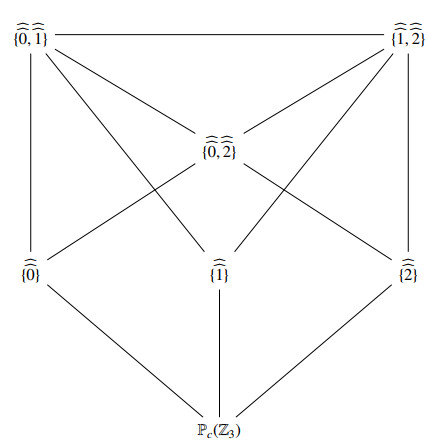
Lie intersection graph $ Lie(\mathbb{G}\mathcal{A}) $ Ⅰ
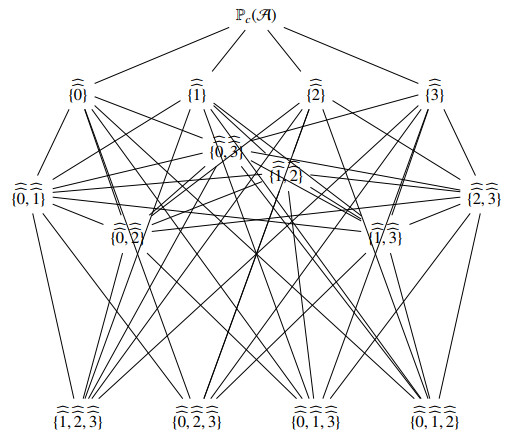
The Lie intersection graph $ Lie(\mathbb{G}\mathcal{A}) $ Ⅱ




 DownLoad: