$ n $-polygonal interval-valued fuzzy sets are a very effective means for describing fuzzy information. How to handle the uncertain information is the key issue. In this paper, we generalized the recent results on the entropy and similarity measures of $ n $-polygonal interval-valued fuzzy sets based on abstract functions that meet specific conditions. Our main contribution is two formulas that derive to create various new entropies and similarity measures by the use of given functions. Meanwhile, we utilized the similarity measure function to construct the cross-entropy function, which can be understood as a dual relationship from the mathematical structure. Besides, we also proved that entropy and similarity measures for $ n $-polygonal interval-valued fuzzy sets can be transformed by each other in a general way. Finally, a multi-attribute decision-making (MADM) method in the light of the newly proposed entropy and cross-entropy were designed to solve practical problems. The experimental results demonstrate the effectiveness of the novel method in solving practical problems in decision-making.
Citation: Xue Zhao, Lili Zhang, Chunfeng Suo. A theoretical development on information measures of $ n $-polygonal interval-value fuzzy sets[J]. AIMS Mathematics, 2026, 11(10): 35070-35118. doi: 10.3934/math.20261365
$ n $-polygonal interval-valued fuzzy sets are a very effective means for describing fuzzy information. How to handle the uncertain information is the key issue. In this paper, we generalized the recent results on the entropy and similarity measures of $ n $-polygonal interval-valued fuzzy sets based on abstract functions that meet specific conditions. Our main contribution is two formulas that derive to create various new entropies and similarity measures by the use of given functions. Meanwhile, we utilized the similarity measure function to construct the cross-entropy function, which can be understood as a dual relationship from the mathematical structure. Besides, we also proved that entropy and similarity measures for $ n $-polygonal interval-valued fuzzy sets can be transformed by each other in a general way. Finally, a multi-attribute decision-making (MADM) method in the light of the newly proposed entropy and cross-entropy were designed to solve practical problems. The experimental results demonstrate the effectiveness of the novel method in solving practical problems in decision-making.

| [1] |
I. Turksen, Interval valued fuzzy sets based on normal forms, Fuzzy Set. Syst., 20 (1986), 191–210. http://dx.doi.org/10.1016/0165-0114(86)90077-1 doi: 10.1016/0165-0114(86)90077-1
|
| [2] |
K. Atanassov, Intuitionistic fuzzy sets, Fuzzy Set. Syst., 20 (1986), 87–96. http://dx.doi.org/10.1016/S0165-0114(86)80034-3 doi: 10.1016/S0165-0114(86)80034-3
|
| [3] |
V. Torra, Hesitant fuzzy sets, Int. J. Intell. Syst., 25 (2010), 529–539. http://dx.doi.org/10.1002/int.20418 doi: 10.1002/int.20418
|
| [4] |
Z. Xu, J. Chen, An interactive method for fuzzy multiple attribute group decision making, Inform. Sci., 177 (2007), 248–263. http://dx.doi.org/10.1016/j.ins.2006.08.021 doi: 10.1016/j.ins.2006.08.021
|
| [5] |
Y. Wang, J. Zhan, Dynamic self-confidence management with multi-granularity probabilistic linguistic preferences and fuzzy social networks, J. Appl. Math. Comput., 72 (2026), 138. http://dx.doi.org/10.1007/s12190-026-02794-z doi: 10.1007/s12190-026-02794-z
|
| [6] |
F. Xiao, J. Wen, W. Pedrycz, Generalized divergence-based decision making method with an application to pattern classification, IEEE T. Knowl. Data En., 35 (2023), 6941–6956. http://dx.doi.org/10.1109/TKDE.2022.3226120 doi: 10.1109/TKDE.2022.3226120
|
| [7] |
H. Choi, G. Mun, J. Ahn, A medical diagnosis based on interval-valued fuzzy sets, Biomed. Eng.-App. Bas. C., 24 (2012), 349–354. http://dx.doi.org/10.4015/S1016237212500305 doi: 10.4015/S1016237212500305
|
| [8] |
L. Zadeh, The concept of a linguistic variable and its application to approximate reason-I, Inform. Sci., 8 (1975), 199–249. http://dx.doi.org/10.1016/0020-0255(75)90036-5 doi: 10.1016/0020-0255(75)90036-5
|
| [9] |
J. Mendel, R. John, F. Liu, Interval type-2 fuzzy logical systems made simple, IEEE T. Fuzzy Syst., 14 (2006), 2923. http://dx.doi.org/10.1109/TFUZZ.2006.876740 doi: 10.1109/TFUZZ.2006.876740
|
| [10] |
T. C. Chu, T. H. P. Le, A novel technique for evaluating and selecting wealthtech apps based on interval type-2 intuitionistic fuzzy technique for order preference by similarity to ideal solution, Neural Comput. Appl., 38 (2026), 238. http://dx.doi.org/10.1007/s00521-026-11861-2 doi: 10.1007/s00521-026-11861-2
|
| [11] |
J. C. Figueroa-Garcia, Y. Chalco-Cano, Distance measures for interval type-2 fuzzy numbers, Discrete Appl. Math., 197 (2015), 93–102. http://dx.doi.org/10.1016/j.dam.2015.05.014 doi: 10.1016/j.dam.2015.05.014
|
| [12] |
H. Hossein, A. Maryam, A new qualitative and quantitative analytical approach for risk management in energy project time-cost trade-off problem under interval type-2 fuzzy uncertainty: A case study in the gas industry, Energy Rep., 8 (2022), 12668–12685. http://dx.doi.org/10.1016/j.egyr.2022.09.140 doi: 10.1016/j.egyr.2022.09.140
|
| [13] |
W. Wang, X. Liu, Y. Qin, Multi-attribute group decision making models under interval type-2 fuzzy environment, Knowledge-Based Systems, 30 (2012), 121–128. http://dx.doi.org/10.1016/j.knosys.2012.01.005 doi: 10.1016/j.knosys.2012.01.005
|
| [14] |
F. Jin, Y. Zhao, X. Zheng, L. Zhou, Supplier selection through interval type-2 trapezoidal fuzzy multi-attribute group decision-making method with logarithmic information measures, Eng. Appl. Artif. Intel., 126 (2023), 107006. http://dx.doi.org/10.1016/j.engappai.2023.107006 doi: 10.1016/j.engappai.2023.107006
|
| [15] |
A. D. Filabadi, H. N. Titkanlue, Multi-attribute group decision making based on a new ranking of positive and negative interval type-2 fuzzy numbers, Control Optim. Appl. Math., 11 (2026), 31–57. http://dx.doi.org/10.30473/coam.2025.74715.1311 doi: 10.30473/coam.2025.74715.1311
|
| [16] |
X. Pan, Y. Wang, S. He, A new regret theory-based risk decision-making method for renewable energy investment under uncertain environment, Comput. Ind. Eng., 170 (2022), 108319. http://dx.doi.org/10.1016/j.cie.2022.108319 doi: 10.1016/j.cie.2022.108319
|
| [17] |
Y. Song, X. Wang, W. Quan, W. Huang, A new approach to construct similarity measure for intuitionistic fuzzy sets, Soft Comput., 23 (2019), 1985–1998. http://dx.doi.org/10.1007/s00500-018-3410-1 doi: 10.1007/s00500-018-3410-1
|
| [18] |
X. Guan, Y. Liu, Multi-attribute decision-making based on comprehensive hesitant fuzzy entropy, Expert Syst. Appl., 237 (2024), 121459. http://dx.doi.org/10.1016/j.eswa.2023.121459 doi: 10.1016/j.eswa.2023.121459
|
| [19] |
X. Xie, X. Zhang, X. Yang, J. Yang, Attribute reduction learning based on double-quantitative similarity granulations and fusion measures in interval-set decision systems, Appl. Intell., 56 (2026), 241. http://dx.doi.org/10.1007/s10489-026-07198-x doi: 10.1007/s10489-026-07198-x
|
| [20] |
A. Bouchet, M. Sesma-Sara, G. Ochoa, H. B. Sola, S. Montes, I. Díaz, Measures of embedding for interval-valued fuzzy sets, Fuzzy Set. Syst., 467 (2023), 108505. http://dx.doi.org/10.1016/j.fss.2023.03.008 doi: 10.1016/j.fss.2023.03.008
|
| [21] |
B. Pekala, K. Dyczkowski, P. Grzegorzewski, U. Bentkowska, Inclusion and similarity measures for interval-valued fuzzy sets based on aggregation and uncertainty assessment, Inform. Sci., 547 (2021), 1182–1200. http://dx.doi.org/10.1016/j.ins.2020.10.043 doi: 10.1016/j.ins.2020.10.043
|
| [22] |
C. Suo, Y. Li, Z. Li, On n-polygonal interval-valued fuzzy sets, Fuzzy Set. Syst., 417 (2021), 46–70. http://dx.doi.org/10.1016/j.fss.2020.09.013 doi: 10.1016/j.fss.2020.09.013
|
Figures(1) / Tables(26)

Xue Zhao, Lili Zhang, Chunfeng Suo. A theoretical development on information measures of $ n $-polygonal interval-value fuzzy sets[J]. AIMS Mathematics, 2026, 11(10): 35070-35118. doi: 10.3934/math.20261365

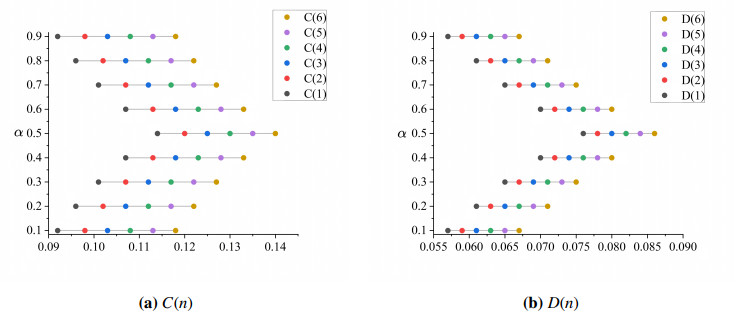
Difference values




 DownLoad: