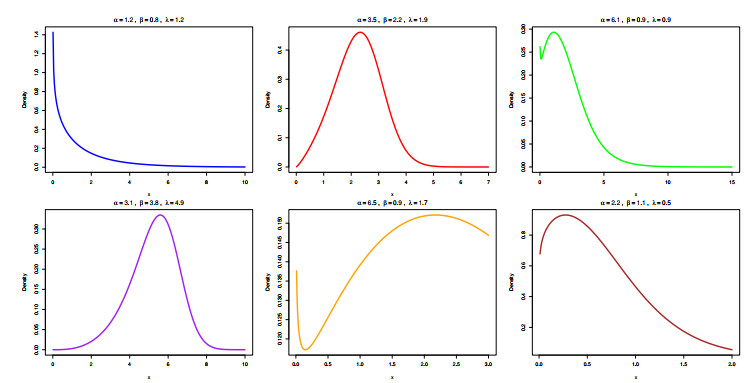
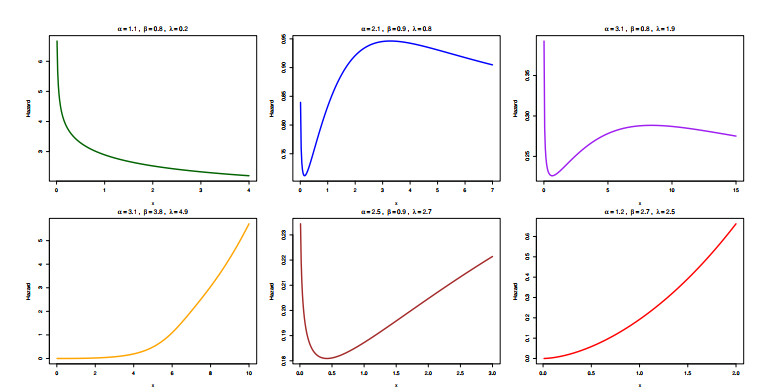
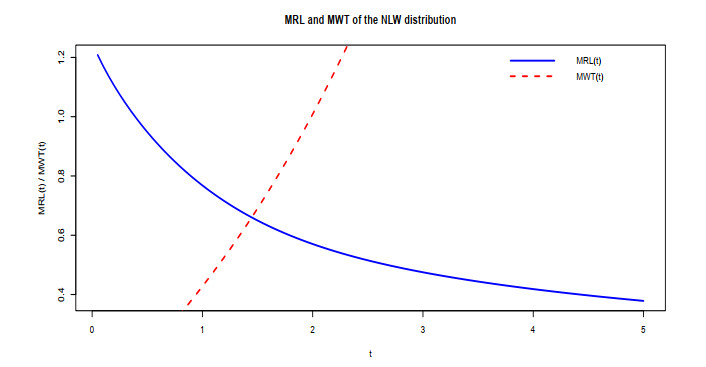
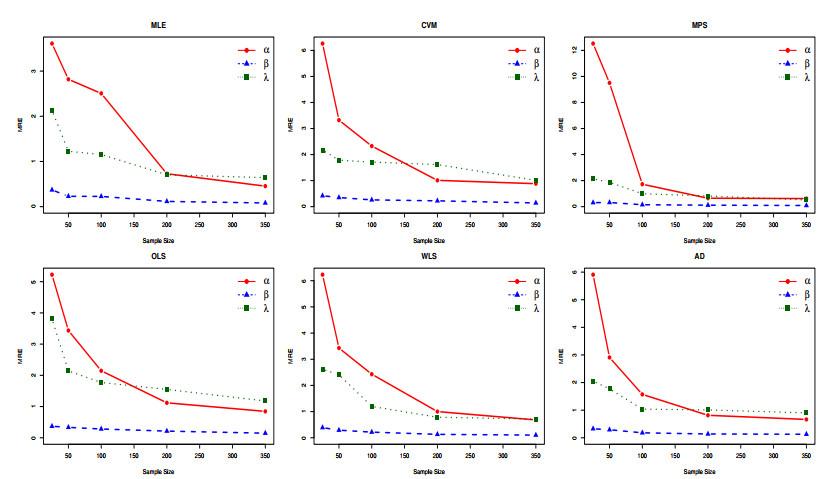
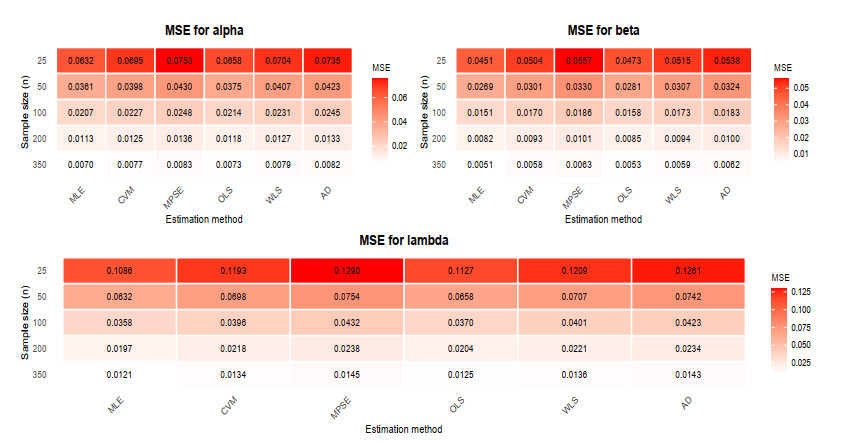
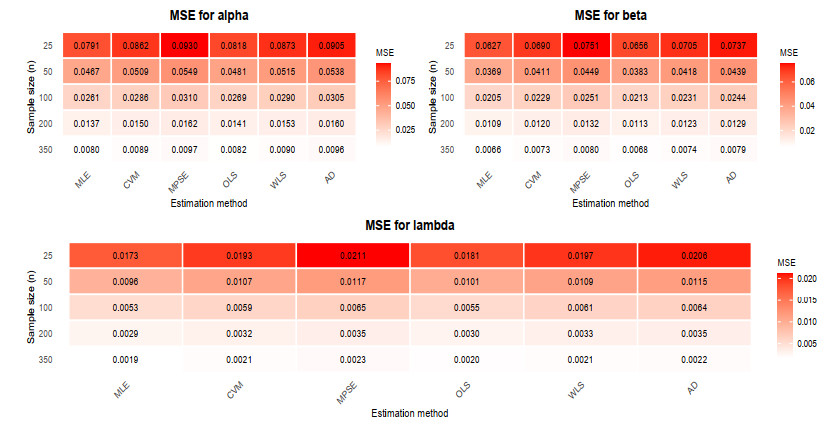
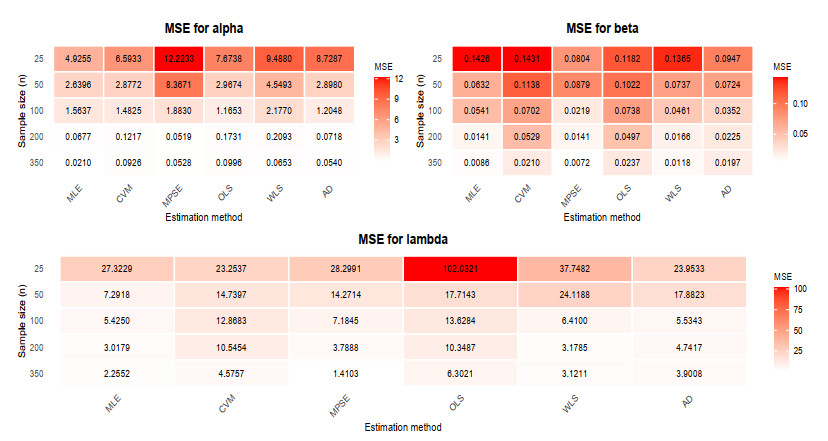
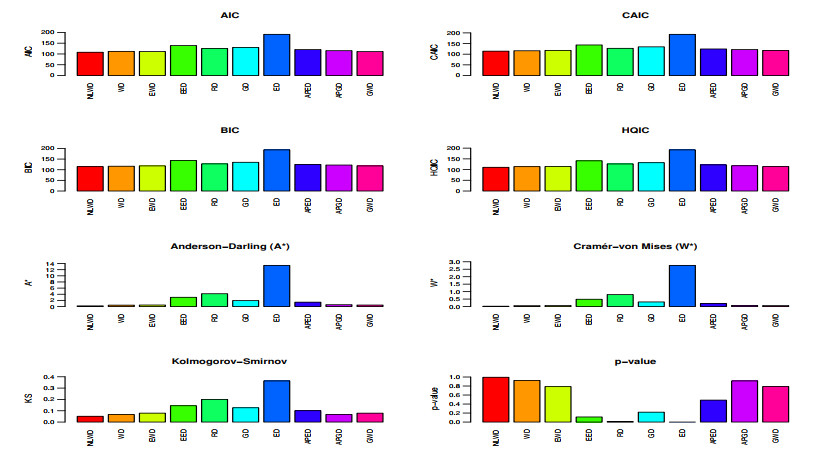
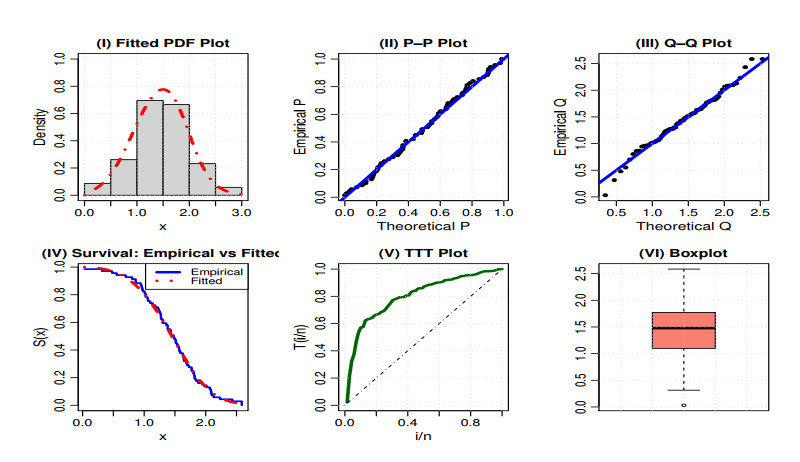
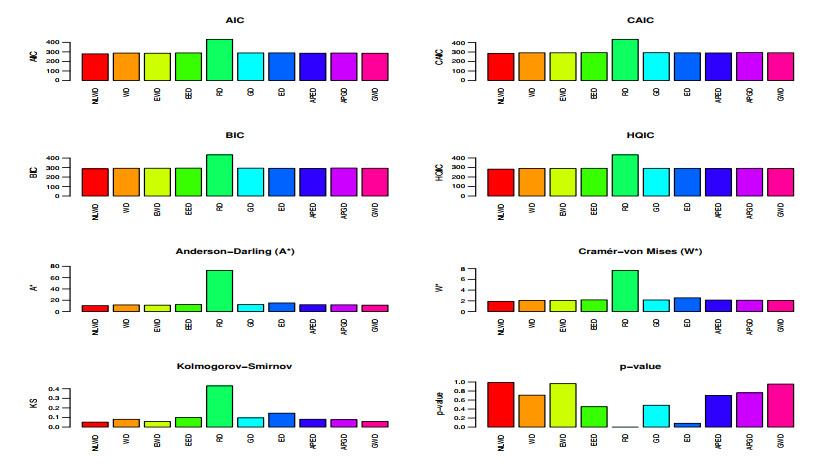
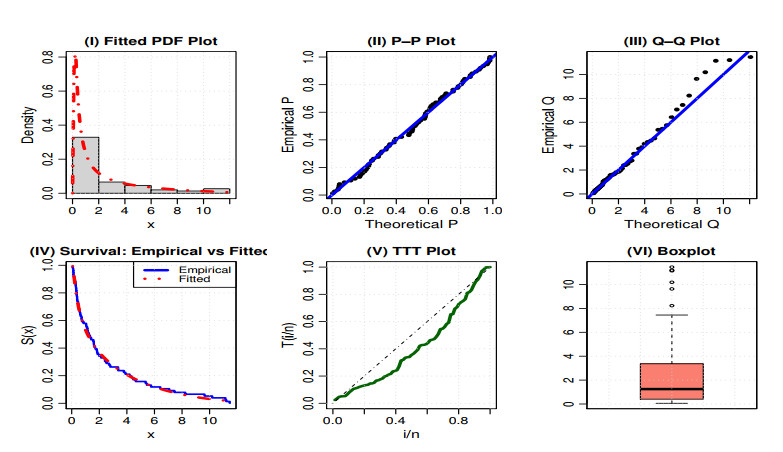
Real-world lifetime data often exhibit complex hazard-rate patterns that conventional models, such as the Weibull distribution, may not adequately capture. This study introduces a new three-parameter New Log-G (NLG) family of distributions, constructed through a logarithmic transformation of a baseline cumulative distribution function with an additional shape-controlling parameter $ \alpha $. Using the Weibull distribution as the baseline, we derive the New Log-Weibull (NLW) distribution, which accommodates increasing, decreasing, bathtub-shaped, and unimodal hazard-rate patterns. The principal theoretical properties of the proposed family are derived, including distributional functions, moments, entropy measures, and residual lifetime characteristics. Six classical estimation methods are evaluated through Monte Carlo simulations across varying sample sizes and parameter configurations. The practical usefulness of the NLW distribution is demonstrated using three real datasets on radiation susceptibility, glass fiber tensile strength, and COVID-19 mortality. Across these applications, the NLW model consistently outperforms seven established competing distributions in terms of goodness of fit. These results demonstrate the flexibility and practical utility of the proposed NLG family as a general framework for extending lifetime distributions, with the NLW model offering broad applicability in reliability engineering, materials science, and epidemiological modeling.
Citation: Aadil Ahmad Mir, A. A. Bhat, S. P. Ahmad, Badr S. Alnssyan, Abdelaziz Alsubie. A new logarithmic transformation for generating flexible probability distributions: Statistical properties, inference, and applications[J]. AIMS Mathematics, 2026, 11(10): 34417-34467. doi: 10.3934/math.20261343
Real-world lifetime data often exhibit complex hazard-rate patterns that conventional models, such as the Weibull distribution, may not adequately capture. This study introduces a new three-parameter New Log-G (NLG) family of distributions, constructed through a logarithmic transformation of a baseline cumulative distribution function with an additional shape-controlling parameter $ \alpha $. Using the Weibull distribution as the baseline, we derive the New Log-Weibull (NLW) distribution, which accommodates increasing, decreasing, bathtub-shaped, and unimodal hazard-rate patterns. The principal theoretical properties of the proposed family are derived, including distributional functions, moments, entropy measures, and residual lifetime characteristics. Six classical estimation methods are evaluated through Monte Carlo simulations across varying sample sizes and parameter configurations. The practical usefulness of the NLW distribution is demonstrated using three real datasets on radiation susceptibility, glass fiber tensile strength, and COVID-19 mortality. Across these applications, the NLW model consistently outperforms seven established competing distributions in terms of goodness of fit. These results demonstrate the flexibility and practical utility of the proposed NLG family as a general framework for extending lifetime distributions, with the NLW model offering broad applicability in reliability engineering, materials science, and epidemiological modeling.

| [1] |
G. S. Mudholkar, D. K. Srivastava, Exponentiated Weibull family for analyzing bathtub failure-rate data, IEEE T. Reliab., 42 (1993), 299–302. https://doi.org/10.1109/24.229504 doi: 10.1109/24.229504

|
| [2] |
A. W. Marshall, I. Olkin, A new method for adding a parameter to a family of distributions with application to the exponential and Weibull families, Biometrika, 84 (1997), 641–652. https://doi.org/10.1093/biomet/84.3.641 doi: 10.1093/biomet/84.3.641
|
| [3] |
A. Mahdavi, D. Kundu, A new method for generating distributions with an application to exponential distribution, Commun. Stat.–Theor. M., 46 (2017), 6543–6557. https://doi.org/10.1080/03610926.2015.1130839 doi: 10.1080/03610926.2015.1130839
|
| [4] |
A. A. Mir, S. U. Rasool, S. P. Ahmad, A. A. Bhat, T. M. Jawa, N. Sayed-Ahmed, et al., A robust framework for probability distribution generation: analyzing structural properties and applications in engineering and medicine, Axioms, 14 (2025), 281. https://doi.org/10.3390/axioms14040281 doi: 10.3390/axioms14040281
|
| [5] |
A. A. Bhat, A. A. Mir, S. P. Ahmad, B. S. Alnssyan, A. Alsubie, Y. S. Raghav, A novel Alpha-power X family: A flexible framework for distribution generation with focus on the half-logistic model, Entropy, 27 (2025), 632. https://doi.org/10.3390/e27060632 doi: 10.3390/e27060632
|
| [6] |
A. A. Mir, A. A. Bhat, S. P. Ahmad, B. S. Alnssyan, A. Alsubie, Y. S. Raghav, Statistical inference and goodness-of-fit assessment using the AAP-X probability framework with symmetric and asymmetric properties: Applications to medical and reliability data, Symmetry, 17 (2025), 863. https://doi.org/10.3390/sym17060863 doi: 10.3390/sym17060863
|
| [7] |
S. Mohammad, I. Mendoza, A new hyperbolic tangent family of distributions: Properties and applications, Ann. Data Sci., 12 (2025), 457–480. https://doi.org/10.1007/s40745-024-00516-5 doi: 10.1007/s40745-024-00516-5
|
| [8] | M. M. Alsolmi, A new logarithmic Tangent-U family of distributions with reliability analysis in engineering data, Comput. J. Math. Stat. Sci., 4 (2025), 258–282. |
| [9] | O. H. Odhah, H. M. Alshanbari, Z. Ahmad, F. Khan, A. H. El-Bagoury, A new family of distributions using a trigonometric function: Properties and applications in the healthcare sector, Heliyon, 2024. |
| [10] |
A. S. Alghamdi, S. F. ALoufi, L. A. Baharith, The sine Alpha power-G family of distributions: Characterizations, regression modeling, and applications, Symmetry, 17 (2025), 468. https://doi.org/10.3390/sym17030468 doi: 10.3390/sym17030468
|
| [11] | V. Mulagala, V. B. V. Nagarjuna, Sine Modified-Kies generalized family of distributions: Properties and applications, Phys. Scripta, 2025. |
| [12] |
Z. Shah, G. S. S. Abdalla, D. M. Khan, G. S. Rao, F. Jamal, E. M. Almetwally, A logarithmic exponent power half Logistic-G family of Distributions: Repetitive acceptance sampling plan and applications to engineering and radiation sectors, J. Radiat. Res. Appl. Sc., 18 (2025), 101797. https://doi.org/10.1016/j.jrras.2025.101797 doi: 10.1016/j.jrras.2025.101797
|
| [13] |
Z. Shah, E. M. Almetwally, D. M. Khan, F. Jamal, A novel odd Type-X family of distributions: Model, theory, and applications to medical, insurance, and engineering data sets, J. Radiat. Res. Appl. Sc., 18 (2025), 101451. https://doi.org/10.1016/j.jrras.2025.101451 doi: 10.1016/j.jrras.2025.101451
|
| [14] | A. A. Mir, S. P. Ahmad, A novel and flexible statistical distribution family: Theoretical development, mathematical properties, Monte Carlo simulation and applications to engineering failure-time, composite material strength and digital advertising data, Life Cycle Reliab. Saf. Eng., 2026, 1–27. |
| [15] | K. Choi, W. G. Bulgren, An estimation procedure for mixtures of distributions, J. Roy. Stat. Soc. B, 30 (1968), 444–460. |
| [16] |
R. C. H. Cheng, N. A. K. Amin, Estimating parameters in continuous univariate distributions with a shifted origin, J. Roy. Stat. Soc. B, 45 (1983), 394–403. https://doi.org/10.1111/j.2517-6161.1983.tb01268.x doi: 10.1111/j.2517-6161.1983.tb01268.x
|
| [17] | G. A. F. Seber, A. J. Lee, Linear regression analysis, 2Eds., Wiley Series in Probability and Statistics, John Wiley & Sons, 2012. |
| [18] |
T. W. Anderson, D. A. Darling, Asymptotic theory of certain goodness of fit criteria based on stochastic processes, Ann. Math. Stat., 23 (1952), 193–212. https://doi.org/10.1214/aoms/1177729437 doi: 10.1214/aoms/1177729437
|
| [19] | M. G. Bader, A. M. Priest, Statistical aspects of fibre and bundle strength in hybrid composites, Prog. Sci. Eng. Compos., 1982, 1129–1136. |
| [20] |
I. E. Ragab, S. Khan, N. Alsadat, F. Jamal, G. G. Hamedani, M. Elgarhy, Modeling to COVID-19 and cancer data: Using the generalized Burr-Hatke model, J. Radiat. Res. Appl. Sc., 17 (2024), 100972. https://doi.org/10.1016/j.jrras.2024.100972 doi: 10.1016/j.jrras.2024.100972
|
| [21] | M. Kargbo, A. W. Gichuhi, A. K. Wanjoya, A novel extended inverse-exponential distribution and its application to COVID-19 data, Eng. Rep., 6 (2024), e12828. |
| [22] |
R. L. Smith, J. C. Naylor, A comparison of maximum likelihood and Bayesian estimators for the three-parameter Weibull distribution, J. Roy. Stat. Soc. C–Appl., 36 (1987), 358–369. https://doi.org/10.2307/2347795 doi: 10.2307/2347795
|
| [23] | A. A. Al-Babtain, D. Kumar, A. M. Gemeay, S. Dey, A. Z. Afify, Modeling engineering data using extended power-Lindley distribution: Properties and estimation methods, J. King Saud Univ. Sci., 33 (2021), 101582. |
| [24] |
H. M. Almongy, E. M. Almetwally, H. M. Aljohani, A. S. Alghamdi, E. H. Hafez, A new extended Rayleigh distribution with applications of COVID-19 data, Results Phys., 23 (2021), 104012. https://doi.org/10.1016/j.rinp.2021.104012 doi: 10.1016/j.rinp.2021.104012
|
| [25] |
A. B. S. Mastor, O. Ngesa, J. Mung'atu, N. M. Alfaer, A. Z. Afify, The extended exponential Weibull distribution: Properties, inference, and applications to real-life data, Complexity, 2022 (2022), 4068842. https://doi.org/10.1155/2022/4068842 doi: 10.1155/2022/4068842
|
Figures(32) / Tables(20)

Aadil Ahmad Mir, A. A. Bhat, S. P. Ahmad, Badr S. Alnssyan, Abdelaziz Alsubie. A new logarithmic transformation for generating flexible probability distributions: Statistical properties, inference, and applications[J]. AIMS Mathematics, 2026, 11(10): 34417-34467. doi: 10.3934/math.20261343





 DownLoad: