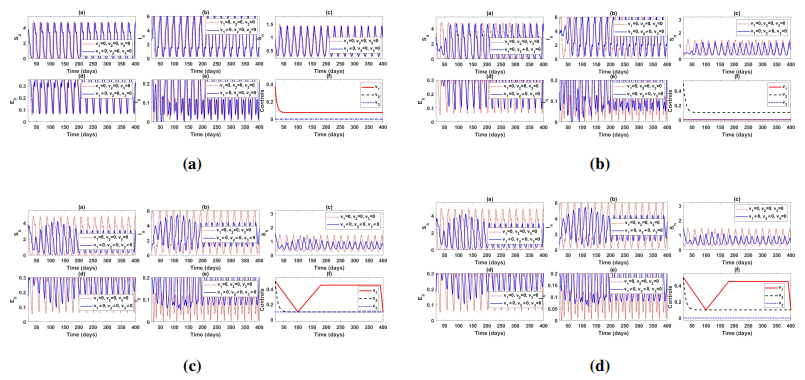
This work develops a Kayo–Kengne–Akgül (KKA) fractional multi-delay framework for modeling avian-influenza transmission. The proposed formulation considers the interaction between bird and human populations while accounting for two biologically meaningful delays: an avian infectious-pressure delay and a human transmission-response delay. By incorporating the KKA fractional derivative, the model is able to represent memory-dependent effects that influence the spread of infection. The well-posedness of the system is verified by proving positivity and boundedness of solutions. The disease-free and endemic steady states are obtained, and the threshold quantity governing disease persistence is computed through the next-generation matrix method. Because the equilibria do not explicitly depend on time, their algebraic forms remain consistent with those of the corresponding classical delayed model. Nevertheless, the fractional operator alters the stability criteria and the Hopf bifurcation analysis through the associated KKA characteristic equation. In addition, an optimal-control formulation is presented by introducing avian biosecurity and contact-reduction measures, infected-bird culling, and awareness-based intervention as control measures. The theoretical findings are supported using a KKA-adapted Adams–Bashforth numerical method. Finally, numerical experiments demonstrate how the fractional order, delay parameters, and control interventions affect the evolution of avian influenza.
Citation: Saeed M. Alamry. Kayo–Kengne–Akgül fractional multi-delay model for avian influenza: Hopf bifurcation and optimal control analysis[J]. AIMS Mathematics, 2026, 11(10): 34369-34416. doi: 10.3934/math.20261342
This work develops a Kayo–Kengne–Akgül (KKA) fractional multi-delay framework for modeling avian-influenza transmission. The proposed formulation considers the interaction between bird and human populations while accounting for two biologically meaningful delays: an avian infectious-pressure delay and a human transmission-response delay. By incorporating the KKA fractional derivative, the model is able to represent memory-dependent effects that influence the spread of infection. The well-posedness of the system is verified by proving positivity and boundedness of solutions. The disease-free and endemic steady states are obtained, and the threshold quantity governing disease persistence is computed through the next-generation matrix method. Because the equilibria do not explicitly depend on time, their algebraic forms remain consistent with those of the corresponding classical delayed model. Nevertheless, the fractional operator alters the stability criteria and the Hopf bifurcation analysis through the associated KKA characteristic equation. In addition, an optimal-control formulation is presented by introducing avian biosecurity and contact-reduction measures, infected-bird culling, and awareness-based intervention as control measures. The theoretical findings are supported using a KKA-adapted Adams–Bashforth numerical method. Finally, numerical experiments demonstrate how the fractional order, delay parameters, and control interventions affect the evolution of avian influenza.

| [1] |
D. J. Alexander, An overview of the epidemiology of avian influenza, Vaccine, 25 (2007), 5637–5644. https://doi.org/10.1016/j.vaccine.2006.10.051 doi: 10.1016/j.vaccine.2006.10.051

|
| [2] |
L. Zhou, R. Ren, L. Yang, C. Bao, J. Wu, D. Wang, et al., Sudden increase in human infection with avian influenza A (H7N9) virus in China, September–December 2016, Western Pac. Surveill Response J., 8 (2017), 6. https://doi.org/10.5365/WPSAR.2017.8.1.001 doi: 10.5365/WPSAR.2017.8.1.001
|
| [3] |
H. Yu, J. T. Wu, B. J. Cowling, Q. Liao, V. J. Fang, S. Zhou, et al., Effect of closure of live poultry markets on poultry-to-person transmission of avian influenza A H7N9 virus: an ecological study, Lancet, 383 (2014), 541–548. https://doi.org/10.1016/S0140-6736(13)61904-2 doi: 10.1016/S0140-6736(13)61904-2
|
| [4] |
A. Blagodatski, K. Trutneva, O. Glazova, O. Mityaeva, L. Shevkova, E. Kegeles, et al., Avian influenza in wild birds and poultry: dissemination pathways, monitoring methods, and virus ecology, Pathogens, 10 (2021), 630. https://doi.org/10.3390/pathogens10050630 doi: 10.3390/pathogens10050630
|
| [5] |
S. Liu, Q. Zhuang, S. Wang, W. Jiang, J. Jin, C. Peng, et al., Control of avian influenza in China: strategies and lessons, Transboundary Emerging Dis., 67 (2020), 1463–1471. https://doi.org/10.1111/tbed.13515 doi: 10.1111/tbed.13515
|
| [6] |
W. O. Kermack, A. G. McKendrick, A contribution to the mathematical theory of epidemics, Proc. R. Soc. A, 115 (1927), 700–721. https://doi.org/10.1098/rspa.1927.0118 doi: 10.1098/rspa.1927.0118
|
| [7] |
N. S. Chong, J. M. Tchuenche, R. J. Smith, A mathematical model of avian influenza with half-saturated incidence, Theory Biosci., 133 (2014), 23–38. https://doi.org/10.1007/s12064-013-0183-6 doi: 10.1007/s12064-013-0183-6
|
| [8] |
S. Iwami, Y. Takeuchi, X. Liu, Avian-human influenza epidemic model, Math. Biosci., 207 (2007), 1–25. https://doi.org/10.1016/j.mbs.2006.08.001 doi: 10.1016/j.mbs.2006.08.001
|
| [9] |
X. Jiao, X. Liu, Rich dynamics of a delayed Filippov avian-only influenza model with two-thresholds policy, Chaos Solitons Fract., 182 (2024), 114710. https://doi.org/10.1016/j.chaos.2024.114710 doi: 10.1016/j.chaos.2024.114710
|
| [10] |
F. Pinotti, L. Kohnle, J. Lourenço, S. Gupta, M. A. Hoque, R. Mahmud, et al., Modelling the transmission dynamics of H9N2 avian influenza viruses in a live bird market, Nature Commun., 15 (2024), 3494. https://doi.org/10.1038/s41467-024-47703-9 doi: 10.1038/s41467-024-47703-9
|
| [11] |
S. Tipsri, W. Chinviriyasit, The effect of time delay on the dynamics of an SEIR model with nonlinear incidence, Chaos Solitons Fract., 75 (2015), 153–172. https://doi.org/10.1016/j.chaos.2015.02.017 doi: 10.1016/j.chaos.2015.02.017
|
| [12] |
S. Z. Rida, A. A. Farghaly, S. A. Azoz, F. Hussien, Global stability of a delayed fractional-order SEI epidemic model with logistic growth, Appl. Math., 15 (2021), 1–12. https://doi.org/10.18576/amis/150105 doi: 10.18576/amis/150105
|
| [13] |
H. Ismail, A. Debbouche, S. Hariharan, L. Shangerganesh, S. V. Kashtanova, Stability and optimality criteria for an SVIR epidemic model with numerical simulation, Mathematics, 12 (2024), 3231. https://doi.org/10.3390/math12203231 doi: 10.3390/math12203231
|
| [14] |
M. R. S. Ammi, M. Tahiri, M. Tilioua, A. Zeb, I. Khan, M. Andualem, Global analysis of a time fractional order spatio-temporal SIR model, Sci. Rep., 12 (2022), 5751. https://doi.org/10.1038/s41598-022-08992-6 doi: 10.1038/s41598-022-08992-6
|
| [15] |
S. Li, S. U. Khan, M. B. Riaz, S. A. AlQahtani, A. M. Alamri, Numerical simulation of a fractional stochastic delay differential equations using spectral scheme: a comprehensive stability analysis, Sci. Rep., 14 (2024), 6930. https://doi.org/10.1038/s41598-024-56944-z doi: 10.1038/s41598-024-56944-z
|
| [16] |
D. Baleanu, P. Shekari, L. Torkzadeh, H. Ranjbar, A. Jajarmi, K. Nouri, Stability analysis and system properties of Nipah virus transmission: a fractional calculus case study, Chaos Solitons Fract., 166 (2023), 112990. https://doi.org/10.1016/j.chaos.2022.112990 doi: 10.1016/j.chaos.2022.112990
|
| [17] |
A. Kandil, Study of Hopf curves in the time delayed active control of a 2DOF nonlinear dynamical system, SN Appl. Sci., 2 (2020), 1924. https://doi.org/10.1007/s42452-020-03614-0 doi: 10.1007/s42452-020-03614-0
|
| [18] |
A. Kandil, W. A. El-Ganaini, Investigation of the time delay effect on the control of rotating blade vibrations, Eur. J. Mech., 72 (2018), 16–40. https://doi.org/10.1016/j.euromechsol.2018.03.007 doi: 10.1016/j.euromechsol.2018.03.007
|
| [19] |
A. Kandil, H. El-Gohary, Investigating the performance of a time delayed proportional–derivative controller for rotating blade vibrations, Nonlinear Dyn., 91 (2018), 2631–2649. https://doi.org/10.1007/s11071-017-4036-6 doi: 10.1007/s11071-017-4036-6
|
| [20] |
M. Eissa, A. Kandil, W. A. El-Ganaini, M. Kamel, Analysis of a nonlinear magnetic levitation system vibrations controlled by a time-delayed proportional-derivative controller, Nonlinear Dyn., 79 (2015), 1217–1233. https://doi.org/10.1007/s11071-014-1738-x doi: 10.1007/s11071-014-1738-x
|
| [21] |
Y. Chen, Z. W. Liu, Y. Qin, Finite-time topology identification of delayed complex dynamical networks and its application, Cyborg Bionic Syst., 5 (2024), 0092. https://doi.org/10.34133/cbsystems.0092 doi: 10.34133/cbsystems.0092
|
| [22] |
X. Li, H. Tian, P. Zhang, X. Liu, Existence, uniqueness, and continuous dependence on initial/final values for Liouville–Caputo fractional difference equations, Fractal Fract., 10 (2026), 504. https://doi.org/10.3390/fractalfract10080504 doi: 10.3390/fractalfract10080504
|
| [23] |
H. H. Zhuang, Y. Chen, Q. Hu, W. M. Long, X. L. Wu, Q. Wang, et al., Efficacy and mortality of ceftazidime/avibactam-based regimens in carbapenem-resistant Gram-negative bacteria infections: a retrospective multicenter observational study, J. Tnfect. Public Health, 16 (2023), 938–947. https://doi.org/10.1016/j.jiph.2023.04.014 doi: 10.1016/j.jiph.2023.04.014
|
| [24] |
H. Q. Zhang, B. Z. Cao, Q. T. Cao, M. Hun, L. Cao, M. Y. Zhao, An analysis of reported cases of hemophagocytic lymphohistiocytosis (HLH) after COVID-19 vaccination, Hum. Vaccines Immunother., 19 (2023), 2263229. https://doi.org/10.1080/21645515.2023.2263229 doi: 10.1080/21645515.2023.2263229
|
| [25] |
Y. Wang, Q. Wang, T. W. Yang, J. M. Yin, F. Wei, H. Liu, et al., Analysis of immune and inflammatory microenvironment characteristics of noncancer end-stage liver disease, J. Int. Cytokine Res., 43 (2023), 86–97. https://doi.org/10.1089/jir.2022.0172 doi: 10.1089/jir.2022.0172
|
| [26] |
R. Shafqat, Ramsha, M. M. Alshamrani, Mathematical and computational analysis of a Kayo-Kengne-Akgül fractional-order Lassa fever model, AIMS Math., 11 (2026), 20143–20169. https://doi.org/10.3934/math.2026818 doi: 10.3934/math.2026818
|
| [27] |
R. Shafqat, A. Alsaadi, A hybrid predictive framework for Zika dynamics using the normalized Caputo–Fabrizio operator, J. Math., 2026 (2026), 4681248. https://doi.org/10.1155/jom/4681248 doi: 10.1155/jom/4681248
|
| [28] |
R. Shafqat, M. M. Alshamrani, Deep learning for parameter estimation in a typhoid fever model, AIMS Math., 11 (2026), 14984–15007. https://doi.org/10.3934/math.2026616 doi: 10.3934/math.2026616
|
| [29] |
S. M. Alamry, R. Shafqat, A. Alsaadi, Poliomyelitis dynamics under the normalized Caputo–fabrizio operator: analysis, stability, and numerics, J. Taibah Univer. Sci., 20 (2026), 2659460. https://doi.org/10.1080/16583655.2026.2659460 doi: 10.1080/16583655.2026.2659460
|
| [30] |
A. Al-Quran, R. Shafqat, A. Alsaadi, A. M. Djaouti, A hybrid fractal‐fractional and machine learning framework for Zika virus spread prediction, J. Math., 2026 (2026), 9999891. https://doi.org/10.1155/jom/9999891 doi: 10.1155/jom/9999891
|
| [31] |
R. Shafqat, Imran, A. Al-Quran, A. M. Djaouti, Enhancing rabies epidemic modeling with neural networks and fractional calculus, Sci. Rep., 16 (2026), 10409. https://doi.org/10.1038/s41598-026-40853-4 doi: 10.1038/s41598-026-40853-4
|
| [32] |
D. Kayo, A. Akgül, Adams–Bashforth scheme and Kayo–Kengne–Akgül derivative: connexion and chaotic modelling, Univer. J. Math. Appl., 9 (2026), 53–63. https://doi.org/10.32323/ujma.1879909 doi: 10.32323/ujma.1879909
|
| [33] |
X. Ye, S. Lin, C. Xu, Dynamical analysis of a fractional-order avian-human influenza epidemic model with logistic growth for avian population, J. Algorithms Comput. Technol., 14 (2020), 1748302620966704. https://doi.org/10.1177/1748302620966704 doi: 10.1177/1748302620966704
|
| [34] |
S. Liu, S. Ruan, X. Zhang, Nonlinear dynamics of avian influenza epidemic models, Math. Biosci., 283 (2017), 118–135. https://doi.org/10.1016/j.mbs.2016.11.014 doi: 10.1016/j.mbs.2016.11.014
|
| [35] |
S. Iwami, Y. Takeuchi, X. Liu, Avian-human influenza epidemic model, Math. Biosci., 207 (2007), 1–25. https://doi.org/10.1016/j.mbs.2006.08.001 doi: 10.1016/j.mbs.2006.08.001
|
| [36] |
O. I. Bada, A. S. Oke, W. N. Mutuku, P. O. Aye, Analysis of the dynamics of SI-SI-SEIR avian influenza A (H7N9) epidemic model with re-infection, Earthline J. Math. Sci., 5 (2021), 43–73. https://doi.org/10.34198/ejms.5121.4373 doi: 10.34198/ejms.5121.4373
|
Figures(9) / Tables(4)

Saeed M. Alamry. Kayo–Kengne–Akgül fractional multi-delay model for avian influenza: Hopf bifurcation and optimal control analysis[J]. AIMS Mathematics, 2026, 11(10): 34369-34416. doi: 10.3934/math.20261342





 DownLoad: