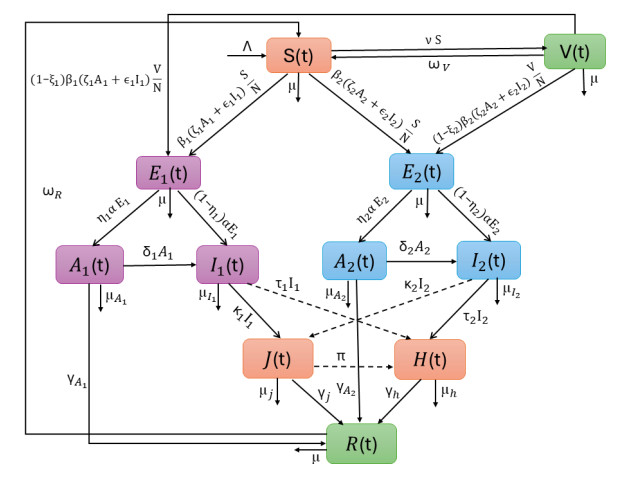
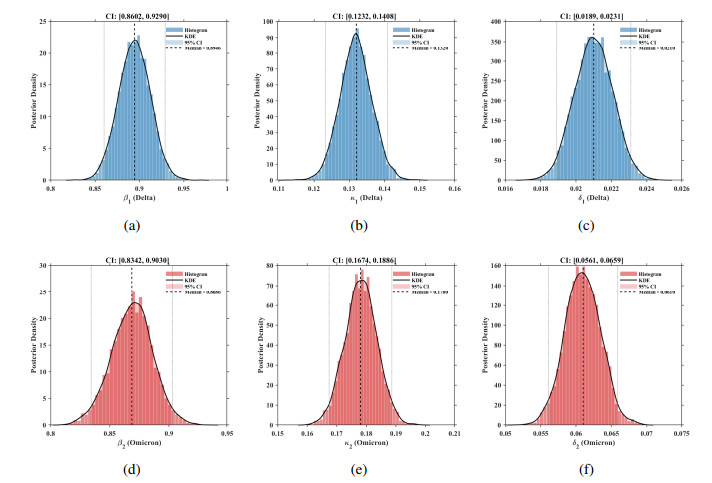
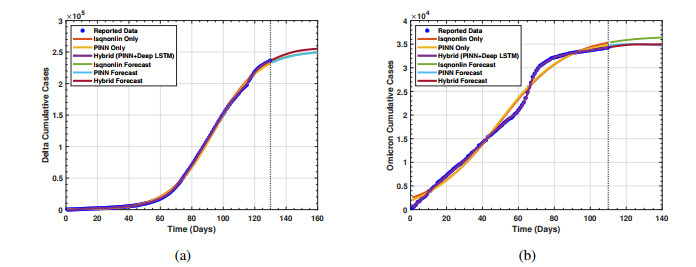
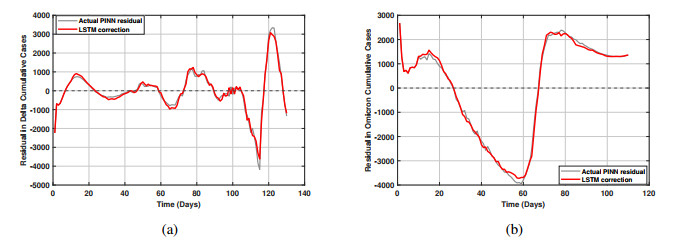
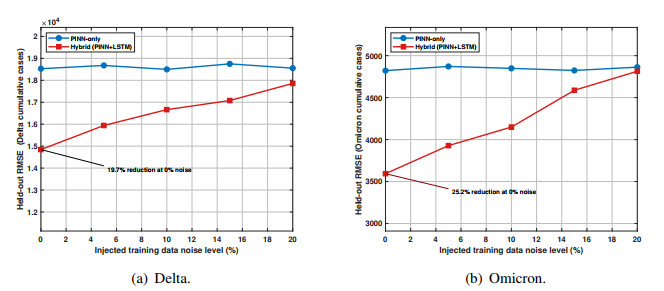
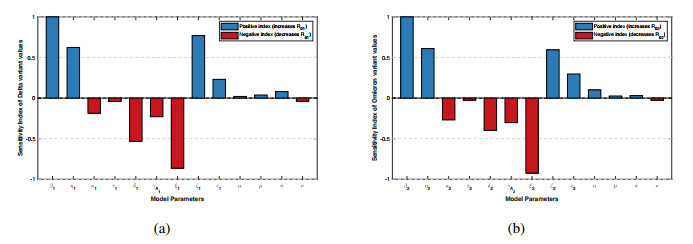
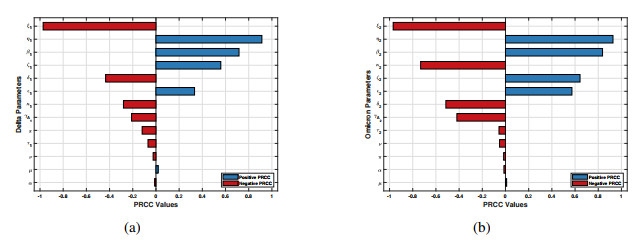
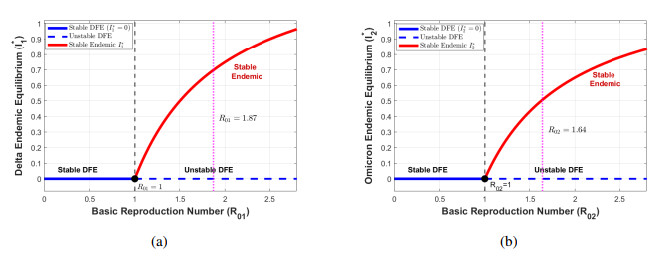
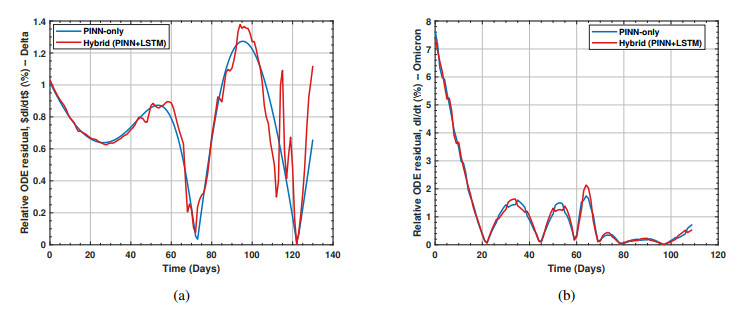
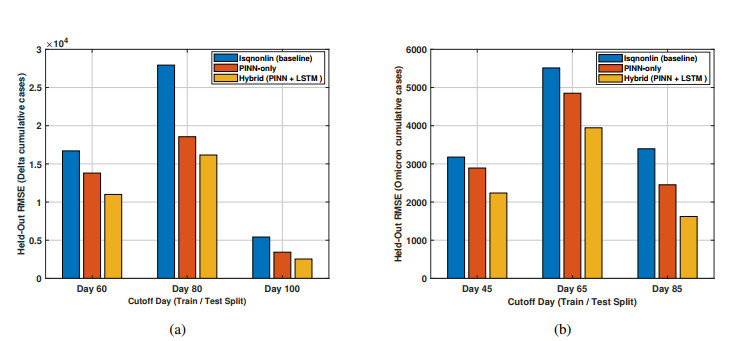
The Delta and Omicron variants drove the two most consequential COVID-19 waves in the region, yet no existing multi-strain compartmental model combines rigorous stability analysis with modern, uncertainty-quantified parameter estimation for this pair. We addressed this gap through four contributions. First, we formulated a deterministic two-strain SVE$ _i $A$ _i $I$ _i $JHR model with eleven compartments and established positivity, boundedness, closed-form variant-specific reproduction numbers $ \mathcal{R}_{0i} $ (evaluated under the baseline intervention configuration), and the local stability and a conditional global-stability result for the disease-free equilibrium via a Castillo-Chavez-Song decomposition, together with the existence of the single-variant endemic equilibria and their local stability under explicit Routh-Hurwitz and invasion conditions, together with a numerical threshold-branch analysis illustrating the forward exchange of stability at the epidemic threshold. Second, we introduced a three-stage hybrid estimation pipeline—lsqnonlin, a deterministic physics-informed neural network (PINN) embedding the full eleven ordinary differential equation (ODE) residual, and a long short-term memory (LSTM) residual-correction module—calibrated against Delta- and Omicron-wave surveillance data. Third, we extended the physics-informed neural network (PINN) to a Bayesian PINN via Hamiltonian Monte Carlo simulation, yielding $ 95\% $ credible intervals for all six learned parameters and for $ \mathcal{R}_{0i} $ ($ \mathcal{R}_{01} = 1.87 $, $ \mathcal{R}_{02} = 1.64 $), providing uncertainty quantification absent from prior multi-strain COVID-19 models for this setting. Propagating literature uncertainty in the fixed parameters $ \alpha, \eta_i $ jointly with the learned parameters widens these credible intervals substantially and can bring them below unity. Fourth, local and global sensitivity analyses and a counterfactual efficacy-coverage scenario analysis showed that vaccine efficacy is the single most influential controllable parameter and that, under the proportional intervention scenario, Delta is the more restrictive variant, with a conditional proportional-intervention benchmark of $ 59.6\% $ (posterior-based $ 95\% $ interval: $ [56.0\%, 64.6\%] $) at the reported operating efficacies. This benchmark is not a full-model herd-immunity threshold. The hybrid PINN-LSTM framework reduces $ 30 $-day forecast root mean square error (RMSE) by about $ 23\% $ over PINN-only and $ 40\% $ over lsqnonlin.
Citation: Mallela Ankamma Rao, Nazek Alessa, Medisetty Padma Devi, Carlos Martin-Barreiro, Prasantha Bharathi Dhandapani. A two-strain Delta-Omicron COVID-19 model: stability and physics-informed parameter estimation[J]. AIMS Mathematics, 2026, 11(10): 34468-34530. doi: 10.3934/math.20261344
The Delta and Omicron variants drove the two most consequential COVID-19 waves in the region, yet no existing multi-strain compartmental model combines rigorous stability analysis with modern, uncertainty-quantified parameter estimation for this pair. We addressed this gap through four contributions. First, we formulated a deterministic two-strain SVE$ _i $A$ _i $I$ _i $JHR model with eleven compartments and established positivity, boundedness, closed-form variant-specific reproduction numbers $ \mathcal{R}_{0i} $ (evaluated under the baseline intervention configuration), and the local stability and a conditional global-stability result for the disease-free equilibrium via a Castillo-Chavez-Song decomposition, together with the existence of the single-variant endemic equilibria and their local stability under explicit Routh-Hurwitz and invasion conditions, together with a numerical threshold-branch analysis illustrating the forward exchange of stability at the epidemic threshold. Second, we introduced a three-stage hybrid estimation pipeline—lsqnonlin, a deterministic physics-informed neural network (PINN) embedding the full eleven ordinary differential equation (ODE) residual, and a long short-term memory (LSTM) residual-correction module—calibrated against Delta- and Omicron-wave surveillance data. Third, we extended the physics-informed neural network (PINN) to a Bayesian PINN via Hamiltonian Monte Carlo simulation, yielding $ 95\% $ credible intervals for all six learned parameters and for $ \mathcal{R}_{0i} $ ($ \mathcal{R}_{01} = 1.87 $, $ \mathcal{R}_{02} = 1.64 $), providing uncertainty quantification absent from prior multi-strain COVID-19 models for this setting. Propagating literature uncertainty in the fixed parameters $ \alpha, \eta_i $ jointly with the learned parameters widens these credible intervals substantially and can bring them below unity. Fourth, local and global sensitivity analyses and a counterfactual efficacy-coverage scenario analysis showed that vaccine efficacy is the single most influential controllable parameter and that, under the proportional intervention scenario, Delta is the more restrictive variant, with a conditional proportional-intervention benchmark of $ 59.6\% $ (posterior-based $ 95\% $ interval: $ [56.0\%, 64.6\%] $) at the reported operating efficacies. This benchmark is not a full-model herd-immunity threshold. The hybrid PINN-LSTM framework reduces $ 30 $-day forecast root mean square error (RMSE) by about $ 23\% $ over PINN-only and $ 40\% $ over lsqnonlin.

| [1] | Worldometer, COVID-19 coronavirus pandemic, 2024. Available from: https://www.worldometers.info/coronavirus. |
| [2] |
H. Y. Yang, G. C. Duan, Analysis on the epidemic factors for COVID-19, Zhonghua Yu Fang Yi Xue Za Zhi, 54 (2020), 608–613. https://doi.org/10.3760/cma.j.cn112150-20200227-00196 doi: 10.3760/cma.j.cn112150-20200227-00196

|
| [3] | World Health Organization, Tracking SARS-CoV-2 variants, 2024. Available from: https://www.who.int/activities/tracking-SARS-CoV-2-variants. |
| [4] |
P. Behera, A. K. Singh, S. H. Subba, A. Mc, D. P. Sahu, P. D. Chandanshive, et al., Effectiveness of COVID-19 vaccine (Covaxin) against breakthrough SARS-CoV-2 infection in India, Hum. Vaccin. Immunother., 18 (2022), 2034456. https://doi.org/10.1080/21645515.2022.2034456 doi: 10.1080/21645515.2022.2034456
|
| [5] |
R. Ella, S. Reddy, W. Blackwelder, V. Potdar, P. Yadav, V. Sarangi, et al., Efficacy, safety, and lot-to-lot immunogenicity of an inactivated SARS-CoV-2 vaccine (BBV152): interim results of a randomised, double-blind, controlled, phase 3 trial, Lancet, 398 (2021), 2173–2184. https://doi.org/10.1016/S0140-6736(21)02000-6 doi: 10.1016/S0140-6736(21)02000-6
|
| [6] |
N. Wu, K. Joyal-Desmarais, P. A. B. Ribeiro, A. M. Vieira, J. Stojanovic, C. Sanuade, et al., Long-term effectiveness of COVID-19 vaccines against infections, hospitalizations, and mortality in adults: findings from a rapid living systematic evidence synthesis and meta-analysis up to December, 2022, Lancet Respir. Med., 11 (2023), 439–452. https://doi.org/10.1016/s2213-2600(23)00015-2 doi: 10.1016/s2213-2600(23)00015-2
|
| [7] |
M. Massard, R. Eftimie, A. Perasso, B. Saussereau, A multi-strain epidemic model for COVID-19 with infected and asymptomatic cases: application to French data, J. Theor. Biol., 545 (2022), 111117. https://doi.org/10.1016/j.jtbi.2022.111117 doi: 10.1016/j.jtbi.2022.111117
|
| [8] |
U. Avila-Ponce de León, E. Avila-Vales, K. Huang, Modeling COVID-19 dynamic using a two-strain model with vaccination, Chaos Solitons Fract., 157 (2022), 111927. https://doi.org/10.1016/j.chaos.2022.111927 doi: 10.1016/j.chaos.2022.111927
|
| [9] |
S. Y. Tchoumi, H. Rwezaura, J. M. Tchuenche, Dynamic of a two-strain COVID-19 model with vaccination, Results Phys., 39 (2022), 105777. https://doi.org/10.1016/j.rinp.2022.105777 doi: 10.1016/j.rinp.2022.105777
|
| [10] |
O. M. Otunuga, Analysis of multi-strain infection of vaccinated and recovered population through epidemic model: application to COVID-19, PLoS ONE, 17 (2022), e0271446. https://doi.org/10.1371/journal.pone.0271446 doi: 10.1371/journal.pone.0271446
|
| [11] |
S. Saha, A. K. Saha, Modeling the dynamics of COVID-19 in the presence of Delta and Omicron variants with vaccination and non-pharmaceutical interventions, Heliyon, 9 (2023), e17900. https://doi.org/10.1016/j.heliyon.2023.e17900 doi: 10.1016/j.heliyon.2023.e17900
|
| [12] |
V. Ambalarajan, A. R. Mallela, P. B. Dhandapani, V. Sivakumar, V. Leiva, C. Castro, Multi-strain COVID-19 dynamics with vaccination strategies: mathematical modeling and case study, Alex. Eng. J., 119 (2025), 665–684. https://doi.org/10.1016/j.aej.2025.01.105 doi: 10.1016/j.aej.2025.01.105
|
| [13] |
A. O. Yunus, M. O. Olayiwola, A mathematical model for assessing vaccination's efficacy as a preventative strategy against newly emerging COVID-19 variants, Vacunas, 26 (2025), 500392. https://doi.org/10.1016/j.vacun.2025.500392 doi: 10.1016/j.vacun.2025.500392
|
| [14] |
A. Venkatesh, M. Ankamma Rao, D. K. K. Vamsi, A comprehensive study of optimal control model simulation for COVID-19 infection with respect to multiple variants, Commun. Math. Biol. Neurosci., 2023 (2023), 75. https://doi.org/10.28919/cmbn/8031 doi: 10.28919/cmbn/8031
|
| [15] |
S. R. Bandekar, M. Ghosh, Mathematical modeling of COVID-19 in India and Nepal with optimal control and sensitivity analysis, Eur. Phys. J. Plus, 136 (2021), 1058. https://doi.org/10.1140/epjp/s13360-021-02046-y doi: 10.1140/epjp/s13360-021-02046-y
|
| [16] |
V. Ambalarajan, A. R. Mallela, V. Sivakumar, P. B. Dhandapani, V. Leiva, C. Martin-Barreiro, et al., A six-compartment model for COVID-19 with transmission dynamics and public health strategies, Sci. Rep., 14 (2024), 22226. https://doi.org/10.1038/s41598-024-72487-9 doi: 10.1038/s41598-024-72487-9
|
| [17] |
S. K. Ghosh, S. Ghosh, A mathematical model for COVID-19 considering waning immunity, vaccination and control measures, Sci. Rep., 13 (2023), 3610. https://doi.org/10.1038/s41598-023-30800-y doi: 10.1038/s41598-023-30800-y
|
| [18] |
M. Ankamma Rao, E. K. Jaradat, M. Padma Devi, P. B. Dhandapani, R. M. Nalule, M. Al-Hmoud, Modeling COVID-19 pneumonia and COVID-associated pulmonary aspergillosis: sensitivity analysis and optimal control, BMC Infect. Dis., 25 (2025), 1192. https://doi.org/10.1186/s12879-025-11606-x doi: 10.1186/s12879-025-11606-x
|
| [19] |
M. A. Rao, E. K. Jaradat, M. P. Devi, P. B. Dhandapani, R. M. Nalule, M. Al-Hmoud, Hybrid modeling and forecasting of COVID-19: integrating SEAIQHRD and GPR for improved predictions, BMC Infect. Dis., 26 (2026), 210. https://doi.org/10.1186/s12879-025-12494-x doi: 10.1186/s12879-025-12494-x
|
| [20] |
M. A. Khan, A. Atangana, Mathematical modeling and analysis of COVID-19: a study of new variant Omicron, Phys. A, 599 (2022), 127452. https://doi.org/10.1016/j.physa.2022.127452 doi: 10.1016/j.physa.2022.127452
|
| [21] |
C. N. Ngonghala, H. B. Taboe, S. Safdar, A. B. Gumel, Unraveling the dynamics of the Omicron and Delta variants of the 2019 coronavirus in the presence of vaccination, mask usage, and antiviral treatment, Appl. Math. Model., 114 (2023), 447–465. https://doi.org/10.1016/j.apm.2022.09.017 doi: 10.1016/j.apm.2022.09.017
|
| [22] |
S. S. Negi, N. Sharma, H. M. Baskonus, Dual-strain dynamics of COVID-19 variants in India: modeling, analysis, and implications for pandemic control, Gene, 926 (2024), 148586. https://doi.org/10.1016/j.gene.2024.148586 doi: 10.1016/j.gene.2024.148586
|
| [23] |
P. Van den Driessche, J. Watmough, Reproduction numbers and sub-threshold endemic equilibria for compartmental models of disease transmission, Math. Biosci., 180 (2002), 29–48. https://doi.org/10.1016/S0025-5564(02)00108-6 doi: 10.1016/S0025-5564(02)00108-6
|
| [24] |
O. Diekmann, J. A. P. Heesterbeek, M. G. Roberts, The construction of next-generation matrices for compartmental epidemic models, J. R. Soc. Interface, 7 (2010), 873–885. https://doi.org/10.1098/rsif.2009.0386 doi: 10.1098/rsif.2009.0386
|
| [25] |
C. Castillo-Chavez, B. Song, Dynamical models of tuberculosis and their applications, Math. Biosci. Eng., 1 (2004), 361–404. https://doi.org/10.3934/mbe.2004.1.361 doi: 10.3934/mbe.2004.1.361
|
| [26] |
M. Raissi, P. Perdikaris, G. E. Karniadakis, Physics-informed neural networks: a deep learning framework for solving forward and inverse problems involving nonlinear partial differential equations, J. Comput. Phys., 378 (2019), 686–707. https://doi.org/10.1016/j.jcp.2018.10.045 doi: 10.1016/j.jcp.2018.10.045
|
| [27] |
A. Yazdani, L. Lu, M. Raissi, G. E. Karniadakis, Systems biology informed deep learning for inferring parameters and hidden dynamics, PLoS Comput. Biol., 16 (2020), e1007575. https://doi.org/10.1371/journal.pcbi.1007575 doi: 10.1371/journal.pcbi.1007575
|
| [28] |
L. Yang, X. Meng, G. E. Karniadakis, B-PINNs: Bayesian physics-informed neural networks for forward and inverse PDE problems with noisy data, J. Comput. Phys., 425 (2021), 109913. https://doi.org/10.1016/j.jcp.2020.109913 doi: 10.1016/j.jcp.2020.109913
|
| [29] |
K. Linka, A. Schafer, X. Meng, Z. Zou, G. E. Karniadakis, E. Kuhl, Bayesian physics-informed neural networks for real-world nonlinear dynamical systems, Comput. Methods Appl. Mech. Eng., 402 (2022), 115346. https://doi.org/10.1016/j.cma.2022.115346 doi: 10.1016/j.cma.2022.115346
|
| [30] | M. D. Hoffman, A. Gelman, The No-U-Turn sampler: adaptively setting path lengths in Hamiltonian Monte Carlo, J. Mach. Learn. Res., 15 (2014), 1593–1623. |
| [31] |
S. Hochreiter, J. Schmidhuber, Long short-term memory, Neural Comput., 9 (1997), 1735–1780. https://doi.org/10.1162/neco.1997.9.8.1735 doi: 10.1162/neco.1997.9.8.1735
|
| [32] |
C. Millevoi, D. Pasetto, M. Ferronato, A physics-informed neural network approach for compartmental epidemiological models, PLoS Comput. Biol., 20 (2024), e1012387. https://doi.org/10.1371/journal.pcbi.1012387 doi: 10.1371/journal.pcbi.1012387
|
| [33] |
H. Aghdaoui, A. A. Raezah, M. Tilioua, Y. Sabbar, Exploring COVID-19 model with general fractional derivatives: novel physics-informed-neural-networks approach for dynamics and order estimation, J. Math. Comput. Sci., 36 (2024), 142–162. https://doi.org/10.22436/jmcs.036.02.01 doi: 10.22436/jmcs.036.02.01
|
| [34] |
R. Dong, C. Goodbrake, H. Harrington, G. Pogudin, Differential elimination for dynamical models via projections with applications to structural identifiability, SIAM J. Appl. Algebra Geom., 7 (2023), 194–235. https://doi.org/10.1137/22M1469067 doi: 10.1137/22M1469067
|
| [35] |
G. Chowell, S. Dahal, Y. R. Liyanage, A. Tariq, N. Tuncer, Structural identifiability analysis of epidemic models based on differential equations: a tutorial-based primer, J. Math. Biol., 87 (2023), 79. https://doi.org/10.1007/s00285-023-02007-2 doi: 10.1007/s00285-023-02007-2
|
| [36] |
G. Giordano, F. Blanchini, R. Bruno, P. Colaneri, A. Di Filippo, A. Di Matteo, et al., Modeling the COVID-19 epidemic and implementation of population-wide interventions in Italy, Nat. Med., 26 (2020), 855–860. https://doi.org/10.1038/s41591-020-0883-7 doi: 10.1038/s41591-020-0883-7
|
| [37] |
R. Li, S. Pei, B. Chen, Y. Song, T. Zhang, W. Yang, et al., Substantial undocumented infection facilitates the rapid dissemination of novel coronavirus (SARS-CoV-2), Science, 368 (2020), 489–493. https://doi.org/10.1126/science.abb3221 doi: 10.1126/science.abb3221
|
| [38] |
S. A. Lauer, K. H. Grantz, Q. Bi, F. K. Jones, Q. Zheng, H. R. Meredith, et al., The incubation period of coronavirus disease 2019 (COVID-19) from publicly reported confirmed cases: estimation and application, Ann. Intern. Med., 172 (2020), 577–582. https://doi.org/10.7326/M20-0504 doi: 10.7326/M20-0504
|
| [39] |
A. Venkatesh, M. A. Rao, M. P. Raj, K. A. Kumar, D. K. K. Vamsi, Mathematical modeling of COVID-19 dynamics using SVEAIQHR model, Comput. Math. Biophys., 12 (2024), 20230112. https://doi.org/10.1515/cmb-2023-0112 doi: 10.1515/cmb-2023-0112
|
| [40] | N. M. Ferguson, D. Laydon, G. Nedjati-Gilani, N. Imai, K. Ainslie, M. Baguelin, et al., Report 9: Impact of non-pharmaceutical interventions (NPIs) to reduce COVID-19 mortality and healthcare demand, 2020, 1–20. https://doi.org/10.25561/77482 |
| [41] |
A. Venkatesh, M. A. Rao, Mathematical model for COVID-19 pandemic with implementation of intervention strategies and cost-effectiveness analysis, Results Control Optim., 14 (2024), 100345. https://doi.org/10.1016/j.rico.2023.100345 doi: 10.1016/j.rico.2023.100345
|
| [42] |
R. S. Khedar, R. Gupta, K. Mittal, A. Mathur, J. B. Gupta, K. K. Sharma, et al., Greater COVID-19 severity and mortality in hospitalized patients in the Delta-phase compared to the others: a single center prospective registry, J. Assoc. Physicians India, 17 (2023), 18–23. https://doi.org/10.59556/japi.71.0293 doi: 10.59556/japi.71.0293
|
| [43] |
S. Khajanchi, K. Sarkar, S. Banerjee, Modeling the dynamics of COVID-19 pandemic with implementation of intervention strategies, Eur. Phys. J. Plus, 137 (2022), 129. https://doi.org/10.1140/epjp/s13360-022-02347-w doi: 10.1140/epjp/s13360-022-02347-w
|
| [44] |
P. Das, S. S. Nadim, S. Das, Dynamics of COVID-19 transmission with comorbidity: a data driven modeling based approach, Nonlinear Dyn., 106 (2021), 1197–1211. https://doi.org/10.1007/s11071-021-06324-3 doi: 10.1007/s11071-021-06324-3
|
| [45] |
S. Khajanchi, K. Sarkar, J. Mondal, K. S. Nisar, S. F. Abdelwahab, Mathematical modeling of the COVID-19 pandemic with intervention strategies, Results Phys., 25 (2021), 104285. https://doi.org/10.1016/j.rinp.2021.104285 doi: 10.1016/j.rinp.2021.104285
|
| [46] |
Y. Liu, J. Rocklov, The reproduction number of the Delta variant of SARS-CoV-2 is far higher compared to the ancestral SARS-CoV-2 virus, J. Travel Med., 28 (2021), 124. https://doi.org/10.1093/jtm/taab124 doi: 10.1093/jtm/taab124
|
| [47] | E. Mathieu, H. Ritchie, L. Rodés-Guirao, C. Appel, D. Gavrilov, C. Giattino, et al., Coronavirus (COVID-19) vaccinations: India, Our World in Data, 2020. Available from: https://ourworldindata.org/covid-vaccinations?country = IND. |
| [48] | COVID-19 India Org Data Operations Group, COVID-19 India tracker: state-wise daily confirmed cases, recoveries, and deaths, 2021. Available from: https://github.com/covid19india/data. |
| [49] |
Y. R. Liyanage, G. Chowell, G. Pogudin, N. Tuncer, Structural and practical identifiability of phenomenological growth models for epidemic forecasting, Viruses, 17 (2025), 496. https://doi.org/10.3390/v17040496 doi: 10.3390/v17040496
|
| [50] |
A. Raue, C. Kreutz, T. Maiwald, J. Bachmann, M. Schilling, U. Klingmüller, et al., Structural and practical identifiability analysis of partially observed dynamical models by exploiting the profile likelihood, Bioinformatics, 25 (2009), 1923–1929. https://doi.org/10.1093/bioinformatics/btp358 doi: 10.1093/bioinformatics/btp358
|
| [51] |
S. Wang, Y. Teng, P. Perdikaris, Understanding and mitigating gradient flow pathologies in physics-informed neural networks, SIAM J. Sci. Comput., 43 (2021), A3055–A3081. https://doi.org/10.1137/20M1318043 doi: 10.1137/20M1318043
|
| [52] | World Health Organization, WHO COVID-19 dashboard: COVID-19 cases, 2023. Available from: https://data.who.int/dashboards/covid19/data. |
| [53] | Ministry of Health and Family Welfare, Government of India, COVID-19 statistics and vaccination updates, 2024. Available from: https://www.mohfw.gov.in/. |
| [54] |
S. Marino, I. B. Hogue, C. J. Ray, D. E. Kirschner, A methodology for performing global uncertainty and sensitivity analysis in systems biology, J. Theor. Biol., 254 (2008), 178–196. https://doi.org/10.1016/j.jtbi.2008.04.011 doi: 10.1016/j.jtbi.2008.04.011
|
| [55] |
G. Zeng, Q. Wu, H. Pan, M. Li, J. Yang, L. Wang, et al., Immunogenicity and safety of a third dose of CoronaVac, and immune persistence of a two-dose schedule, in healthy adults: interim results from two single-centre, double-blind, randomised, placebo-controlled phase 2 clinical trials, Lancet Infect. Dis., 22 (2022), 483–495. https://doi.org/10.1016/S1473-3099(21)00681-2 doi: 10.1016/S1473-3099(21)00681-2
|
Figures(18) / Tables(11)

Mallela Ankamma Rao, Nazek Alessa, Medisetty Padma Devi, Carlos Martin-Barreiro, Prasantha Bharathi Dhandapani. A two-strain Delta-Omicron COVID-19 model: stability and physics-informed parameter estimation[J]. AIMS Mathematics, 2026, 11(10): 34468-34530. doi: 10.3934/math.20261344





 DownLoad: