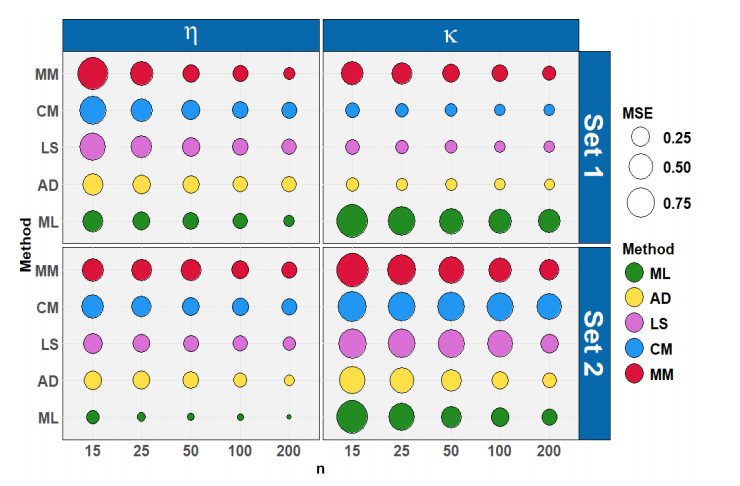
This paper proposes a flexible probability mass function for modeling count data, particularly over-dispersed and asymmetric observations. A novel two-parameter discrete distribution, the discrete power inverted Topp–Leone distribution, is presented using a survival discretization technique. The following statistical characteristics are examined: factorial moments, probability-generating function, quantiles, mean, variance, mean residual life, and entropy measures. The best estimators of the unknown parameters were obtained using various techniques, such as maximum likelihood, moments, least squares, Anderson–Darling, and Cramér-von Mises. A simulation study showed that the accuracy of the estimates improves with larger samples, although higher parameter values may affect precision. The findings indicate that the efficiency of these estimation methods varies under different conditions. Applications to liver lesions, chromatid aberrations, and criminal sociology datasets confirm the model's usefulness for discrete count data in fields such as social sciences, pharmacology, and environmental health. Finally, for modeling count data, the new probabilistic model can be employed as a competitive alternative to other existing distributions.
Citation: Amal S. Hassan, Eslam Abdelhakim Seyam, Asma Ahmad Alzahrani, Omar A. Saudi. An innovative discrete distribution for modeling genotoxicity data: Applications in pharmacology and environmental health[J]. AIMS Mathematics, 2026, 11(1): 1145-1174. doi: 10.3934/math.2026049
This paper proposes a flexible probability mass function for modeling count data, particularly over-dispersed and asymmetric observations. A novel two-parameter discrete distribution, the discrete power inverted Topp–Leone distribution, is presented using a survival discretization technique. The following statistical characteristics are examined: factorial moments, probability-generating function, quantiles, mean, variance, mean residual life, and entropy measures. The best estimators of the unknown parameters were obtained using various techniques, such as maximum likelihood, moments, least squares, Anderson–Darling, and Cramér-von Mises. A simulation study showed that the accuracy of the estimates improves with larger samples, although higher parameter values may affect precision. The findings indicate that the efficiency of these estimation methods varies under different conditions. Applications to liver lesions, chromatid aberrations, and criminal sociology datasets confirm the model's usefulness for discrete count data in fields such as social sciences, pharmacology, and environmental health. Finally, for modeling count data, the new probabilistic model can be employed as a competitive alternative to other existing distributions.

| [1] |
D. Roy, The discrete normal distribution, Commun. Stat. Theor. M., 32 (2003), 1871–1883. https://doi.org/10.1081/STA-120023256 doi: 10.1081/STA-120023256

|
| [2] |
T. Nakagawa, S. Osaki, The discrete Weibull distribution, IEEE T. Reliab., 24 (1975), 300–301. https://doi.org/10.1109/TR.1975.5214915 doi: 10.1109/TR.1975.5214915
|
| [3] |
H. Krishna, P. S. Pundir, Discrete Burr and discrete Pareto distributions, Stat. Methodol., 6 (2009), 177–188. https://doi.org/10.1016/j.stamet.2008.07.001 doi: 10.1016/j.stamet.2008.07.001
|
| [4] |
M. A. Jazi, C. Lai, M. H. Alamatsaz, A discrete inverse Weibull distribution and estimation of its parameters, Stat. Methodol., 7 (2010), 121–132. https://doi.org/10.1016/j.stamet.2009.11.001 doi: 10.1016/j.stamet.2009.11.001
|
| [5] |
B. A. Para, Discrete generalized Burr-Type XⅡ distribution, J. Mod. Appl. Stat. Meth., 13 (2014), 244–258. https://doi.org/10.22237/jmasm/1414815120 doi: 10.22237/jmasm/1414815120
|
| [6] | B. A. Para, T. R. Jan, Discrete version of log-logistic distribution and its application in genetics, Int. J. Mod. Math. Sci., 14 (2016), 407–422. |
| [7] |
J. M. Jia, Z. Z. Yan, X. Y. Peng, A new discrete extended Weibull distribution, IEEE Access, 7 (2019), 175474–175486. https://doi.org/10.1109/ACCESS.2019.2957788 doi: 10.1109/ACCESS.2019.2957788
|
| [8] |
M. El-Morshedy, M. S. Eliwa, E. Altun, Discrete Burr-Hatke distribution with properties, estimation methods and regression model, IEEE Access, 8 (2020), 74359–74370. https://doi.org/10.1109/ACCESS.2020.2988431 doi: 10.1109/ACCESS.2020.2988431
|
| [9] | S. S. Maiti, M. Dey, S. Sarkar, Discrete Xgamma distributions: properties, estimation and an application to the collective risk model, J. Reliab. Stat. Stud., 11 (2018), 117–132. |
| [10] | E. Altun, M. El-Morshedy, M. S. Eliwa, A Study on discrete Bilal distribution with properties and applications on integer-valued autoregressive process, Revstat-Stat. J., 20 (2022), 501–528. |
| [11] |
M. Irshad, P. Jodrá, A. Krishna, R. Maya, On the discrete analogue of the Teissier distribution and its associated INAR (1) process, Math. Comput. Simul., 214 (2023), 227–245. https://doi.org/10.1016/j.matcom.2023.07.007 doi: 10.1016/j.matcom.2023.07.007
|
| [12] |
A. S. Eldeeb, M. Ahsan-Ul-Haq, A. Babar, A discrete analog of inverted Topp-Leone distribution: properties, estimation and applications, Int. J. Anal. Appl., 19 (2021), 695–708. https://doi.org/10.28924/2291-8639-19-2021-695 doi: 10.28924/2291-8639-19-2021-695
|
| [13] |
M. Shafqat, S. Ali, I. Shah, S. Dey, Univariate discrete Nadarajah and Haghighi distribution: Properties and different methods of estimation, Statistica, 80 (2020), 301–330. https://doi.org/10.6092/issn.1973-2201/9532 doi: 10.6092/issn.1973-2201/9532
|
| [14] |
D. Das, M. Abouelenein, B. Das, P. Hazarika, M. El-Morshedy, N. Roushdy, et al., A discrete expansion of the Lindley distribution: Mathematical and statistical characterizations with estimation techniques, simulation, and goodness-of-fit analysis, Comput. J. Math. Stat. Sci., 2025. https://doi.org/10.21608/cjmss.2025.373562.1146 doi: 10.21608/cjmss.2025.373562.1146
|
| [15] |
F. C. Opone, E. A. Izekor, I. U. Akata, F. E. U. Osagiede, A discrete analogue of the continuous Marshall-Olkin Weibull distribution with application to count data, Earthline J. Math. Sci., 5 (2021), 415–428. https://doi.org/10.34198/ejms.5221.415428 doi: 10.34198/ejms.5221.415428
|
| [16] |
S. Chakraborty, D. Chakravarty, J. Mazucheli, W. Bertoli, A discrete analog of Gumbel distribution: Properties, parameter estimation and applications, J. Appl. Stat., 48 (2021), 712–737. https://doi.org/10.1080/02664763.2020.1744538 doi: 10.1080/02664763.2020.1744538
|
| [17] |
A. S. Eldeeb, M. Ahsan-Ul-Haq, M. S. Eliwa, A discrete Ramos-Louzada distribution for asymmetric and over-dispersed data with leptokurtic-shaped: Properties and various estimation techniques with inference, AIMS Math., 7 (2021), 1726–1741. https://doi.org/10.3934/math.2022099 doi: 10.3934/math.2022099
|
| [18] |
J. Mazucheli, W. Bertoli, R. P. Oliveira, A. F. B. Menezes, On the discrete quasi Xgamma distribution, Methodol. Comput. Appl. Probab., 22 (2020), 747–775. https://doi.org/10.1007/s11009-019-09731-7 doi: 10.1007/s11009-019-09731-7
|
| [19] |
R. Maya, P. Jodrá, S. Aswathy, M. R. Irshad, The discrete new XLindley distribution and the associated autoregressive process, Int. J. Data Sci. Anal., 20 (2025), 1767–1793. https://doi.org/10.1007/s41060-024-00563-4 doi: 10.1007/s41060-024-00563-4
|
| [20] |
A. A. EL-Helbawy, M. A. Hegazy, G. R. AL-Dayian, R. E. Abd EL-Kader, A discrete analog of the inverted Kumaraswamy distribution: Properties and estimation with application to COVID-19 Data, Pak. J. Stat. Oper. Res., 18 (2022), 297–328. https://doi.org/10.18187/pjsor.vl8il.3634 doi: 10.18187/pjsor.vl8il.3634
|
| [21] | H. Fawzy, Discrete Marshall-Olkin extended Burr Type XⅡ distribution: Properties and estimation, Egyptian Stat. J., 66 (2022), 17–41. |
| [22] |
H. Elsayed, M. Hussein, A new discrete analogue of the continuous Muth distribution for over-dispersed data: Properties, estimation techniques, and application, Entropy, 27 (2025), 409. https://doi.org/10.3390/e27040409 doi: 10.3390/e27040409
|
| [23] |
T. A. Abushal, A. S. Hassan, A. R. El-Saeed, S. G. Nassr, Power inverted Topp-Leone distribution in acceptance sampling plans, Comput. Mater. Con., 67 (2021), 991–1011. https://doi.org/10.32604/cmc.2021.014620 doi: 10.32604/cmc.2021.014620
|
| [24] |
A. S. Hassan, M. Elgarhy, R. Ragab, Statistical properties and estimation of inverted Topp-Leone distribution, J. Stat. Appl. Probab., 9 (2020), 319–331. https://doi.org/10.18576/jsap/090212 doi: 10.18576/jsap/090212
|
| [25] |
A. R. El-Saeed, A. S. Hassan, N. M. Elharoun, A. Al Mutairi, R. H. Khashab, S. G. Nassr, A class of power inverted Topp-Leone distribution: Properties, different estimation methods and applications, J. Radiat. Res. Appl. Sc., 16 (2023), 100643. https://doi.org/10.1016/j.jrras.2023.100643 doi: 10.1016/j.jrras.2023.100643
|
| [26] |
S. G. Nassr, A. S. Hassan, R. Alsultan, A. R. El-Saeed, Acceptance sampling plans for the three-parameter inverted Topp-Leone model, AIMS Math. Biosci. Eng., 19 (2022), 13628–13659. https://doi.org/10.3934/mbe.2022636 doi: 10.3934/mbe.2022636
|
| [27] |
G. M. Ibrahim, A. S. Hassan, E. M. Almetwally, H. M. Almongy, Parameter estimation of alpha power inverted Topp-Leone distribution with applications, Intell. Autom. Soft Co., 29 (2021), 353–371. https://doi.org/10.32604/iasc.2021.017586 doi: 10.32604/iasc.2021.017586
|
| [28] | A. S. Hassan, E. M. Almetwally, Applications to physical data using four-parameter inverted Topp-Leone model, Thail. Statist., 22 (2024), 430–457. |
| [29] | V. K. Rohatgi, A. K. M. E. Saleh, An introduction to probability and statistics, John Wiley and Sons, 2015. https://doi.org/10.1002/9781118799635 |
| [30] | A. Rényi, On measures of entropy and information, In: Proceedings of the 4th Berkeley symposium on mathematical statistics and probability, University of California Press, 1 (1961), 547–561. |
| [31] |
C. Tsallis, Possible generalization of Boltzmann-Gibbs statistics, J. Stat. Phys., 52 (1988), 479–487. https://doi.org/10.1007/BF01016429 doi: 10.1007/BF01016429
|
| [32] |
M. A. Khan, A. Khalique, A. M. Abouammoh, On estimating parameters in a discrete Weibull distribution, IEEE T. Reliab., 38 (1989), 348–350. https://doi.org/10.1109/24.44179 doi: 10.1109/24.44179
|
| [33] |
B. A. Para, T. R. Jan, On discrete three-parameter Burr type XⅡ and discrete Lomax distributions and their applications to model count data from medical science, Biom. Biostat. Int. J., 4 (2016), 70–82. https://doi.org/10.15406/bbij.2016.04.00092 doi: 10.15406/bbij.2016.04.00092
|
| [34] |
S. Chan, P. R. Riley, K. L. Price, F. McElduff, P. J. Winyard, Corticosteroid-induced kidney dysmorphogenesis is associated with deregulated expression of known cystogenic molecules, as well as Indian hedgehog, Am. J. Physiol. Renal, 298 (2010), 346–356. https://doi.org/10.1152/ajprenal.00350.2009 doi: 10.1152/ajprenal.00350.2009
|
| [35] | M. Borah, J. Hazarika, Discrete Shanker distribution and its derived distributions, Biom. Biostat. Int. J., 5 (2017), 146–153. |
| [36] |
M. Ahsan-ul-Haq, M. N. S. Hussain, J. Talib, S. Tariq, Zero-inflated Poisson XLindley distribution for medical science modeling, J. Stat., 29 (2025), 110–127. https://doi.org/10.58575/4cwngm09 doi: 10.58575/4cwngm09
|
| [37] |
H. M. Yousof, C. Chesneau, G. H. Hamedani, M. Ibrahim, A new discrete distribution: properties, characterizations, modeling real count data, Bayesian and non-Bayesian estimations, Statistica, 81 (2021), 135–162. https://doi.org/10.6092/issn.1973-2201/11635 doi: 10.6092/issn.1973-2201/11635
|
| [38] |
O. A. Alamri, Classical and Bayesian estimation of discrete Poisson Agu-Eghwerido distribution with applications, Alex. Eng. J., 109 (2024), 768–777. https://doi.org/10.1016/j.aej.2024.09.063 doi: 10.1016/j.aej.2024.09.063
|
| [39] |
I. Alkhairy, Classical and Bayesian inference for the discrete Poisson Ramos-Louzada distribution with application to COVID-19 data, Math. Biosci. Eng., 20 (2023), 14061–14080. https://doi.org/10.3934/mbe.2023628 doi: 10.3934/mbe.2023628
|
| [40] |
J. Debastiani Neto, R. P. Oliveira, F. A. Moala, J. A. Achcar, Introducing the discrete xLindley distribution: A one-parameter model for overdispersed data, Rev. Colomb. Estad., 48 (2025), 39–70. http://doi.org/10.15446/rce.v48n1.115319 doi: 10.15446/rce.v48n1.115319
|


Figures(17) / Tables(9)

Amal S. Hassan, Eslam Abdelhakim Seyam, Asma Ahmad Alzahrani, Omar A. Saudi. An innovative discrete distribution for modeling genotoxicity data: Applications in pharmacology and environmental health[J]. AIMS Mathematics, 2026, 11(1): 1145-1174. doi: 10.3934/math.2026049





 DownLoad: