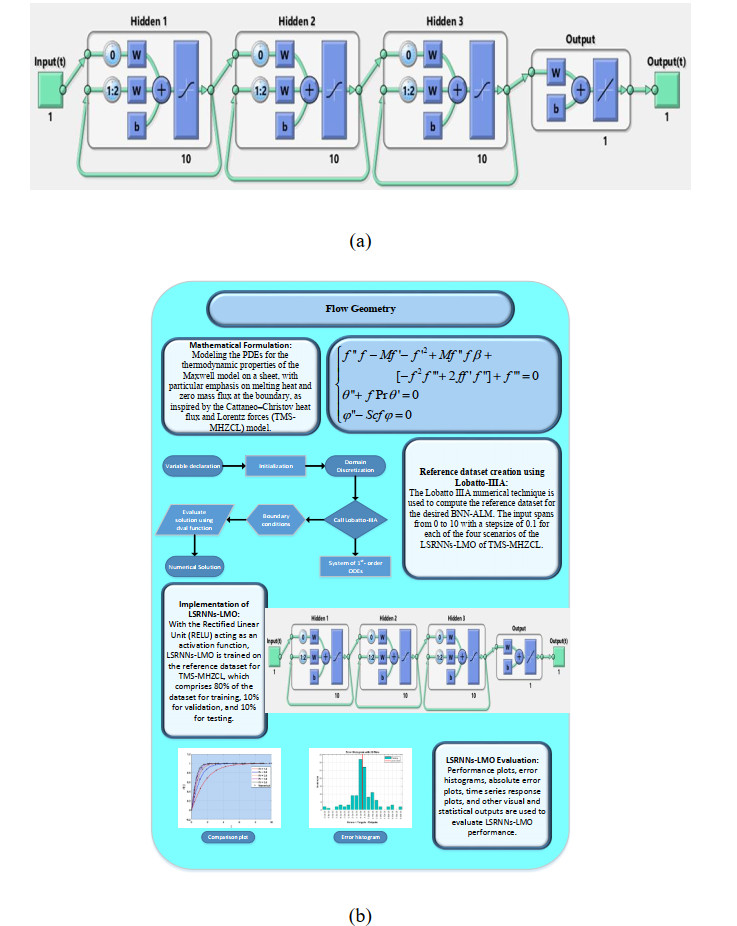
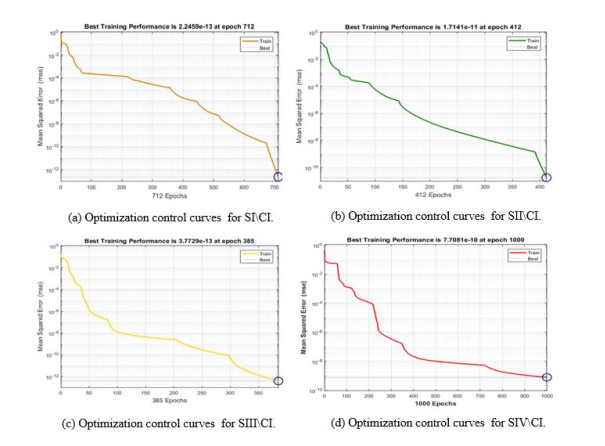
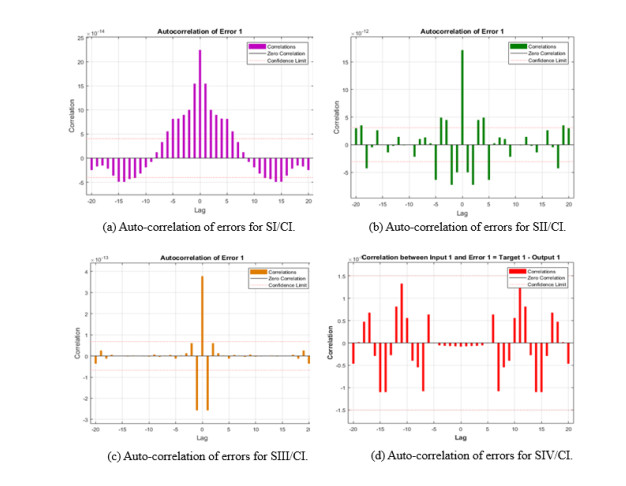
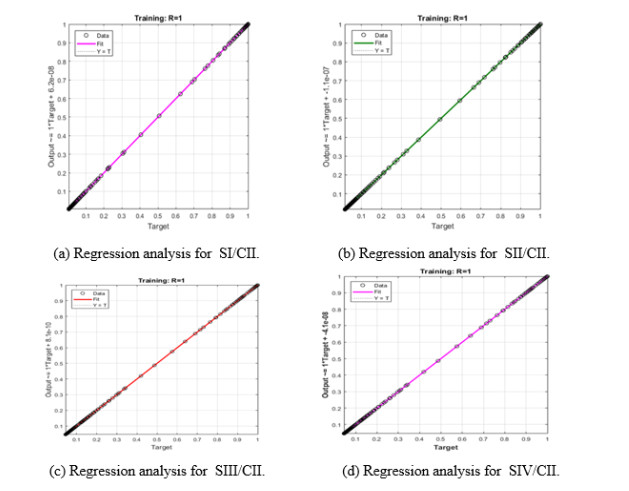
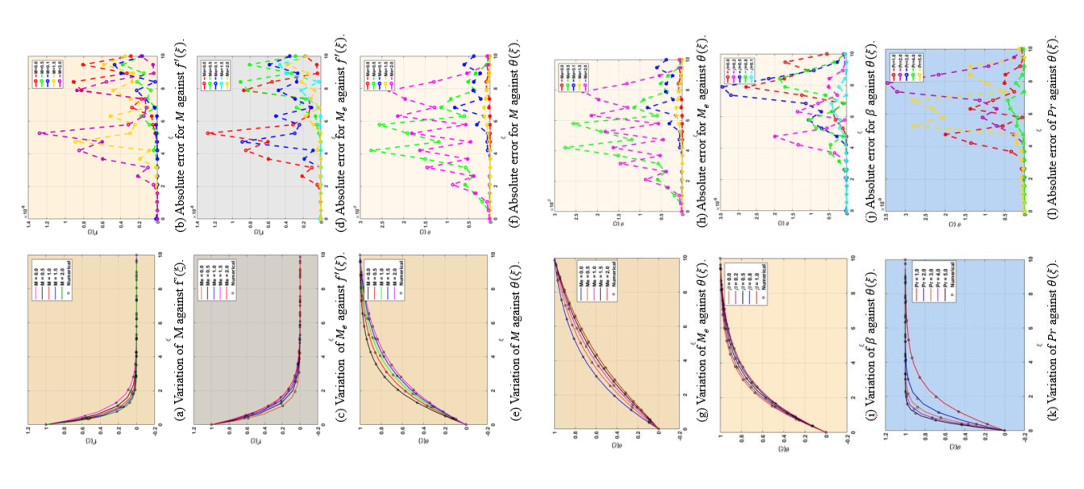
This study examines the characteristics of the Maxwell model under the influence of magnetohydrodynamics (MHD). Due to its inherent viscosity and elasticity, this model has significant applications in both industrial and biological contexts. The core innovation of this work lies in the development and application of a soft computational approach, specifically, the design and implementation of layered supervised recurrent neural networks optimized via the Levenberg-Marquardt (LSRNNs-LMO) technique, to predict the thermodynamic properties of the Maxwell model over a sheet, with particular focus on melting heat and zero mass flux boundary conditions, as inspired by the Cattaneo-Christov heat flux formulation and Lorentz force effects (TMS-MHZCL) model. The LSRNNs-LMO model is trained using data generated through a reliable numerical scheme. Simulation outcomes from the proposed LSRNNs-LMO method show excellent agreement with numerical results across multiple test cases, exhibiting minimal errors and high robustness. The accuracy of the proposed technique is thoroughly validated using error histograms, optimization control curves (mean squared error), root-mean-square error, autocorrelation analysis, regression evaluation, and the Nash-Sutcliffe efficiency (NSE) metric for the TMS-MHZCL model. These assessments provide strong evidence of the predictive validity and precision of the developed LSRNNs-LMO approach.
Citation: Sana Ullah Saqib, Yin-Tzer Shih, Muhammad Jahanzaib, Abdul Wahab, Adnan, Shih-Hau Fang. Application of Tri-layered RNN scheme for Maxwell model subject to MHD[J]. AIMS Mathematics, 2026, 11(1): 881-906. doi: 10.3934/math.2026038
This study examines the characteristics of the Maxwell model under the influence of magnetohydrodynamics (MHD). Due to its inherent viscosity and elasticity, this model has significant applications in both industrial and biological contexts. The core innovation of this work lies in the development and application of a soft computational approach, specifically, the design and implementation of layered supervised recurrent neural networks optimized via the Levenberg-Marquardt (LSRNNs-LMO) technique, to predict the thermodynamic properties of the Maxwell model over a sheet, with particular focus on melting heat and zero mass flux boundary conditions, as inspired by the Cattaneo-Christov heat flux formulation and Lorentz force effects (TMS-MHZCL) model. The LSRNNs-LMO model is trained using data generated through a reliable numerical scheme. Simulation outcomes from the proposed LSRNNs-LMO method show excellent agreement with numerical results across multiple test cases, exhibiting minimal errors and high robustness. The accuracy of the proposed technique is thoroughly validated using error histograms, optimization control curves (mean squared error), root-mean-square error, autocorrelation analysis, regression evaluation, and the Nash-Sutcliffe efficiency (NSE) metric for the TMS-MHZCL model. These assessments provide strong evidence of the predictive validity and precision of the developed LSRNNs-LMO approach.

| [1] |
D. H. Zhou, Z. Y. Song, Z. C. Chen, X. T. Huang, C. M. Ji, S. Kumari, et al., Advancing explainability of adversarial trained convolutional neural networks for robust engineering applications., Eng. Appl. Artif. Intel., 140 (2025), 109681. https://doi.org/10.1016/j.engappai.2024.109681 doi: 10.1016/j.engappai.2024.109681

|
| [2] |
U. Farooq, S. U. Saqib, S. A. Khan, H. H. Liu, N. Fatima, T. Muhammad, et al., Mathematical modeling of radiative nanofluid flow over nonlinear stretching sheet using artificial neural networks and Levenberg-Marquardt scheme: Applications in solar thermal energy, Sol. Energ. Mat. Sol. C., 281 (2025), 113265. https://doi.org/10.1016/j.solmat.2024.113265 doi: 10.1016/j.solmat.2024.113265
|
| [3] |
O. Orojo, J. Tepper, T. M. McGinnity, M. Mahmud, The multi-recurrent neural network for state-of-the-art time-series processing, Procedia Computer Science, 222 (2023), 488–498. https://doi.org/10.1016/j.procs.2023.08.187 doi: 10.1016/j.procs.2023.08.187
|
| [4] |
A. Nishihata, O. Tonomura, K. I. Sotowa, Accelerating unsteady fluid dynamic simulations for microdevices for Droplet generation using singular value decomposition and recurrent neural network, Chemical Engineering Transactions, 118 (2025), 439–444. https://doi.org/10.3303/CET25118074 doi: 10.3303/CET25118074
|
| [5] |
M. Khan, M. Imran, W. Khan, A neural network approach to modeling magnetohydrodynamic stagnation point Ree-Eyring flow over a convectively heated stretched surface, International Journal of Modelling and Simulation, 2024 (2024), 2338579. https://doi.org/10.1080/02286203.2024.2338579 doi: 10.1080/02286203.2024.2338579
|
| [6] |
S. U. Saqib, U. Farooq, N. Fatima, Y.-T. Shih, A. Mir, L. Kolsi, Novel Recurrent neural networks for efficient heat transfer analysis in radiative moving porous triangular fin with heat generation, Case Stud. Therm. Eng., 64 (2024), 105516. https://doi.org/10.1016/j.csite.2024.105516 doi: 10.1016/j.csite.2024.105516
|
| [7] |
M. B. Jeelani, A. Abbas, Thermal efficiency of spherical nanoparticles Al2O3-Cu dispersion in ethylene glycol via the MHD non-Newtonian Maxwell fluid model past the stretching inclined sheet with suction effects in a porous space, Processes, 11 (2023), 2842. https://doi.org/10.3390/pr11102842 doi: 10.3390/pr11102842
|
| [8] |
N. Venkatesh, R. S. Raju, M. A. Kumar, C. Vijayabhaskar, Heat and mass transfer in Maxwell fluid with nanoparticles past a stretching sheet in the existence of thermal radiation and chemical reaction, International Journal of Modelling and Simulation, 45 (2025), 1200–1213. https://doi.org/10.1080/02286203.2023.2266798 doi: 10.1080/02286203.2023.2266798
|
| [9] |
J. F. Cui, F. Azam, U. Farooq, M. Hussain, Non-similar thermal transport analysis in entropy optimized magnetic nanofluids flow by considering effective Prandtl number model with melting heat transfer and Joule heating, J. Magn. Magn. Mater., 567 (2023), 170331. https://doi.org/10.1016/j.jmmm.2022.170331 doi: 10.1016/j.jmmm.2022.170331
|
| [10] |
M. Khan, Z. D. Zhang, D. C. Lu, Numerical simulations and modeling of MHD boundary layer flow and heat transfer dynamics in Darcy-forchheimer media with distributed fractional-order derivatives, Case Stud. Therm. Eng., 49 (2023), 103234. https://doi.org/10.1016/j.csite.2023.103234 doi: 10.1016/j.csite.2023.103234
|
| [11] |
M. Khan, A. Alhowaity, M. Imran, M. Hussien, R. Alroobaea, M. S. Anwar, Advanced numerical simulation techniques in MHD fluid flow analysis using distributed fractional order derivatives and Cattaneo heat flux model, ZAMM‐Z. Angew. Math. Me., 104 (2024), e202300622. https://doi.org/10.1002/zamm.202300622 doi: 10.1002/zamm.202300622
|
| [12] |
M. S. Anwar, T. Muhammad, M. Khan, V. Puneeth, MHD nanofluid flow through Darcy medium with thermal radiation and heat source, Int. J. Mod. Phy. B, 38 (2024), 2450386. https://doi.org/10.1142/S0217979224503867 doi: 10.1142/S0217979224503867
|
| [13] |
M. S. Anwar, M. Khan, Z. Hussain, T. Muhammad, V. Puneeth, Investigation of heat transfer characteristics in MHD hybrid nanofluids with variable viscosity and thermal radiations, J. Radiat. Res. Appl. Sc., 18 (2025), 101240. https://doi.org/10.1016/j.jrras.2024.101240 doi: 10.1016/j.jrras.2024.101240
|
| [14] |
B. Jalili, A. Rezaeian, P. Jalili, F. Ommi, D. D. Ganji, Numerical modeling of magnetic field impact on the thermal behavior of a microchannel heat sink, Case Stud. Therm. Eng., 45 (2023), 102944. https://doi.org/10.1016/j.csite.2023.102944 doi: 10.1016/j.csite.2023.102944
|
| [15] |
N. A. Yacob, A. Ishak, I. Pop, Melting heat transfer in boundary layer stagnation-point flow towards a stretching/shrinking sheet in a micropolar fluid, Comput. Fluids, 47 (2011), 16–21. https://doi.org/10.1016/j.compfluid.2011.01.040 doi: 10.1016/j.compfluid.2011.01.040
|
| [16] |
A. Ramar, A. Arulmozhi, S. Balamuralitharan, I. Khan, F. Hajjej, M. A. Khuthaylah, et al., Melting heat effect in MHD flow of maxwell fluid with zero mass flux, Case Stud. Therm. Eng., 53 (2024), 103910. https://doi.org/10.1016/j.csite.2023.103910 doi: 10.1016/j.csite.2023.103910
|
| [17] |
R. G. Abdel-Rahman, M. M. Khader, A. M. Megahed, Melting phenomenon in magneto hydro-dynamics steady flow and heat transfer over a moving surface in the presence of thermal radiation, Chinese Phys. B, 22 (2013), 030202. https://doi.org/10.1088/1674-1056/22/3/030202 doi: 10.1088/1674-1056/22/3/030202
|
| [18] |
U. Farooq, S. A. Khan, H. H. Liu, M. Imran, L. B. Said, A. Ramzan, et al., Application of artificial intelligence brain structure-based paradigm to predict the slip condition impact on magnetized thermal Casson viscoplastic fluid model under combined temperature dependent viscosity and thermal conductivity, Case Stud. Therm. Eng., 66 (2025), 105702. https://doi.org/10.1016/j.csite.2024.105702 doi: 10.1016/j.csite.2024.105702
|
| [19] |
S. A. Khan, U. Farooq, M. Imran, H. H. Liu, T. Muhammad, M. Alghamdi, Mathematical and artificial neural network modeling to predict the heat transfer of mixed convective electroosmotic nanofluid flow with Helmholtz-Smoluchowski velocity and multiple slip effects: an application of soft computing, Case Stud. Therm. Eng., 61 (2024), 104950. https://doi.org/10.1016/j.csite.2024.104950 doi: 10.1016/j.csite.2024.104950
|
| [20] |
M. Hussain, D. Lin, H. Waqas, F. Jiang, T. Muhammad, Advanced thermal performance of blood-integrated tri-hybrid nanofluid: an artificial neural network-based modeling and simulation, Mech. Time-Depend. Mater., 29 (2025), 16. https://doi.org/10.1007/s11043-024-09748-7 doi: 10.1007/s11043-024-09748-7
|
| [21] |
A. S. Alnahdi, T. Gul, Neural network analysis for prediction of heat transfer of aqueous hybrid nanofluid flow in a variable porous space with varying film thickness over a stretched surface, Chinese Phys. B, 34 (2025), 024701. https://doi.org/10.1088/1674-1056/ad989c doi: 10.1088/1674-1056/ad989c
|


Figures(9) / Tables(3)

Sana Ullah Saqib, Yin-Tzer Shih, Muhammad Jahanzaib, Abdul Wahab, Adnan, Shih-Hau Fang. Application of Tri-layered RNN scheme for Maxwell model subject to MHD[J]. AIMS Mathematics, 2026, 11(1): 881-906. doi: 10.3934/math.2026038





 DownLoad: