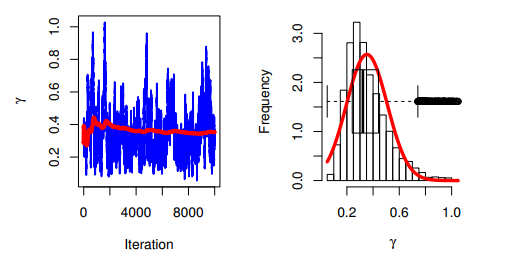
A unified progressive hybrid censoring scheme is introduced by combining progressive and hybrid plans, allowing tests to be terminated either after a predetermined number of failures or at a fixed time. Both likelihood and Bayesian procedures are developed for estimating the parameter, reliability, and hazard rate of a one-parameter lifetime model when data are generated under this scheme. Maximum likelihood estimates are obtained via the Newton-Raphson algorithm, and asymptotic confidence intervals are constructed using the delta method with the Fisher information matrix. In addition, parametric bootstrap methods are employed for constructing confidence intervals. Within the Bayesian framework, Markov chain Monte Carlo techniques are employed under non-informative and informative independent gamma priors, with computational intractability addressed through the Metropolis-Hastings algorithm. Progressive censoring with binomial random removals has also been considered within this framework to enhance flexibility in test termination and data collection. Extensive Monte Carlo simulations are conducted to compare the efficiency of the likelihood and Bayesian estimators across multiple censoring designs, and the superiority of Bayesian inference with informative priors is demonstrated. The applicability of the proposed estimators is illustrated using three real datasets: tensile strength of polyester fibers, aircraft air-conditioning failures, and ordered failure times. The one-parameter model is further compared with ten standard unit distributions. The censoring framework is successfully applied to these datasets, confirming its practical value in modeling reliability and failure behavior.
Citation: Ehab M. Almetwally. Statistical inference for a one-parameter lifetime model under unified progressive hybrid censoring with binomial random removals[J]. AIMS Mathematics, 2026, 11(1): 211-242. doi: 10.3934/math.2026009
A unified progressive hybrid censoring scheme is introduced by combining progressive and hybrid plans, allowing tests to be terminated either after a predetermined number of failures or at a fixed time. Both likelihood and Bayesian procedures are developed for estimating the parameter, reliability, and hazard rate of a one-parameter lifetime model when data are generated under this scheme. Maximum likelihood estimates are obtained via the Newton-Raphson algorithm, and asymptotic confidence intervals are constructed using the delta method with the Fisher information matrix. In addition, parametric bootstrap methods are employed for constructing confidence intervals. Within the Bayesian framework, Markov chain Monte Carlo techniques are employed under non-informative and informative independent gamma priors, with computational intractability addressed through the Metropolis-Hastings algorithm. Progressive censoring with binomial random removals has also been considered within this framework to enhance flexibility in test termination and data collection. Extensive Monte Carlo simulations are conducted to compare the efficiency of the likelihood and Bayesian estimators across multiple censoring designs, and the superiority of Bayesian inference with informative priors is demonstrated. The applicability of the proposed estimators is illustrated using three real datasets: tensile strength of polyester fibers, aircraft air-conditioning failures, and ordered failure times. The one-parameter model is further compared with ten standard unit distributions. The censoring framework is successfully applied to these datasets, confirming its practical value in modeling reliability and failure behavior.

| [1] |
E. M. Almetwally, M. A. H. Sabry, R. Alharbi, D. Alnagar, S. A. M. Mubarak, E. H. Hafez, Marshall–Olkin alpha power extended Weibull distribution: different methods of estimation based on Type-Ⅰ and Type Ⅱ censoring, Gazi Univ. J. Sci., 35 (2022), 293–312. https://doi.org/10.1155/2021/5533799 doi: 10.1155/2021/5533799

|
| [2] |
A. Childs, B. Chandrasekar, N. Balakrishnan, D. Kundu, Exact likelihood inference based on Type-Ⅰ and Type-Ⅱ hybrid censored samples from the exponential distribution, Ann. Inst. Stat. Math., 55 (2003), 319–330. https://doi.org/10.1007/BF02530502 doi: 10.1007/BF02530502
|
| [3] |
B. Chandrasekar, A. Childs, N. Balakrishnan, Exact likelihood inference for the exponential distribution under generalized Type-Ⅰ and Type-Ⅱ hybrid censoring, Naval Research Logistics, 51 (2004), 994–1004. https://doi.org/10.1002/nav.20038 doi: 10.1002/nav.20038
|
| [4] |
N. Balakrishnan, A. Rasouli, N. S. Farsipour, Exact likelihood inference based on an unified hybrid censored sample from the exponential distribution, J. Stat. Comput. Simul., 78 (2008), 475–488. https://doi.org/10.1080/00949650601158336 doi: 10.1080/00949650601158336
|
| [5] | N. Balakrishnan, E. Cramer, The art of progressive censoring, Statistics for Industry and Technology, Birkhäuser New York, 2014. https://doi.org/10.1007/978-0-8176-4807-7 |
| [6] |
J. Górny, E. Cramer, Modularization of hybrid censoring schemes and its application to unified progressive hybrid censoring, Metrika, 81 (2018), 173–210. https://doi.org/10.1007/s00184-017-0639-7 doi: 10.1007/s00184-017-0639-7
|
| [7] |
S. Dutta, S. Kayal, Estimation and prediction for Burr Type Ⅲ distribution based on unified progressive hybrid censoring scheme, J. Appl. Stat., 51 (2024), 1–33. https://doi.org/10.1080/02664763.2022.2113865 doi: 10.1080/02664763.2022.2113865
|
| [8] |
M. M. Yousef, A. S. Hassan, E. M. Almetwally, M. Nagy, A. H. Mansi, Utilizing unified progressive hybrid censored data in parametric inference under accelerated life tests, Sci. Rep., 15 (2025), 32567. https://doi.org/10.1038/s41598-025-06927-5 doi: 10.1038/s41598-025-06927-5
|
| [9] |
S. Dutta, H. K. T. Ng, S. Kayal, Inference for Kumaraswamy‐G family of distributions under unified progressive hybrid censoring with partially observed competing risks data, Stat. Neerl., 78 (2024), 719–742. https://doi.org/10.1111/stan.12357 doi: 10.1111/stan.12357
|
| [10] |
S. Anwar, S. A. Lone, A. Khan, S. Almutlak, Stress-strength reliability estimation for the inverted exponentiated Rayleigh distribution under unified progressive hybrid censoring with application, Electron. Res. Arch., 31 (2023), 4011–4033. https://doi.org/10.3934/era.2023204 doi: 10.3934/era.2023204
|
| [11] |
H. S. Mohammed, O. E. Abo-Kasem, A. Elshahhat, Optimum progressive data analysis and Bayesian inference for unified progressive hybrid INH censoring with applications to diamonds and gold, Axioms, 14 (2025), 559. https://doi.org/10.3390/axioms14080559 doi: 10.3390/axioms14080559
|
| [12] |
A. Prakash, A. Maurya, R. K. Maurya, Statistical and machine learning approach for progressive stress accelerated life testing under unified progressive hybrid censoring, Qual. Reliab. Eng. Int., 41 (2025), 2463–2480. https://doi.org/10.1002/qre.3782 doi: 10.1002/qre.3782
|
| [13] |
E. A. Elsherpieny, A. Abdel-Hakim, Statistical analysis of Alpha-Power exponential distribution using unified Hybrid censored data and its applications, Comput. J. Math. Stat. Sci., 4 (2025), 283–315. https://doi.org/10.21608/cjmss.2025.346134.1094 doi: 10.21608/cjmss.2025.346134.1094
|
| [14] |
R. Alotaibi, M. Nassar, A. Elshahhat, Analysis of unified hybrid Hjorth competing risk data and its application to multiple myeloma and electrical appliances, J. Math., 2025 (2025), 5089157. https://doi.org/10.1155/jom/5089157 doi: 10.1155/jom/5089157
|
| [15] | M. Muhammad, A new two parameter distribution with a finite support, Appl. Math. Sci., 10 (2016), 1–12. |
| [16] | A. Henningsen, O. Toomet, maxLik: A package for maximum likelihood estimation in R, Comput. Stat., 26 (2011), 443–458. |
| [17] |
K. Krishnamoorthy, Y. Lin, Y. Xia, Confidence limits and prediction limits for a Weibull distribution based on the generalized variable approach, J. Stat. Plan. Infer., 139 (2009), 2675–2684. https://doi.org/10.1016/j.jspi.2008.12.010 doi: 10.1016/j.jspi.2008.12.010
|
| [18] |
S. Dey, T. Dey, On progressively censored generalized inverted exponential distribution, J. Appl. Stat., 41 (2014), 2557–2576. https://doi.org/10.1080/02664763.2014.922165 doi: 10.1080/02664763.2014.922165
|
| [19] | C. M. Carlo, Markov chain Monte Carlo and Gibbs sampling, Lecture notes for EEB, 2004, 1–24. |
| [20] |
N. Metropolis, A. W. Rosenbluth, M. N. Rosenbluth, A. H. Teller, E. Teller, Equation of state calculations by fast computing machines, J. Chem. Phys., 21 (1953), 1087–1092. https://doi.org/10.1063/1.1699114 doi: 10.1063/1.1699114
|
| [21] |
M. H. Chen, Q. M. Shao, Monte Carlo estimation of Bayesian credible and HPD intervals, J. Comput. Graph. Stat., 8 (1999), 69–92. https://doi.org/10.2307/1390921 doi: 10.2307/1390921
|
| [22] | B. Efron, Bootstrap methods: another look at the jackknife, In: Breakthroughs in statistics, New York: Springer, 1992,569–593. https://doi.org/10.1007/978-1-4612-4380-9_41 |
| [23] | M. Plummer, N. Best, K. Cowles, K. Vines, CODA: Convergence diagnosis and output analysis for MCMC, 6 (2006), 7–11. |
| [24] | J. Mazucheli, S. R. Bapat, A. F. B. Menezes, A new one-parameter unit-Lindley distribution, Chil. J. Stat., 11 (2020), 53–67. |
| [25] |
A. A. Al-Babtain, I. Elbatal, C. Chesneau, M. Elgarhy, Sine Topp-Leone-G family of distributions: theory and applications, Open Phys., 18 (2020), 574–593. https://doi.org/10.1515/phys-2020-0180 doi: 10.1515/phys-2020-0180
|
| [26] | A. K. Gupta, S. Nadarajah, Handbook of Beta distribution and its applications, CRC Press, 2004. https://doi.org/10.1201/9781482276596 |
| [27] | J. Mazucheli, A. F. B. Menezes, M. E. Ghitany, The unit-Weibull distribution and associated inference, J. Appl. Probab. Stat., 13 (2018), 1–22. |
| [28] |
A. M. Gemeay, M. I. A. Araibi, E. M. Almetwally, I. Elbatal, C. Tanış, L. P. Sapkota, et al., Modeling with the inverse unit new XLindley distribution: properties and real‐world applications, Eng. Rep., 7 (2025), e70354. https://doi.org/10.1002/eng2.70354 doi: 10.1002/eng2.70354
|
| [29] |
J. Mazucheli, A. F. Menezes, S. Dey, Unit-Gompertz distribution with applications, Statistica, 79 (2019), 25–43. https://doi.org/10.6092/issn.1973-2201/8497 doi: 10.6092/issn.1973-2201/8497
|
| [30] |
J. Mazucheli, A. F. B. Menezes, S. Chakraborty, On the one parameter unit-Lindley distribution and its associated regression model for proportion data, J. Appl. Stat., 46 (2019), 700–714. https://doi.org/10.1080/02664763.2018.1511774 doi: 10.1080/02664763.2018.1511774
|
| [31] |
L. Benkhelifa, Alpha power Topp-Leone Weibull distribution: properties, characterizations, regression modeling and applications, J. Stat. Manage. Syst., 25 (2022), 1945–1970. https://doi.org/10.1080/09720510.2021.1995217 doi: 10.1080/09720510.2021.1995217
|
| [32] |
M. Ç. Korkmaz, Z. S. Korkmaz, The unit log–log distribution: a new unit distribution with alternative quantile regression modeling and educational measurements applications, J. Appl. Stat., 50 (2023), 889–908. https://doi.org/10.1080/02664763.2021.2001442 doi: 10.1080/02664763.2021.2001442
|
| [33] |
M. Ç. Korkmaz, C. Chesneau, On the unit Burr-XII distribution with the quantile regression modeling and applications, Comput. Appl. Math., 40 (2021), 29. https://doi.org/10.1007/s40314-021-01418-5 doi: 10.1007/s40314-021-01418-5
|
| [34] | P. Lahiri, Model selection, IMS, 2001. |
| [35] |
M. Elgarhy, A. Al Mutairi, A. S. Hassan, C. Chesneau, A. H. Abdel-Hamid, Bayesian and non-Bayesian estimations of truncated inverse power Lindley distribution under progressively type-Ⅱ censored data with applications, AIP Adv., 13 (2023), 095130. https://doi.org/10.1063/5.0172632 doi: 10.1063/5.0172632
|
| [36] |
A. M. Nigm, E. K. Al-Hussaini, Z. F. Jaheen, Bayesian one-sample prediction of future observations under Pareto distribution, Statistics, 37 (2003), 527–536. https://doi.org/10.1080/02331880310001598837 doi: 10.1080/02331880310001598837
|
Figures(13) / Tables(9)

Ehab M. Almetwally. Statistical inference for a one-parameter lifetime model under unified progressive hybrid censoring with binomial random removals[J]. AIMS Mathematics, 2026, 11(1): 211-242. doi: 10.3934/math.2026009





 DownLoad: