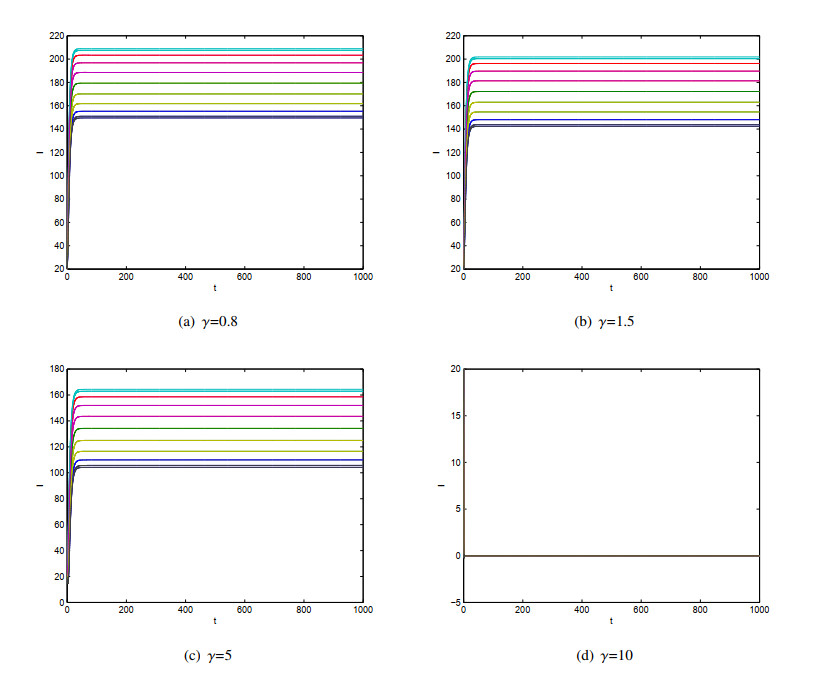
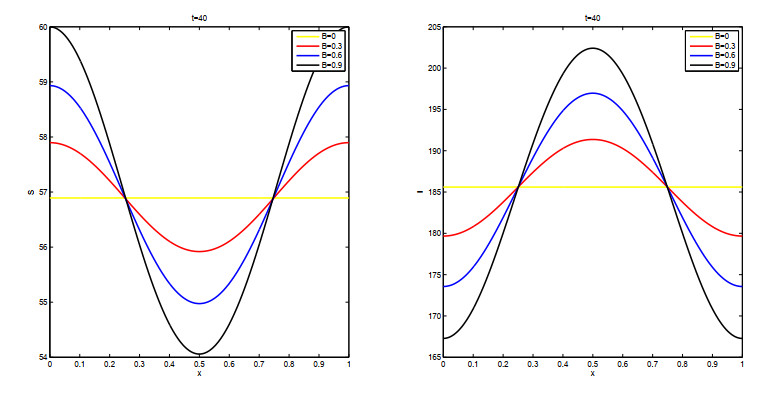
The spread of infectious diseases is profoundly influenced by spatial heterogeneity and the availability of medical resources. While reaction-diffusion epidemic models have been extensively studied, there has been little research on SIR models that incorporate a spatially heterogeneous standard incidence rate and a saturated treatment function, which is crucial for modeling the limited capacity of health care systems. To address this, we proposed a novel diffusive SIR epidemic model in a heterogeneous environment. Methodologically, we defined the basic reproduction number $ R_0 $ and employed Lyapunov functions, the theory of monotone dynamical systems, and asymptotic analysis to investigate the dynamics. Our key results showed that if $ R_0 < 1 $, the disease-free equilibrium is globally asymptotically stable, implying epidemic extinction. If $ R_0 > 1 $, the disease becomes uniformly persistent, and an endemic equilibrium exists. Furthermore, we derived the asymptotic profiles of the endemic equilibrium as the diffusion rates of susceptible or infected populations approached zero. Numerical simulations not only validated our theoretical findings but also demonstrated that increasing medical resources or reducing spatial heterogeneity can effectively lower the infection peak and help control the disease. These results provide theoretical guidance for designing effective public health policies.
Citation: Zhengran Zhan, Chunxiao Zhang. Analysis of a diffusion epidemic SIR model with saturated treatment in a heterogeneous environment[J]. Electronic Research Archive, 2025, 33(10): 6267-6297. doi: 10.3934/era.2025277
The spread of infectious diseases is profoundly influenced by spatial heterogeneity and the availability of medical resources. While reaction-diffusion epidemic models have been extensively studied, there has been little research on SIR models that incorporate a spatially heterogeneous standard incidence rate and a saturated treatment function, which is crucial for modeling the limited capacity of health care systems. To address this, we proposed a novel diffusive SIR epidemic model in a heterogeneous environment. Methodologically, we defined the basic reproduction number $ R_0 $ and employed Lyapunov functions, the theory of monotone dynamical systems, and asymptotic analysis to investigate the dynamics. Our key results showed that if $ R_0 < 1 $, the disease-free equilibrium is globally asymptotically stable, implying epidemic extinction. If $ R_0 > 1 $, the disease becomes uniformly persistent, and an endemic equilibrium exists. Furthermore, we derived the asymptotic profiles of the endemic equilibrium as the diffusion rates of susceptible or infected populations approached zero. Numerical simulations not only validated our theoretical findings but also demonstrated that increasing medical resources or reducing spatial heterogeneity can effectively lower the infection peak and help control the disease. These results provide theoretical guidance for designing effective public health policies.

| [1] |
W. O. Kermack, A. G. Mckendrick, A contribution to the mathematical theory of epidemics, Proc. R. Soc. Lond., 115 (1927), 700–721. https://doi.org/10.1007/BF02464423 doi: 10.1007/BF02464423

|
| [2] | M. De Jong, O. Diekmann, H. Heesterbeek, How Does Transmission of Infection Depend on Population Size, Cambridge University Press, 1995. |
| [3] | O. Diekmann, J. A. P. Heesterbeek, Mathematical Epidemiology of Infectious Diseases: Model Building, Analysis and Interpretation, John Wiley and Sons, 2000. |
| [4] | R. S. Cantrell, C. Cosner, Spatial Ecology via Reaction-Diffusion Equations, Wiley Series in Mathematical and Computational Biology, Chichester, 2003. |
| [5] |
H. Li, R. Peng, F. B. Wang, Varying total population enhances disease persistence: Qualitative analysis on a diffusive SIS epidemic model, J. Differ. Equ., 262 (2017), 885–913. https://doi.org/10.1016/j.jde.2016.09.044 doi: 10.1016/j.jde.2016.09.044
|
| [6] |
L. Pu, Z. Lin, A diffusive SIS epidemic model in a heterogeneous and periodically evolving environment, Math. Biosci. Eng., 16 (2019), 3094–3110. https://doi.org/10.3934/mbe.2019153 doi: 10.3934/mbe.2019153
|
| [7] |
Y. Cai, Y. Kang, M. Banerjee, W. Wang, Complex dynamics of a host-parasite model with both horizontal and vertical transmissions in a spatial heterogeneous environment, Nonlinear Anal. Real World Appl., 40 (2018), 444–465. https://doi.org/10.1016/j.nonrwa.2017.10.001 doi: 10.1016/j.nonrwa.2017.10.001
|
| [8] |
S. Han, C. Lei, X. Zhang, Qualitative analysis on a diffusive SIRS epidemic model with standard incidence infection mechanism, Z. Angew. Math. Phys., 71 (2020), 190. https://doi.org/10.1007/s00033-020-01418-1 doi: 10.1007/s00033-020-01418-1
|
| [9] |
R. Peng, S. Liu, Global stability of the steady states of an SIS epidemic reaction-diffusion model, Nonlinear Anal., 71 (2009), 239–247. https://doi.org/10.1016/j.na.2008.10.043 doi: 10.1016/j.na.2008.10.043
|
| [10] |
C. Lei, F. Li, J. Liu, Theoretical analysis on a diffusive SIR epidemic model with nonlinear incidence in a heterogeneous environment, Discrete Contin. Dyn. Syst. - Ser. B, 23 (2018), 4499–4517. https://doi.org/10.3934/dcdsb.2018173 doi: 10.3934/dcdsb.2018173
|
| [11] |
T. Zhou, W. Zhang, Q. Lu, Bifurcation analysis of an SIS epidemic model with saturated incidence rate and saturated treatment function, Appl. Math. Comput., 226 (2014), 288–305. https://doi.org/10.1016/j.amc.2013.10.020 doi: 10.1016/j.amc.2013.10.020
|
| [12] |
W. Wang, Backward bifurcation of an epidemic model with treatment, Math. Biosci., 201 (2006), 58–71. https://doi.org/10.1016/j.mbs.2005.12.022 doi: 10.1016/j.mbs.2005.12.022
|
| [13] |
X. Zhang, X. Liu, Backward bifurcation of an epidemic model with saturated treatment function, J. Math. Anal. Appl., 348 (2008), 433–443. https://doi.org/10.1016/j.jmaa.2008.07.042 doi: 10.1016/j.jmaa.2008.07.042
|
| [14] |
G. She, F. Yi, Stability and bifurcation analysis of a reaction-diffusion SIRS epidemic model with the general saturated incidence rate, J. Nonlinear Sci., 34 (2024), 101. https://doi.org/10.1007/s00332-024-10081-z doi: 10.1007/s00332-024-10081-z
|
| [15] |
M. Feng, X. Li, Y. Li, Q. Li, The impact of nodes of information dissemination on epidemic spreading in dynamic multiplex networks, Chaos, 33 (2023), 1–12. https://doi.org/10.1063/5.0142386 doi: 10.1063/5.0142386
|
| [16] |
X. Yuan, Y. Yao, H. Wu, M. Feng, Impacts of physical-layer information on epidemic spreading in cyber-physical networked systems, IEEE Trans. Circuits Syst. Ⅰ: Regul. Pap., 72 (2025), 1–13. https://doi.org/10.1109/TCSI.2025.3550386 doi: 10.1109/TCSI.2025.3550386
|
| [17] |
J. Tang, Y. Yao, M. Xie, M. Feng, SIS epidemic modelling on homogeneous networked system: General recovering process and mean-field perspective, Appl. Math. Model., 146 (2025), 116188. https://doi.org/10.1016/j.apm.2025.116188 doi: 10.1016/j.apm.2025.116188
|
| [18] |
Q. Li, H. Chen, Y. Li, M. Feng, J. Kurths, Network spreading among areas: A dynamical complex network modeling approach, Chaos, 32 (2022), 103102. https://doi.org/10.1063/5.0102390 doi: 10.1063/5.0102390
|
| [19] |
P. Wu, H. Zhao, Dynamical analysis of a nonlocal delayed and diffusive hiv latent infection model with spatial heterogeneity, J. Franklin Inst., 358 (2021), 5552–5587. https://doi.org/10.1016/j.jfranklin.2021.05.014 doi: 10.1016/j.jfranklin.2021.05.014
|
| [20] |
Y. Cai, X. Lian, Z. Peng, W. Wang, Spatiotemporal transmission dynamics for influenza disease in a heterogenous environment, Nonlinear Anal. Real World Appl., 46 (2019), 178–194. https://doi.org/10.1016/j.nonrwa.2018.09.006 doi: 10.1016/j.nonrwa.2018.09.006
|
| [21] |
J. Wang, Z. Teng, B. Dai, Qualitative analysis of a reaction-diffusion sirs epidemic model with nonlinear incidence rate and partial immunity, Infect. Dis. Model., 8 (2023), 881–911. https://doi.org/10.1016/j.idm.2023.07.006 doi: 10.1016/j.idm.2023.07.006
|
| [22] |
H. Wu, B. Song, L. Zhang, H. Li, Z. Teng, Turing-hopf bifurcation and inhomogeneous pattern for a reaction-diffusion SIR epidemic model with chemotaxis and delay, Math. Comput. Simul., 240 (2026), 1000–1022. https://doi.org/10.1016/j.matcom.2025.08.010 doi: 10.1016/j.matcom.2025.08.010
|
| [23] | R. M. Anderson, R. M. May, Population Biology of Infectious Diseases: Part I, Nature, London, 1979. |
| [24] | H. W. Hethcote, The Mathematics of Infectious Diseases, SIAM Review, London, 2000. |
| [25] |
E. Avila-Vales, G. García-Almeida, A. Pérez, Qualitative analysis of a diffusive SIR epidemic model with saturated incidence rate in a heterogeneous environment, J. Math. Anal. Appl., 503 (2021), 125295. https://doi.org/10.1016/j.jmaa.2021.125295 doi: 10.1016/j.jmaa.2021.125295
|
| [26] | D. Henry, Geometric Theory of Semilinear Parabolic Equations, Springer-Verlag, New York, 2006. |
| [27] |
Z. Du, R. Peng, A priori $l^\infty $ estimates for solutions of a class of reaction-diffusion systems, J. Math. Biol., 72 (2016), 1429–1439. https://doi.org/10.1007/s00285-015-0914-z doi: 10.1007/s00285-015-0914-z
|
| [28] |
H. Li, R. Peng, Z. Wang, On a diffusive susceptible-infected-susceptible epidemic model with mass action mechanism and birth-death effect: Analysis, simulations, and comparison with other mechanisms, SIAM J. Appl. Math., 78 (2018), 2129–2153. https://doi.org/10.1137/18M1167863 doi: 10.1137/18M1167863
|
| [29] | X. Q. Zhao, Dynamical Systems In Population Biology, Springer-Verlag, New York, 2003. |
| [30] |
H. Smith, X. Q. Zhao, Robust persistence for semidynamical systems, Nonlinear Anal., 47 (2001), 6169–6179. https://doi.org/10.1016/S0362-546X(01)00678-2 doi: 10.1016/S0362-546X(01)00678-2
|
| [31] |
P. Magal, X. Q. Zhao, Global attractors and steady states for uniformly persistent dynamical systems, SIAM J. Math. Anal., 37 (2005), 251–275. https://doi.org/10.1137/S0036141003439173 doi: 10.1137/S0036141003439173
|
| [32] |
R. Peng, J. Shi, M. Wang, On stationary patterns of a reaction-diffusion model with autocatalysis and saturation law, Nonlinearity, 21 (2008), 1471–1488. https://doi.org/10.1088/0951-7715/21/7/006 doi: 10.1088/0951-7715/21/7/006
|
| [33] | D. Gilbarg, N. S. Trudinger, D. Gilbarg, N. S. Trudinger, Elliptic Partial Differential Equations of Second Order, Springer-Verlag, New York, 1997. |
| [34] |
Y. Du, R. Peng, M. Wang, Effect of a protection zone in the diffusive leslie predator-prey model, J. Differ. Equ., 246 (2009), 3932–3956. https://doi.org/10.1016/j.jde.2008.11.007 doi: 10.1016/j.jde.2008.11.007
|
| [35] |
Y. Lou, W. M. Ni, Diffusion, self-diffusion and cross-diffusion, J. Differ. Equ., 131 (1996), 79–131. https://doi.org/10.1006/jdeq.1996.0157 doi: 10.1006/jdeq.1996.0157
|
| [36] |
W. M. Ni, I. Takagi, On the neumann problem for some semilinear elliptic equations and systems of activator-inhibitor type, Trans. Am. Math. Soc., 297 (1986), 351–368. https://doi.org/10.1090/S0002-9947-1986-0849484-2 doi: 10.1090/S0002-9947-1986-0849484-2
|
| [37] |
R. Peng, F. Yi, Asymptotic profile of the positive steady state for an SIS epidemic reaction-diffusion model: effects of epidemic risk and population movement, Phys. D., 259 (2013), 8–25. https://doi.org/10.1016/j.physd.2013.05.006 doi: 10.1016/j.physd.2013.05.006
|
| [38] |
B. Li, H. Li, Y. Tong, Analysis on a diffusive SIS epidemic model with logistic source, Z. Angew. Math. Phys., 68 (2017), 1–25. https://doi.org/10.1007/s00033-017-0845-1 doi: 10.1007/s00033-017-0845-1
|
| [39] |
M. Samsuzzoha, M. Singh, D. Lucy, Numerical study of a diffusive epidemic model of influenza with variable transmission coefficient, Appl. Math. Model., 35 (2011), 5507–5523. https://doi.org/10.1016/j.apm.2011.04.029 doi: 10.1016/j.apm.2011.04.029
|
Figures(6) / Tables(1)
Zhengran Zhan, Chunxiao Zhang. Analysis of a diffusion epidemic SIR model with saturated treatment in a heterogeneous environment[J]. Electronic Research Archive, 2025, 33(10): 6267-6297. doi: 10.3934/era.2025277





 DownLoad: