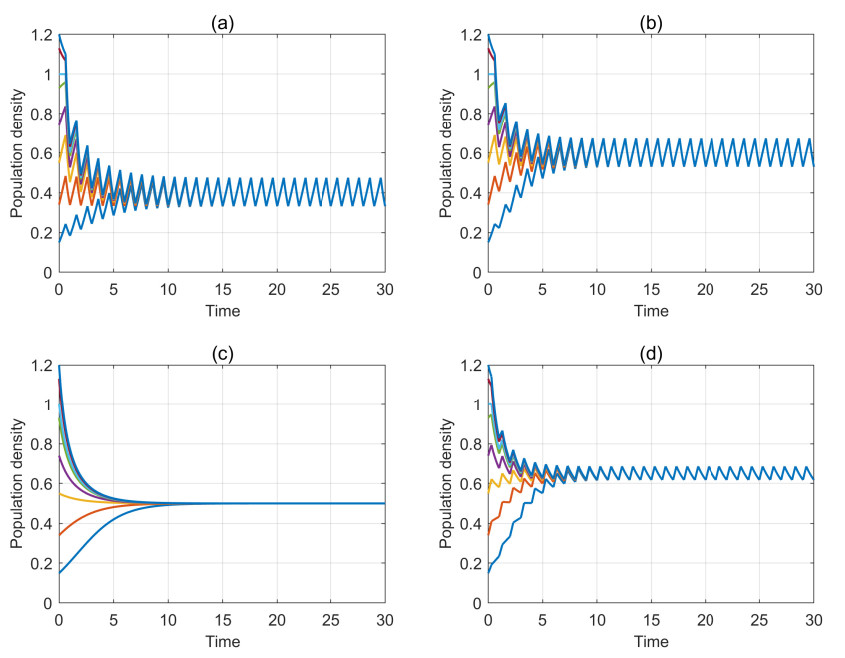
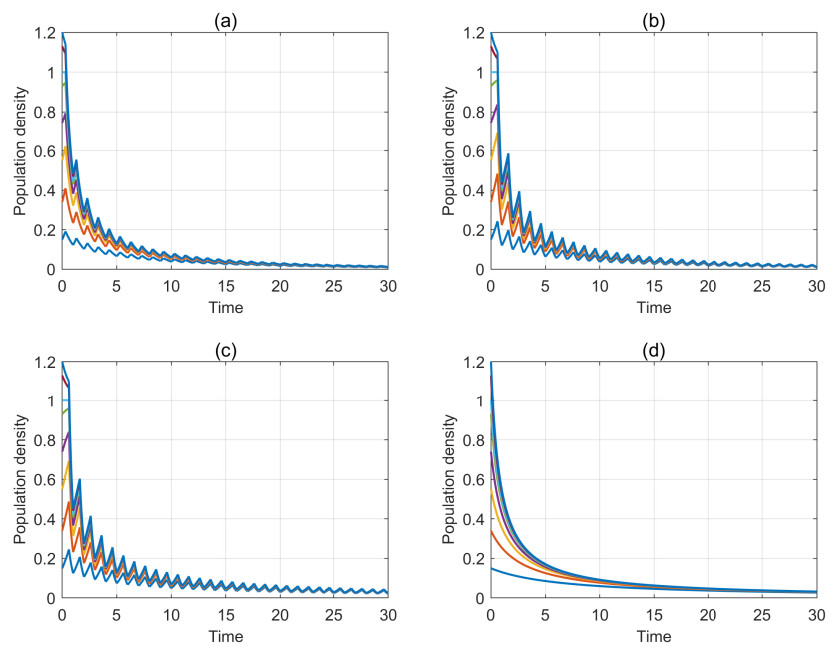
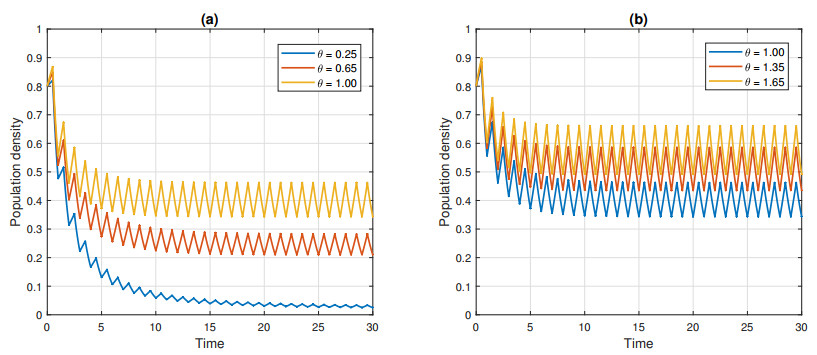
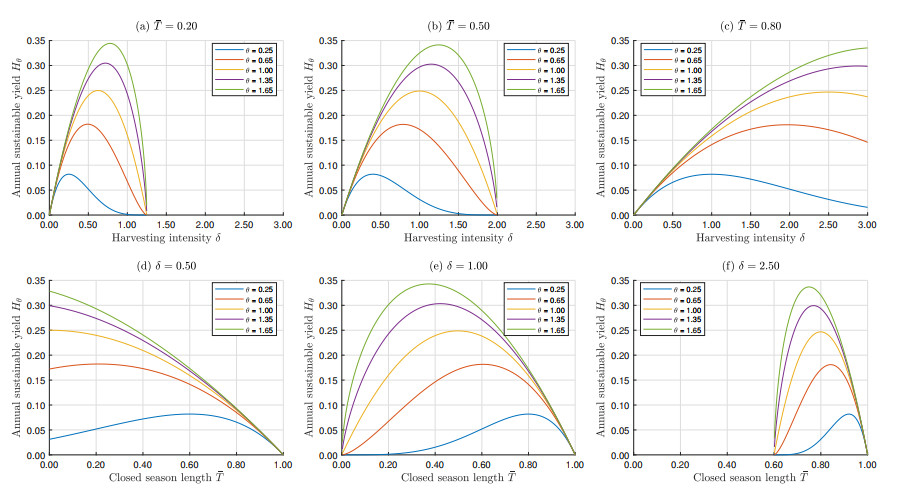
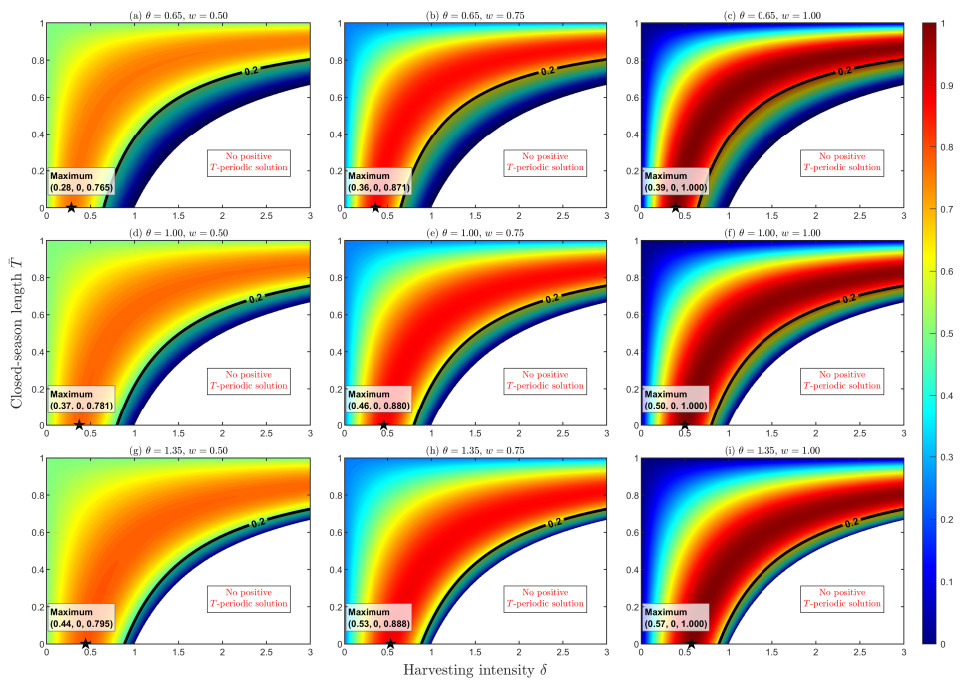
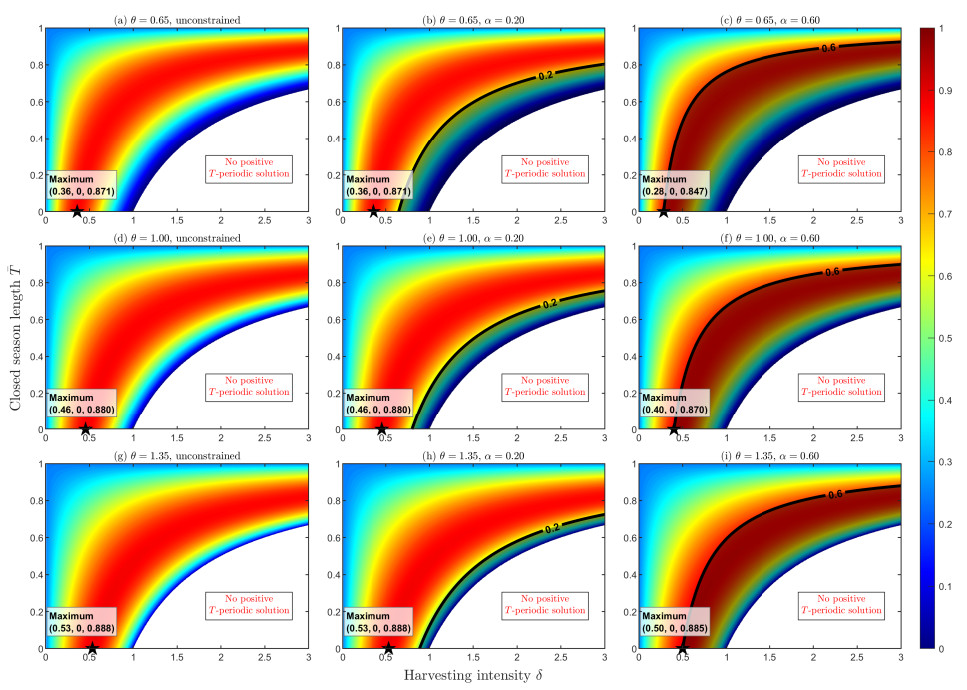
In this paper, a seasonally switching single-species $ \theta $-logistic harvesting model with alternating closed and open seasons is developed, and the effects of nonlinear density dependence on fish population persistence and sustainable harvesting are investigated. Theoretical analysis identifies a critical closed-season duration threshold that depends strictly on harvesting intensity. When fishing pressure is excessive, the population persists in a stable positive periodic state if the closed season exceeds this threshold; otherwise, it inevitably tends toward extinction. Notably, while the closed-season threshold is independent of the density-dependence parameter, the population biomass levels and harvesting outcomes are profoundly influenced by this parameter. We analyze the maximum annual sustainable yield (MASY) within the persistence region and demonstrate that it is attained only in the absence of a closed season under idealized continuous harvesting. Numerical simulations confirm that a larger density-dependence parameter enhances population recovery, raises the stable periodic population level, and increases the MASY. Furthermore, a resilience-constrained yield-efficiency index (RCYEI) is proposed by integrating annual sustainable yield, catch per unit effort (CPUE), and ecological safety constraints to circumvent the drawbacks of yield-only optimization. The results indicate that placing greater emphasis on yield raises the optimal harvesting intensity, whereas stricter ecological safety requirements limit the allowable harvesting pressure. A larger density-dependence parameter also expands the ecologically feasible region, enabling the population to withstand higher fishing pressure under identical safety requirements. These findings provide rigorous theoretical insights and practical guidance for designing sustainable seasonal harvesting strategies under ecological safety constraints.
Citation: Qiuran Wang, Wei You, E. K. Makarov, Shengqiang Liu. Optimal harvesting policy for a single-species $ \theta $-logistic model with seasonal succession[J]. Mathematical Biosciences and Engineering, 2026, 23(10): 3037-3060. doi: 10.3934/mbe.2026105
In this paper, a seasonally switching single-species $ \theta $-logistic harvesting model with alternating closed and open seasons is developed, and the effects of nonlinear density dependence on fish population persistence and sustainable harvesting are investigated. Theoretical analysis identifies a critical closed-season duration threshold that depends strictly on harvesting intensity. When fishing pressure is excessive, the population persists in a stable positive periodic state if the closed season exceeds this threshold; otherwise, it inevitably tends toward extinction. Notably, while the closed-season threshold is independent of the density-dependence parameter, the population biomass levels and harvesting outcomes are profoundly influenced by this parameter. We analyze the maximum annual sustainable yield (MASY) within the persistence region and demonstrate that it is attained only in the absence of a closed season under idealized continuous harvesting. Numerical simulations confirm that a larger density-dependence parameter enhances population recovery, raises the stable periodic population level, and increases the MASY. Furthermore, a resilience-constrained yield-efficiency index (RCYEI) is proposed by integrating annual sustainable yield, catch per unit effort (CPUE), and ecological safety constraints to circumvent the drawbacks of yield-only optimization. The results indicate that placing greater emphasis on yield raises the optimal harvesting intensity, whereas stricter ecological safety requirements limit the allowable harvesting pressure. A larger density-dependence parameter also expands the ecologically feasible region, enabling the population to withstand higher fishing pressure under identical safety requirements. These findings provide rigorous theoretical insights and practical guidance for designing sustainable seasonal harvesting strategies under ecological safety constraints.

| [1] |
Y. Rousseau, R. A. Watson, J. L. Blanchard, E. A. Fulton, Evolution of global marine fishing fleets and the response of fished resources, Proc. Natl. Acad. Sci. U.S.A., 116 (2019), 12238–12243. https://doi.org/10.1073/pnas.1820344116 doi: 10.1073/pnas.1820344116

|
| [2] |
E. D. Galbraith, D. A. Carozza, D. Bianchi, A coupled human–Earth model perspective on long-term trends in the global marine fishery, Nat. Commun., 8 (2017), 14884. https://doi.org/10.1038/ncomms14884 doi: 10.1038/ncomms14884
|
| [3] | Food and Agriculture Organization of the United Nations, The State of World Fisheries and Aquaculture 2024: Blue Transformation in Action, Rome: Food and Agriculture Organization of the United Nations, 2024. https://doi.org/10.4060/cd0683en |
| [4] |
X. Liu, R. Geng, X. Lv, X. Hu, T. N. Do, M. Liu, From dynamics to sustainability: Modeling the shrimp (Penaeus chinensis) fishery in Shandong, China, Ecol. Modell., 489 (2024), 110600. https://doi.org/10.1016/j.ecolmodel.2023.110600 doi: 10.1016/j.ecolmodel.2023.110600
|
| [5] |
J. Zou, X. Jin, X. Shan, Y. Ren, Y. Chen, Whether the summer fishing moratorium can improve the status of fisheries resources in the Yellow Sea and Bohai Sea, Heliyon, 10 (2024), e38100. https://doi.org/10.1016/j.heliyon.2024.e38100 doi: 10.1016/j.heliyon.2024.e38100
|
| [6] |
M. Liu, Y. S. de Mitcheson, Profile of a fishery collapse: Why mariculture failed to save the large yellow croaker, Fish Fish., 9 (2008), 219–242. https://doi.org/10.1111/j.1467-2979.2008.00278.x doi: 10.1111/j.1467-2979.2008.00278.x
|
| [7] | International Union for Conservation of Nature, The IUCN Red List of Threatened Species: Background & History, Gland: IUCN, 2022. Available from: https://www.iucnredlist.org/about/background-history. |
| [8] |
B. D. Coleman, Y. H. Hsieh, G. P. Knowles, On the optimal choice of $ r $ for a population in a periodic environment, Math. Biosci., 46 (1979), 71–85. https://doi.org/10.1016/0025-5564(79)90015-4 doi: 10.1016/0025-5564(79)90015-4
|
| [9] |
J. M. Cushing, Oscillatory population growth in periodic environments, Theor. Popul. Biol., 30 (1986), 289–308. https://doi.org/10.1016/0040-5809(86)90038-9 doi: 10.1016/0040-5809(86)90038-9
|
| [10] |
B. G. Zhang, K. Gopalsamy, Global attractivity and oscillations in a periodic delay-logistic equation, J. Math. Anal. Appl., 150 (1990), 274–283. https://doi.org/10.1016/0022-247X(90)90213-Y doi: 10.1016/0022-247X(90)90213-Y
|
| [11] |
P. P. Win, Z. Lin, M. Zhang, The final size and critical times of an SIVR epidemic model, Adv. Contin. Discrete Models, 2025 (2025), 31. https://doi.org/10.1186/s13662-025-03902-2 doi: 10.1186/s13662-025-03902-2
|
| [12] |
Y. Xiao, D. Cheng, H. Qin, Optimal impulsive control in periodic ecosystem, Syst. Control Lett., 55 (2006), 558–565. https://doi.org/10.1016/j.sysconle.2005.12.003 doi: 10.1016/j.sysconle.2005.12.003
|
| [13] | L. Berezansky, L. Idels, Population models with delay in dynamic environment, preprint, arXiv: math/0601103. |
| [14] |
C. Xu, M. S. Boyce, D. J. Daley, Harvesting in seasonal environments, J. Math. Biol., 50 (2005), 663–682. https://doi.org/10.1007/s00285-004-0303-5 doi: 10.1007/s00285-004-0303-5
|
| [15] |
M. Fan, K. Wang, Optimal harvesting policy for single population with periodic coefficients, Math. Biosci., 152 (1998), 165–177. https://doi.org/10.1016/S0025-5564(98)10024-X doi: 10.1016/S0025-5564(98)10024-X
|
| [16] |
N. Wang, S. Liu, Modeling of periodic input Ornstein-Uhlenbeck temperature-tick-borne disease transmission coupling mechanism under climate change, Acta Trop., 261 (2025), 107490. https://doi.org/10.1016/j.actatropica.2024.107490 doi: 10.1016/j.actatropica.2024.107490
|
| [17] |
F. Fan, J. L. Zheng, S. S. Wu, Z. L. Zhang, Effect analysis and optimization of fishing moratorium in China, Ocean Dev. Manage., 41 (2024), 152–160. https://doi.org/10.20016/j.cnki.hykfygl.2024.04.008 doi: 10.20016/j.cnki.hykfygl.2024.04.008
|
| [18] |
P. Xu, W. Zhou, M. Xie, D. Ding, A. Suo, Temporal and spatial comparison of food web structure in marine pastures in the Pearl River Estuary: Implications for sustainable fisheries management, Ecol. Evol., 12 (2022), e8903. https://doi.org/10.1002/ece3.8903 doi: 10.1002/ece3.8903
|
| [19] |
L. P. Yan, Z. L. Liu, Y. Jin, J. H. Cheng, Effects of prolonging the trawl net summer fishing moratorium period in the East China Sea on the conservation of fishery resources, J. Fish. Sci. China, 26 (2019), 118–123. https://doi.org/10.3724/SP.J.1118.2019.18243 doi: 10.3724/SP.J.1118.2019.18243
|
| [20] |
J. S. Goetze, J. Claudet, F. Januchowski-Hartley, T. J. Langlois, S. K. Wilson, C. White, et al., Demonstrating multiple benefits from periodically harvested fisheries closures, J. Appl. Ecol., 55 (2018), 1102–1113. https://doi.org/10.1111/1365-2664.13047 doi: 10.1111/1365-2664.13047
|
| [21] |
P. G. Carvalho, J. Goetze, S. D. Jupiter, J. Claudet, F. A. Januchowski-Hartley, R. Weeks, Optimized fishing through periodically harvested closures, J. Appl. Ecol., 56 (2019), 1927–1936. https://doi.org/10.1111/1365-2664.13417 doi: 10.1111/1365-2664.13417
|
| [22] |
T. A. Oliver, K. L. L. Oleson, H. Ratsimbazafy, D. Raberinary, S. Benbow, A. Harris, Positive catch and economic benefits of periodic octopus fishery closures: Do effective, narrowly targeted actions catalyze broader management, PLoS One, 10 (2015), e0129075. https://doi.org/10.1371/journal.pone.0129075 doi: 10.1371/journal.pone.0129075
|
| [23] |
R. Olinky, A. Huppert, L. Stone, Seasonal dynamics and thresholds governing recurrent epidemics, J. Math. Biol., 56 (2008), 827–839. https://doi.org/10.1007/s00285-007-0140-4 doi: 10.1007/s00285-007-0140-4
|
| [24] |
L. Stone, R. Olinky, A. Huppert, Seasonal dynamics of recurrent epidemics, Nature, 446 (2007), 533–536. https://doi.org/10.1038/nature05638 doi: 10.1038/nature05638
|
| [25] |
D. Xiao, Dynamics and bifurcations on a class of population model with seasonal constant-yield harvesting, Discrete Contin. Dyn. Syst. - Ser. B, 21 (2017), 699–719. https://doi.org/10.3934/dcdsb.2016.21.699 doi: 10.3934/dcdsb.2016.21.699
|
| [26] |
X. Feng, Y. Liu, S. Ruan, J. Yu, Periodic dynamics of a single species model with seasonal Michaelis–Menten type harvesting, J. Differ. Equations, 354 (2023), 237–263. https://doi.org/10.1016/j.jde.2023.01.014 doi: 10.1016/j.jde.2023.01.014
|
| [27] |
Y. Liu, X. Feng, S. Ruan, J. Yu, Periodic dynamics of a single species model with seasonal Michaelis–Menten type harvesting, Ⅱ: Existence of two periodic solutions, J. Differ. Equations, 388 (2024), 253–285. https://doi.org/10.1016/j.jde.2024.01.004 doi: 10.1016/j.jde.2024.01.004
|
| [28] |
M. E. Gilpin, F. J. Ayala, Global models of growth and competition, Proc. Natl. Acad. Sci. U.S.A., 70 (1973), 3590–3593. https://doi.org/10.1073/pnas.70.12.3590 doi: 10.1073/pnas.70.12.3590
|
| [29] | Z. J. Zeng, The harvesting optimal problem of Richards model, Chin. Q. J. Math., 28 (2013), 366–375. |
| [30] |
A. Samadder, A. Chattopadhyay, A. Sau, S. Bhattacharya, Interconnection between density-regulation and stability in competitive ecological network, Theor. Popul. Biol., 157 (2024), 33–46. https://doi.org/10.1016/j.tpb.2024.03.003 doi: 10.1016/j.tpb.2024.03.003
|
| [31] |
D. V. Mestry, A. R. Bhowmick, On estimating the parameters of generalized logistic model from census data: Drawback of classical approach and reliable inference using Bayesian framework, Ecol. Inf., 62 (2021), 101249. https://doi.org/10.1016/j.ecoinf.2021.101249 doi: 10.1016/j.ecoinf.2021.101249
|
| [32] | R. Lande, S. Engen, B. E. Sæther, Stochastic Population Dynamics in Ecology and Conservation, Oxford: Oxford University Press, 2003. https://doi.org/10.1093/acprof: oso/9780198525257.001.0001 |
| [33] |
S. Chamaillé-Jammes, H. Fritz, M. Valeix, F. Murindagomo, J. Clobert, Resource variability, aggregation and direct density dependence in an open context: The local regulation of an African elephant population, J. Anim. Ecol., 77 (2008), 135–144. https://doi.org/10.1111/j.1365-2656.2007.01307.x doi: 10.1111/j.1365-2656.2007.01307.x
|
| [34] |
B. E. Sæther, S. Engen, R. Lande, P. Arcese, J. N. M. Smith, Estimating the time to extinction in an island population of song sparrows, Proc. R. Soc. London, Ser. B, 267 (2000), 621–626. https://doi.org/10.1098/rspb.2000.1047 doi: 10.1098/rspb.2000.1047
|
| [35] |
P. B. Stacey, M. Taper, Environmental variation and the persistence of small populations, Ecol. Appl., 2 (1992), 18–29. https://doi.org/10.2307/1941886 doi: 10.2307/1941886
|
| [36] |
S. Einum, E. R. Ullern, M. Walsh, T. Burton, Evolution of population dynamics following invasion by a non-native predator, Ecol. Evol., 12 (2022), e9348. https://doi.org/10.1002/ece3.9348 doi: 10.1002/ece3.9348
|
| [37] |
B. E. Sæther, S. Engen, E. Matthysen, Demographic characteristics and population dynamical patterns of solitary birds, Science, 295 (2002), 2070–2073. https://doi.org/10.1126/science.1068766 doi: 10.1126/science.1068766
|
| [38] |
R. M. Sibly, D. Barker, M. C. Denham, J. Hone, M. Pagel, On the regulation of populations of mammals, birds, fish, and insects, Science, 309 (2005), 607–610. https://doi.org/10.1126/science.1110760 doi: 10.1126/science.1110760
|
| [39] |
I. A. Hatton, O. Mazzarisi, A. Altieri, M. Smerlak, Diversity begets stability: Sublinear growth and competitive coexistence across ecosystems, Science, 383 (2024), eadg8488. https://doi.org/10.1126/science.adg8488 doi: 10.1126/science.adg8488
|
| [40] |
L. Dong, L. Chen, L. Sun, Optimal harvesting policies for periodic Gompertz systems, Nonlinear Anal. Real World Appl., 8 (2007), 572–578. https://doi.org/10.1016/j.nonrwa.2006.01.001 doi: 10.1016/j.nonrwa.2006.01.001
|
| [41] | D. Yu, S. Tang, Y. Lou, Revisiting logistic population model for assessing periodically harvested closures, Commun. Math. Biol. Neurosci., 2016 (2016), 14. |
| [42] |
Y. J. Su, G. B. Chen, Y. B. Zhou, S. W. Ma, Q. E. Wu, Assessment of impact of summer fishing moratorium in South China Sea during 2015–2017, South China Fish. Sci., 15 (2019), 20–28. https://doi.org/10.12131/20180149 doi: 10.12131/20180149
|
| [43] |
M. N. Maunder, J. R. Sibert, A. Fonteneau, J. Hampton, P. Kleiber, S. J. Harley, Interpreting catch per unit effort data to assess the status of individual stocks and communities, ICES J. Mar. Sci., 63 (2006), 1373–1385. https://doi.org/10.1016/j.icesjms.2006.05.008 doi: 10.1016/j.icesjms.2006.05.008
|
| [44] |
S. P. Bannerot, C. B. Austin, Using frequency distributions of catch per unit effort to measure fish-stock abundance, Trans. Am. Fish. Soc., 112 (1983), 608–617. https://doi.org/10.1577/1548-8659(1983)112<608:UFDOCP>2.0.CO;2 doi: 10.1577/1548-8659(1983)112<608:UFDOCP>2.0.CO;2
|
| [45] | European Commission, Our Life Insurance, Our Natural Capital: An EU Biodiversity Strategy to 2020, Commission Staff Working Paper SEC(2011) 540 final, Brussels, 2011. |
| [46] |
R. W. Zabel, C. J. Harvey, S. L. Katz, T. P. Good, P. S. Levin, Ecologically sustainable yield, Am. Sci., 91 (2003), 150–157. https://doi.org/10.1511/2003.12.150 doi: 10.1511/2003.12.150
|
| [47] |
S. Baumgärtner, M. F. Quaas, Ecological-economic viability as a criterion of strong sustainability under uncertainty, Ecol. Econ., 68 (2009), 2008–2020. https://doi.org/10.1016/j.ecolecon.2009.01.016 doi: 10.1016/j.ecolecon.2009.01.016
|
| [48] |
T. R. McClanahan, N. A. J. Graham, M. A. MacNeil, N. A. Muthiga, J. E. Cinner, J. H. Bruggemann, et al., Critical thresholds and tangible targets for ecosystem-based management of coral reef fisheries, Proc. Natl. Acad. Sci. U.S.A., 108 (2011), 17230–17233. https://doi.org/10.1073/pnas.1106861108 doi: 10.1073/pnas.1106861108
|
| [49] |
Q. Ding, J. Yu, Z. Guo, Y. Chen, Y. Liu, Periodic dynamics of a general switching dynamical system, Eur. J. Appl. Math., 37 (2026), 882–896. https://doi.org/10.1017/S0956792525100065 doi: 10.1017/S0956792525100065
|
| [50] |
P. M. Mace, A new role for MSY in single-species and ecosystem approaches to fisheries stock assessment and management, Fish Fish., 2 (2001), 2–32. https://doi.org/10.1046/j.1467-2979.2001.00033.x doi: 10.1046/j.1467-2979.2001.00033.x
|
| [51] | J. F. Caddy, R. Mahon, Reference Points for Fisheries Management, FAO Fisheries Technical Paper No. 347, Food and Agriculture Organization of the United Nations, Rome, 1995. Available from: https://www.fao.org/4/v8400e/v8400e00.htm. |
| [52] |
N. A. Dowling, C. M. Dichmont, G. M. Leigh, S. Pascoe, R. J. Pears, T. Roberts, et al., Optimising harvest strategies over multiple objectives and stakeholder preferences, Ecol. Modell., 435 (2020), 109243. https://doi.org/10.1016/j.ecolmodel.2020.109243 doi: 10.1016/j.ecolmodel.2020.109243
|
| [53] |
W. W. L. Cheung, U. R. Sumaila, Trade-offs between conservation and socio-economic objectives in managing a tropical marine ecosystem, Ecol. Econ., 66 (2008), 193–210. https://doi.org/10.1016/j.ecolecon.2007.09.001 doi: 10.1016/j.ecolecon.2007.09.001
|
| [54] |
P. J. Williams, W. L. Kendall, A guide to multi-objective optimization for ecological problems with an application to cackling goose management, Ecol. Modell., 343 (2017), 54–67. https://doi.org/10.1016/j.ecolmodel.2016.10.010 doi: 10.1016/j.ecolmodel.2016.10.010
|
| [55] |
S. K. Gaichas, M. Fogarty, G. Fay, R. Gamble, S. Lucey, L. Smith, Combining stock, multispecies, and ecosystem level fishery objectives within an operational management procedure: simulations to start the conversation, ICES J. Mar. Sci., 74 (2017), 552–565. https://doi.org/10.1093/icesjms/fsw119 doi: 10.1093/icesjms/fsw119
|
| [56] |
P. S. Kemp, R. Froese, D. Pauly, COVID-19 provides an opportunity to advance a sustainable UK fisheries policy in a post-Brexit brave new world, Mar. Policy, 120 (2020), 104114. https://doi.org/10.1016/j.marpol.2020.104114 doi: 10.1016/j.marpol.2020.104114
|
| [57] |
C. Costello, D. Ovando, R. Hilborn, S. D. Gaines, O. Deschenes, S. E. Heilpern, Status and solutions for the world's unassessed fisheries, Science, 338 (2012), 517–520. https://doi.org/10.1126/science.1223389 doi: 10.1126/science.1223389
|
Figures(6)

Qiuran Wang, Wei You, E. K. Makarov, Shengqiang Liu. Optimal harvesting policy for a single-species $ \theta $-logistic model with seasonal succession[J]. Mathematical Biosciences and Engineering, 2026, 23(10): 3037-3060. doi: 10.3934/mbe.2026105





 DownLoad: