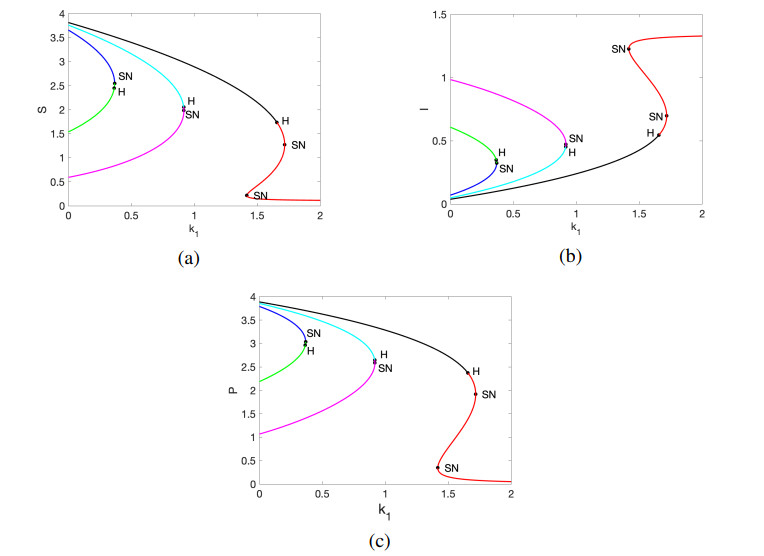
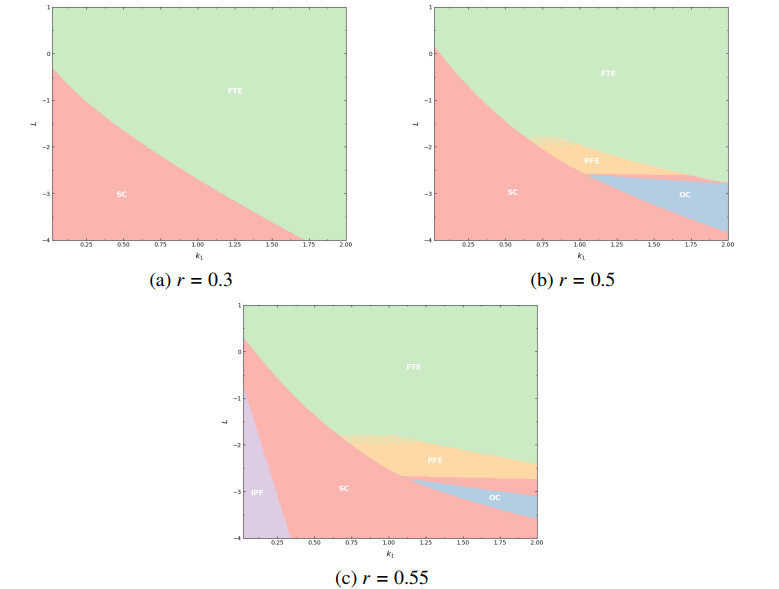
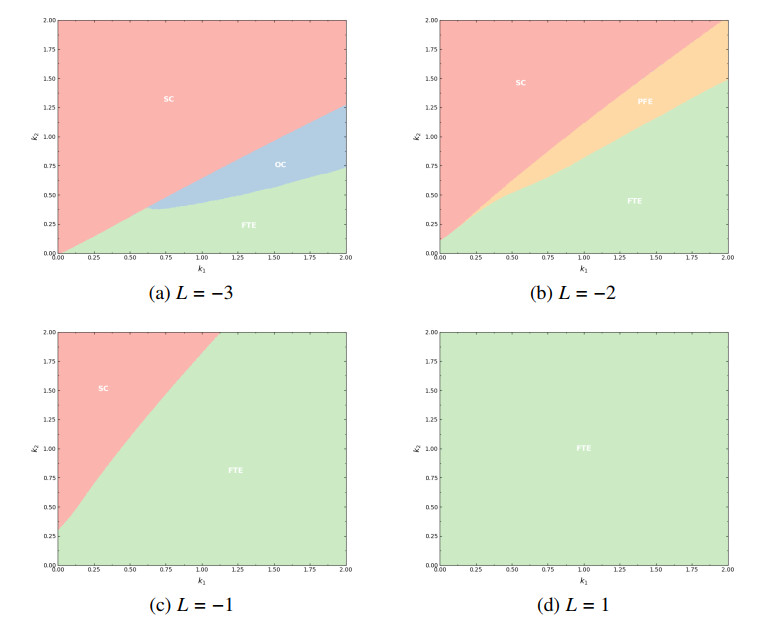
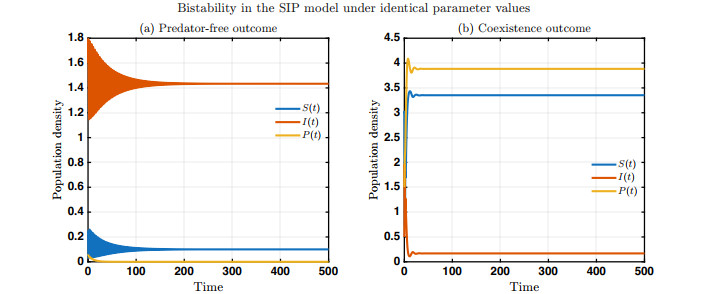
Although prey aggregation is widely regarded as an effective defense against predation, we have demonstrated that, when coupled with predator-induced fear, infectious disease, and demographic Allee effects, it can paradoxically accelerate rather than prevent ecosystem collapse. We formulated and analyzed a susceptible–infectious–predator model incorporating dual fear responses, a sublinear aggregation-based predation term, and an Allee effect. We characterized the existence and local stability of all biologically meaningful equilibria. We then proved that the non-Lipschitz aggregation term, under suitable parameter conditions, can drive the susceptible prey population to extinction in finite time under sustained predator pressure, while the Allee effect identifies the ecological regime in which populations become vulnerable to collapse. An explicit upper bound for the extinction time was derived, quantifying how predator pressure and the strength of the aggregation response jointly determine the speed of ecological collapse. Bifurcation analysis revealed transcritical, saddle-node, and Hopf bifurcations as fear intensity, aggregation strength, and the Allee threshold vary. Two-parameter continuation further identified parameter regions supporting stable coexistence, oscillatory coexistence, predator exclusion, and finite-time extinction, demonstrating that stronger aggregation progressively enlarges the finite-time extinction region while weaker aggregation promotes a richer coexistence structure. Moreover, the coexistence of alternative stable states gives rise to path-dependent ecological outcomes, indicating that identical environmental conditions may produce fundamentally different long-term dynamics depending on the initial population state. These results demonstrate that aggregation, when coupled with fear, disease dynamics, and demographic vulnerability, can fundamentally alter ecosystem resilience by accelerating collapse, generating alternative stable states, and promoting abrupt ecological tipping points.
Citation: Kwadwo Antwi-Fordjour, Eric M. Takyi. Aggregation as a double-edged sword: Fear, Allee effects, and finite-time collapse[J]. Mathematical Biosciences and Engineering, 2026, 23(10): 2998-3036. doi: 10.3934/mbe.2026104
Although prey aggregation is widely regarded as an effective defense against predation, we have demonstrated that, when coupled with predator-induced fear, infectious disease, and demographic Allee effects, it can paradoxically accelerate rather than prevent ecosystem collapse. We formulated and analyzed a susceptible–infectious–predator model incorporating dual fear responses, a sublinear aggregation-based predation term, and an Allee effect. We characterized the existence and local stability of all biologically meaningful equilibria. We then proved that the non-Lipschitz aggregation term, under suitable parameter conditions, can drive the susceptible prey population to extinction in finite time under sustained predator pressure, while the Allee effect identifies the ecological regime in which populations become vulnerable to collapse. An explicit upper bound for the extinction time was derived, quantifying how predator pressure and the strength of the aggregation response jointly determine the speed of ecological collapse. Bifurcation analysis revealed transcritical, saddle-node, and Hopf bifurcations as fear intensity, aggregation strength, and the Allee threshold vary. Two-parameter continuation further identified parameter regions supporting stable coexistence, oscillatory coexistence, predator exclusion, and finite-time extinction, demonstrating that stronger aggregation progressively enlarges the finite-time extinction region while weaker aggregation promotes a richer coexistence structure. Moreover, the coexistence of alternative stable states gives rise to path-dependent ecological outcomes, indicating that identical environmental conditions may produce fundamentally different long-term dynamics depending on the initial population state. These results demonstrate that aggregation, when coupled with fear, disease dynamics, and demographic vulnerability, can fundamentally alter ecosystem resilience by accelerating collapse, generating alternative stable states, and promoting abrupt ecological tipping points.

| [1] |
W. J. Ripple, R. L. Beschta, Wolves and the ecology of fear: Can predation risk structure ecosystems, BioScience, 54 (2004), 755–766. https://doi.org/10.1641/0006-3568(2004)054[0755:WATEOF]2.0.CO;2 doi: 10.1641/0006-3568(2004)054[0755:WATEOF]2.0.CO;2

|
| [2] | R. L. Beschta, W. J. Ripple, Return of wolves to yellowstone national park: Restoring a functionally intact ecological system, Restor. Ecol., 20 (2012), 106–113. |
| [3] |
S. L. Lima, L. M. Dill, Behavioral decisions made under the risk of predation: A review and prospectus, Can. J. Zool., 68 (1990), 619–640. https://doi.org/10.1139/z90-092 doi: 10.1139/z90-092
|
| [4] |
S. Creel, D. Christianson, Relationships between direct predation and risk effects, Trends Ecol. Evol., 23 (2008), 194–201. https://doi.org/10.1016/j.tree.2007.12.004 doi: 10.1016/j.tree.2007.12.004
|
| [5] |
J. S. Brown, J. W. Laundré, M. Gurung, The ecology of fear: Optimal foraging, game theory, and trophic interactions, J. Mammal., 80 (1999), 385–399. https://doi.org/10.2307/1383287 doi: 10.2307/1383287
|
| [6] |
S. D. Peacor, E. E. Werner, How dependent are species-pair interaction strengths on other species in the food web, Ecology, 85 (2004), 2754–2765. https://doi.org/10.1890/03-0662 doi: 10.1890/03-0662
|
| [7] |
L. Y. Zanette, A. F. White, M. C. Allen, M. Clinchy, Perceived predation risk reduces the number of offspring songbirds produce per year, Science, 334 (2011), 1398–1401. https://doi.org/10.1126/science.1210908 doi: 10.1126/science.1210908
|
| [8] |
X. Wang, L. Y. Zanette, X. Zou, Modelling the fear effect in predator–prey interactions, J. Math. Biol., 73 (2016), 1179–1204. https://doi.org/10.1007/s00285-016-0989-1 doi: 10.1007/s00285-016-0989-1
|
| [9] |
S. K. Sasmal, Population dynamics with multiple Allee effects induced by fear factors: A mathematical study on prey–predator interactions, Appl. Math. Modell., 64 (2018), 1–14. https://doi.org/10.1016/j.apm.2018.07.021 doi: 10.1016/j.apm.2018.07.021
|
| [10] |
V. Kumar, N. Kumari, Controlling chaos in three species food chain model with fear effect, AIMS Math., 5 (2020), 828–842. https://doi.org/10.3934/math.2020056 doi: 10.3934/math.2020056
|
| [11] |
K. Antwi-Fordjour, S. P. Westmoreland, K. H. Bearden, Dual fear phenomenon in an eco-epidemiological model with prey aggregation, Eur. Phys. J. Plus, 139 (2024), 518. https://doi.org/10.1140/epjp/s13360-024-05324-7 doi: 10.1140/epjp/s13360-024-05324-7
|
| [12] |
R. M. Anderson, R. M. May, Regulation and stability of host–parasite population interactions. i. regulatory processes, J. Anim. Ecol., 47 (1978), 219–247. https://doi.org/10.2307/3933 doi: 10.2307/3933
|
| [13] |
H. W. Hethcote, The mathematics of infectious diseases, SIAM Rev., 42 (2000), 599–653. https://doi.org/10.1137/S0036144500371907 doi: 10.1137/S0036144500371907
|
| [14] |
J. Chattopadhyay, O. Arino, A predator–prey model with disease in the prey, Nonlinear Anal. Theory Methods Appl., 36 (1999), 747–766. https://doi.org/10.1016/S0362-546X(98)00126-6 doi: 10.1016/S0362-546X(98)00126-6
|
| [15] |
E. Venturino, Epidemics in predator–prey models: Disease in the predators, IMA J. Math. Appl. Med. Biol., 19 (2002), 185–205. https://doi.org/10.1093/imammb/19.3.185 doi: 10.1093/imammb/19.3.185
|
| [16] |
W. D. Hamilton, Geometry for the selfish herd, J. Theor. Biol., 31 (1971), 295–311. https://doi.org/10.1016/0022-5193(71)90189-5 doi: 10.1016/0022-5193(71)90189-5
|
| [17] | J. Krause, G. D. Ruxton, Living in Groups, Oxford University Press, Oxford, 2002. https://doi.org/10.1093/oso/9780198508175.001.0001 |
| [18] |
K. Antwi-Fordjour, R. D. Parshad, H. E. Thompson, S. B. Westaway, Fear-driven extinction and (de) stabilization in a predator-prey model incorporating prey herd behavior and mutual interference, AIMS Math., 8 (2023), 3353–3377. https://doi.org/10.3934/math.2023173 doi: 10.3934/math.2023173
|
| [19] |
P. A. Braza, Predator–prey dynamics with square root functional responses, Nonlinear Anal. Real World Appl., 13 (2012), 1837–1843. https://doi.org/10.1016/j.nonrwa.2011.12.014 doi: 10.1016/j.nonrwa.2011.12.014
|
| [20] |
K. Vilches, E. González-Olivares, A. Rojas-Palma, Prey herd behavior modeled by a generic non-differentiable functional response, Math. Modell. Nat. Phenom., 13 (2018), 26. https://doi.org/10.1051/mmnp/2018038 doi: 10.1051/mmnp/2018038
|
| [21] | W. C. Allee, Animal Aggregations: A Study in General Sociology, University of Chicago Press, Chicago, 1931. |
| [22] |
F. Courchamp, T. Clutton-Brock, B. Grenfell, Inverse density dependence and the Allee effect, Trends Ecol. Evol., 14 (1999), 405–410. https://doi.org/10.1016/s0169-5347(99)01683-3 doi: 10.1016/s0169-5347(99)01683-3
|
| [23] | F. Courchamp, L. Berec, J. Gascoigne, Allee Effects in Ecology and Conservation, Oxford University Press, Oxford, 2008. |
| [24] |
B. Dennis, Allee effects: Population growth, critical density, and the chance of extinction, Nat. Resour. Model., 3 (1989), 481–538. https://doi.org/10.1111/j.1939-7445.1989.tb00119.x doi: 10.1111/j.1939-7445.1989.tb00119.x
|
| [25] |
P. A. Stephens, W. J. Sutherland, Consequences of the Allee effect for behaviour, ecology and conservation, Trends Ecol. Evol., 14 (1999), 401–405. https://doi.org/10.1016/S0169-5347(99)01684-5 doi: 10.1016/S0169-5347(99)01684-5
|
| [26] |
K. Antwi-Fordjour, Z. Overton, D. Lee, Dynamics of diseased-impacted prey populations: Defense and Allee effect mechanisms, Eur. Phys. J. Plus, 140 (2025), 675. https://doi.org/10.1140/epjp/s13360-025-06611-7 doi: 10.1140/epjp/s13360-025-06611-7
|
| [27] |
K. Antwi-Fordjour, When long-term coexistence fails: Finite time extinction in a nonlinear model, Examples Counterexamples, 2025 (2025), 100205. https://doi.org/10.1016/j.exco.2025.100205 doi: 10.1016/j.exco.2025.100205
|
| [28] |
K. H. Bearden, K. Antwi-Fordjour, On a predator-prey model with square root functional response, J. Appl. Nonlinear Dyn., 15 (2026), 401–408. https://doi.org/10.5890/JAND.2026.06.011 doi: 10.5890/JAND.2026.06.011
|
| [29] | L. Perko, Differential Equations and Dynamical Systems, Springer Science & Business Media, 2013. |
| [30] |
A. Dhooge, W. Govaerts, Y. A. Kuznetsov, MATCONT: A MATLAB package for numerical bifurcation analysis of ODEs, ACM Trans. Math. Software, 29 (2003), 141–164. https://doi.org/10.1145/779359.779362 doi: 10.1145/779359.779362
|
| [31] |
M. Scheffer, S. Carpenter, J. A. Foley, C. Folke, B. Walker, Catastrophic shifts in ecosystems, Nature, 413 (2001), 591–596. https://doi.org/10.1038/35098000 doi: 10.1038/35098000
|
| [32] | M. Scheffer, Critical Transitions in Nature and Society, Princeton University Press, Princeton, 2009. |
| [33] |
V. Dakos, B. Matthews, A. P. Hendry, J. Levine, N. Loeuille, J. Norberg, et al., Ecosystem tipping points in an evolving world, Nat. Ecol. Evol., 3 (2019), 355–362. https://doi.org/10.1038/s41559-019-0797-2 doi: 10.1038/s41559-019-0797-2
|
| [34] | Y. A. Kuznetsov, Elements of Applied Bifurcation Theory, 3rd edition, Springer, New York, 2004. https://doi.org/10.1007/978-1-4757-3978-7 |
| [35] |
B. W. Brook, N. S. Sodhi, C. J. A. Bradshaw, Synergies among extinction drivers under global change, Trends Ecol. Evol., 23 (2008), 453–460. https://doi.org/10.1016/j.tree.2008.03.011 doi: 10.1016/j.tree.2008.03.011
|
| [36] |
V. Dakos, S. R. Carpenter, W. A. Brock, A. M. Ellison, V. Guttal, A. R. Ives, et al., Methods for detecting early warnings of critical transitions in time series illustrated using simulated ecological data, PLoS One, 7 (2012), e41010. https://doi.org/10.1371/journal.pone.0041010 doi: 10.1371/journal.pone.0041010
|
| [37] |
M. C. Boerlijst, T. Oudman, A. M. de Roos, Catastrophic collapse can occur without early warning: Examples of silent catastrophes in structured ecological models, PLoS One, 8 (2013), e62033. https://doi.org/10.1371/journal.pone.0062033 doi: 10.1371/journal.pone.0062033
|
| [38] |
R. Levins, Some demographic and genetic consequences of environmental heterogeneity for biological control, Bull. Entomol. Soc. Am., 15 (1969), 237–240. https://doi.org/10.1093/besa/15.3.237 doi: 10.1093/besa/15.3.237
|
| [39] | I. Hanski, Metapopulation dynamics, Nature, 396 (1998), 41–49. https://doi.org/10.1038/23876 |
| [40] |
R. Lande, Risks of population extinction from demographic and environmental stochasticity and random catastrophes, Am. Nat., 142 (1993), 911–927. https://doi.org/10.1086/285580 doi: 10.1086/285580
|
| [41] |
B. A. Melbourne, A. Hastings, Extinction risk depends strongly on factors contributing to stochasticity, Nature, 454 (2008), 100–103. https://doi.org/10.1038/nature06922 doi: 10.1038/nature06922
|
Figures(8) / Tables(1)

Kwadwo Antwi-Fordjour, Eric M. Takyi. Aggregation as a double-edged sword: Fear, Allee effects, and finite-time collapse[J]. Mathematical Biosciences and Engineering, 2026, 23(10): 2998-3036. doi: 10.3934/mbe.2026104





 DownLoad: