Traditional gradual semantics in argumentation frameworks typically relies on global computation, resulting in significant computational redundancy and topological instability. To address these limitations, we focused on the evaluation of a specific target argument and established the semantics for a localized Target Argumentation Framework (TAF). First, we formulated a set of core local axioms for TAF to regulate localized gradual semantics. Second, we decomposed the direct attacks on the target into independent evaluation dimensions and employed backward tracing along specific attack paths. Finally, we designed a path-based exact algorithm to calculate the strength of the target argument. By restricting the evaluation to relevant ancestral subgraphs, this algorithm successfully simplified the computation from global iterations to local path tracing. Furthermore, the proposed TAF theory provided solid theoretical guarantees for semantic rationality, system robustness, and reasoning interpretability.
Citation: Yunjie Zhang, Jiachao Wu. Semantics of target argumentation: a calculation of target strength based on attack paths[J]. AIMS Mathematics, 2026, 11(11): 37158-37185. doi: 10.3934/math.20261436
Traditional gradual semantics in argumentation frameworks typically relies on global computation, resulting in significant computational redundancy and topological instability. To address these limitations, we focused on the evaluation of a specific target argument and established the semantics for a localized Target Argumentation Framework (TAF). First, we formulated a set of core local axioms for TAF to regulate localized gradual semantics. Second, we decomposed the direct attacks on the target into independent evaluation dimensions and employed backward tracing along specific attack paths. Finally, we designed a path-based exact algorithm to calculate the strength of the target argument. By restricting the evaluation to relevant ancestral subgraphs, this algorithm successfully simplified the computation from global iterations to local path tracing. Furthermore, the proposed TAF theory provided solid theoretical guarantees for semantic rationality, system robustness, and reasoning interpretability.

| [1] |
P. M. Dung, On the acceptability of arguments and its fundamental role in nonmonotonic reasoning, logic programming and n-person games, Artif. Intell., 77 (1995), 321–357. http://doi.org/10.1016/0004-3702(94)00041-X doi: 10.1016/0004-3702(94)00041-X
|
| [2] |
T. J. M. Bench-Capon, P. E. Dunne, Argumentation in artificial intelligence, Artif. Intell., 171 (2007), 619–641. http://doi.org/10.1016/j.artint.2007.05.001 doi: 10.1016/j.artint.2007.05.001
|
| [3] |
P. Baroni, M. Caminada, M. Giacomin, An introduction to argumentation semantics, Knowl. Eng. Rev., 26 (2011), 365–410. http://doi.org/10.1017/S0269888911000166 doi: 10.1017/S0269888911000166
|
| [4] |
C. da Costa Pereira, A. G. B. Tettamanzi, S. Villata, Changing one's mind: Erase or rewind? possibilistic belief revision with fuzzy argumentation based on trust, In: Proceedings of the 22nd international joint conference on artificial intelligence, Barcelona, Catalonia, Spain, July 16–22, 2011,164–171. http://doi.org/10.5591/978-1-57735-516-8/IJCAI11-039 |
| [5] |
L. Amgoud, D. Doder, S. Vesic, Evaluation of argument strength in attack graphs: foundations and semantics, Artif. Intell., 302 (2022), 103607. http://doi.org/10.1016/j.artint.2021.103607 doi: 10.1016/j.artint.2021.103607
|
| [6] |
P. E. Dunne, A. Hunter, P. McBurney, S. Parsons, M. Wooldridge, Weighted argument systems: basic definitions, algorithms, and complexity results, Artif. Intell., 175 (2011), 457–486. http://doi.org/10.1016/j.artint.2010.09.005 doi: 10.1016/j.artint.2010.09.005
|
| [7] |
L. Amgoud, J. Ben-Naim, Ranking-based semantics for argumentation frameworks, In: Scalable uncertainty management, Berlin, Heidelberg: Springer, 2013,134–147. http://doi.org/10.1007/978-3-642-40381-1_11 |
| [8] |
C. Cayrol, M.-C. Lagasquie-Schiex, Graduality in argumentation, J. Artif. Intell. Res., 23 (2005), 245–297. http://doi.org/10.1613/jair.1411 doi: 10.1613/jair.1411
|
| [9] |
Z. Wang, Y. Shen, Convergent semantics for weighted bipolar argumentation, Proceedings of the 40th AAAI Conference on Artificial Intelligence, 40 (2026), 19415–19423. http://doi.org/10.1609/aaai.v40i23.39019 doi: 10.1609/aaai.v40i23.39019
|
| [10] |
N. Oren, B. Yun, S. Vesic, M. Baptista, Inverse problems for gradual semantics, In: Proceedings of the 31st international joint conference on artificial intelligence, 2022, 2719–2725. http://doi.org/10.24963/ijcai.2022/377 |
| [11] |
I. Ahmad, M. N. Khan, R. Jan, N. N. A. Razak, Efficient numerical method for pricing multi-asset options with the time-fractional Black-Scholes model: focus on American and digital options, Math. Model. Control, 5 (2025), 147–163. http://doi.org/10.3934/mmc.2025011 doi: 10.3934/mmc.2025011
|
| [12] |
Z. Wang, Y. Shen, Fuzzy labelling semantics for quantitative argumentation, J. Log. Comput., 35 (2025), exaf009. http://doi.org/10.1093/logcom/exaf009 doi: 10.1093/logcom/exaf009
|
| [13] |
L. Dupuis de Tarlé, E. Bonzon, N. Maudet, Multiagent dynamics of gradual argumentation semantics, In: Proceedings of the 21st international conference on autonomous agents and multiagent systems, 2022,363–371. |
| [14] |
M. Haripriya, A. Manivannan, S. Dhanasekar, S. Lakshmanan, Finite-time synchronization of delayed complex dynamical networks via sampled-data controller, Math. Model. Control, 5 (2025), 73–84. http://doi.org/10.3934/mmc.2025006 doi: 10.3934/mmc.2025006
|
| [15] |
Z. Feng, Z. Lin, H. Wang, R. Ma, Y. Long, K. An, et al., Large AI models for empowering semantic communications in 6G non-terrestrial networks, IEEE Netw., in press. http://doi.org/10.1109/MNET.2026.3704846 |
| [16] |
Y. He, Z. Lin, Z. Feng, D. Yan, LEO satellites meet movable antennas: an SEEI entropy driven agentic AI cross-domain optimization framework, Sci. China Inf. Sci., 69 (2026), 200302. http://doi.org/10.1007/s11432-026-5056-5 doi: 10.1007/s11432-026-5056-5
|
| [17] |
T. Mayer, S. Marro, E. Cabrio, S. Villata, Enhancing evidence-based medicine with natural language argumentative analysis of clinical trials, Artif. Intell. Med., 118 (2021), 102098. http://doi.org/10.1016/j.artmed.2021.102098 doi: 10.1016/j.artmed.2021.102098
|
| [18] |
J. Fuller, B. Chin-Yee, R. E. G. Upshur, The argument framework is a flexible approach to evidence in healthcare, Nat. Med., 30 (2024), 2113–2116. http://doi.org/10.1038/s41591-024-02930-x doi: 10.1038/s41591-024-02930-x
|
| [19] |
S. Guedim, A. Benkerrouche, M. S. Souid, A. Amara, R. Jan, I. Ahmad, Initial value problem for fractional differential equations of variable order, Math. Model. Control, 5 (2025), 379–389. http://doi.org/10.3934/mmc.2025026 doi: 10.3934/mmc.2025026
|
| [20] |
Z. Wang, Y. Shen, On SCC-recursiveness in quantitative argumentation, In: Logic and argumentation, Singapore: Springer, 2025,309–326. http://doi.org/10.1007/978-981-96-7956-0_19 |
| [21] |
J. Wu, Relative attack strength and its application in argumentation frameworks, AIMS Math., 10 (2025), 16355–16370. http://doi.org/10.3934/math.2025731 doi: 10.3934/math.2025731
|
| [22] |
L. Malmqvist, T. Yuan, P. Nightingale, Approximating problems in abstract argumentation with graph convolutional networks, Artif. Intell., 336 (2024), 104209. http://doi.org/10.1016/j.artint.2024.104209 doi: 10.1016/j.artint.2024.104209
|
| [23] |
N. Mirzakhmedova, M. Gohsen, C. H. Chang, B. Stein, Are large language models reliable argument quality annotators?, In: Robust argumentation machines, Cham: Springer, 2024,129–146. http://doi.org/10.1007/978-3-031-63536-6_8 |
| [24] |
P. Baroni, F. Toni, B. Verheij, On the acceptability of arguments and its fundamental role in nonmonotonic reasoning, logic programming and n-person games: 25 years later, Argument Comput., 11 (2020), 1–14. http://doi.org/10.3233/AAC-200901 doi: 10.3233/AAC-200901
|
| [25] |
E. Bonzon, J. Delobelle, S. Konieczny, N. Maudet, A comparative study of ranking-based semantics for abstract argumentation, Proceedings of the 30th AAAI Conference on Artificial Intelligence, 30 (2016), 914–920. http://doi.org/10.1609/aaai.v30i1.10116 doi: 10.1609/aaai.v30i1.10116
|
| [26] |
D. M. Gabbay, Equational approach to argumentation networks, Argument Comput., 3 (2012), 87–142. http://doi.org/10.1080/19462166.2012.704398 doi: 10.1080/19462166.2012.704398
|
| [27] |
C. Cayrol, M.-C. Lagasquie-Schiex, Gradual valuation for bipolar argumentation frameworks, In: Symbolic and quantitative approaches to reasoning with uncertainty, Berlin, Heidelberg: Springer, 2005,366–377. http://doi.org/10.1007/11518655_32 |
| [28] |
X. Yin, N. Potyka, F. Toni, Explaining arguments' strength: unveiling the role of attacks and supports, In: Proceedings of the 33rd international joint conference on artificial intelligence, 2024, 3622–3630. http://doi.org/10.24963/ijcai.2024/401 |
| [29] |
L. Amgoud, Axiomatic characterisations of argumentation semantics, In: Proceedings of the 22nd international conference on principles of knowledge representation and reasoning, Melbourne, Australia, November 11–17, 2025, 36–45. http://doi.org/10.24963/kr.2025/4 |
| [30] |
P. Teovanović, S. Vesic, B. Yun, Human compliance with computational argumentation principles, Artif. Intell., 351 (2026), 104457. http://doi.org/10.1016/j.artint.2025.104457 doi: 10.1016/j.artint.2025.104457
|
| [31] |
J. Wu, H. Li, N. Oren, T. J. Norman, Gödel fuzzy argumentation frameworks, In: Computational models of argument, IOS Press, 2016,447–458. http://doi.org/10.3233/978-1-61499-686-6-447 |
| [32] |
S. Modgil, H. Prakken, The ASPIC+ framework for structured argumentation: a tutorial, Argument Comput., 5 (2014), 31–62. http://doi.org/10.1080/19462166.2013.869766 doi: 10.1080/19462166.2013.869766
|
| [33] |
M. Berthold, L. Blümel, A. Rapberger, On strong and weak admissibility in non-flat assumption-based argumentation, arXiv: 2508.11182. http://doi.org/10.48550/arXiv.2508.11182 |
| [34] |
S. Zhao, J. Wu, An efficient algorithm of fuzzy reinstatement labelling, AIMS Math., 7 (2022), 11165–11187. http://doi.org/10.3934/math.2022625 doi: 10.3934/math.2022625
|
| [35] |
M. Bernreiter, W. Dvořák, A. Rapberger, S. Woltran, The effect of preferences in abstract argumentation under a claim-centric view, J. Artif. Intell. Res., 81 (2024), 203–262. http://doi.org/10.1613/jair.1.15932 doi: 10.1613/jair.1.15932
|
| [36] |
J. Dauphin, M. Cramer, L. van der Torre, A dynamic approach for combining abstract argumentation semantics, In: Dynamics, uncertainty and reasoning, Singapore: Springer, 2019, 21–43. http://doi.org/10.1007/978-981-13-7791-4_2 |
Figures(2) / Tables(1)

Yunjie Zhang, Jiachao Wu. Semantics of target argumentation: a calculation of target strength based on attack paths[J]. AIMS Mathematics, 2026, 11(11): 37158-37185. doi: 10.3934/math.20261436

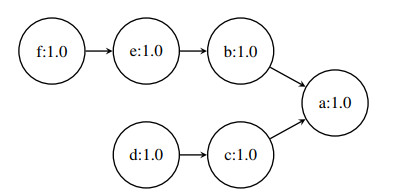
The TAF argumentation graph for Jack's clinical surgery decision
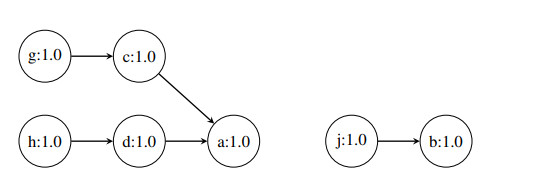
Weighted graph $ \mathbf{G_2} $




 DownLoad: