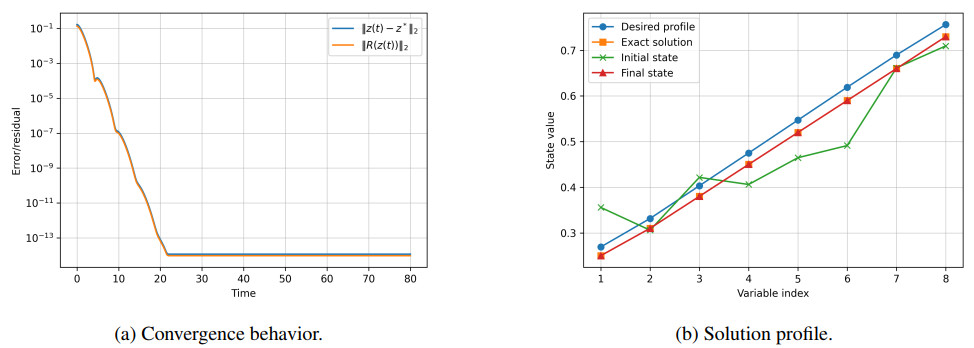
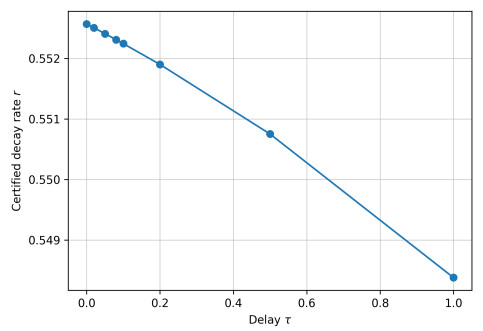
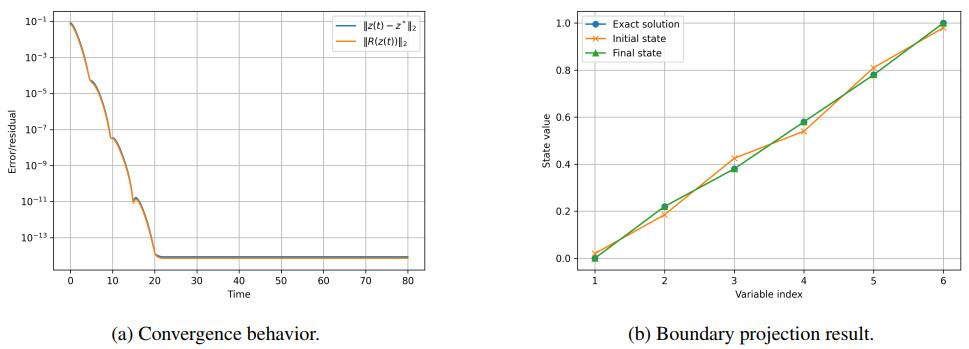
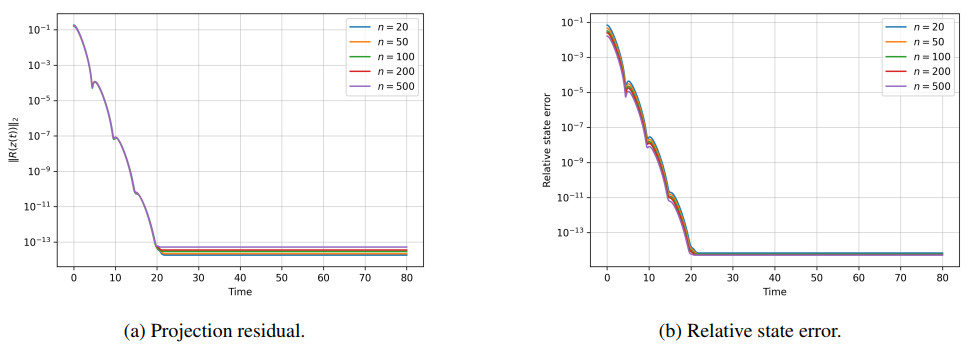
This paper develops a projection activation inertial bidirectional associative memory (BAM) neural network allowing delayed feedback for computing fixed points of extremal mappings with coupled constraints. In this problem, the unknown point is both a parameter and an optimizer of an inner constrained optimization problem. By combining the Karush–Kuhn–Tucker (KKT) conditions with the projection form of normal cone inclusions, the fixed point problem is reformulated as a projection residual equation. Different from BAM neural networks with standard activation functions, the proposed model uses the projection mapping itself as the activation mapping, so that the constraint set, multiplier nonnegativity, and residual structure are embedded into the neural dynamics. Under a matching condition on the connection matrices, the equilibria of the proposed network are proved to coincide with the zeros of the projection residual, and therefore correspond to the fixed points of the original extremal mapping. A conditional exponential stability criterion on a prescribed operating domain is further established by using matrix measure estimates and Halanay's inequality. Numerical examples and a multi-actuator output allocation application confirm the theoretical stability condition and demonstrate the convergence accuracy, boundary projection ability, scalability, and delay-dependent performance of the proposed method.
Citation: Yunlai Zhong, Li Wang, Juhe Sun, Xu Wu. A projection activation inertial BAM neural network for solving fixed points of extremal mappings with coupled constraints[J]. AIMS Mathematics, 2026, 11(10): 34849-34883. doi: 10.3934/math.20261357
This paper develops a projection activation inertial bidirectional associative memory (BAM) neural network allowing delayed feedback for computing fixed points of extremal mappings with coupled constraints. In this problem, the unknown point is both a parameter and an optimizer of an inner constrained optimization problem. By combining the Karush–Kuhn–Tucker (KKT) conditions with the projection form of normal cone inclusions, the fixed point problem is reformulated as a projection residual equation. Different from BAM neural networks with standard activation functions, the proposed model uses the projection mapping itself as the activation mapping, so that the constraint set, multiplier nonnegativity, and residual structure are embedded into the neural dynamics. Under a matching condition on the connection matrices, the equilibria of the proposed network are proved to coincide with the zeros of the projection residual, and therefore correspond to the fixed points of the original extremal mapping. A conditional exponential stability criterion on a prescribed operating domain is further established by using matrix measure estimates and Halanay's inequality. Numerical examples and a multi-actuator output allocation application confirm the theoretical stability condition and demonstrate the convergence accuracy, boundary projection ability, scalability, and delay-dependent performance of the proposed method.

| [1] | J. P. Aubin, H. Frankowska, Set-Valued Analysis, Birkhäuser, Boston, 1990. |
| [2] | A. S. Antipin, The convergence of proximal methods to fixed points of extremal mappings and estimates of their rate of convergence, Comput. Math. Math. Phys., 35 (1995), 539–551. |
| [3] |
S. D. Flåm, A. S. Antipin, Equilibrium programming using proximal-like algorithms, Math. Program., 78 (1996), 29–41. https://doi.org/10.1007/BF02614504 doi: 10.1007/BF02614504

|
| [4] | A. S. Antipin, On differential gradient methods of predictive type for computing fixed points of extremal mappings, Differ. Equ., 31 (1995), 1754–1763. |
| [5] |
A. S. Antipin, Differential equations for equilibrium problems with coupled constraints, Nonlinear Anal.-Theor., 47 (2001), 1833–1844. https://doi.org/10.1016/S0362-546X(01)00314-5 doi: 10.1016/S0362-546X(01)00314-5
|
| [6] |
L. Wang, F. Shan, L. W. Zhang, An implementable augmented Lagrange method for solving fixed point problems with coupled constraints, Nonlinear Anal.-Theor., 74 (2011), 1761–1768. https://doi.org/10.1016/j.na.2010.10.048 doi: 10.1016/j.na.2010.10.048
|
| [7] |
Y. Zhao, X. Liao, X. He, Novel projection neurodynamic approaches for constrained convex optimization, Neural Networks, 150 (2022), 336–349. https://doi.org/10.1016/j.neunet.2022.03.011 doi: 10.1016/j.neunet.2022.03.011
|
| [8] |
D. Hu, X. He, X. Ju, A modified projection neural network with fixed-time convergence, Neurocomputing, 489 (2022), 90–97. https://doi.org/10.1016/j.neucom.2022.03.023 doi: 10.1016/j.neucom.2022.03.023
|
| [9] |
J. Cao, Y. Wan, Matrix measure strategies for stability and synchronization of inertial BAM neural network with time delays, Neural Networks, 53 (2014), 165–172. https://doi.org/10.1016/j.neunet.2014.02.003 doi: 10.1016/j.neunet.2014.02.003
|
| [10] |
C. Huang, H. Wang, J. Cao, H. Liu, Delay-dependent bifurcation conditions in a fractional-order inertial BAM neural network, Chaos, Soliton. Fract., 185 (2024), 115106. https://doi.org/10.1016/j.chaos.2024.115106 doi: 10.1016/j.chaos.2024.115106
|
| [11] |
W. Wang, J. Wu, W. Chen, The characteristics method to study global exponential stability of delayed inertial neural networks, Math. Comput. Simulat., 232 (2025), 91–101. https://doi.org/10.1016/j.matcom.2024.12.021 doi: 10.1016/j.matcom.2024.12.021
|
| [12] |
W. Wang, W. Zeng, W. Chen, New sufficient conditions on the global exponential stability of delayed inertial neural networks, Neurocomputing, 622 (2025), 129301. https://doi.org/10.1016/j.neucom.2024.129301 doi: 10.1016/j.neucom.2024.129301
|
| [13] |
W. Wang, W. Zeng, W. Chen, Global exponential stability of periodic solutions for inertial delayed BAM neural networks, Commun. Nonlinear Sci., 145 (2025), 108728. https://doi.org/10.1016/j.cnsns.2025.108728 doi: 10.1016/j.cnsns.2025.108728
|
| [14] |
D. Xu, W. Liu, Two types of stability criteria for incommensurate fractional-order inertial delay BAM neural networks, Neural Process. Lett., 57 (2025), 57. https://doi.org/10.1007/s11063-025-11765-7 doi: 10.1007/s11063-025-11765-7
|
| [15] |
W. Wang, W. Chen, New study on neutral-type inertial BAM neural networks via the characteristic method, J. Math. Anal. Appl., 557 (2026), 130325. https://doi.org/10.1016/j.jmaa.2025.130325 doi: 10.1016/j.jmaa.2025.130325
|
| [16] | R. T. Rockafellar, Convex Analysis, Princeton: Princeton University Press, 1970. |
| [17] | F. Facchinei, J. S. Pang, Finite-dimensional variational inequalities and complementarity problems, New York: Springer, 2003. https://doi.org/10.1007/b97543 |
| [18] | M. Vidyasagar, Nonlinear systems analysis, 2 Eds., Prentice Hall, 1993. |
| [19] | A. Halanay, Differential equations: Stability, oscillations, time lags, New York: Academic Press, 1966. |
| [20] |
W. C. Durham, Constrained control allocation, J. Guid. Control Dynam., 16 (1993), 717–725. https://doi.org/10.2514/3.21072 doi: 10.2514/3.21072
|
| [21] |
M. Bodson, Evaluation of optimization methods for control allocation, J. Guid. Control Dynam., 25 (2002), 703–711. https://doi.org/10.2514/2.4937 doi: 10.2514/2.4937
|
| [22] |
O. Härkegård, Dynamic control allocation using constrained quadratic programming, J. Guid. Control Dynam., 27 (2004), 1028–1034. https://doi.org/10.2514/1.11607 doi: 10.2514/1.11607
|
| [23] |
T. A. Johansen, T. I. Fossen, Control allocation—A survey, Automatica, 49 (2013), 1087–1103. https://doi.org/10.1016/j.automatica.2013.01.035 doi: 10.1016/j.automatica.2013.01.035
|
| [24] |
A. K. Naskar, S. Patra, S. Sen, New control allocation algorithms in fixed point framework for overactuated systems with actuator saturation, Int. J. Control, 90 (2017), 348–356. https://doi.org/10.1080/00207179.2016.1181785 doi: 10.1080/00207179.2016.1181785
|
| [25] |
D. A. Santos, J. A. Bezerra, On the control allocation of fully actuated multirotor aerial vehicles, Aerosp. Sci. Technol., 122 (2022), 107424. https://doi.org/10.1016/j.ast.2022.107424 doi: 10.1016/j.ast.2022.107424
|
| [26] |
M. E. Grøtte, J. T. Gravdahl, T. A. Johansen, A constrained control allocation and tuning scheme for hybrid actuators in spacecraft attitude control, IFAC-PapersOnLine, 56 (2023), 11273–11280. https://doi.org/10.1016/j.ifacol.2023.10.321 doi: 10.1016/j.ifacol.2023.10.321
|
Figures(7) / Tables(5)

Yunlai Zhong, Li Wang, Juhe Sun, Xu Wu. A projection activation inertial BAM neural network for solving fixed points of extremal mappings with coupled constraints[J]. AIMS Mathematics, 2026, 11(10): 34849-34883. doi: 10.3934/math.20261357





 DownLoad: