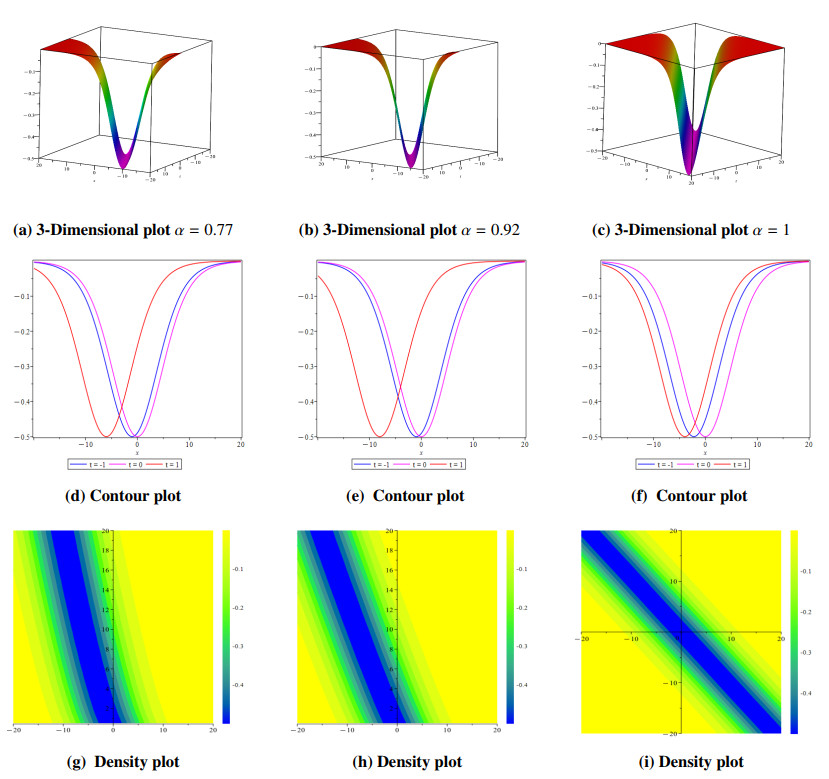
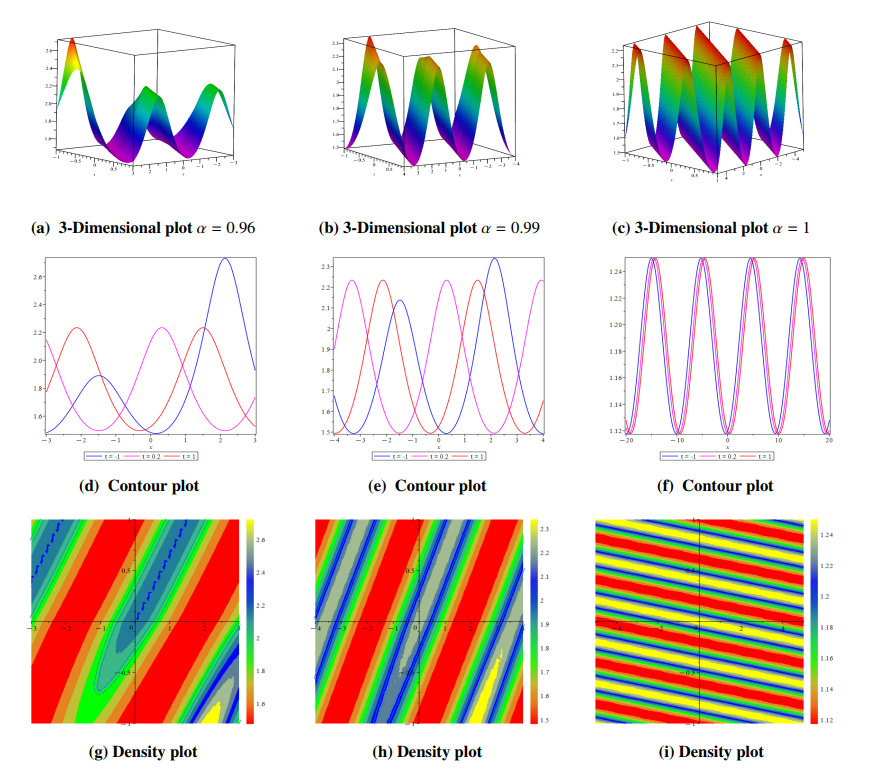
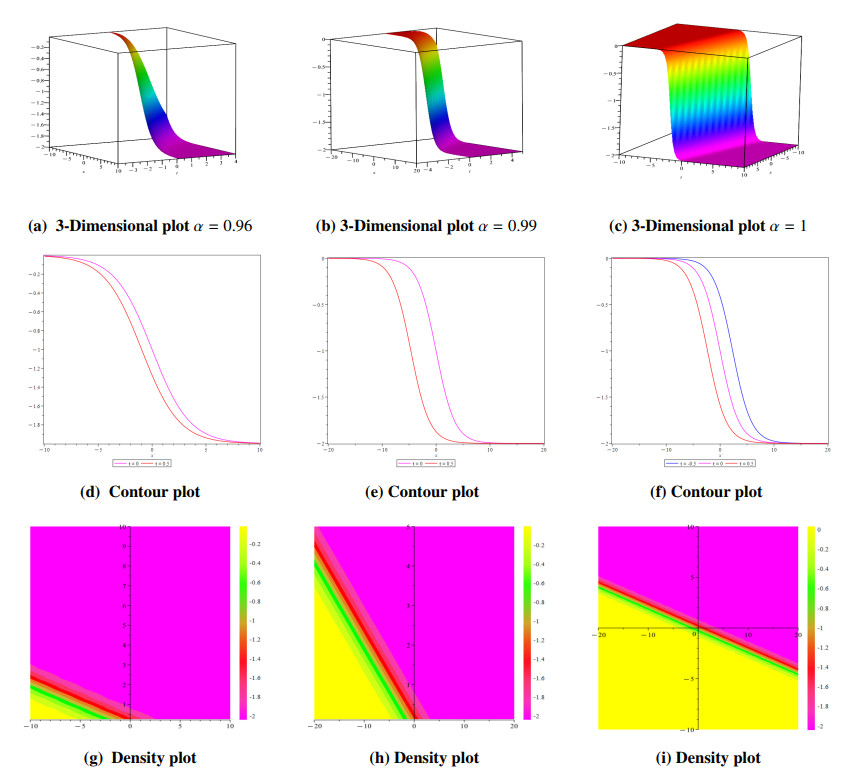
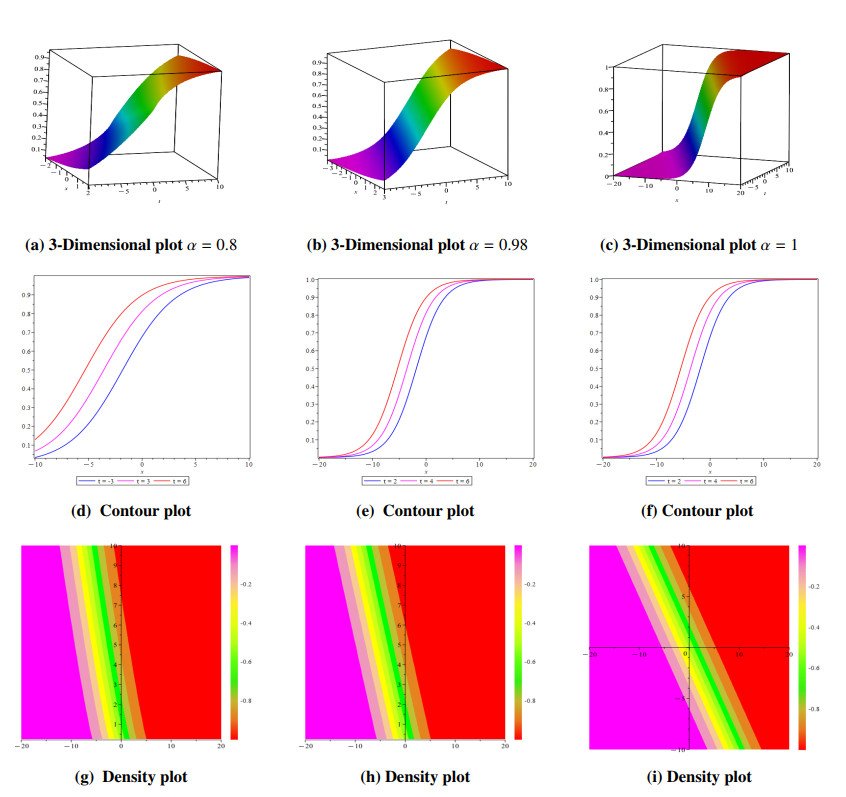
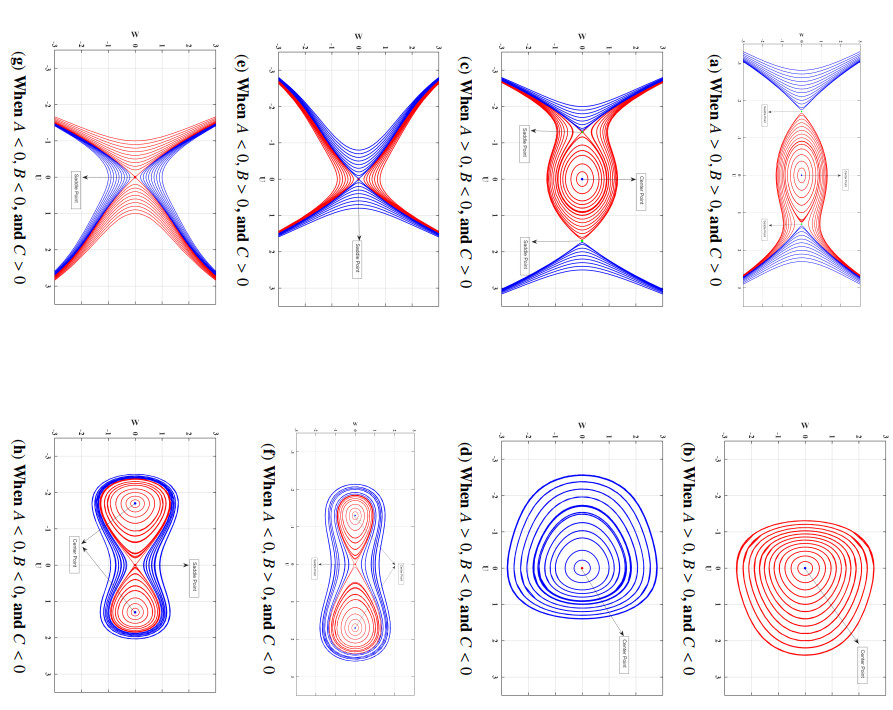
The propagation of nonlinear electrical impulses in neuronal media can be modeled through nonlinear fractional differential equations that incorporate the memory and hereditary characteristics of biological tissues. The motivation of this study is to provide a comprehensive analytical and dynamical investigation of the time-fractional nonlinear neuron model (TFNNM), with the aim of obtaining explicit wave structures and gaining deeper insight into the qualitative behavior of the model. From an analytical perspective, the study seeks to derive exact traveling-wave solutions that can characterize different nonlinear wave patterns, including dark, periodic, and kink-type structures. From a dynamical perspective, the study aims to explore the underlying phase-space behavior of the reduced system by examining its Hamiltonian structure, equilibrium points, and their stability and classification. In particular, the identification of center, saddle, and degenerate cusp configurations under appropriate parameter conditions on $ A, B $, and $ C $ provides a systematic understanding of the possible dynamical regimes of the model. Thus, the study is motivated by the need to combine exact solution techniques with dynamical-systems analysis to obtain a more complete understanding of the nonlinear behavior and wave propagation characteristics of the TFNNM. Moreover, the phase portraits demonstrate that the signs of dynamical parameters strongly control the number and type of real equilibrium points and consequently determine the topology of the phase space. Eight representative parameter regimes are examined, showing configurations containing a central equilibrium surrounded by saddle structures, two center-type equilibria separated by a saddle, and regimes in which the nonzero equilibria become imaginary. The obtained dynamical behavior provides a qualitative interpretation of the traveling-wave structures and establishes a direct connection between the parameter space, equilibrium configurations, and nonlinear wave dynamics. These results enhance the understanding of fractional neuron wave propagation and provide a useful analytical framework for studying nonlinear signal transmission in biological media.
Citation: Faisal Hayat Shaheen, Amal Alabdullatif, Khizar Farooq. Fractional nonlinear wave dynamics for neural signal processing in bioengineering: Hamiltonian bifurcations and exact soliton solutions[J]. AIMS Mathematics, 2026, 11(10): 33964-33993. doi: 10.3934/math.20261325
The propagation of nonlinear electrical impulses in neuronal media can be modeled through nonlinear fractional differential equations that incorporate the memory and hereditary characteristics of biological tissues. The motivation of this study is to provide a comprehensive analytical and dynamical investigation of the time-fractional nonlinear neuron model (TFNNM), with the aim of obtaining explicit wave structures and gaining deeper insight into the qualitative behavior of the model. From an analytical perspective, the study seeks to derive exact traveling-wave solutions that can characterize different nonlinear wave patterns, including dark, periodic, and kink-type structures. From a dynamical perspective, the study aims to explore the underlying phase-space behavior of the reduced system by examining its Hamiltonian structure, equilibrium points, and their stability and classification. In particular, the identification of center, saddle, and degenerate cusp configurations under appropriate parameter conditions on $ A, B $, and $ C $ provides a systematic understanding of the possible dynamical regimes of the model. Thus, the study is motivated by the need to combine exact solution techniques with dynamical-systems analysis to obtain a more complete understanding of the nonlinear behavior and wave propagation characteristics of the TFNNM. Moreover, the phase portraits demonstrate that the signs of dynamical parameters strongly control the number and type of real equilibrium points and consequently determine the topology of the phase space. Eight representative parameter regimes are examined, showing configurations containing a central equilibrium surrounded by saddle structures, two center-type equilibria separated by a saddle, and regimes in which the nonzero equilibria become imaginary. The obtained dynamical behavior provides a qualitative interpretation of the traveling-wave structures and establishes a direct connection between the parameter space, equilibrium configurations, and nonlinear wave dynamics. These results enhance the understanding of fractional neuron wave propagation and provide a useful analytical framework for studying nonlinear signal transmission in biological media.

| [1] |
K. K. Ali, A. Yusuf, A. Yokus, M. R. Ali, Optical waves solutions for the perturbed Fokas–Lenells equation through two different methods, Results Phys., 53 (2023), 106869. https://doi.org/10.1016/j.rinp.2023.106869 doi: 10.1016/j.rinp.2023.106869

|
| [2] |
A. Zafar, M. Raheel, A. M. Mahnashi, A. Bekir, M. R. Ali, A. S. Hendy, Exploring the new soliton solutions to the nonlinear M-fractional evolution equations in shallow water by three analytical techniques, Results Phys., 54 (2023), 107092. https://doi.org/10.1016/j.rinp.2023.107092 doi: 10.1016/j.rinp.2023.107092
|
| [3] |
K. K. Ali, S. Tarla, M. R. Ali, A. Yusuf, Modulation instability analysis and optical solutions of an extended (2+1)-dimensional perturbed nonlinear Schrödinger equation, Results Phys., 45 (2023), 106255. https://doi.org/10.1016/j.rinp.2023.106255 doi: 10.1016/j.rinp.2023.106255
|
| [4] |
H. Ahmad, M. N. Alam, M. Omri, New computational results for a prototype of an excitable system, Results Phys., 28 (2021), 104666. https://doi.org/10.1016/j.rinp.2021.104666 doi: 10.1016/j.rinp.2021.104666
|
| [5] |
B. Al Alwan, M. Abu Bakar, W. A. Faridi, A. C. Turcu, A. Akgül, M. Sallah, The propagating exact solitary waves formation of generalized Calogero–Bogoyavlenskii–Schiff equation with robust computational approaches, Fractal Fract., 7 (2023), 191. https://doi.org/10.3390/fractalfract7020191 doi: 10.3390/fractalfract7020191
|
| [6] |
K. U. Tariq, E. Tala-Tebue, H. Rezazadeh, M. Younis, A. Bekir, Y. M. Chu, Construction of new exact solutions of the resonant fractional NLS equation with the extended Fan sub-equation method, J. King Saud Univ. Sci., 33 (2021), 101643. https://doi.org/10.1016/j.jksus.2021.101643 doi: 10.1016/j.jksus.2021.101643
|
| [7] |
S. Tarla, K. K. Ali, R. Yilmazer, Newly modified unified auxiliary equation method and its applications, Optik, 269 (2022), 169880. https://doi.org/10.1016/j.ijleo.2022.169880 doi: 10.1016/j.ijleo.2022.169880
|
| [8] |
R. A. Aljethi, E. Hussain, Nonlinear wave structures in a truncated M-fractional complex mKdV system: soliton dynamics and numerical simulations, Axioms, 15 (2026), 454. https://doi.org/10.3390/axioms15060454 doi: 10.3390/axioms15060454
|
| [9] |
E. M. Özkan, A. Özkan, The soliton solutions for some nonlinear fractional differential equations with Beta-derivative, Axioms, 10 (2021), 203. https://doi.org/10.3390/axioms10030203 doi: 10.3390/axioms10030203
|
| [10] |
A. R. Ali, M. N. Alam, M. W. Parven, Unveiling optical soliton solutions and bifurcation analysis in the space-time fractional Fokas–Lenells equation via SSE approach, Sci. Rep., 14 (2024), 2000. https://doi.org/10.1038/s41598-024-52308-9 doi: 10.1038/s41598-024-52308-9
|
| [11] |
A. Danladi, A. R. Abdullah, E. Hussain, Beenish, Exploring qualitative analysis and interaction dynamics in a (3+1)-dimensional Boussinesq equation Ⅱ via Hirota bilinear method, Mathematics, 14 (2026), 1981. https://doi.org/10.3390/math14111981 doi: 10.3390/math14111981
|
| [12] |
A. Ali, J. Ahmad, S. Javed, S. Ur-Rehman, Analysis of chaotic structures, bifurcation and soliton solutions to fractional Boussinesq model, Phys. Scr., 98 (2023), 075217. https://doi.org/10.1088/1402-4896/acdcee doi: 10.1088/1402-4896/acdcee
|
| [13] |
M. I. Asjad, W. A. Faridi, S. E. Alhazmi, A. Hussanan, The modulation instability analysis and generalized fractional propagating patterns of the Peyrard–Bishop DNA dynamical equation, Opt. Quantum Electron., 55 (2023), 232. https://doi.org/10.1007/s11082-022-04477-y doi: 10.1007/s11082-022-04477-y
|
| [14] |
A. U. Awan, M. Tahir, K. A. Abro, Multiple soliton solutions with chiral nonlinear Schrödinger's equation in (2+1)-dimensions, Eur. J. Mech. B Fluids, 85 (2021), 68–75. https://doi.org/10.1016/j.euromechflu.2020.07.014 doi: 10.1016/j.euromechflu.2020.07.014
|
| [15] |
W. A. Faridi, U. Asghar, M. I. Asjad, A. M. Zidan, S. M. Eldin, Explicit propagating electrostatic potential waves formation and dynamical assessment of generalized Kadomtsev–Petviashvili modified equal width-Burgers model with sensitivity and modulation instability gain spectrum visualization, Results Phys., 44 (2023), 106167. https://doi.org/10.1016/j.rinp.2022.106167 doi: 10.1016/j.rinp.2022.106167
|
| [16] |
W. A. Faridi, M. Abu Bakar, A. Akgül, M. Abd El-Rahman, S. M. El Din, Exact fractional soliton solutions of thin-film ferroelectric material equation by analytical approaches, Alexandria Eng. J., 78 (2023), 483–497. https://doi.org/10.1016/j.aej.2023.07.049 doi: 10.1016/j.aej.2023.07.049
|
| [17] |
M. Iqbal, M. N. Alam, D. Lu, A. R. Seadawy, N. E. Alsubaie, S. Ibrahim, On the exploration of dynamical optical solitons to modify unstable nonlinear Schrödinger equation arising in optical fibers, Opt. Quantum Electron., 56 (2024), 765. https://doi.org/10.1007/s11082-024-06468-7 doi: 10.1007/s11082-024-06468-7
|
| [18] |
G. Jumarie, Modified Riemann–Liouville derivative and fractional Taylor series of nondifferentiable functions further results, Comput. Math. Appl., 51 (2006), 1367–1376. https://doi.org/10.1016/j.camwa.2006.02.001 doi: 10.1016/j.camwa.2006.02.001
|
| [19] |
S. Z. Majid, W. A. Faridi, M. I. Asjad, M. Abd El-Rahman, S. M. Eldin, Explicit soliton structure formation for the Riemann wave equation and a sensitive demonstration, Fractal Fract., 7 (2023), 102. https://doi.org/10.3390/fractalfract7020102 doi: 10.3390/fractalfract7020102
|
| [20] |
N. Nasreen, D. Lu, U. Younas, A. R. Seadawy, M. Iqbal, Dynamics of optical pulses with the effect of second-order spatiotemporal dispersion, Opt. Quantum Electron., 56 (2024), 852. https://doi.org/10.1007/s11082-023-05864-9 doi: 10.1007/s11082-023-05864-9
|
| [21] |
N. Nasreen, M. N. Rafiq, U. Younas, M. Arshad, M. Abbas, M. R. Ali, Stability analysis and dynamics of solitary wave solutions of the (3+1)-dimensional generalized shallow water wave equation using the Riccati equation mapping method, Results Phys., 56 (2024), 107226. https://doi.org/10.1016/j.rinp.2023.107226 doi: 10.1016/j.rinp.2023.107226
|
| [22] |
M. M. Rahman, M. A. Habib, H. M. S. Ali, M. M. Miah, The generalized Kudryashov method: a renewed mechanism for performing exact solitary wave solutions of some NLEEs, J. Mech. Cont. Math. Sci., 14 (2019), 323–339. https://doi.org/10.26782/jmcms.2019.02.00022 doi: 10.26782/jmcms.2019.02.00022
|
| [23] | M. Shakeel, S. T. Mohyud-Din, Exact solutions of (3+1)-dimensional potential-YTSF equation by improved $(G'/G)$-expansion method and the extended tanh method, Ann. Pure Appl. Math., 4 (2013), 160–171. |
| [24] |
L. Tang, Bifurcation analysis and optical soliton solutions for the fractional complex Ginzburg–Landau equation in communication systems, Optik, 276 (2023), 170639. https://doi.org/10.1016/j.ijleo.2023.170639 doi: 10.1016/j.ijleo.2023.170639
|
| [25] |
M. N. Alam, M. A. Rahman, Study of the parametric effect of the wave profiles of the time-space fractional soliton neuron model equation arising in the topic of neuroscience, Partial Differ. Equ. Appl. Math., 12 (2024), 100985. https://doi.org/10.1016/j.padiff.2024.100985 doi: 10.1016/j.padiff.2024.100985
|
| [26] |
M. N. Alam, H. S. Akash, U. Saha, M. S. Hasan, M. W. Parvin, C. Tunç, Bifurcation analysis and solitary wave analysis of the nonlinear fractional soliton neuron model, Iran. J. Sci., 47 (2023), 1797–1808. https://doi.org/10.1007/s40995-023-01555-y doi: 10.1007/s40995-023-01555-y
|
| [27] |
M. R. Amin, R. Akter, K. M. Helal, M. S. Ullah, Analytical and numerical investigations, data-driven modeling via an analytical–machine learning approach, and chaotic analysis of a nonlinear fractional soliton neuron model, Sci. Prog., 109 (2026), 1–33. https://doi.org/10.1177/00368504261487286 doi: 10.1177/00368504261487286
|
| [28] |
M. S. Rahaman, M. S. Ullah, M. N. Islam, Novel dynamics of the nonlinear fractional soliton neuron model with sensitivity analysis, AIP Adv., 15 (2025), 085116. https://doi.org/10.1063/5.0282276 doi: 10.1063/5.0282276
|
| [29] |
S. S. Alzaid, B. S. T. Alkahtani, Exploration of bifurcation, chaos and novel optical dromions solution of the fractional nonlinear dynamical model, Sci. Rep., 15 (2025), 23112. https://doi.org/10.1038/s41598-025-04731-9 doi: 10.1038/s41598-025-04731-9
|
| [30] | K. Diethelm, The analysis of fractional differential equations: an application-oriented exposition using differential operators of Caputo type, Berlin: Springer, 2010. https://doi.org/10.1007/978-3-642-14574-2 |
| [31] | I. Podlubny, Fractional differential equations: an introduction to fractional derivatives, fractional differential equations, to methods of their solution and some of their applications, San Diego: Academic Press, 1998. |
| [32] | R. Hilfer, Applications of fractional calculus in physics, Singapore: World Scientific, 2000. https://doi.org/10.1142/3779 |
| [33] |
G. Jumarie, On the representation of fractional Brownian motion as an integral with respect to $(dt)^{\alpha}$, Appl. Math. Lett., 18 (2005), 739–748. https://doi.org/10.1016/j.aml.2004.05.014 doi: 10.1016/j.aml.2004.05.014
|
| [34] |
H. Rezazadeh, A. Korkmaz, M. Eslami, J. Vahidi, R. Asghari, Traveling wave solution of conformable fractional generalized reaction Duffing model by generalized projective Riccati equation method, Opt. Quantum Electron., 50 (2018), 150. https://doi.org/10.1007/s11082-018-1416-1 doi: 10.1007/s11082-018-1416-1
|
| [35] |
X. Wang, J. Wu, Y. Wang, C. Chen, Extended tanh-function method and its applications in nonlocal complex mKdV equations, Mathematics, 10 (2022), 3250. https://doi.org/10.3390/math10183250 doi: 10.3390/math10183250
|
| [36] |
E. Hussain, Z. Li, S. A. A. Shah, E. A. Az-Zo'bi, M. Hussien, Dynamics study of stability analysis, sensitivity insights and precise soliton solutions of the nonlinear (STO)-Burger equation, Opt. Quantum Electron., 55 (2023), 1274. https://doi.org/10.1007/s11082-023-05588-w doi: 10.1007/s11082-023-05588-w
|
| [37] |
Z. Li, E. Hussain, Qualitative analysis and traveling wave solutions of a (3+1)-dimensional generalized nonlinear Konopelchenko-Dubrovsky-Kaup-Kupershmidt system, Fractal Fract., 9 (2025), 285. https://doi.org/10.3390/fractalfract9050285 doi: 10.3390/fractalfract9050285
|
| [38] |
E. A. Az-Zo'bi, E. Hussain, M. Iqbal, Q. M. M. Alomari, S. A. Ali Shah, D. Yaro, S. Aljawi, A. S. Alsubaie, M. A. Tashtoush, Chaotic, bifurcation, sensitivity, modulation stability analysis, and optical soliton structure to the nonlinear coupled Konno–Oono system in magnetic field, AIP Adv., 15 (2025), 095103. https://doi.org/10.1063/5.0291009 doi: 10.1063/5.0291009
|
| [39] |
E. Hussain, N. Raees, A. H. Tedjani, Y. Yildirim, T. Radwan, Phase portraits, detection of chaos, and solitary wave solutions of the first extended (3+1)-dimensional KP equation for nonlinear optical systems, AIMS Math., 11 (2026), 18917–18942. https://doi.org/10.3934/math.2026770 doi: 10.3934/math.2026770
|
| [40] |
H. Liu, F. Yan, Bifurcation and exact travelling wave solutions for Gardner-KP equation, Appl. Math. Comput., 228 (2014), 384–394. https://doi.org/10.1016/j.amc.2013.12.005 doi: 10.1016/j.amc.2013.12.005
|
| [41] |
X. Wang, Y. Sun, J. Qi, S. Haroon, Dynamical study of nonlinear fractional-order Schrödinger equations with bifurcation, chaos and modulation instability analysis, Int. J. Theor. Phys., 63 (2024), 252. https://doi.org/10.1007/s10773-024-05776-8 doi: 10.1007/s10773-024-05776-8
|
| [42] |
Y. Liu, X. Yong, Bifurcation and exact traveling wave solutions for the (3+1)-dimensional Gardner–KP equation, J. Nonlinear Math. Phys., 33 (2026), 76. https://doi.org/10.1007/s44198-026-00430-9 doi: 10.1007/s44198-026-00430-9
|
Figures(5) / Tables(3)

Faisal Hayat Shaheen, Amal Alabdullatif, Khizar Farooq. Fractional nonlinear wave dynamics for neural signal processing in bioengineering: Hamiltonian bifurcations and exact soliton solutions[J]. AIMS Mathematics, 2026, 11(10): 33964-33993. doi: 10.3934/math.20261325





 DownLoad: