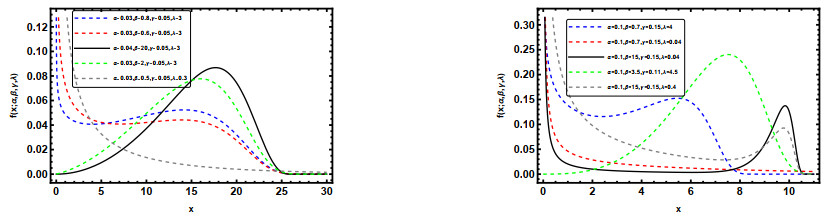
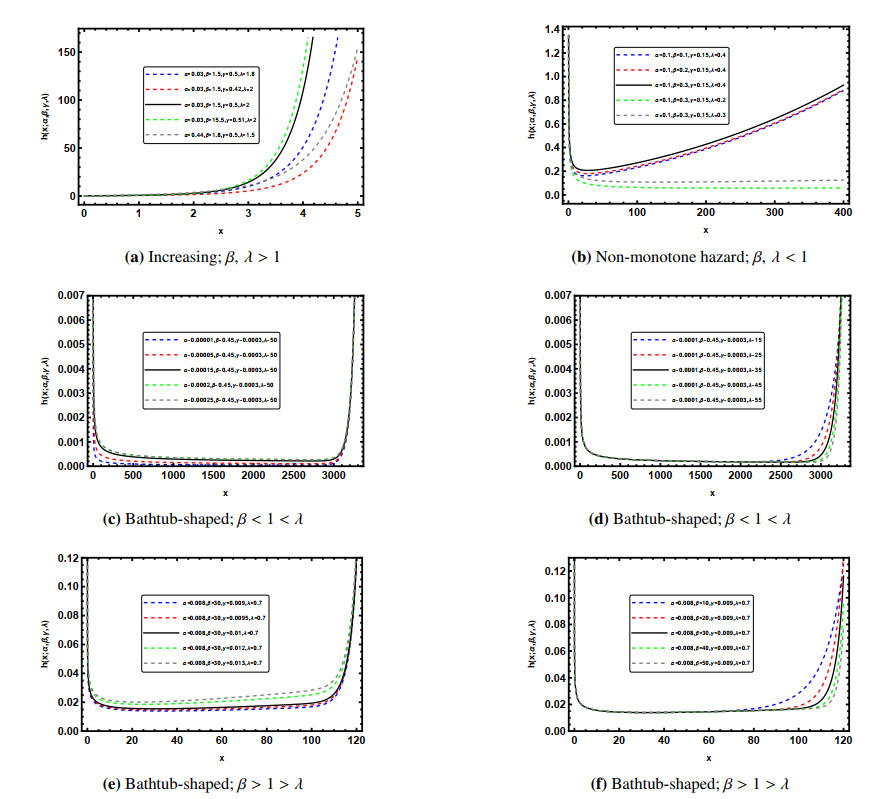
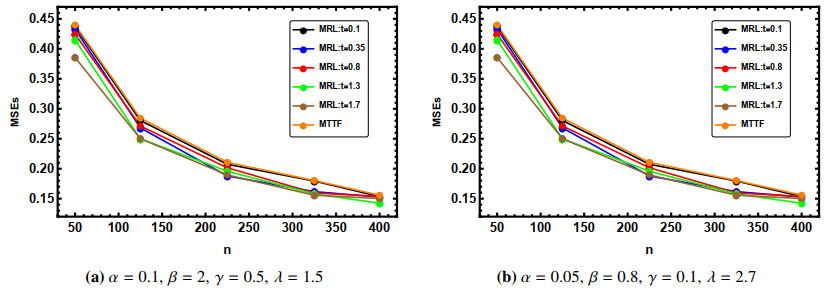
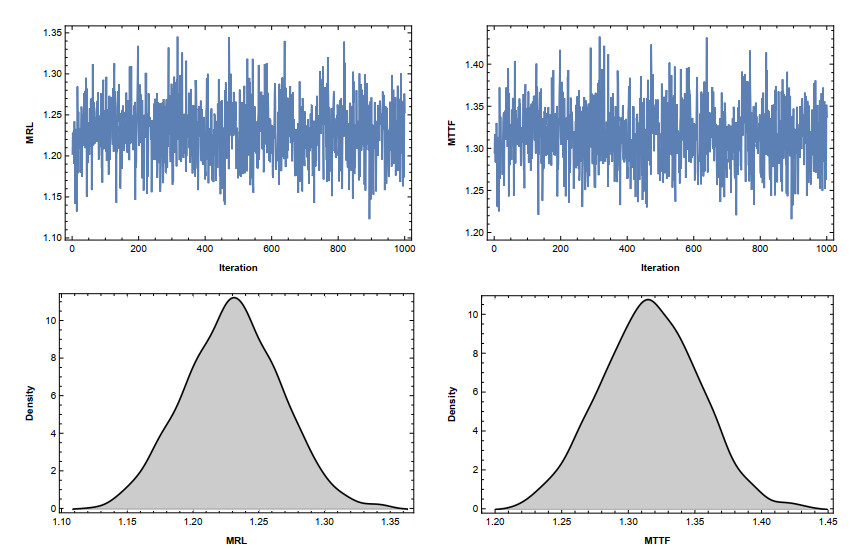
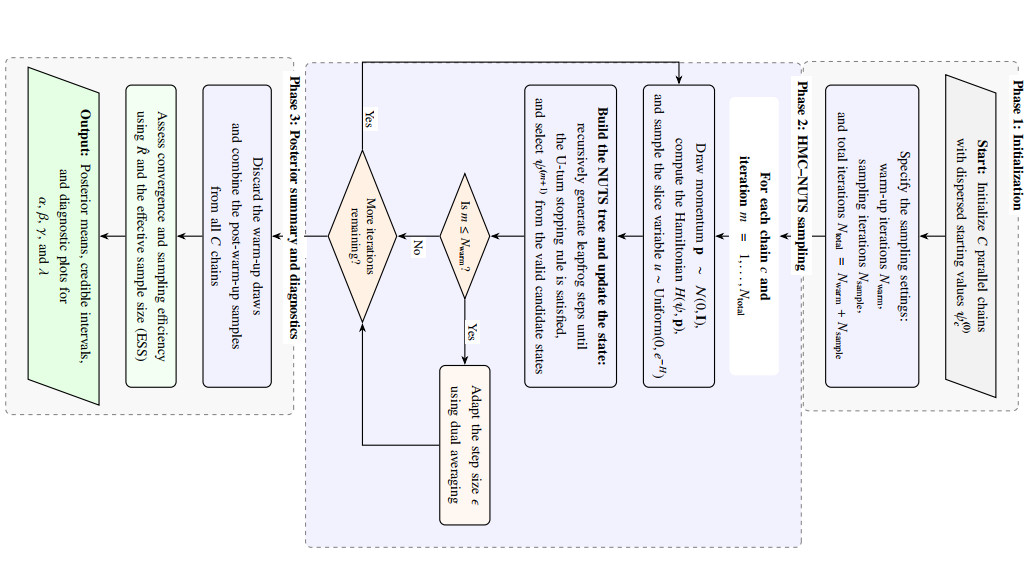
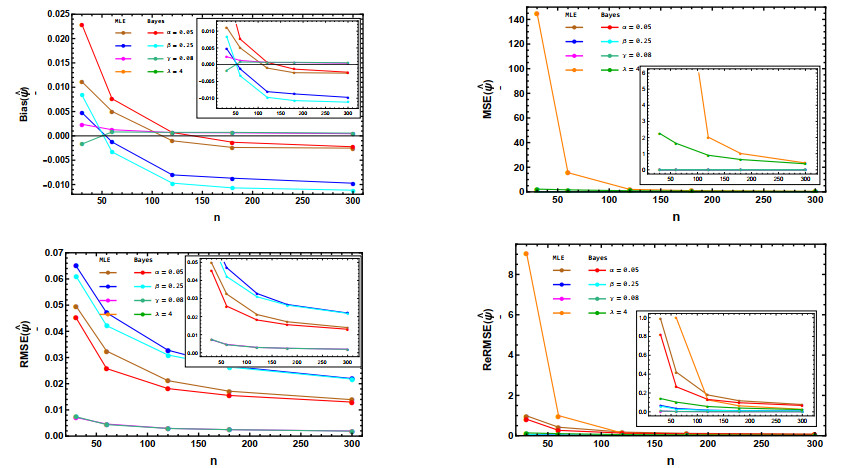
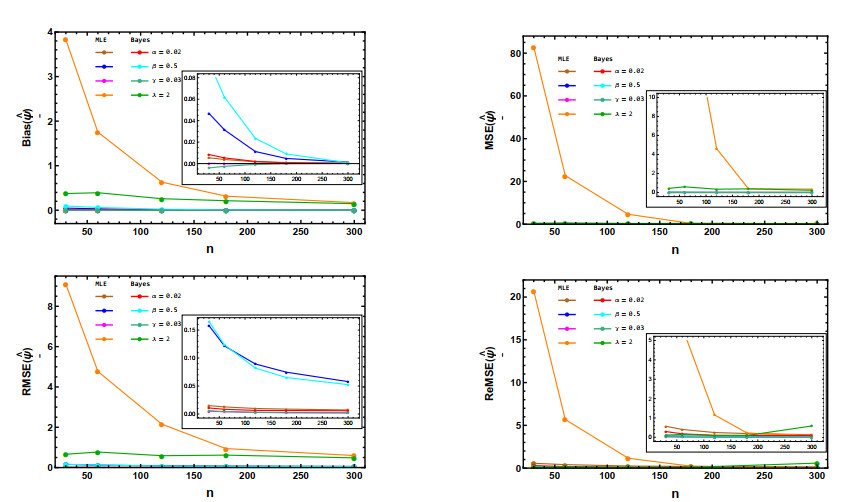
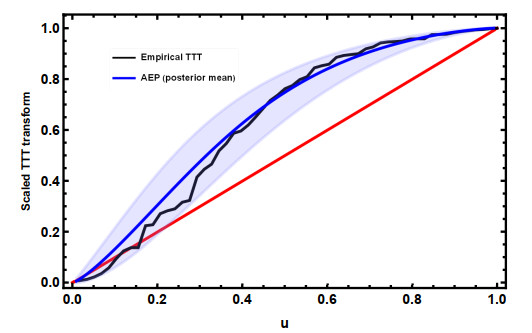
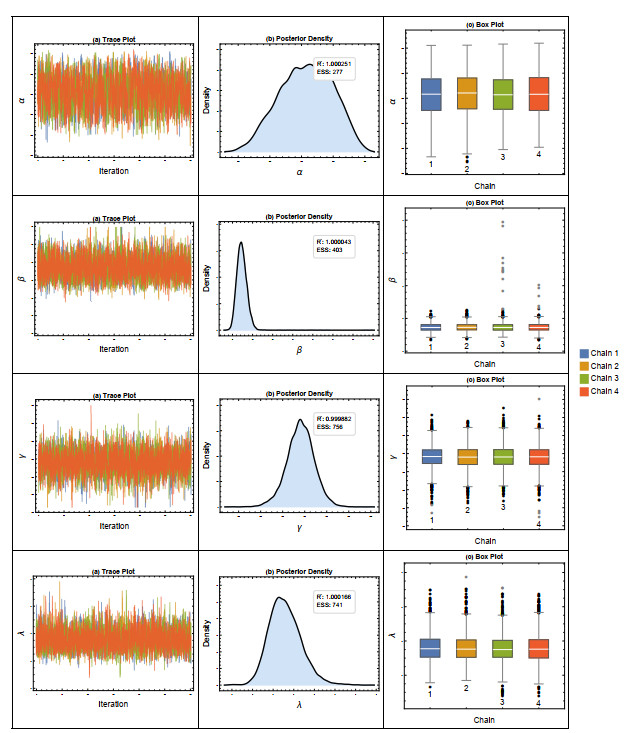
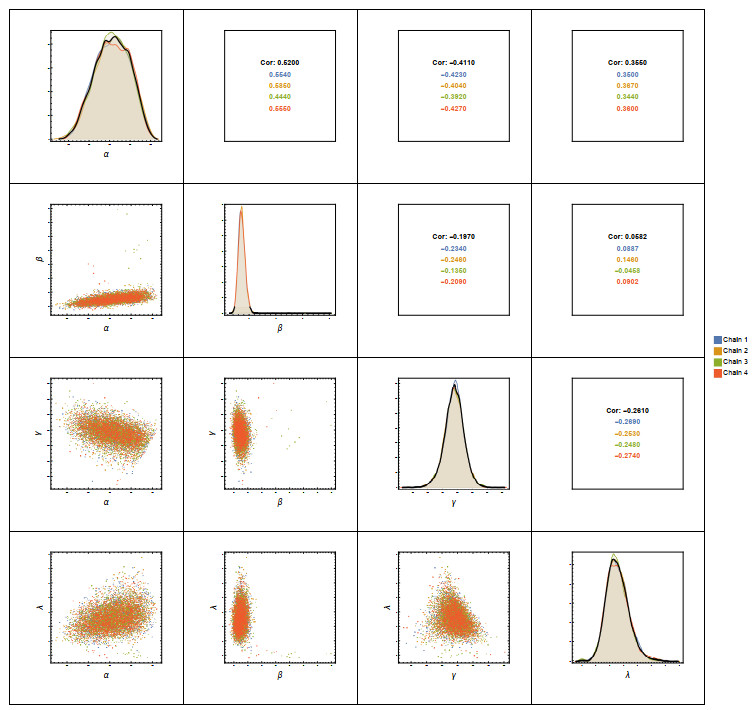
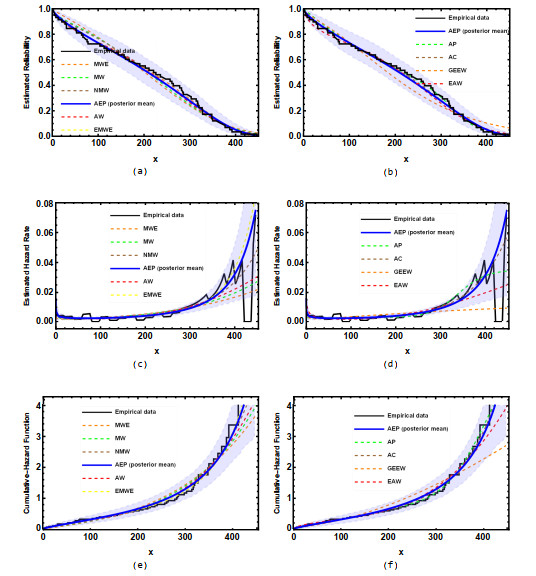
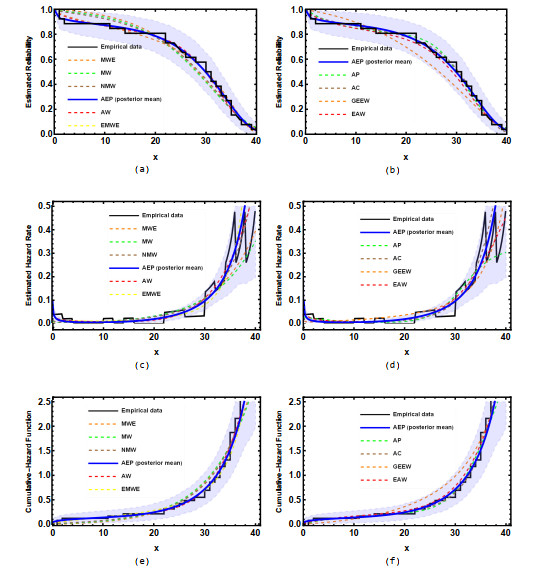
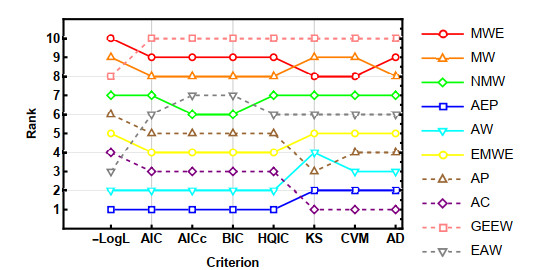
Accurately modeling lifetime data with non-monotonic hazard rates, particularly bathtub-shaped patterns, remains an important problem in lifetime analysis. This work introduced the additive exponential power (AEP) model, a four-parameter distribution obtained by combining two exponential power hazard components within an additive framework. The proposed model is capable of representing increasing and non-monotone hazard functions, including bathtub-shaped patterns, which makes it suitable for a wide range of lifetime behaviors. Several distributional and reliability properties of the AEP model were derived to establish its theoretical basis. Parameter estimation was developed using both maximum likelihood and Bayesian approaches, with Bayesian computation carried out through Hamiltonian Monte Carlo simulation to facilitate posterior inference under parameter dependence. The performance of the proposed estimation procedures was examined through Monte Carlo simulation, and the practical behavior of the model was illustrated using three real datasets with comparisons to existing lifetime models. The results indicated that the AEP model provides a flexible and useful addition to the family of statistical models for analyzing lifetime data.
Citation: M. G. M. Ghazal, Ghadah Alomani, Khalaf S. Sultan, Hossam M. M. Radwan. A robust two-component lifetime model with a bathtub-shaped hazard: A Bayesian study using Hamiltonian Monte Carlo simulation[J]. AIMS Mathematics, 2026, 11(10): 33911-33963. doi: 10.3934/math.20261324
Accurately modeling lifetime data with non-monotonic hazard rates, particularly bathtub-shaped patterns, remains an important problem in lifetime analysis. This work introduced the additive exponential power (AEP) model, a four-parameter distribution obtained by combining two exponential power hazard components within an additive framework. The proposed model is capable of representing increasing and non-monotone hazard functions, including bathtub-shaped patterns, which makes it suitable for a wide range of lifetime behaviors. Several distributional and reliability properties of the AEP model were derived to establish its theoretical basis. Parameter estimation was developed using both maximum likelihood and Bayesian approaches, with Bayesian computation carried out through Hamiltonian Monte Carlo simulation to facilitate posterior inference under parameter dependence. The performance of the proposed estimation procedures was examined through Monte Carlo simulation, and the practical behavior of the model was illustrated using three real datasets with comparisons to existing lifetime models. The results indicated that the AEP model provides a flexible and useful addition to the family of statistical models for analyzing lifetime data.

| [1] | W. Q. Meeker, L. A. Escobar, Statistical methods for reliability data, John Wiley & Sons, 1998. |
| [2] |
W. Weibull, A statistical distribution function of wide applicability, J. Appl. Mech., 18 (1951), 293–297. http://dx.doi.org/10.1115/1.4010337 doi: 10.1115/1.4010337

|
| [3] | W. H. Bartley, Analysis of transformer failures, WGP 33 (03), Proceedings of the 36th Annual Conference on International Association of Engineering, 2003. |
| [4] |
M. K. Shakhatreh, A. J. Lemonte, G. M. Arenas, The log-normal modified Weibull distribution and its reliability implications, Reliab. Eng. Syst. Safe., 188 (2019), 6–22. http://dx.doi.org/10.1016/j.ress.2019.03.014 doi: 10.1016/j.ress.2019.03.014
|
| [5] | P. Kosky, R. Balmer, W. Keat, G. Wise, Industrial engineering, In: Exploring Engineering, Elsevier, 2021,229–257. https://doi.org/10.1016/B978-0-12-815073-3.00011-9 |
| [6] |
S. J. Almalki, J. Yuan, A new modified Weibull distribution, Reliab. Eng. Syst. Safe., 111 (2013), 164–170. http://dx.doi.org/10.1016/j.ress.2012.10.018 doi: 10.1016/j.ress.2012.10.018
|
| [7] |
T. T. Thach, R. Bris, An additive Chen-Weibull distribution and its applications in reliability modeling, Qual. Reliab. Eng. Int., 37 (2021), 352–373. http://dx.doi.org/10.1002/qre.2740 doi: 10.1002/qre.2740
|
| [8] |
B. Abba, H. Wang, H. S. Bakouch, A reliability and survival model for one and two failure modes system with applications to complete and censored datasets, Reliab. Eng. Syst. Safe., 223 (2022), 108460. http://dx.doi.org/10.1016/j.ress.2022.108460 doi: 10.1016/j.ress.2022.108460
|
| [9] | A. U. Abdullahi, H. Wang, Y. Liu, Y. Qin, Robust failure time model with Bayesian inference and its application to reliability analysis, Qual. Reliab. Eng. Int., 2025. http://dx.doi.org/10.1002/qre.3821 |
| [10] |
R. Jiang, D. N. Murthy, Reliability modeling involving two Weibull distributions, Reliab. Eng. Syst. Safe., 47 (1995), 187–198. http://dx.doi.org/10.1016/0951-8320(94)00045-P doi: 10.1016/0951-8320(94)00045-P
|
| [11] |
F. Wang, A new model with bathtub-shaped failure rate using an additive Burr XII distribution, Reliab. Eng. Syst. Safe., 70 (2000), 305–312. http://dx.doi.org/10.1016/S0951-8320(00)00066-1 doi: 10.1016/S0951-8320(00)00066-1
|
| [12] |
B. He, W. Cui, X. Du, An additive modified Weibull distribution, Reliab. Eng. Syst. Safe., 145 (2016), 28–37. http://dx.doi.org/10.1016/j.ress.2015.08.010 doi: 10.1016/j.ress.2015.08.010
|
| [13] |
B. Singh, An additive perks-Weibull model with bathtub-shaped hazard rate function, Commun. Math. Stat., 4 (2016), 473–493. http://dx.doi.org/10.1007/s40304-016-0096-z doi: 10.1007/s40304-016-0096-z
|
| [14] |
B. Tarvirdizade, M. Ahmadpour, A new extension of Chen distribution with applications to lifetime data, Commun. Math. Stat., 9 (2021), 23–38. http://dx.doi.org/10.1007/s40304-019-00185-4 doi: 10.1007/s40304-019-00185-4
|
| [15] |
T. Xavier, J. K. Jose, S. Nadarajah, An additive power-transformed half-logistic model and its applications in reliability, Qual. Reliab. Eng. Int., 38 (2022), 3179–3196. http://dx.doi.org/10.1002/qre.3119 doi: 10.1002/qre.3119
|
| [16] |
L. C. Méndez-González, L. A. Rodríguez-Picón, I. J. Pérez-Olguin, V. García, D. Luviano-Cruz, The additive Perks distribution and its applications in reliability analysis, Qual. Technol. Quant. M., 20 (2023), 784–808. http://dx.doi.org/10.1080/16843703.2022.2148884 doi: 10.1080/16843703.2022.2148884
|
| [17] |
L. C. Méndez-González, L. A. Rodríguez-Picón, I. J. Pérez-Olguin, R. L. Portilla, An additive Chen distribution with applications to lifetime data, Axioms, 12 (2023), 118. http://dx.doi.org/10.3390/axioms12020118 doi: 10.3390/axioms12020118
|
| [18] |
L. C. Méndez-González, L. A. Rodríguez-Picón, M. I. Rodríguez-Borbón, H. Sohn, The Chen-Perks distribution: Properties and reliability applications, Mathematics, 11 (2023), 3001. http://dx.doi.org/10.3390/math11133001 doi: 10.3390/math11133001
|
| [19] |
D. Jiang, Y. Han, W. Cui, F. Wan, T. Yu, B. Song, An improved modified Weibull distribution applied to predict the reliability evolution of an aircraft lock mechanism, Probabilist. Eng. Mech., 72 (2023), 103449. http://dx.doi.org/10.1016/j.probengmech.2023.103449 doi: 10.1016/j.probengmech.2023.103449
|
| [20] |
B. Abba, H. Wang, M. Muhammad, H. S. Bakouch, A robust bathtub-shaped failure time model for a two-component system with applications to complete and censored reliability data, Qual. Technol. Quant. M., 21 (2024), 309–339. http://dx.doi.org/10.1080/16843703.2023.2193771 doi: 10.1080/16843703.2023.2193771
|
| [21] |
B. Abba, H. Wang, A new failure times model for one and two failure modes system: A Bayesian study with Hamiltonian Monte Carlo simulation, P. I. Mech. Eng. O-J. Risk Reliab., 238 (2024), 304–323. http://dx.doi.org/10.1177/1748006X221146367 doi: 10.1177/1748006X221146367
|
| [22] |
B. Abba, J. Wu, M. Muhammad, A robust multi-risk model and its reliability relevance: A Bayes study with Hamiltonian Monte Carlo methodology, Reliab. Eng. Syst. Safe., 250 (2024), 110310. http://dx.doi.org/10.1016/j.ress.2024.110310 doi: 10.1016/j.ress.2024.110310
|
| [23] |
F. Amiru, U. Usman, S. Shamsuddeen, U. Adamu, B. Abba, The additive Dhillon-Chen distribution: Properties and applications to failure time data, Int. J. Stat. Distrib. Appl., 11 (2025), 1–10. http://dx.doi.org/10.11648/j.ijsda.20251101.11 doi: 10.11648/j.ijsda.20251101.11
|
| [24] |
M. G. M. Ghazal, Hamiltonian Monte Carlo–based inference for the flexible exponential power–Weibull distribution with applications in reliability analysis, AIMS Math., 11 (2026), 11659–11705. https://doi.org/10.3934/math.2026481 doi: 10.3934/math.2026481
|
| [25] |
R. M. Smith, L. J. Bain, An exponential power life-testing distribution, Commun. Stat.-Theory M., 4 (1975), 469–481. http://dx.doi.org/10.1080/03610927508827263 doi: 10.1080/03610927508827263
|
| [26] | E. L. Lehmann, G. Casella, Theory of point estimation, 2Eds., Springer, 1998. |
| [27] | A. W. van der Vaart, Asymptotic statistics, Cambridge University Press, 1998. |
| [28] |
N. Metropolis, A. W. Rosenbluth, M. N. Rosenbluth, A. H. Teller, E. Teller, Equation of state calculations by fast computing machines, J. Chem. Phys., 21 (1953), 1087–1092. http://dx.doi.org/10.1063/1.1699114 doi: 10.1063/1.1699114
|
| [29] |
W. K. Hastings, Monte Carlo sampling methods using Markov chains and their applications, Biometrika, 57 (1970), 97–109. http://dx.doi.org/10.1093/biomet/57.1.97 doi: 10.1093/biomet/57.1.97
|
| [30] |
A. E. Gelfand, Gibbs Sampling, J. Am. Stat. Assoc., 95 (2000), 1300–1304. https://doi.org/10.2307/2669775 doi: 10.2307/2669775
|
| [31] | R. M. Neal, MCMC using Hamiltonian dynamics, In: S. Brooks, A. Gelman, G. Jones, X. L. Meng Eds., Handbook of Markov Chain Monte Carlo, CRC Press, Boca Raton, 2011,113–162. |
| [32] | A. Gelman, J. B. Carlin, H. S. Stern, D. B. Dunson, A. Vehtari, D. B. Rubin, Bayesian data analysis, CRC Press, Boca Raton, 2014. https://doi.org/10.1201/b16018 |
| [33] |
T. T. Thach, R. Bris, Improved new modified Weibull model: A Bayes study using hamiltonian monte carlo simulation, P. I. Mech. Eng. O-J. Risk Reliab., 234 (2020), 496–511. https://doi.org/10.1177/1748006X19896740 doi: 10.1177/1748006X19896740
|
| [34] |
T. T. Thach, R. Bris, P. Volf, F. P. A. Coolen, Non-linear failure rate: A Bayes study using hamiltonian monte carlo simulation, Int. J. Approx. Reason., 123 (2020), 55–76. https://doi.org/10.1016/j.ijar.2020.04.007 doi: 10.1016/j.ijar.2020.04.007
|
| [35] | M. D. Hoffman, A. Gelman, The no-u-turn sampler: Adaptively setting path lengths in Hamiltonian Monte Carlo, J. Mach. Learn. Res., 15 (2014), 1593–1623. |
| [36] | M. Betancourt, A conceptual introduction to Hamiltonian Monte Carlo, arXiv Preprint, 2017. http://arXiv.org/abs/1701.02434 |
| [37] |
M. Nishio, A. Arakawa, Performance of Hamiltonian Monte Carlo and No-U-Turn sampler for estimating genetic parameters and breeding values, Genet. Sel. Evol., 51 (2019). https://doi.org/10.1186/s12711-019-0515-1 doi: 10.1186/s12711-019-0515-1
|
| [38] |
S. Thomas, W. Tu, Learning Hamiltonian Monte Carlo in R, Am. Stat., 75 (2021), 403–413. https://doi.org/10.1080/00031305.2020.1865198 doi: 10.1080/00031305.2020.1865198
|
| [39] |
L. Devlin, M. Carter, P. R. Horridge, P. L. Green, S. Maskell, The No-U-Turn Sampler as a proposal distribution in a sequential Monte Carlo sampler without accept/reject, IEEE Signal Proc. Let., 31 (2024), 1089–1093. https://doi.org/10.1109/LSP.2024.3386494 doi: 10.1109/LSP.2024.3386494
|
| [40] | D. Levy, M. D. Hoffman, J. Sohl-Dickstein, Generalizing Hamiltonian Monte Carlo with neural networks, In: International Conference on Learning Representations (ICLR), 2018. https://doi.org/10.48550/arXiv.1711.09268 |
| [41] |
X. Meng, J. L. Beck, Y. Huang, H. Li, Adaptive meta-learning stochastic gradient Hamiltonian Monte Carlo simulation for Bayesian updating of structural dynamic models, Comput. Method. Appl. M., 437 (2025), 117753. https://doi.org/10.1016/j.cma.2025.117753 doi: 10.1016/j.cma.2025.117753
|
| [42] |
X. Meng, Y. Huang, J. L. Beck, K. Jiang, H. Li, MCMC with adaptive principal-component transformation: Rotation-invariant universal samplers for Bayesian structural system identification, Adv. Eng. Inform., 74 (2026), 104758. https://doi.org/10.1016/j.aei.2026.104758 doi: 10.1016/j.aei.2026.104758
|
| [43] |
M. Xie, Y. Tang, T. N. Goh, A modified Weibull extension with bathtub-shaped failure rate function, Reliab. Eng. Syst. Safe., 76 (2002), 279–285. https://doi.org/10.1016/S0951-8320(02)00022-4 doi: 10.1016/S0951-8320(02)00022-4
|
| [44] |
C. D. Lai, M. Xie, D. N. P. Murthy, A modified Weibull distribution, IEEE T. Reliab., 52 (2003), 33–37. https://doi.org/10.1109/TR.2002.805788 doi: 10.1109/TR.2002.805788
|
| [45] |
M. G. M. Ghazal, A new extension of the modified Weibull distribution with applications for engineering data, Probabilist. Eng. Mech., 74 (2023), 103523. https://doi.org/10.1016/j.probengmech.2023.103523 doi: 10.1016/j.probengmech.2023.103523
|
| [46] |
A. M. Sarhan, J. Apaloo, Exponentiated modified Weibull extension distribution, Reliab. Eng. Syst. Safe., 112 (2013), 137–144. https://doi.org/10.1016/j.ress.2012.10.013 doi: 10.1016/j.ress.2012.10.013
|
| [47] |
M. K. Shakhatreh, A. J. Lemonte, G. M. Cordeiro, On the generalized extended exponential-Weibull distribution: Properties and different methods of estimation, Int. J. Comput. Math., 97 (2020), 1029–1057. https://doi.org/10.1080/00207160.2019.1605062 doi: 10.1080/00207160.2019.1605062
|
| [48] |
A. E. Ahmad, M. G. Ghazal, Exponentiated additive Weibull distribution, Reliab. Eng. Syst. Safe., 193 (2020), 106663. http://dx.doi.org/10.1016/j.ress.2019.106663 doi: 10.1016/j.ress.2019.106663
|
| [49] |
S. Kosznik-Biernacka, Makeham's generalised distribution, Comput. Method. Sci. Technol., 13 (2007), 113–120. https://doi.org/10.12921/cmst.2007.13.02.113-120 doi: 10.12921/cmst.2007.13.02.113-120
|
| [50] | N. Doganaksoy, G. Hahn, W. Meeker, Reliability analysis by failure mode, Qual. Prog., 35 (2002), 47–52. |
| [51] | J. P. Klein, M. L. Moeschberger, Survival analysis: Techniques for censored and truncated data, Springer, 2003. |
Figures(22) / Tables(17)

M. G. M. Ghazal, Ghadah Alomani, Khalaf S. Sultan, Hossam M. M. Radwan. A robust two-component lifetime model with a bathtub-shaped hazard: A Bayesian study using Hamiltonian Monte Carlo simulation[J]. AIMS Mathematics, 2026, 11(10): 33911-33963. doi: 10.3934/math.20261324





 DownLoad: