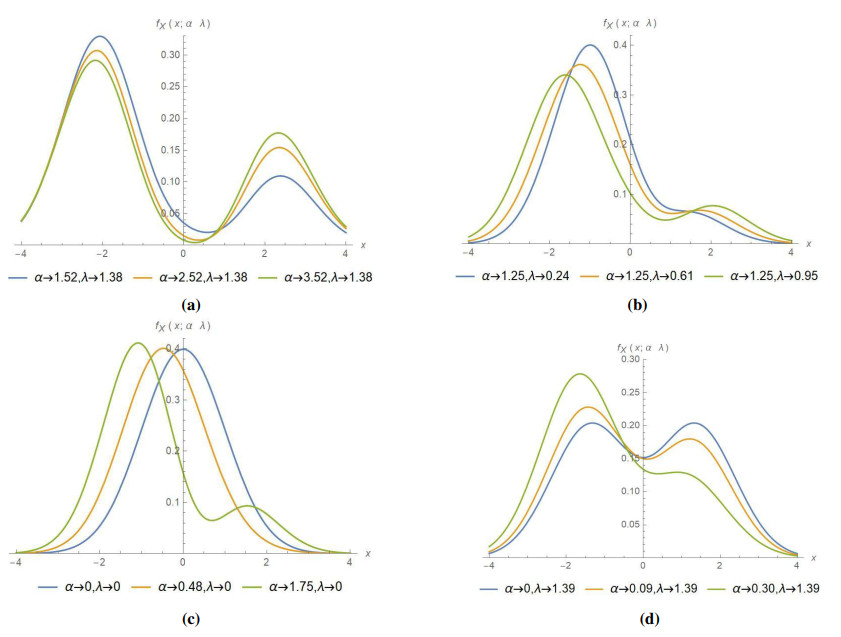
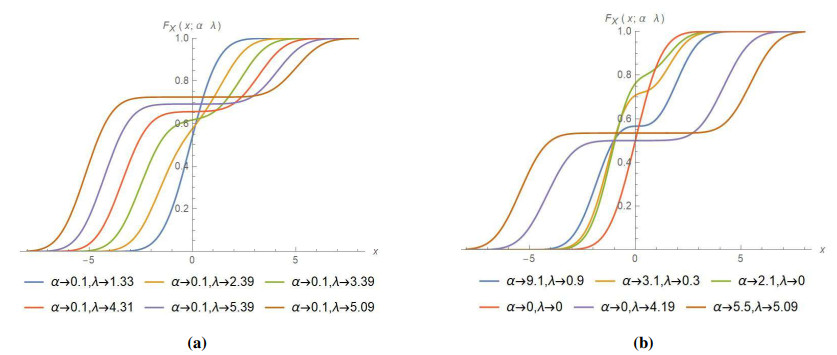
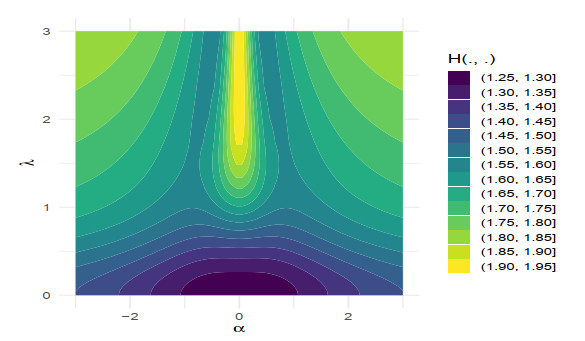
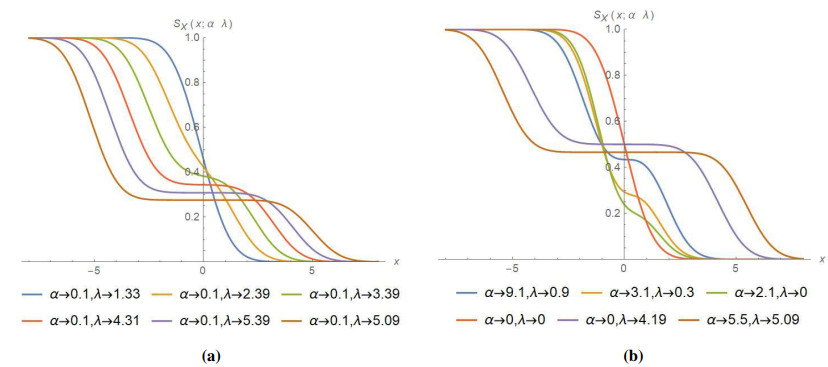
This study introduces a novel and adaptable bimodal class of two-piece skew-normal distributions, specifically designed to accommodate datasets with up to two modes. This paper comprehensively examines the analytical attributes of the suggested model, encompassing its cumulative distribution function, moments, moment generating function, Rényi entropy, reliability metrics with aging intensity, and other critical statistical properties. The model effectively captures asymmetric behavior, accommodating both negative and positive skewness, and is particularly well suited for leptokurtic data characterized by an increasing hazard rate. Furthermore, it adeptly manages both over- and under-dispersed data, enhancing its relevance across many domains. To improve its adaptability, extensions of the distribution concerning location and scale are also devised. Parameter estimation is conducted using the maximum likelihood approach. A detailed simulation study assesses the performance of the estimators, illustrating their asymptotic consistency and efficiency. The practical utility of the suggested distribution is demonstrated through applications to real-world datasets, where it regularly outperforms multiple existing rival models in goodness-of-fit. Finally, a likelihood ratio test is utilized to statistically validate the superiority of the presented model compared to its nested alternatives.
Citation: Reda Elbarougy, Jondeep Das, Partha Jyoti Hazarika, Mohamed S. Eliwa. The bimodal two-piece skew-normal distribution: Mathematical theory, reliability aging measures, and simulation-oriented decision analysis[J]. AIMS Mathematics, 2026, 11(1): 511-542. doi: 10.3934/math.2026022
This study introduces a novel and adaptable bimodal class of two-piece skew-normal distributions, specifically designed to accommodate datasets with up to two modes. This paper comprehensively examines the analytical attributes of the suggested model, encompassing its cumulative distribution function, moments, moment generating function, Rényi entropy, reliability metrics with aging intensity, and other critical statistical properties. The model effectively captures asymmetric behavior, accommodating both negative and positive skewness, and is particularly well suited for leptokurtic data characterized by an increasing hazard rate. Furthermore, it adeptly manages both over- and under-dispersed data, enhancing its relevance across many domains. To improve its adaptability, extensions of the distribution concerning location and scale are also devised. Parameter estimation is conducted using the maximum likelihood approach. A detailed simulation study assesses the performance of the estimators, illustrating their asymptotic consistency and efficiency. The practical utility of the suggested distribution is demonstrated through applications to real-world datasets, where it regularly outperforms multiple existing rival models in goodness-of-fit. Finally, a likelihood ratio test is utilized to statistically validate the superiority of the presented model compared to its nested alternatives.

| [1] |
S. Yang, D. Meng, H. Wang, C. Yang, A novel learning function for adaptive surrogate-model-based reliability evaluation, Philos. T. Roy. Soc. A, 382 (2024), 20220395. https://doi.org/10.1098/rsta.2022.0395 doi: 10.1098/rsta.2022.0395

|
| [2] |
S. Yang, D. Meng, H. Yang, B. Keshtegar, A. M. P. D. Jesus, S. P. Zhu, Adaptive Kriging-assisted enhanced sparrow search with augmented-Lagrangian first-order reliability method for highly efficient structural reliability analysis, Reliab. Eng. Syst. Safe., 267 (2026), 111916. https://doi.org/10.1016/j.ress.2025.111916 doi: 10.1016/j.ress.2025.111916
|
| [3] | A. Azzalini, A class of distributions which includes the normal ones, Scand. J. Stat., 12 (1985), 171–178. |
| [4] |
S. Nadarajah, G. Aryal, On the skew uniform distribution, Random Operators Sto., 12 (2004), 319–330. https://doi.org/10.1515/1569397042722337 doi: 10.1515/1569397042722337
|
| [5] |
G. Aryal, S. Nadarajah, On the skew Laplace distribution, J. Inform. Optim. Sci., 26 (2005), 205–217. https://doi.org/10.1080/02522667.2005.10699644 doi: 10.1080/02522667.2005.10699644
|
| [6] |
S. Nadarajah, The skew logistic distribution, AStA-Adv. Stat. Anal., 93 (2009), 187–203. https://doi.org/10.1007/s10182-009-0105-6 doi: 10.1007/s10182-009-0105-6
|
| [7] |
P. Theodossiou, Financial data and the skewed generalized t distribution, Manage. Sci., 44 (1998), 1650–1661. https://doi.org/10.1287/mnsc.44.12.1650 doi: 10.1287/mnsc.44.12.1650
|
| [8] |
S. Chakraborty, P. J. Hazarika, M. M. Ali, A new skew logistic distribution and its properties, Pak. J. Stat., 28 (2012), 513–524. https://doi.org/10.1016/j.future.2011.09.005 doi: 10.1016/j.future.2011.09.005
|
| [9] | M. R. Mahmoud, H. H. El-Damrawy, H. S. Abdalla, A new class of skew normal distribution: Tanh-skew normal distribution and its properties, Int. J. Sci. Res. Sci. Technol., 5 (2020), 31–44. |
| [10] |
N. B. Rushforth, P. H. Bennett, A. G. Steinberg, T. A. Burch, M. Miller, Diabetes in the Pima Indians: evidence of bimodality in glucose tolerance distributions, Diabetes, 20 (1971), 756–765. https://doi.org/10.2337/diab.20.11.756 doi: 10.2337/diab.20.11.756
|
| [11] |
A. O. Marcinek, M. Tabaka, Bimodal gene expression in noncooperative regulatory systems, P. Natl. Acad. Sci. USA, 107 (2010), 22096–22101. https://doi.org/10.1073/pnas.1008965107 doi: 10.1073/pnas.1008965107
|
| [12] |
G. V. Duarte, A. Braga, D. L. Miquelluti, V. A. Ozaki, Modeling of soybean yield using symmetric, asymmetric and bimodal distributions: Implications for crop insurance, J. Appl. Stat., 45 (2018), 1920–1937. https://doi.org/10.1080/02664763.2017.1406902 doi: 10.1080/02664763.2017.1406902
|
| [13] |
R. S. Lima, A. Kucuk, C. C. Berndt, Bimodal distribution of mechanical properties on plasma sprayed nanostructured partially stabilized zirconia, Mat. Sci. Eng. A, 327 (2002), 224–232. https://doi.org/10.1016/S0921-5093(01)01530-1 doi: 10.1016/S0921-5093(01)01530-1
|
| [14] | J. McGee, J. A. Caverlee, Z. Cheng, A geographic study of tie strength in social media, In: Proceedings of the 20th ACM International Conference on Information and Knowledge Management, New York, USA, 2011, 2333–2336. https://doi.org/10.1145/2063576.2063959 |
| [15] | H. Li, G. Fei, S. Wang, B. Liu, W. Shao, A. Mukherjee, et al., Bimodal distribution and co-bursting in review spam detection, In: Proceedings of the 26th International Conference on World Wide Web, 2017, 1063–1072. https://doi.org/10.1145/3038912.3052582 |
| [16] |
T. O. Lim, R. Bakri, Z. Morad, M. A. Hamid, Bimodality in blood glucose distribution: Is it universal? Diabetes Care, 25 (2002), 2212–2217. https://doi.org/10.2337/diacare.25.12.2212 doi: 10.2337/diacare.25.12.2212
|
| [17] |
D. E. Olivero, J. F. O. Pacheco, O. Venegas, H. Bolfarine, H. W. Gomez, On properties of the bimodal skew-normal distribution and an application, Mathematics, 8 (2020), 703. https://doi.org/10.3390/math8050703 doi: 10.3390/math8050703
|
| [18] | J. Das, P. J. Hazarika, S. Chakraborty, D. Pathak, G. G. Hamedani, H. Karamikabir, A bimodal extension of the tanh skew normal distribution: Properties and applications, Pak. J. Stat. Oper. Res., 20 (2024), 533–551. |
| [19] |
D. E. Olivero, Alpha-skew-normal distribution, Proyecciones (Antofagasta), 29 (2010), 224–240. http://dx.doi.org/10.4067/S0716-09172010000300006 doi: 10.4067/S0716-09172010000300006
|
| [20] |
P. J. Hazarika, S. Chakraborty, Alpha-skew-logistic distribution, IOSR J. Math., 10 (2014), 36–46. https://doi.org/10.9790/5728-10463646 doi: 10.9790/5728-10463646
|
| [21] |
S. S. Harandi, M. H. Alamatsaz, Alpha–skew–Laplace distribution, Stat. Probabil. Lett., 83 (2013), 774–782. https://doi.org/10.1016/j.spl.2012.11.024 doi: 10.1016/j.spl.2012.11.024
|
| [22] |
M. Sharafi, Z. Sajjadnia, J. Behboodian, A new generalization of alpha-skew-normal distribution, Commun. Stat.-Theor. M., 46 (2017), 6098–6111. https://doi.org/10.1080/03610926.2015.1117639 doi: 10.1080/03610926.2015.1117639
|
| [23] |
J. Das, P. J. Hazarika, D. Pathak, P. Sulewski, On a generalized Alpha skew Laplace distribution: Properties and applications, Aust. J. Stat., 54 (2025), 125–150. https://doi.org/10.17713/ajs.v54i2.2025 doi: 10.17713/ajs.v54i2.2025
|
| [24] | P. J. Hazarika, S. Shah, S. Chakraborty, The Balakrishnan-alpha-skew-normal distribution: Properties and applications, arXiv Preprint, 2019. https://doi.org/10.48550/arXiv.1906.07424 |
| [25] | S. Shah, S. Chakraborty, P. J. Hazarika, The Balakrishnan Alpha skew logistic distribution: Properties and applications, Int. J. Appl. Math. Stat., 59 (2020), 76–92. |
| [26] | S. Shah, P. J. Hazarika, S. Chakraborty, A new Alpha skew Laplace distribution: Properties and its applications, Int. J. Agric. Stat. Sci., 16 (2020), 1–10. |
| [27] | S. Shah, S. Chakraborty, P. J. Hazarika, M. M. Ali, The Log-Balakrishnan-alpha-skew-normal distribution and its applications, Pak. J. Stat. Oper. Res., 16 (2020), 109–117. |
| [28] |
E. G. Déniz, J. M. Sarabia, E. C. Ojeda, Bimodal normal distribution: Extensions and applications, J. Comput. Appl. Math., 388 (2020), 113292. https://doi.org/10.1016/j.cam.2020.113292 doi: 10.1016/j.cam.2020.113292
|
| [29] |
E. G. Déniz, E. C. Ojeda, J. M. Sarabia, Bimodal and multimodal extensions of the normal and skew normal distributions, REVSTAT-Stat. J., 23 (2023), 253–271. https://doi.org/10.57805/revstat.v23i2.563 doi: 10.57805/revstat.v23i2.563
|
| [30] |
A. Xu, J. Wang, D. Zhu, Z. Chen, Y. Wang, A robust Bayesian framework for degradation state identification in the presence of outliers, Nav. Res. Log., 2025. https://doi.org/10.1002/nav.70033 doi: 10.1002/nav.70033
|
| [31] |
A. Xu, W. Wang, Recursive Bayesian prediction of remaining useful life for gamma degradation process under conjugate priors, Scand. J. Stat., 2025. https://doi.org/10.1111/sjos.70031 doi: 10.1111/sjos.70031
|
| [32] |
H. Salinas, H. Bakouch, N. Qarmalah, G. M. Flórez, A flexible class of two-piece normal distribution with a regression illustration to biaxial fatigue data, Mathematics, 11 (2023), 1271. https://doi.org/10.3390/math11051271 doi: 10.3390/math11051271
|
| [33] |
K. E. Muller, Computing the confluent hypergeometric function, M(a, b, x), Numer. Math., 90 (2001), 179–196. https://doi.org/10.1007/s002110100285 doi: 10.1007/s002110100285
|
| [34] |
K. T. Kumar, S. Remidi, A. D. Reddy, P. D. Reddy, R. S. Varun Kumar, J. Madhu, Numerical analysis of the radiative heat transfer and fluid flow between two cylinders using a high-order efficient Probabilists' Hermite polynomial based collocation method, Numer. Heat Tr. B-Fund., 86 (2025), 1743–1762. https://doi.org/10.1080/10407790.2024.2320722 doi: 10.1080/10407790.2024.2320722
|
| [35] |
K. Peng, W. Chen, Maximum likelihood estimators and properties of the parameters of the Power Allamujia distribution under ranked set sampling, J. Stat. Comput. Sim., 95 (2025), 3705–3727. https://doi.org/10.1080/00949655.2025.2542540 doi: 10.1080/00949655.2025.2542540
|
| [36] |
A. Azzalini, A. W. Bowman, A look at some data on the Old Faithful geyser, Appl. Stat., 39 (1990), 357–365. https://doi.org/10.2307/2347385 doi: 10.2307/2347385
|
| [37] |
A. Gul, A. J. Sandhu, M. Farooq, M. Adil, Y. Hassan, F. Khan, Half logistic-truncated exponential distribution: Characteristics and applications, PLoS One, 18 (2023), e0285992. https://doi.org/10.1371/journal.pone.0285992 doi: 10.1371/journal.pone.0285992
|
Figures(12) / Tables(10)

Reda Elbarougy, Jondeep Das, Partha Jyoti Hazarika, Mohamed S. Eliwa. The bimodal two-piece skew-normal distribution: Mathematical theory, reliability aging measures, and simulation-oriented decision analysis[J]. AIMS Mathematics, 2026, 11(1): 511-542. doi: 10.3934/math.2026022





 DownLoad: