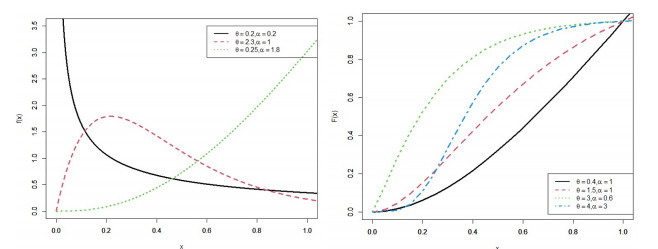
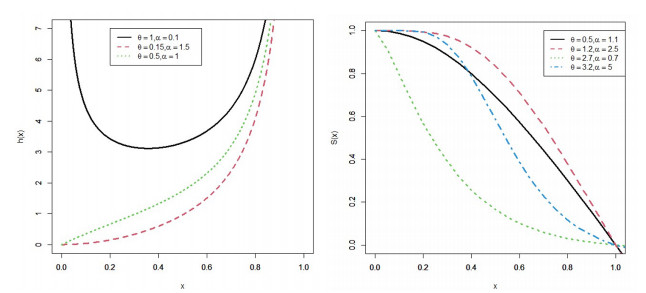
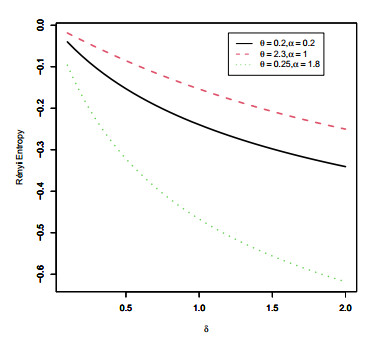
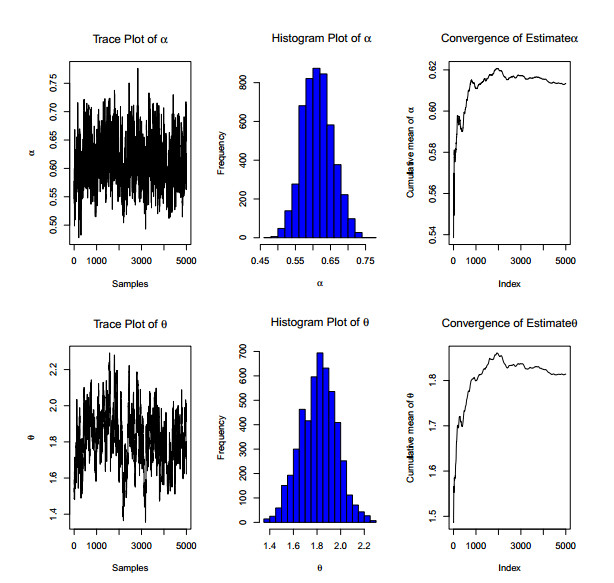
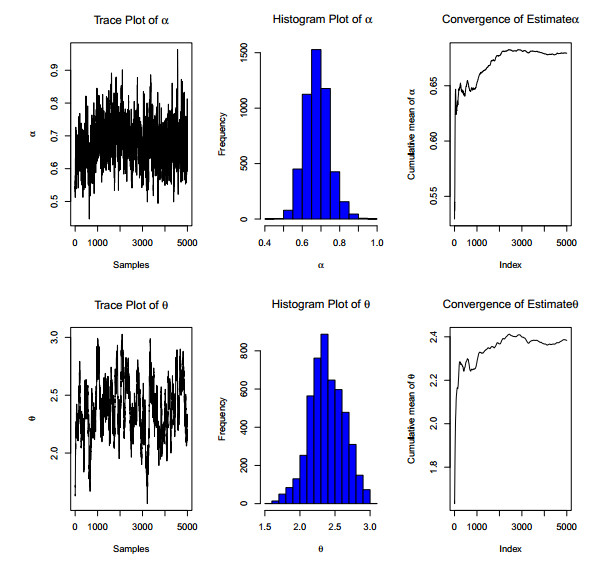
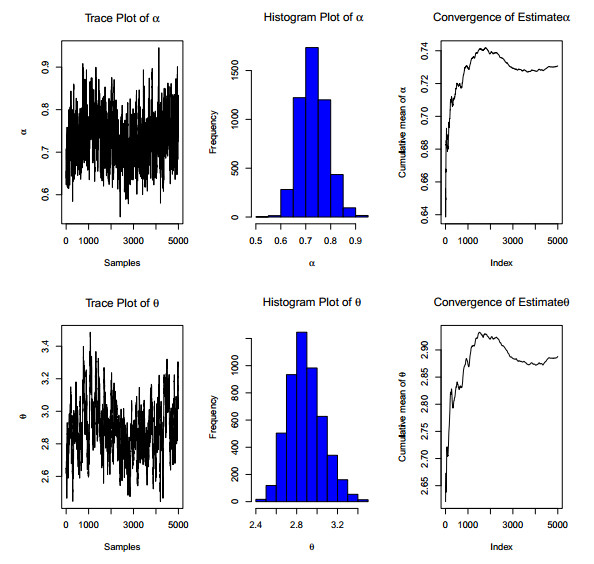
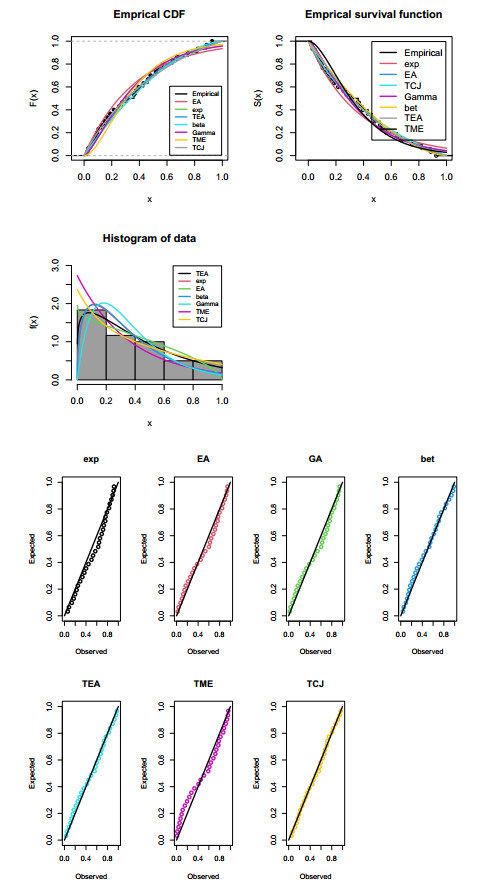
This study introduces a novel and flexible distribution called the truncated exponentiated Ailamujia (TEA) distribution, designed for modeling bounded lifetime data, particularly in engineering applications. The TEA distribution enhances the flexibility of the classic Ailamujia model by incorporating two shape parameters, allowing it to capture a wide range of hazard rate behaviors, including increasing, decreasing, and bathtub shapes. We investigated the mathematical properties of the TEA distribution, including its probability density function, moments, entropy measures, and order statistics. To estimate the model parameters, several classical and modern techniques are developed and compared, including maximum likelihood estimation (MLE), least squares estimation (LSE), weighted LSE, Cramér-von Mises estimation, maximum product spacing estimation, Anderson-Darling and right-tail Anderson-Darling estimation, Percentile estimation, and Bayesian estimation via the Markov chain Monte Carlo (MCMC) method. The effectiveness and flexibility of the proposed model were validated through extensive Monte Carlo simulations and real-life engineering datasets. The results demonstrate that the TEA distribution consistently provides a better fit compared to several well-known competing models. These findings highlight the practical value of the TEA model for engineers and statisticians working with bounded data of reliability type.
Citation: Hana S. Jabarah, Ahlam H. Tolba, Ahmed T. Ramadan, Awad I. El-Gohary. A new truncated unit exponentiated Ailamujia distribution with ranked-based inference and engineering applications[J]. AIMS Mathematics, 2025, 10(9): 20466-20504. doi: 10.3934/math.2025914
This study introduces a novel and flexible distribution called the truncated exponentiated Ailamujia (TEA) distribution, designed for modeling bounded lifetime data, particularly in engineering applications. The TEA distribution enhances the flexibility of the classic Ailamujia model by incorporating two shape parameters, allowing it to capture a wide range of hazard rate behaviors, including increasing, decreasing, and bathtub shapes. We investigated the mathematical properties of the TEA distribution, including its probability density function, moments, entropy measures, and order statistics. To estimate the model parameters, several classical and modern techniques are developed and compared, including maximum likelihood estimation (MLE), least squares estimation (LSE), weighted LSE, Cramér-von Mises estimation, maximum product spacing estimation, Anderson-Darling and right-tail Anderson-Darling estimation, Percentile estimation, and Bayesian estimation via the Markov chain Monte Carlo (MCMC) method. The effectiveness and flexibility of the proposed model were validated through extensive Monte Carlo simulations and real-life engineering datasets. The results demonstrate that the TEA distribution consistently provides a better fit compared to several well-known competing models. These findings highlight the practical value of the TEA model for engineers and statisticians working with bounded data of reliability type.

| [1] |
I. B. Aban, M. M. Meerschaert, A. K. Panorska, Parameter estimation for the truncated Pareto distribution, J. Am. Stat. Assoc., 101 (2006), 270–277. https://doi.org/10.1198/016214505000000411 doi: 10.1198/016214505000000411

|
| [2] |
S. Abbas, M. Farooq, J. A. Darwish, S. H. Shahbaz, M. Q. Shahbaz, Truncated Weibull-exponential distribution: Methods and applications, Sci. Rep., 13 (2023), 20849. https://doi.org/10.1038/s41598-023-48288-x doi: 10.1038/s41598-023-48288-x
|
| [3] |
S. Abid, R. Abdulrazak, [0, 1] truncated Frechet-Weibull and Frechet distributions, Int. J. Res. Ind. Eng., 7 (2018), 106–135. https://doi.org/10.22105/riej.2018.100865.1020 doi: 10.22105/riej.2018.100865.1020
|
| [4] | A. Ahmad, S. Q. U. Ain, A. Ahmad, R. Tripathi, Bayesian estimation of inverse Ailamujia distribution using different loss functions, J. Xi'an Univ. Archit. Technol., 12 (2020), 226–238. |
| [5] |
A. Algarni, A. M. Almarashi, F. Jamal, C. Chesneau, M. Elgarhy, Truncated inverse Lomax generated family of distributions with applications to biomedical data, J. Med. Imag. Health Inform., 11 (2021), 2425–2439. https://doi.org/10.1166/jmihi.2021.3733 doi: 10.1166/jmihi.2021.3733
|
| [6] |
A. M. Almarashi, M. Elgarhy, F. Jamal, C. Chesneau, The exponentiated truncated inverse Weibull-generated family of distributions with applications, Symmetry, 12 (2020), 650. https://doi.org/10.3390/sym12040650 doi: 10.3390/sym12040650
|
| [7] |
G. Alomani, M. Kayid, A. M. Elgazar, Classical and Bayesian analysis with fitting radiation data: Using a new truncated distribution, J. Radiat. Res. Appl. Sci., 18 (2025), 101498. https://doi.org/10.1016/j.jrras.2025.101498 doi: 10.1016/j.jrras.2025.101498
|
| [8] |
G. Alomani, M. Kayid, A. M. Elgazar, Statistical analysis of radiation data using power unit moment exponential distribution, J. Radiat. Res. Appl. Sci., 18 (2025), 101432. https://doi.org/10.1016/j.jrras.2025.101432 doi: 10.1016/j.jrras.2025.101432
|
| [9] |
R. A. R. Bantan, C. Chesneau, F. Jamal, I. Elbatal, M. Elgarhy, The truncated Burr XG family of distributions: Properties and applications to actuarial and financial data, Entropy, 23 (2021), 1088. https://doi.org/10.3390/e23081088 doi: 10.3390/e23081088
|
| [10] |
R. A. R. Bantan, F. Jamal, C. Chesneau, M. Elgarhy, Truncated inverted Kumaraswamy generated family of distributions with applications, Entropy, 21 (2019), 1089. https://doi.org/10.3390/e21111089 doi: 10.3390/e21111089
|
| [11] | J. Burkardt, The truncated normal distribution, Department of Scientific Computing Website, Florida State University, 1 (2014), 58. https://doi.org/10.1038/165444a0 |
| [12] |
S. M. Burroughs, S. F. Tebbens, The upper-truncated power law applied to earthquake cumulative frequency-magnitude distributions: Evidence for a time-independent scaling parameter, Bull. Seismol. Soc. Am., 92 (2002), 2983–2993. https://doi.org/10.1785/0120010191 doi: 10.1785/0120010191
|
| [13] |
R. C. H. Cheng, N. A. K. Amin, Estimating parameters in continuous univariate distributions with a shifted origin, J. R. Stat. Soc. Ser. B (Methodol.), 45 (1983), 394–403. https://doi.org/10.1111/j.2517-6161.1983.tb01268.x doi: 10.1111/j.2517-6161.1983.tb01268.x
|
| [14] |
W. Deng, J. Wang, X. Wu, H. Xi, A novel goodness of fit test for the truncated and non-truncated Yule distributions, Stat. Pap., 66 (2025), 1–18. https://doi.org/10.1007/s00362-025-01721-x doi: 10.1007/s00362-025-01721-x
|
| [15] |
A. M. El Gazar, M. ElGarhy, B. S. El-Desouky, Classical and Bayesian estimation for the truncated inverse power Ailamujia distribution with applications, AIP Adv., 13 (2023), 125104. https://doi.org/10.1063/5.0174794 doi: 10.1063/5.0174794
|
| [16] |
A. S. Hassan, M. A. Sabry, A. M. Elsehetry, Truncated power Lomax distribution with application to flood data, J. Stat. Appl. Probab., 9 (2020), 347–359. https://doi.org/10.18576/jsap/090214 doi: 10.18576/jsap/090214
|
| [17] |
A. Hassan, M. Sabry, A. Elsehetry, A new probability distribution family arising from truncated power Lomax distribution with application to Weibull model, Pak. J. Stat. Oper. Res., 16 (2020), 661–674. https://doi.org/10.18187/pjsor.v16i4.3442 doi: 10.18187/pjsor.v16i4.3442
|
| [18] |
H. S. Jabarah, A. H. Tolba, A. T. Ramadan, A. I. El-Gohary, The truncated unit Chris-Jerry distribution and its applications, Appl. Math., 18 (2024), 1317–1330. https://doi.org/10.18576/amis/180613 doi: 10.18576/amis/180613
|
| [19] |
K. Jayakumar, K. K. Sankaran, Generalized exponential truncated negative binomial distribution, Amer. J. Math. Manag. Sci., 36 (2017), 98–111. https://doi.org/10.1080/01966324.2017.1295892 doi: 10.1080/01966324.2017.1295892
|
| [20] |
B. A. Kalaf, F. S. M. Batah, A. I. Abdul-Nabi, Right truncated Shankar distribution and its properties, Ibn AL-Haitham J. Pure Appl. Sci., 38 (2025), 493–499. https://doi.org/10.30526/38.1.4031 doi: 10.30526/38.1.4031
|
| [21] |
Y. M. Kantar, I. Usta, Analysis of the upper-truncated Weibull distribution for wind speed, Energ. Convers. Manage., 96 (2015), 81–88. https://doi.org/10.1016/j.enconman.2015.02.063 doi: 10.1016/j.enconman.2015.02.063
|
| [22] |
T. Kumari, A. Chaturvedi, A. Pathak, Estimation and testing procedures for the reliability functions of Kumaraswamy-G distributions and a characterization based on records, J. Stat. Theory Pract., 13 (2019), 1–41. https://doi.org/10.1007/s42519-018-0014-7 doi: 10.1007/s42519-018-0014-7
|
| [23] |
J. Mazucheli, A. F. Menezes, S. Dey, Unit-Gompertz distribution with applications, Statistica, 79 (2019), 25–43. https://doi.org/10.6092/issn.1973-2201/8497 doi: 10.6092/issn.1973-2201/8497
|
| [24] | F. Mostafa, M. R. Haque, M. M. Rahman, F. Nasrin, Bayesian inference for left-truncated log-logistic distributions for time-to-event data analysis, arXiv preprint, 2025. https://doi.org/10.48550/arXiv.2506.17852 |
| [25] |
O. J. Obulezi, I. C. Anabike, O. G. Oyo, C. Igbokwe, H. Etaga, Marshall-Olkin Chris-Jerry distribution and its applications, Int. J. Innov. Sci. Res. Technol., 8 (2023), 522–533. https://doi.org/10.5281/zenodo.7949632 doi: 10.5281/zenodo.7949632
|
| [26] |
R. C. Patel, Estimates of parameters of truncated inverse Gaussian distribution, Ann. I. Stat. Math., 17 (1965), 29–33. https://doi.org/10.1007/BF02868150 doi: 10.1007/BF02868150
|
| [27] | E. J. G. Pitman, Some basic theory for statistical inference (Monographs on Applied Probability and Statistics), 1 Ed., Chapman and Hall/CRC, 2018. https://doi.org/10.1201/9781351076777 |
| [28] |
A. T. Ramadan, A. H. Tolba, B. S. El-Desouky, A unit half-logistic geometric distribution and its application in insurance, Axioms, 11 (2022), 676. https://doi.org/10.3390/axioms11120676 doi: 10.3390/axioms11120676
|
| [29] | B. Ranneby, The maximum spacing method. An estimation method related to the maximum likelihood method, Scand. J. Stat., 11 (1984), 93–112. Available from: http://www.jstor.org/stable/4615946. |
| [30] |
J. J. Swain, S. Venkatraman, J. R. Wilson, Least-squares estimation of distribution functions in Johnson's translation system, J. Stat. Comput. Simul., 29 (1988), 271–297. https://doi.org/10.1080/00949658808811068 doi: 10.1080/00949658808811068
|
| [31] |
A. H. Tolba, Bayesian and non-Bayesian estimation methods for simulating the parameter of the Akshaya distribution, Comput. J. Math. Stat. Sci., 1 (2022), 13–25. https://doi.org/10.21608/cjmss.2022.270897 doi: 10.21608/cjmss.2022.270897
|
| [32] |
L. Zaninetti, M. Ferraro, On the truncated Pareto distribution with applications, Open Phys., 6 (2008), 1–6. https://doi.org/10.2478/s11534-008-0008-2 doi: 10.2478/s11534-008-0008-2
|
| [33] |
R. A. ZeinEldin, C. Chesneau, F. Jamal, M. Elgarhy, A. M. Almarashi, S. Al-Marzouki, Generalized truncated Fréchet generated family distributions and their applications, Comput. Model. Eng. Sci., 126 (2021), 791–819. https://doi.org/10.32604/cmes.2021.012169 doi: 10.32604/cmes.2021.012169
|
| [34] | G. C. Canavos, C. P. Tsokos, A study of an ordinary and empirical Bayes approach to reliability estimation in the gamma life testing model, Annual Symposium on Reliability, IEEE, 1971. |
Figures(13) / Tables(12)

Hana S. Jabarah, Ahlam H. Tolba, Ahmed T. Ramadan, Awad I. El-Gohary. A new truncated unit exponentiated Ailamujia distribution with ranked-based inference and engineering applications[J]. AIMS Mathematics, 2025, 10(9): 20466-20504. doi: 10.3934/math.2025914





 DownLoad: