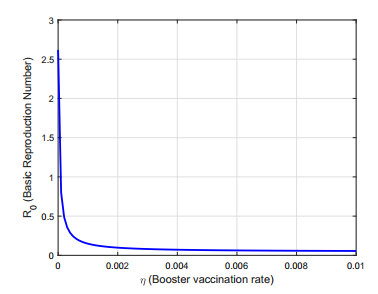
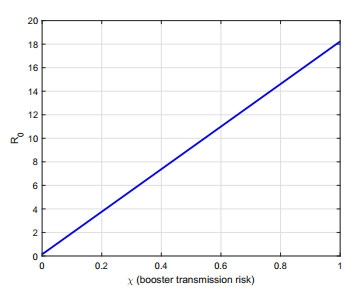
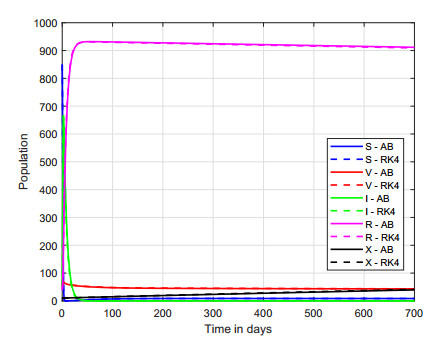
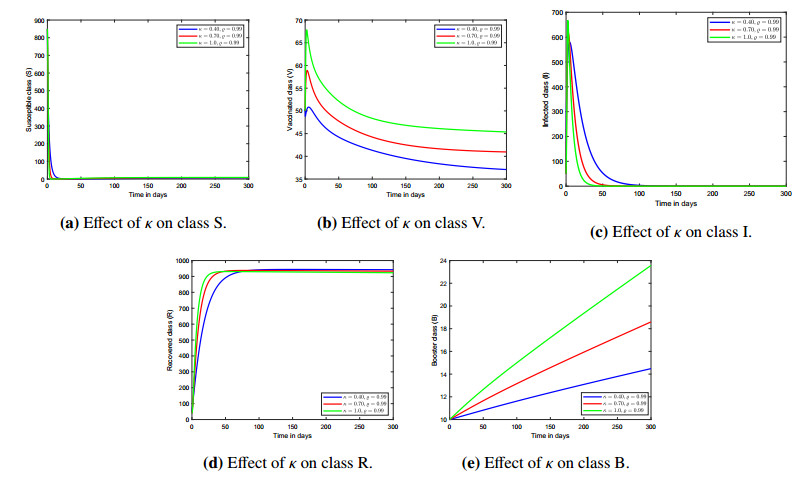
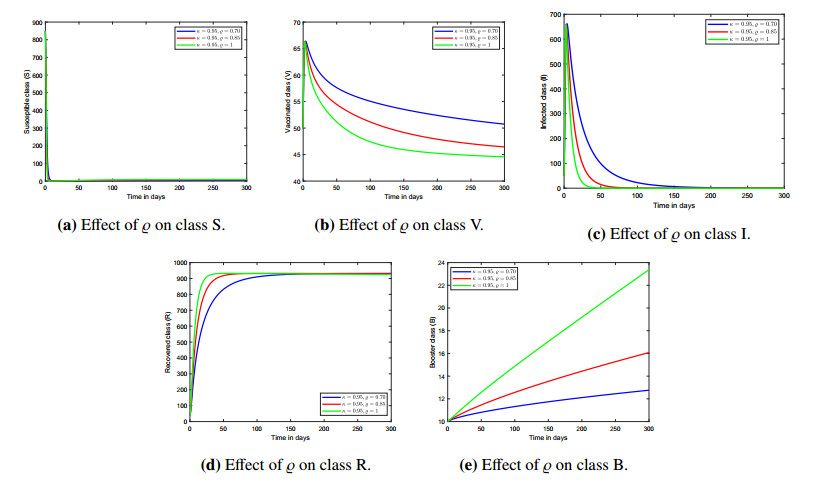
Rotavirus remains a leading cause of gastroenteritis in children under five in low- and middle-income countries due to waning immunity and incomplete vaccine coverage. To address this, we propose a mathematical model to analyze the transmission dynamics with primary and booster vaccination strategies. The model is formulated using the fractal-fractional derivative in the Caputo-Fabrizio sense, which allows for the incorporation of memory effects and hereditary properties in disease evolution. The population is structured into five compartments, including booster-immunized individuals. We derive the disease-free and endemic equilibrium points and analyze their local stability. The basic reproduction number is computed to determine the threshold conditions for disease persistence. We establish the existence and Hyers-Ulam (H-U) stability of the model, and validate the results through numerical simulations using the Adams-Bashforth method (ABM), confirmed by comparison with Runge-Kutta 4th Order (RK-4) solution plots to assess the booster vaccination impact. The results reveal that booster immunization plays a significant role in reducing the infection burden, thereby highlighting its relevance in public health planning.
Citation: Rabeb Sidaoui, Ashraf A. Qurtam, Arshad Ali, Muntasir Suhail, Khaled Aldwoah, Abdelaziz Elsayed, E. I. Hassan. Modeling rotavirus transmission with booster vaccination using fractal-fractional derivatives[J]. AIMS Mathematics, 2025, 10(9): 20025-20049. doi: 10.3934/math.2025895
Rotavirus remains a leading cause of gastroenteritis in children under five in low- and middle-income countries due to waning immunity and incomplete vaccine coverage. To address this, we propose a mathematical model to analyze the transmission dynamics with primary and booster vaccination strategies. The model is formulated using the fractal-fractional derivative in the Caputo-Fabrizio sense, which allows for the incorporation of memory effects and hereditary properties in disease evolution. The population is structured into five compartments, including booster-immunized individuals. We derive the disease-free and endemic equilibrium points and analyze their local stability. The basic reproduction number is computed to determine the threshold conditions for disease persistence. We establish the existence and Hyers-Ulam (H-U) stability of the model, and validate the results through numerical simulations using the Adams-Bashforth method (ABM), confirmed by comparison with Runge-Kutta 4th Order (RK-4) solution plots to assess the booster vaccination impact. The results reveal that booster immunization plays a significant role in reducing the infection burden, thereby highlighting its relevance in public health planning.

| [1] |
L. J. White, J. Buttery, B. Cooper, D. J. Nokes, G. Medley, Rotavirus within day care centres in Oxfordshire, UK: Characterization of partial immunity, J. R. Soc. Interface, 5 (2008), 1481–1490. https://doi.org/10.1098/rsif.2008.0115 doi: 10.1098/rsif.2008.0115

|
| [2] | WHO: World Health Organization, Generic protocol for monitoring impact of rotavirus vaccination on gastroenteritis disease burden and viral strains, Geneva, 2008. Available from: http://www.emro.who.int/health-topics/rotavirus-gastroenteritis/. |
| [3] |
E. Shim, H. Banks, C. Castillo-Chavez, Seasonality of rotavirus infection with its vaccination, Contemp. Math., 410 (2006), 327–347. https://doi.org/10.1090/conm/410/07735 doi: 10.1090/conm/410/07735
|
| [4] |
E. J. Anderson, S. G. Weber, Rotavirus infection in adults, Lancet Infect. Dis., 4 (2004), 91–99. https://doi.org/10.1016/S1473-3099(04)00928-4 doi: 10.1016/S1473-3099(04)00928-4
|
| [5] |
T. Ruuska, T. Vesikari, Rotavirus disease in Finnish children: Use of numerical scores for clinical severity of diarrhoeal episodes, Scand. J. Infect. Dis., 22 (1990), 259–267. https://doi.org/10.3109/00365549009027046 doi: 10.3109/00365549009027046
|
| [6] | R. F. Bishop, Natural history of human rotavirus infection, Arch. Virol., 12 (1996), 119–128. Available from: https://link.springer.com/chapter/10.1007/978-3-7091-6553-9_14. |
| [7] |
P. H. Dennehy, Transmission of rotavirus and other enteric pathogens in the home, Pediatr. Infect. Dis. J., 19 (2000), S103–S105. https://doi.org/10.1097/00006454-200010001-00003 doi: 10.1097/00006454-200010001-00003
|
| [8] |
L. W. Nitiema, J. Nordgren, D. Ouermi, D. Dianou, A. S. Traore, L. Svensson, et al., Burden of rotavirus and other enteropathogens among children with diarrhea in Burkina Faso, Int. J. Infect. Dis., 15 (2011), 646–652. https://doi.org/10.1016/j.ijid.2011.05.009 doi: 10.1016/j.ijid.2011.05.009
|
| [9] |
T. Snelling, P. Markey, J. Carapetis, R. Andrews, Rotavirus infection in Northern Territory before and after vaccination, Microbiol. Aust., 33 (2012), 61–63. https://doi.org/10.1071/MA12061 doi: 10.1071/MA12061
|
| [10] |
Y. Wang, Z. Jin, Z. Yang, Z. K. Zhang, T. Zhou, G. Q. Sun, Global analysis of an SIS model with an infective vector on complex networks, Nonlinear Anal.-Real, 13 (2012), 543–557. https://doi.org/10.1016/j.nonrwa.2011.07.033 doi: 10.1016/j.nonrwa.2011.07.033
|
| [11] |
Y. Wang, Z. Jin, Global analysis of multiple routes of disease transmission on heterogeneous networks, Physica A, 392 (2013), 3869–3880. https://doi.org/10.1016/j.physa.2013.03.042 doi: 10.1016/j.physa.2013.03.042
|
| [12] |
C. E. Okafor, Introducing rotavirus vaccination in Nigeria: Economic evaluation and implications, Pharmacoecon.-Open, 5 (2021), 545–557. https://doi.org/10.1007/s41669-020-00251-6 doi: 10.1007/s41669-020-00251-6
|
| [13] | P. Jain, A. Jain, Waterborne viral gastroenteritis: An introduction to common agents, Water and Health, Springer, Berlin, 2014, 53–74. https://doi.org/10.1007/978-81-322-1029-0_4 |
| [14] |
U. D. Parashar, E. G. Hummelman, J. S. Bresee, M. A. Miller, R. I. Glass, Global illness and deaths caused by rotavirus disease in children, Emerg. Infect. Dis., 9 (2003), 565–572. https://doi.org/10.3201/eid0905.020562 doi: 10.3201/eid0905.020562
|
| [15] | E. K. Yeargers, R. W. Shonkwiler, J. V. Herod, An introduction to the mathematics of biology: With computer algebra models, Springer, 2013. |
| [16] |
K. A. Aldwoah, M. A. Almalahi, M. Hleili, F. A. Alqarni, E. S. Aly, K. Shah, Analytical study of a modified-ABC fractional order breast cancer model, J. Appl. Math. Comput., 70 (2024), 3685–3716. https://doi.org/10.1007/s12190-024-02102-7 doi: 10.1007/s12190-024-02102-7
|
| [17] |
H. Khan, J. Alzabut, A. Shah, Z. Y. He, S. Etemad, S. Rezapour, et al., On fractal-fractional waterborne disease model: A study on theoretical and numerical aspects of solutions via simulations, Fractals, 31 (2023), 2340055. https://doi.org/10.1142/S0218348X23400558 doi: 10.1142/S0218348X23400558
|
| [18] |
S. E. Shuaib, P. Riyapan, A mathematical model to study the effects of breastfeeding and vaccination on rotavirus epidemics, J. Math. Fundam. Sci., 52 (2020), 43–65. https://doi.org/10.5614/j.math.fund.sci.2020.52.1.4 doi: 10.5614/j.math.fund.sci.2020.52.1.4
|
| [19] |
N. B. Ilmi, I. Darti, A. Suryanto, Dynamical analysis of a rotavirus infection model with vaccination and saturation incidence rate, J. Phys.: Conf. Ser., 1562 (2020), 012018. https://doi.org/10.1088/1742-6596/1562/1/012018 doi: 10.1088/1742-6596/1562/1/012018
|
| [20] |
F. Weidemann, M. Dehnert, J. Koch, O. Wichmann, M. Höhle, Bayesian parameter inference for dynamic infectious disease modelling: Rotavirus in Germany, Stat. Med., 33 (2014), 1580–1599. https://doi.org/10.1002/sim.6041 doi: 10.1002/sim.6041
|
| [21] |
A. Atangana, Fractal-fractional differentiation and integration: Connecting fractal calculus and fractional calculus to predict complex system, Chaos Soliton. Fract., 102 (2017), 396–406. https://doi.org/10.1016/j.chaos.2017.04.027 doi: 10.1016/j.chaos.2017.04.027
|
| [22] |
A. E. Hamza, O. Osman, A. Ali, A. Alsulami, K. Aldwoah, A. Mustafa, et al., Fractal-fractional-order modeling of liver fibrosis disease and its mathematical results with subinterval transitions, Fractal Fract., 8 (2024), 638. https://doi.org/10.3390/fractalfract8110638 doi: 10.3390/fractalfract8110638
|
| [23] |
T. A. Burton, A fixed-point theorem of Krasnoselskii, Appl. Math. Lett., 11 (1998), 85–88. https://doi.org/10.1016/S0893-9659(97)00138-9 doi: 10.1016/S0893-9659(97)00138-9
|
| [24] |
J. Peinadoa, J. Ibáñeza, E. Ariasb, V. Hernández, Adams-Bashforth and Adams-Moulton methods for solving differential Riccati equations, Comput. Math. Appl., 60 (2010), 3032–3045. https://doi.org/10.1016/j.camwa.2010.10.002 doi: 10.1016/j.camwa.2010.10.002
|
| [25] |
R. Singh, J. Mishra, V. K. Gupta, Dynamical analysis of a tumor growth model under the effect of fractal fractional Caputo-Fabrizio derivative, Int. J. Math. Comput. Eng., 1 (2023), 115–126. https://doi.org/10.2478/ijmce-2023-0009 doi: 10.2478/ijmce-2023-0009
|
| [26] |
W. Al-Sadi, Z. Wei, I. Moroz, A. Alkhazzan, Existence and stability of solution in Banach space for an impulsive system involving Atangana-Baleanu and Caputo-Fabrizio derivatives, Fractals, 31 (2023), 2340085. https://doi.org/10.1142/S0218348X23400856 doi: 10.1142/S0218348X23400856
|
| [27] |
Y. Tian, F. Yu, G. Zhang, C. Tian, X. Wang, Y. Chen, et al., Rotavirus outbreaks in China, 1982-2021: A systematic review, Front. Public Health, 12 (2024), 1423573. https://doi.org/10.3389/fpubh.2024.1423573 doi: 10.3389/fpubh.2024.1423573
|
| [28] |
W. Al-Sadi, Z. Wei, T. Q. Abdullah, A. Alkhazzan, J. F. Gómez-Aguilar, Dynamical and numerical analysis of the hepatitis B virus treatment model through fractal-fractional derivative, Math. Method. Appl. Sci., 48 (2025), 639–657. https://doi.org/10.1002/mma.10348 doi: 10.1002/mma.10348
|
| [29] |
O. L. Omondi, C. Wang, X. Xue, O. G. Lawi, Modeling the effects of vaccination on rotavirus infection, Adv. Differ. Equ., 2015 (2015), 381. https://doi.org/10.1186/s13662-015-0722-1 doi: 10.1186/s13662-015-0722-1
|
| [30] |
K. Eiman, K. Shah, M. Sarwar, T. Abdeljawad, On rotavirus infectious disease model using piecewise modified ABC fractional order derivative, Netw. Heterog. Media, 19 (2024), 1. https://doi.org/10.3934/nhm.2024010 doi: 10.3934/nhm.2024010
|
| [31] |
N. M. Laban, S. Bosomprah, M. Simuyandi, M. Chibuye, A. Chauwa, M. Chirwa-Chobe, et al., Evaluation of ROTARIX booster dose vaccination at 9 months for safety and enhanced anti-rotavirus immunity in Zambian children: A randomised controlled trial, Vaccines, 11 (2023), 346. https://doi.org/10.3390/vaccines11020346 doi: 10.3390/vaccines11020346
|
| [32] |
E. Burnett, B. A. Lopman, U. D. Parashar, Potential for a booster dose of rotavirus vaccine to further reduce diarrhea mortality, Vaccine, 35 (2017), 7198–7203. https://doi.org/10.1016/j.vaccine.2017.10.027 doi: 10.1016/j.vaccine.2017.10.027
|
| [33] |
F. C. Haidara, M. D. Tapia, S. O. Sow, M. Doumbia, F. Coulibaly, F. Diallo, et al., Evaluation of a booster dose of pentavalent rotavirus vaccine coadministered with measles, yellow fever, and meningitis A vaccines in 9-month-old Malian infants, J. Infect. Dis., 218 (2018), 606–613. https://doi.org/10.1093/infdis/jiy215 doi: 10.1093/infdis/jiy215
|
| [34] |
S. Ahmad, A. Ullah, M. Arfan, K. Shah, On analysis of the fractional mathematical model of rotavirus epidemic with the effects of breastfeeding and vaccination under Atangana-Baleanu (AB) derivative, Chaos Soliton. Fract., 140 (2020), 110233. https://doi.org/10.1016/j.chaos.2020.110233 doi: 10.1016/j.chaos.2020.110233
|
| [35] |
R. F. Bishop, G. Davidson, I. Holmes, B. Ruck, Virus particles in epithelial cells of duodenal mucosa from children with acute non-bacterial gastroenteritis, Lancet, 302 (1973), 1281–1283. https://doi.org/10.1016/S0140-6736(73)92867-5 doi: 10.1016/S0140-6736(73)92867-5
|
| [36] | A. Eigenwillig, Real root isolation for exact and approximate polynomials using Descartes' rule of signs, PhD thesis, Saarland University, 2008. |
| [37] | I. A. Rus, Ulam stabilities of ordinary differential equations in a Banach space, Carpath. J. Math., 26 (2010), 103–107. |
| [38] | M. A. Khan, A. Atangana, Numerical methods for fractal-fractional differential equations and engineering simulations and modeling, CRC Press, 2023. https://doi.org/10.1201/9781003359258 |
| [39] |
Marsudi, I. Darti, A comparative study on numerical solutions of initial values problems of differential equations using the three numerical methods, BAREKENG J. Math. Appl., 19 (2025), 1263–1278. https://doi.org/10.30598/barekengvol19iss2pp1263-1278 doi: 10.30598/barekengvol19iss2pp1263-1278
|
Figures(5) / Tables(1)

Rabeb Sidaoui, Ashraf A. Qurtam, Arshad Ali, Muntasir Suhail, Khaled Aldwoah, Abdelaziz Elsayed, E. I. Hassan. Modeling rotavirus transmission with booster vaccination using fractal-fractional derivatives[J]. AIMS Mathematics, 2025, 10(9): 20025-20049. doi: 10.3934/math.2025895





 DownLoad: