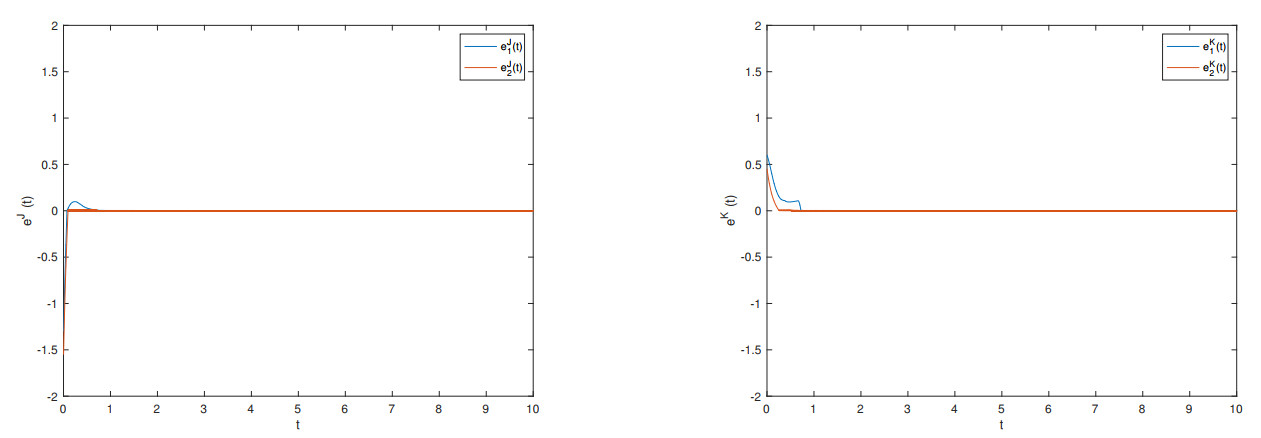
This study explored the fixed-time synchronization (FTS) problem for quaternion-valued memristive neural networks (QVMNNs) incorporating time-varying delays and impulsive disturbances. Initially, we established a model for QVMNNs incorporating these characteristics, namely time-varying delays, memristor behavior, impulsive effects, and quaternion-valued neural network properties. Given that QVMNNs do not obey the commutative law of multiplication, we decomposed them into four real-valued memristor neural networks for analysis. Second, due to the potential disruption of instantaneous impulsive disturbances to neural network synchronization, it was crucial to design an appropriate controller to manage these effects. Therefore, we devised a suitable feedback controller to effectively regulate the system. Next, we established the FTS conditions for QVMNNs using fixed-time stability theory combined with multiple inequality methods. Numerical experiments were performed to validate the theoretical results, demonstrating the effectiveness of our approach.
Citation: Hong Zhou, Jie Zhou. Fixed-time synchronization of quaternion-valued memristive neural networks with time-varying delays and impulsive effect[J]. AIMS Mathematics, 2025, 10(10): 24093-24114. doi: 10.3934/math.20251069
This study explored the fixed-time synchronization (FTS) problem for quaternion-valued memristive neural networks (QVMNNs) incorporating time-varying delays and impulsive disturbances. Initially, we established a model for QVMNNs incorporating these characteristics, namely time-varying delays, memristor behavior, impulsive effects, and quaternion-valued neural network properties. Given that QVMNNs do not obey the commutative law of multiplication, we decomposed them into four real-valued memristor neural networks for analysis. Second, due to the potential disruption of instantaneous impulsive disturbances to neural network synchronization, it was crucial to design an appropriate controller to manage these effects. Therefore, we devised a suitable feedback controller to effectively regulate the system. Next, we established the FTS conditions for QVMNNs using fixed-time stability theory combined with multiple inequality methods. Numerical experiments were performed to validate the theoretical results, demonstrating the effectiveness of our approach.

| [1] |
L. Chua, Memristor-the missing circuit element, IEEE Trans. Circuit Theory, 18 (1971), 507–519. https://doi.org/10.1109/TCT.1971.1083337 doi: 10.1109/TCT.1971.1083337

|
| [2] |
D. B. Strukov, G. S. Snider, D. R. Stewart, R. S. William, The missing memristor found, Nature, 453 (2008), 80–83. https://doi.org/10.1038/nature06932 doi: 10.1038/nature06932
|
| [3] |
F. Corinto, A. Ascoli, M. Gilli, Nonlinear dynamics of memristor oscillators, IEEE Trans. Circuits Syst. I, 58 (2011), 1323–1336. https://doi.org/10.1109/TCSI.2010.2097731 doi: 10.1109/TCSI.2010.2097731
|
| [4] |
J. Huang, C. Li, X. He, Stabilization of a memristor-based chaotic system by intermittent control and fuzzy processing, Int. J. Control Autom. Syst., 11 (2013), 643–647. https://doi.org/10.1007/s12555-012-9323-x doi: 10.1007/s12555-012-9323-x
|
| [5] |
R. Li, J. Cao, Stability analysis of reaction-diffusion uncertain memristive neural networks with time-varying delays and leakage term, Appl. Math. Comput., 278 (2016), 54–69. https://doi.org/10.1016/j.amc.2016.01.016 doi: 10.1016/j.amc.2016.01.016
|
| [6] |
Z. Meng, Z. Xiang, Stability analysis of stochastic memristor-based recurrent neural networks with mixed time-varying delays, Neural Comput. Appl., 28 (2017), 1787–1799. https://doi.org/10.1007/s00521-015-2146-y doi: 10.1007/s00521-015-2146-y
|
| [7] |
R. Li, X. Gao, J. Cao, Exponential synchronization of stochastic memristive neural networks with time-varying delays, Neural Proces. Lett., 50 (2019), 459–475. https://doi.org/10.1007/s11063-019-09989-5 doi: 10.1007/s11063-019-09989-5
|
| [8] |
R. Wei, J. Cao, Fixed-time synchronization of quaternion-valued memristive neural networks with time delays, Neural Networks, 113 (2019), 1–10. https://doi.org/10.1016/j.neunet.2019.01.014 doi: 10.1016/j.neunet.2019.01.014
|
| [9] |
X. Qi, H. Bao, J. Cao, Exponential input-to-state stability of quaternion-valued neural networks with time delay, Appl. Math. Comput., 358 (2019), 382–393. https://doi.org/10.1016/j.amc.2019.04.045 doi: 10.1016/j.amc.2019.04.045
|
| [10] | T. Isokawa, T. Kusakabe, N. Matsui, F. Peper, Quaternion neural network and its application, In: V. Palade, R. J. Howlett, L. Jain, Knowledge-based intelligent information and engineering systems, KES 2003, Lecture Notes in Computer Science, Springer, 2774 (2003), 318–324. https://doi.org/10.1007/978-3-540-45226-3_44 |
| [11] |
X. Yang, C. Huang, J. Cao, An LMI approach for exponential synchronization of switched stochastic competitive neural networks with mixed delays, Neural Comput. Appl., 21 (2012), 2033–2047. https://doi.org/10.1007/s00521-011-0626-2 doi: 10.1007/s00521-011-0626-2
|
| [12] |
X. Yang, J. Cao, J. Liang, Exponential synchronization of memristive neural networks with delays: Interval matrix method, IEEE Trans. Neural Networks Learn. Syst., 28 (2017), 1878–1888. https://doi.org/10.1109/TNNLS.2016.2561298 doi: 10.1109/TNNLS.2016.2561298
|
| [13] |
A. Polyakov, Nonlinear feedback design for fixed-time stabilization of linear control systems, IEEE Trans. Autom. Control, 57 (2012), 2106–2110. https://doi.org/10.1109/TAC.2011.2179869 doi: 10.1109/TAC.2011.2179869
|
| [14] |
C. Hu, J. Yu, Z. Chen, H. Jiang, T. Huang, Fixed-time stability of dynamical systems and fixed-time synchronization of coupled discontinuous neural networks, Neural Networks, 89 (2017), 74–83. https://doi.org/10.1016/j.neunet.2017.02.001 doi: 10.1016/j.neunet.2017.02.001
|
| [15] |
C. Aouiti, E. A. Assali, F. Chérif, A. Zeglaoui, Fixed-time synchronization of competitive neural networks with proportional delays and impulsive effect, Neural Comput. Appl., 32 (2020), 13245–13254. https://doi.org/10.1007/s00521-019-04654-3 doi: 10.1007/s00521-019-04654-3
|
| [16] |
L. Zhao, J. Yu, C. Lin, H. Yu, Distributed adaptive fixed-time consensus tracking for second-order multi-agent systems using modified terminal sliding mode, Appl. Math. Comput., 312 (2017), 23–35. https://doi.org/10.1016/j.amc.2017.05.049 doi: 10.1016/j.amc.2017.05.049
|
| [17] |
Z. G. Wu, Y. Xu, Y. J. Pan, H. Su, Y. Tang, Event-triggered control for consensus problem in multi-agent systems with quantized relative state measurements and external disturbance, IEEE Trans. Circuits Syst. I, 65 (2018), 2232–2242. https://doi.org/10.1109/TCSI.2017.2777504 doi: 10.1109/TCSI.2017.2777504
|
| [18] |
J. Zhou, T. Chen, L. Xiang, Robust synchronization of delayed neural networks based on adaptive control and parameters identification, Chaos Soliton. Fract., 27 (2006), 905–913. https://doi.org/10.1016/j.chaos.2005.04.022 doi: 10.1016/j.chaos.2005.04.022
|
| [19] |
W. Yu, J. Cao, Robust control of uncertain stochastic recurrent neural networks with time-varying delay, Neural Process. Lett., 26 (2007), 101–119. https://doi.org/10.1007/s11063-007-9045-x doi: 10.1007/s11063-007-9045-x
|
| [20] |
X. Ding, J. Cao, A. Alsaedi, F. E. Alsaadi, T. Hayat, Robust fixed-time synchronization for uncertain complex-valued neural networks with discontinuous activation functions, Neural Networks, 90 (2017), 42–55. https://doi.org/10.1016/j.neunet.2017.03.006 doi: 10.1016/j.neunet.2017.03.006
|
| [21] |
X. Li, J. Fang, H. Li, Master-slave exponential synchronization of delayed complex-valued memristor-based neural networks via impulsive control, Neural Networks, 93 (2017), 165–175. https://doi.org/10.1016/j.neunet.2017.05.008 doi: 10.1016/j.neunet.2017.05.008
|
| [22] |
L. Zhang, Y. Yang, X. Xu, Synchronization analysis for fractional order memristive Cohen–Grossberg neural networks with state feedback and impulsive control, Phys. A, 506 (2018), 644–660. https://doi.org/10.1016/j.physa.2018.04.088 doi: 10.1016/j.physa.2018.04.088
|
| [23] |
J. Zhu, J. Sun, Stability of quaternion-valued impulsive delay difference systems and its application to neural networks, Neurocomputing, 284 (2018), 63–69. https://doi.org/10.1016/j.neucom.2018.01.018 doi: 10.1016/j.neucom.2018.01.018
|
| [24] |
A. Polyakov, D. Efimov, W. Perruquetti, Robust stabilization of MIMO systems in finite/fixed time, Int. J. Robust Nonlinear Control, 26 (2016), 69–90. https://doi.org/10.1002/rnc.3297 doi: 10.1002/rnc.3297
|
| [25] |
Y. Zhang, J. Zhuang, Y. Xia, Y. Bai, J. Cao, L. Gu, Fixed-time synchronization of the impulsive memristor-based neural networks, Commun. Nonlinear Sci. Numer. Simulat., 77 (2019), 40–53. https://doi.org/10.1016/j.cnsns.2019.04.021 doi: 10.1016/j.cnsns.2019.04.021
|
| [26] |
X. Yang, J. Lam, D. W. C. Ho, Z. Feng, Fixed-time synchronization of complex networks with impulsive effects via nonchattering control, IEEE Trans. Autom. Control, 62 (2017), 5511–5521. https://doi.org/10.1109/TAC.2017.2691303 doi: 10.1109/TAC.2017.2691303
|
Figures(9)

Hong Zhou, Jie Zhou. Fixed-time synchronization of quaternion-valued memristive neural networks with time-varying delays and impulsive effect[J]. AIMS Mathematics, 2025, 10(10): 24093-24114. doi: 10.3934/math.20251069





 DownLoad: