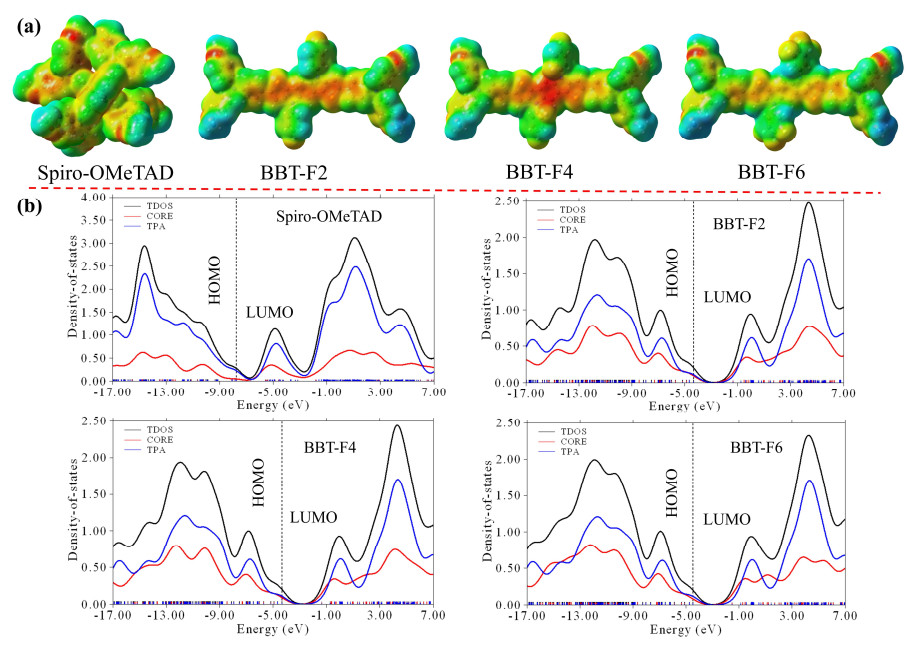
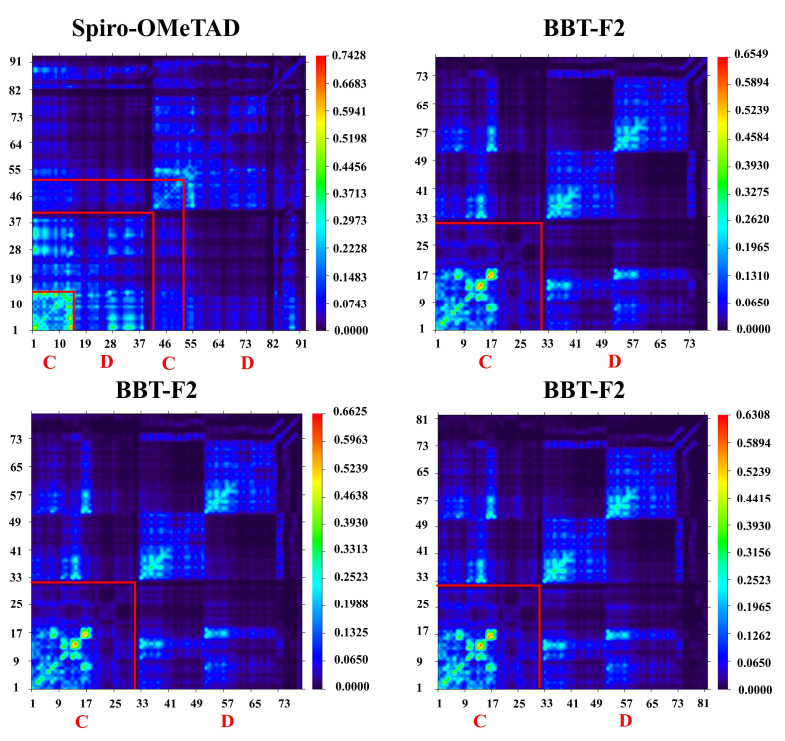
Hole-transport materials (HTMs) are crucial for controlling charge dynamics in perovskite solar cells, particularly at the interface and during electron recombination. Here, a series of benzodithiazole (BBT) cores, linked to side-arm triphenylamine (TPA) groups and possessing a donor-π-donor architecture, was designed through molecular engineering with various fluorine substitutions on the core. The optoelectronic characteristics of the designed HTMs were investigated using the B3LYP and CAM-B3LYP/6-31G** methods within the density functional theory (DFT)/time-dependent DFT (TD-DFT) framework. All materials displayed energy gaps of 2.60–2.63 eV and absorption maxima at ~400 nm. Frontier molecular orbital (FMO) investigations demonstrated an efficient intramolecular charge transfer (ICT)from the BBT core to TPA donor arms. The transition density matrix maps and the density of states further supported the significant charge transfer. The fluorinated-designed HTMs exhibited lower exciton binding energies (Eb = 0.3423–0.3472 eV), resulting in higher exciton dissociation rates and enhanced charge transfer. A benchmark analysis using Spiro-OMeTAD (2, 2, 7, 7-Tetrakis [N, N-di(4-methoxyphenyl)amino]-9, 9-spirobifluorene) as a standard in HTM studies demonstrated that the engineered HTMs exhibited enhanced hole-transport performance. Photovoltaic performance of the designed HTMs was evaluated using Solar Cell Capacitance Simulator in One Dimension (SCAPS-1D) device simulations. The optimized devices incorporating the designed HTM (BBT-F6) achieved a power conversion efficiency of up to 16%, outperforming the benchmark Spiro-OMeTAD under the same simulation conditions. These results indicate that structural modeling of organic HTMs with TPA donors can effectively tune their photovoltaic properties, making them promising candidates for efficient HTMs.
Citation: Guannan Wang, Rani Sayyar, Tazeem Fatima, Sayyar Ali Shah, Ouyang Chun, Aihua Yuan. Molecular engineering of fluorinated benzodithiazole-based hole transport materials for efficient perovskite solar cells: A DFT study[J]. AIMS Materials Science, 2026, 13(5): 939-966. doi: 10.3934/matersci.2026044
Hole-transport materials (HTMs) are crucial for controlling charge dynamics in perovskite solar cells, particularly at the interface and during electron recombination. Here, a series of benzodithiazole (BBT) cores, linked to side-arm triphenylamine (TPA) groups and possessing a donor-π-donor architecture, was designed through molecular engineering with various fluorine substitutions on the core. The optoelectronic characteristics of the designed HTMs were investigated using the B3LYP and CAM-B3LYP/6-31G** methods within the density functional theory (DFT)/time-dependent DFT (TD-DFT) framework. All materials displayed energy gaps of 2.60–2.63 eV and absorption maxima at ~400 nm. Frontier molecular orbital (FMO) investigations demonstrated an efficient intramolecular charge transfer (ICT)from the BBT core to TPA donor arms. The transition density matrix maps and the density of states further supported the significant charge transfer. The fluorinated-designed HTMs exhibited lower exciton binding energies (Eb = 0.3423–0.3472 eV), resulting in higher exciton dissociation rates and enhanced charge transfer. A benchmark analysis using Spiro-OMeTAD (2, 2, 7, 7-Tetrakis [N, N-di(4-methoxyphenyl)amino]-9, 9-spirobifluorene) as a standard in HTM studies demonstrated that the engineered HTMs exhibited enhanced hole-transport performance. Photovoltaic performance of the designed HTMs was evaluated using Solar Cell Capacitance Simulator in One Dimension (SCAPS-1D) device simulations. The optimized devices incorporating the designed HTM (BBT-F6) achieved a power conversion efficiency of up to 16%, outperforming the benchmark Spiro-OMeTAD under the same simulation conditions. These results indicate that structural modeling of organic HTMs with TPA donors can effectively tune their photovoltaic properties, making them promising candidates for efficient HTMs.

| [1] |
Marinova N, Valero S, Delgado JL (2017) Organic and perovskite solar cells: Working principles, materials and interfaces. J Colloid Interface Sci 488: 373–389. https://doi.org/10.1016/j.jcis.2016.11.021 doi: 10.1016/j.jcis.2016.11.021
|
| [2] |
Nelson J (2003) The Physics of Solar Cells, London: Imperial College Press. https://doi.org/10.1142/p276 |
| [3] |
Haider MDS, Hussain R, Kanwal N, et al. (2024) Enhancing PCE above 16.03% via linker engineering of donor layer: A DFT study of binary all-small-molecule organic solar cells. Surf Interfaces 55: 105434. https://doi.org/10.1016/j.surfin.2024.105434 doi: 10.1016/j.surfin.2024.105434
|
| [4] |
Mohammad A, Shovon RB, Hasan MM, et al. (2024) Perovskite solar cell materials development for enhanced efficiency and stability. Power Syst Technol 48: 119–135. https://powertechjournal.com/index.php/journal/article/view/249 |
| [5] |
Saif AAA, Alahmadi G (2025) Optimization of HTL and ETL materials and parameters for high-efficiency CH3NH3SnI3 perovskite solar cells. AIMS Mater Sci 12: 1004–1024. https://doi.org/10.3934/matersci.2025046 doi: 10.3934/matersci.2025046
|
| [6] |
Ananthakumar S, Kumar JR, Babu SM (2019) Third-generation solar cells: Concept, materials and performance—An overview, In: Rajendran S, Naushad M, Raju K, et al. Emerging Nanostructured Materials for Energy and Environmental Science. Environmental Chemistry for a Sustainable World, Cham: Springer, 305–339. https://doi.org/10.1007/978-3-030-04474-9_7 |
| [7] |
Xie G, Xue Q, Ding H, et al. (2025) Management of intramolecular noncovalent interactions in dopant-free hole transport materials for high-performance perovskite solar cells. Angew Chem Int Ed 64: e202504144. https://doi.org/10.1002/anie.202504144 doi: 10.1002/anie.202504144
|
| [8] |
Shahzad N, Ishaq M, Laraib A, et al. (2026) Optimizing charge transport properties of dithieno[3, 2-b: 2′, 3′-d]pyrrole-based hole transport materials for perovskite solar cells: A DFT study. J Fluoresc 36: 183–201. https://doi.org/10.1007/s10895-025-04565-8 doi: 10.1007/s10895-025-04565-8
|
| [9] |
Sharma D, Mehra R, Raj B (2022) Comparative study of hole transporting layers commonly used in high-efficiency perovskite solar cells. J Mater Sci 57: 21172–21191. https://doi.org/10.1007/s10853-022-07958-3 doi: 10.1007/s10853-022-07958-3
|
| [10] |
Zhong S, Yang Y, Wang Z, et al. (2026) Molecular tailoring of self-assembled monolayers derived from asymmetric benzothienoindole for efficient and stable inverted perovskite solar cells and modules. Angew Chem Int Ed 65: e1678852. https://doi.org/10.1002/anie.1678852 doi: 10.1002/anie.1678852
|
| [11] |
Arunkumar A, Ju XH (2024) Computational method on highly efficient D-π-A-π-D-based different molecular acceptors for organic solar cells applications and non-linear optical behaviour. Spectrochim Acta A Mol Biomol Spectrosc 317: 124391. https://doi.org/10.1016/j.saa.2024.124391 doi: 10.1016/j.saa.2024.124391
|
| [12] |
Arunkumar A, Anbarasan PM, Ju XH (2024) Acceptor tuned effect on the D-π-A-based organic efficient sensitizers for optoelectronic properties using quantum chemical study. Opt Quantum Electron 56: 520. https://doi.org/10.1007/s11082-023-06196-4 doi: 10.1007/s11082-023-06196-4
|
| [13] |
Yang Y, Yuan Q, Li H, et al. (2020) Dopant-free mixture of spiro-OMeTAD and PTAA with tunable wettability as hole transport layer enhancing performance of inverted CsPbI2Br perovskite solar cells. Org Electron 86: 105873. https://doi.org/10.1016/j.orgel.2020.105873 doi: 10.1016/j.orgel.2020.105873
|
| [14] |
Nakka L, Cheng Y, Aberle AG, et al. (2022) Analytical review of spiro-OMeTAD hole transport materials: Paths toward stable and efficient perovskite solar cells. Adv Energy Sustain Res 3: 2200045. https://doi.org/10.1002/aesr.202200045 doi: 10.1002/aesr.202200045
|
| [15] |
Xu D, Gong Z, Jiang Y, et al. (2022) Constructing molecular bridge for high-efficiency and stable perovskite solar cells based on P3HT. Nat Commun 13: 7020. https://doi.org/10.1038/s41467-022-34768-7 doi: 10.1038/s41467-022-34768-7
|
| [16] |
Anrango-Camacho C, Pavón-Ipiales K, Frontana-Uribe BA, et al. (2022) Recent advances in hole-transporting layers for organic solar cells. Nanomaterials 12: 443. https://doi.org/10.3390/nano12030443 doi: 10.3390/nano12030443
|
| [17] |
Muniandy S, Idris MIB, Napiah ZAFM, et al. (2021) An investigation on NiO for hole transport material in perovskite solar cells. 2021 IEEE Regional Symposium on Micro and Nanoelectronics (RSM), Kuala Lumpur, Malaysia, 112–115. https://doi.org/10.1109/RSM52397.2021.9511573 |
| [18] |
Shah SA, Sayyar R, Zou X, et al. (2026) Theoretical study on the optoelectronics and charge transport properties of difluoro benzothiadiazole-based hole transport materials for perovskite solar cells. J Fluoresc 36: 2661–2678. https://doi.org/10.1007/s10895-026-04722-7 doi: 10.1007/s10895-026-04722-7
|
| [19] |
Dennington R, Keith TA, Millam JM (2016) GaussView, version 6.0. 16. Semichem Inc, Shawnee Mission, KS, USA. https://gaussian.com/gaussview6/ |
| [20] |
Becke AD (1993) Density-functional thermochemistry. Ⅲ. The role of exact exchange. J Chem Phys 98: 5648–5652. https://doi.org/10.1063/1.464913 doi: 10.1063/1.464913
|
| [21] |
Chi WJ, Li QS, Li ZS (2016) Exploring the electrochemical properties of hole transport materials with spiro-cores for efficient perovskite solar cells from first-principles. Nanoscale 8: 6146–6154. https://doi.org/10.1039/C6NR00235H doi: 10.1039/C6NR00235H
|
| [22] |
Cancès E, Mennucci B, Tomasi J (1997) A new integral equation formalism for the polarizable continuum model: Theoretical background and applications to isotropic and anisotropic dielectrics. J Chem Phys 107: 3032–3041. https://doi.org/10.1063/1.474659 doi: 10.1063/1.474659
|
| [23] |
Yanai T, Tew DP, Handy NC (2004) A new hybrid exchange–correlation functional using the Coulomb-attenuating method (CAM-B3LYP). Chem Phys Lett 393: 51–57. https://doi.org/10.1016/j.cplett.2004.06.011 doi: 10.1016/j.cplett.2004.06.011
|
| [24] |
Yang LN, Chen SL, Li ZS (2015) How does the silicon element perform in JD-dyes: A theoretical investigation. J Mater Chem A 3: 8308–8315. https://doi.org/10.1039/C5TA00812C doi: 10.1039/C5TA00812C
|
| [25] |
Sun ZZ, Feng S, Gu C, et al. (2019) Probing effects of molecular conformation on the electronic and charge transport properties in two- and three-dimensional small molecule hole-transporting materials: A theoretical investigation. Phys Chem Chem Phys 21: 15206–15214. https://doi.org/10.1039/C9CP01986C doi: 10.1039/C9CP01986C
|
| [26] |
Lu T, Chen F (2012) Multiwfn: A multifunctional wavefunction analyzer. J Comput Chem 33: 580–592. https://doi.org/10.1002/jcc.22885 doi: 10.1002/jcc.22885
|
| [27] |
Wang Y, Verma P, Zhang L, et al. (2020) M06-SX screened-exchange density functional for chemistry and solid-state physics. Proc Natl Acad Sci USA 117: 2294–2301. https://doi.org/10.1073/pnas.1913699117 doi: 10.1073/pnas.1913699117
|
| [28] |
Park NG (2015) Perovskite solar cells: An emerging photovoltaic technology. Mater Today 18: 65–72. https://doi.org/10.1016/j.mattod.2014.07.007 doi: 10.1016/j.mattod.2014.07.007
|
| [29] |
Shahzad N, Chatha SAS, Iqbal J, et al. (2024) Enhancing perovskite solar cells performance through tailored design: pyridine-functionalized phenothiazine derivatives with modified end-capped acceptor moieties. Eng Res Express 6: 045316. https://doi.org/10.1088/2631-8695/ad82a8 doi: 10.1088/2631-8695/ad82a8
|
| [30] |
Shao S, Loi MA (2020) The role of the interfaces in perovskite solar cells. Adv Mater Interfaces 7: 1901469. https://doi.org/10.1002/admi.201901469 doi: 10.1002/admi.201901469
|
| [31] |
Achoi MF, Kato S, Kishi N, et al. (2024) Improved photovoltaic properties of ((CH3NH3)1−xCsx)3Bi2I9: (x = 0–1.0) hybrid perovskite solar cells via a hot immersion method. AIMS Mater Sci 11: 605–619. https://doi.org/10.3934/matersci.2024031 doi: 10.3934/matersci.2024031
|
| [32] |
Fatima T, Bibi S, Muhammad S, et al. (2025) Systematic computational designing of efficient phenalene and pyrene based derivatives to tune the optical and nonlinear optical response. J Fluoresc 35: 10987–11006. https://doi.org/10.1007/s10895-025-04330-x doi: 10.1007/s10895-025-04330-x
|
| [33] |
Ameen S, Rub MA, Kosa SA, et al. (2016) Perovskite solar cells: Influence of hole transporting materials on power conversion efficiency. ChemSusChem 9: 10–27. https://doi.org/10.1002/cssc.201501228 doi: 10.1002/cssc.201501228
|
| [34] |
Xia Z, Zhang J, Gao X, et al. (2021) Fine-tuning the dipole moment of asymmetric non-fullerene acceptors enabling efficient and stable organic solar cells. ACS Appl Mater Interfaces 13: 23983–23992. https://doi.org/10.1021/acsami.1c02652 doi: 10.1021/acsami.1c02652
|
| [35] |
Zhang Y, Wang L, Mao L, et al. (2020) Carbazole-substituted NP-based derivative as hole transporting material for highly efficient perovskite solar cells. Spectrochim Acta A Mol Biomol Spectrosc 228: 117808. https://doi.org/10.1016/j.saa.2019.117808 doi: 10.1016/j.saa.2019.117808
|
| [36] |
Shahzad N, Fatima R, Etabti H, et al. (2025) Quantum design and investigation of dibenzo[g, p]chrysene-based hole transport materials for efficient perovskite solar cells. Sol Energy 301: 113980. https://doi.org/10.1016/j.solener.2025.113980 doi: 10.1016/j.solener.2025.113980
|
| [37] |
Bernazzani L, Duce C, Micheli A, et al. (2006) Predicting physical–chemical properties of compounds from molecular structures by recursive neural networks. J Chem Inf Model 46: 2030–2042. https://doi.org/10.1021/ci060104e doi: 10.1021/ci060104e
|
| [38] |
Akram SJ, Iqbal J, Ans M, et al. (2022) Designing of the indacenodithiophene core-based small molecules for optoelectronic applications: A DFT approach. Sol Energy 237: 108–121. https://doi.org/10.1016/j.solener.2022.03.072 doi: 10.1016/j.solener.2022.03.072
|
| [39] |
Lu C, Paramasivam M, Park K, et al. (2019) Phenothiazine functionalized multifunctional A–π–D–π–D–π–A-type hole-transporting materials via sequential C–H arylation approach for efficient and stable perovskite solar cells. ACS Appl Mater Interfaces 11: 14011–14022. https://doi.org/10.1021/acsami.8b20646 doi: 10.1021/acsami.8b20646
|
| [40] |
Cowan SR, Banerji N, Leong WL, et al. (2012) Charge formation, recombination, and sweep-out dynamics in organic solar cells. Adv Funct Mater 22: 1116–1128. https://doi.org/10.1002/adfm.201101632 doi: 10.1002/adfm.201101632
|
| [41] |
Bi D, Yang L, Boschloo G, et al. (2013) Effect of different hole transport materials on recombination in CH3NH3PbI3 perovskite-sensitized mesoscopic solar cells. J Phys Chem Lett 4: 1532–1536. https://doi.org/10.1021/jz400638x doi: 10.1021/jz400638x
|
| [42] |
Koster LJA, Shaheen SE, Hummelen JC (2012) Pathways to a new efficiency regime for organic solar cells. Adv Energy Mater 2: 1246–1253. https://doi.org/10.1002/aenm.201200103 doi: 10.1002/aenm.201200103
|
| [43] |
Marcus RA (1964) Chemical and electrochemical electron-transfer theory. Annu Rev Phys Chem 15: 155–196. https://doi.org/10.1146/annurev.pc.15.100164.001103 doi: 10.1146/annurev.pc.15.100164.001103
|
| [44] |
Padmanabhan J, Arif Z, Singh P, et al. (2021) Chemical reactivity and skin sensitization studies on a series of chloro- and fluoropyrroles—A computational approach. ACS Omega 6: 21514–21524. https://doi.org/10.1021/acsomega.1c02436 doi: 10.1021/acsomega.1c02436
|
| [45] |
Li HX, Zheng RH, Shi Q (2011) Theoretical study on charge carrier mobilities of tetrathiafulvalene derivatives. Phys Chem Chem Phys 13: 5642–5650. https://doi.org/10.1039/C0CP01016B doi: 10.1039/C0CP01016B
|
| [46] |
Imahori H, Kobori Y, Kaji H (2021) Manipulation of charge-transfer states by molecular design: Perspective from "dynamic exciton". Acc Mater Res 2: 501–514. https://doi.org/10.1021/accountsmr.1c00045 doi: 10.1021/accountsmr.1c00045
|
| [47] |
Akram W, Zahid WA, Abu El Maati L, et al. (2023) Engineering push–pull structural versatility in highly functional carbazole-based hole transporting materials design for efficient perovskites solar devices. J Photochem Photobiol A Chem 444: 114991. https://doi.org/10.1016/j.jphotochem.2023.114991 doi: 10.1016/j.jphotochem.2023.114991
|
| [48] |
Spackman MA, Jayatilaka D (2009) Hirshfeld surface analysis. CrystEngComm 11: 19–32. https://doi.org/10.1039/B818330A doi: 10.1039/B818330A
|
| [49] |
Hirshfeld FL (1977) Bonded-atom fragments for describing molecular charge densities. Theor Chim Acta 44: 129–138. https://doi.org/10.1007/BF00549096 doi: 10.1007/BF00549096
|
| [50] |
McKinnon JJ, Jayatilaka D, Spackman MA (2007) Towards quantitative analysis of intermolecular interactions with Hirshfeld surfaces. Chem Commun 2007: 3814–3816. https://doi.org/10.1039/B704980C doi: 10.1039/B704980C
|
| [51] |
Seth SK, Maity GC, Kar T (2011) Structural elucidation, Hirshfeld surface analysis and quantum mechanical study of para-nitro benzylidene methyl arjunolate. J Mol Struct 1000: 120–126. https://doi.org/10.1016/j.molstruc.2011.06.003 doi: 10.1016/j.molstruc.2011.06.003
|
| [52] |
Abad N, Sallam HH, Al-Ostoot FH, et al. (2021) Synthesis, crystal structure, DFT calculations, Hirshfeld surface analysis, energy frameworks, molecular dynamics and docking studies of novel isoxazolequinoxaline derivative (IZQ) as anti-cancer drug. J Mol Struct 1232: 130004. https://doi.org/10.1016/j.molstruc.2021.130004 doi: 10.1016/j.molstruc.2021.130004
|
| [53] |
Burgelman M, Nollet P, Degrave S (2000) Modelling polycrystalline semiconductor solar cells. Thin Solid Films 361–362: 527–532. https://doi.org/10.1016/S0040-6090(99)00825-1 |
| [54] |
Singh NK, Agarwal A, Singh AK, et al. (2024) Design and performance evaluation of eco-friendly FASnI3/CsSn0.5Ge0.5I3 based perovskite solar cell with distinct charge transport layer: A computational modeling. Sol Energy 268: 112256. https://doi.org/10.1016/j.solener.2023.112256 doi: 10.1016/j.solener.2023.112256
|
| [55] |
Benami A, Ouslimane T, Et-taya L, et al. (2022) Comparison of the effects of ZnO and TiO2 on the performance of perovskite solar cells via SCAPS-1D software package. J Nano Electron Phys 14: 01033. https://doi.org/10.21272/jnep.14(1).01033 doi: 10.21272/jnep.14(1).01033
|
| [56] |
Targhi FF, Jalili YS, Kanjouri F (2018) MAPbI3 and FAPbI3 perovskites as solar cells: Case study on structural, electrical and optical properties. Results Phys 10: 616–627. https://doi.org/10.1016/j.rinp.2018.07.007 doi: 10.1016/j.rinp.2018.07.007
|
| [57] |
Duan C, Zhang X, Du Z, et al. (2023) Perovskite interface defect passivation with poly(ethylene oxide) for improving power conversion efficiency of the inverted solar cells. Opt Express 31: 20364–20376. https://doi.org/10.1364/OE.489290 doi: 10.1364/OE.489290
|
| [58] |
Salem AF, El-Bashar R, El-Rabaie SM, et al. (2024) Nanoscale grating-based perovskite solar cell with improved efficiency. Phys Scr 99: 115504. https://doi.org/10.1088/1402-4896/ad7dc1 doi: 10.1088/1402-4896/ad7dc1
|
| [59] |
Manzoor S, Abbas F, Munir R, et al. (2025) Theoretical investigation of hole transport and donor materials derived from anthracene with improved optoelectronic characteristics for perovskite and organic solar cell applications. Opt Quantum Electron 57: 509. https://doi.org/10.1007/s11082-025-08429-0 doi: 10.1007/s11082-025-08429-0
|
 matersci-13-05-044-Supplementary.pdf |
 |
Figures(10) / Tables(9)

Guannan Wang, Rani Sayyar, Tazeem Fatima, Sayyar Ali Shah, Ouyang Chun, Aihua Yuan. Molecular engineering of fluorinated benzodithiazole-based hole transport materials for efficient perovskite solar cells: A DFT study[J]. AIMS Materials Science, 2026, 13(5): 939-966. doi: 10.3934/matersci.2026044

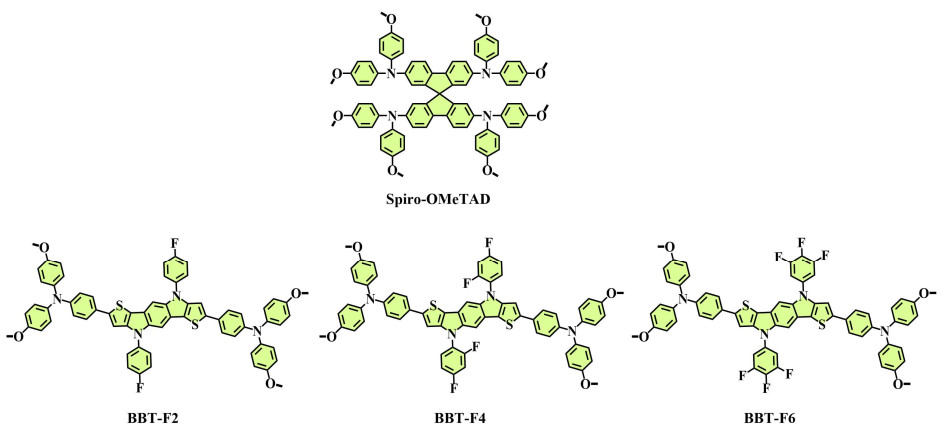
The chemical structures of Spiro-OMeTAD and fluorinated HTMs (BBT-F2, BBT-F4, and BBT-F6)
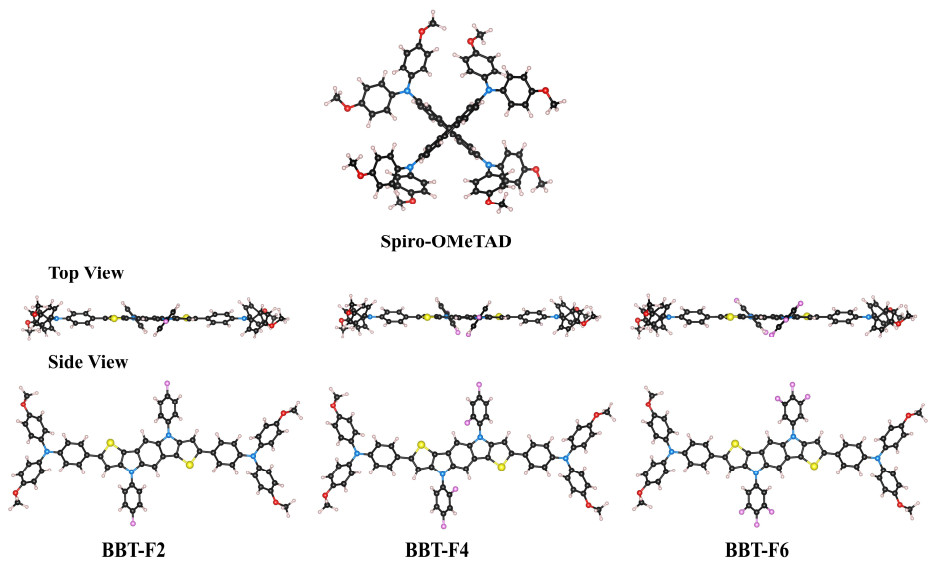
The optimized molecular structures of Spiro-OMeTAD, BBT-F2, BBT-F4, and BBT-F6 at B3LYP/6-31G** theory
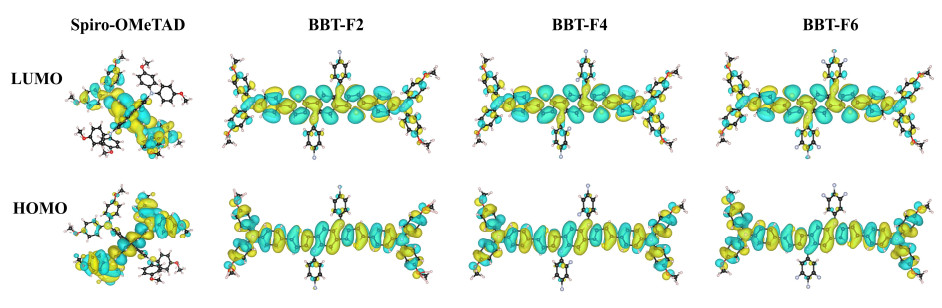
The distribution of HOMO and LUMO over molecular structures
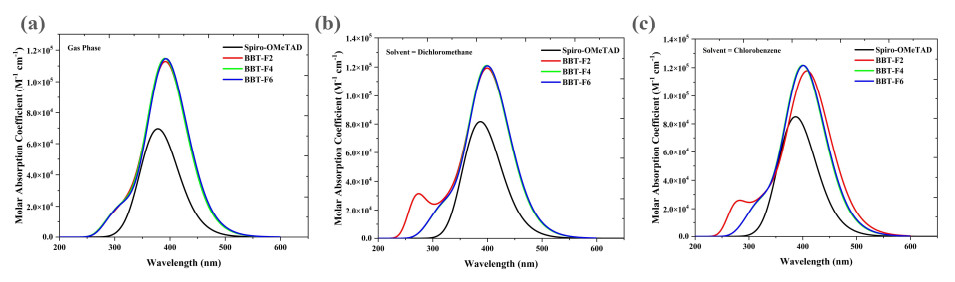
The UV–vis spectra of all studied materials: (a) in gas phase; (b) in solvent DCM; and (c) in solvent CB, were obtained at CAM-B3LYP/6-31G** theory
(a) Molecular electrostatic potential maps. (b) DOS graphs for the studied molecules via the electronic state population method
Transition-density heat maps of Spiro-OMeTAD and all designed BBT-Fx HTMs
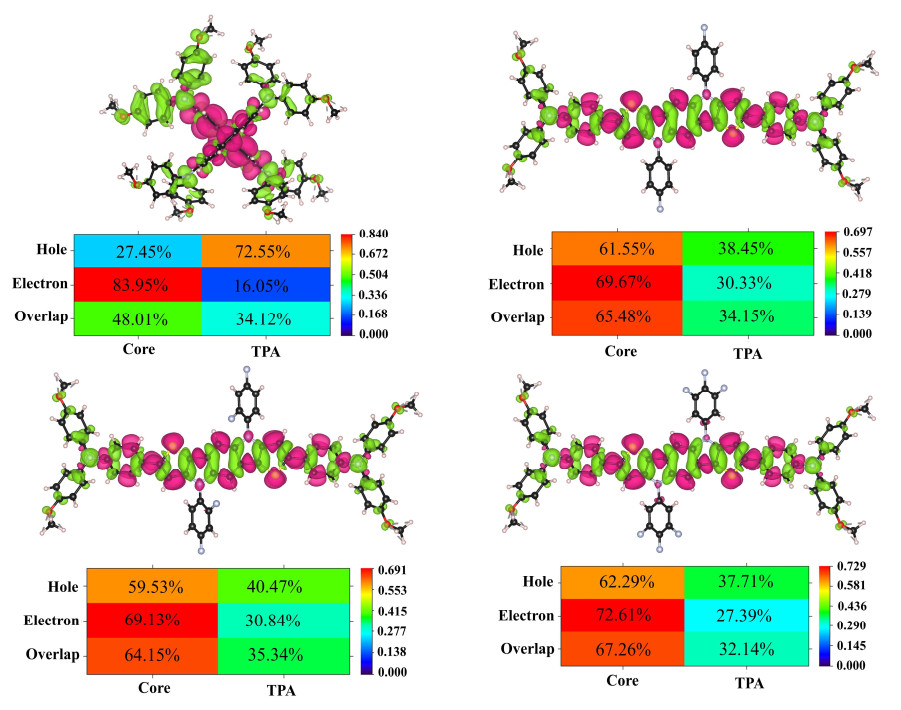
Charge density difference surfaces (red color represents the electron-rich site, and green color represents the electron depletion area) and hole-electron distribution heat maps with percentage contributions to spatial charge generation and overlap
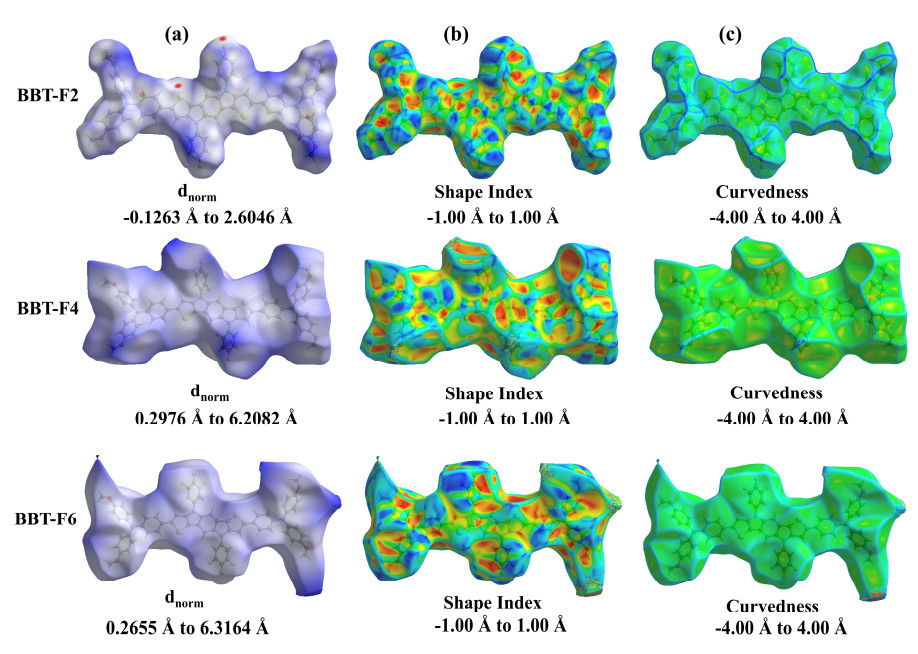
(a) Hirshfeld plots of dnorm, (b) shape index, and (c) curvedness for the Spiro-OMeTAD and BBT-Fx series
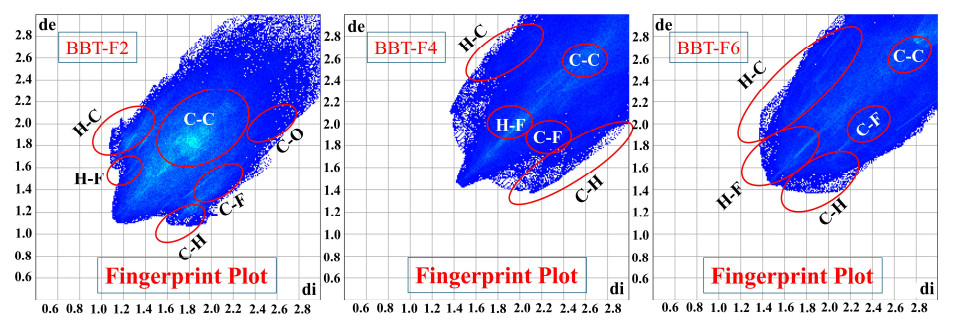
Fingerprint plots displaying the major proportion of intermolecular contact
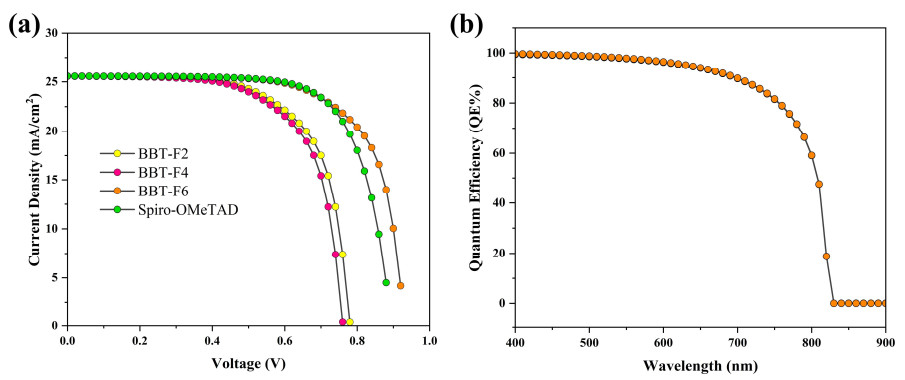
(a) The current density-voltage (J-V) curves and (b) quantum efficiency vs. wavelength of BBT-Fx series and Spiro-OMeTAD




 DownLoad: