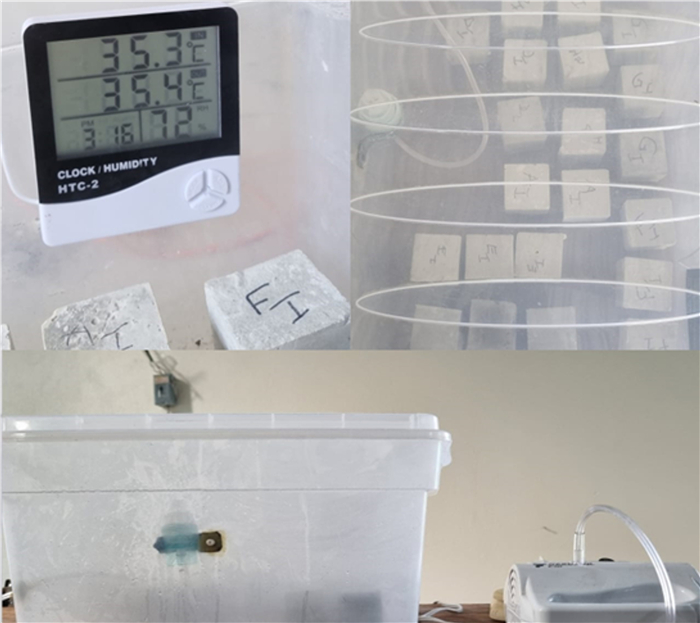
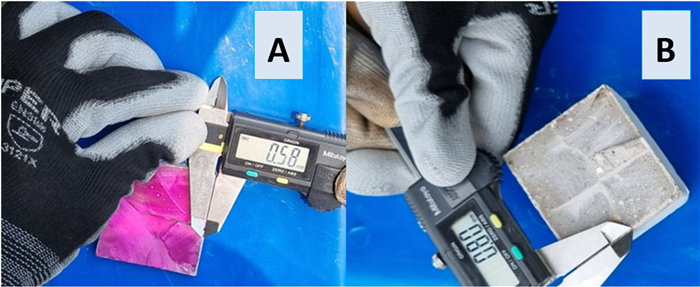
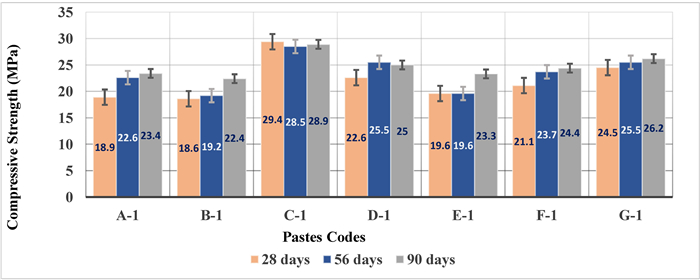
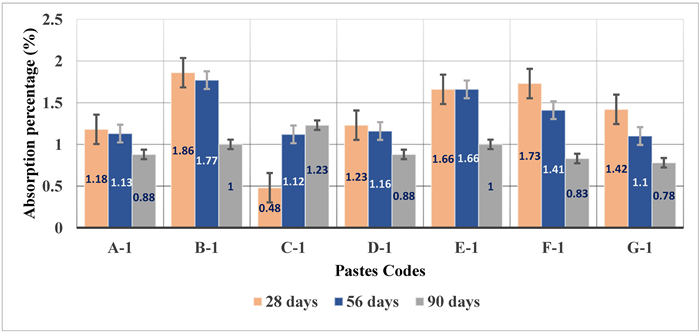
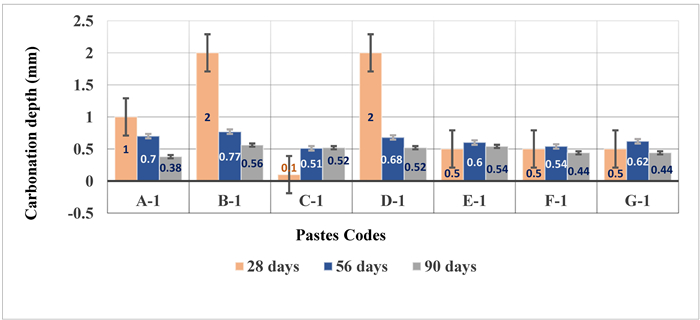
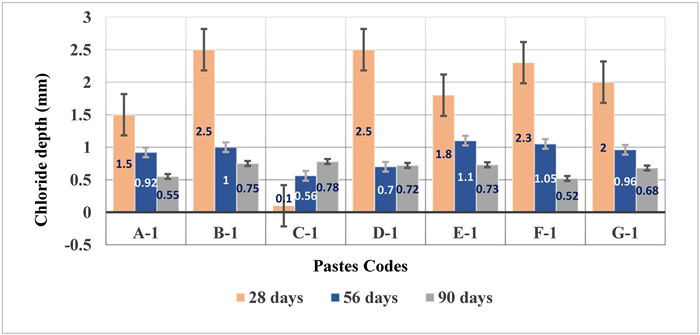
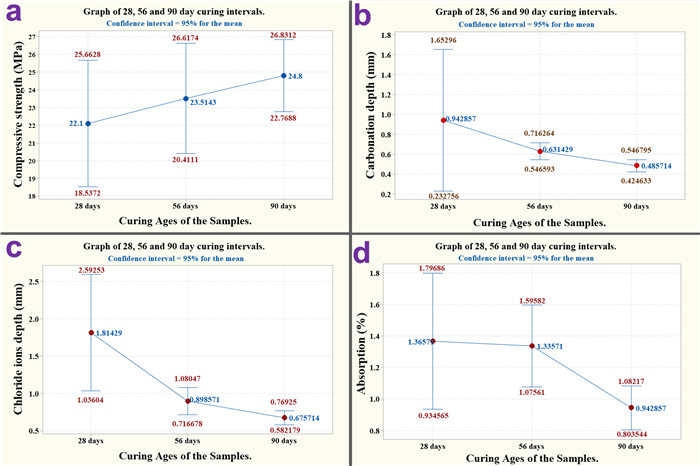
In this study, we investigated the mechanical performance and durability of supersulfated pastes (SSP) formulated with locally sourced pumice (PM) activated by a two-stage NaOH process, proposed as a low-carbon alternative to Portland cement (PC) for protective coatings in marine environments. The novelty of this work lies in the development of a supersulfated paste for coating that uses local pumice activated with NaOH as the main cementitious material, reaching PC substitutions up to 50%. Seven formulations were prepared, including a PC control, with varying proportions of PM, PC, hemihydrate, and Ca(OH)2, cured for 28, 56, and 90 days, and subsequently exposed to an accelerated regimen of marine aerosols. Compressive strength, carbonation depth, chloride penetration, and moisture absorption were quantified as key indicators of durability. According to the results, SSP consistently outperformed PC control in all four durability parameters. Statistical analysis confirmed significant improvements in carbonation resistance, chloride resistance, and moisture absorption from 56 days after curing. Overall, SSP containing 30% PC, and 70% supersulfated components (SC), as well as those with 40% PC and 60% SC, demonstrated superior strength and durability compared to the control sample. In addition, the properties of the supersulfated pastes improved markedly after 56 days, cementing their potential as durable coating materials for coastal environments.
Citation: Kenson Noel, David Reyes-Gonzalez, Rodrigo Vivar-Ocampo, Pablo J. Lopez-Gonzalez, Gustavo Martinez Castellanos. Effect of the sea breeze on the durability of pumice-based supersulfated pastes under accelerated conditions[J]. AIMS Materials Science, 2026, 13(1): 1-29. doi: 10.3934/matersci.2026001
In this study, we investigated the mechanical performance and durability of supersulfated pastes (SSP) formulated with locally sourced pumice (PM) activated by a two-stage NaOH process, proposed as a low-carbon alternative to Portland cement (PC) for protective coatings in marine environments. The novelty of this work lies in the development of a supersulfated paste for coating that uses local pumice activated with NaOH as the main cementitious material, reaching PC substitutions up to 50%. Seven formulations were prepared, including a PC control, with varying proportions of PM, PC, hemihydrate, and Ca(OH)2, cured for 28, 56, and 90 days, and subsequently exposed to an accelerated regimen of marine aerosols. Compressive strength, carbonation depth, chloride penetration, and moisture absorption were quantified as key indicators of durability. According to the results, SSP consistently outperformed PC control in all four durability parameters. Statistical analysis confirmed significant improvements in carbonation resistance, chloride resistance, and moisture absorption from 56 days after curing. Overall, SSP containing 30% PC, and 70% supersulfated components (SC), as well as those with 40% PC and 60% SC, demonstrated superior strength and durability compared to the control sample. In addition, the properties of the supersulfated pastes improved markedly after 56 days, cementing their potential as durable coating materials for coastal environments.

| [1] |
Kim IS, Choi SY, Yang EI (2018) Evaluation of durability of concrete substituted heavyweight waste glass as fine aggregate. Constr Build Mater 184: 269–277. https://doi.org/10.1016/j.conbuildmat.2018.06.221 doi: 10.1016/j.conbuildmat.2018.06.221

|
| [2] |
Paul SC, van Zijl GPAG, Šavija B (2020) Effect of fibers on durability of concrete: A practical review. Materials 13: 4562. https://doi.org/10.3390/ma13204562 doi: 10.3390/ma13204562
|
| [3] |
Wong LS (2022) Durability performance of geopolymer concrete: A review. Polymers 14: 868. https://doi.org/10.3390/polym14050868 doi: 10.3390/polym14050868
|
| [4] |
Maddalena R, Roberts JJ, Hamilton A (2018) Can Portland cement be replaced by low-carbon alternative materials? A study on the thermal properties and carbon emissions of innovative cements. J Clean Prod 186: 933–942. https://doi.org/10.1016/j.jclepro.2018.02.138 doi: 10.1016/j.jclepro.2018.02.138
|
| [5] |
Askarian M, Fakhretaha Aval S, Joshaghani A (2018) A comprehensive experimental study on the performance of pumice powder in self-compacting concrete (SCC). J Sustain Cem Based Mater 7: 340–356. https://doi.org/10.1080/21650373.2018.1511486 doi: 10.1080/21650373.2018.1511486
|
| [6] |
Abbas R, Abdelzaher MA, Shehata N, et al. (2024) Production, characterization and performance of green geopolymer modified with industrial by-products. Sci Rep 14: 5104. https://doi.org/10.1038/s41598-024-55494-8 doi: 10.1038/s41598-024-55494-8
|
| [7] |
Singh NB, Middendorf B (2020) Geopolymers as an alternative to Portland cement: an overview. Constr Build Mater 237: 117455. https://doi.org/10.1016/j.conbuildmat.2019.117455 doi: 10.1016/j.conbuildmat.2019.117455
|
| [8] |
Erdem TK, Meral Ç, Tokyay M, et al. (2007) Use of perlite as a pozzolanic addition in producing blended cements. Cem Concr Compos 29: 13–21. https://doi.org/10.1016/j.cemconcomp.2006.07.018 doi: 10.1016/j.cemconcomp.2006.07.018
|
| [9] |
Chihaoui R, Siad H, Senhadji Y, et al. (2022) Efficiency of natural pozzolan and natural perlite in controlling the alkali-silica reaction of cementitious materials. Case Stud Constr Mater 17: e01246. https://doi.org/10.1016/j.cscm.2022.e01246 doi: 10.1016/j.cscm.2022.e01246
|
| [10] | Stefanidou M (2023) Substituting natural pozzolan with artificial derived from industrial perlite waste for mortar production. In: Jędrzejewska A, Kanavaris F, Azenha M, et al. International RILEM Conference on Synergising Expertise towards Sustainability and Robustness of Cement-based Materials and Concrete Structures, Cham: Springer. https://doi.org/10.1007/978-3-031-33211-1_1 |
| [11] |
Ban J, Wu Q, Yu Z, et al. (2024) Mechanisms on the inhibition of alkali-silica reaction in supersulfated cement. Cem Concr Compos 145: 105320. https://doi.org/10.1016/j.cemconcomp.2023.105320 doi: 10.1016/j.cemconcomp.2023.105320
|
| [12] |
Zokaei S, Siad H, Lachemi M, et al. (2025) Enhancing the self-healing properties of engineered cementitious composites by the application of super-sulfated cement. Mag Concr Res 77: 42–55. https://doi.org/10.1680/jmacr.23.00361 doi: 10.1680/jmacr.23.00361
|
| [13] |
Wu Q, Xue Q, Yu Z (2021) Research status of super sulfate cement. J Clean Prod 294: 126228. https://doi.org/10.1016/j.jclepro.2021.126228 doi: 10.1016/j.jclepro.2021.126228
|
| [14] |
Cabrera-Luna K, Maldonado-Bandala EE, Nieves-Mendoza D, et al. (2021) Supersulfated cements based on pumice with quicklime, anhydrite and hemihydrate: Characterization and environmental impact. Cem Concr Compos 124: 104236. https://doi.org/10.1016/j.cemconcomp.2021.104236 doi: 10.1016/j.cemconcomp.2021.104236
|
| [15] |
Ma W, Zheng J, Feng S, et al. (2025) Evaluation on the long-term properties of the steel fiber-reinforced supersulfated cement mortar in seawater environment and performance enhancement through alkalinity regulation. J Build Eng 112: 113596. https://doi.org/10.1016/j.jobe.2025.113596 doi: 10.1016/j.jobe.2025.113596
|
| [16] |
Szabó R, Kristály F, Nagy S, et al. (2023) Reaction, structure and properties of eco-friendly geopolymer cement derived from mechanically activated pumice. Ceram Int 49: 6756–6763. https://doi.org/10.1016/j.ceramint.2022.10.204 doi: 10.1016/j.ceramint.2022.10.204
|
| [17] | Zhao Y, Zhao W, Wei W, et al. (2024) Effect of styrene-acrylic latex on physical-mechanical properties and microstructure of sulphoaluminate cement paste. ZKG Int 77: 50–59. |
| [18] | Mei J, Deng C, Hu X, et al. (2023) Resistance of polymer modified calcium sulfoaluminate cement to sulphate attack. ZKG Int 76: 54–61. |
| [19] | Mei J, Yuan C, Niu Y, et al. (2024) Sulfate resistance of alkali-activated slag/metakaolin/fly ash cementitious materials. ZKG Int 77: 50–59. |
| [20] |
Moolchandani K (2025) Advancements in pumice-based concrete: A comprehensive review. Next Mater 8: 100646. https://doi.org/10.1016/j.nxmate.2025.100646 doi: 10.1016/j.nxmate.2025.100646
|
| [21] |
Poupelloz E, Gauffinet S, Nonat A (2020) Study of nucleation and growth processes of ettringite in diluted conditions. Cem Concr Res 127: 105915. https://doi.org/10.1016/j.cemconres.2019.105915 doi: 10.1016/j.cemconres.2019.105915
|
| [22] |
Zeyad AM, Shubaili M, Abutaleb A (2023) Using volcanic pumice dust to produce high-strength self-curing concrete in hot weather regions. Case Stud Constr Mater 18: e01927. https://doi.org/10.1016/j.cscm.2023.e01927 doi: 10.1016/j.cscm.2023.e01927
|
| [23] |
Sun H, Lin T, Zhuo K Q, et al. (2024) Sulfate optimization in ettringite rich cements by SO3/Al2O3 molar ratio: A comparative study of calcium sulfoaluminate and aluminate cements. Case Stud Constr Mater 21: e03701. https://doi.org/10.1016/j.cscm.2024.e03701 doi: 10.1016/j.cscm.2024.e03701
|
| [24] |
Bergna D, Varila T, Romar H, et al. (2018) Comparison of the properties of activated carbons produced in one-stage and two-stage processes. C 4: 41. https://doi.org/10.3390/c4030041 doi: 10.3390/c4030041
|
| [25] | Nyangi P (2025) Chemical characterization of pumice material sourced from Mbeya, Tanzania. MUST. Available from: https://repository.must.ac.tz/handle/123456789/304. |
| [26] |
Sahakyan E, Arzumanyan A, Muradyan N (2022) Inorganic polymeric materials based on natural silicate and aluminosilicate raw materials. Key Eng Mater 906: 1–6. https://doi.org/10.4028/www.scientific.net/KEM.906.1 doi: 10.4028/www.scientific.net/KEM.906.1
|
| [27] |
Rakhimova NR, Morozov VP, Eskin AA (2021) Phase formation behavior of alkali-activated calcined clays: Effects of the reactive phase and NaOH concentration. Geosyst Eng 24: 238–246. https://doi.org/10.1080/12269328.2021.1961615 doi: 10.1080/12269328.2021.1961615
|
| [28] | Tsintskaladze G, Kordzakhia T, Skhvitaridze R, et al. (2024) Physical and chemical characteristics of pumice from some regions of Georgia and the prospects for its use in lightweight concrete with environmental advantages, In: Jeswani H, Environmental Technology and Sustainability, Boca Raton: Apple Academic Press, 247–256. https://doi.org/10.1201/9781003397960-16 |
| [29] |
Cabrera-Luna K, Perez-Cortes P, Escalante Garcia JI (2022) Pumice-based supersulfated cements in mortars: Effects of pumice fineness and activator ratio on physical and environmental characteristics. Constr Build Mater 342: 127947. https://doi.org/10.1016/j.conbuildmat.2022.127947 doi: 10.1016/j.conbuildmat.2022.127947
|
| [30] |
Jwaida Z, Dulaimi A, Mashaan N, et al. (2023) Geopolymers: The green alternative to traditional materials for engineering applications. Infrastructures 8: 98. https://doi.org/10.3390/infrastructures8060098 doi: 10.3390/infrastructures8060098
|
| [31] |
Komaei A, Saeedi A (2025) Pumicite-based geopolymer optimization for sustainable soil stabilization. J Mater Civ Eng 37. https://doi.org/10.1061/JMCEE7.MTENG-19308 doi: 10.1061/JMCEE7.MTENG-19308
|
| [32] | Bo Q (2018) Temperature effect on performance of Portland cement versus advanced hybrid cements and alkali-fly ash cement. PhD Thesis, Universidad Politécnica de Madrid. https://doi.org/10.20868/UPM.thesis.49698 |
| [33] |
Zhou Y, Peng Z, Chen L, et al. (2021) The influence of two types of alkali activators on the microstructure and performance of supersulfated cement concrete: mitigating the strength and carbonation resistance. Cem Concr Compos 118: 103947. https://doi.org/10.1016/j.cemconcomp.2021.103947 doi: 10.1016/j.cemconcomp.2021.103947
|
| [34] | Provis JL, Van Deventer JSJ (2014) Alkali Activated Materials: State-of-the-Art Report, RILEM TC 224-AAM, Dordrecht: Springer. https://doi.org/10.1007/978-94-007-7672-2 |
| [35] |
Mansor AM, Borg RP, Hamed AMM, et al. (2018) The effects of water-cement ratio and chemical admixtures on the workability of concrete. IOP Conf Ser Mater Sci Eng 442: 012017. https://doi.org/10.1088/1757-899X/442/1/012017 doi: 10.1088/1757-899X/442/1/012017
|
| [36] |
Doan T, Arulrajah A, Horpibulsuk S, et al. (2024) Low-carbon metakaolin precursor for one-part and two-part geopolymer activation of demolition wastes. Constr Build Mater 442: 137663. https://doi.org/10.1016/j.conbuildmat.2024.137663 doi: 10.1016/j.conbuildmat.2024.137663
|
| [37] |
Provis JL, Bernal SA (2014) Geopolymers and related alkali-activated materials. Annu Rev Mater Res 44: 299–327. https://doi.org/10.1146/annurev-matsci-070813-113515 doi: 10.1146/annurev-matsci-070813-113515
|
| [38] |
Li X, Yu X, Zhao Y, et al. (2022) Effect of initial curing period on the behavior of mortar under sulfate attack. Constr Build Mater 326: 126852. https://doi.org/10.1016/j.conbuildmat.2022.126852 doi: 10.1016/j.conbuildmat.2022.126852
|
| [39] | Ghazy MF, Abd Elaty MA, Mostafa SM (2022) Properties of one-part versus two-part geopolymers composites—A review. Am J Eng Res 11: 1–14. |
| [40] |
Mahendra K, Narasimhan MC (2023) One part alkali-activated materials for construction—A review. Mater Today Proc 93: 182–188. https://doi.org/10.1016/j.matpr.2023.07.116 doi: 10.1016/j.matpr.2023.07.116
|
| [41] | NASA (2025) Sea surface salinity from space. Available from: https://salinity.oceansciences.org/science-salinity.htm (accessed Jul. 28, 2025). |
| [42] | Roger Williams University (2025) Salinity patterns, Introduction to Oceanography Cap(5.3.). Available from: https://rwu.pressbooks.pub/webboceanography/chapter/5-3-salinity-patterns/ (accessed Jul. 28, 2025). |
| [43] | NRMCA (2020) Concrete in Practice: CIP 13—Chloride Limits in Concrete. Available from: https://www.nrmca.org/wp-content/uploads/2020/04/Tip13w.pdf (accessed Jul. 28, 2025). |
| [44] | California Department of Transportation (Caltrans) (2020) Corrosion Threshold Guidelines. Available from: https://dot.ca.gov/-/media/dot-media/programs/engineering/documents/mets/corrosion-guidelines-a11y.pdf (accessed Jul. 28, 2025). |
| [45] | Weather Spark (2025) El clima y el tiempo promedio en todo el año en Veracruz México. Available from: https://es.weatherspark.com/y/8657/Clima-promedio-en-Veracruz-M%C3%A9xico-durante-todo-el-a%C3%B1o (accessed Jul. 28, 2025). |
| [46] |
Pinto SR, Angulski da Luz C, Munhoz GS, et al. (2020) Resistance of phosphogypsum-based supersulfated cement to carbonation and chloride ingress. Constr Build Mater 263: 120640. https://doi.org/10.1016/j.conbuildmat.2020.120640 doi: 10.1016/j.conbuildmat.2020.120640
|
| [47] |
He Y, Li Y, Jia J, et al. (2024) Effect of seawater dry-wet cycling on the durability of concrete repair materials. J Sustain Cem Based Mater 13: 402–415. https://doi.org/10.1080/21650373.2023.2279288 doi: 10.1080/21650373.2023.2279288
|
| [48] | Weatherspark (2024) El clima y el tiempo promedio en todo el año en Nautla. Available from: https://es.weatherspark.com/y/8752/Clima-promedio-en-Nautla-M%C3%A9xico-durante-todo-el-a%C3%B1o (accessed Jul. 07, 2024). |
| [49] |
Chen Y, Liu P, Yu Z (2018) Effects of environmental factors on concrete carbonation depth and compressive strength. Materials 11: 2167. https://doi.org/10.3390/ma11112167 doi: 10.3390/ma11112167
|
| [50] |
Pratiwi WD, Putra FDD, Triwulan, et al. (2021) A review of concrete durability in marine environment. IOP Conf Ser Mater Sci Eng 1175: 012018. https://doi.org/10.1088/1757-899X/1175/1/012018 doi: 10.1088/1757-899X/1175/1/012018
|
| [51] |
Alexander M, Beushausen H (2019) Durability, service life prediction, and modelling for reinforced concrete structures—Review and critique. Cem Concr Res 122: 17–29. https://doi.org/10.1016/j.cemconres.2019.04.018 doi: 10.1016/j.cemconres.2019.04.018
|
| [52] |
Lee T, Kim D, Cho S, et al. (2025) Advancements in surface coatings and inspection technologies for extending the service life of concrete structures in marine environments: A critical review. Buildings 15: 304. https://doi.org/10.3390/buildings15030304 doi: 10.3390/buildings15030304
|
| [53] |
Ortiz-Marqués A, Caldevilla P, Goldmann E, et al. (2025) Porosity and permeability in construction materials as key parameters for their durability and performance: A review. Buildings 15: 3422. https://doi.org/10.3390/buildings15183422 doi: 10.3390/buildings15183422
|
| [54] |
Al Fuhaid AF, Niaz A (2022) Carbonation and corrosion problems in reinforced concrete structures. Buildings 12: 586. https://doi.org/10.3390/buildings12050586 doi: 10.3390/buildings12050586
|
| [55] |
Melchers RE, Richardson PJ (2023) Carbonation, neutralization, and reinforcement corrosion for concrete in long-term atmospheric exposures. Corrosion 79: 395–404. https://doi.org/10.5006/4224 doi: 10.5006/4224
|
| [56] |
Zhao R, Li C, Guan X (2024) Advances in modeling surface chloride concentrations in concrete serving in the marine environment: A mini review. Buildings 14: 1879. https://doi.org/10.3390/buildings14061879 doi: 10.3390/buildings14061879
|
| [57] |
Ali M, Li S, Shahzad M, et al. (2024) A review on chloride induced corrosion in reinforced concrete structures: Lab and in situ investigation. RSC Adv 14: 37252–37271. https://doi.org/10.1039/D4RA05506C doi: 10.1039/D4RA05506C
|
| [58] |
Wu L, Xia Y, Shi F (2025) Experimental and numerical simulation research on chloride ion corrosion of concrete in a marine silt environment. Int J Civ Eng 23: 2021–2035. https://doi.org/10.1007/s40999-025-01133-w doi: 10.1007/s40999-025-01133-w
|
| [59] |
Vieira Pontes C, Costa Reus G, Calvo A, et al. (2021) Procedimento para detectar a penetração de cloretos com nitrato de prata em concreto carbonatado. Rev ALCONPAT 11: 164–177. https://doi.org/10.21041/ra.v11i2.480 doi: 10.21041/ra.v11i2.480
|
| [60] |
Chambua ST, Jande YAC, Machunda RL (2021) Strength and durability properties of concrete containing pumice and scoria as supplementary cementitious material. Adv Mater Sci Eng 2021: 5578870. https://doi.org/10.1155/2021/5578870 doi: 10.1155/2021/5578870
|
| [61] |
Karthika RB, Vidyapriya V, Nandhini Sri KV, et al. (2021) Experimental study on lightweight concrete using pumice aggregate. Mater Today Proc 43: 1606–1613. https://doi.org/10.1016/j.matpr.2020.09.762 doi: 10.1016/j.matpr.2020.09.762
|
| [62] |
Bagci C, Kafkas D, Samuel DM, et al. (2024) Sustainable activation of pumice with partially variable substitutions of metakaolin and/or fumed silica. Int J Appl Ceram Technol 21: 818–828. https://doi.org/10.1111/ijac.14545 doi: 10.1111/ijac.14545
|
| [63] |
Zeyad AM, Khan AH, Tayeh BA (2020) Durability and strength characteristics of high-strength concrete incorporated with volcanic pumice powder and polypropylene fibers. J Mater Res Technol 9: 806–818. https://doi.org/10.1016/j.jmrt.2019.11.021 doi: 10.1016/j.jmrt.2019.11.021
|
| [64] |
Sonebi M, Abdalqader A, Fayyad T, et al. (2020) Optimisation of rheological parameters, induced bleeding, permeability and mechanical properties of supersulfated cement grouts. Constr Build Mater 262: 120078. https://doi.org/10.1016/j.conbuildmat.2020.120078 doi: 10.1016/j.conbuildmat.2020.120078
|
| [65] |
Maldonado Bandala EE, Cabrera Luna K, Escalante Garcia JI, et al. (2018) Resistance to compression and microstructure of concrete manufactured with supersulfated cements-based materials of volcanic origin exposed to a sulphate environment. Rev ALCONPAT 9: 106–116. https://doi.org/10.21041/ra.v9i1.374 doi: 10.21041/ra.v9i1.374
|
| [66] |
Hegazy A, Khalil A, El-Alfi E, et al. (2019) Durability of supersulphated cement pastes activated with Portland cement in magnesium chloride solution. Egypt J Chem. https://doi.org/10.21608/ejchem.2019.6563.1579 doi: 10.21608/ejchem.2019.6563.1579
|
| [67] |
Trentin PO, Perardt M, Medeiros-Junior RA (2022) Ettringite instability analysis in the hydration process of the supersulfated cement. J Therm Anal Calorim 147: 6631–6642. https://doi.org/10.1007/s10973-021-11005-9 doi: 10.1007/s10973-021-11005-9
|
| [68] |
Atoyebi OD, Ayanrinde OP, Oluwafemi J (2019) Reliability comparison of Schmidt rebound hammer as a non-destructive test with compressive strength tests for different concrete mix. J Phys Conf Ser 1378: 032096. https://doi.org/10.1088/1742-6596/1378/3/032096 doi: 10.1088/1742-6596/1378/3/032096
|
| [69] |
Mengistu GM, Gyurkó Z, Nemes R (2023) The influence of the rebound hammer test location on the estimation of compressive strength of a historical solid clay brick. Solids 4: 71–86. https://doi.org/10.3390/solids4010005 doi: 10.3390/solids4010005
|
| [70] |
Kabay N, Miyan N, Özkan H (2021) Utilization of pumice powder and glass microspheres in cement mortar using paste replacement methodology. Constr Build Mater 282: 122691. https://doi.org/10.1016/j.conbuildmat.2021.122691 doi: 10.1016/j.conbuildmat.2021.122691
|
| [71] |
Li D, Li L, Wang X (2019) Chloride diffusion model for concrete in marine environment with considering binding effect. Mar Struct 66: 44–51. https://doi.org/10.1016/j.marstruc.2019.03.004 doi: 10.1016/j.marstruc.2019.03.004
|
| [72] |
Chen H, Zhou Y, Zhang Y, et al. (2025) Improving the carbonation resistance of supersulfated cement by nano SiO2 and silica fume. Cem Concr Compos 158: 105984. https://doi.org/10.1016/j.cemconcomp.2025.105984 doi: 10.1016/j.cemconcomp.2025.105984
|
| [73] |
Sohail MG, Kahraman R, Al Nuaimi N, et al. (2021) Durability characteristics of high and ultra-high performance concretes. J Build Eng 33: 101669. https://doi.org/10.1016/j.jobe.2020.101669 doi: 10.1016/j.jobe.2020.101669
|
| [74] |
Wang X, Yang Q, Peng X, et al. (2024) A review of concrete carbonation depth evaluation models. Coatings 14: 386. https://doi.org/10.3390/coatings14040386 doi: 10.3390/coatings14040386
|
| [75] |
Bameri M, Rashidi S, Mohammadhasani M, et al. (2022) Evaluation of mechanical and durability properties of eco-friendly concrete containing silica fume, waste glass powder, and ground granulated blast furnace slag. Adv Mater Sci Eng 2022: 2730391. https://doi.org/10.1155/2022/2730391 doi: 10.1155/2022/2730391
|
| [76] |
Long WJ, Feng TT, Xing F, et al. (2022) Investigation on chloride binding capacity and stability of Friedel's salt in graphene oxide reinforced cement paste. Cem Concr Compos 132: 104603. https://doi.org/10.1016/j.cemconcomp.2022.104603 doi: 10.1016/j.cemconcomp.2022.104603
|
| [77] |
Han Y, Xia J, Chang H, et al. (2021) The influence mechanism of ettringite crystals and microstructure characteristics on the strength of calcium-based stabilized soil. Materials 14: 1359. https://doi.org/10.3390/ma14061359. doi: 10.3390/ma14061359
|
| [78] |
Sai KPP, Rao BK, Veerendra GTN, et al. (2024) A critical examination on service life prediction of RC structures with respect to chloride-ion penetration. J Bio Tribocorros 10: 5. https://doi.org/10.1007/s40735-023-00808-y doi: 10.1007/s40735-023-00808-y
|
| [79] | Law AM (2015) Simulation Modeling and Analysis, 5 Eds., New York: McGraw-Hill Education. |
Figures(12) / Tables(6)

Kenson Noel, David Reyes-Gonzalez, Rodrigo Vivar-Ocampo, Pablo J. Lopez-Gonzalez, Gustavo Martinez Castellanos. Effect of the sea breeze on the durability of pumice-based supersulfated pastes under accelerated conditions[J]. AIMS Materials Science, 2026, 13(1): 1-29. doi: 10.3934/matersci.2026001





 DownLoad: