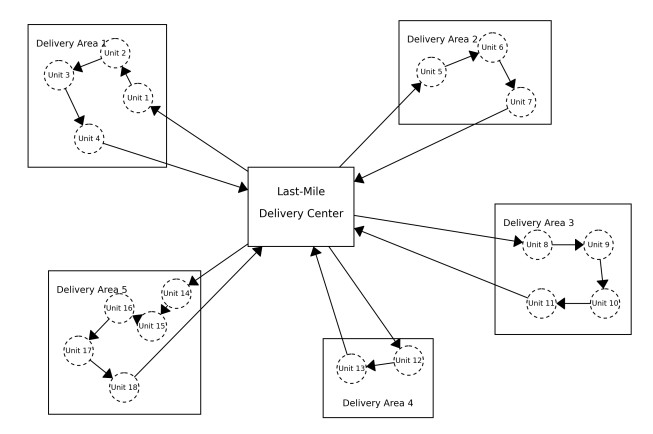
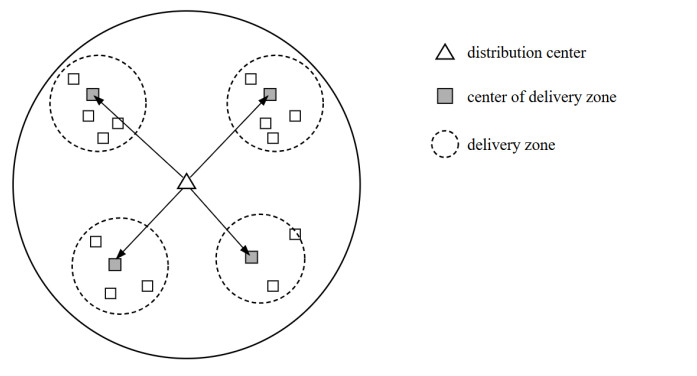
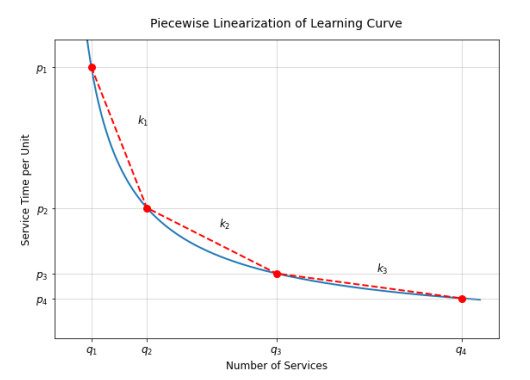
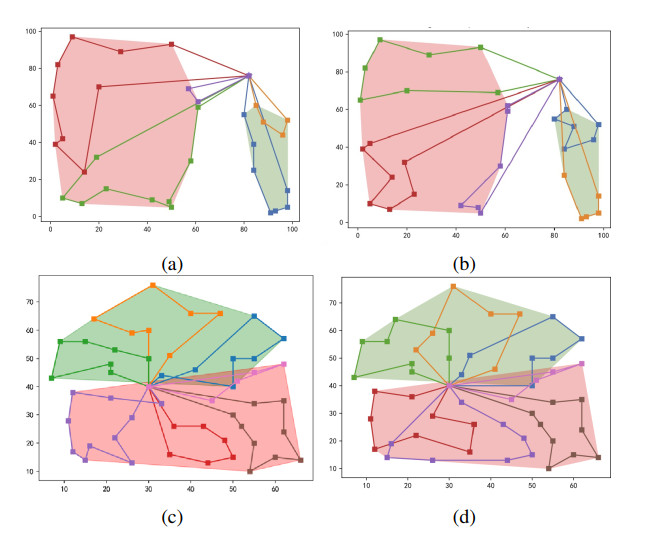
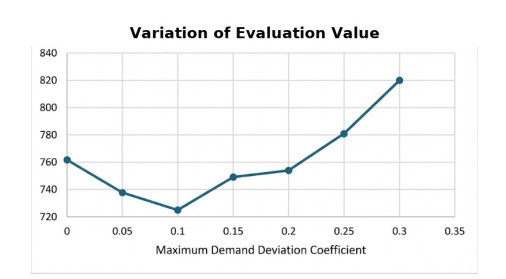
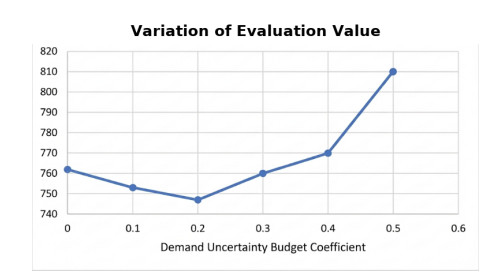
This study focuses on the robust partitioned distribution problem with courier learning and demand uncertainty. The research is divided into tactical (customer point zoning) and operational (courier route planning within zones) stages, for which mathematical models are established. Nonlinear learning curves are linearized via piecewise methods, and the robust partitioned distribution model for demand uncertainty is converted into a robust linear model. An improved adaptive large neighborhood search algorithm is designed; on 13 standard capacitated vehicle routing problem (CVRP) benchmarks, it achieves a 1.72% average gap to the best-known solutions and the best or tied-best gap on 12 of them, outperforming the genetic algorithm, tabu search, and general adaptive large neighborhood search (ALNS) comparators. Its effectiveness is further verified through extensive numerical experiments. First, considering couriers' learning effects reduces the total costs and concentrates route coverage. Second, the benefit of robust solutions is instance-dependent: They reduce overload costs under demand fluctuations in some cases, while excessively large uncertainty parameters lead to conservative, cost-increasing outcomes. Experimental results on real enterprise data clearly validate the superiority of the proposed model and algorithm over existing approaches.
Citation: Chi Zhang, Xue Bai, Guojun Sheng, Zhili Zhou. The robust partitioned distribution problem with courier learning and demand uncertainty[J]. Journal of Industrial and Management Optimization, 2026, 22(11): 5961-6002. doi: 10.3934/jimo.2026201
This study focuses on the robust partitioned distribution problem with courier learning and demand uncertainty. The research is divided into tactical (customer point zoning) and operational (courier route planning within zones) stages, for which mathematical models are established. Nonlinear learning curves are linearized via piecewise methods, and the robust partitioned distribution model for demand uncertainty is converted into a robust linear model. An improved adaptive large neighborhood search algorithm is designed; on 13 standard capacitated vehicle routing problem (CVRP) benchmarks, it achieves a 1.72% average gap to the best-known solutions and the best or tied-best gap on 12 of them, outperforming the genetic algorithm, tabu search, and general adaptive large neighborhood search (ALNS) comparators. Its effectiveness is further verified through extensive numerical experiments. First, considering couriers' learning effects reduces the total costs and concentrates route coverage. Second, the benefit of robust solutions is instance-dependent: They reduce overload costs under demand fluctuations in some cases, while excessively large uncertainty parameters lead to conservative, cost-increasing outcomes. Experimental results on real enterprise data clearly validate the superiority of the proposed model and algorithm over existing approaches.

| [1] |
H. Zhong, R. W. Hall, M. Dessouky, Territory planning and vehicle dispatching with driver learning, Transp. Sci., 41 (2007), 74–89. https://doi.org/10.1287/trsc.1060.0167 doi: 10.1287/trsc.1060.0167

|
| [2] |
Y. Li, C. Zhou, P. Yuan, T. T. A. Ngo, Experience-based territory planning and driver assignment with predicted demand and driver present condition, Transp. Res. Part E, 171 (2023), 103036. https://doi.org/10.1016/j.tre.2023.103036 doi: 10.1016/j.tre.2023.103036
|
| [3] |
I. Sungur, F. Ordóñez, M. Dessouky, A robust optimization approach for the capacitated vehicle routing problem with demand uncertainty, IIE Trans., 40 (2008), 509–523. https://doi.org/10.1080/07408170701745378 doi: 10.1080/07408170701745378
|
| [4] |
C. E. Gounaris, W. Wiesemann, C. A. Floudas, The robust capacitated vehicle routing problem under demand uncertainty, Oper. Res., 61 (2013), 677–693. https://doi.org/10.1287/opre.1120.1136 doi: 10.1287/opre.1120.1136
|
| [5] |
P. Munari, A. Moreno, J. De La Vega, D. Alem, J. Gondzio, R. Morabito, The robust vehicle routing problem with time windows: Compact formulation and branch-price-and-cut method, Transp. Sci., 53 (2019), 1043–1066. https://doi.org/10.1287/trsc.2018.0886 doi: 10.1287/trsc.2018.0886
|
| [6] |
M. L. Fisher, R. Jaikumar, A generalized assignment heuristic for vehicle routing, Networks, 11 (1981), 109–124. https://doi.org/10.1002/net.3230110205 doi: 10.1002/net.3230110205
|
| [7] |
Y. Huang, M. Savelsbergh, L. Zhao, Designing logistics systems for home delivery in densely populated urban areas, Transp. Res. Part B, 115 (2018), 95–125. https://doi.org/10.1016/j.trb.2018.07.006 doi: 10.1016/j.trb.2018.07.006
|
| [8] | B. Zheng, F. Tang, H. Yang, Tobacco distribution based on improved K-means algorithm, in: Proceedings of the 2009 IEEE/INFORMS International Conference on Service Operations, Logistics and Informatics, IEEE, 2009,724–728. |
| [9] |
Y. Wang, X. Ma, M. Xu, Y. Liu, Y. Wang, Two-echelon logistics distribution region partitioning problem based on a hybrid particle swarm optimization–genetic algorithm, Expert Syst. Appl., 42 (2015), 5019–5031. https://doi.org/10.1016/j.eswa.2015.02.058 doi: 10.1016/j.eswa.2015.02.058
|
| [10] |
P. Matl, R. F. Hartl, T. Vidal, Workload equity in vehicle routing problems: A survey and analysis, Transp. Sci., 52 (2018), 239–260. https://doi.org/10.1287/trsc.2017.0744 doi: 10.1287/trsc.2017.0744
|
| [11] |
D. Haugland, S. C. Ho, G. Laporte, Designing delivery districts for the vehicle routing problem with stochastic demands, Eur. J. Oper. Res., 180 (2007), 997–1010. https://doi.org/10.1016/j.ejor.2005.11.070 doi: 10.1016/j.ejor.2005.11.070
|
| [12] |
E. Khodabandeh, L. Bai, S. S. Heragu, G. W. Evans, T. Elrod, M. Shirkness, Modelling and solution of a large-scale vehicle routing problem at GE appliances & lighting, Int. J. Prod. Res., 55 (2017), 1100–1116. https://doi.org/10.1080/00207543.2016.1220685 doi: 10.1080/00207543.2016.1220685
|
| [13] |
M. Schneider, The vehicle-routing problem with time windows and driver-specific times, Eur. J. Oper. Res., 250 (2016), 101–119. https://doi.org/10.1016/j.ejor.2015.09.015 doi: 10.1016/j.ejor.2015.09.015
|
| [14] |
M. Bender, A. Meyer, J. Kalcsics, S. Nickel, The multi-period service territory design problem–an introduction, a model and a heuristic approach, Transp. Res. Part E, 96 (2016), 135–157. https://doi.org/10.1016/j.tre.2016.09.007 doi: 10.1016/j.tre.2016.09.007
|
| [15] |
J. Beardwood, J. H. Halton, J. M. Hammersley, The shortest path through many points, Proc. Cambridge Philos. Soc., 55 (1959), 299–327. https://doi.org/10.1017/S0305004100034095 doi: 10.1017/S0305004100034095
|
| [16] |
D. M. Stein, An asymptotic, probabilistic analysis of a routing problem, Math. Oper. Res., 3 (1978), 89–101. https://doi.org/10.1287/moor.3.2.89 doi: 10.1287/moor.3.2.89
|
| [17] |
A. Hindle, D. Worthington, Models to estimate average route lengths in different geographical environments, J. Oper. Res. Soc., 55 (2004), 662–666. https://doi.org/10.1057/palgrave.jors.2601751 doi: 10.1057/palgrave.jors.2601751
|
| [18] |
B. Çavdar, J. Sokol, A distribution-free TSP tour length estimation model for random graphs, Eur. J. Oper. Res., 243 (2015), 588–598. https://doi.org/10.1016/j.ejor.2014.12.020 doi: 10.1016/j.ejor.2014.12.020
|
| [19] | R. C. Larson, A. R. Odoni, Urban Operations Research, Prentice-Hall, Englewood Cliffs, 1981. |
| [20] |
M. Webb, Cost functions in the location of depots for multiple-delivery journeys, J. Oper. Res. Soc., 19 (1968), 311–320. https://doi.org/10.1057/jors.1968.74 doi: 10.1057/jors.1968.74
|
| [21] |
C. F. Daganzo, The distance traveled to visit N points with a maximum of C stops per vehicle: An analytic model and an application, Transp. Sci., 18 (1984), 331–350. https://doi.org/10.1287/trsc.18.4.331 doi: 10.1287/trsc.18.4.331
|
| [22] |
M. A. Figliozzi, Planning approximations to the average length of vehicle routing problems with time window constraints, Transp. Res. Part B, 43 (2009), 438–447. https://doi.org/10.1016/j.trb.2008.08.004 doi: 10.1016/j.trb.2008.08.004
|
| [23] |
I. Sungur, Y. Ren, F. Ordóñez, M. Dessouky, H. Zhong, A model and algorithm for the courier delivery problem with uncertainty, Transp. Sci., 44 (2010), 193–205. https://doi.org/10.1287/trsc.1090.0303 doi: 10.1287/trsc.1090.0303
|
| [24] |
T. P. Wright, Factors affecting the cost of airplanes, J. Aeronaut. Sci., 3 (1936), 122–128. https://doi.org/10.2514/8.155 doi: 10.2514/8.155
|
| [25] |
M. Y. Jaber, C. H. Glock, A learning curve for tasks with cognitive and motor elements, Comput. Ind. Eng., 64 (2013), 866–871. https://doi.org/10.1016/j.cie.2012.12.005 doi: 10.1016/j.cie.2012.12.005
|
| [26] |
J. R. De Jong, The effects of increasing skill on cycle time and its consequences for time standards, Ergonomics, 1 (1957), 51–60. https://doi.org/10.1080/00140135708964571 doi: 10.1080/00140135708964571
|
| [27] | M. Kunkel, M. Schwind, Vehicle routing with driver learning for real world CEP problems, in: Proceedings of the 2012 45th Hawaii International Conference on System Sciences, IEEE, 2012, 1315–1322. https://doi.org/10.1109/HICSS.2012.633 |
| [28] |
M. Hewitt, A. Chacosky, S. E. Grasman, B. W. Thomas, Integer programming techniques for solving non-linear workforce planning models with learning, Eur. J. Oper. Res., 242 (2015), 942–950. https://doi.org/10.1016/j.ejor.2014.10.060 doi: 10.1016/j.ejor.2014.10.060
|
| [29] |
X. Chen, B. W. Thomas, M. Hewitt, Multi-period technician scheduling with experience-based service times and stochastic customers, Comput. Oper. Res., 82 (2017), 1–14. https://doi.org/10.1016/j.cor.2016.12.026 doi: 10.1016/j.cor.2016.12.026
|
| [30] |
D. Lu, F. Gzara, The robust vehicle routing problem with time windows: Solution by branch and price and cut, Eur. J. Oper. Res., 275 (2019), 925–938. https://doi.org/10.1016/j.ejor.2018.12.019 doi: 10.1016/j.ejor.2018.12.019
|
| [31] |
C. Lee, K. Lee, S. Park, Robust vehicle routing problem with deadlines and travel time/demand uncertainty, J. Oper. Res. Soc., 63 (2012), 1294–1306. https://doi.org/10.1057/jors.2011.136 doi: 10.1057/jors.2011.136
|
| [32] |
S. Souyris, C. E. Cortés, F. Ordóñez, A. Weintraub, A robust optimization approach to dispatching technicians under stochastic service times, Optim. Lett., 7 (2013), 1549–1568. https://doi.org/10.1007/s11590-012-0557-6 doi: 10.1007/s11590-012-0557-6
|
| [33] |
E. Cao, M. Lai, H. Yang, Open vehicle routing problem with demand uncertainty and its robust strategies, Expert Syst. Appl., 41 (2014), 3569–3575. https://doi.org/10.1016/j.eswa.2013.11.004 doi: 10.1016/j.eswa.2013.11.004
|
| [34] |
S. Braaten, O. Gjønnes, L. M. Hvattum, G. Tirado, Heuristics for the robust vehicle routing problem with time windows, Expert Syst. Appl., 77 (2017), 136–147. https://doi.org/10.1016/j.eswa.2017.01.038 doi: 10.1016/j.eswa.2017.01.038
|
| [35] |
Y. Adulyasak, P. Jaillet, Models and algorithms for stochastic and robust vehicle routing with deadlines, Transp. Sci., 50 (2016), 608–626. https://doi.org/10.1287/trsc.2014.0581 doi: 10.1287/trsc.2014.0581
|
| [36] |
J. Han, C. Lee, S. Park, A robust scenario approach for the vehicle routing problem with uncertain travel times, Transp. Sci., 48 (2014), 373–390. https://doi.org/10.1287/trsc.2013.0476 doi: 10.1287/trsc.2013.0476
|
| [37] |
V. Pureza, R. Morabito, M. Reimann, Vehicle routing with multiple deliverymen: Modeling and heuristic approaches for the VRPTW, Eur. J. Oper. Res., 218 (2012), 636–647. https://doi.org/10.1016/j.ejor.2011.12.005 doi: 10.1016/j.ejor.2011.12.005
|
| [38] |
J. De La Vega, P. Munari, R. Morabito, Robust optimization for the vehicle routing problem with multiple deliverymen, Cent. Eur. J. Oper. Res., 27 (2019), 905–936. https://doi.org/10.1007/s10100-017-0511-x doi: 10.1007/s10100-017-0511-x
|
| [39] | K. Sim, E. Hart, A combined generative and selective hyper-heuristic for the vehicle routing problem, in: Proceedings of the Genetic and Evolutionary Computation Conference 2016, ACM, 2016, 1093–1100. https://doi.org/10.1145/2908812.2908942 |
| [40] |
C. Hu, J. Lu, X. Liu, G. Zhang, Robust vehicle routing problem with hard time windows under demand and travel time uncertainty, Comput. Oper. Res., 94 (2018), 139–153. https://doi.org/10.1016/j.cor.2018.02.006 doi: 10.1016/j.cor.2018.02.006
|
| [41] |
S. Qin, S. Liu, H. Kuang, Piecewise linear model for multiskilled workforce scheduling problems considering learning effect and project quality, Math. Probl. Eng., 2016 (2016), 3728934. https://doi.org/10.1155/2016/3728934 doi: 10.1155/2016/3728934
|
| [42] |
N. Christofides, S. Eilon, An algorithm for the vehicle-dispatching problem, J. Oper. Res. Soc., 20 (1969), 309–318. https://doi.org/10.1057/jors.1969.75 doi: 10.1057/jors.1969.75
|
Figures(14) / Tables(11)
Chi Zhang, Xue Bai, Guojun Sheng, Zhili Zhou. The robust partitioned distribution problem with courier learning and demand uncertainty[J]. Journal of Industrial and Management Optimization, 2026, 22(11): 5961-6002. doi: 10.3934/jimo.2026201




 DownLoad: