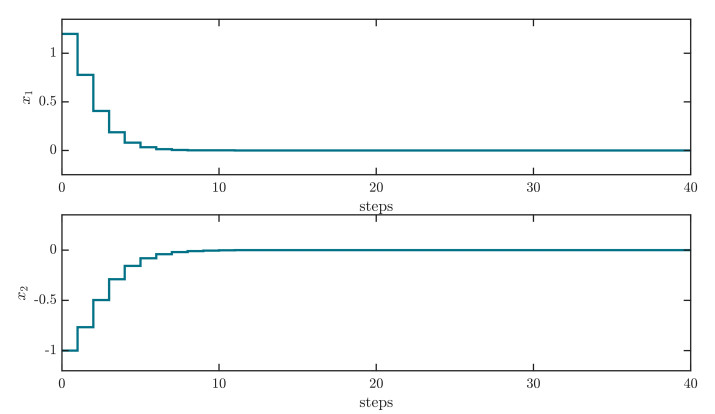
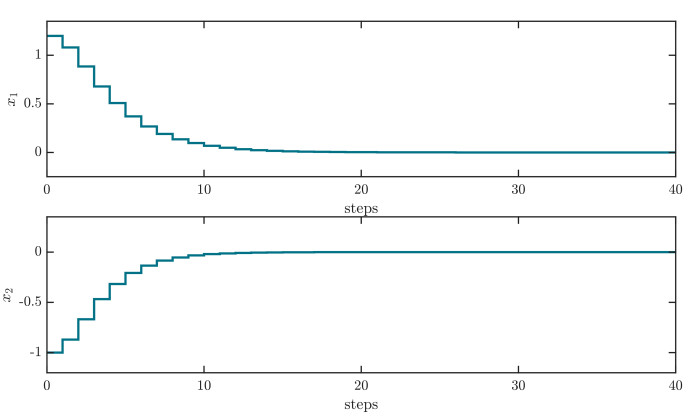
This study addresses stabilization for a class of discrete-time periodic affine nonlinear systems within the high-order fully actuated (HOFA) system framework. The nonlinear affine contribution is first handled through an input transformation, while the periodic high-order linear part is retained for controller synthesis. The resulting dynamics are then represented in lifted coordinates, so that the closed-loop behavior can be characterized by its transition over one period. Instead of computing the feedback matrices directly from the monodromy product, a prescribed periodic target model is introduced and related to the closed-loop dynamics through a periodic Sylvester matrix equation. This construction allows the assigned spectrum to be transferred to the actual closed-loop system, and asymptotic stability follows when the prescribed poles lie inside the unit disk. A third-order numerical study, together with a comparison against discrete-time sliding mode control, illustrates the resulting closed-loop behavior.
Citation: Lingling Lv, Ruijie Fu, Xingyu Xue, Liyan Kang, Sunjie Chen. A high-order fully actuated system approach to stabilization of discrete-time periodic affine nonlinear systems[J]. Journal of Industrial and Management Optimization, 2026, 22(11): 5944-5960. doi: 10.3934/jimo.2026200
This study addresses stabilization for a class of discrete-time periodic affine nonlinear systems within the high-order fully actuated (HOFA) system framework. The nonlinear affine contribution is first handled through an input transformation, while the periodic high-order linear part is retained for controller synthesis. The resulting dynamics are then represented in lifted coordinates, so that the closed-loop behavior can be characterized by its transition over one period. Instead of computing the feedback matrices directly from the monodromy product, a prescribed periodic target model is introduced and related to the closed-loop dynamics through a periodic Sylvester matrix equation. This construction allows the assigned spectrum to be transferred to the actual closed-loop system, and asymptotic stability follows when the prescribed poles lie inside the unit disk. A third-order numerical study, together with a comparison against discrete-time sliding mode control, illustrates the resulting closed-loop behavior.

| [1] |
M. Ghodrat, H. J. Marquez, A multirate approach to event-triggered control of periodic sampled-data systems, IEEE Trans. Control Netw. Syst., 12 (2025), 648–660. https://doi.org/10.1109/TCNS.2024.3395848 doi: 10.1109/TCNS.2024.3395848

|
| [2] |
T. Choe, K. Ri, C. Yun, K. Kim, K. Kim, Nonlinear vibration analysis and stability analysis of rotor systems with multiple localized nonlinearities, AIP Adv., 12 (2022), 125004. https://doi.org/10.1063/5.0128600 doi: 10.1063/5.0128600
|
| [3] |
Y. Chen, Q. Zong, X. Zhang, J. Li, Data-driven active vibration control for helicopter with trailing-edge flaps using adaptive dynamic programming, Chin. J. Aeronaut., 37 (2024), 151–166. https://doi.org/10.1016/j.cja.2024.02.019 doi: 10.1016/j.cja.2024.02.019
|
| [4] |
N. Athanasopoulos, M. Lazar, C. Böhm, F. Allgöwer, On stability and stabilization of periodic discrete-time systems with an application to satellite attitude control, Automatica, 50 (2014), 3190–3196. https://doi.org/10.1016/j.automatica.2014.10.028 doi: 10.1016/j.automatica.2014.10.028
|
| [5] |
A. Czornik, E. Makarov, M. Niezabitowski, S. Popova, V. Zaitsev, Uniform global asymptotic stabilization of semilinear periodic discrete-time systems, IEEE Trans. Autom. Control, 67 (2022), 3598–3605. https://doi.org/10.1109/TAC.2021.3105648 doi: 10.1109/TAC.2021.3105648
|
| [6] |
L. Lv, G. Duan, B. Zhou, Parametric pole assignment and robust pole assignment for discrete-time linear periodic systems, SIAM J. Control Optim., 48 (2010), 3975–3996. https://doi.org/10.1137/080730469 doi: 10.1137/080730469
|
| [7] |
J. Gao, C. Han, Y. Zhao, L. Lv, Output feedback based poles configuration for LDP systems with varying state and input dimensions, IET Control Theory Appl., 17 (2023), 318–330. https://doi.org/10.1049/cth2.12316 doi: 10.1049/cth2.12316
|
| [8] |
Z. Chen, Y. Guo, Z. Zou, Z. Zhang, An adaptive Levenberg–Marquardt identification algorithm for time-delay linear discrete periodic systems, J. Ind. Manag. Optim., 22 (2026), 3023–3049. https://doi.org/10.3934/jimo.2026111 doi: 10.3934/jimo.2026111
|
| [9] | S. Sinha, S. P. Nandanoori, J. Drgona, D. Vrabie, Data-driven stabilization of discrete-time control-affine nonlinear systems: A Koopman operator approach, in 2022 European Control Conference, (2022), 552–559. https://doi.org/10.23919/ECC55457.2022.9837986 |
| [10] |
I. Karafyllis, S. Kotsios, Conditions for global asymptotic stabilization of discrete-time systems, IFAC Proc. Vol., 37 (2004), 719–724. https://doi.org/10.1016/S1474-6670(17)31390-3 doi: 10.1016/S1474-6670(17)31390-3
|
| [11] |
G. Duan, High-order fully actuated system approaches: Part I. Models and basic procedure, Int. J. Syst. Sci., 52 (2021a), 422–435. https://doi.org/10.1080/00207721.2020.1829167 doi: 10.1080/00207721.2020.1829167
|
| [12] |
G. Duan, High-order fully actuated system approaches: Part VII. Controllability, stabilisability and parametric designs, Int. J. Syst. Sci., 52 (2021b), 3091–3114. https://doi.org/10.1080/00207721.2021.1921307 doi: 10.1080/00207721.2021.1921307
|
| [13] |
G. Duan, High-order fully actuated system approaches: Part X. Basics of discrete-time systems, Int. J. Syst. Sci., 53 (2022), 810–832. https://doi.org/10.1080/00207721.2021.1975848 doi: 10.1080/00207721.2021.1975848
|
| [14] |
G. Duan, B. Zhou, Fully actuated system approach for linear systems control: A frequency-domain solution, J. Syst. Sci. Complex., 35 (2022), 2046–2061. https://doi.org/10.1007/s11424-022-1361-8 doi: 10.1007/s11424-022-1361-8
|
| [15] |
D. Gu, S. Wang, A high-order fully actuated system approach for a class of nonlinear systems, J. Syst. Sci. Complex., 35 (2022), 714–730. https://doi.org/10.1007/s11424-022-2041-4 doi: 10.1007/s11424-022-2041-4
|
| [16] |
G. Duan, Discrete-time delay systems: Part 1. Global fully actuated case, Sci. China Inf. Sci., 65 (2022), 182201. https://doi.org/10.1007/s11432-021-3417-3 doi: 10.1007/s11432-021-3417-3
|
| [17] |
D. W. Zhang, G. P. Liu, L. Cao, Predictive control of discrete-time high-order fully actuated systems with application to air-bearing spacecraft simulator, J. Franklin Inst., 360 (2023), 5910–5927. https://doi.org/10.1016/j.jfranklin.2023.04.003 doi: 10.1016/j.jfranklin.2023.04.003
|
| [18] |
S. Zhang, Y. Qiu, M. Hou, X. Wu, H. Zhang, J. Wang, Design of a fast model predictive controller based on the fully actuated system approach, Control Eng. Pract., 169 (2026), 106762. https://doi.org/10.1016/j.conengprac.2026.106762 doi: 10.1016/j.conengprac.2026.106762
|
| [19] |
S. Zhang, Y. Qiu, M. Hou, X. Wu, H. Zhang, J. Wang, Multiple filtered high-gain observers-based robust control for mixed-order fully actuated systems, J. Franklin Inst., 363 (2026), 108599. https://doi.org/10.1016/j.jfranklin.2026.108599 doi: 10.1016/j.jfranklin.2026.108599
|
| [20] |
D. Jin, J. Qiu, W. Ji, T. Wang, Attitude–orbit integrated modeling and control for flexible spacecraft based on twistors and fully actuated system approach, IEEE Trans. Syst. Man Cybern. Syst., 56 (2026), 1369–1378. https://doi.org/10.1109/TSMC.2025.3647684 doi: 10.1109/TSMC.2025.3647684
|
| [21] |
S. Jia, J. Qiu, T. Wang, High-order fully actuated system approach-based attitude stabilization for underactuated rigid and flexible spacecraft, IEEE Trans. Autom. Sci. Eng., 22 (2025), 15094–15105. https://doi.org/10.1109/TASE.2025.3567541 doi: 10.1109/TASE.2025.3567541
|
| [22] |
G. Liu, K. Zhang, B. Li, Fully-actuated system approach based optimal attitude tracking control of rigid spacecraft with actuator saturation, J. Syst. Sci. Complex., 35 (2022), 688–702. https://doi.org/10.1007/s11424-022-1515-8 doi: 10.1007/s11424-022-1515-8
|
| [23] |
G. Tian, J. Tan, B. Li, G. Duan, Optimal fully actuated system approach-based trajectory tracking control for robot manipulators, IEEE Trans. Cybern., 54 (2024), 7469–7478. https://doi.org/10.1109/TCYB.2024.3467386 doi: 10.1109/TCYB.2024.3467386
|
| [24] |
L. Lv, Z. Zhang, L. Zhang, W. Wang, An iterative algorithm for periodic Sylvester matrix equations, J. Ind. Manag. Optim., 14 (2018), 413–425. https://doi.org/10.3934/jimo.2017053 doi: 10.3934/jimo.2017053
|
| [25] |
C. Ma, T. Yan, A finite iterative algorithm for the general discrete-time periodic Sylvester matrix equations, J. Franklin Inst., 359 (2022), 4410–4432. https://doi.org/10.1016/j.jfranklin.2022.03.047 doi: 10.1016/j.jfranklin.2022.03.047
|
| [26] |
L. Lv, J. Chen, L. Zhang, F. Zhang, Gradient-based neural networks for solving periodic Sylvester matrix equations, J. Franklin Inst., 359 (2022), 10849–10866. https://doi.org/10.1016/j.jfranklin.2022.05.023 doi: 10.1016/j.jfranklin.2022.05.023
|
| [27] |
S. Li, C. Ma, An improved gradient neural network for solving periodic Sylvester matrix equations, J. Franklin Inst., 360 (2023), 4056–4070. https://doi.org/10.1016/j.jfranklin.2023.02.019 doi: 10.1016/j.jfranklin.2023.02.019
|
| [28] |
W. Wang, C. Song, Iterative algorithms for discrete-time periodic Sylvester matrix equations and its application in antilinear periodic system, Appl. Numer. Math., 168 (2021), 251–273. https://doi.org/10.1016/j.apnum.2021.06.006 doi: 10.1016/j.apnum.2021.06.006
|
| [29] |
R. Qi, C. Song, Iterative algorithms for the generalized discrete-time periodic Sylvester transpose matrix equations with application in the periodic state observer design of linear systems, J. Appl. Anal. Comput., 15 (2025), 286–315. https://doi.org/10.11948/20240085 doi: 10.11948/20240085
|
| [30] |
L. Lv, W. Lai, X. Liu, A parametric poles assignment algorithm for high-order linear discrete periodic systems, J. Franklin Inst., 360 (2023), 11855–11870. https://doi.org/10.1016/j.jfranklin.2023.09.010 doi: 10.1016/j.jfranklin.2023.09.010
|
Figures(2) / Tables(1)
Lingling Lv, Ruijie Fu, Xingyu Xue, Liyan Kang, Sunjie Chen. A high-order fully actuated system approach to stabilization of discrete-time periodic affine nonlinear systems[J]. Journal of Industrial and Management Optimization, 2026, 22(11): 5944-5960. doi: 10.3934/jimo.2026200




 DownLoad: