Decompressive craniectomy (DC) is a surgical procedure for refractory intracranial hypertension following severe acquired brain injury (sABI) and is an effective, life-saving treatment. However, there is significant controversy regarding its impact on long-term functional outcome. Furthermore, the role of postoperative rehabilitation in shaping recovery after DC has been largely overlooked in the literature.
To systematically review randomized controlled trials (RCTs) evaluating the long-term functional outcomes of DC in patients with sABI, stratified by underlying etiology, with particular attention to the assessment tools employed, their alignment with the International Classification of Functioning, Disability and Health (ICF) framework, and the reporting of post-operative rehabilitation data.
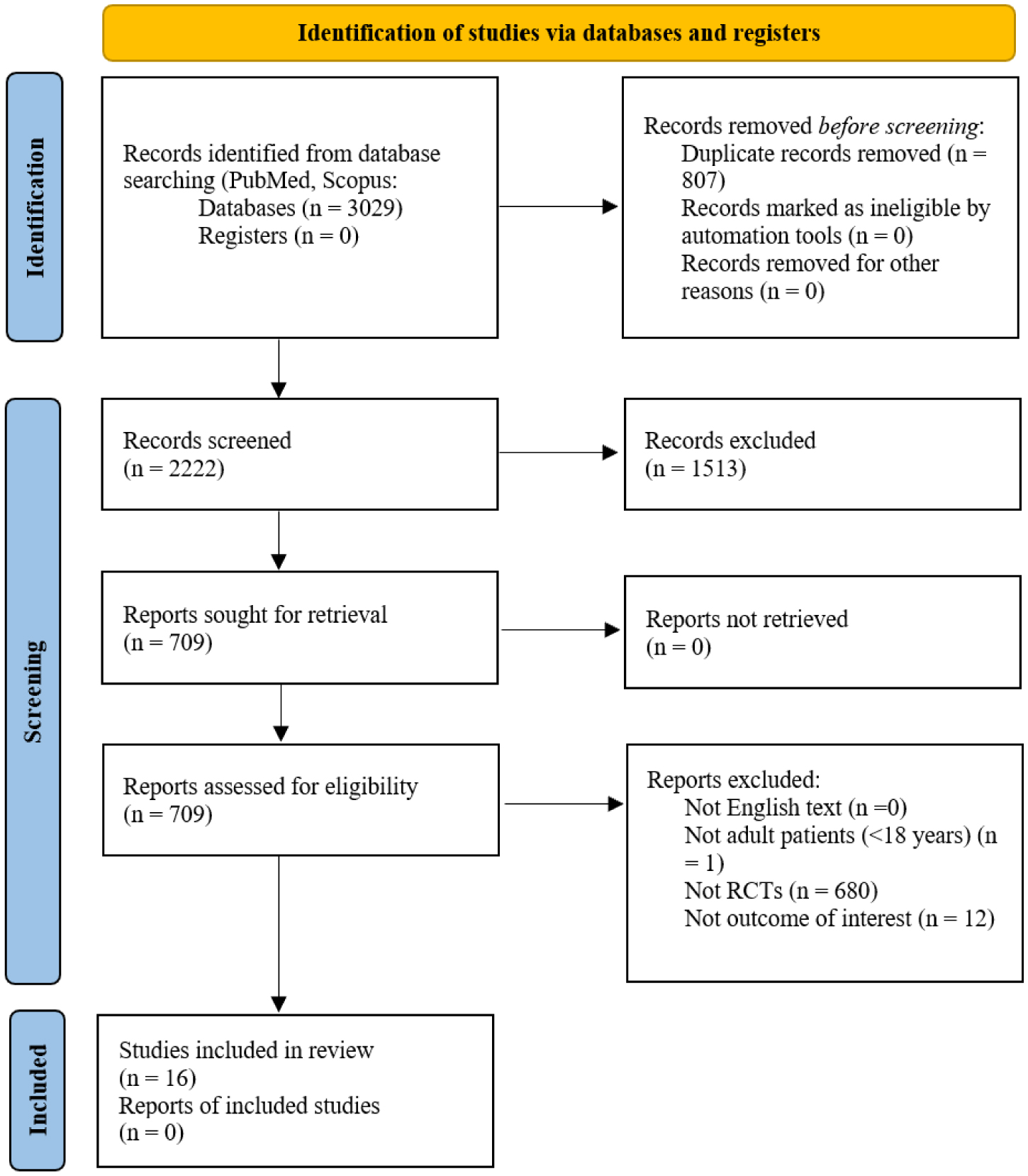
We searched PubMed and Scopus for all RCTs related to DC published between 2000 and 2024. Eligible studies included adults (≥18 years) who underwent DC for acute brain injury and reported at least one functional outcome measure (GOS-E, mRS, GOS, or Barthel Index). Outcomes were dichotomized into favorable and unfavorable categories. A narrative summary was performed because of the substantial clinical and methodological heterogeneity.
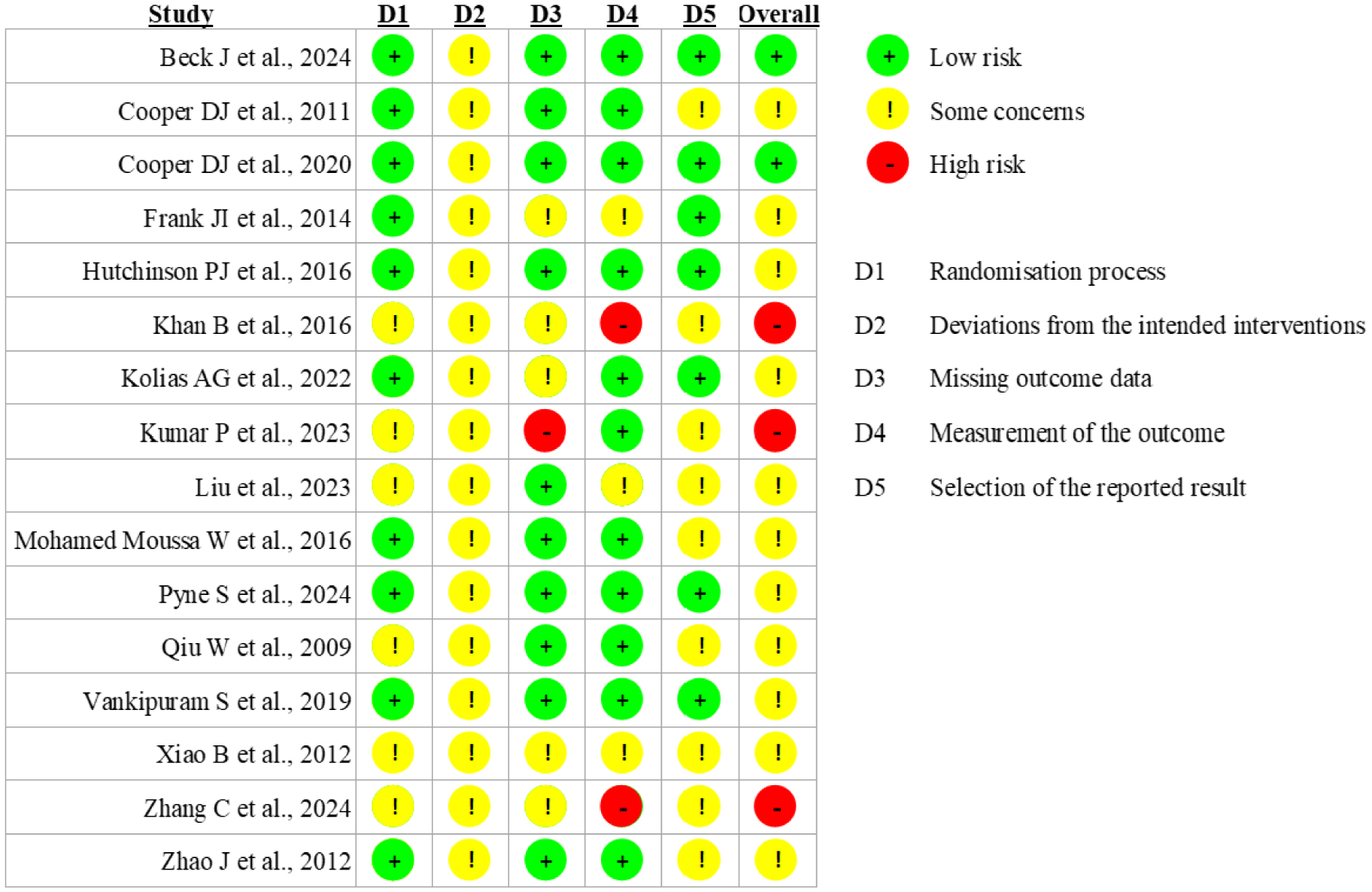
We included 16 RCTs (1803 participants) in our analysis. The etiologies included traumatic brain injury, intracerebral hemorrhage, acute subdural hematoma, and malignant cerebral infarction. DC was associated with lower overall mortality compared to those not receiving it (24% vs. 31%). However, in 8 RCTS, a higher proportion of patients with DC had unfavorable functional outcomes. All outcome scales mapped exclusively to the ICF domain of “Activities and Participation”, while any assessment of cognitive function, emotional well-being, social participation, or quality of life was reported. Rehabilitation was largely unmeasured rather than necessarily absent: Only one study reported any rehabilitation data, limited to the number of patients admitted to inpatient rehabilitation. Most RCTs reported outcomes at 6 months or before; only one RCT extended the follow-up period to 24 months.
DC is an effective, life-saving procedure that reduces mortality and has an etiology-dependent effect on functional outcomes. Available functional outcome measures do not adequately capture the multifaceted nature of recovery following severe brain injury. Crucially, the post-DC rehabilitation trajectory is not captured by current trials; this argues for the routine, prospective collection of rehabilitation data in future RCTs to determine the contribution of postoperative rehabilitation to long-term functional recovery rather than against the use of a life-saving procedure.
Citation: Davide Giannuzzi, Claudia Lombardo, Pierluigi Contaldi, Maria Caputo, Francesco Pambianco, Gianpaolo Ronconi, Francesco Signorelli, Francesco Doglietto, Augusto Fusco. A systematic review of mortality and long-term functional outcomes after decompressive craniectomy for acquired brain injury: The missing rehabilitation reporting[J]. AIMS Neuroscience, 2026, 13(3): 510-529. doi: 10.3934/Neuroscience.2026023
Decompressive craniectomy (DC) is a surgical procedure for refractory intracranial hypertension following severe acquired brain injury (sABI) and is an effective, life-saving treatment. However, there is significant controversy regarding its impact on long-term functional outcome. Furthermore, the role of postoperative rehabilitation in shaping recovery after DC has been largely overlooked in the literature.
To systematically review randomized controlled trials (RCTs) evaluating the long-term functional outcomes of DC in patients with sABI, stratified by underlying etiology, with particular attention to the assessment tools employed, their alignment with the International Classification of Functioning, Disability and Health (ICF) framework, and the reporting of post-operative rehabilitation data.
We searched PubMed and Scopus for all RCTs related to DC published between 2000 and 2024. Eligible studies included adults (≥18 years) who underwent DC for acute brain injury and reported at least one functional outcome measure (GOS-E, mRS, GOS, or Barthel Index). Outcomes were dichotomized into favorable and unfavorable categories. A narrative summary was performed because of the substantial clinical and methodological heterogeneity.
We included 16 RCTs (1803 participants) in our analysis. The etiologies included traumatic brain injury, intracerebral hemorrhage, acute subdural hematoma, and malignant cerebral infarction. DC was associated with lower overall mortality compared to those not receiving it (24% vs. 31%). However, in 8 RCTS, a higher proportion of patients with DC had unfavorable functional outcomes. All outcome scales mapped exclusively to the ICF domain of “Activities and Participation”, while any assessment of cognitive function, emotional well-being, social participation, or quality of life was reported. Rehabilitation was largely unmeasured rather than necessarily absent: Only one study reported any rehabilitation data, limited to the number of patients admitted to inpatient rehabilitation. Most RCTs reported outcomes at 6 months or before; only one RCT extended the follow-up period to 24 months.
DC is an effective, life-saving procedure that reduces mortality and has an etiology-dependent effect on functional outcomes. Available functional outcome measures do not adequately capture the multifaceted nature of recovery following severe brain injury. Crucially, the post-DC rehabilitation trajectory is not captured by current trials; this argues for the routine, prospective collection of rehabilitation data in future RCTs to determine the contribution of postoperative rehabilitation to long-term functional recovery rather than against the use of a life-saving procedure.
Decompressive Craniectomy
Control
intracerebral haemorrhage
Randomized Controlled Trials
International Classification of Functioning, Disability and Health
Glasgow Outcome Scale Extended
modified Rankin Scale
Glasgow Outcome Scale
modified Barthel index
Barthel Index
intracranial pressure
traumatic brain injury
Glasgow Coma Scale
Risk of Bias 2
acute subdural haematoma
large su-pratentorial cerebral haemorrhagic infarction
malignant middle cerebral artery infarction
malignant cerebral artery infarction
yes
no
not described

| [1] |
Quinn TM, Taylor JJ, Magarik JA, et al. (2011) Decompressive craniectomy: technical note. Acta Neurol Scand 123: 239-244. https://doi.org/10.1111/j.1600-0404.2010.01397.x 
|
| [2] |
Smith M (2017) Refractory intracranial hypertension: The role of decompressive craniectomy. Anesth Analg 125: 1999-2008. https://doi.org/10.1213/ANE.0000000000002399
|
| [3] |
Cooper DJ, Rosenfeld JV, Murray L, et al. (2011) Decompressive craniectomy in diffuse traumatic brain injury. N Engl J Med 364: 1493-1502. https://doi.org/10.1056/NEJMoa1102077
|
| [4] |
Hutchinson PJ, Kolias AG, Timofeev IS, et al. (2016) Trial of decompressive craniectomy for traumatic intracranial hypertension. N Engl J Med 375: 1119-1130. https://doi.org/10.1056/NEJMoa1605215
|
| [5] | Dower A, Mulcahy M, Maharaj M, et al. (2022) Surgical decompression for malignant cerebral oedema after ischaemic stroke. Cochrane Database Syst Rev 11: CD014989. https://doi.org/10.1002/14651858.CD014989.pub2 |
| [6] | Limpastan K, Norasetthada T, Watcharasaksilp W, et al. (2013) Factors influencing the outcome of decompressive craniectomy used in the treatment of severe traumatic brain injury. J Med Assoc Thai 96: 678-682. |
| [7] |
Keller E, Pangalu A, Fandino J, et al. (2005) Decompressive craniectomy in severe cerebral venous and dural sinus thrombosis. Acta Neurochir Suppl 94: 177-183. https://doi.org/10.1007/3-211-27911-3_28
|
| [8] |
Baussart B, Cheisson G, Compain M, et al. (2006) Multimodal cerebral monitoring and decompressive surgery for the treatment of severe bacterial meningitis with increased intracranial pressure. Acta Anaesthesiol Scand 50: 762-765. https://doi.org/10.1111/j.1399-6576.2006.01038.x
|
| [9] |
Vahedi K, Vicaut E, Mateo J, et al. (2007) Sequential–design, multicenter, randomized, controlled trial of early decompressive craniectomy in malignant middle cerebral artery infarction (DECIMAL Trial). Stroke 38: 2506-2517. https://doi.org/10.1161/STROKEAHA.107.485235
|
| [10] |
Kuan NG, Yeow TL (2022) Outcome of decompressive craniectomy for traumatic brain injury: Ways to better evaluate functional outcome. Asian J Neurosurg 17: 394-395. https://doi.org/10.1055/s-0042-1750810
|
| [11] |
Harscher S, Reichart R, Terborg C, et al. (2006) Outcome after decompressive craniectomy in patients with severe ischemic stroke. Acta Neurochir (Wien) 148: 31-37. https://doi.org/10.1007/s00701-005-0617-0
|
| [12] |
Kolias AG, Adams H, Timofeev IS, et al. (2022) Evaluation of outcomes among patients with traumatic intracranial hypertension treated with decompressive craniectomy vs standard medical care at 24 months: A secondary analysis of the RESCUEicp randomized clinical trial. JAMA Neurol 79: 664-671. https://doi.org/10.1001/jamaneurol.2022.1070
|
| [13] |
Page MJ, Moher D, Bossuyt PM, et al. (2021) PRISMA 2020 explanation and elaboration: updated guidance and exemplars for reporting systematic reviews. BMJ 372: n160. https://doi.org/10.1136/bmj.n160
|
| [14] |
Sterne JAC, Savović J, Page MJ, et al. (2019) RoB 2: a revised tool for assessing risk of bias in randomised trials. BMJ 366: l4898. https://doi.org/10.1136/bmj.l4898
|
| [15] |
Cooper DJ, Rosenfeld JV, Murray L, et al. (2020) Patient outcomes at twelve months after early decompressive craniectomy for diffuse traumatic brain injury in the randomized DECRA clinical trial. J Neurotrauma 37: 810-816. https://doi.org/10.1089/neu.2019.6869
|
| [16] |
Beck J, Fung C, Strbian D, et al. (2024) Decompressive craniectomy plus best medical treatment versus best medical treatment alone for spontaneous severe deep supratentorial intracerebral haemorrhage: a randomised controlled clinical trial. Lancet 403: 2395-2404. https://doi.org/10.1016/S0140-6736(24)00702-5
|
| [17] |
Frank JI, Schumm LP, Wroblewski K, et al. (2014) Hemicraniectomy and durotomy upon deterioration from infarction–related swelling trial: randomized pilot clinical trial. Stroke 45: 781-877. https://doi.org/10.1161/STROKEAHA.113.003200
|
| [18] | Khan B, Khan Afridi EA, Khan B, et al. (2016) Decompressive craniectomy for acute subdural haematoma with expansile duraplasty versus dural-slits. J Ayub Med Coll Abbottabad 28: 285-288. |
| [19] |
Kumar P, Srivastava C, Bajaj A, et al. (2023) A prospective, randomized, controlled study comparing two surgical procedures of decompressive craniectomy in patients with traumatic brain injury: Dural closure without dural closure. J Clin Neurosci 108: 30-36. https://doi.org/10.1016/j.jocn.2022.11.015
|
| [20] |
Liu C, Jia G, Wu R, et al. (2023) Comparison of the effects of stepwise intracranial decompression and decompressive craniectomy in the treatment of severe traumatic brain injury: A randomized controlled trial. Medicine (Baltimore) 102: e36633. https://doi.org/10.1097/MD.0000000000036633
|
| [21] |
Moussa WM, Khedr W (2017) Decompressive craniectomy and expansive duraplasty with evacuation of hypertensive intracerebral hematoma, a randomized controlled trial. Neurosurg Rev 40: 115-127. https://doi.org/10.1007/s10143-016-0743-6
|
| [22] |
Pyne S, Barton G, Turner D, et al. (2024) Cost-effectiveness of craniotomy versus decompressive craniectomy for UK patients with traumatic acute subdural haematoma. BMJ Open 14: e085084. https://doi.org/10.1136/bmjopen-2024-085084
|
| [23] |
Qiu W, Guo C, Shen H, et al. (2009) Effects of unilateral decompressive craniectomy on patients with unilateral acute post–traumatic brain swelling after severe traumatic brain injury. Crit Care 13: R185. https://doi.org/10.1186/cc8178
|
| [24] |
Vankipuram S, Sasane SV, Chandra A, et al. (2020) A comparative analysis between four–quadrant osteoplastic decompressive craniotomy versus conventional decompressive craniectomy for traumatic brain injury. World Neurosurg 135: e393-e404. https://doi.org/10.1016/j.wneu.2019.12.004
|
| [25] |
Xiao B, Wu FF, Zhang H, et al. (2012) A randomized study of urgent computed tomography-based hematoma puncture and aspiration in the emergency department and subsequent evacuation using craniectomy versus craniectomy only. J Neurosurg 117: 566-573. https://doi.org/10.3171/2012.5.JNS111611
|
| [26] |
Zhang C, Zhang S, Yin Y, et al. (2024) Clot removAl with or without decompRessive craniectomy under ICP monitoring for supratentorial IntraCerebral Hemorrhage (CARICH): a randomized controlled trial. Int J Surg 110: 4804-4809. https://doi.org/10.1097/JS9.0000000000001466
|
| [27] |
Zhao J, Su YY, Zhang Y, et al. (2012) Decompressive hemicraniectomy in malignant middle cerebral artery infarct: a randomized controlled trial enrolling patients up to 80 years old. Neurocrit Care 17: 161-171. https://doi.org/10.1007/s12028-012-9703-3
|
| [28] |
Jüttler E, Schwab S, Schmiedek P, et al. (2007) Decompressive surgery for the treatment of malignant infarction of the middle cerebral artery (DESTINY): a randomized, controlled trial. Stroke 38: 2518-2525. https://doi.org/10.1161/STROKEAHA.107.485649
|
| [29] |
Moskowitz E, Melendez CI, Dunn J, et al. (2018) Long-term effects of decompressive craniectomy on functional outcomes after traumatic brain injury: A multicenter study. Am Surg 84: 1314-1318. https://doi.org/10.1177/000313481808400844
|
| [30] |
Fusco A, Galluccio C, Castelli L, et al. (2022) Severe acquired brain injury: Prognostic factors of discharge outcome in older adults. Brain Sci 12: 1232. https://doi.org/10.3390/brainsci12091232
|
| [31] |
Honeybul S, Gillett GR, Ho KM, et al. (2016) Is life worth living? Decompressive craniectomy and the disability paradox. J Neurosurg 125: 775-778. https://doi.org/10.3171/2016.3.JNS1683
|
| [32] | Honeybul S (2018) Long–term outcome following severe traumatic brain injury: ethical considerations. J Neurosurg Sci 62: 599-605. https://doi.org/10.23736/S0390-5616.18.04509-5 |
| [33] |
Guerra WK, Piek J, Gaab MR (1999) Decompressive craniectomy to treat intracranial hypertension in head injury patients. Intensive Care Med 25: 1327-1329. https://doi.org/10.1007/s001340051068
|
| [34] |
Polin RS, Shaffrey ME, Bogaev CA, et al. (1997) Decompressive bifrontal craniectomy in the treatment of severe refractory posttraumatic cerebral edema. Neurosurgery 41: 84-92. https://doi.org/10.1097/00006123-199707000-00018
|
| [35] |
Shah A, Almenawer S, Hawryluk G (2019) Timing of decompressive craniectomy for ischemic stroke and traumatic brain injury: A review. Front Neurol 10: 11. https://doi.org/10.3389/fneur.2019.00011
|
| [36] | Rubiano AM, Villarreal W, Hakim EJ, et al. (2009) Early decompressive craniectomy for neurotrauma: an institutional experience. Ulus Travma Acil Cerrahi Derg 15: 28-38. |
| [37] |
Josan VA, Sgouros S (2006) Early decompressive craniectomy may be effective in the treatment of refractory intracranial hypertension after traumatic brain injury. Childs Nerv Syst 22: 1268-1274. https://doi.org/10.1007/s00381-006-0064-0
|
| [38] |
Piedra MP, Nemecek AN, Ragel BT (2014) Timing of cranioplasty after decompressive craniectomy for trauma. Surg Neurol Int 5: 25. https://doi.org/10.4103/2152-7806.127762
|
| [39] |
Kurland DB, Khaladj-Ghom A, Stokum JA, et al. (2015) Complications associated with decompressive craniectomy: A systematic review. Neurocrit Care 23: 292-304. https://doi.org/10.1007/s12028-015-0144-7
|
| [40] |
Solari A, Giordano A, Grasso MG, et al. (2015) Home-based palliative approach for people with severe multiple sclerosis and their carers: study protocol for a randomized controlled trial. Trials 16: 184. https://doi.org/10.1186/s13063-015-0695-0
|
Figures(2) / Tables(5)

Davide Giannuzzi, Claudia Lombardo, Pierluigi Contaldi, Maria Caputo, Francesco Pambianco, Gianpaolo Ronconi, Francesco Signorelli, Francesco Doglietto, Augusto Fusco. A systematic review of mortality and long-term functional outcomes after decompressive craniectomy for acquired brain injury: The missing rehabilitation reporting[J]. AIMS Neuroscience, 2026, 13(3): 510-529. doi: 10.3934/Neuroscience.2026023





 DownLoad: