Cognitive reappraisal (CR) relies on prefrontal top-down control over limbic systems, with the dorsolateral prefrontal cortex (dlPFC) playing a central regulatory role. Alpha-frequency transcranial alternating current stimulation (α-tACS) can modulate cortical oscillations; yet, its causal contribution to emotion regulation (ER) remains unclear.
In this study, we investigated whether in-phase or anti-phase alpha-tACS influenced subjective and physiological responses during cognitive reappraisal of negative emotional stimuli.
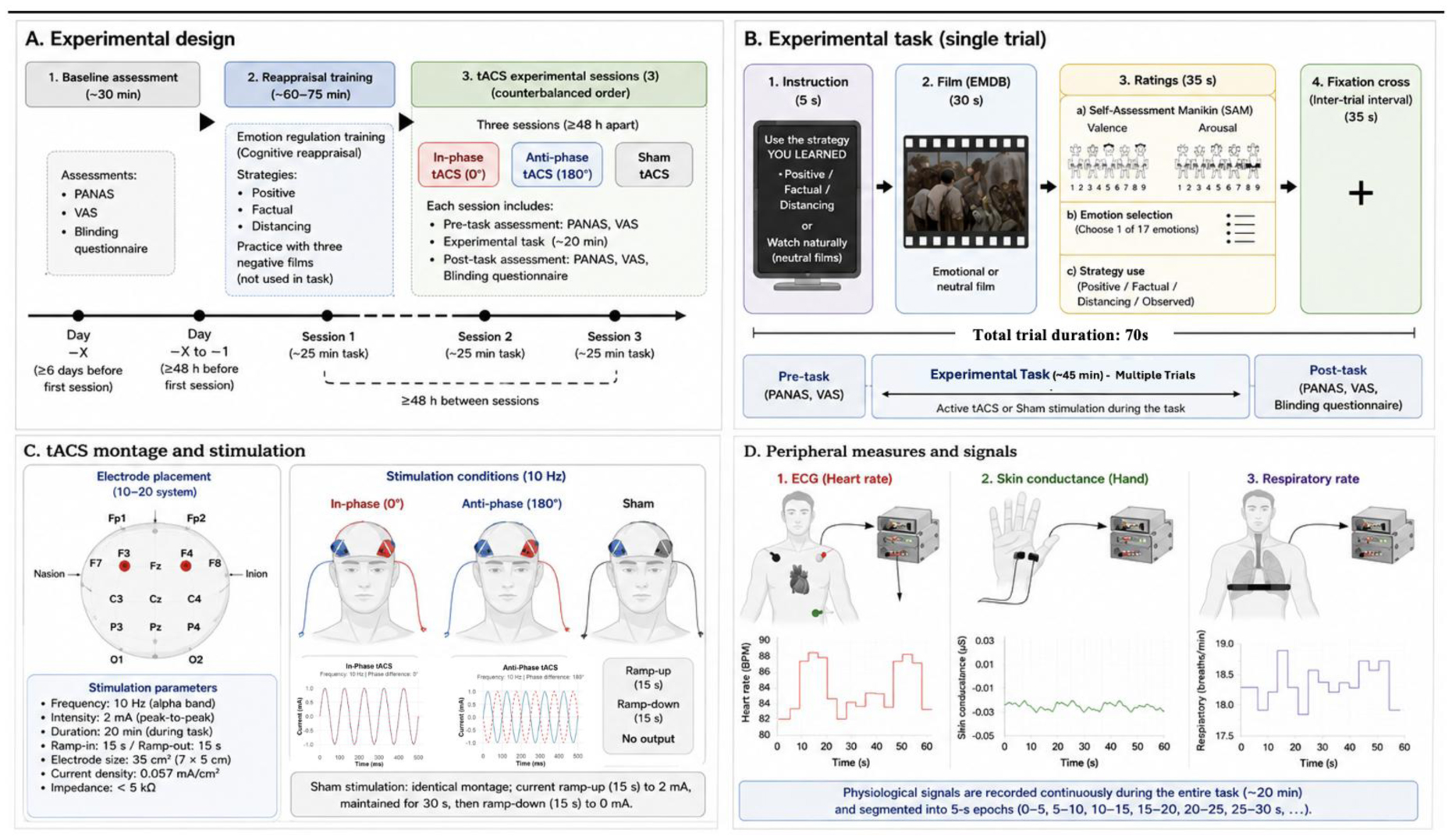
Forty-two healthy young adults completed three counterbalanced sessions (in-phase, anti-phase, sham) in a single-blind, sham-controlled crossover design. During α-tACS or sham, participants applied three CR strategies (positive, fictional, distancing) while viewing negative and neutral film clips. Valence, arousal, heart rate (HR), skin conductance (SC), respiratory rate (RR), and pre/post-session affect (PANAS) were recorded.
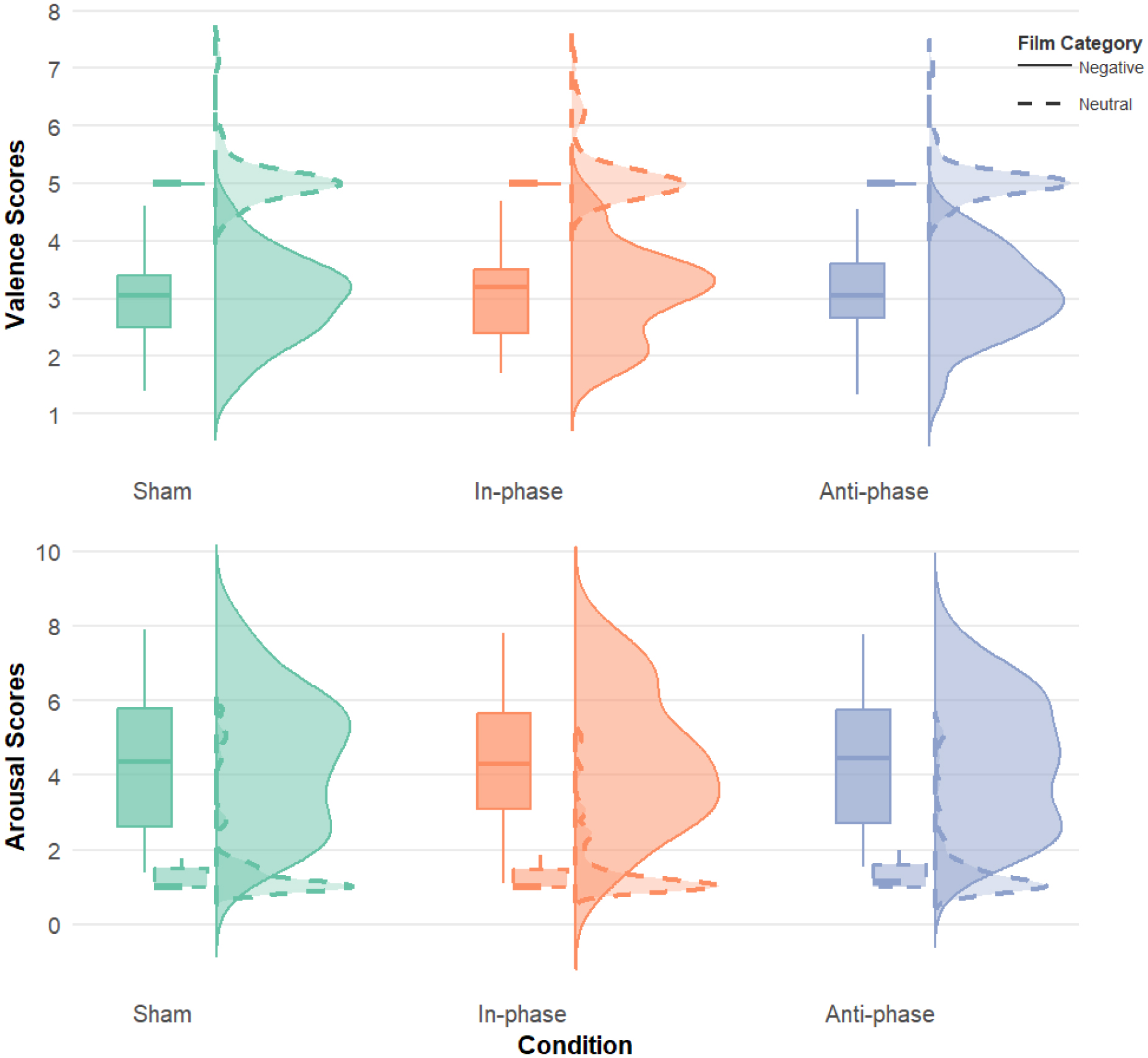
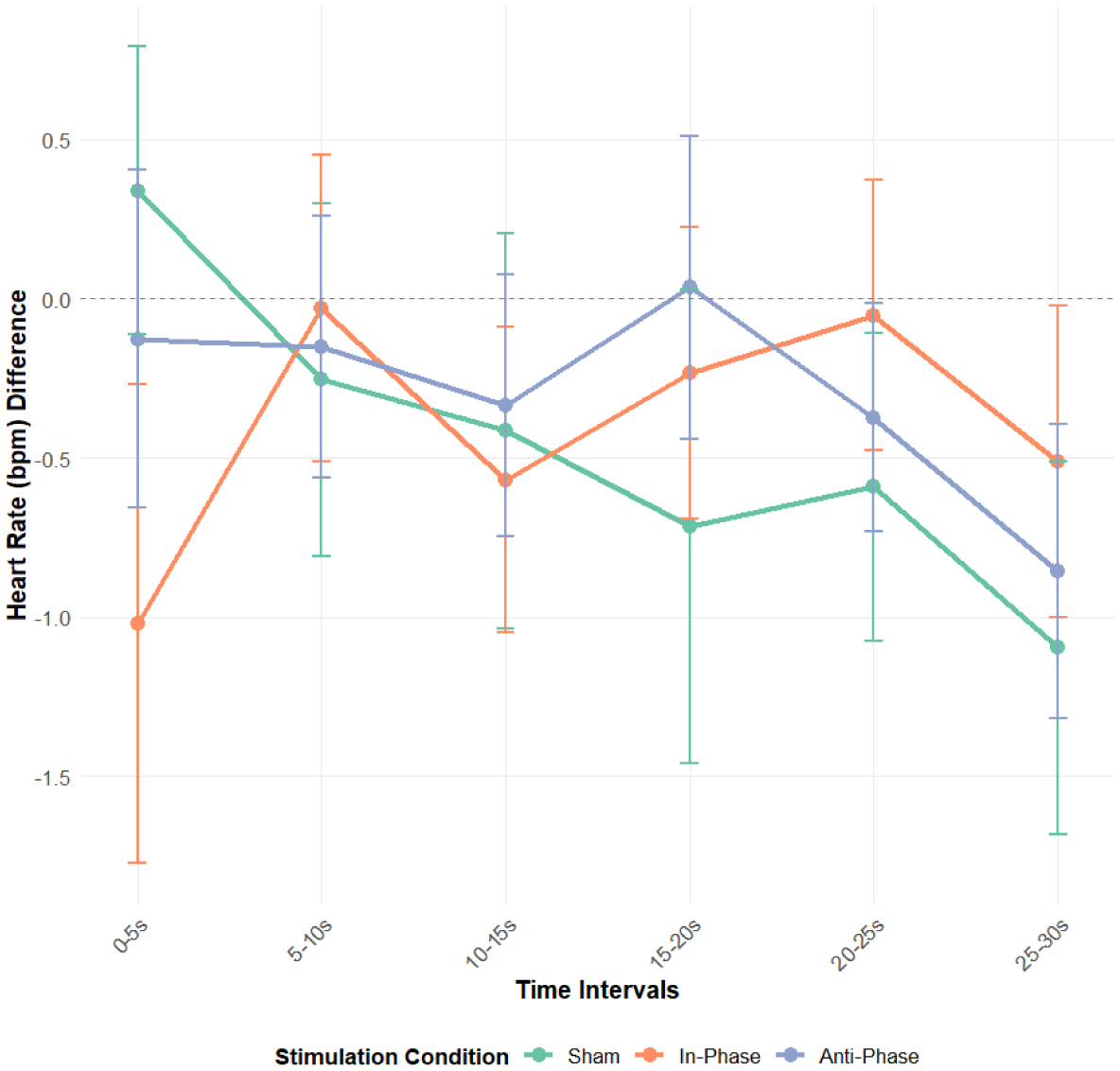
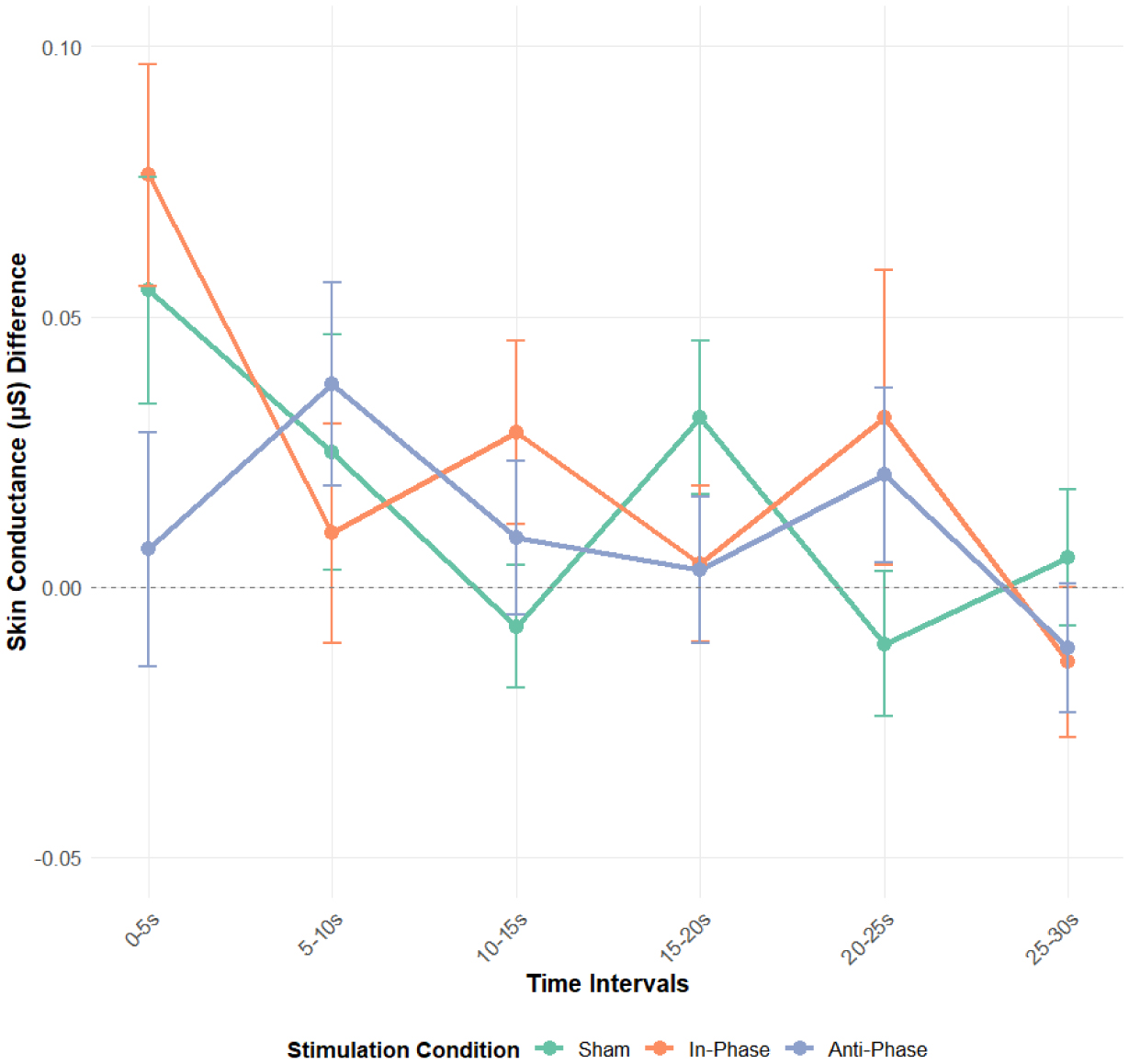
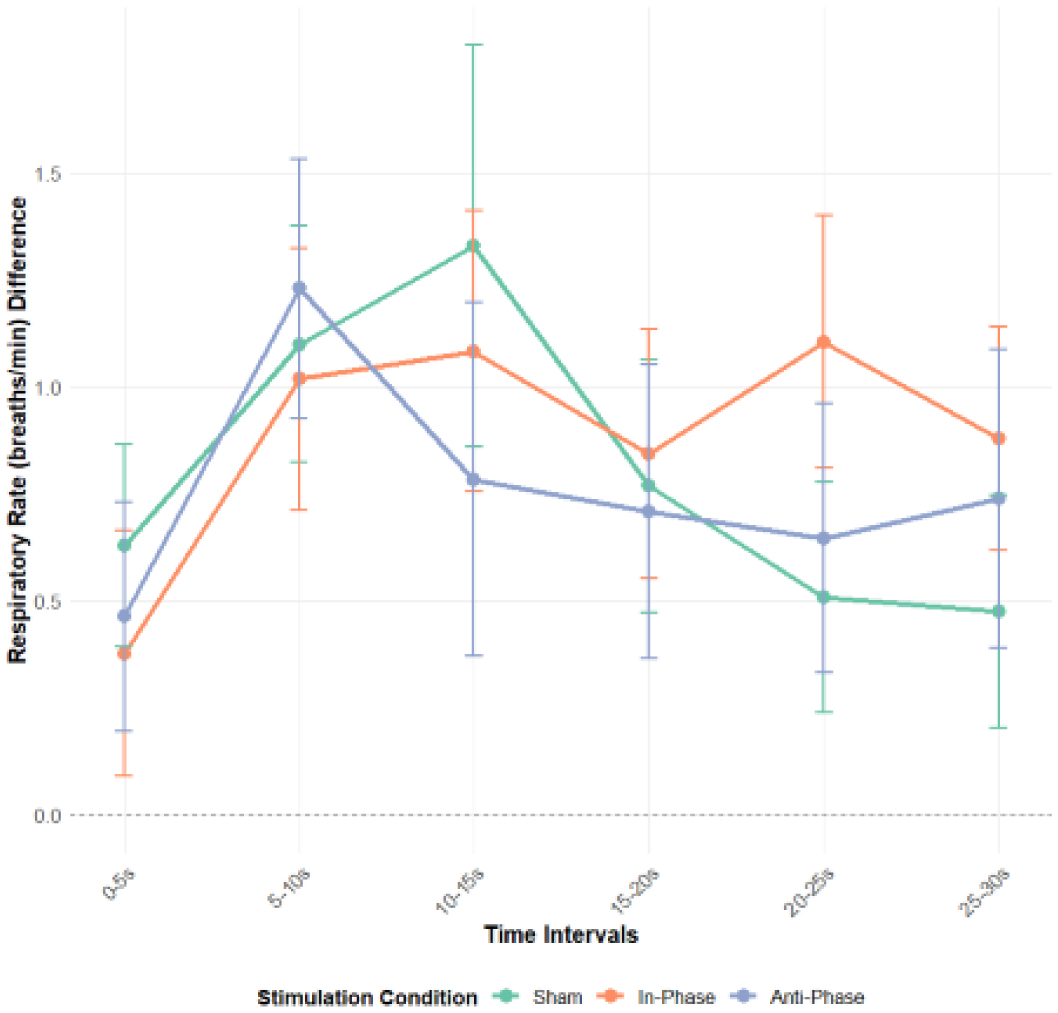
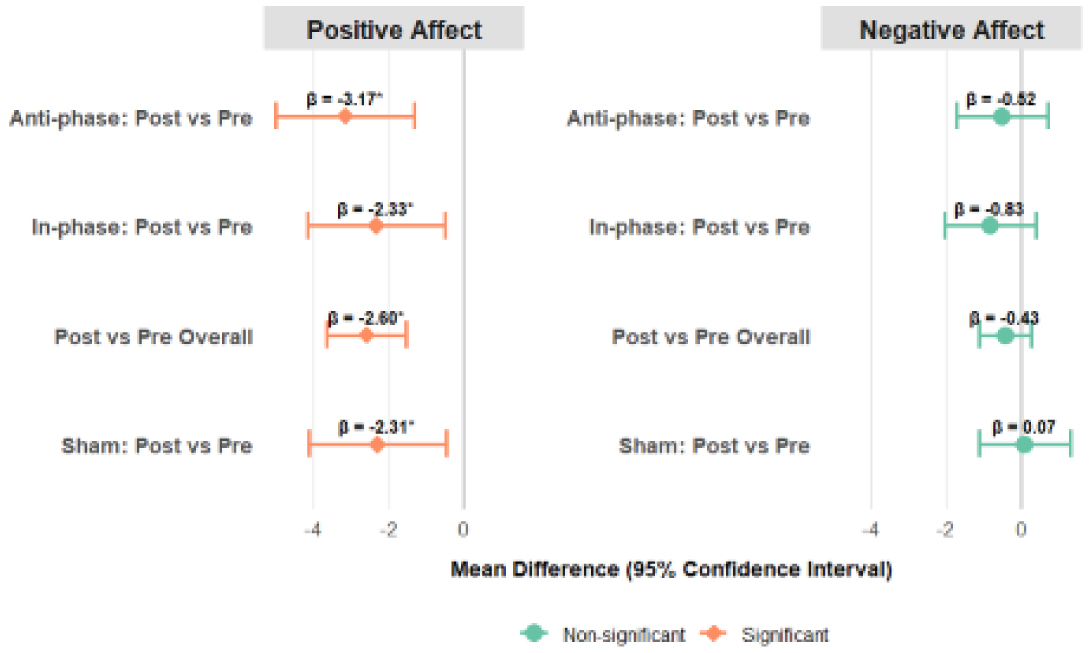
The Emotional Movie Database (EMDB) emotional stimuli elicited the expected subjective and autonomic responses, confirming that the task engaged emotional-reactivity processes. Participants also showed a typical habituation pattern in physiological measures across blocks. However, neither in-phase nor anti-phase alpha-tACS was associated with measurable changes in subjective emotional ratings or autonomic responses relative to sham under the experimental conditions.
This study provides the first evaluation of phase-specific alpha-tACS during cognitive reappraisal using film-based stimuli. Under the experimental conditions, no measurable effects of in-phase or anti-phase stimulation on subjective or autonomic measures of ER were observed. Future studies incorporating individualized stimulation frequencies, multi-session protocols, closed-loop stimulation, and concurrent electrophysiological recordings may help clarify the conditions under which phase-specific tACS influences ER.
Citation: Catarina Gomes Coelho, Jorge Leite, Gabriela Gonzaga, Paulo Machado, Sandra Carvalho. Phase-specific alpha tACS over the dlPFC does not enhance cognitive reappraisal or autonomic responses: A sham-controlled crossover study[J]. AIMS Neuroscience, 2026, 13(3): 483-509. doi: 10.3934/Neuroscience.2026022
Cognitive reappraisal (CR) relies on prefrontal top-down control over limbic systems, with the dorsolateral prefrontal cortex (dlPFC) playing a central regulatory role. Alpha-frequency transcranial alternating current stimulation (α-tACS) can modulate cortical oscillations; yet, its causal contribution to emotion regulation (ER) remains unclear.
In this study, we investigated whether in-phase or anti-phase alpha-tACS influenced subjective and physiological responses during cognitive reappraisal of negative emotional stimuli.
Forty-two healthy young adults completed three counterbalanced sessions (in-phase, anti-phase, sham) in a single-blind, sham-controlled crossover design. During α-tACS or sham, participants applied three CR strategies (positive, fictional, distancing) while viewing negative and neutral film clips. Valence, arousal, heart rate (HR), skin conductance (SC), respiratory rate (RR), and pre/post-session affect (PANAS) were recorded.
The Emotional Movie Database (EMDB) emotional stimuli elicited the expected subjective and autonomic responses, confirming that the task engaged emotional-reactivity processes. Participants also showed a typical habituation pattern in physiological measures across blocks. However, neither in-phase nor anti-phase alpha-tACS was associated with measurable changes in subjective emotional ratings or autonomic responses relative to sham under the experimental conditions.
This study provides the first evaluation of phase-specific alpha-tACS during cognitive reappraisal using film-based stimuli. Under the experimental conditions, no measurable effects of in-phase or anti-phase stimulation on subjective or autonomic measures of ER were observed. Future studies incorporating individualized stimulation frequencies, multi-session protocols, closed-loop stimulation, and concurrent electrophysiological recordings may help clarify the conditions under which phase-specific tACS influences ER.

| [1] |
Aldao A, Gee DG, Reyes ADL, et al. (2016) Emotion regulation as a transdiagnostic factor in the development of internalizing and externalizing psychopathology: Current and future directions. Dev Psychopathol 28: 927-946. https://doi.org/10.1017/S0954579416000638 
|
| [2] |
Kraiss JT, Klooster PM, Moskowitz JT, et al. (2020) The relationship between emotion regulation and well-being in patients with mental disorders: A meta-analysis. Compr Psychiatry 102: 1-14. https://doi.org/10.1016/j.comppsych.2020.152189
|
| [3] |
Gross JJ, John OP (2003) Individual differences in two emotion regulation processes: implications for affect, relationships, and well-being. J Pers Soc Psychol 85: 348-362. https://doi.org/10.1037/0022-3514.85.2.348
|
| [4] |
Buhle JT, Silvers JA, Wager TD, et al. (2014) Cognitive reappraisal of emotion: a meta-analysis of human neuroimaging studies. Cerebral Cortex 24: 2981-2990. https://doi.org/10.1093/cercor/bht154
|
| [5] |
Kohn N, Eickhoff SB, Scheller M, et al. (2014) Neural network of cognitive emotion regulation — An ALE meta-analysis and MACM analysis. Neuroimage 87: 345-355. https://doi.org/10.1016/j.neuroimage.2013.11.001
|
| [6] |
Moodie CA, Suri G, Goerlitz DS, et al. (2020) The neural bases of cognitive emotion regulation: The roles of strategy and intensity. Cogn Affect Behav Neurosci 20: 387-407. https://doi.org/10.3758/s13415-020-00775-8
|
| [7] |
Nejati V, Khalaji S, Goodarzi H, et al. (2021) The role of ventromedial and dorsolateral prefrontal cortex in attention and interpretation biases in individuals with general anxiety disorder (GAD): A tDCS study. J Psychiatr Res 144: 269-277. https://doi.org/10.1016/j.jpsychires.2021.10.034
|
| [8] |
Ochsner KN, Silvers JA, Buhle JT (2012) Functional imaging studies of emotion regulation: a synthetic review and evolving model of the cognitive control of emotion. Ann N Y Acad Sci 1251: E1-24. https://doi.org/10.1111/j.1749-6632.2012.06751.x
|
| [9] |
Klimesch W (2012) Alpha-band oscillations, attention, and controlled access to stored information. Trends Cogn Sci 16: 606-617. https://doi.org/10.1016/j.tics.2012.10.007
|
| [10] |
Jensen O, Mazaheri A (2010) Shaping functional architecture by oscillatory alpha activity: gating by inhibition. Front Hum Neurosci 4: 1-8. https://doi.org/10.3389/fnhum.2010.00186
|
| [11] |
Knyazev GG (2007) Motivation, emotion, and their inhibitory control mirrored in brain oscillations. Neurosci Biobehav Rev 31: 377-395. https://doi.org/10.1016/j.neubiorev.2006.10.004
|
| [12] |
Choi D, Sekiya T, Minote N, et al. (2016) Relative left frontal activity in reappraisal and suppression of negative emotion: Evidence from frontal alpha asymmetry (FAA). Int J Psychophysiol 109: 37-44. https://doi.org/10.1016/j.ijpsycho.2016.09.018
|
| [13] |
Papousek I, Weiss EM, Perchtold CM, et al. (2016) The capacity for generating cognitive reappraisals is reflected in asymmetric activation of frontal brain regions. Brain Imaging Behav 11: 577-590. https://doi.org/10.1007/s11682-016-9537-2
|
| [14] |
Wang Y, Lu J, Gu C, et al. (2018) Mapping the frontal alpha asymmetry indicators of habitual emotion regulation. Neuroreport 29: 1288-1292. https://doi.org/10.1097/WNR.0000000000001109
|
| [15] |
Berretz G, Packheiser J, Wolf OT, et al. (2022) Acute stress increases left hemispheric activity measured via changes in frontal alpha asymmetries. IScience 25: 1-13. https://doi.org/10.1016/j.isci.2022.103841
|
| [16] |
Goodman RN, Rietschel JC, Lo LC, et al. (2013) Stress, emotion regulation and cognitive performance: The predictive contributions of trait and state relative frontal EEG alpha asymmetry. Int J Psychophysiol 87: 115-123. https://doi.org/10.1016/j.ijpsycho.2012.09.008
|
| [17] |
Vasquez A, Malavera A, Doruk D, et al. (2016) Duration dependent effects of transcranial pulsed current stimulation (tPCS) indexed by electroencephalography. Neuromodulation 19: 679-688. https://doi.org/10.1111/ner.12457
|
| [18] | Pan R, Ye S, Zhong Y, et al. (2023) Transcranial alternating current stimulation for the treatment of major depressive disorder: from basic mechanisms toward clinical applications. Front Hum Neurosci 17: 1-14. https://doi.org/10.3389/fnhum.2023.1197393 |
| [19] |
Herrmann CS, Rach S, Neuling T, et al. (2013) Transcranial alternating current stimulation: a review of the underlying mechanisms and modulation of cognitive processes. Front Hum Neurosci 7: 1-13. https://doi.org/10.3389/fnhum.2013.00279
|
| [20] |
Antal A, Herrmann CS (2016) Transcranial alternating current and random noise stimulation: possible mechanisms. Neural Plast 2016: 1-12. https://doi.org/10.1155/2016/3616807
|
| [21] |
Benussi A, Cantoni V, Grassi M, et al. (2022) Increasing brain gamma activity improves episodic memory and restores cholinergic dysfunction in Alzheimer's disease. Ann Neurol 92: 322-334. https://doi.org/10.1002/ana.26411
|
| [22] |
Farcas A, Iftene F (2022) Findings, limitations and new directions in tACS studies in schizophrenia research: A scoping review. J Psychiatr Res 151: 291-298. https://doi.org/10.1016/j.jpsychires.2022.04.036
|
| [23] |
Grover S, Nguyen JA, Viswanathan V, et al. (2021) High-frequency neuromodulation improves obsessive–compulsive behavior. Nat Med 27: 232-238. https://doi.org/10.1038/s41591-020-01173-w
|
| [24] |
Liu S, He Y, Guo D, et al. (2022) Transcranial alternating current stimulation ameliorates emotional attention through neural oscillations modulation. Cogn Neurodyn 17: 1473-1483. https://doi.org/10.1007/s11571-022-09880-5
|
| [25] |
McAleer J, Stewart L, Shepard R, et al. (2022) Neuromodulatory effects of transcranial electrical stimulation on emotion regulation in internalizing psychopathologies. Clin Neurophysiol 145: 62-70. https://doi.org/10.1016/j.clinph.2022.10.015
|
| [26] |
McAleer J, Stewart L, Shepard R, et al. (2023) Differential effects of transcranial current type on heart rate variability during emotion regulation in internalizing psychopathologies. J Affect Disord 327: 7-14. https://doi.org/10.1016/j.jad.2023.01.102
|
| [27] |
Jensen MP, Day MA, Miró J (2014) Neuromodulatory treatments for chronic pain: efficacy and mechanisms. Nat Rev Neurol 10: 167-178. https://doi.org/10.1038/nrneurol.2014.12
|
| [28] |
May ES, Hohn VD, Nickel MM, et al. (2021) Modulating brain rhythms of pain using transcranial alternating current stimulation (tACS) - A sham-controlled study in healthy human participants. J Pain 22: 1256-1272. https://doi.org/10.1016/j.jpain.2021.03.150
|
| [29] |
Holczer A, Vékony T, Klivényi P, et al. (2023) Frontal two-electrode transcranial direct current stimulation protocols may not affect performance on a combined flanker Go/No-Go task. Sci Rep 13: 1-12. https://doi.org/10.1038/s41598-023-39161-y
|
| [30] |
Woods AJ, Antal A, Bikson M, et al. (2016) A technical guide to tDCS, and related non-invasive brain stimulation tools. Clin Neurophysiol 127: 1031-1048. https://doi.org/10.1016/j.clinph.2015.11.012
|
| [31] |
Espírito-Santo H, Pires CF, Garcia IQ, et al. (2017) Preliminary validation of the Portuguese Edinburgh Handedness Inventory in an adult sample. Appl Neuropsychol Adult 24: 275-287. https://doi.org/10.1080/23279095.2017.1290636
|
| [32] |
Oldfield RC (1971) The assessment and analysis of handedness: The Edinburgh inventory. Neuropsychologia 9: 97-113. https://doi.org/10.1016/0028-3932(71)90067-4
|
| [33] |
Gratz KL, Roemer L (2004) Multidimensional assessment of emotion regulation and dysregulation: development, factor structure, and initial validation of the difficulties in emotion regulation scale. J Psychopathol Behav Assess 26: 41-54. https://doi.org/10.1023/B:JOBA.0000007455.08539.94
|
| [34] |
Garnefski N, Kraaij V, Spinhoven P (2001) Negative life events, cognitive emotion regulation and emotional problems. Pers Individ Dif 30: 1311-1327. https://doi.org/10.1016/S0191-8869(00)00113-6
|
| [35] | Martins EC, Freire M, Ferreira-Santos F (2016) Examination of adaptive and maladaptive cognitive emotion regulation strategies as transdiagnostic processes: associations with diverse psychological symptoms in college students. Stud Psychol (Bratisl) 58: 59-73. https://doi.org/10.21909/sp.2016.01.707 |
| [36] |
Lovibond PF, Lovibond SH (1995) The structure of negative emotional states: Comparison of the Depression Anxiety Stress Scales (DASS) with the Beck Depression and Anxiety Inventories. Behav Res Ther 33: 335-343. https://doi.org/10.1016/0005-7967(94)00075-U
|
| [37] |
Crowne DP, Marlowe D (1960) A new scale of social desirability independent of psychopathology. J Consult Psychol 24: 349-354. https://doi.org/10.1037/h0047358
|
| [38] |
Coelho CG, Leite J, Pinto R, et al. (2025) From cortex to cardiac response: tDCS of the prefrontal cortex improves autonomic markers of emotion regulation. Brain Sci 15: 1-26. https://doi.org/10.3390/brainsci15090898
|
| [39] |
Galinha IC, Pais-Ribeiro JL (2012) Contribuição para o estudo da versão portuguesa da Positive and Negative Affect Schedule (PANAS): II – Estudo Psicométrico. Análise Psicológica 23: 219-227. https://doi.org/10.14417/ap.84
|
| [40] |
Watson D, Clark LA, Tellegen A (1988) Development and validation of brief measures of positive and negative affect: The PANAS scales. J Pers Soc Psychol 54: 1063-1070. https://doi.org/10.1037/0022-3514.54.6.1063
|
| [41] |
Bradley MM, Lang PJ (1994) Measuring emotion: The self-assessment manikin and the semantic differential. J Behav Ther Exp Psychiatry 25: 49-59. https://doi.org/10.1016/0005-7916(94)90063-9
|
| [42] |
Carvalho S, Leite J, Galdo-Álvarez S, et al. (2012) The emotional movie database (EMDB): A self-report and psychophysiological study. Appl Psychophysiol Biofeedback 37: 279-294. https://doi.org/10.1007/s10484-012-9201-6
|
| [43] | Carvalho S, Coelho CG, Mendes AG, et al. (2026) The Emotional Movie Database (EMDB): An expanded toolkit for emotion research. Motiv Emot 2026: 1-26. https://doi.org/10.1007/s11031-026-10220-x |
| [44] | Nejati V, Vaziri Z, Antal A, et al. (2025) Report Approval for Transcranial Electrical Stimulation (RATES): expert recommendation based on a Delphi consensus study. Nat Protoc 2025: 1-16. https://doi.org/10.1038/s41596-025-01259-0 |
| [45] | Thielscher A, Antunes A, Saturnino GB (2015) Field modeling for transcranial magnetic stimulation: a useful tool to understand the physiological effects of TMS?. IEEE 2015: 222-225. |
| [46] |
Bates D, Mächler M, Bolker B, et al. (2015) Fitting linear mixed-effects models using lme4. J Stat Softw 67: 1-48. https://doi.org/10.18637/jss.v067.i01
|
| [47] |
Maxwell SE, Delaney HD, Kelley K (2017) Designing Experiments and Analyzing Data: A Model Comparison Perspective. New York: Routledge. https://doi.org/10.4324/9781315642956
|
| [48] |
Bang H, Ni L, Davis CE (2004) Assessment of blinding in clinical trials. Control Clin Trials 25: 143-156. https://doi.org/10.1016/j.cct.2003.10.016
|
| [49] |
Bang H, Flaherty SP, Kolahi J, et al. (2010) Blinding assessment in clinical trials: A review of statistical methods and a proposal of blinding assessment protocol. Clin Res Regul Aff 27: 42-51. https://doi.org/10.3109/10601331003777444
|
| [50] | Morey RD, Rouder JN, Jamil T, et al. BayesFactor: Computation of bayes factors for common designs (2024). https://doi.org/10.32614/CRAN.package.BayesFactor |
| [51] |
Erez C, Gordon I (2025) The imperfect yet valuable difficulties in emotion regulation scale: factor structure, dimensionality, and possible cutoff score. Assessment 32: 778-795. https://doi.org/10.1177/10731911241261168
|
| [52] | Yan C, Ding Q, Wang Y, et al. (2022) The effect of cognitive reappraisal and expression suppression on sadness and the recognition of sad scenes: An event-related potential study. Front Psychol 13: 1-14. https://doi.org/10.3389/fpsyg.2022.935007 |
| [53] |
Nord CL, Forster S, Halahakoon DC, et al. (2017) Prefrontal cortex stimulation does not affect emotional bias, but may slow emotion identification. Soc Cogn Affect Neurosci 12: 839-847. https://doi.org/10.1093/scan/nsx007
|
| [54] |
Schiweck C, Piette D, Berckmans D, et al. (2019) Heart rate and high frequency heart rate variability during stress as biomarker for clinical depression. A systematic review. Psychol Med 49: 200-211. https://doi.org/10.1017/S0033291718001988
|
| [55] |
Juuse L, Tamm D, Lõo K, et al. (2024) Skin conductance response and habituation to emotional facial expressions and words. Acta Psychol (Amst) 251: 1-10. https://doi.org/10.1016/j.actpsy.2024.104573
|
| [56] | Oku Y (2022) Temporal variations in the pattern of breathing: techniques, sources, and applications to translational sciences. J Physiol Sci 72: 1-19. https://doi.org/10.1186/s12576-022-00847-z |
| [57] | Seo J, Lee J, Min BK (2024) Out-of-phase transcranial alternating current stimulation modulates the neurodynamics of inhibitory control. Neuroimage 292: 1-14. https://doi.org/10.1016/j.neuroimage.2024.120612 |
| [58] |
Kuo MF, Nitsche MA (2012) Effects of transcranial electrical stimulation on cognition. Clin EEG Neurosci 43: 192-199. https://doi.org/10.1177/1550059412444975
|
| [59] |
Lema A, Carvalho S, Fregni F, et al. (2021) The effects of direct current stimulation and random noise stimulation on attention networks. Sci Rep 11: 1-15. https://doi.org/10.1038/s41598-021-85749-7
|
| [60] |
Oceno M (2025) How social desirability bias impacts the expression of emotions. Political Sci Res Methods 2025: 1-10. https://doi.org/10.1017/psrm.2025.10016
|
 neurosci-13-03-022-s001.pdf neurosci-13-03-022-s001.pdf |
 |
Figures(7) / Tables(1)

Catarina Gomes Coelho, Jorge Leite, Gabriela Gonzaga, Paulo Machado, Sandra Carvalho. Phase-specific alpha tACS over the dlPFC does not enhance cognitive reappraisal or autonomic responses: A sham-controlled crossover study[J]. AIMS Neuroscience, 2026, 13(3): 483-509. doi: 10.3934/Neuroscience.2026022





 DownLoad: