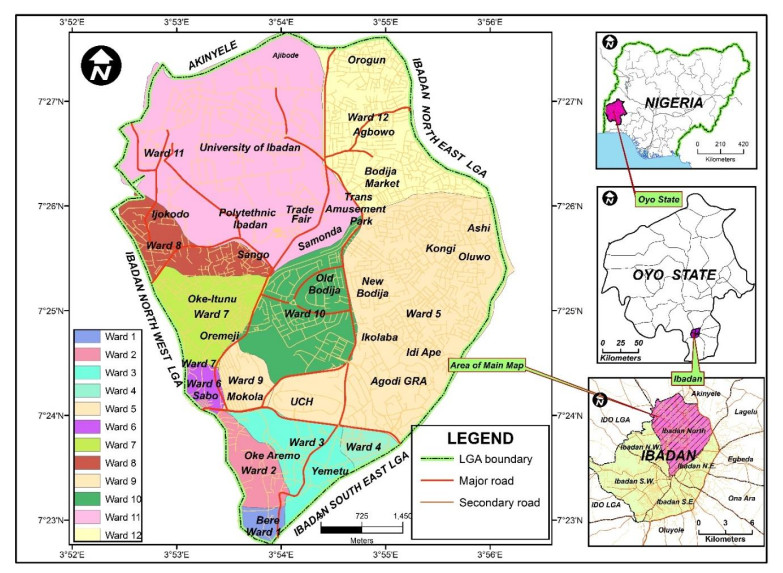
The removal of fuel subsidies in Nigeria has triggered widespread changes in transportation affordability, with serious implications for where urban residents choose to live. In this study, we examined how households in Ibadan-North, a local government area in Oyo State, are adjusting their residential decisions in response to increased transportation costs. Drawing on data from 400 respondents across twelve communities, we explored the relationship between transport-related financial strain and shifts in housing preference. Our findings showed that households are reducing the frequency of travel for work, education, and social activities, leading to a growing preference for homes located near essential services. While income and occupation significantly influenced household responses, other demographic factors showed little variation. The study highlights the role of transport vulnerability in shaping urban spatial patterns and calls attention to the need for planning strategies that can buffer low- and middle-income populations from the pressures of fuel policy reform.
Citation: Abiodun Ayooluwa Areola. Changes in travel frequency and residential relocation following the removal of fuel subsidies in Ibadan North, Nigeria[J]. Urban Resilience and Sustainability, 2025, 3(1): 86-101. doi: 10.3934/urs.2025004
The removal of fuel subsidies in Nigeria has triggered widespread changes in transportation affordability, with serious implications for where urban residents choose to live. In this study, we examined how households in Ibadan-North, a local government area in Oyo State, are adjusting their residential decisions in response to increased transportation costs. Drawing on data from 400 respondents across twelve communities, we explored the relationship between transport-related financial strain and shifts in housing preference. Our findings showed that households are reducing the frequency of travel for work, education, and social activities, leading to a growing preference for homes located near essential services. While income and occupation significantly influenced household responses, other demographic factors showed little variation. The study highlights the role of transport vulnerability in shaping urban spatial patterns and calls attention to the need for planning strategies that can buffer low- and middle-income populations from the pressures of fuel policy reform.

| [1] |
Okwa FO, Okwonu FZ, Owoyi MC (2024) The impact of fuel subsidy removal on consumer goods in selected states in Nigeria. Fudma J Sci 8: 94–101. https://doi.org/10.33003/fjs-2024-0805-2632 doi: 10.33003/fjs-2024-0805-2632

|
| [2] | Omole FK (2009) Analysis of some factors affecting market patronage in Osun State, Nigeria. Asian J Bus Manage 1: 24–31. |
| [3] |
Greve H, Lay J (2023) Stepping down the ladder: The impact of fossil fuel subsidy removal in a developing country. J Assoc Environ Resour Econ 10: 121–158. https://doi.org/10.1086/721375 doi: 10.1086/721375
|
| [4] | Noah AG, Jubril ST, Bello TL (2024) Impact of fuel subsidy removal on Nigeria's supply chain: A case study analysis. Int J Stud Bus Manage Econ Strategies 3: 125–143. |
| [5] | Oladele KE (2024) Income inequality and the burden of rising petroleum prices on low-income households in Nigeria. http://dx.doi.org/10.2139/ssrn.5052300 |
| [6] | Idris A, Kitabu MU, Musa MM, et al. (2024) Effect of fuel subsidy removal on socio-economic development of Chanchaga Local Government Area of Niger State. Kashere J Polit Int Relat 2: 340–354. Available from: https://journals.fukashere.edu.ng/index.php/kjpir/article/view/371. |
| [7] | Imbrenda V, Coluzzi R, Bianchini L, et al. (2022) Urban sprawl: Theory and practice, In: Advances in Chemical Pollution, Environmental Management and Protection, Elsevier, 8: 23–46. https://doi.org/10.1016/bs.apmp.2022.10.017 |
| [8] |
Salvati L, Sateriano A, Grigoriadis E (2016) Crisis and the city: Profiling urban growth under economic expansion and stagnation. Lett Spat Resour Sci 9: 329–342. https://doi.org/10.1007/s12076-015-0160-4 doi: 10.1007/s12076-015-0160-4
|
| [9] | Akinyemi O, Alege PO, Ajayi OO, et al. (2015) Fuel subsidy reform and environmental quality in Nigeria. Int J Energy Econ Policy 5: 540–549. Available from: https://dergipark.org.tr/en/pub/ijeeep/issue/31913/350910. |
| [10] | Al-Ababneh M (2020) The concept of creativity: Definitions and theories. Int J Tour Hotel Bus Managet 2: 245–249. Available from: https://ssrn.com/abstract = 3633647. |
| [11] |
Palicki S (2020) Housing preferences in various stages of the human life cycle. Real Estate Manage Val 28: 91–99. https://doi.org/10.2478/remav-2020-0008 doi: 10.2478/remav-2020-0008
|
| [12] |
Sinha P, Caulkins ML, Cropper ML (2018) Household location decisions and the value of climate amenities. J Environ Econ Manage 92: 608–637. https://doi.org/10.1016/j.jeem.2017.08.005 doi: 10.1016/j.jeem.2017.08.005
|
| [13] |
Chatterjee K, Chng S, Clark B, et al. (2020) Commuting and wellbeing: A critical overview of the literature with implications for policy and future research. Transport Rev 40: 5–34. https://doi.org/10.1080/01441647.2019.1649317 doi: 10.1080/01441647.2019.1649317
|
| [14] |
Gehrke SR, Currans KM, Clifton KJ (2019) Assessing the importance of housing, accessibility, and transportation characteristics on stated neighbourhood preference. Int J Urban Sci 23: 49–66. https://doi.org/10.1080/12265934.2018.1436983 doi: 10.1080/12265934.2018.1436983
|
| [15] |
Agarwal S, Isha T, Irappa TV, et al. (2023) The impact of tourism on local communities: A literature review of socio-economic factors. J Harbin Eng Univ 44: 1851–1859. http://doi.org/10.5281/zenodo.8314700 doi: 10.5281/zenodo.8314700
|
| [16] |
Zhao X, Yan X, Yu A, et al. (2020) Prediction and behavioral analysis of travel mode choice: A comparison of machine learning and logit models. Travel Behav Soc 20: 22–35. https://doi.org/10.1016/j.tbs.2020.02.003 doi: 10.1016/j.tbs.2020.02.003
|
| [17] |
Rafiq R, McNally MG (2022) A structural analysis of the work tour behavior of transit commuters. Transp Res Part A Policy Pract 160: 61–79. https://doi.org/10.1016/j.tra.2022.04.003 doi: 10.1016/j.tra.2022.04.003
|
| [18] |
Kemiki OA, Oladapo RA, Ayoola AB, et al. (2019) Residential property location choice of tenants in Bosso Local Municipality of Minna, Nigeria. J Afr Real Estate Res 4: 23–41. https://doi.org/10.15641/jarer.v4i1.662 doi: 10.15641/jarer.v4i1.662
|
| [19] |
Rentschler J, Bazilian M (2017) Reforming fossil fuel subsidies: Drivers, barriers and the state of progress. Clim Policy 17: 891–914. https://doi.org/10.1080/14693062.2016.1169393 doi: 10.1080/14693062.2016.1169393
|
| [20] |
Dimuna KO, Olotuah AO (2019) Assessing residents' satisfaction with planning and neighbourhood facilities of some public housing estates in Benin city, Nigeria. J Educ Social Res 9: 21–28. https://doi.org/10.2478/jesr-2019-0002 doi: 10.2478/jesr-2019-0002
|
| [21] | Barton H, Grant M, Guise R (2021) Shaping Neighbourhoods: For Local Health and Global Sustainability, London: Routledge. https://doi.org/10.4324/9780429321245 |
| [22] |
Cockx K, Canters F (2020) Determining heterogeneity of residential location preferences of households in Belgium. Appl Geogr 124: 102271. https://doi.org/10.1016/j.apgeog.2020.102271 doi: 10.1016/j.apgeog.2020.102271
|
| [23] |
De Vos J, Van Acker V, Witlox F (2016) Urban sprawl: Neighbourhood dissatisfaction and urban preferences. Some evidence from Flanders. Urban Geogr 37: 839–862. https://doi.org/10.1080/02723638.2015.1118955 doi: 10.1080/02723638.2015.1118955
|
| [24] |
Hamizah AF, Nurwati B, Kausar A (2018) Residential preferences in residential location choice: Household preferences in Penang Island, Malaysia/Hamizah Abdul Fattah, Nurwati Badarulzaman and Kausar Ali. Malays J Sustain Environ 5: 43–56. http://doi.org/10.24191/myse.v5i2.5616 doi: 10.24191/myse.v5i2.5616
|
| [25] |
Park RE (1936) Human ecology. Am J Sociol 42: 1–15. https://doi.org/10.1086/217327 doi: 10.1086/217327
|
| [26] |
Parker DC, Manson SM, Janssen MA, et al. (2003) Multi-agent systems for the simulation of land-use and land-cover change: A review. Ann Assoc Am Geogr 93: 314–337. https://doi.org/10.1111/1467-8306.9302004 doi: 10.1111/1467-8306.9302004
|
| [27] | Seamon D (2018) Life Takes Place: Phenomenology, Lifeworlds, and Place Making, New York: Routledge. https://doi.org/10.4324/9781351212519 |
| [28] | González-Lezcano RA (2023) Intersecting Health, Livability, and Human Behavior in Urban Environments, IGI Global. |
| [29] | Clark JJ (2020) Uneven Innovation: The Work of Smart Cities, Columbia University Press. https://doi.org/10.7312/clar18496 |
| [30] | Despommier DD (2023) The New City: How to Build Our Sustainable Urban Future, Columbia University Press. Available from: https://www.jstor.org/stable/10.7312/desp20550. |
| [31] | Edwards F, Popartan LA, Pettersen NI (2023) Urban Natures: Living the More‑than‑Human City, Berghahn Books. https://doi.org/10.1515/9781805390831 |
| [32] | Angeoletto F, Tryjanowski P, Fellowes MDE (2025) Ecology of Tropical Cities: Biodiversity, People and Places, Springer. |
| [33] |
Alberti M (2023) Cities of the Anthropocene: Urban sustainability in an eco‑evolutionary perspective. Philos Trans Royal Soc B 379: 20220264. https://doi.org/10.1098/rstb.2022.0264 doi: 10.1098/rstb.2022.0264
|
| [34] | Hansen G, Macedo J (2022) Urban Ecology for Citizens and Planners, University Press of Florida. https://doi.org/10.5744/florida/9781683402527.001.0001 |
| [35] | Oladapo RA, Adewolu TO (2019) The contribution of neighbourhood factors on the choice of residential locations in Ibadan city. FULafia J Sci Technol 5: 83–98. Available from: https://lafiascijournals.org.ng/index.php/fjst/article/view/220. |
| [36] |
Oladapo RA, Ojo B, Ayoola AB, et al. (2019) Factors influencing tenants' choice of location of residence in Bosso local municipality, Minna, Nigeria. J Afr Real Estate Res 4: 23–41. https://doi.org/10.15641/jarer.v4i1.662 doi: 10.15641/jarer.v4i1.662
|
| [37] | Owoicho BC, Ogwuche JA (2018) Assessment of social factors that influence residential area preference in Otukpo town, Benue State. Nigeria. Glob J Hum Soc Sci 18: 18–22. |
| [38] | Pandya F, Maind SN (2017) Discrete choice model: Residential location choice, ISFIRE Working Papers, ISFIRE: London, 2017. Available from: https://ojsiire.com/index.php/isfirewps/issue/view/53. |
 urs-03-01-004-s001.pdf urs-03-01-004-s001.pdf |
 |


Figures(4) / Tables(2)
Abiodun Ayooluwa Areola. Changes in travel frequency and residential relocation following the removal of fuel subsidies in Ibadan North, Nigeria[J]. Urban Resilience and Sustainability, 2025, 3(1): 86-101. doi: 10.3934/urs.2025004





 DownLoad: