In this paper, we present an update on the geotechnical characterisation and the geotechnical behaviour of the Dublin Boulder Clay, which is arguably the most important geotechnical material in the Republic of Ireland from an economic point of view. Despite its properties and the units within the material being well known, variations can occur, and detailed ground investigation is often warranted. The material is very strong and stiff and has a high content of coarse particles. Examples are given as to where triple tube rotary coring, combined with sub-sampling, can produce very good sample quality of the material for geotechnical testing. In situ testing is problematic though there appears to be some promise in shear wave velocity measurements and high-pressure dilatometer testing. Examples are given where the material is shown to behave very well in a wide range of geotechnical applications, e.g., for retaining walls and soil nails/ground anchors. Some examples of surprising behaviour of the material, e.g., unexpected rapid settlements and the impact of fissuring, are also outlined. Further work is required into the development of practical numerical constitutive models of the soil, especially for use in fully coupled undrained to drained analyses.
Citation: Michael Long, Kevin Flynn, Chris Menkiti, Ronan Travers, Kieran Simpson, David Gill, Miles Friedman. Characterisation and engineering properties of Dublin Boulder Clay—an update[J]. AIMS Geosciences, 2025, 11(2): 387-441. doi: 10.3934/geosci.2025017
In this paper, we present an update on the geotechnical characterisation and the geotechnical behaviour of the Dublin Boulder Clay, which is arguably the most important geotechnical material in the Republic of Ireland from an economic point of view. Despite its properties and the units within the material being well known, variations can occur, and detailed ground investigation is often warranted. The material is very strong and stiff and has a high content of coarse particles. Examples are given as to where triple tube rotary coring, combined with sub-sampling, can produce very good sample quality of the material for geotechnical testing. In situ testing is problematic though there appears to be some promise in shear wave velocity measurements and high-pressure dilatometer testing. Examples are given where the material is shown to behave very well in a wide range of geotechnical applications, e.g., for retaining walls and soil nails/ground anchors. Some examples of surprising behaviour of the material, e.g., unexpected rapid settlements and the impact of fissuring, are also outlined. Further work is required into the development of practical numerical constitutive models of the soil, especially for use in fully coupled undrained to drained analyses.

| [1] | Farrell E, Wall D (1990) Soils of Dublin. Trans Inst Eng Irel 115: 78–97. |
| [2] | Long M, Menkiti CO (2007) Characterisation and engineering properties of Dublin Boulder clay, Proceedings 2nd International Workshop on Characterisation and Engineering Properties of Natural Soils, 2003–2045. |
| [3] |
Long M, Menkiti CO (2007) Geotechnical properties of Dublin Boulder Clay. Géotechnique 57: 595–611. https://doi.org/10.1680/geot.2007.57.7.595 doi: 10.1680/geot.2007.57.7.595

|
| [4] | Marchant TR, Sevastopulo GD (1980) The Calp of the Dublin district. J Earth Sci 3: 195–203. |
| [5] |
Skipper J, Follett B, Menkiti C, et al. (2005) The engineering geology and characterisation of Dublin Boulder Clay. Q J Eng Geol Hydrogeol 38: 171–187. https://doi.org/10.1144/1470-9236/04-038 doi: 10.1144/1470-9236/04-038
|
| [6] |
Clarke BG (2018) The engineering properties of glacial tills. Geotech Res 5: 262–277. https://doi.org/10.1680/jgere.18.00020 doi: 10.1680/jgere.18.00020
|
| [7] | Farrington A (1929) The pre-glacial topography of the Liffey basin. Proc R Ir Acad, Sect B: Biol Geol Chem Sci 38: 148–170. |
| [8] | Naylor D (1965) Pleistocene and Post Pleistocene sediments in Dublin Bay. Sci Proc R Dublin Soc 2A: 175–188. |
| [9] | Kealy S, Long M, Fleming M, et al. (2021) Characterisation of gravel deposits in the pre-glacial channel Central Dublin. Ir J Earth Sci 39: 71–88. |
| [10] |
Farrell ER, Coxon P, Doff D, et al. (1995) The genesis of the brown boulder clay of Dublin. Q J Eng Geol 28:143–152. https://doi.org/10.1144/GSL.QJEGH.1995.028.P2.05 doi: 10.1144/GSL.QJEGH.1995.028.P2.05
|
| [11] | Menkiti CO, Long M, Kovacevic N, et al. (2004) Trial excavation for cut and cover tunnel construction in glacial till—a case study from Dublin, Advances in Geotechnical Engineering: Skempton Memorial Conference, Royal Geographical Society, London, March: Thomas Telford, 1090–1104. |
| [12] |
Long M, Brangan C, Menkiti C, et al. (2012) Retaining walls in Dublin Boulder Clay, Ireland. Inst Civ Eng J Geotech Eng 165: 247–266. https://doi.org/10.1680/geng.9.00091 doi: 10.1680/geng.9.00091
|
| [13] |
Boulton GS, Paul MA (1976) The influence of genetic processes on some geotechnical properties of glacial tills. Q J Eng Geol Hydrogeol 9: 159–194. https://doi.org/10.1144/GSL.QJEG.1976.009.03.03 doi: 10.1144/GSL.QJEG.1976.009.03.03
|
| [14] |
Lehane BM, Simpson B (2000) Modelling glacial till under trixial conditions using a BRICK soil model. Can Geotech J 37: 1078–1088. https://doi.org/10.1139/t00-032 doi: 10.1139/t00-032
|
| [15] | ENISO (2006) EN ISO 22475-1: Geotechnical investigation and testing—Sampling methods and groundwater measurements—Part 1: Technical principles for execution. Geneva: ISO/CEN. |
| [16] | Clayton CRI, Matthews MC, Simons NE (1995) Site Investigation, 2nd. Edition Oxford, UK, Blackwell Science. |
| [17] | Simpson K (2020) Advanced investigation techniques for Dublin Boulder Clay. School of CivIl Engineering, UniversIty CollEge Dublin (UCD). ME thesis. |
| [18] | Kleven A, Lacasse S, Andersen KH (1986) Foundation engineering criteria for gravity platforms. Soil Parameters for Offshore Foundation Design, Part Ⅱ, Norwegian Geotechnical Institute Report 40013-34. |
| [19] | Lunne T, Berre T, Strandvik S (1997) Sample disturbance in soft low plasticity Norwegian clay, Symposium on Recent Developments in Soil and Pavement Mechanics, Rio de Janeiro: Balkema, Rotterdam, 81–92. |
| [20] | Stroud MA (1988) The standard penetration test: its application and interpretation, Conference on Penetration Testing in the UK, Londres, 29–51. |
| [21] | White F, Ingram P, Nicholson DP, et al. (2019) An update of the SPT-cu relationship proposed by M. Stroud in 1974, Proceedings of the XVII European conference of soil mechanics geotechnical engineering, Reykjavik. |
| [22] | O'Kelly B (2014) CPT testing in Dublin Boulder Clay, International Symposium on Cone Penetration Testing (CPT'14), Las Vegas, Nevada, USA, 761–768. |
| [23] | Faulkner A, Lehane BM, Farrell ER (1998) Cone penetration testing in Irish soils, 1st International Conference on Geotechnical Site Characterisation (ISC 1), Atlanta, Georgia, USA: Balkema, Rotterdam, 1033–1038. |
| [24] |
Sivakumar V, O'Kelly BC, Madhav MR, et al. (2013) Granular anchors under vertical loading—axial pull. Can Geotech J 50: 123–132. https://doi.org/10.1139/cgj-2012-0203 doi: 10.1139/cgj-2012-0203
|
| [25] | Wu M, Zhao Z, Cai G (2024) Improving the interpretation of undrained shear strength from piezocone penetration tests by integrating soil physical properties using a hybrid meta-heuristic algorithm. J Rock Mech Geotech Eng. https://doi.org/10.1016/j.jrmge.2024.05.057. In Press. |
| [26] |
Zhao Z, Duan W, Cai G, et al. (2025) Robust geotechnical design of piles incorporating system reliability. J Geotech Geoenviron Eng 151. https://doi.org/10.1061/JGGEFK.GTENG-12936 doi: 10.1061/JGGEFK.GTENG-12936
|
| [27] | Hughes JMO (1973) An instrument for in situ measurement in soft clays. University of Cambridge. PhD Thesis. |
| [28] | Hughes JMO, Whittle R (2022) High Resolution Pressuremeters and Geotechnical Engineering, CRC Press. https://doi.org/10.1201/9781003200680 |
| [29] | Donohue S, Gavin K, Long M, et al. (2003) Gmax from multichannel analysis of surface waves for Dublin Boulder Clay, Proceedings XⅢth European Conference on Soil Mechanics and Geotechnical Engineering, CGtS, Prague, 515–520. |
| [30] |
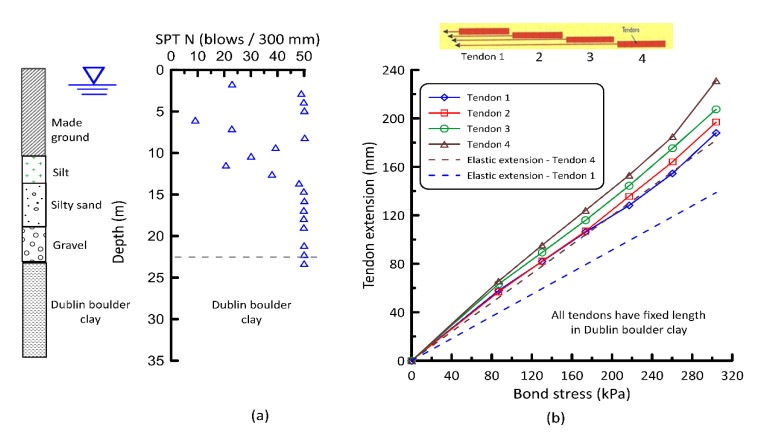
Ku T, Mayne PW (2013) Evaluating the in situ lateral stress coefficient (K0) of soils via paired shear wave velocity modes. J Geotech Geoenviron Eng 139: 775–787. https://doi.org/10.1061/(ASCE)GT.1943-5606.0000756 doi: 10.1061/(ASCE)GT.1943-5606.0000756
|
| [31] | Hight DW, Gasparre A, Nishimura S, et al. (2011) Characteristics of the London Clay from the Terminal 5 site at Heathrow Airport. Stiff Sedimentary Clays: Genesis and Engineering Behaviour: Géotechnique Symposium, Thomas Telford Ltd. https://doi.org/10.1680/ssc.41080.0016 |
| [32] | BSI, BS 8004: 2015+A1: 2020: Code of practice for foundations. London, UK: British Standard Institute, 2015. |
| [33] | NSAI, I.S. EN ISO 14688-2: 2018: Geotechnical investigation and testing. Identification and classification of soil. Principles for a classification system. Dublin, Irleand: National Standards Authority of Ireland, 2018. |
| [34] | ENISO, BS EN ISO 14689-1: 2018 Geotechnical investigation and testing. Identification, description and classification of rock. Part 1: Identification and description. British Standards Institution, London, UK, 2018. |
| [35] |
Farrell E (2024) The 1st Hanrahan Lecture: Geotechnical properties of Irish glacial and interglacial soils. Q J Eng Geol 57. https://doi.org/10.1144/qjegh2023-148 doi: 10.1144/qjegh2023-148
|
| [36] |
Lunne T, Berre T, Andersen KH, et al. (2006) Effects of sample disturbance and consolidation procedures on measured shear strength of soft marine Norwegian clays. Can Geotech J 43: 726–750. https://doi.org/10.1139/t06-040 doi: 10.1139/t06-040
|
| [37] | Long M, Quigley P, O'Connor P (2013) Undrained shear strength and stiffness of Irish glacial till from shear wave velocity. Ground Eng 46: 26–27. |
| [38] | Long M, Donohue S, O'Connor P, et al. (2009) Relationship between shear wave velocity and undrained shear strength of Irish glacial till, Near Surface 2009—15th European Meeting of Environmental and Engineering Geophysics, European Association of Geoscientists & Engineers. Dublin. |
| [39] | Powell JJM, Butcher AP (2003) Characterisation of a glacial clay till at Cowden, Humberside. Charact Eng Prop Nat Soils 2: 983–1020. |
| [40] |
Poulos HG (2022) Use of shear wave velocity for foundation design. Geotech Geol Eng 40: 1921–1938. https://doi.org/10.1007/s10706-021-02000-w doi: 10.1007/s10706-021-02000-w
|
| [41] | BSI, BS EN ISO 14688-1: 2002: Geotechnical investigation and testing. Identification and classification of soil. Identification and description. British Standards Institution, London, UK, 2002. |
| [42] |
Long M (2023) Practical use of shear wave velocity measurements in UK clays (BGA Touring Lecture 2023). Proc Inst Civ Eng Geotech Eng 178: 70–84. https://doi.org/10.1680/jgeen.23.00158 doi: 10.1680/jgeen.23.00158
|
| [43] | Butcher AP, Powell JJM (1995) The effects of geological history on the dynamic stiffness in soils, XIth European Conference on Soil Mechanics, Copenhagen: Danish Geotechnical Society (DGF), 127–136. |
| [44] | Looby M, Long M (2007) Deep excavations in Dublin—recent developments. Trans Eng Irel 131: 1–15. |
| [45] |
O'Leary F, Long M, Menkiti CO, et al. (2016) The long term behaviour of retaining walls in Dublin. Proc Inst Civ Eng Geotech Eng 169: 99–109. https://doi.org/10.1680/jgeen.15.00041 doi: 10.1680/jgeen.15.00041
|
| [46] |
Hardy S, Nicholson DP, Ingram P, et al. (2018) New observational method framework for embedded walls. Geotech Res 5: 122–129. https://doi.org/10.1680/jgere.18.00013 doi: 10.1680/jgere.18.00013
|
| [47] |
Long M (2001) Database for retaining wall and ground movements due to deep excavations. J Geotech Geoenviron Eng 127: 203–224. https://doi.org/10.1061/(ASCE)1090-0241(2001)127:3(203) doi: 10.1061/(ASCE)1090-0241(2001)127:3(203)
|
| [48] | Gaba AR, Simpson B, Powrie W, et al. (2003) Embedded retaining walls: Guidance for economic design. Proc Inst Civ Eng Geotech Eng, 13–16. |
| [49] |
Menkiti CO, Long M (2008) Performance of soil nails in Dublin glacial till. Can Geotech J 45: 1685–1698. https://doi.org/10.1139/T08-084 doi: 10.1139/T08-084
|
| [50] |
Menkiti CO, Long M, Milligan GWE, et al. (2014) Soil nailing in Dublin boulder clay. Geotech Geol Eng 32: 1427–1438. https://doi.org/10.1007/s10706-013-9679-6 doi: 10.1007/s10706-013-9679-6
|
| [51] | Odega K (2022) Behaviour of ground anchorages in Dublin soils—Dublin Boulder Clay. School of Civil Engineeing, University College Dublin. Masters thesis. |
| [52] | Barley AD (1997) The single bore multiple anchor system, Ground anchorages and anchored structures: Proceedings of the International Conference on Ground Anchorages and Anchored Structures Organised by the Institution of Civil Engineers, London, UK, Thomas Telford Ltd, 65–75. |
| [53] |
Gavin K, Cadogan D, Twomey L (2008) Axial resistance of CFA piles in Dublin Boulder Clay. Proc Inst Civ Eng Geotech Eng 161: 171–180. https://doi.org/10.1680/geng.2008.161.4.171 doi: 10.1680/geng.2008.161.4.171
|
| [54] |
Lawler M, Farrell ER, Lochaden ALE (2011) Comparison of the measured and finite element-predicted ground deformations of a stiff lodgement till. Can Geotech J 48: 98–116. https://doi.org/10.1139/T10-038 doi: 10.1139/T10-038
|
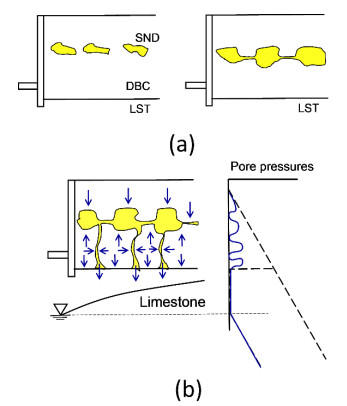
| [55] | Menkiti CO, Long M (2015) Consolidation settlements in Dublin Boulder Clay, XVIth European Conference on Soil Mechanics and Geotechnical Engineering (ECSMGE), Edinburgh, Scotland: Thomas Telford Ltd, 313–318. |
| [56] |
Phillips E, Lee JR (2013) Development of a subglacial drainage system and its effect on glacitectonism within the polydeformed Middle Pleistocene (Anglian) glacigenic sequence of north Norfolk, Eastern England. P Geologists Assoc 124: 855–875. https://doi.org/10.1016/j.pgeola.2012.07.005 doi: 10.1016/j.pgeola.2012.07.005
|
| [57] | Cabarkapa Z, Milligan GWE, Menkiti CO, et al. (2003) Design and performance of a large diameter shaft in Dublin Boulder Clay, BGA International Conference on Foundations: Innovations, observations, design and practice: Proceedings of the international conference organised by British Geotechnical Association and held in Dundee, Scotland. Thomas Telford Ltd., 175–185. |
| [58] | Kovacevic N, Menkiti CO, Long M, et al. (2015) Finite element analyses of a cantilever wall in Dublin Boulder Clay, Geotechnical Engineering for Infrastructure and Development, 3983–3988. |
| [59] | Kovacevic N, Menkiti CO, Long M, et al. (2017) Finite element back-analysis of an anchored wall in Dublin Boulder Clay, 19th International Conference on Soil Mechanics and Geotechnical Engineering (ICSMGE), Seoul, South Korea, 773–776. |
| [60] |
Pedro AMG, Repsold L, Sousa JA (2024) Assessing the sustainability of alternative shaft construction methods. Appl Sci 14: 4476. https://doi.org/10.3390/app14114476 doi: 10.3390/app14114476
|

Figures(40) / Tables(6)

Michael Long, Kevin Flynn, Chris Menkiti, Ronan Travers, Kieran Simpson, David Gill, Miles Friedman. Characterisation and engineering properties of Dublin Boulder Clay—an update[J]. AIMS Geosciences, 2025, 11(2): 387-441. doi: 10.3934/geosci.2025017





 DownLoad: