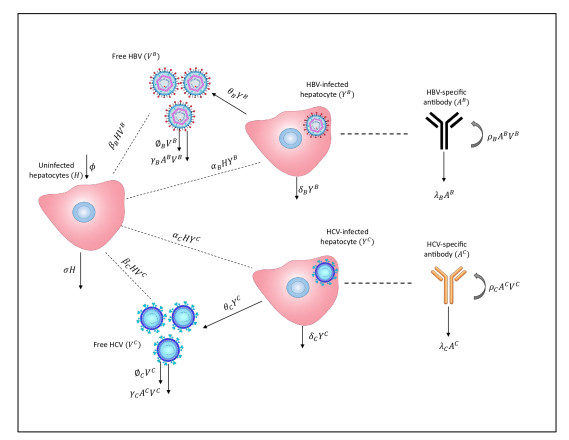
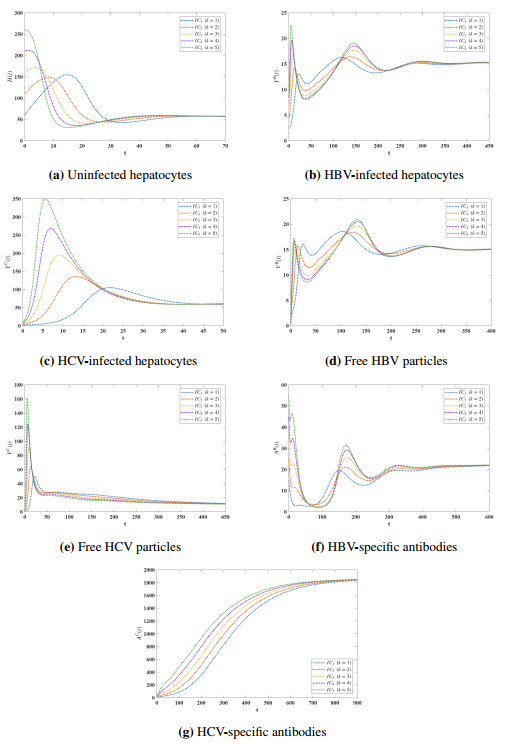
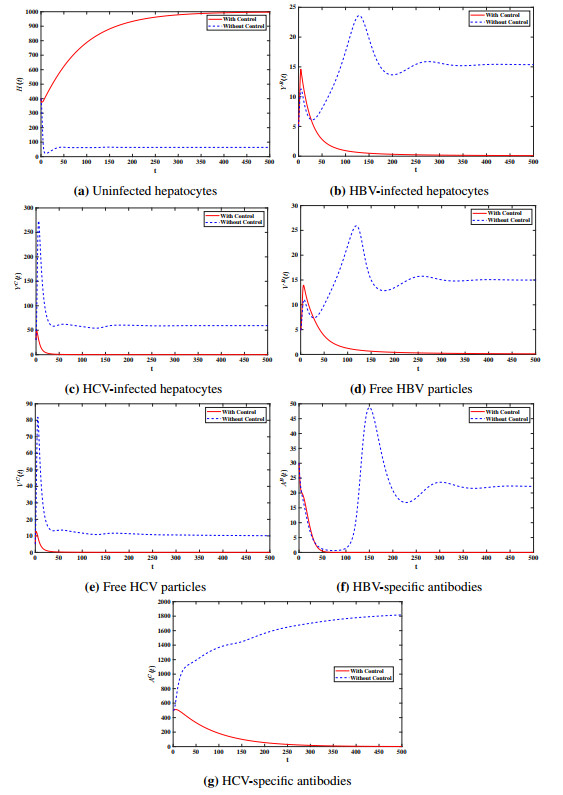
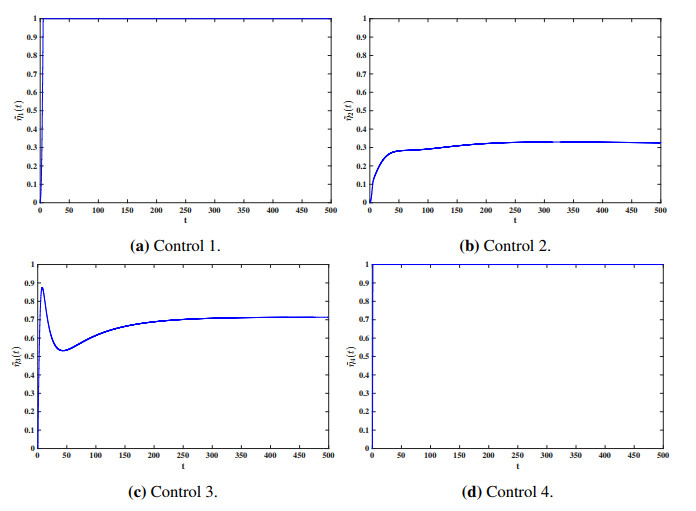
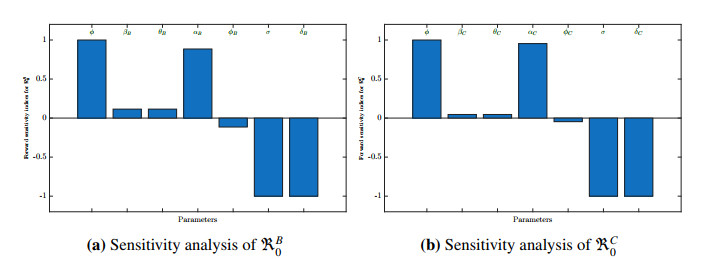
In this study, we investigate the dynamics of a within-host model of hepatitis B virus (HBV) and hepatitis C virus (HCV) coinfection with two distinct transmission pathways: virus-to-cell and cell-to-cell transmission. The model incorporates both HBV-specific and HCV-specific humoral immunity. Using the next-generation matrix method, we derive the basic reproduction numbers for HBV mono-infection ($ \Re_{0}^{B} $), HCV mono-infection ($ \Re_{0}^{C} $), and HBV/HCV coinfection ($ \Re_{0} = max\{ \Re_{0}^{B}, \Re_{0}^{C}\} $). We establish the fundamental qualitative properties of the model, identify eight possible equilibrium points, and investigate their global stability. The stability analysis is carried out using Lyapunov functions together with the Lyapunov–LaSalle invariance principle. The model is further formulated as a nonlinear control system, where anti-HBV and anti-HCV therapies serve as the control inputs. For each virus, two antiviral treatment strategies are considered: one that reduces virus-to-cell transmission and another that reduces cell-to-cell transmission. The results show that neglecting cell-to-cell transmission may underestimate the treatment effort required for viral clearance, highlighting the importance of incorporating this transmission pathway to obtain more realistic descriptions of within-host HBV/HCV dynamics. The optimal control problem is formulated to maximize the population of uninfected hepatocytes while minimizing treatment costs. Numerical simulations illustrate the theoretical results and demonstrate that the proposed control strategies can reduce viral infections and increase the population of uninfected hepatocytes under the considered parameter scenarios. Finally, sensitivity analysis of $ \Re_{0}^{B} $ and $ \Re_{0}^{C} $ identifies the parameters that have the greatest influence on the basic reproduction numbers, providing insights into the model mechanisms associated with viral persistence and clearance.
Citation: Raghad S. Alsulami, A. M. Elaiw, A. A. Alshareef, A. D. Hobiny. Global stability and optimal control of an HBV/HCV coinfection model with humoral immunity and cell-to-cell transmission[J]. Networks and Heterogeneous Media, 2026, 21(6): 2108-2179. doi: 10.3934/nhm.2026080
In this study, we investigate the dynamics of a within-host model of hepatitis B virus (HBV) and hepatitis C virus (HCV) coinfection with two distinct transmission pathways: virus-to-cell and cell-to-cell transmission. The model incorporates both HBV-specific and HCV-specific humoral immunity. Using the next-generation matrix method, we derive the basic reproduction numbers for HBV mono-infection ($ \Re_{0}^{B} $), HCV mono-infection ($ \Re_{0}^{C} $), and HBV/HCV coinfection ($ \Re_{0} = max\{ \Re_{0}^{B}, \Re_{0}^{C}\} $). We establish the fundamental qualitative properties of the model, identify eight possible equilibrium points, and investigate their global stability. The stability analysis is carried out using Lyapunov functions together with the Lyapunov–LaSalle invariance principle. The model is further formulated as a nonlinear control system, where anti-HBV and anti-HCV therapies serve as the control inputs. For each virus, two antiviral treatment strategies are considered: one that reduces virus-to-cell transmission and another that reduces cell-to-cell transmission. The results show that neglecting cell-to-cell transmission may underestimate the treatment effort required for viral clearance, highlighting the importance of incorporating this transmission pathway to obtain more realistic descriptions of within-host HBV/HCV dynamics. The optimal control problem is formulated to maximize the population of uninfected hepatocytes while minimizing treatment costs. Numerical simulations illustrate the theoretical results and demonstrate that the proposed control strategies can reduce viral infections and increase the population of uninfected hepatocytes under the considered parameter scenarios. Finally, sensitivity analysis of $ \Re_{0}^{B} $ and $ \Re_{0}^{C} $ identifies the parameters that have the greatest influence on the basic reproduction numbers, providing insights into the model mechanisms associated with viral persistence and clearance.

| [1] | World Health Organization, Global hepatitis report (2026), WHO. Available from: https://www.who.int/publications/i/item/9789240122383 (accessed on 1 July 2026). |
| [2] | World Health Organization, Global hepatitis report (2024): Action for access in low- and middle-income countries, WHO. Available from: https://www.who.int/publications/i/item/9789240091672 (accessed on 1 July 2026). |
| [3] |
M. G. Mavilia, G. Y. Wu, HBV-HCV coinfection: Viral interactions, management, and viral reactivation, JCTH, 6 (2018), 296–305. https://doi.org/10.14218/JCTH.2018.00016 doi: 10.14218/JCTH.2018.00016

|
| [4] |
Q. Maqsood, A. Sumrin, M. Iqbal, S. Younas, N. Hussain, M. Mahnoor, et al., Hepatitis C virus/hepatitis B virus coinfection: Current prospectives, Antivir. Ther., 28 (2023), 1–18. https://doi.org/10.1177/13596535231189643 doi: 10.1177/13596535231189643
|
| [5] |
G. Raimondo, G. Cacciamo, C. Saitta, Hepatitis B virus and hepatitis C virus co-infection: Additive players in chronic liver disease? Ann. Hepatol., 4 (2005), 100–106. https://doi.org/10.1016/S1665-2681(19)32072-1 doi: 10.1016/S1665-2681(19)32072-1
|
| [6] |
Z. Liu, J. Hou, Hepatitis B virus (HBV) and hepatitis C virus (HCV) dual infection, Int. J. Med. Sci., 3 (2006), 57–62. https://doi.org/10.7150/ijms.3.57 doi: 10.7150/ijms.3.57
|
| [7] | D. Konstantinou, M. Deutsch, The spectrum of HBV/HCV coinfection: Epidemiology, clinical characteristics, viralinteractions and management, Ann. Gastroenterol., 28 (2015), 221–228. Available from: https://pmc.ncbi.nlm.nih.gov/articles/PMC4367211/. |
| [8] |
L. Pinky, G. Gonzalez-Parra, H. M. Dobrovolny, Superinfection and cell regeneration can lead to chronic viral coinfections, J. Theor. Biol., 466 (2019), 24–38. https://doi.org/10.1016/j.jtbi.2019.01.011 doi: 10.1016/j.jtbi.2019.01.011
|
| [9] |
A. M. Elaiw, N. H. AlShamrani, Analysis of a within-host HIV/HTLV-I co-infection model with immunity, Virus Res., 295 (2021), 198204. https://doi.org/10.1016/j.virusres.2020.198204 doi: 10.1016/j.virusres.2020.198204
|
| [10] |
R. Shi, Y. Zhang, Dynamic analysis and optimal control of a fractional order HIV/HTLV co-infection model with HIV-specific CTL immune response, AIMS Math., 9 (2024), 9455–9493. https://doi.org/10.3934/math.2024462 doi: 10.3934/math.2024462
|
| [11] |
A. M. Elaiw, G. Alsaadi, A. D. Hobiny, Global co-dynamics of viral infections with saturated incidence, AIMS Math., 9 (2024), 13770–13818. https://doi.org/10.3934/math.2024671 doi: 10.3934/math.2024671
|
| [12] |
H. Nampala, L. S. Luboobi, J. Y. Mugisha, C. Obua, M. Jablonska-Sabuka, Modelling hepatotoxicity and antiretroviral therapeutic effect in HIV/HBV co-infection, Math. Biosci., 302 (2018), 67–79. https://doi.org/10.1016/j.mbs.2018.05.012 doi: 10.1016/j.mbs.2018.05.012
|
| [13] |
R. Shi, T. Lu, C. Wang, Dynamic analysis of a fractional-order model for HIV with drug-resistance and CTL immune response, Math. Comput. Simul., 188 (2021), 509–536. https://doi.org/10.1016/j.matcom.2021.04.022 doi: 10.1016/j.matcom.2021.04.022
|
| [14] |
N. H. AlShamrani, A. M. Elaiw, Modeling within-host dynamics of two competing viruses with distinct target-cell populations, AIMS Math., 11 (2026), 1489–1526. https://doi.org/10.3934/math.2026063 doi: 10.3934/math.2026063
|
| [15] |
S. Hagiwara, N. Nishida, M. Kudo, Antiviral therapy for chronic hepatitis B: Combination of nucleoside analogs and interferon, World J. Hepatol., 7 (2015), 2427–2431. https://doi.org/10.4254/wjh.v7.i23.2427 doi: 10.4254/wjh.v7.i23.2427
|
| [16] |
S. J. Hadziyannis, N. C. Tassopoulos, E. J. Heathcote, T. T. Chang, G. Kitis, M. Rizzetto, et al., Adefovir dipivoxil for the treatment of hepatitis B e antigen-negative chronic hepatitis B, N. Engl. J. Med., 348 (2003), 800–807. https://www.nejm.org/doi/full/10.1056/NEJMoa021812 doi: 10.1056/NEJMoa021812
|
| [17] |
J. J. Feld, J. H. Hoofnagle, Mechanism of action of interferon and ribavirin in treatment of hepatitis C, Nature, 436 (2005), 967–972. https://doi.org/10.1038/nature04082 doi: 10.1038/nature04082
|
| [18] |
C. L. Lai, M. F. Yuen, The natural history and treatment of chronic hepatitis B: A critical evaluation of standard treatment criteria and end points, Ann. Intern. Med., 147 (2007), 58–61. https://doi.org/10.7326/0003-4819-147-1-200707030-00010 doi: 10.7326/0003-4819-147-1-200707030-00010
|
| [19] |
T. Khan, G. Zaman, M. I. Chohan, The transmission dynamic and optimal control of acute and chronic hepatitis B, J. Biol. Dyn., 11 (2017), 172–189. https://doi.org/10.1080/17513758.2016.1256441 doi: 10.1080/17513758.2016.1256441
|
| [20] |
I. Zada, M. Naeem Jan, N. Ali, D. Alrowail, K. S. Nisar, G. Zaman, Mathematical analysis of hepatitis B epidemic model with optimal control, Adv. Differ. Equ., 2021 (2021), 451. https://doi.org/10.1186/s13662-021-03607-2 doi: 10.1186/s13662-021-03607-2
|
| [21] |
A. U. Neumann, N. P. Lam, H. Dahari, D. R. Gretch, T. E. Wiley, T. J. Layden, et al., Hepatitis C viral dynamics in vivo and the antiviral efficacy of interferon-$\alpha$ therapy, Science, 282 (1998), 103–107. https://doi.org/10.1126/science.282.5386.103 doi: 10.1126/science.282.5386.103
|
| [22] |
A. N. Chatterjee, F. Al Basir, Y. Takeuchi, Effect of DAA therapy in hepatitis C treatment-an impulsive control approach, Math. Biosci. Eng., 18 (2021), 1450–1464. http://dx.doi.org/10.3934/mbe.2021075 doi: 10.3934/mbe.2021075
|
| [23] |
M. A. Nowak, S. Bonhoeffer, A. M. Hill, R. Boehme, H. C. Thomas, H. McDade, Viral dynamics in hepatitis B virus infection, Proc. Natl. Acad. Sci. U.S.A., 93 (1996), 4398–4402. https://doi.org/10.1073/pnas.93.9.4398 doi: 10.1073/pnas.93.9.4398
|
| [24] | M. A. Nowak, R. M. May, Virus Dynamics: Mathematical Principles of Immunology and Virology, Oxford University Press, UK, 2000. https://doi.org/10.1093/oso/9780198504184.001.0001 |
| [25] |
A. Murase, T. Sasaki, T. Kajiwara, Stability analysis of pathogen-immune interaction dynamics, J. Math. Biol., 51 (2005), 247–267. https://doi.org/10.1007/s00285-005-0321-y doi: 10.1007/s00285-005-0321-y
|
| [26] |
S. Wang, D. Zou, Global stability of in-host viral models with humoral immunity and intracellular delays, Appl. Math. Model., 36 (2012), 1313–1322. https://doi.org/10.1016/j.apm.2011.07.086 doi: 10.1016/j.apm.2011.07.086
|
| [27] |
C. Tadmon, S. Foko, A. D. Rendall, Global stability analysis of a delay cell-population model of hepatitis B infection with humoral immune response, Dyn. Syst., 36 (2021), 537–559. https://doi.org/10.1080/14689367.2021.1940868 doi: 10.1080/14689367.2021.1940868
|
| [28] |
J. Danane, K. Allali, Z. Hammouch, Mathematical analysis of a fractional differential model of HBV infection with antibody immune response, Chaos, Solitons Fractals, 136 (2020), 109787. https://doi.org/10.1016/j.chaos.2020.109787 doi: 10.1016/j.chaos.2020.109787
|
| [29] |
S. Foko, C. Tadmon, Consistent discrete global dynamics of a general initial boundary value problem for hepatitis B virus infection with capsids and adaptive immunity, J. Differ. Equ. Appl., 28 (2022), 777–852. https://doi.org/10.1080/10236198.2022.2082873 doi: 10.1080/10236198.2022.2082873
|
| [30] |
S. Foko, Dynamical analysis of a general delayed HBV infection model with capsids and adaptive immune response in presence of exposed infected hepatocytes, J. Math. Biol., 88 (2024), 75. https://doi.org/10.1007/s00285-024-02096-7 doi: 10.1007/s00285-024-02096-7
|
| [31] |
N. Martin, Q. Sattentau, Cell-to-cell HIV-1 spread and its implications for immune evasion, Curr. Opin. HIV AIDS, 4 (2009), 143–149. https://doi.org/10.1097/COH.0b013e328322f94a doi: 10.1097/COH.0b013e328322f94a
|
| [32] |
Q. Sattentau, Avoiding the void: Cell-to-cell spread of human viruses, Nat. Rev. Microbiol., 6 (2008), 815–826. https://doi.org/10.1038/nrmicro1972 doi: 10.1038/nrmicro1972
|
| [33] |
N. L. Galloway, G. Doitsh, K. M. Monroe, Z. Yang, I. Muñoz-Arias, D. N. Levy, et al., Cell-to-cell transmission of HIV-1 is required to trigger pyroptotic death of lymphoid-tissue-derived CD4 T cells, Cell Rep., 12 (2015), 1555–1563. https://doi.org/10.1016/j.celrep.2015.08.011 doi: 10.1016/j.celrep.2015.08.011
|
| [34] |
W. Hübner, G. P. McNerney, P. Chen, B. M. Dale, R. E. Gordan, F. Y. S. Chuang, et al., Quantitative 3D video microscopy of HIV transfer across T cell virological synapses, Science, 323 (2009), 1743–1747. https://doi.org/10.1126/science.1167525 doi: 10.1126/science.1167525
|
| [35] |
K. Hattaf, N. Yousfi, Qualitative analysis of a generalized virus dynamics model with both modes of transmission and distributed delays, Int. J. Differ. Equ., 2018 (2018), 9818372. https://doi.org/10.1155/2018/9818372 doi: 10.1155/2018/9818372
|
| [36] |
H. Shu, Y. Chen, L. Wang, Impacts of the cell-free and cell-to-cell infection modes on viral dynamics, J. Dyn. Differ. Equ., 30 (2018), 1817–1836. https://doi.org/10.1007/s10884-017-9622-2 doi: 10.1007/s10884-017-9622-2
|
| [37] |
X. Wang, Y. Tan, Y. Cai, K. Wang, W. Wang, Dynamics of a stochastic HBV infection model with cell-to-cell transmission and immune response, Math. Biosci. Eng., 18 (2021), 616–642. http://dx.doi.org/10.3934/mbe.2021034 doi: 10.3934/mbe.2021034
|
| [38] |
F. Mirza, Z. A. Alhussain, J. Feng, A. Din, The impact of Lévy jumps on the dynamics of an HBV model with immune interaction and intracellular transmission pathways, AIMS Math., 11 (2026), 21036–21068. https://doi.org/10.3934/math.2026854 doi: 10.3934/math.2026854
|
| [39] |
H. Dahari, A. Lo, R. M. Ribeiro, A. S. Perelson, Modeling hepatitis C virus dynamics: Liver regeneration and critical drug efficacy, J. Theor. Biol., 247 (2007), 371–381. https://doi.org/10.1016/j.jtbi.2007.03.006 doi: 10.1016/j.jtbi.2007.03.006
|
| [40] |
T. C. Reluga, H. Dahari, A. S. Perelson, Analysis of hepatitis C virus infection models with hepatocyte homeostasis, SIAM J. Appl. Math., 69 (2009), 999–1023. https://doi.org/10.1137/080714579 doi: 10.1137/080714579
|
| [41] |
D. Wodarz, Hepatitis C virus dynamics and pathology: The role of CTL and antibody responses, J. Gen. Virol., 84 (2003), 1743–1750. https://doi.org/10.1099/vir.0.19118-0 doi: 10.1099/vir.0.19118-0
|
| [42] | N. Yousfi, K. Hattaf, M. Rachik, Analysis of a HCV model with CTL and antibody responses, Appl. Math. Sci., 3 (2009), 2835–2846. Available from: https://www.m-hikari.com/ams/ams-password-2009/ams-password57-60-2009/hattafAMS57-60-2009.pdf. |
| [43] |
A. Meskaf, Y. Tabit, K. Allali, Global analysis of a HCV model with CTL, antibody responses and therapy, Appl. Math. Sci., 9 (2015), 3997–4008. http://doi.org/10.12988/ams.2015.54334 doi: 10.12988/ams.2015.54334
|
| [44] |
A. Mojaver, H. Kheiri, Dynamical analysis of a class of hepatitis C virus infection models with application of optimal control, Int. J. Biomath., 9 (2016), 1650038. https://doi.org/10.1142/S1793524516500388 doi: 10.1142/S1793524516500388
|
| [45] |
J. M. Timpe, Z. Stamataki, A. Jennings, K. Hu, M. J. Farquhar, H. J. Harris, et al., Hepatitis C virus cell-cell transmission in hepatoma cells in the presence of neutralizing antibodies, Hepatology, 47 (2008), 17–24. https://doi.org/10.1002/hep.21959 doi: 10.1002/hep.21959
|
| [46] |
F. Xiao, I. Fofana, L. Heydmann, H. Barth, E. Soulier, F. Habersetzer, et al., Hepatitis C virus cell-cell transmission and resistance to direct-acting antiviral agents, PLoS Pathog., 10 (2014), e1004128. https://doi.org/10.1371/journal.ppat.1004128 doi: 10.1371/journal.ppat.1004128
|
| [47] |
M. Sadki, J. Danane, K. Allali, Hepatitis C virus fractional-order model: Mathematical analysis, Model. Earth Syst. Environ., 9 (2023), 1695–1707. https://doi.org/10.1007/s40808-022-01582-5 doi: 10.1007/s40808-022-01582-5
|
| [48] |
X. Wang, X. Meng, L. Rong, Global dynamics of a multiscale model for hepatitis C virus infection, Appl. Math. Lett., 149 (2024), 108904. https://doi.org/10.1016/j.aml.2023.108904 doi: 10.1016/j.aml.2023.108904
|
| [49] |
M. Sadki, S. Harroudi, K. Allali, Local and global stability of an HCV viral dynamics model with two routes of infection and adaptive immunity, Comput. Meth. Biomech. Biomed. Engin., 27 (2024), 1510–1537. https://doi.org/10.1080/10255842.2023.2245941 doi: 10.1080/10255842.2023.2245941
|
| [50] |
P. Yosyingyong, R. Viriyapong, Global dynamics of multiple delays within-host model for a hepatitis B virus infection of hepatocytes with immune response and drug therapy, Math. Biosci. Eng., 20 (2023), 7349–7386. https://doi.org/10.3934/mbe.2023319 doi: 10.3934/mbe.2023319
|
| [51] | N. H. Shah, N. Sheoran, E. Jayswal, Mathematical model of HBV/HCV co-infection, Discontinuity Nonlinearity Complex., 10 (2021), 409–424. |
| [52] |
H. Alrabaiah, M. U. Rahman, I. Mahariq, S. Bushnaq, M. Arfan, Fractional order analysis of HBV and HCV co-infection under ABC derivative, Fractals, 30 (2022), 2240036. https://doi.org/10.1142/S0218348X22400369 doi: 10.1142/S0218348X22400369
|
| [53] |
A. M. Elaiw, A. D. Al Agha, G. Alsaadi, A. D. Hobiny, Global analysis of HCV/HBV codynamics model with antibody immunity, Eur. Phys. J. Plus, 139 (2024), 850. https://doi.org/10.1140/epjp/s13360-024-05604-2 doi: 10.1140/epjp/s13360-024-05604-2
|
| [54] |
A. M. Elaiw, G. S. Alsaadi, A. A. Raezah, A. D. Hobiny, Co-dynamics of hepatitis B and C viruses under the influence of CTL immunity, Alex. Eng. J., 119 (2025), 285–325. https://doi.org/10.1016/j.aej.2025.01.029 doi: 10.1016/j.aej.2025.01.029
|
| [55] |
S. Jamma, G. Hussain, D. T. Y. Lau, Current concepts of HBV/HCV coinfection: Coexistence, but not necessarily in harmony, Curr. Hepatitis Rep., 9 (2010), 260–269. https://doi.org/10.1007/s11901-010-0060-4 doi: 10.1007/s11901-010-0060-4
|
| [56] |
K. Zhang, X. Lai, J. Song, L. He, L. Wang, G. Ou, et al., A novel cell culture model reveals the viral interference during hepatitis B and C virus coinfection, Antiviral Res., 189 (2021), 105061. https://doi.org/10.1016/j.antiviral.2021.105061 doi: 10.1016/j.antiviral.2021.105061
|
| [57] |
M. B. Zeisel, S. Fafi-Kremer, I. Fofana, H. Barth, F. Stoll-Keller, M. Doffoël, et al., Neutralizing antibodies in hepatitis C virus infection, World J. Gastroenterol., 13 (2007), 4824–4830. https://doi.org/10.3748/wjg.v13.i36.4824 doi: 10.3748/wjg.v13.i36.4824
|
| [58] |
V. C. Edwards, A. W. Tarr, R. A. Urbanowicz, J. K. Ball, The role of neutralizing antibodies in hepatitis C virus infection, J. Gen. Virol., 93 (2012), 1–19. https://doi.org/10.1099/vir.0.035956-0 doi: 10.1099/vir.0.035956-0
|
| [59] |
L. Kong, E. Giang, J. B. Robbins, R. L. Stanfield, D. R. Burton, I. A. Wilson, et al., Structural basis of hepatitis C virus neutralization by broadly neutralizing antibody HCV1, Proc. Natl. Acad. Sci. U.S.A., 109 (2012), 9499–9504. https://doi.org/10.1073/pnas.1202924109 doi: 10.1073/pnas.1202924109
|
| [60] | H. L. Smith, P. Waltman, The Theory of the Chemostat: Dynamics of Microbial Competition, Cambridge University Press: Cambridge, UK, 1995. |
| [61] |
A. Korobeinikov, Global properties of basic virus dynamics models, Bull. Math. Biol., 66 (2004), 879–883. https://doi.org/10.1016/j.bulm.2004.02.001 doi: 10.1016/j.bulm.2004.02.001
|
| [62] | H. K. Khalil, Nonlinear Systems, 3$^{rd}$ Edition, Prentice Hall, Upper Saddle River, 2002. |
| [63] | J. K. Hale, S. V. Lunel, Introduction to Functional Differential Equations, Springer-Verlag, 2 (1993), 187–200. |
| [64] |
Z. Liu, J. J. He, Cell-cell contact-mediated hepatitis C virus (HCV) transfer, productive infection, and replication and their requirement for HCV receptors, J. Virol., 87 (2013), 8545–8558. https://doi.org/10.1128/jvi.01062-13 doi: 10.1128/jvi.01062-13
|
| [65] |
A. Goyal, J. M. Murray, Modelling the impact of cell-to-cell transmission in hepatitis B virus, PLoS One, 11 (2016), e0161978. https://doi.org/10.1371/journal.pone.0161978 doi: 10.1371/journal.pone.0161978
|
| [66] | L. S. Pontryagin, V. G. Boltyanskii, R. V. Gamkrelidze, E. F. Mishchenko, The Mathematical Theory of Optimal Processes, Wiley, New York, 1962. |
| [67] | W. H. Fleming, R. W. Rishel, Deterministic and Stochastic Optimal Control, Springer-Verlag, New York, 1975. |
| [68] |
D. Wodarz, Mathematical models of immune effector responses to viral infections: Virus control versus the development of pathology, J. Comput. Appl. Math., 184 (2005), 301–319. https://doi.org/10.1016/j.cam.2004.08.016 doi: 10.1016/j.cam.2004.08.016
|
| [69] |
N. Yousfi, K. Hattaf, A. Tridane, Modeling the adaptive immune response in HBV infection, J. Math. Biol., 63 (2011), 933–957. https://doi.org/10.1007/s00285-010-0397-x doi: 10.1007/s00285-010-0397-x
|
| [70] |
G. J. Webster, S. Reignat, M. K. Maini, S. A. Whalley, G. S. Ogg, A. King, et al., Incubation phase of acute hepatitis B in man: Dynamic of cellular immune mechanisms, Hepatology, 32 (2000), 1117–1124. https://doi.org/10.1053/jhep.2000.19324 doi: 10.1053/jhep.2000.19324
|
| [71] |
S. A. Gourley, Y. Kuang, J. D. Nagy, Dynamics of a delay differential equation model of hepatitis B virus infection, J. Biol. Dyn., 2 (2008), 140–153. https://doi.org/10.1080/17513750701769873 doi: 10.1080/17513750701769873
|
| [72] |
R. Sutradhar, G. Sadhu, D. C. Dalal, Multi-point infection dynamics of hepatitis B in the presence of sub-viral particles, Bull. Math. Biol., 88 (2026), 7. https://doi.org/10.1007/s11538-025-01572-5 doi: 10.1007/s11538-025-01572-5
|
| [73] |
X. Wang, H. Zhao, L. Wang, Dynamics of an age-structured multiscale hepatitis C virus model with two infection modes and antibody immune response, Math. Methods Appl. Sci., 48 (2025), 2693–2725. https://doi.org/10.1002/mma.10352 doi: 10.1002/mma.10352
|
| [74] |
N. M. Dixit, J. E. Layden-Almer, T. J. Layden, A. S. Perelson, Modelling how ribavirin improves interferon response rates in hepatitis C virus infection, Nature, 432 (2004), 922–924. https://doi.org/10.1038/nature03153 doi: 10.1038/nature03153
|
| [75] |
H. A. Elkaranshawy, H. M. Ezzat, N. N. Ibrahim, Lyapunov function and global asymptotic stability for a new multiscale viral dynamics model incorporating the immune system response: Implemented upon HCV, PloS One, 16 (2021), e0257975. https://doi.org/10.1371/journal.pone.0257975 doi: 10.1371/journal.pone.0257975
|
| [76] |
S. Foko, S. A. Mohammadi, Complex dynamics in a delayed diffusive cell population model of hepatitis b with capsids, mitotic transmission, and non-cytopathic antiviral mechanisms, Discrete Contin. Dyn. Syst. Ser. B, 31 (2026), 94–145. https://doi.org/10.3934/dcdsb.2025104 doi: 10.3934/dcdsb.2025104
|
| [77] |
K. Manna, Global properties of a HBV infection model with HBV DNA-containing capsids and CTL immune response, Int. J. Appl. Comput. Math., 3 (2017), 2323–2338. https://doi.org/10.1007/s40819-016-0205-4 doi: 10.1007/s40819-016-0205-4
|
| [78] |
M. Tsiang, J. F. Rooney, J. J. Toole, C. S. Gibbs, Biphasic clearance kinetics of hepatitis B virus from patients during adefovir dipivoxil therapy, Hepatology, 29 (1999), 1863–1869. https://doi.org/10.1002/hep.510290626 doi: 10.1002/hep.510290626
|
| [79] |
P. Yosyingyong, R. Viriyapong, Global stability and optimal control for a hepatitis B virus infection model with immune response and drug therapy, J. Appl. Math. Comput., 60 (2019), 537–565. https://doi.org/10.1007/s12190-018-01226-x doi: 10.1007/s12190-018-01226-x
|
| [80] |
A. Meskaf, K. Allali, Y. Tabit, Optimal control of a delayed hepatitis B viral infection model with cytotoxic T-lymphocyte and antibody responses, Int. J. Dyn. Control, 5 (2017), 893–902. https://doi.org/10.1007/s40435-016-0231-4 doi: 10.1007/s40435-016-0231-4
|
| [81] |
S. Pan, S. P. Chakrabarty, Stochastic analysis of in-host HCV dynamics through budding and bursting process, Commun. Nonlinear Sci. Numer. Simul., 80 (2020), 104955. https://doi.org/10.1016/j.cnsns.2019.104955 doi: 10.1016/j.cnsns.2019.104955
|
| [82] |
J. Reyes-Silveyra, A. R. Mikler, Modeling immune response and its effect on infectious disease outbreak dynamics, Theor. Biol. Med. Model., 13 (2016), 10. https://doi.org/10.1186/s12976-016-0033-6 doi: 10.1186/s12976-016-0033-6
|
| [83] | S. Lenhart, J. T. Workman, Optimal Control Applied to Biological Models, Chapman & Hall/CRC, 2007. |
| [84] | K. Hattaf, M. Rachik, S. Saadi, N. Yousfi, Optimal control of treatment in a basic virus infection model, Appl. Math. Sci., 3 (2009), 949–958. |
| [85] |
S. Marino, I. B. Hogue, C. J. Ray, D. E. Kirschner, A methodology for performing global uncertainty and sensitivity analysis in systems biology, J. Theor. Biol., 254 (2008), 178–196. https://doi.org/10.1016/j.jtbi.2008.04.011 doi: 10.1016/j.jtbi.2008.04.011
|
| [86] |
P. Van den Driessche, J. Watmough, Reproduction numbers and sub-threshold endemic equilibria for compartmental models of disease transmission, Math. Biosci., 180 (2002), 29–48. https://doi.org/10.1016/S0025-5564(02)00108-6 doi: 10.1016/S0025-5564(02)00108-6
|
Figures(12) / Tables(5)
Raghad S. Alsulami, A. M. Elaiw, A. A. Alshareef, A. D. Hobiny. Global stability and optimal control of an HBV/HCV coinfection model with humoral immunity and cell-to-cell transmission[J]. Networks and Heterogeneous Media, 2026, 21(6): 2108-2179. doi: 10.3934/nhm.2026080




 DownLoad: