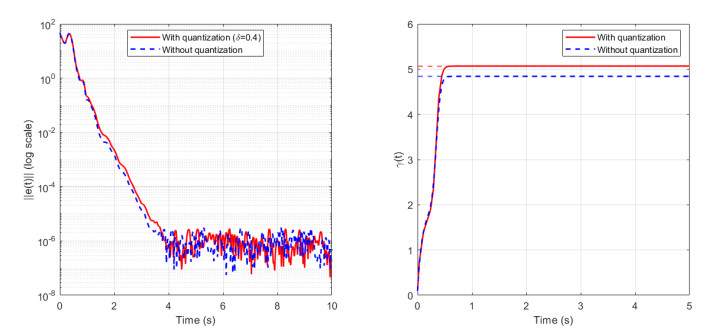
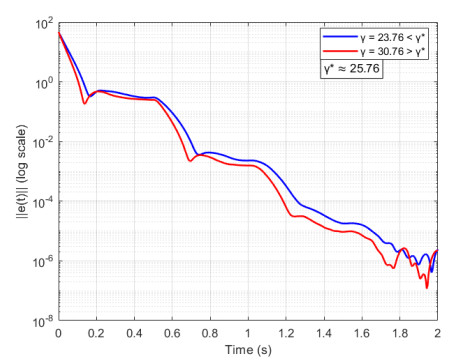
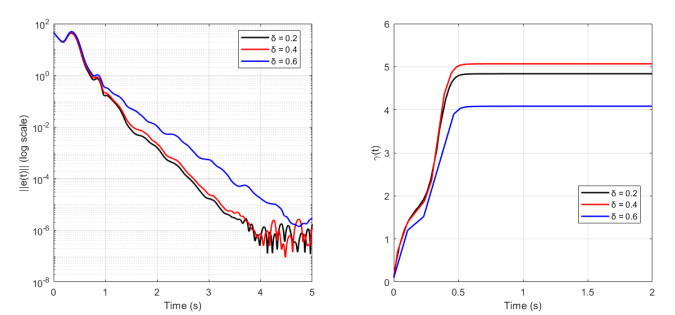
A novel average-valued condition for consensus of multi-agent systems (MASs) is developed via a quantized adaptive control protocol, a framework that simultaneously addresses multiple self-delays, time-varying coupling, and logarithmic quantizers. A adaptive controller is designed, where each follower applies a quantized error signal and a shared adaptive gain that is updated by the quantized sum of all followers' squared errors with a fixed adaptation rate. By constructing a Lyapunov functional and applying a generalized Halanay inequality that exploits the time-average property of the coupling strength, we prove that the adaptive gain is nondecreasing, remains bounded, and converges to a finite limit. A gain threshold, depending explicitly on the average coupling strength and the delay-related Lipschitz constants, is established: If the gain exceeds this threshold, exponential consensus is achieved; otherwise, asymptotic consensus still holds. Numerical simulations on a leader-follower network with Lorenz-type node dynamics and two self-delays validate the theoretical results, including the effect of different adaptation rates, quantization densities, and delay configurations.
Citation: Yufang Wu, Zhenkun Huang. Novel average-valued condition for multi-agent systems via a quantized adaptive control protocol[J]. Networks and Heterogeneous Media, 2026, 21(5): 1902-1923. doi: 10.3934/nhm.2026071
A novel average-valued condition for consensus of multi-agent systems (MASs) is developed via a quantized adaptive control protocol, a framework that simultaneously addresses multiple self-delays, time-varying coupling, and logarithmic quantizers. A adaptive controller is designed, where each follower applies a quantized error signal and a shared adaptive gain that is updated by the quantized sum of all followers' squared errors with a fixed adaptation rate. By constructing a Lyapunov functional and applying a generalized Halanay inequality that exploits the time-average property of the coupling strength, we prove that the adaptive gain is nondecreasing, remains bounded, and converges to a finite limit. A gain threshold, depending explicitly on the average coupling strength and the delay-related Lipschitz constants, is established: If the gain exceeds this threshold, exponential consensus is achieved; otherwise, asymptotic consensus still holds. Numerical simulations on a leader-follower network with Lorenz-type node dynamics and two self-delays validate the theoretical results, including the effect of different adaptation rates, quantization densities, and delay configurations.

| [1] |
Z. Wang, M. Chadli, S. X. Ding, A dynamic event-triggered approach for observer-based formation control of multi-agent systems with designable inter-event time, Syst. Control Lett., 195 (2025), 105970. https://doi.org/10.1016/j.sysconle.2024.105970 doi: 10.1016/j.sysconle.2024.105970

|
| [2] |
S. Zhang, J. Mao, K. Zhang, R. Li, D. Li, N. Wang, Survey on robust multi-robot path planning under uncertainty, Control Decis., 39 (2024), 3873–3888. https://doi.org/10.13195/j.kzyjc.2023.1728 doi: 10.13195/j.kzyjc.2023.1728
|
| [3] |
H. Li, H. Yang, Z. Sheng, C. Liu, Y. Chen, Multi-UAV collaborative distributed dynamic task allocation based on MAPPO, Control Decis., 40 (2025), 1429–1437. https://doi.org/10.13195/j.kzyjc.2024.0784 doi: 10.13195/j.kzyjc.2024.0784
|
| [4] |
W. Li, Y. Liu, H. Liang, Y. Shen, A new distributed energy management strategy for smart grid with stochastic wind power, IEEE Trans. Ind. Electron., 68 (2021), 1311–1321. https://doi.org/10.1109/TIE.2020.2970627 doi: 10.1109/TIE.2020.2970627
|
| [5] |
G. Wen, Y. Zhao, Z. Duan, W. Yu, G. Chen, Containment of higher-order multi-leader multi-agent systems: A dynamic output approach, IEEE Trans. Autom. Control, 61 (2016), 1135–1140. https://doi.org/10.1109/TAC.2015.2465071 doi: 10.1109/TAC.2015.2465071
|
| [6] |
Y. Cao, W. Ren, Distributed coordinated tracking with reduced interaction via a variable structure approach, IEEE Trans. Autom. Control, 57 (2012), 33–48. https://doi.org/10.1109/TAC.2011.2146830 doi: 10.1109/TAC.2011.2146830
|
| [7] |
Y. Wang, Y. Liu, Z. Zhang, Theory and experiments on enclosing control of multi-agent systems, IEEE/CAA J. Autom. Sin., 8 (2021), 1677–1685. https://doi.org/10.1109/JAS.2021.1004138 doi: 10.1109/JAS.2021.1004138
|
| [8] |
W. Xiong, X. Yu, R. Patel, W. Yu, Iterative learning control for discrete-time systems with event-triggered transmission strategy and quantization, Automatica, 72 (2016), 84–91. https://doi.org/10.1016/j.automatica.2016.05.031 doi: 10.1016/j.automatica.2016.05.031
|
| [9] |
X. Zhou, H. Wang, Y. Tian, X. Dai, Consensus tracking via quantized iterative learning control for singular nonlinear multi-agent systems with state time-delay and initial state error, Nonlinear Dyn., 103 (2021), 2701–2719. https://doi.org/10.1007/s11071-021-06265-x doi: 10.1007/s11071-021-06265-x
|
| [10] |
H. Bao, J. H. Park, J. Cao, Adaptive synchronization of fractional-order output-coupling neural networks via quantized output control, IEEE Trans. Neural Netw. Learn. Syst., 32 (2021), 3230–3239. https://doi.org/10.1109/TNNLS.2020.3013619 doi: 10.1109/TNNLS.2020.3013619
|
| [11] |
T. Zhang, J. Li, Quantized iterative learning control for nonlinear multi-agent systems with limited information communication and input saturation, J. Franklin Inst., 361 (2024), 1620–1630. https://doi.org/10.1016/j.jfranklin.2024.01.017 doi: 10.1016/j.jfranklin.2024.01.017
|
| [12] |
Z. Wang, Y. Dou, Y. Cao, M. Xiao, G. Jiang, G. Chen, Consensus of multiagent systems with input delay and communication restriction: A delay-dependent quantization control approach, IEEE Syst. J., 20 (2026), 52–62. https://doi.org/10.1109/JSYST.2025.3647701 doi: 10.1109/JSYST.2025.3647701
|
| [13] |
T. Xu, Z. Duan, Z. Sun, G. Chen, A unified control method for consensus with various quantizers, Automatica, 136 (2022), 110090. https://doi.org/10.1016/j.automatica.2021.110090 doi: 10.1016/j.automatica.2021.110090
|
| [14] |
Q. Jia, M. Sun, W. K. S. Tang, Consensus of multiagent systems with delayed node dynamics and time-varying coupling, IEEE Trans. Syst. Man Cybern. Syst., 51 (2021), 3320–3329. https://doi.org/10.1109/TSMC.2019.2921594 doi: 10.1109/TSMC.2019.2921594
|
| [15] |
S. Zhu, J. Zhou, X. Yu, J. Lu, Synchronization of complex networks with nondifferentiable time-varying delay, IEEE Trans. Cybern., 52 (2022), 3342–3348. https://doi.org/10.1109/TCYB.2020.3022976 doi: 10.1109/TCYB.2020.3022976
|
| [16] |
Q. Ma, S. Xu, Consensus switching of second-order multiagent systems with time delay, IEEE Trans. Cybern., 52 (2022), 3349–3353. https://doi.org/10.1109/TCYB.2020.3011448 doi: 10.1109/TCYB.2020.3011448
|
| [17] | T. Zhang, Z. Liu, J. Liu, Quantized consensus tracking problem for nonlinear multi-agent systems with initial state error and time delay, in 2024 43rd Chinese Control Conference (CCC), Kunming, China, 2024, 5399–5404. https://doi.org/10.23919/CCC63176.2024.10661558 |
| [18] |
H. Li, X. Zhang, Z. Li, X. Chen, C. Su, Adaptive consensus control of heterogeneous multi-agent time-delay systems with motor backlash compensator and its application, Sci. China Inf. Sci., 69 (2026), 149202. https://doi.org/10.1007/s11432-025-4730-y doi: 10.1007/s11432-025-4730-y
|
| [19] |
S. A. Samy, Y. Cao, R. Ramachandran, J. Alzabut, M. Niezabitowski, C. Lim, Globally asymptotic stability and synchronization analysis of uncertain multi-agent systems with multiple time-varying delays and impulses, Int. J. Robust Nonlinear Control, 32 (2022), 737–773. https://doi.org/10.1002/rnc.5851 doi: 10.1002/rnc.5851
|
| [20] |
L. Wei, W. Yang, T. Hua, Cooperative control of multi-time-scale agent networks under digraphs, IEEE Access, 11 (2023), 30796–30806. https://doi.org/10.1109/ACCESS.2023.3261963 doi: 10.1109/ACCESS.2023.3261963
|
| [21] |
H. Zhang, F. L. Lewis, Adaptive cooperative tracking control of higher-order nonlinear systems with unknown dynamics, Automatica, 48 (2012), 1432–1439. https://doi.org/10.1016/j.automatica.2012.05.008 doi: 10.1016/j.automatica.2012.05.008
|
| [22] |
Z. Li, G. Wen, Z. Duan, W. Ren, Designing fully distributed consensus protocols for linear multi-agent systems with directed graphs, IEEE Trans. Autom. Control, 60 (2015), 1152–1157. https://doi.org/10.1109/TAC.2014.2350391 doi: 10.1109/TAC.2014.2350391
|
| [23] |
X. Li, Y. Tang, H. R. Karimi, Consensus of multi-agent systems via fully distributed event-triggered control, Automatica, 116 (2020), 108898. https://doi.org/10.1016/j.automatica.2020.108898 doi: 10.1016/j.automatica.2020.108898
|
| [24] |
J. Zhou, J. Lu, J. Lü, Pinning adaptive synchronization of a general complex dynamical network, Automatica, 44 (2008), 996–1003. https://doi.org/10.1016/j.automatica.2007.08.016 doi: 10.1016/j.automatica.2007.08.016
|
| [25] |
W. He, B. Xu, Q. Han, F. Qian, Adaptive consensus control of linear multi-agent systems with dynamic event-triggered strategies, IEEE Trans. Cybern., 50 (2020), 2996–3008. https://doi.org/10.1109/TCYB.2019.2920093 doi: 10.1109/TCYB.2019.2920093
|
| [26] |
J. Long, Y. Guo, Z. Liu, W. Wang, S. Zhou, Fully distributed adaptive consensus tracking of uncertain nonlinear multi-agent systems: An augmented system approach, IEEE Trans. Circuits Syst. II Express Briefs, 70 (2023), 2151–2155. https://doi.org/10.1109/TCSII.2022.3227516 doi: 10.1109/TCSII.2022.3227516
|
| [27] |
Y. Zhang, R. Cui, X. Guo, Z. Zhang, Distributed adaptive event-triggered consensus control for high-order multi-agent systems, J. Franklin Inst., 361 (2024), 107137. https://doi.org/10.1016/j.jfranklin.2024.107137 doi: 10.1016/j.jfranklin.2024.107137
|
| [28] |
N. Moustakis, S. Yuan, S. Baldi, An adaptive design for quantized feedback control of uncertain switched linear systems, Int. J. Adapt. Control Signal., 32 (2018), 665–680. https://doi.org/10.1002/acs.2860 doi: 10.1002/acs.2860
|
| [29] |
A. Selivanov, A. Fradkov, D. Liberzon, Adaptive control of passifiable linear systems with quantized measurements and bounded disturbances, Syst. Control Lett., 88 (2016), 62–67. https://doi.org/10.1016/j.sysconle.2015.12.001 doi: 10.1016/j.sysconle.2015.12.001
|
| [30] | R. Horn, C. Johnson, Matrix Analysis, Cambridge University Press, New York, 2012. https://doi.org/10.1017/CBO9780511810817 |
| [31] | A. Berman, R. J. Plemmons, Nonnegative Matrices in the Mathematical Sciences, SIAM, Philadelphia, 1994. https://doi.org/10.1137/1.9781611971262 |
| [32] |
D. He, L. Xu, Ultimate boundedness of nonautonomous dynamical complex networks under impulsive control, IEEE Trans. Circuits Syst. II Express Briefs, 62 (2015), 997–1001. https://doi.org/10.1109/TCSII.2015.2436191 doi: 10.1109/TCSII.2015.2436191
|
| [33] |
Y. Wu, Z. Huang, M. Bohner, J. Cao, Impulsive boundedness for nonautonomous dynamic complex networks with constraint nonlinearity, Appl. Math. Model., 115 (2023), 853–867. https://doi.org/10.1016/j.apm.2022.10.050 doi: 10.1016/j.apm.2022.10.050
|
| [34] |
R. Lu, H. Li, Y. Zhu, Quantized $H_{\infty}$ filtering for singular time-varying delay systems with unreliable communication channel, Circuits Syst. Signal Process., 31 (2012), 521–538. https://doi.org/10.1007/s00034-011-9333-6 doi: 10.1007/s00034-011-9333-6
|
| [35] | C. T. H. Baker, A. Tang, Generalized Halanay inequalities for Volterra functional differential equations and discretized versions, in: C. Corduneanu and I. W. Sandberg (eds.), Volterra Equations and Applications, Gordon and Breach, Amsterdam, 2000, 39–55. https://doi.org/10.1201/9781482287424-11 |
| [36] |
L. Wen, Y. Yu, W. Wang, Generalized Halanay inequalities for dissipativity of Volterra functional differential equations, J. Math. Anal. Appl., 347 (2008), 169–178. https://doi.org/10.1016/j.jmaa.2008.05.007 doi: 10.1016/j.jmaa.2008.05.007
|
| [37] | H. K. Khalil, Nonlinear Systems, 3rd edn., Prentice Hall, Upper Saddle River, 2002. |
Figures(9) / Tables(1)
Yufang Wu, Zhenkun Huang. Novel average-valued condition for multi-agent systems via a quantized adaptive control protocol[J]. Networks and Heterogeneous Media, 2026, 21(5): 1902-1923. doi: 10.3934/nhm.2026071




 DownLoad: