This paper is concerned with an alternating direction implicit (ADI) general finite difference method (GFDM) for solving three-dimensional nonlocal diffusion equations with anisotropic diffusion coefficients. The Grünwald-Letnikov (GL) approximation is adopted to discretize the Caputo fractional derivatives on uniform grids. This spatial direction is handled by using the general difference method. A fully discrete GL-ADI general difference scheme is strictly constructed. The existence, uniqueness, stability, and convergence of numerical solution are proved. In addition, numerical experiments are carried out to confirm the validity of the theoretical analysis.
Citation: Jia Liu, Haixiang Zhang. An efficient GL-ADI general finite difference method for three dimensional nonlocal diffusion equations with anisotropic diffusion coefficients[J]. Networks and Heterogeneous Media, 2026, 21(5): 1709-1738. doi: 10.3934/nhm.2026064
This paper is concerned with an alternating direction implicit (ADI) general finite difference method (GFDM) for solving three-dimensional nonlocal diffusion equations with anisotropic diffusion coefficients. The Grünwald-Letnikov (GL) approximation is adopted to discretize the Caputo fractional derivatives on uniform grids. This spatial direction is handled by using the general difference method. A fully discrete GL-ADI general difference scheme is strictly constructed. The existence, uniqueness, stability, and convergence of numerical solution are proved. In addition, numerical experiments are carried out to confirm the validity of the theoretical analysis.

| [1] |
E. Scalas, R. Gorenflo, F. Mainardi, Fractional calculus and continuous-time finance, Physica A, 284 (2000), 376–384. https://doi.org/10.1016/S0378-4371(00)00255-7 doi: 10.1016/S0378-4371(00)00255-7

|
| [2] |
R. Magin, Fractional calculus in bioengineering, Crit. Rev. Biomed. Eng., 32 (2004), 1–104. https://doi.org/10.1615/critrevbiomedeng.v32.i1.10 doi: 10.1615/critrevbiomedeng.v32.i1.10
|
| [3] |
L. Korobenko, M. Kamrujjaman, E. Braverman, Persistence and extinction in spatial models with a carrying capacity driven diffusion and harvesting, J. Math. Anal. Appl., 399 (2013), 352–368. https://doi.org/10.1016/j.jmaa.2012.09.057 doi: 10.1016/j.jmaa.2012.09.057
|
| [4] |
L. Ouyang, H. Zhang, Construction of a new hybrid Richardson method and its theoretical analysis for the parabolic equation, Appl. Math. Lett., 182 (2026), 110043. https://doi.org/10.1016/j.aml.2026.110043 doi: 10.1016/j.aml.2026.110043
|
| [5] | V. V. Uchaikin, Fractional Derivatives for Physicists and Engineers, Volume Ⅰ: Background and Theory, Higher Education Press, Beijing; Springer, Heidelberg, 2013. https://doi.org/10.1007/978-3-642-33911-0 |
| [6] |
P. Ostrowski, B. Michalak, A contribution to the modelling of heat conduction for cylindrical composite conductors with non-uniform distribution of constituents, Int. J. Heat Mass Transfer, 92 (2016), 435–448. http://dx.doi.org/10.1016/j.ijheatmasstransfer.2015.08.092 doi: 10.1016/j.ijheatmasstransfer.2015.08.092
|
| [7] |
H. Feng, L. Chen, Y. Ge, Constructal optimization of a rectangular non-uniform heat generation area with irregular high thermal conductivity material, Case Stud. Therm. Eng., 49 (2023), 103403. https://doi.org/10.1016/j.csite.2023.103403 doi: 10.1016/j.csite.2023.103403
|
| [8] |
R. Metzler, J. Klafter, The random walk's guide to anomalous diffusion: A fractional dynamics approach, Phys. Rep., 339 (2000), 1–77. https://doi.org/10.1016/S0370-1573(00)00070-3 doi: 10.1016/S0370-1573(00)00070-3
|
| [9] |
J. Bear, Dynamics of fluids in porous media, Soil Sci., 120 (1975), 162–163. https://doi.org/10.1097/00010694-197508000-00022 doi: 10.1097/00010694-197508000-00022
|
| [10] |
D. Su, M. Xie, K. U. Mayer, K. T. MacQuarrie, Simulation of diffusive solute transport in heterogeneous porous media with dipping anisotropy, Front. Water, 4 (2022), 974145. https://doi.org/10.3389/frwa.2022.974145 doi: 10.3389/frwa.2022.974145
|
| [11] |
A. H. Muliana, J. S. Kim, A two-scale homogenization framework for nonlinear effective thermal conductivity of laminated composites, Acta Mech., 212 (2010), 319–347. https://doi.org/10.1007/s00707-009-0259-6 doi: 10.1007/s00707-009-0259-6
|
| [12] |
J. S. P. Guerrero, L. C. G. Pimentel, T. H. Skaggs, Analytical solution for the advection–dispersion transport equation in layered media, Int. J. Heat Mass Transfer, 56 (2013), 274–282. https://doi.org/10.1016/j.ijheatmasstransfer.2012.09.011 doi: 10.1016/j.ijheatmasstransfer.2012.09.011
|
| [13] |
A. Hendy, L. Qiao, A. Aldraweesh, M. Zaky, Optimal spectral Galerkin approximation for time and space fractional reaction-diffusion equations, Appl. Numer. Math., 201 (2024), 118–128. https://doi.org/10.1016/j.apnum.2024.02.013 doi: 10.1016/j.apnum.2024.02.013
|
| [14] |
A. Jannelli, Adaptive numerical solutions of time-fractional advection-diffusion-reaction equations, Commun. Nonlinear Sci. Numer. Simul., 105 (2022), 106073. https://doi.org/10.1016/j.cnsns.2021.106073 doi: 10.1016/j.cnsns.2021.106073
|
| [15] |
B. Jin, B. Li, Z. Zhou, Numerical analysis of nonlinear subdiffusion equations, SIAM J. Numer. Anal., 56 (2018), 1–23. https://doi.org/10.1137/16M1089320 doi: 10.1137/16M1089320
|
| [16] |
W. McLean, K. Mustapha, R. Ali, O. Knio, Regularity theory for time-fractional advection-diffusion-reaction equations, Comput. Math. Appl., 79 (2020), 947–961. https://doi.org/10.1016/j.camwa.2019.08.008 doi: 10.1016/j.camwa.2019.08.008
|
| [17] |
R. Du, Z. Sun, Temporal second-order difference methods for solving multi-term time fractional mixed diffusion and wave equations, Numer. Algor., 88 (2021), 191–226. https://doi.org/10.1007/s11075-020-01037-x doi: 10.1007/s11075-020-01037-x
|
| [18] |
Y. Wang, Y. Zhao, H. Chen, Discrete comparison principle of a finite difference method for the multi-term time fractional diffusion equation, Numer. Algor., 93 (2023), 1581–1593. https://doi.org/10.1007/s11075-022-01480-y doi: 10.1007/s11075-022-01480-y
|
| [19] |
X. Yang, Y. Shi, H. Zhang, Z. Zhang, Analysis of a new time-space two-grid method for the two-dimensional nonlinear nonlocal mobile/immobile transport model. J. Sci. Comput., 107 (2026), 96. https://doi.org/10.1007/s10915-026-03314-8 doi: 10.1007/s10915-026-03314-8
|
| [20] |
W. Zhang, X. Yang, A fourth-order difference scheme for solving the generalized nonlinear time-fractional Burgers-type equation, Fractal Fract., 10 (2026), 210. https://doi.org/10.3390/fractalfract10040210 doi: 10.3390/fractalfract10040210
|
| [21] |
Z. Zhang, X. Yang, Error estimation of $\alpha^p$-robust ADI difference scheme on graded meshes for the three-dimensional nonlinear multiterm subdiffusion equation with constant coefficients, Comput. Appl. Math., 45 (2026), 187. https://doi.org/10.1007/s40314-025-03469-4 doi: 10.1007/s40314-025-03469-4
|
| [22] |
X. Yang, Z. Zhang, Analysis of a new NFV scheme preserving DMP for two-dimensional sub-diffusion equation on distorted meshes, J. Sci. Comput., 99 (2024), 80. https://doi.org/10.1007/s10915-024-02511-7 doi: 10.1007/s10915-024-02511-7
|
| [23] |
X. Yang, Z. Zhang, On conservative, positivity preserving, nonlinear FV scheme on distorted meshes for the multi-term nonlocal Nagumo-type equations, Appl. Math. Lett., 150 (2024), 108972. https://doi.org/10.1016/j.aml.2023.108972 doi: 10.1016/j.aml.2023.108972
|
| [24] |
X. Yang, Z. Zhang, Superconvergence analysis of a robust orthogonal Gauss collocation method for 2D fourth-order subdiffusion equations, J. Sci. Comput., 100 (2024), 62. https://doi.org/10.1007/s10915-024-02616-z doi: 10.1007/s10915-024-02616-z
|
| [25] |
Z. Liu, F. Liu, F. Zeng, An alternating direction implicit spectral method for solving two dimensional multi-term time fractional mixed diffusion and diffusion-wave equations, Appl. Numer. Math., 136 (2019), 139–151. https://doi.org/10.1016/j.apnum.2018.10.005 doi: 10.1016/j.apnum.2018.10.005
|
| [26] |
Y. Wei, Y. Zhao, Z. Shi, F. Wang, Y. Tang, Spatial high accuracy analysis of FEM for two-dimensional multi-term time-fractional diffusion-wave equations, Acta Math. Appl. Sin. Engl. Ser., 34 (2018), 828–841. https://doi.org/10.1007/s10255-018-0795-1 doi: 10.1007/s10255-018-0795-1
|
| [27] |
K. Liu, H. Zhang, X. Yang, An averaged L1 ADI compact difference scheme for the three-dimensional time-fractional mobile/immobile transport equation with weakly singular solutions, Comput. Math. Appl., 200 (2025), 102–116. https://doi.org/10.1016/j.camwa.2025.09.019 doi: 10.1016/j.camwa.2025.09.019
|
| [28] |
J. Huang, Y. Zhao, S. Arshad, K. Li, Y. Tang, Alternating direction implicit schemes for the two-dimensional time fractional nonlinear super-diffusion equations, J. Comput. Math., 37 (2019), 297–315. https://doi.org/10.4208/jcm.1802-m2017-0196 doi: 10.4208/jcm.1802-m2017-0196
|
| [29] |
T. Liu, H. Zhang, X. Yang, The BDF2-ADI compact difference scheme on graded meshes for the three-dimensional PIDEs with multi-term weakly singular kernels, Numer. Algor., 2025, 1–34. https://doi.org/10.1007/s11075-025-02246-y doi: 10.1007/s11075-025-02246-y
|
| [30] |
W. Xiao, X. Yang, Z. Zhou, Pointwise-in-time $\alpha$-robust error estimate of the ADI difference scheme for three-dimensional fractional subdiffusion equations with variable coefficients, Commun. Anal. Mech., 16 (2024), 53–70. https://doi.org/10.3934/cam.2024003 doi: 10.3934/cam.2024003
|
| [31] |
D. Cao, H. Chen, Pointwise-in-time error estimate of an ADI scheme for two-dimensional multi-term subdiffusion equation, J. Appl. Math. Comput., 69 (2023), 707–729. https://doi.org/10.1007/s12190-022-01759-2 doi: 10.1007/s12190-022-01759-2
|
| [32] |
H. Chen, Y. Shi, J. Zhang, Y. Zhao, Sharp error estimate of a Grünwald-Letnikov scheme for reaction-subdiffusion equations, Numer. Algor., 89 (2022), 1465–1477. https://doi.org/10.1007/s11075-021-01161-2 doi: 10.1007/s11075-021-01161-2
|
| [33] |
Y. Jiang, H. Chen, Error estimate of GL-ADI scheme for 2D multiterm nonlinear time-fractional subdiffusion equation, Math. Methods Appl. Sci., 47 (2024), 14588–14599. https://doi.org/10.1002/mma.10290 doi: 10.1002/mma.10290
|
| [34] |
Y. Jiang, H. Chen, C. Huang, J. Wang, A fully discrete GL-ADI scheme for 2D time-fractional reaction-subdiffusion equation, Appl. Math. Comput., 488 (2025), 129147. https://doi.org/10.1016/j.amc.2024.129147 doi: 10.1016/j.amc.2024.129147
|
| [35] |
H. Chen, Y. Jiang, J. Wang, Grünwald-Letnikov scheme for a multi-term time fractional reaction-subdiffusion equation, Commun. Nonlinear Sci. Numer. Simul., 132 (2024), 107930. https://doi.org/10.1016/j.cnsns.2024.107930 doi: 10.1016/j.cnsns.2024.107930
|
| [36] |
D. Cao, H. Chen, Sharp error estimate of Grünwald-Letnikov scheme for a multi-term time fractional diffusion equation, Adv. Comput. Math., 48 (2022), 82. https://doi.org/10.1007/s10444-022-09999-3 doi: 10.1007/s10444-022-09999-3
|
| [37] |
M. Al-Maskari, S. Karaa, Numerical approximation of semilinear subdiffusion equations with nonsmooth initial data, SIAM J. Numer. Anal., 57 (2019), 1524–1544. https://doi.org/10.1137/18M1189750 doi: 10.1137/18M1189750
|
| [38] | P. Farrell, A. Hegarty, J. M. Miller, E. O'Riordan, G. I. Shishkin, Robust Computational Techniques for Boundary Layers, Chapman and Hall/CRC, (2000), 256. https://doi.org/10.1201/9781482285727 |
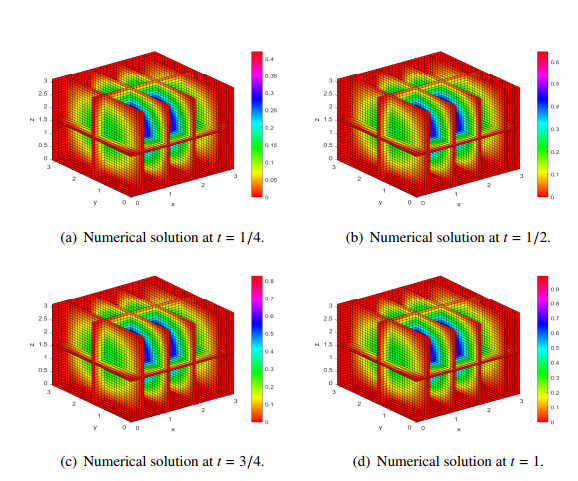
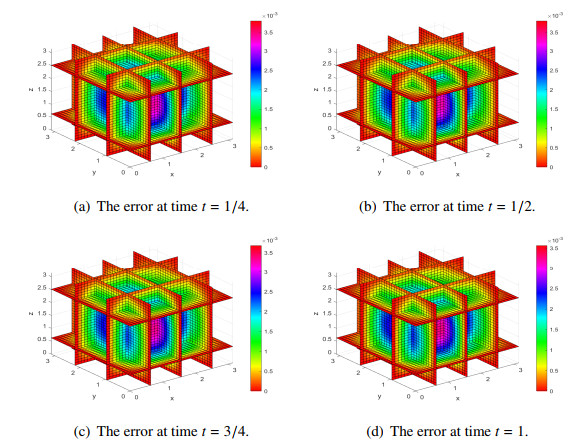
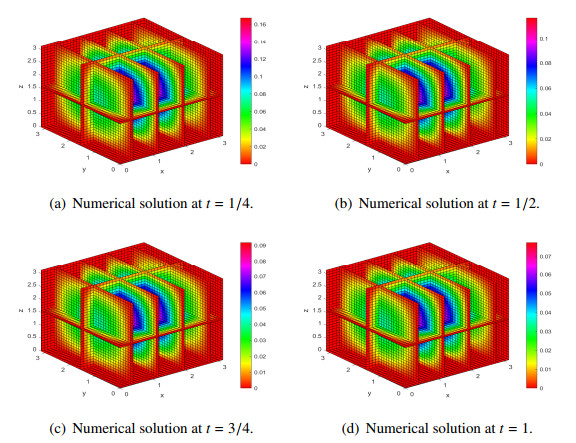
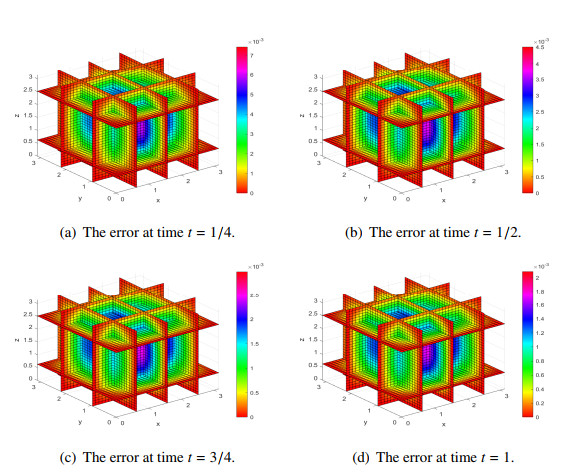
Figures(4) / Tables(5)
Jia Liu, Haixiang Zhang. An efficient GL-ADI general finite difference method for three dimensional nonlocal diffusion equations with anisotropic diffusion coefficients[J]. Networks and Heterogeneous Media, 2026, 21(5): 1709-1738. doi: 10.3934/nhm.2026064




 DownLoad: