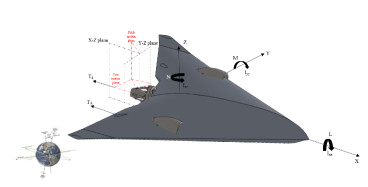
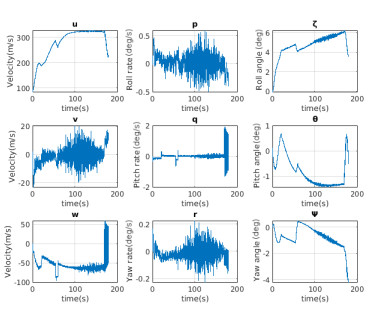
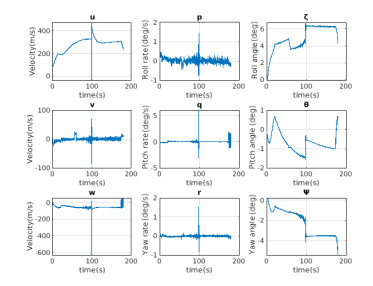
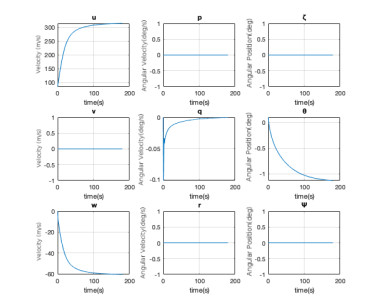
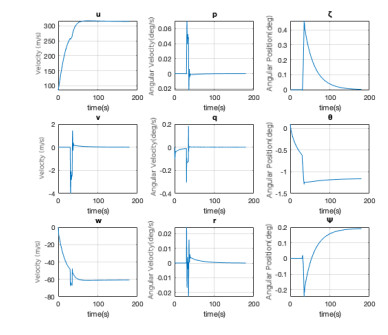
Superior maneuverability and stealth are two primary focal points in the sixth generation of aviation and aerospace concepts. A potential technology to deliver such enhanced maneuverability is thrust vectored control (TVC), which is currently limited only to vertical control during take-off and landing. The expansion of maneuvering to all three dimensions (including horizontal) enables TVC's ability to attain extreme maneuvers with the least effect on overall performance. However, developing controllers to achieve these maneuvers requires a detailed mathematical model to help understand the aircraft dynamics. Thus, this paper demonstrates the development of a nonlinear dynamic model in the first-order differential form for an aircraft employing a full flyingwing design with a tail-end single-thrust vectored engine with two wing-mounted forward thrusters. This design falls under the generic class of the multi-engine single-thrust vector system (MESTV) configuration. A feedback controller was incorporated to simulate and attain optimal performance in two realistic and critical flight scenarios: flight-envelop regulation and stall recovery. The developed model was tested with three phases of operation; climb and cruising, pitch, and yaw maneuvers. The simulation results show that the proposed configuration achieved horizontal (yaw) maneuvers together with vertical (pitch) maneuvers. Thus, the proposed engine configuration is well-suited to attain superior maneuverability.
Citation: W. Dakshina T. Fernando, Joseph Chan, Lily Wong, Julian K. P. Tan, Chee Pin Tan. A generalized nonlinear model for multi-engine single thrust vectored flyingwing[J]. Mathematical Modelling and Control, 2026, 6(3): 216-239. doi: 10.3934/mmc.2026017
Superior maneuverability and stealth are two primary focal points in the sixth generation of aviation and aerospace concepts. A potential technology to deliver such enhanced maneuverability is thrust vectored control (TVC), which is currently limited only to vertical control during take-off and landing. The expansion of maneuvering to all three dimensions (including horizontal) enables TVC's ability to attain extreme maneuvers with the least effect on overall performance. However, developing controllers to achieve these maneuvers requires a detailed mathematical model to help understand the aircraft dynamics. Thus, this paper demonstrates the development of a nonlinear dynamic model in the first-order differential form for an aircraft employing a full flyingwing design with a tail-end single-thrust vectored engine with two wing-mounted forward thrusters. This design falls under the generic class of the multi-engine single-thrust vector system (MESTV) configuration. A feedback controller was incorporated to simulate and attain optimal performance in two realistic and critical flight scenarios: flight-envelop regulation and stall recovery. The developed model was tested with three phases of operation; climb and cruising, pitch, and yaw maneuvers. The simulation results show that the proposed configuration achieved horizontal (yaw) maneuvers together with vertical (pitch) maneuvers. Thus, the proposed engine configuration is well-suited to attain superior maneuverability.

| [1] |
J. M. Fahmi, C. A. Woolsey, Port-hamiltonian flight control of a fixed-wing aircraft, IEEE Trans. Control Syst. Technol., 30 (2021), 408–415. https://doi.org/10.1109/tcst.2021.3059928 doi: 10.1109/tcst.2021.3059928

|
| [2] |
A. Voß, Open and closed loop gust loads analyses for a flying wing configuration with variable longitudinal stability, Aerosp. Sci. Technol., 89 (2019), 1–10. https://doi.org/10.1016/j.ast.2019.03.049 doi: 10.1016/j.ast.2019.03.049
|
| [3] |
Z. Gao, J. Fu, Robust LPV modeling and control of aircraft flying through wind disturbance, Chin. J. Aeronaut., 32 (2019), 1588-1602. https://doi.org/10.1016/j.cja.2019.03.029 doi: 10.1016/j.cja.2019.03.029
|
| [4] |
B. Yu, W. Shu, A novel control approach for a thrust vector system with an electromechanical actuator, IEEE Access, 5 (2017), 15542–15550. https://doi.org/10.1109/access.2017.2731779 doi: 10.1109/access.2017.2731779
|
| [5] |
A. Khalili, V. Vahidpour, A. Rastegarnia, W. M. Bazzi, S. Sanei, Partial diffusion Kalman filter with adaptive combiners, IEEE Trans. Aerosp. Electron. Syst., 57 (2021), 1972–1980. https://doi.org/10.1109/taes.2020.3046085 doi: 10.1109/taes.2020.3046085
|
| [6] | C. H. Lee, B. E. Jun, H. S. Shin, A. Tsourdos, Nonlinear acceleration controller for exo-atmospheric and endo-atmospheric interceptors with TVC, 2017 25th Mediterranean Conference on Control and Automation (MED), Valletta, Malta, 2017,153–157. https://doi.org/10.1109/med.2017.7984110 |
| [7] |
H. S. Shin, K. B. Li, An improvement in three-dimensional pure proportional navigation guidance, IEEE Trans. Aerosp. Electron. Syst., 57 (2021), 3004–3014. https://doi.org/10.1109/taes.2021.3067656 doi: 10.1109/taes.2021.3067656
|
| [8] |
Y. Li, H. Lu, S. Tian, Z. Jiao, J. T. Chen, Posture control of electromechanical-actuator-based thrust vector system for aircraft engine, IEEE Trans. Ind. Electron., 59 (2012), 3561–3571. https://doi.org/10.1109/tie.2011.2159351 doi: 10.1109/tie.2011.2159351
|
| [9] | N. A. Ratnayake, E. R. Waggonery, B. R. Taylor, Lateral-directional parameter estimation on the X-48B aircraft using an abstracted, multi-objective effector model, 29th AIAA Applied Aerodynamics Conference, 2011. https://doi.org/10.2514/6.2011-3014 |
| [10] |
T. Bykerk, S. Karl, M. Laureti, M. Ertl, T. Ecker, Retro-propulsion in rocket systems: Recent advancements and challenges for the prediction of aerodynamic characteristics and thermal loads, Prog. Aerosp. Sci., 151 (2024), 101044. https://doi.org/10.1016/j.paerosci.2024.101044 doi: 10.1016/j.paerosci.2024.101044
|
| [11] |
P. Baiocco, Overview of reusable space systems with a look to technology aspects, Acta Astronaut., 189 (2021), 10–25. https://doi.org/10.1016/j.actaastro.2021.07.039 doi: 10.1016/j.actaastro.2021.07.039
|
| [12] |
L. Bauersfeld, L. Spannagl, G. Ducard, C. H. Onder, MPC flight control for a tilt-rotor VTOL aircraft, IEEE Trans. Aerosp. Electron. Syst., 57 (2021), 2395–2409. https://doi.org/10.1109/taes.2021.3061819 doi: 10.1109/taes.2021.3061819
|
| [13] |
S. H. Hashemi, N. Pariz, S. Kamal, Observer-based adaptive hybrid feedback for robust global attitude stabilization of a rigid body, IEEE Trans. Aerosp. Electron. Syst., 57 (2021), 1919–1929. https://doi.org/10.1109/taes.2021.3050665 doi: 10.1109/taes.2021.3050665
|
| [14] |
A. M. Hassan, H. E. Taha, Design of a nonlinear roll mechanism for airplanes using Lie brackets for high alpha operation, IEEE Trans. Aerosp. Electron. Syst., 57 (2021), 462–475. https://doi.org/10.1109/taes.2020.3024396 doi: 10.1109/taes.2020.3024396
|
| [15] |
M. S. Francis, Air vehicle management with integrated thrust-vector control, AIAA J., 56 (2018), 4741–4751. https://doi.org/10.2514/1.J056768 doi: 10.2514/1.J056768
|
| [16] |
D. F. Hunsaker, Z. S. Montgomery, J. J. Joo, Analytic and computational analysis of wing twist to minimize induced drag during roll, Proc. Inst. Mech. Eng. G: J. Aerosp. Eng., 234 (2019), 788–803. https://doi.org/10.1177/0954410019886939 doi: 10.1177/0954410019886939
|
| [17] | H. Huang, Blended control allocation and lateral-directional stability of the reusable launch vehicles, European Control Conference, Aalborg, Denmark, 2016, 74–79. https://doi.org/10.1109/ecc.2016.7810266 |
| [18] |
T. Jardin, Coriolis effect and the attachment of the leading edge vortex, J. Fluid Mech., 820 (2017), 312–340. https://doi.org/10.1017/jfm.2017.222 doi: 10.1017/jfm.2017.222
|
| [19] |
G. Li, L. Sun, B. Yang, S. Yu, Z. Yang, Reconfiguration control allocation of actuator faults for tailless aircraft with low aspect ratio, J. Phys.: Conf. Ser., 2472 (2023), 012019. https://doi.org/10.1088/1742-6596/2472/1/012019 doi: 10.1088/1742-6596/2472/1/012019
|
| [20] |
A. K. Das, K. Acharyya, T. K. Mankodi, U. K. Saha, Fluidic thrust vector control of aerospace vehicles: state-of-the-art review and future prospects, J. Fluids Eng., 145 (2023), 1–29. https://doi.org/10.1115/1.4062109 doi: 10.1115/1.4062109
|
| [21] |
J. Liu, W. Zhang, X. Liu, Q. He, Y. Qin, Gust response stabilization for rigid aircraft with multi-control-effectors based on a novel integrated control scheme, Aerosp. Sci. Technol., 79 (2018), 625–635. https://doi.org/10.1016/j.ast.2018.06.022 doi: 10.1016/j.ast.2018.06.022
|
| [22] |
D. Saha, J. Valasek, C. Leshikar, M. M. Reza, Multiple-timescale nonlinear control of aircraft with model uncertainties, J. Guid. Control Dynam., 43 (2020), 536–552. https://doi.org/10.2514/1.G004303 doi: 10.2514/1.G004303
|
| [23] |
L. Ding, Research on longitudinal static stability compensation of aircraft, J. Phys.: Conf. Ser., 2457 (2023), 012003. https://doi.org/10.1088/1742-6596/2457/1/012003 doi: 10.1088/1742-6596/2457/1/012003
|
| [24] | Y. D. Staelens, R. F. Blackwelder, Novel pitch control effectors for a blended wing body airplane in takeoff and landing configuration, 45th AIAA Aerospace Sciences Meeting and Exhibit, 2007. https://doi.org/10.2514/6.2007-68 |
| [25] |
P. Dehpanah, A. Nejat, The aerodynamic design evaluation of a blended-wing-body configuration, Aerosp. Sci. Technol., 43 (2015), 96–110. https://doi.org/10.1016/j.ast.2015.02.015 doi: 10.1016/j.ast.2015.02.015
|
| [26] | C. D. Regan, In-flight stability analysis of the X-48B aircraft, AIAA Atmospheric Flight Mechanics Conference and Exhibit, 2008. https://doi.org/10.2514/6.2008-6571 |
| [27] |
B. Gal-Or, D. D. Baumann, Mathematical phenomenology for thrust-vectoring-induced agility comparisons, J. Aircraft, 30 (1993), 248–255. https://doi.org/10.2514/3.48273 doi: 10.2514/3.48273
|
| [28] |
D. D. Vicroy, K. C. Huber, A. Schütte, M. Rein, J. P. Irving, G. Rigby, et al., Experimental investigations of a generic swept unmanned combat air vehicle with controls, J. Aircraft, 55 (2018), 475–501. https://doi.org/10.2514/1.C033782 doi: 10.2514/1.C033782
|
| [29] |
B. C. Moulton, D. F. Hunsaker, Analytic solutions for volume, mass, center of gravity, and inertia of wing segments and rotors of constant density, Aerospace, 11 (2024), 492. https://doi.org/10.3390/aerospace11060492 doi: 10.3390/aerospace11060492
|
| [30] |
B. M. Simmons, J. L. Gresham, C. A. Woolsey, Nonlinear dynamic modeling for aircraft with unknown mass properties using flight data, J. Aircraft, 60 (2023), 968–980. https://doi.org/10.2514/1.C037259 doi: 10.2514/1.C037259
|
| [31] | O. A. Marzouk, A flight-mechanics solver for aircraft inverse simulations and application to 3D Mirage-III maneuver, arXiv preprint, 2024. https://doi.org/10.48550/arXiv.2411.00834 |
| [32] |
S. H. Derrouaoui, Y. Bouzid, M. Guiatni, Nonlinear robust control of a new reconfigurable unmanned aerial vehicle, Robotics, 10 (2021), 76. https://doi.org/10.3390/robotics10020076 doi: 10.3390/robotics10020076
|
| [33] | D. P. Raymer, Aircraft design: a conceptual approach, sixth edition, American Institute of Aeronautics and Astronautics, 37 (2018). https://doi.org/10.2514/4.104909 |
| [34] |
O. A. Marzouk, Coupled differential-algebraic equations framework for modeling six-degree-of-freedom flight dynamics of asymmetric fixed-wing aircraft, Int. J. Adv. Appl. Sci., 12 (2025), 30–51. https://doi.org/10.21833/ijaas.2025.01.004 doi: 10.21833/ijaas.2025.01.004
|
| [35] |
J. H. Kim, S. S. Park, K. K. Park, C. K. Ryoo, Quaternion based three-dimensional impact angle control guidance law, IEEE Trans. Aerosp. Electron. Syst., 57 (2021), 2311–2323. https://doi.org/10.1109/taes.2021.3058398 doi: 10.1109/taes.2021.3058398
|
| [36] | Federal Aviation Administration, Type Certificate Data Sheet No. A20WE, The Boeing Company 747 Series, Revision 36, 2005. Available from: https://www.boeing.com/content/dam/boeing/v2/airports/7478-airport-comp/A20WE.pdf. |
| [37] |
S. Mizuno, H. Ohba, K. Ito, Machine learning‑based turbulence‑risk prediction method for the safe peration of aircrafts, J. Big Data, 9 (2022), 29. https://doi.org/10.1186/s40537-022-00584-5 doi: 10.1186/s40537-022-00584-5
|
| [38] |
M. Caetano, Aviation accident and incident forecasting combining occurrence investigation and meteorological data using machine learning, Aviation, 27 (2023), 47–56. https://doi.org/10.3846/aviation.2023.18641 doi: 10.3846/aviation.2023.18641
|
| [39] |
Z. Tian, Analysis and research on chaotic dynamics behaviour of wind power time series at diferent time scales, J. Ambient Intell. Human. Comput., 14 (2023), 897–921. https://doi.org/10.1007/s12652-021-03343-1 doi: 10.1007/s12652-021-03343-1
|
| [40] |
J. Chen, L. Wang, J. Fu, Z. Yang, Engineering comprehensive model of complex wind fields for flight simulation, Aerospace, 8 (2021), 145. https://doi.org/10.3390/aerospace8060145 doi: 10.3390/aerospace8060145
|
| [41] |
B. Wang, Z. A. Ali, D. Wang, Controller for UAV to oppose different kinds of wind in the environment, J. Control Sci. Eng., 2020 (2020), 5708970. https://doi.org/10.1155/2020/5708970 doi: 10.1155/2020/5708970
|
| [42] |
S. Ekici, M. Ayar, I. Orhan, T. H. Karakoc, Cruise altitude patterns for minimizing fuel consumption and emission: a detailed analysis of five prominent aircraft, Energy, 295 (2024), 130989. https://doi.org/10.1016/j.energy.2024.130989 doi: 10.1016/j.energy.2024.130989
|
| [43] |
R. K. S. S. Vuppala, Z. Krawczyk, R. Paul, K. Kara, Modeling advanced air mobility aircraft in data-driven reduced order realistic urban winds, Sci. Rep., 14 (2024), 383. https://doi.org/10.1038/s41598-023-50719-8 doi: 10.1038/s41598-023-50719-8
|
| [44] |
W. Qiao, S. Wu, The modeling and simulation of turbulence for civil aircraft compliance verification test, J. Phys.: Conf. Ser., 2658 (2023), 012056. https://doi.org/10.1088/1742-6596/2658/1/012056 doi: 10.1088/1742-6596/2658/1/012056
|
Figures(12) / Tables(4)
W. Dakshina T. Fernando, Joseph Chan, Lily Wong, Julian K. P. Tan, Chee Pin Tan. A generalized nonlinear model for multi-engine single thrust vectored flyingwing[J]. Mathematical Modelling and Control, 2026, 6(3): 216-239. doi: 10.3934/mmc.2026017




 DownLoad: