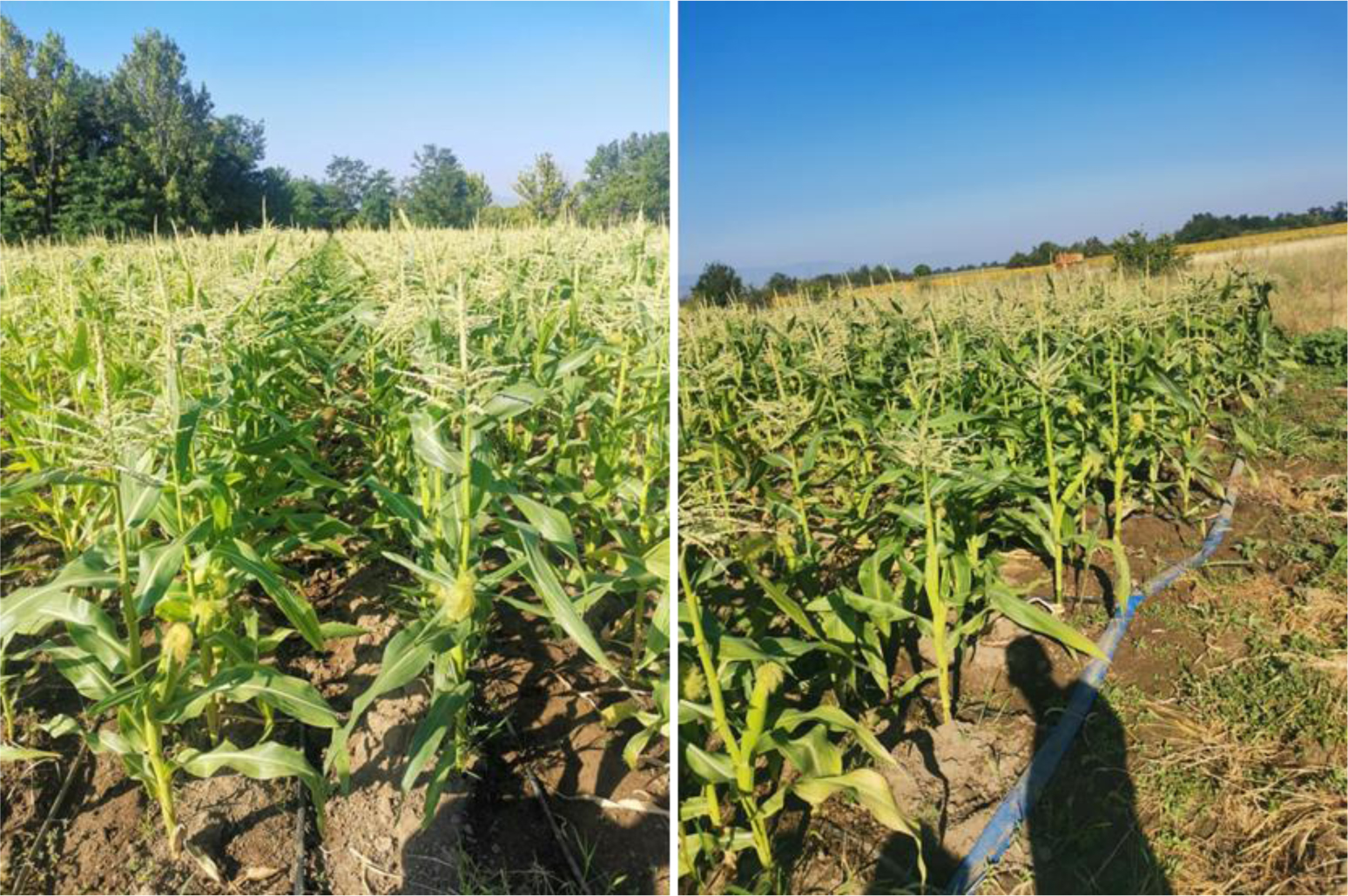
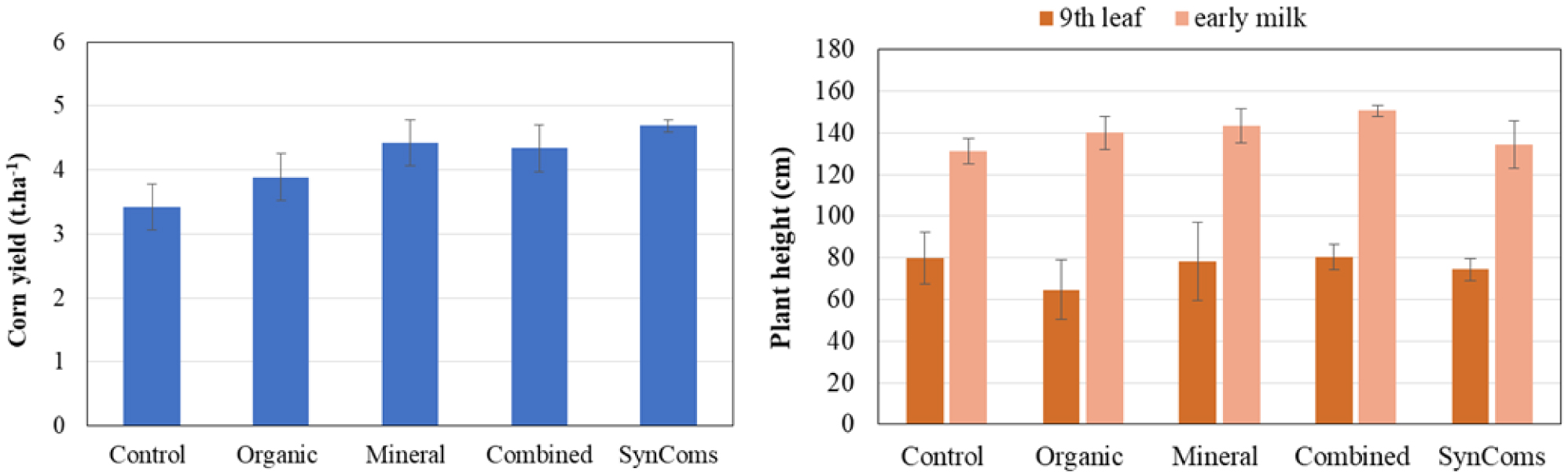
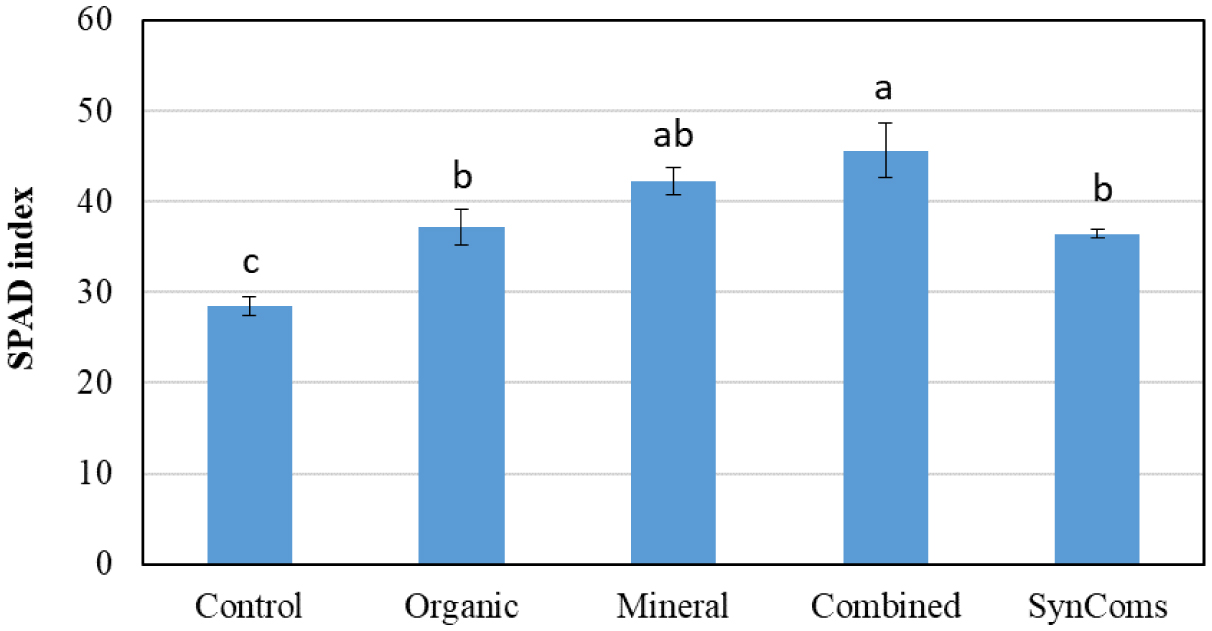
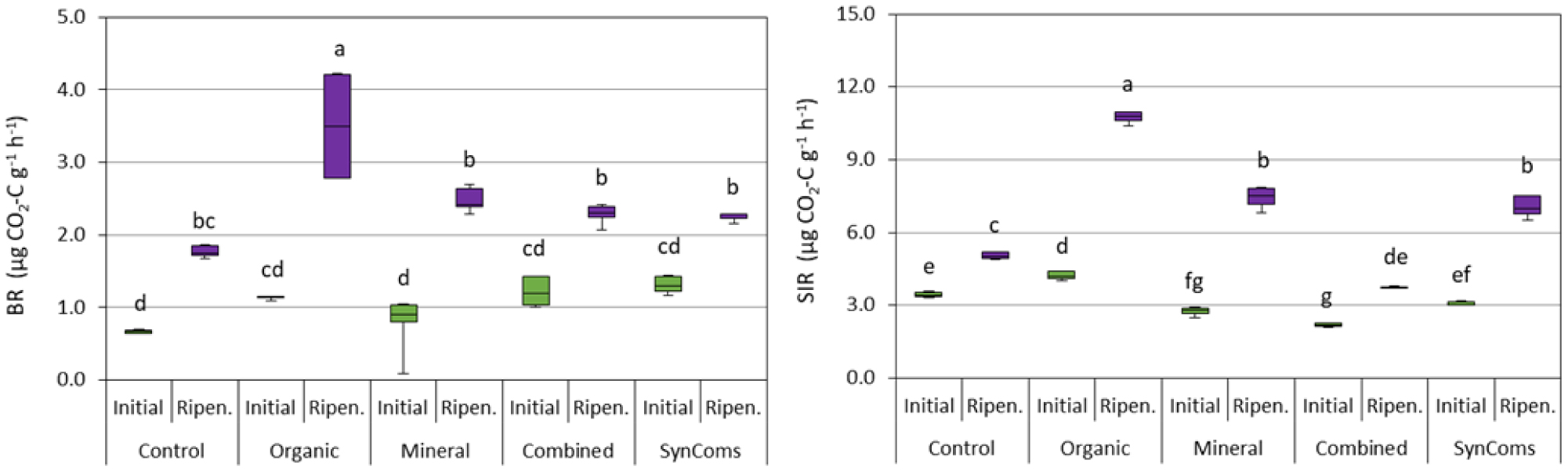
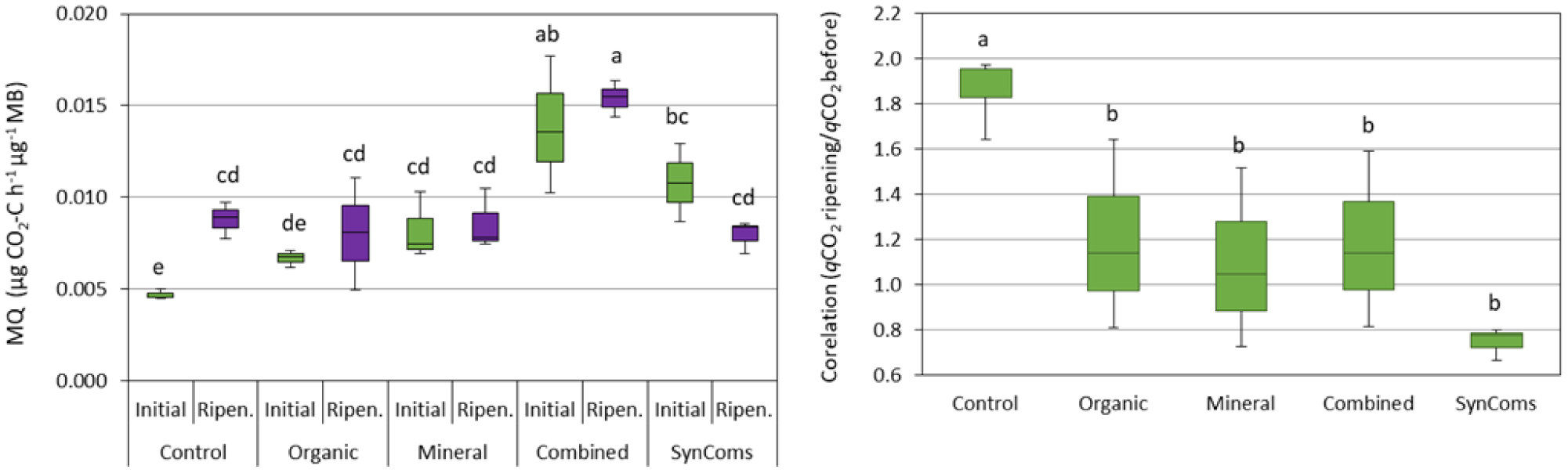
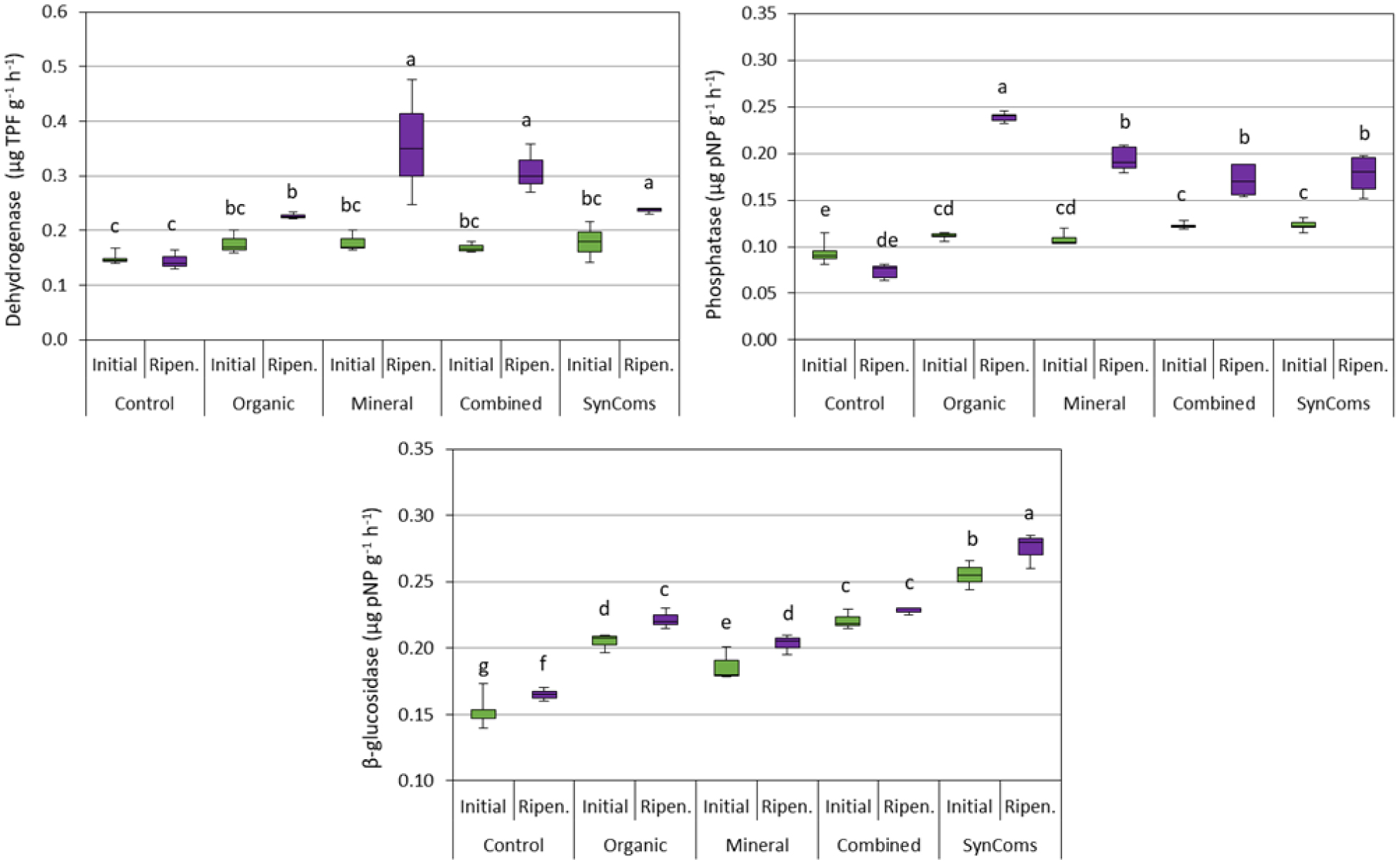
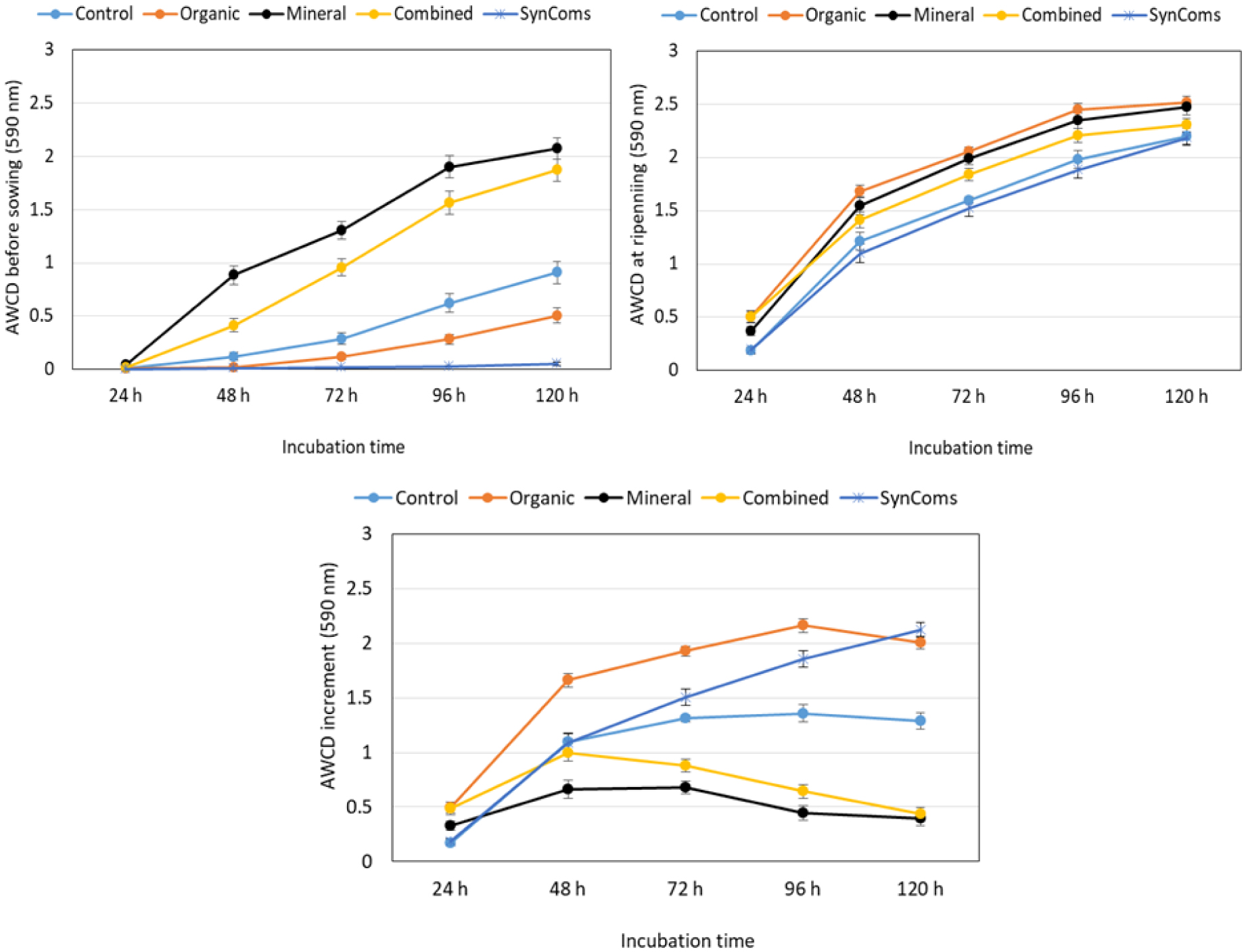
The systematic application of fertilizers and pesticides to increase crop productivity leads to depleted soils with low organic matter content, which increases greenhouse gas emissions and alters profiles of soil microbial communities. Our study investigated the effect of different types of fertilizers on the growth and yield of sweet corn (Zea mays L., var. saccharata), soil microbial community characteristics, and functional diversity. Five treatments were prepared (untreated control, application of mineral fertilizer, organic fertilizer, combined application of both, and microbial fertilizer-SynComs) with four replicates per treatment. Physicochemical soil parameters, soil carbon dioxide emissions (in situ), and physiological profiles of microbial communities were measured. The highest corn yield was found when microbial fertilizer was applied, followed by mineral and combined fertilizations. The highest microbial activity at ripening, measured by basal and substrate-induced soil respiration, was found in the organic fertilization treatment. The metabolic quotient correlation showed the highest values in the control treatment without any amendments, while the lowest data were observed when SynComs were added. Among the soil enzymes studied, mineral fertilization led to the highest dehydrogenase activity, organic fertilization to the highest phosphatase activity, and combined fertilization to the highest β-glucosidase activity. The most pronounced increase in carbon source utilization capacity between the two sampling periods was observed in the microbial fertilizer and organic variants. Current research has confirmed the excellent effects of combined solutions in agriculture, in which different approaches are applied together to reduce the environmental and climate impacts of interventions.
Citation: Teodora Tomova, Ivelina Neykova, Veselina Vasileva, Nikolay Dinev, Stefan Shilev. SynComs and organic fertilizers positively influenced rhizosphere microbial and crops characteristics of sweet corn[J]. AIMS Microbiology, 2026, 12(4): 934-952. doi: 10.3934/microbiol.2026039
The systematic application of fertilizers and pesticides to increase crop productivity leads to depleted soils with low organic matter content, which increases greenhouse gas emissions and alters profiles of soil microbial communities. Our study investigated the effect of different types of fertilizers on the growth and yield of sweet corn (Zea mays L., var. saccharata), soil microbial community characteristics, and functional diversity. Five treatments were prepared (untreated control, application of mineral fertilizer, organic fertilizer, combined application of both, and microbial fertilizer-SynComs) with four replicates per treatment. Physicochemical soil parameters, soil carbon dioxide emissions (in situ), and physiological profiles of microbial communities were measured. The highest corn yield was found when microbial fertilizer was applied, followed by mineral and combined fertilizations. The highest microbial activity at ripening, measured by basal and substrate-induced soil respiration, was found in the organic fertilization treatment. The metabolic quotient correlation showed the highest values in the control treatment without any amendments, while the lowest data were observed when SynComs were added. Among the soil enzymes studied, mineral fertilization led to the highest dehydrogenase activity, organic fertilization to the highest phosphatase activity, and combined fertilization to the highest β-glucosidase activity. The most pronounced increase in carbon source utilization capacity between the two sampling periods was observed in the microbial fertilizer and organic variants. Current research has confirmed the excellent effects of combined solutions in agriculture, in which different approaches are applied together to reduce the environmental and climate impacts of interventions.

The authors acknowledge the financial support of the Bulgarian National Science Fund under grant KP-06-N76/9.
The authors declare no conflict of interest.
Teodora Tomova: Data curation (lead), Visualization, Writing — original draft. Ivelina Neykova: Data curation, Investigation, Validation. Veselina Vasileva: Data curation, Investigation. Nikolay Dinev: Funding acquisition (lead), Supervision. Stefan Shilev: Conceptualization (lead), Methodology, Writing — original draft, Writing — review & editing, Funding acquisition.
| [1] | Tracy WF, Shuler SL, Dodson-Swenson HG (2016) The use of endosperm genes for sweet corn improvement. Plant Breeding Reviews . Hoboken: Wiley. https://doi.org/10.1002/9781119616801.ch6 |
| [2] | Bavec F, Bavec M, Fekonja M (2013) Organic and mineral nitrogen fertilizers in sweet maize (Zea mays L. saccharata Sturt.) production under temperate climate. Žemdirbyst 100: 243-250. https://doi.org/10.13080/z-a.2013.100.031 |
| [3] |
Dhaliwal DS, Williams M (2019) Optimum plant density for crowding stress tolerant processing sweet corn. Plos One 14: e0223107. https://doi.org/10.1371/journal.pone.0223107 
|
| [4] |
Gao L, Li W, Ashraf U, et al. (2020) Nitrogen fertilizer management and maize straw return modulate yield and nitrogen balance in sweet corn. Agronomy 10: 362. https://doi.org/10.3390/agronomy10030362
|
| [5] |
Chivenge P, Vanlauwe B, Six J (2011) Does the combined application of organic and mineral nutrient sources influence maize productivity? A meta-analysis. Plant Soil 342: 1-30. https://doi.org/10.1007/s11104-010-0626-5
|
| [6] |
Herencia JF, Ruíz JC, Melero S, et al. (2008) A short-term comparison of organic v. conventional agriculture in a silty loam soil using two organic amendments. J Agric Sci 146: 677-687. https://doi.org/10.1017/s0021859608008071
|
| [7] |
Zhang Q, Chen Y, Jilani G, et al. (2010) Model AVSWAT apropos of simulating non-point source pollution in Taihu lake basin. J Hazard Mater 174: 824-830. https://doi.org/10.1016/j.jhazmat.2009.09.127
|
| [8] | Arshad AM, Rawayau HY (2015) The role of organic fertilization and arbuscular mycorhizal fungi inoculation on sweet corn growth on rasau series soil. Int J Agron Agric Res 10: 9-13. https://hal.science/hal-03591079 |
| [9] | Emam M, Elsayed T, Mamdoh Mohamed Hamed L (2020) Sweet corn growth performance and rhizosphere microbial densities in response to mineral and organic amendments. Egypt J Soil Sci 60: 43-52. https://doi.org/10.21608/ejss.2019.19528.1324 |
| [10] |
Matson PA, Parton WJ, Power AG, et al. (1997) Agricultural intensification and ecosystem properties. Science 277: 504-509. https://doi.org/10.1126/science.277.5325.504
|
| [11] |
Guo P, Wang C, Jia Y, et al. (2010) Responses of soil microbial biomass and enzymatic activities to fertilizations of mixed inorganic and organic nitrogen at a subtropical forest in east China. Plant Soil 338: 355-366. https://doi.org/10.1007/s11104-010-0550-8
|
| [12] |
Zinati G, Carra JE, Das S, et al. (2025) Impact of tillage practices and arbuscular mycorrhizal fungi inoculation on organic sweet corn yield and nutritional quality. Soil Till Res 251: 106545. https://doi.org/10.1016/j.still.2025.106545
|
| [13] |
Numoto AY, Vidigal Filho PS, Scapim CA, et al. (2019) Agronomic performance and sweet corn quality as a function of inoculant doses (Azospirillum brasilense) and nitrogen fertilization management in summer harvest. Bragantia 78: 26-37. https://doi.org/10.1590/1678-4499.2018044
|
| [14] | Avşar Ö, Kolay B, Bilge U (2025) The influence of nitrogen rates on yield and some quality parameters of sweet corn (Zea mays saccharata Sturt.) growing in Diyarbakır districts of Türkiye. J Tekirdağ Agr Facul 22: 175-186. https://doi.org/10.33462/jotaf.1491888 |
| [15] | Raja V (2001) I Effect of nitrogen and plant population on yield and quality of super sweet corn (Zea mays). Indian J Agron 46: 246-249. https://doi.org/10.59797/ija.v46i2.3252 |
| [16] |
Schmid CAO, Schröder P, Armbruster M, et al. (2018) Organic amendments in a long-term field trial—consequences for the bulk soil bacterial community as revealed by network analysis. Microb Ecol 76: 226-239. https://doi.org/10.1007/s00248-017-1110-z
|
| [17] | Yaseen R, Yossif T (2019) Microbial diversity in relation to soil types and land uses of Wadi Um Ashtan basin, north-western coast, Egypt. Egypt J Soil Sci 59: 287-297. https://doi.org/10.21608/ejss.2019.14096.1282 |
| [18] | Abbott LK, Murphy DV (2007) Soil Biological Fertility: A Key to Sustainable Land Use in Agriculture. Springer 264. https://doi.org/10.1007/978-1-4020-6619-1 |
| [19] |
Nannipieri P, Ascher J, Ceccherini M T, et al. (2003) Microbial diversity and soil functions. Eur J Soil Sci 54: 655-670. https://doi.org/10.1046/j.1351-0754.2003.0556.x
|
| [20] |
Campbell CD, Chapman SJ, Cameron CM, et al. (2003) A rapid microtiter plate method to measure carbon dioxide evolved from carbon substrate amendments so as to determine the physiological profiles of soil microbial communities by using whole soil. Appl Environ Microbiol 69: 3593-3599. https://doi.org/10.1128/AEM.69.6.3593-3599.2003
|
| [21] |
Bremner JM, Keeney DR (1965) Steam distillation methods for determination of ammonium, nitrate and nitrite. Anal Chim Acta 32: 485-495. https://doi.org/10.1016/S0003-267088973-4
|
| [22] | Ivanov P (1984) A new acetate-lactate method for determining plant-available phosphorus and potassium in soil. Agr Chem 19: 88-93. |
| [23] |
Thomas GW (1996) Soil pH and soil acidity. Methods of Soil Analysis: Part 3 Chemical Methods . Madison, WI: 475-490. https://doi.org/10.2136/sssabookser5.3.c16
|
| [24] |
Rhoades JD (1996) Salinity: Electrical conductivity and total dissolved solids. Methods of Soil Analysis: Part 3—Chemical Methods . Madison, WI: 417-435. https://doi.org/10.2136/sssabookser5.3.c14
|
| [25] | Tyurin IV (1931) A new modification of the volumetric method of determining soil organic matter by means of chromic acid. Pochvovedenie 26: 36-47. |
| [26] | Alef K, Nannipieri P (1995) Methods in Applied Soil Microbiology and Biochemistry. London: Academic Press. https://doi.org/10.1016/b978-0-12-513840-6.x5014-9 |
| [27] |
Anderson JPE, Domsch KH (1978) A physiological method for the quantitative measurement of microbial biomass in soils. Soil Biol Biochem 10: 215-221. https://doi.org/10.1016/0038-071790099-8
|
| [28] | Thalmann A (1968) Zur Methodik der Bestimmung der Dehydrogenaseaktivität im Boden mittels Triphenyltetrazoliumchlorid. Landwirtsch Forsch 21: 249-258. |
| [29] | Alef K (1995) Soil respiration. Methods in Applied Soil Microbiology and Biochemistry . Academic Press 214-219. https://doi.org/10.1016/B978-0-12-513840-6.X5014-9 |
| [30] |
Eivazi F, Tabatabai MA (1977) Phosphatases in soils. Soil Biol Biochem 9: 167-172. https://doi.org/10.1016/0038-071790070-9
|
| [31] |
Tabatabai MA (1982) Soil enzymes. Methods of Soil Analysis: Part 2 — Chemical and Microbiological Properties . Madison, WI: 903-947. https://doi.org/10.2134/agronmonogr9.2.2ed.c43
|
| [32] |
Garland JL, Mills AL (1991) Classification and characterization of heterotrophic microbial communities on the basis of patterns of community-level sole-carbon-source utilization. Appl Environ Microbiol 57: 2351-2359. https://doi.org/10.1128/aem.57.8.2351-2359.1991
|
| [33] | Shilev S, Azaizeh H, Vassilev N, et al. (2022) Interactions in soil-microbe-plant system: Adaptation to stressed agriculture. Microbial Interventions in Agriculture and Environment . Singapore: Springer. https://doi.org/10.1007/978-981-13-8391-5_6 |
| [34] |
Chen L, Hao Z, Li K, et al. (2020) Effects of growth-promoting rhizobacteria on maize growth and rhizosphere microbial community under conservation tillage in northeast China. Microb Biotechnol 14: 535-550. https://doi.org/10.1111/1751-7915.13693
|
| [35] |
Amogou O, Noumavo AP, Agbodjato NA, et al. (2021) Rhizobacterial inoculation in combination with mineral fertilizer improves maize growth and yield in poor ferruginous soil in center of Benin. Biotechnologia 102: 141-155. https://doi.org/10.5114/bta.2021.106520
|
| [36] |
Dinh HT, Gagné-Bourque F, Tremblay J, et al. (2020) Plant growth-promoting rhizobacteria (PGPR) improve the growth and nutrient use efficiency in maize (Zea mays L.) under water deficit conditions. Front Plant Sci 11: 559. https://doi.org/10.3389/fpls.2020.00559
|
| [37] | PÖ.Field-based evaluation of multi-strain PGPR to improve Zea mays yield and soil nutrient dynamics in semi-arid of Türkiye. Sci Rep (2025) 15: 7643. https://doi.org/10.1038/s41598-025-07643-w |
| [38] |
Ollio I, González Rosado M, Lloret E, et al. (2025) Integrating plant growth microorganisms in potato farming reduce soil CO₂ emissions and improve crop quality. Soil Use Manage 41: e13140. https://doi.org/10.1111/sum.13140
|
| [39] |
Rashid MI, Mujawar LH, Shahzad T, et al. (2016) Bacteria and fungi can contribute to nutrients bioavailability and aggregate formation in degraded soils. Microbiol Res 183: 26-41. https://doi.org/10.1016/j.micres.2015.11.007
|
| [40] |
Zarzecka K, Gugała M, Mystkowska I, et al. (2021) The Leaf Greenness Index SPAD and selected features of potato following an application of herbicides and biostimulants. J Ecol Eng 22: 54-63. https://doi.org/10.12911/22998993/140330
|
| [41] | Dhaliwal SS, Shukla AK, Behera SK, et al. (2024) Impact of fertilization and tillage practices on transformations of carbon, essential plant nutrients and microbial biota composition in soils: a review. Technol Agron 4: e003. https://doi.org/10.48130/tia-0023-0020 |
| [42] |
Lazcano C, Gómez-Brandón M, Revilla P, et al. (2013) Short-term effects of organic and inorganic fertilizers on soil microbial community structure and function. Biol Fertil Soils 49: 723-733. https://doi.org/10.1007/s00374-013-0806-0
|
| [43] |
Grandy AS, Salam DS, Wickings K, et al. (2013) Soil respiration and litter decomposition responses to nitrogen fertilization rate in no-till corn systems. Agric Ecosyst Environ 179: 35-40. https://doi.org/10.1016/j.agee.2013.04.020
|
| [44] | Zhang X, Liu Y, Li J, et al. (2023) Response of soil basal respiration to fertilization across China's croplands. J Plant Nutr Fertil 29: 15-27. https://doi.org/10.11674/zwyf.2023015 |
| [45] | Chadwick DR, Wei J, Yan X, et al. (2021) Carbon storage potential and carbon dioxide emissions from mineral-fertilized and manured soil. Appl Sci 13: 4620. https://doi.org/10.3390/app13074620 |
| [46] |
Muhammad I, Wang J, Sainju UM, et al. (2022) Cover cropping enhances soil microbial biomass and affects microbial community structure: A meta-analysis. Geoderma 381: 114696. https://doi.org/10.1016/j.geoderma.2020.114696
|
| [47] |
Guo L, Wang C, Tong YF, et al. (2023) Short-term application of organic fertilization impacts phosphatase activity and phosphorus-mineralizing bacterial communities of bulk and rhizosphere soils of maize in acidic soil. Plant Soil 484: 95-113. https://doi.org/10.1007/s11104-022-05775-w
|
| [48] | Wang J, Yang X, Huang S, et al. (2024) Long-term combined application of organic and inorganic fertilizers increases crop yield sustainability by improving soil fertility in maize-wheat cropping systems. J Integr Agr 24: 290-305. https://doi.org/10.1016/j.jia.2024.07.003 |
| [49] |
Yang X, Yang X, Chen X, et al. (2018) Effect of organic matter on phosphorus adsorption and desorption in a black soil from northeast China. Soil Tillage Res 187: 85-91. https://doi.org/10.1016/j.still.2018.11.016
|
| [50] | Kong L, Li B, Dong Y, et al. (2024) Fertilization strategies shape rhizosphere microbial community functional diversity in maize at different growth stages. Front Microbiol 15: 1357246. https://doi.org/10.3389/fmicb.2024.1357246 |
Figures(7) / Tables(3)

Teodora Tomova, Ivelina Neykova, Veselina Vasileva, Nikolay Dinev, Stefan Shilev. SynComs and organic fertilizers positively influenced rhizosphere microbial and crops characteristics of sweet corn[J]. AIMS Microbiology, 2026, 12(4): 934-952. doi: 10.3934/microbiol.2026039





 DownLoad: