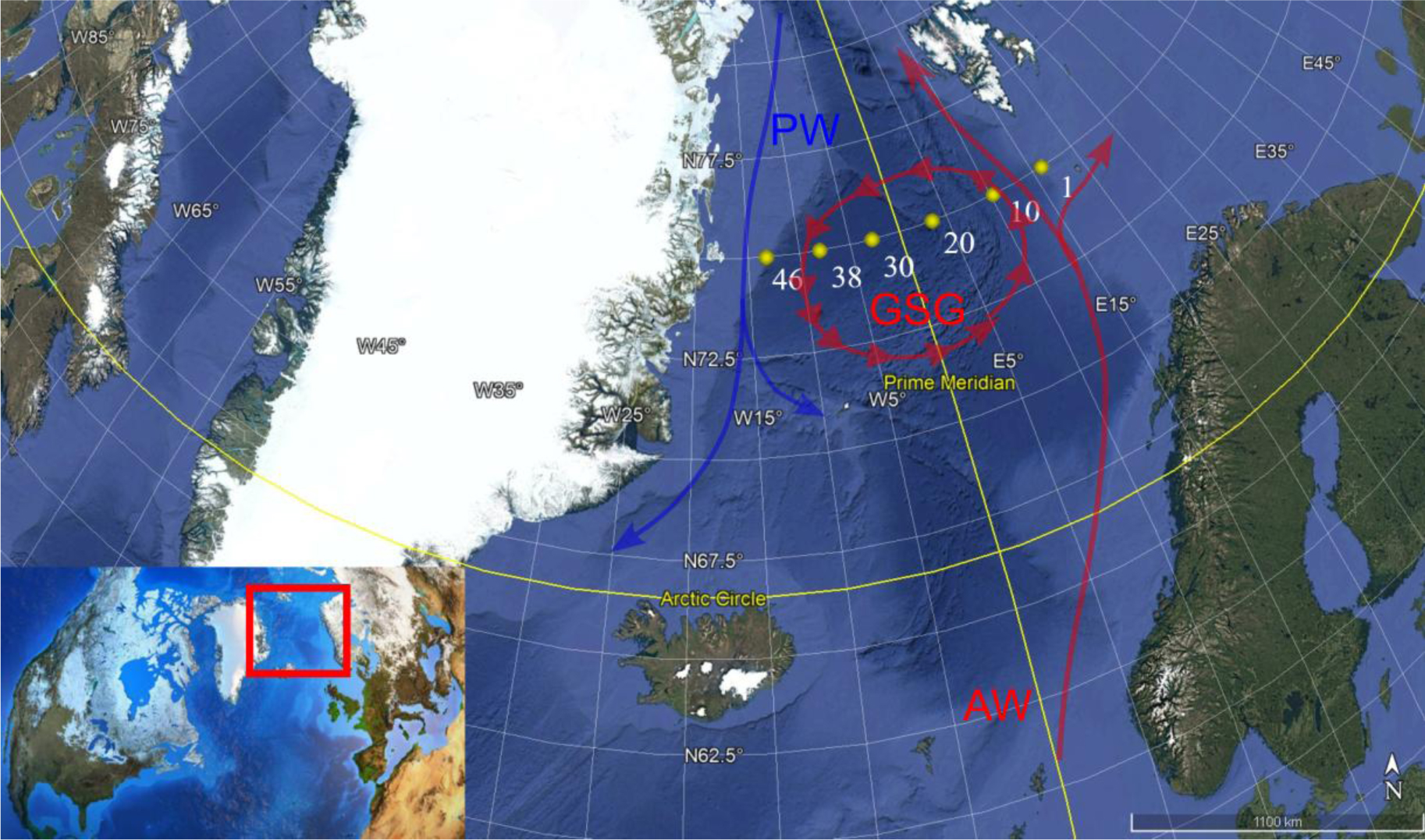
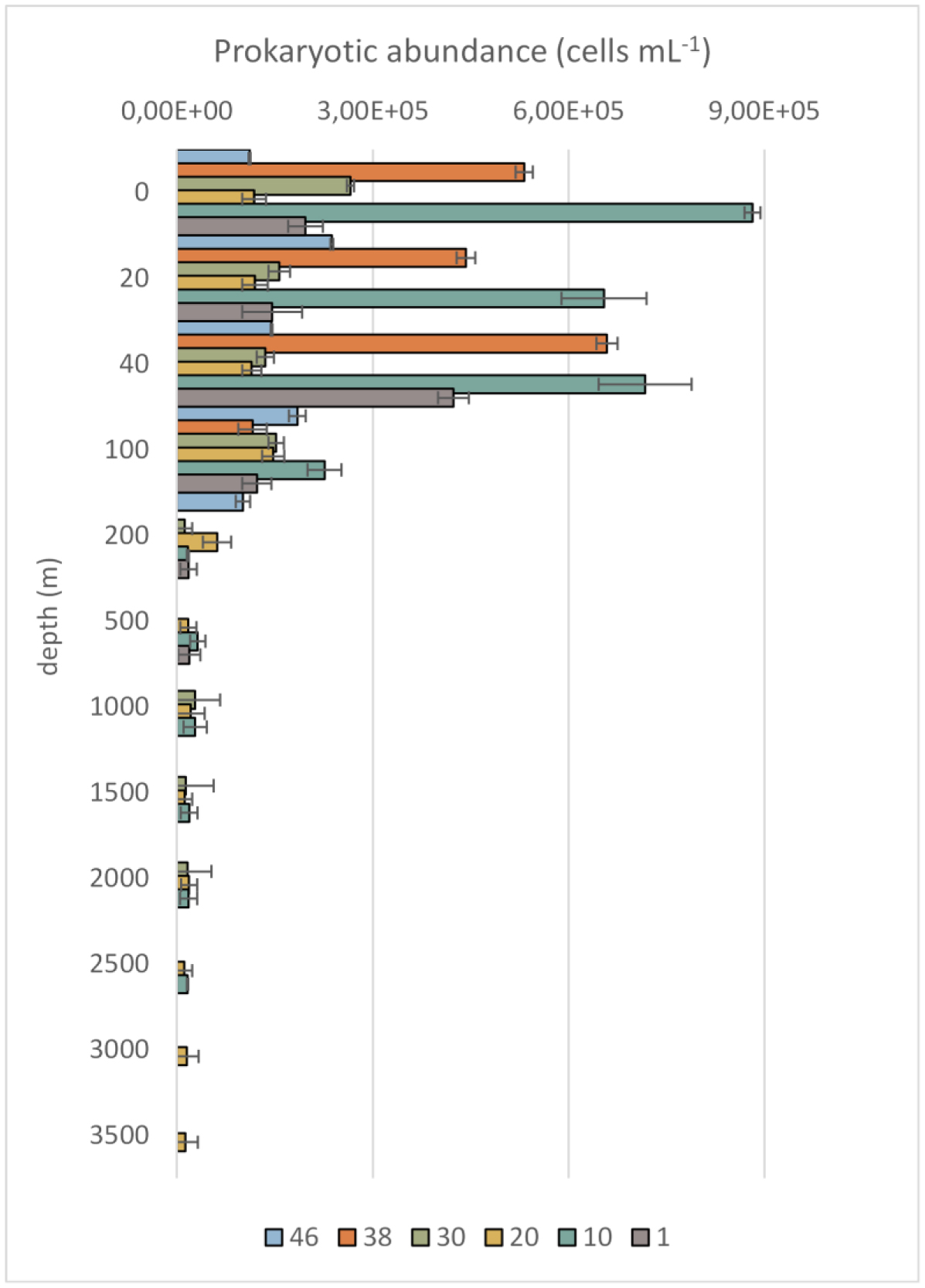
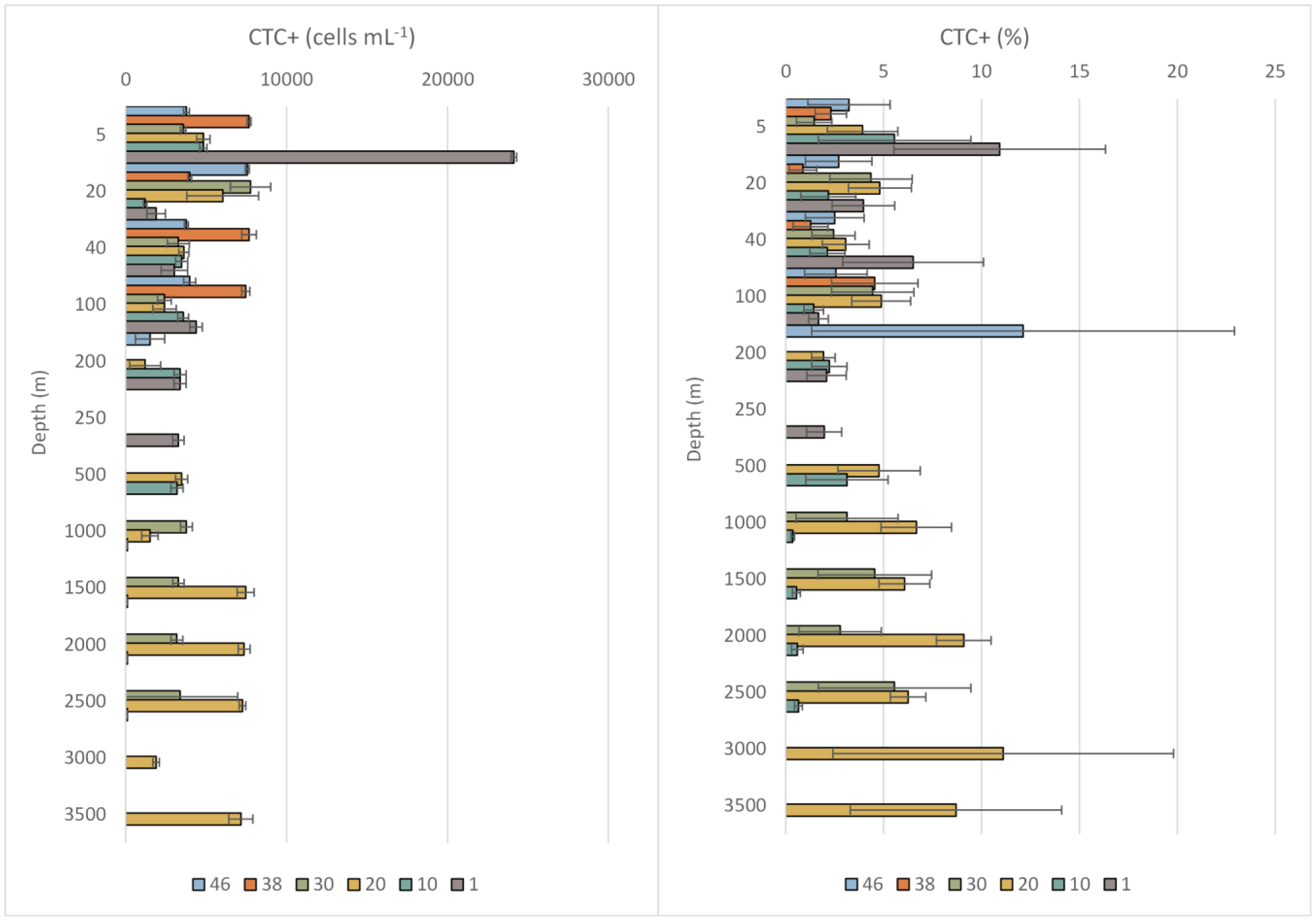
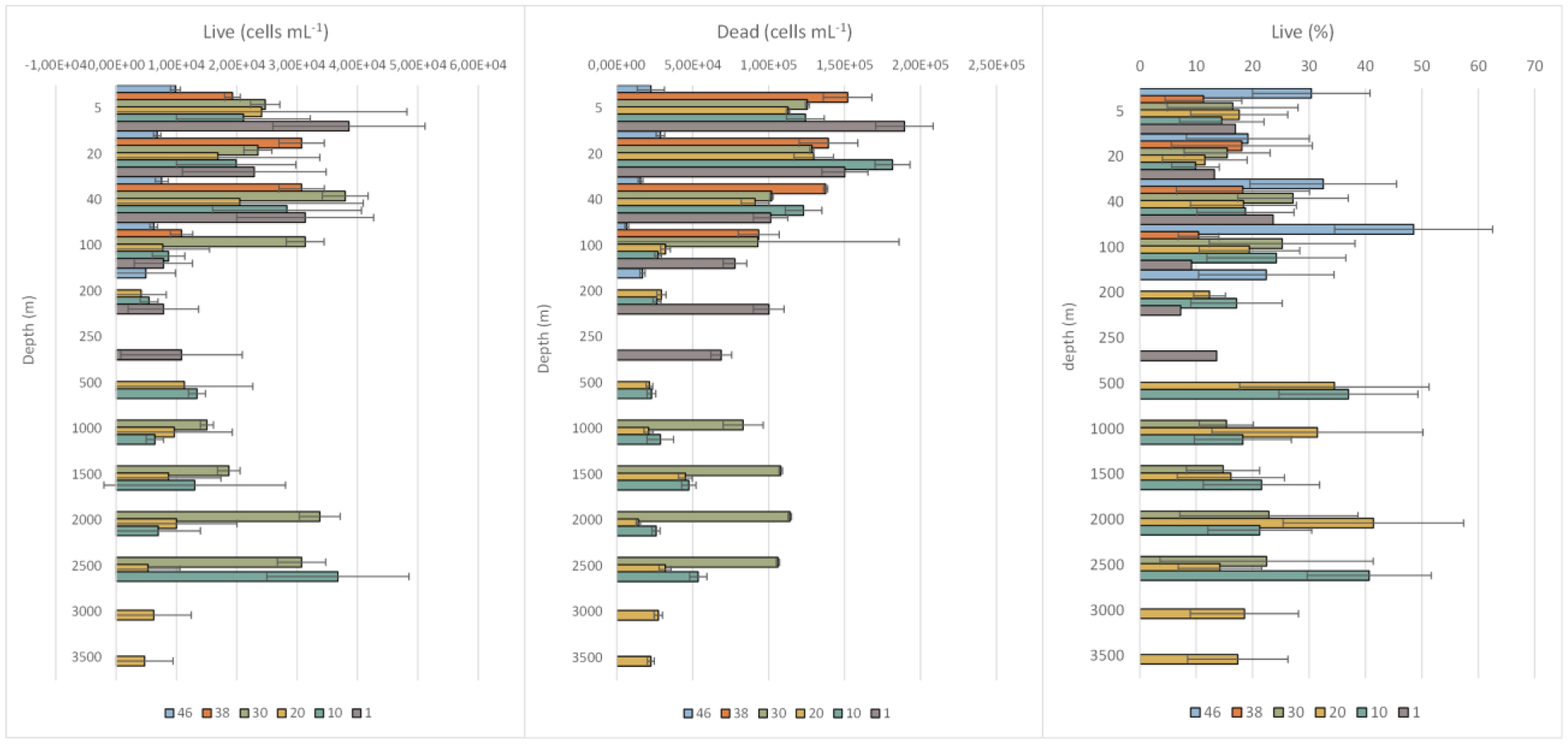
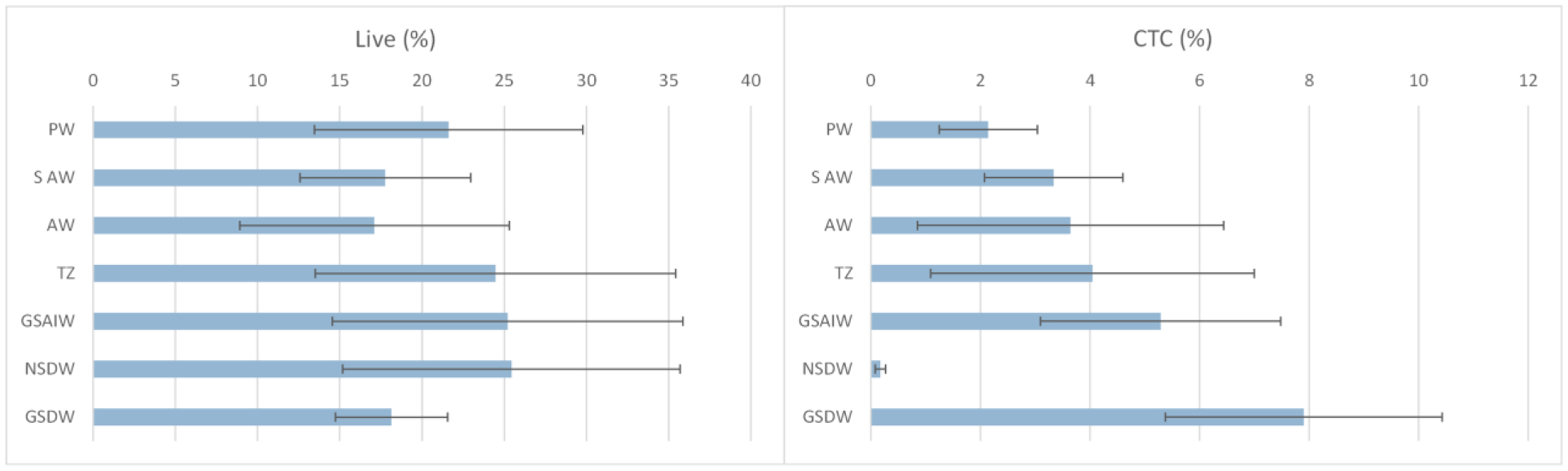
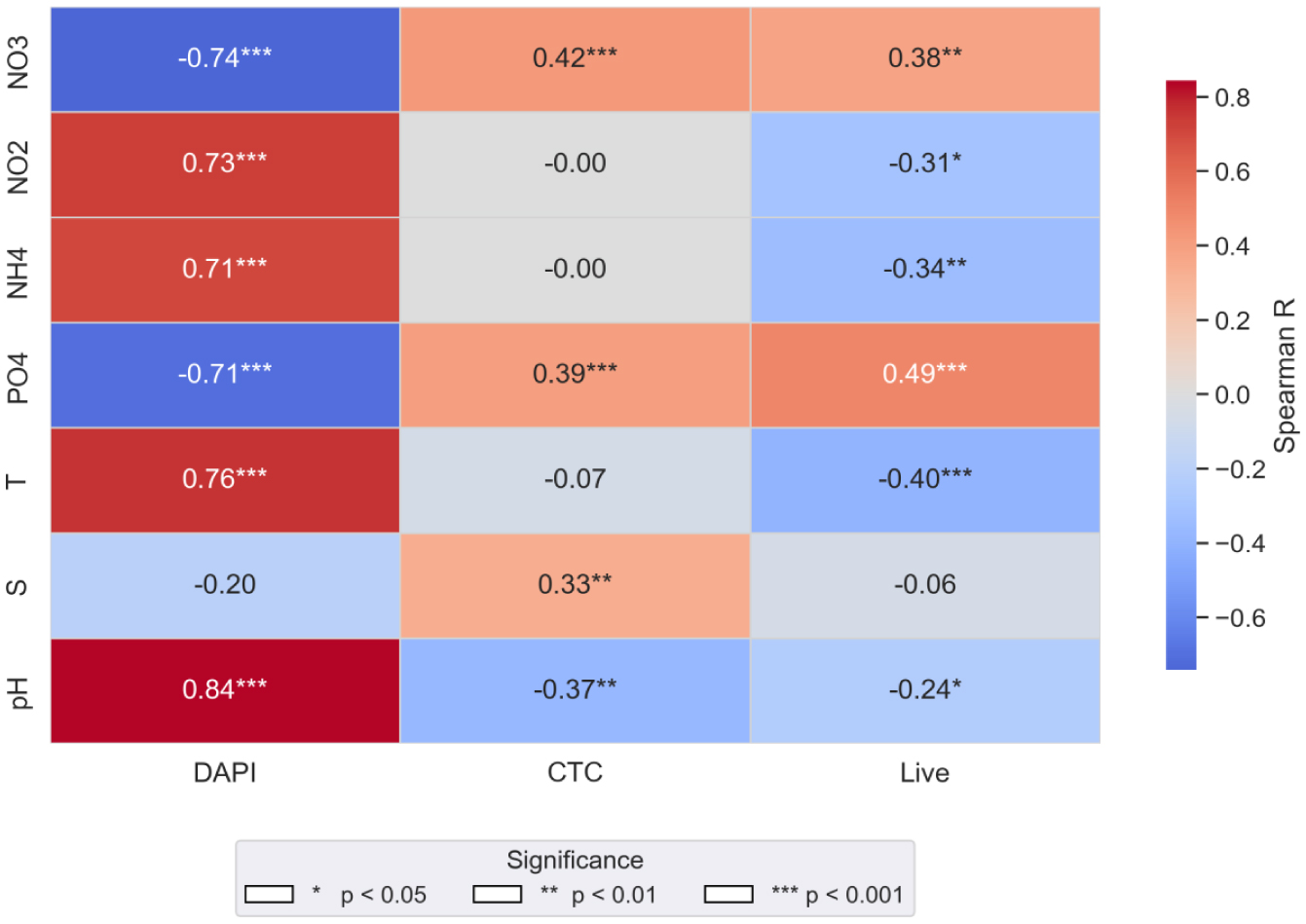
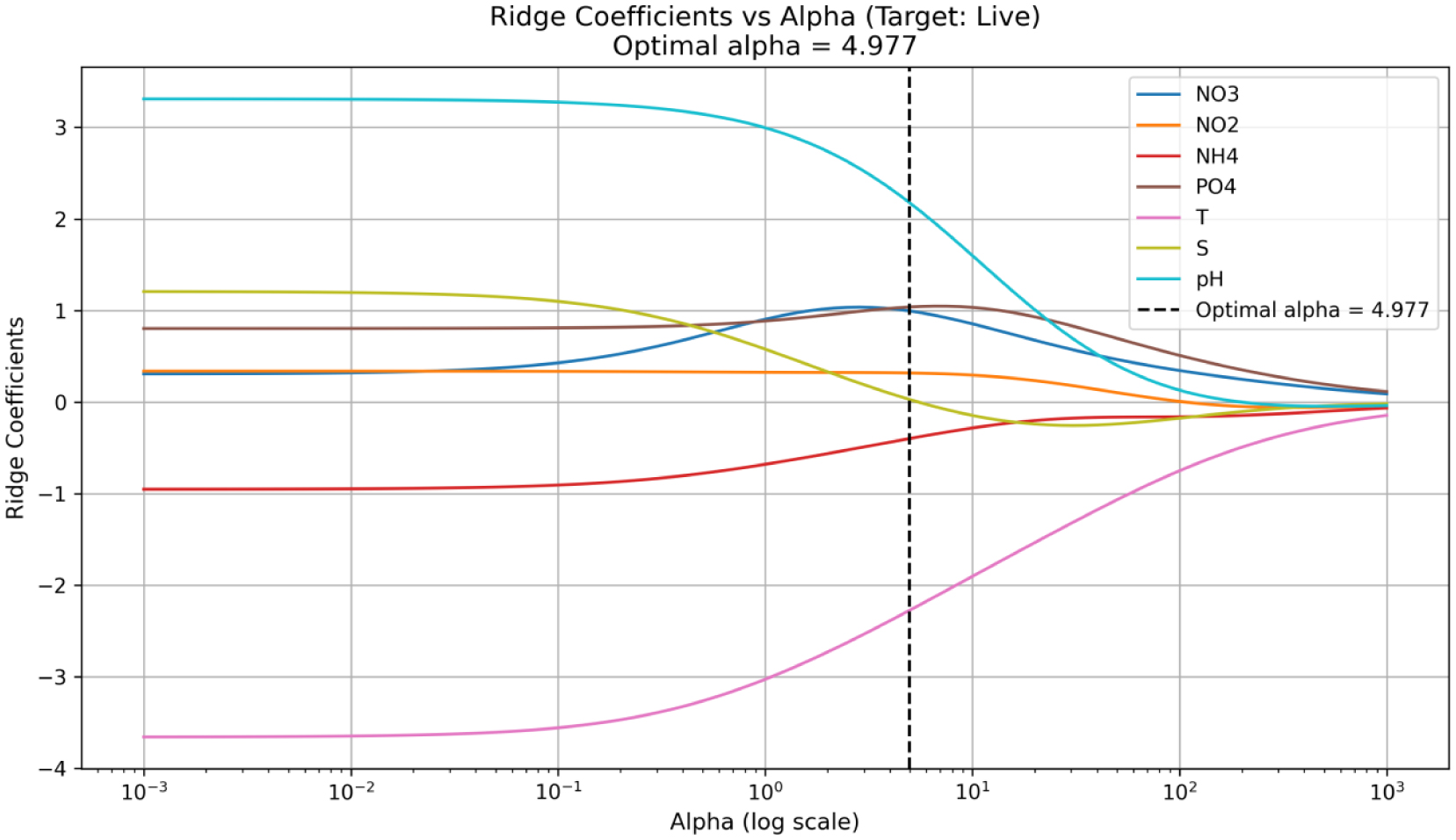
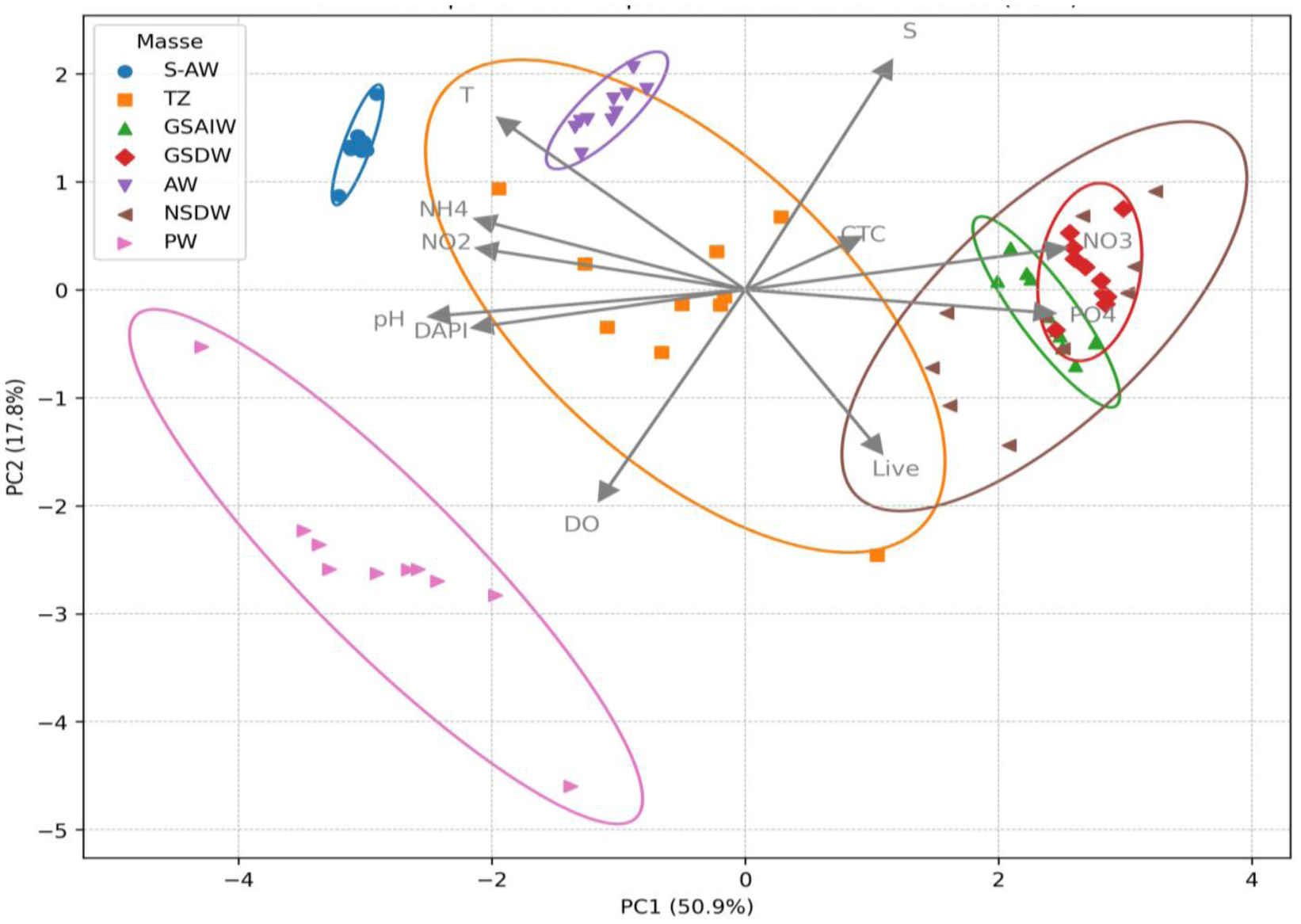
In this study, we provided the first comprehensive assessment of prokaryotic viability and respiratory activity across a 75°N transect in the Greenland Sea. Seawater samples collected during the CASSANDRA cruise (early September 2021, Italian Arctic Research Program PRA) were analyzed using LIVE/DEAD BacLight viability staining (L/D) and 5-cyano-2,3-ditolyl tetrazolium chloride (CTC) methods to quantify viable and metabolically active cells, respectively. Total prokaryotic abundance ranged between 0.13 and 8.8 × 10⁵ cells mL−1, with metabolically active (CTC+) cells accounting for 0.1–12% of the total. Viable cells accounted for 7–48% of the bacterial community, showing a significant vertical variability that increased with depth (Coefficient of variability 44%), particularly in deeper, nutrient-rich water masses such as the Greenland Sea Deep Water and the Greenland Sea Arctic Intermediate Water, occupying the deep layer (below 2500 m depth) and the intermediate layer (500–2500 m depth), respectively. Significant correlations were found between microbial parameters and environmental variables associated with different water masses, notably nutrients (nitrates and phosphates), whereas temperature showed a more complex, indirect influence. These findings highlight that the prokaryotic community inhabiting the examined transect is well adapted to this extreme marine environment, emphasizing the complex interactions of multiple environmental factors in shaping microbial community structure and activity under low-temperature conditions.
Citation: Alessandro Ciro Rappazzo, Gabriella Caruso, Alessandro Cosenza, Angelina Lo Giudice, Giovanna Maimone, Maria Papale, Manuel Bensi, Vedrana Kovacevic, Maurizio Azzaro. Prokaryotic viability and active metabolism across a Greenland Sea transect (75°N latitude)[J]. AIMS Microbiology, 2025, 11(4): 921-945. doi: 10.3934/microbiol.2025041
In this study, we provided the first comprehensive assessment of prokaryotic viability and respiratory activity across a 75°N transect in the Greenland Sea. Seawater samples collected during the CASSANDRA cruise (early September 2021, Italian Arctic Research Program PRA) were analyzed using LIVE/DEAD BacLight viability staining (L/D) and 5-cyano-2,3-ditolyl tetrazolium chloride (CTC) methods to quantify viable and metabolically active cells, respectively. Total prokaryotic abundance ranged between 0.13 and 8.8 × 10⁵ cells mL−1, with metabolically active (CTC+) cells accounting for 0.1–12% of the total. Viable cells accounted for 7–48% of the bacterial community, showing a significant vertical variability that increased with depth (Coefficient of variability 44%), particularly in deeper, nutrient-rich water masses such as the Greenland Sea Deep Water and the Greenland Sea Arctic Intermediate Water, occupying the deep layer (below 2500 m depth) and the intermediate layer (500–2500 m depth), respectively. Significant correlations were found between microbial parameters and environmental variables associated with different water masses, notably nutrients (nitrates and phosphates), whereas temperature showed a more complex, indirect influence. These findings highlight that the prokaryotic community inhabiting the examined transect is well adapted to this extreme marine environment, emphasizing the complex interactions of multiple environmental factors in shaping microbial community structure and activity under low-temperature conditions.

| [1] |
Gradinger R, Bluhm BA, Iken K (2010) Arctic sea-ice ridges—Safe havens for sea-ice fauna during periods of extreme ice melt?. Deep Sea Res II 57: 86-95. https://doi.org/10.1016/j.dsr2.2009.08.008 
|
| [2] |
Holmberg SM, Jørgensen NOG (2023) Insights into abundance, adaptation and activity of prokaryotes in Arctic and Antarctic environments. Polar Biol 46: 381-396. https://doi.org/10.1007/s00300-023-03137-5
|
| [3] |
Azam F (1998) Microbial control of oceanic carbon flux: The plot thickens. Science 280: 694-696. https://doi.org/10.1126/science.280.5364.694
|
| [4] |
Mohanrasu K, Guru Raj Rao R, Raja R, et al. (2020) Bioremediation process by marine microorganisms. Encyclopedia of Marine Biotechnology : 2211. https://doi.org/10.1002/9781119143802.ch100
|
| [5] |
Davidson AT, Thomson PG, Westwood K, et al. (2004) Estimation of bacterioplankton activity in Tasmanian coastal waters and between Tasmania and Antarctica using stains. Aquat Microb Ecol 37: 33-45. https://doi.org/10.3354/ame037033
|
| [6] | Senjarini K, Karsten U, Schumann R (2013) Application of fluorescence markers for the diagnosis of bacterial abundance and viability in aquatic ecosystem. J Microbiol Res 3: 143-147. |
| [7] |
Bouchachi N, Obernosterer I, Carpaneto Bastos C, et al. (2023) Effects of phosphorus limitation on the bioavailability of DOM released by marine heterotrophic prokaryotes. Microb Ecol 86: 1961-1971. https://doi.org/10.1007/s00248-023-02201-1
|
| [8] |
Seidel L, Sachpazidou V, Ketzer M, et al. (2023) Long-term warming modulates diversity, vertical structuring of microbial communities, and sulfate reduction in coastal Baltic Sea sediments. Front Microbiol 14: 10994445. https://doi.org/10.3389/fmicb.2023.1099445
|
| [9] |
Braissant O, Astasov-Frauenhoffer M, Waltimo T, et al. (2020) A Review of methods to determine viability, vitality, and metabolic rates in microbiology. Front Microbiol 11: 547458. https://doi.org/10.3389/fmicb.2020.547458
|
| [10] |
Paoli A, Karuza A, de Vittor C, et al. (2005) Daily variations of highly active bacteria in the Northern Adriatic Sea. J Plankton Res 28: 325-335. https://doi.org/10.1093/plankt/fbi116
|
| [11] |
Guan N, Li J, Shin Hd, et al. (2017) Microbial response to environmental stresses: From fundamental mechanisms to practical applications. Appl Microbiol Biotechnol 101: 3991-4008. https://doi.org/10.1007/s00253-017-8264-y
|
| [12] |
Perliński P, Mudryk ZJ, Zdanowicz M, et al. (2023) Abundance of live and dead bacteriopsammon inhabiting sandy ecosystems of recreational marine beaches of the Southern Baltic Sea. Microb Ecol 86: 350-363. https://doi.org/10.1007/s00248-022-02079-5
|
| [13] |
Sherr BF, del Giorgio P, Sherr EB (1999) Estimating abundance and single-cell characteristics of respiring bacteria via the redox dye CTC. Aquat Microb Ecol 18: 117-131. https://doi.org/10.3354/ame018117
|
| [14] |
Creach V, Baudoux AC, Bertru G, et al. (2002) Direct estimate of active bacteria: CTC use and limitations. J Microbiol Methods 52: 19-28. https://doi.org/10.1016/s0167-7012(02)00128-8
|
| [15] |
Servais P, Agogué H, Courties C, et al. (2001) Are the actively respiring cells (CTC+) those responsible for bacterial production in aquatic environments?. FEMS Microbiol Ecol 35: 171-179. https://doi.org/10.1111/j.1574-6941.2001.tb00801.x
|
| [16] |
Ullrich S, Karrasch B, Hoppe H, et al. (1996) Toxic effects on bacterial metabolism of the redox dye 5-cyano-2,3-ditolyl tetrazolium chloride. Appl Environ Microbiol 62: 4587-4593. https://doi.org/10.1128/aem.62.12.4587-4593.1996
|
| [17] |
Sherr EB, Sherr BF (2002) Significance of predation by protists in aquatic microbial food webs. Antonie Leeuwenhoek 81: 293-308. https://doi.org/10.1023/A:1020591307260
|
| [18] |
Chatterjee S, Raj RP, Bertino L, et al. (2018) Role of greenland sea gyre circulation on atlantic water temperature variability in the fram strait. Geophys Res Lett 45: 8399-8406. https://doi.org/10.1029/2018GL079174
|
| [19] |
Bensi, Civitarese G, Borme D, et al. (2025) The Italian contribution to the synoptic arctic survey programme: The 2021 CASSANDRA cruise (LB21) through the Greenland Sea Gyre along the 75°N transect. Earth Syst Sci Data 17: 3701-3719. https://doi.org/10.5194/essd-2025-37
|
| [20] |
Jugnia LB, Richardot M, Debroas D, et al. (2000) Variations in the number of active bacteria in the euphotic zone of a recently flooded reservoir. Aquat Microb Ecol 22: 251-259. https://doi.org/10.3354/ame022251
|
| [21] |
Schumann R, Schiever U, Karsten U, et al. (2003) Viability of bacteria from different aquatic habitats. II. Cellular fluorescent markers for membrane integrity and metabolic activity. Aquat Microb Ecol 32: 137-150. https://doi.org/10.3354/ame032137
|
| [22] |
Tam L, Kevan PG, Trevors JT (2003) Viable bacterial biomass and functional diversity in fresh and marine waters in the Canadian Arctic. Polar Biol 26: 287-294. https://doi.org/10.1007/s00300-002-0474-8
|
| [23] |
Romanova ND, Boltenkova MA, Polukhin AA, et al. (2022) Heterotrophic bacteria of the Ob river estuary during growing season: Spatial and temporal variability. Oceanology 62: 369-378. https://doi.org/10.1134/S0001437022030109
|
| [24] |
Dayal A, Hodson A, Šabacká M, et al. (2024) Seasonal changes in the viability and abundance of bacterial cells in the snowpack ecosystem of a High Arctic ice cap. Arct Antarct Alp Res 56: 2407711. https://doi.org/10.1080/15230430.2024.2407711
|
| [25] | Bensi M, Kovacevic V, Mansutti P CTD (DOWNCAST) LB21 ARCTIC Cruise Italian Arctic project CASSANDRA (2024). Available from: https://doi.org/10.71761/C082C3CA-40BF-42B1-A61A-7B3697AB2C5A |
| [26] |
Porter KG, Feig YS (1980) The use of DAPI for identifying and counting aquatic microflora. Limnol Oceanogr 25: 943-948. https://doi.org/10.4319/lo.1980.25.5.0943
|
| [27] |
La Ferla R, Azzaro M, Michaud L, et al. (2017) Prokaryotic abundance and activity in permafrost of the Northern Victoria Land and Upper Victoria Valley (Antarctica). Microb Ecol 74: 402-415. https://doi.org/10.1007/s00248-017-0955-5
|
| [28] |
Maimone G, Giudice AL, Papale M, et al. (2025) Morphological traits of prokaryoplankton across an Atlantic subarctic marine transect. Polar Biol 48: 85. https://doi.org/10.1007/s00300-025-03404-7
|
| [29] | Tammert H, Olli K, Sturluson M, et al. (2008) Bacterial biomass and activity in the marginal ice zone of the northern Barents Sea. Deep-Sea Res II 55: 2199-2209. https://doi.org/10.1016/j.dsr 008.05.011 |
| [30] |
Bezzubova EM, Seliverstova AM, Zamyatin IA, et al. (2020) Heterotrophic bacterioplankton of the laptev and east Siberian sea shelf affected by freshwater inflow areas. Oceanology 60: 62-73. https://doi.org/10.1134/S0001437020010026
|
| [31] |
Bezzubova EM, Romanova ND, Kodryan KV, et al. (2023) Data on the heterotrophic bacterioplankton and concurrent environmental characteristics in the outer shelf and slope area of the Laptev Sea (Arctic Ocean). Data in Brief 51: 109697. https://doi.org/10.1016/j.dib.2023.109697
|
| [32] |
Cardozo-Mino MG, Fadeev E, Salman-Carvalho V, et al. (2021) Spatial distribution of arctic bacterioplankton abundance is linked to distinct water masses and summertime phytoplankton bloom dynamics (fram strait, 79°N). Front Microbiol 10: 658803. https://doi.org/10.3389/fmicb.2021.658803
|
| [33] |
Howard-Jones MH, Ballard VD, Allen AE, et al. (2002) Distribution of bacterial biomass and activity in the marginal ice zone of the central Barents Sea during summer. J Mar Syst 38: 77-91. https://doi.org/10.1016/S0924-7963(02)00170-7
|
| [34] |
Venger MP, Dvoretsky VG, Vashchenko AV, et al. (2023) Prokaryotic plankton and viruses in the waters of the fram strait in the winter period. Russ J Mar Biol 49: 461-468. https://doi.org/10.1134/S106307402306010X
|
| [35] |
Kalinowska A, Ameryk A, Jankowska K (2015) Microbiological survey in two arctic fjords: Total bacterial number and biomass comparison of hornsund and Kongsfjorden. Impact of Climate Changes on Marine Environments . Switzerland: Springer 115-126. https://doi.org/10.1007/978-3-319-14283-8_9
|
| [36] |
Caruso G, Madonia A, Bonamano S, et al. (2020) Microbial abundance and enzyme activity patterns: Response to changing environmental characteristics along a transect in Kongsfjorden (Svalbard islands). J Mar Sci Eng 8: 824. https://doi.org/10.3390/jmse8100824
|
| [37] |
Caruso G, Mancuso M, Crisafi E (2003) Combined fluorescent antibody assay and viability staining for the assessment of the physiological states of Escherichia coli in seawaters. J Appl Microbiol 95: 225-233. https://doi.org/10.1046/j.1365-2672.2003.01967.x
|
| [38] |
Posch T, Pernthaler J, Alfreider A, et al. (1997) Cell-specific respiratory activity of aquatic bacteria studied with the tetrazolium reduction method, cyto-clear slides, and image analysis. Appl Environ Microbiol 63: 867-873. https://doi.org/10.1128/aem.63.3.867-873.1997
|
| [39] |
Choi JW, Sherr BF, Sherr EB (1999) Dead or alive? A large fraction of ETS-inactive marine bacterioplankton cells, as assessed by reduction of CTC, can become ETS-active with incubation and substrate addition. Aquat Microb Ecol 18: 105-115. https://doi.org/10.3354/ame018105
|
| [40] |
Price PB, Sowers T (2004) Temperature dependence of metabolic rates for microbial growth, maintenance, and survival. Proc Natl Acad Sci 101: 4631. https://doi.org/10.1073/pnas.0400522101
|
| [41] |
De Maayer P, Anderson D, Cary C, et al. (2014) Some like it cold: understanding the survival strategies of psychrophiles. EMBO Rep 15: 508-517. https://doi.org/10.1002/embr.201338170
|
| [42] |
Caruso G, Rizzo C (2025) Cryosphere microbial communities as a reservoir of hidden risks to human and ecosystem's health. Microbiol Res 299: 128261. https://doi.org/10.1016/j.micres.2025.128261
|
| [43] |
Smith EM (1998) Coherence of microbial respiration rate and cell-specific bacterial activity in a coastal planktonic community. Aquat Microb Ecol 16: 27-35. https://doi.org/10.3354/ame016027
|
| [44] | Perliński P, Mudryk ZJ (2017) Abundance of live and dead cells of bacterioneuston and bacterioplankton from the Słupia River estuary. Balt Coast Zone 21: 61-72. |
| [45] |
Galand PE, Potvin M, Casamayor EO, et al. (2010) Hydrography shapes bacterial biogeography of the deep Arctic Ocean. ISME J 4: 564-576. https://doi.org/10.1038/ismej.2009.134
|
| [46] |
Zampino D, Zaccone R, La Ferla R (2004) Determination of living and active baterioplankton: A comparison of methods. Chem Ecol 20: 411-422. https://doi.org/10.1080/02757540410001728007
|
| [47] |
Dal Bello M, Abreu CI (2024) Temperature structuring of microbial communities on a global scale. Curr Opin Microbiol 82: 102558. https://doi.org/10.1016/j.mib.2024.102558
|
| [48] | Nguyen TT, Landfald B (2015) Polar front associated variation in prokaryotic community structure in Arctic shelf seafloor. Front Microbiol 6. https://doi.org/10.3389/fmicb.2015.00017 |
| [49] |
Vipindas PV, Venkatachalam S, Jabir T, et al. (2022) Water mass controlled vertical stratification of bacterial and archaeal communities in the western arctic ocean during summer sea-ice melting. Microb Ecol 85: 1150. https://doi.org/10.1007/s00248-022-01992-z
|
| [50] |
D'Amico S, Collins T, Marx JC, et al. (2006) Psychrophilic microorganisms: Challenges for life. EMBO Rep 7: 385-389. https://doi.org/10.1038/sj.embor.7400662
|
| [51] |
Tribelli PM, López NI (2018) Reporting key features in cold-adapted bacteria. Life 8: 8. https://doi.org/10.3390/life8010008
|
| [52] |
Egli T (2010) How to live at very low substrate concentration. Water Res 44: 4826. https://doi.org/10.1016/j.watres.2010.07.023
|
| [53] | Azzaro M, Bensi M, Civitarese G, et al. (2024) CTD (data from NISKIN Bottles) LB21 ARCTIC Cruise 673 Italian Arctic project CASSANDRA [Data set]. ISP-CNR . https://doi.org/10.71761/F7474404- 674 3331-43E5-883B-25755E94956D |
 microbiol-11-04-041-s001.pdf microbiol-11-04-041-s001.pdf |
 |
Figures(8) / Tables(3)

Alessandro Ciro Rappazzo, Gabriella Caruso, Alessandro Cosenza, Angelina Lo Giudice, Giovanna Maimone, Maria Papale, Manuel Bensi, Vedrana Kovacevic, Maurizio Azzaro. Prokaryotic viability and active metabolism across a Greenland Sea transect (75°N latitude)[J]. AIMS Microbiology, 2025, 11(4): 921-945. doi: 10.3934/microbiol.2025041




 DownLoad: