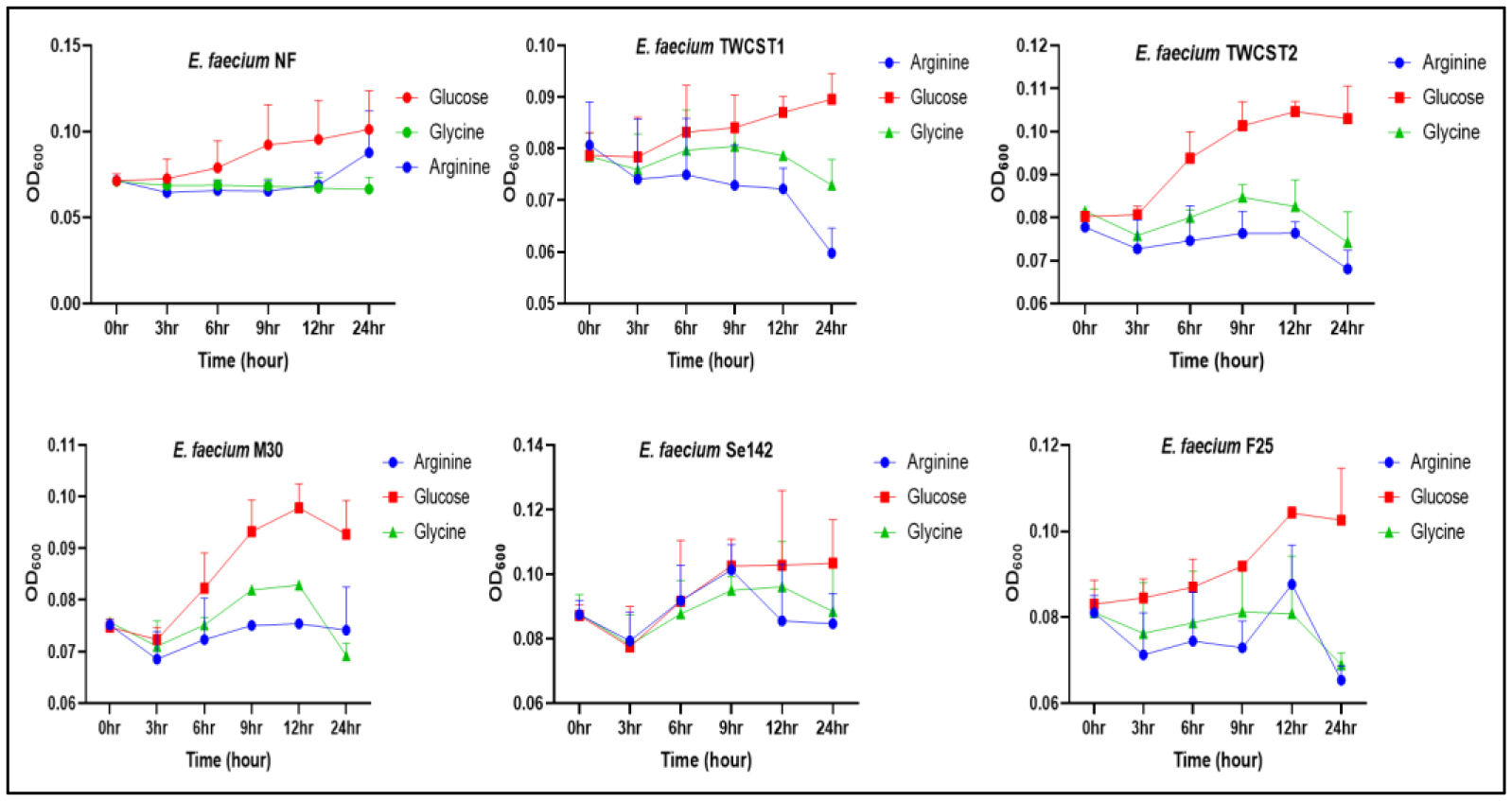
The emergence and applications of probiotic species across industries are growing rapidly, requiring the isolation, identification, and robust characterization of new strains. Enterococcus faecium, a dominant species of the genus Enterococcus, is widely distributed and has a prominent role in biotechnological applications. The probiotic potential of E. faecium is well established, and various strains have been commercially available. In this study, we aimed to provide a strategic road map to explore the probiotic potential, postbiotic production, antioxidant activities, aggregation properties, and functional characterization of the selected E. faecium strains (n = 6) isolated locally. All selected strains demonstrated significant probiotic potential, with stress tolerance, aggregation, and postbiotic production. They were free from biogenic amines while exhibiting notable free radical scavenging and reducing activities. Additionally, their ability to adhere to fibrinogen and mucin indicates enhanced potential for mucosal colonization, competitive exclusion of pathogens, and improved host interaction. All strains tolerated digestive stress, two strains (E. faecium Se142 and E. faecium F25) produced slime, and all exhibited antioxidant activity. The influence of digestive enzymes on enterocins, the production of arginine hydrolases, and the impact of glycine, arginine, and glucose on their growth performance reflected positive attributes. These attributes indicate their potential as ideal candidates for developing new probiotic formulations, with intended food and biotechnological applications. In the future, genomic and in vivo validation studies are warranted.
Citation: Abrar Hussain, Muhammad Tanweer Khan, Syed Abid Ali. Postbiotic production, aggregation properties, binding potential, antioxidants capacity, and functional characterization of the lead Enterococcus faecium probiotic strains[J]. AIMS Microbiology, 2025, 11(4): 821-854. doi: 10.3934/microbiol.2025035
The emergence and applications of probiotic species across industries are growing rapidly, requiring the isolation, identification, and robust characterization of new strains. Enterococcus faecium, a dominant species of the genus Enterococcus, is widely distributed and has a prominent role in biotechnological applications. The probiotic potential of E. faecium is well established, and various strains have been commercially available. In this study, we aimed to provide a strategic road map to explore the probiotic potential, postbiotic production, antioxidant activities, aggregation properties, and functional characterization of the selected E. faecium strains (n = 6) isolated locally. All selected strains demonstrated significant probiotic potential, with stress tolerance, aggregation, and postbiotic production. They were free from biogenic amines while exhibiting notable free radical scavenging and reducing activities. Additionally, their ability to adhere to fibrinogen and mucin indicates enhanced potential for mucosal colonization, competitive exclusion of pathogens, and improved host interaction. All strains tolerated digestive stress, two strains (E. faecium Se142 and E. faecium F25) produced slime, and all exhibited antioxidant activity. The influence of digestive enzymes on enterocins, the production of arginine hydrolases, and the impact of glycine, arginine, and glucose on their growth performance reflected positive attributes. These attributes indicate their potential as ideal candidates for developing new probiotic formulations, with intended food and biotechnological applications. In the future, genomic and in vivo validation studies are warranted.

| [1] |
Hussain A, Shakeel M, Khan MT, et al. (2025) Probiotic potential and biotechnological characterization of the selected enterococcal strains. Food Biosci 63: 105792. https://doi.org/10.1016/j.fbio.2024.105792 
|
| [2] |
Hill C, Guarner F, Reid G, et al. (2014) The international scientific association for probiotics and prebiotics consensus statement oWen the scope and appropriate use of the term probiotic. Nat Rev Gastroenterol Hepatol 11: 506-514. https://doi.org/10.1038/nrgastro.2014.66
|
| [3] |
Das TK, Pradhan S, Chakrabarti S, et al. (2022) Current status of probiotic and related health benefits. Appl Food Res 2: 100185. https://doi.org/10.1016/j.afres.2022.100185
|
| [4] |
Latif A, Shehzad A, Niazi S, et al. (2023) Probiotics: mechanism of action, health benefits and their application in food industries. Front Microbiol 14. https://doi.org/10.3389/fmicb.2023.1216674
|
| [5] |
Fuochi V, Furneri PM (2023) Applications of probiotics and their potential health benefits. Int J Mol Sci 24: 15915. https://doi.org/10.3390/ijms242115915
|
| [6] |
Singh RP, Shadan A, Ma Y (2022) Biotechnological applications of probiotics: A multifarious weapon to disease and metabolic abnormality. Probiotics Antimicrob Proteins 14: 1184-1210. https://doi.org/10.1007/s12602-022-09992-8
|
| [7] |
H. Panda S, Khanna Goli J, Das S, et al. (2017) Production, optimization and probiotic characterization of potential lactic acid bacteria producing siderophores. AIMS Microbiol 3: 88-107. https://doi.org/10.3934/microbiol.2017.1.88
|
| [8] |
Nakagawa H, Miyazaki T (2017) Beneficial effects of antioxidative lactic acid bacteria. AIMS Microbiol 3: 1-7. https://doi.org/10.3934/microbiol.2017.1.1
|
| [9] | Hussain A, Abid Ali S (2024) Exploring enterococcus species for their next-generation probiotics potential. Probiotics, Prebiotics, and Postbiotics in Human Health and Sustainable Food Systems . IntechOpen. http://dx.doi.org/10.5772/intechopen.1007306 |
| [10] | Hussain A, Abid Ali S (2025) The emergence and prevalence of antibiotic resistance in genus enterococcus and their implications on probiotics. Antimicrobial Resistance-New Insights . IntechOpen. http://dx.doi.org/10.5772/intechopen.1009648 |
| [11] |
Rehman M, Hasan KA, Bin-Asif H, et al. (2021) Differentiating Enterococcus lineages in combined sewer overflow and potable water combating to hospital acquired high-level β-lactam resistance. Environ Challenges 4: 100094. https://doi.org/10.1016/j.envc.2021.100094
|
| [12] |
Hussain A, Akram S, Ahmad D, et al. (2025) Molecular assessment and validation of the selected enterococcal strains as probiotics. Probiotics Antimicrob Proteins 17: 378-392. https://doi.org/10.1007/s12602-023-10163-6
|
| [13] | Khoso A, Hussain A, Rehman M, et al. (2024) Molecular assessments of antimicrobial protein enterocins and quorum sensing genes and their role in virulence of the genus enterococcus. Probiotics Antimicrob Proteins 1–12. https://doi.org/10.1007/s12602-024-10278-4 |
| [14] |
García-Solache M, Rice LB (2019) The Enterococcus: a model of adaptability to its environment. Clin Microbiol Rev 32. https://doi.org/10.1128/CMR.00058-18
|
| [15] |
Hanchi H, Mottawea W, Sebei K, et al. (2018) The genus Enterococcus: Between probiotic potential and safety concerns-an update. Front Microbiol 9: 1-16. https://doi.org/10.3389/fmicb.2018.01791
|
| [16] |
Krawczyk B, Wityk P, Gałęcka M, et al. (2021) The many faces of Enterococcus spp.—commensal, probiotic and opportunistic pathogen. Microorganisms 9: 1900. https://doi.org/10.3390/microorganisms9091900
|
| [17] |
Brinkwirth S, Ayobami O, Eckmanns T, et al. (2021) Hospital-acquired infections caused by enterococci: a systematic review and meta-analysis, WHO European Region, 1 January 2010 to 4 February 2020. Eurosurveillance 26: 1-16. https://doi.org/10.2807/1560-7917.ES.2021.26.45.2001628
|
| [18] |
Foulquié Moreno MR, Sarantinopoulos P, Tsakalidou E, et al. (2006) The role and application of enterococci in food and health. Int J Food Microbiol 106: 1-24. https://doi.org/10.1016/j.ijfoodmicro.2005.06.026
|
| [19] |
Beukers AG, Zaheer R, Goji N, et al. (2017) Comparative genomics of Enterococcus spp. isolated from bovine feces. BMC Microbiol 17: 52. https://doi.org/10.1186/s12866-017-0962-1
|
| [20] |
Hasan KA, Ali SA, Rehman M, et al. (2018) The unravelled Enterococcus faecalis zoonotic superbugs: Emerging multiple resistant and virulent lineages isolated from poultry environment. Zoonoses Public Health 65: 921-935. https://doi.org/10.1111/zph.12512
|
| [21] |
Kouidhi B, Zmantar T, Mahdouani K, et al. (2011) Antibiotic resistance and adhesion properties of oral Enterococci associated to dental caries. BMC Microbiol 11: 155. https://doi.org/10.1186/1471-2180-11-155
|
| [22] |
Nami Y, Bakhshayesh RV, Jalaly HM, et al. (2019) Probiotic properties of enterococcus isolated from artisanal dairy products. Front Microbiol 10: 1-13. https://doi.org/10.3389/fmicb.2019.00300
|
| [23] |
Kavitha M, Raja M, Perumal P (2018) Evaluation of probiotic potential of Bacillus spp. isolated from the digestive tract of freshwater fish Labeo calbasu (Hamilton, 1822). Aquac Reports 11: 59-69. https://doi.org/10.1016/j.aqrep.2018.07.001
|
| [24] | Ilesanmi OI, Adekunle AE, Omolaiye JA, et al. (2020) Isolation, optimization and molecular characterization of lipase producing bacteria from contaminated soil. Sci African 8: e00279. https://doi.org/10.1016/j.sciaf.2020.e00279 |
| [25] |
Omar N Ben, Castro A, Lucas R, et al. (2004) Functional and safety aspects of Enterococci isolated from different spanish foods. Syst Appl Microbiol 27: 118-130. https://doi.org/10.1078/0723-2020-00248
|
| [26] |
Vasudha M, Prashantkumar C, Bellurkar M, et al. (2023) Probiotic potential of β-galactosidase-producing lactic acid bacteria from fermented milk and their molecular characterization. Biomed Reports 18: 23. https://doi.org/10.3892/br.2023.1605
|
| [27] |
Ali SA, Hasan KA, Bin Asif H, et al. (2014) Environmental enterococci: I. Prevalence of virulence, antibiotic resistance and species distribution in poultry and its related environment in Karachi, Pakistan. Lett Appl Microbiol 58: 423-432. https://doi.org/10.1111/lam.12208
|
| [28] |
Cebrián R, Baños A, Valdivia E, et al. (2012) Characterization of functional, safety, and probiotic properties of Enterococcus faecalis UGRA10, a new AS-48-producer strain. Food Microbiol 30: 59-67. https://doi.org/10.1016/j.fm.2011.12.002
|
| [29] | Kim S, Lee JY, Jeong Y, et al. (2022) Antioxidant activity and probiotic properties of lactic acid bacteria. Fermentation 8. https://doi.org/10.3390/fermentation8010029 |
| [30] |
Wu D, Li H, Wang X, et al. (2025) Screening and whole-genome analysis of probiotic lactic acid bacteria with potential antioxidants from Yak Milk and Dairy Products in the Qinghai–Tibet Plateau. Antioxidants 14: 173. https://doi.org/10.3390/antiox14020173
|
| [31] |
Lau LYJ, Quek SY (2024) Probiotics: Health benefits, food application, and colonization in the human gastrointestinal tract. Food Bioeng 3: 41-64. https://doi.org/10.1002/fbe2.12078
|
| [32] |
Collado MC, Meriluoto J, Salminen S (2008) Adhesion and aggregation properties of probiotic and pathogen strains. Eur Food Res Technol 226: 1065-1073. https://doi.org/10.1007/s00217-007-0632-x
|
| [33] |
Vargas S, Millán-Chiu BE, Arvizu-Medrano SM, et al. (2017) Dynamic light scattering: A fast and reliable method to analyze bacterial growth during the lag phase. J Microbiol Methods 137: 34-39. https://doi.org/10.1016/j.mimet.2017.04.004
|
| [34] | Abid M, Jamal HS, Ahmed A, et al. (2024) Biocompatible casein silver nanoparticles: An efficient nanosensor for rapid nitazoxanide detection in biological and environmental samples. Plasmonics . https://doi.org/10.1007/s11468-024-02697-4 |
| [35] |
Bhardwaj A, Kaur G, Gupta H, et al. (2011) Interspecies diversity, safety and probiotic potential of bacteriocinogenic E. faecium isolated from dairy food and human faeces. World J Microbiol Biotechnol 27: 591-602. https://doi.org/10.1007/s11274-010-0494-4
|
| [36] |
Collins J, van Pijkeren J, Svensson L, et al. (2012) Fibrinogen-binding and platelet-aggregation activities of a Lactobacillus salivarius septicaemia isolate are mediated by a novel fibrinogen-binding protein. Mol Microbiol 85: 862-877. https://doi.org/10.1111/j.1365-2958.2012.08148.x
|
| [37] |
Atanasov N, Evstatieva Y, Nikolova D (2023) Probiotic potential of lactic acid bacterial strains isolated from human oral microbiome. Microbiol Res (Pavia) 14: 262-278. https://doi.org/10.3390/microbiolres14010021
|
| [38] |
Shi Y, Zhai M, Li J, et al. (2020) Evaluation of safety and probiotic properties of a strain of E. faecium isolated from chicken bile. J Food Sci Technol 57: 578-587. https://doi.org/10.1007/s13197-019-04089-7
|
| [39] |
Kopit LM, Kim EB, Siezen RJ, et al. (2014) Safety of the surrogate microorganism E. faecium NRRL B-2354 for use in thermal process validation. Appl Environ Microbiol 80: 1899-1909. https://doi.org/10.1128/AEM.03859-13
|
| [40] |
Di Cerbo A, Aponte M, Esposito R, et al. (2013) Comparison of the effects of hyaluronidase and hyaluronic acid on probiotics growth. BMC Microbiol 13. https://doi.org/10.1186/1471-2180-13-243
|
| [41] |
Valledor SJD, Dioso CM, Bucheli JEV, et al. (2022) Characterization and safety evaluation of two beneficial, enterocin-producing E. faecium strains isolated from kimchi, a Korean fermented cabbage. Food Microbiol 102: 103886. https://doi.org/10.1016/j.fm.2021.103886
|
| [42] | Snell A, Manias DA, Elbehery RR, et al. (2024) Arginine impacts aggregation, biofilm formation, and antibiotic susceptibility in 1 Enterococcus faecalis. FEMS Microbe 23: 1-13. https://doi.org/10.1093/femsmc/xtae030 |
| [43] |
Khushboo, Karnwal A, Malik T (2023) Characterization and selection of probiotic lactic acid bacteria from different dietary sources for development of functional foods. Front Microbiol 14. https://doi.org/10.3389/fmicb.2023.1170725
|
| [44] |
Angmo K, Kumari A, Savitri, et al. (2016) Probiotic characterization of lactic acid bacteria isolated from fermented foods and beverage of Ladakh. Lwt 66: 428-435. https://doi.org/10.1016/j.lwt.2015.10.057
|
| [45] |
Hugas M, Garriga M, Aymerich MT (2003) Functionalty of enterococci in meat products. Int J Food Microbiol 88: 223-233. https://doi.org/10.1016/S0168-1605(03)00184-3
|
| [46] |
Donelli G, Paoletti C, Baldassarri L, et al. (2004) Sex pheromone response, clumping, and slime production in enterococcal strains isolated from occluded biliary stents. J Clin Microbiol 42: 3419-3427. https://doi.org/10.1128/JCM.42.8.3419-3427.2004
|
| [47] |
Mubarak AG, El-Zamkan MA, Younis W, et al. (2024) Phenotypic and genotypic characterization of Enterococcus faecalis and E. faecium isolated from fish, vegetables, and humans. Sci Rep 14: 21741. https://doi.org/10.1038/s41598-024-71610-0
|
| [48] |
Zaghloul EH, Ibrahim MIA (2022) Production and characterization of exopolysaccharide from newly isolated marine probiotic Lactiplantibacillus plantarum EI6 with in vitro wound healing activity. Front Microbiol 13: 1-13. https://doi.org/10.3389/fmicb.2022.903363
|
| [49] |
Angelin J, Kavitha M (2020) Exopolysaccharides from probiotic bacteria and their health potential. Int J Biol Macromol 162: 853-865. https://doi.org/10.1016/j.ijbiomac.2020.06.190
|
| [50] |
Hashem YA, Amin HM, Essam TM, et al. (2017) Biofilm formation in enterococci: genotype-phenotype correlations and inhibition by vancomycin. Sci Rep 7: 5733. https://doi.org/10.1038/s41598-017-05901-0
|
| [51] |
Harika K, Shenoy V, Narasimhaswamy N, et al. (2020) Detection of biofilm production and its impact on antibiotic resistance profile of bacterial isolates from chronic wound infections. J Glob Infect Dis 12: 129. https://doi.org/10.4103/jgid.jgid_150_19
|
| [52] |
Baldev E, MubarakAli D, Ilavarasi A, et al. (2013) Degradation of synthetic dye, Rhodamine B to environmentally non-toxic products using microalgae. Colloids Surfaces B Biointerfaces 105: 207-214. https://doi.org/10.1016/j.colsurfb.2013.01.008
|
| [53] |
Anggraeni AA (2022) Mini-Review: The potential of raffinose as a prebiotic. IOP Conf Ser Earth Environ Sci 980: 012033. https://doi.org/10.1088/1755-1315/980/1/012033
|
| [54] |
Geniş B, Öztürk H, Özden Tuncer B, et al. (2024) Safety assessment of enterocin-producing Enterococcus strains isolated from sheep and goat colostrum. BMC Microbiol 24: 391. https://doi.org/10.1186/s12866-024-03551-7
|
| [55] |
Roselino MN, Maciel LF, Sirocchi V, et al. (2020) Analysis of biogenic amines in probiotic and commercial salamis. J Food Compos Anal 94: 103649. https://doi.org/10.1016/j.jfca.2020.103649
|
| [56] |
Hoffmann A, Kleniewska P, Pawliczak R (2021) Antioxidative activity of probiotics. Arch Med Sci 17: 792-804. https://doi.org/10.5114/aoms.2019.89894
|
| [57] |
Blazheva D, Mihaylova D, Averina O V., et al. (2022) Antioxidant potential of probiotics and postbiotics: a biotechnological approach to improving their stability. Russ J Genet 58: 1036-1050. https://doi.org/10.1134/S1022795422090058
|
| [58] |
Mishra V, Shah C, Mokashe N, et al. (2015) Probiotics as potential antioxidants: A systematic review. J Agric Food Chem 63: 3615-3626. https://doi.org/10.1021/jf506326t
|
| [59] |
Bhagwat A, Annapure US (2019) In vitro assessment of metabolic profile of Enterococcus strains of human origin. J Genet Eng Biotechnol 17: 11. https://doi.org/10.1186/s43141-019-0009-0
|
| [60] |
Pieniz S, Andreazza R, Anghinoni T, et al. (2014) Probiotic potential, antimicrobial and antioxidant activities of Enterococcus durans strain LAB18s. Food Control 37: 251-256. https://doi.org/10.1016/j.foodcont.2013.09.055
|
| [61] |
Abdhul K, Ganesh M, Shanmughapriya S, et al. (2014) Antioxidant activity of exopolysaccharide from probiotic strain E. faecium (BDU7) from Ngari. Int J Biol Macromol 70: 450-454. https://doi.org/10.1016/j.ijbiomac.2014.07.026
|
| [62] | Zhang Q, Wang M, Ma X, et al. (2022) In vitro investigation on lactic acid bacteria isolatedfrom Yak faeces for potential probiotics. Front Cell Infect Microbiol 12: 1-13. https://doi.org/10.3389/fcimb.2022.984537 |
| [63] |
Lee N-K, Han KJ, Park H, et al. (2023) Effects of the probiotic Lactiplantibacillus plantarum KU15120 derived from Korean homemade diced-radish kimchi against oxidation and adipogenesis. Probiotics Antimicrob Proteins 15: 728-737. https://doi.org/10.1007/s12602-021-09885-2
|
| [64] |
Yang Y, Jiang G, Tian Y (2023) Biological activities and applications of exopolysaccharides produced by lactic acid bacteria: a mini-review. World J Microbiol Biotechnol 39: 155. https://doi.org/10.1007/s11274-023-03610-7
|
| [65] |
Aliouche N, Sifour M, Ouled-Haddar H (2024) Exploring the antioxidant, antidiabetic, and antibacterial potential of postbiotic compounds derived from Lactiplantibacillus plantarum O7S1. BioTechnologia 105: 215-225. https://doi.org/10.5114/bta.2024.141802
|
| [66] |
Chantanawilas P, Pahumunto N, Teanpaisan R (2024) Aggregation and adhesion ability of various probiotic strains and Candida species: An in vitro study. J Dent Sci 19: 2163-2171. https://doi.org/10.1016/j.jds.2024.03.016
|
| [67] |
Lavecchia R, García-Martínez JB, Contreras-Ropero JE, et al. (2024) Antibacterial and photocatalytic applications of silver nanoparticles synthesized from Lacticaseibacillus rhamnosus. Int J Mol Sci 25: 11809. https://doi.org/10.3390/ijms252111809
|
| [68] |
Chotinantakul K, Chansiw N, Okada S (2020) Biofilm formation and transfer of a streptomycin resistance gene in enterococci from fermented pork. J Glob Antimicrob Resist 22: 434-440. https://doi.org/10.1016/j.jgar.2020.04.016
|
| [69] |
Süßmuth SD, Muscholl-Silberhorn A, Wirth R, et al. (2000) Aggregation substance promotes adherence, phagocytosis, and intracellular survival of Enterococcus faecalis within human macrophages and suppresses respiratory burst. Infect Immun 68: 4900-4906. https://doi.org/10.1128/IAI.68.9.4900-4906.2000
|
| [70] |
Monteagudo-Mera A, Rastall RA, Gibson GR, et al. (2019) Adhesion mechanisms mediated by probiotics and prebiotics and their potential impact on human health. Appl Microbiol Biotechnol 103: 6463-6472. https://doi.org/10.1007/s00253-019-09978-7
|
| [71] |
Lu Y, Han S, Zhang S, et al. (2022) The role of probiotic exopolysaccharides in adhesion to mucin in different gastrointestinal conditions. Curr Res Food Sci 5: 581-589. https://doi.org/10.1016/j.crfs.2022.02.015
|
| [72] |
Nascimento LCS, Casarotti SN, Todorov SD, et al. (2019) Probiotic potential and safety of enterococci strains. Ann Microbiol 69: 241-252. https://doi.org/10.1007/s13213-018-1412-5
|
| [73] |
Fu X, Lyu L, Wang Y, et al. (2022) Safety assessment and probiotic characteristics of Enterococcus lactis JDM1. Microb Pathog 163: 105380. https://doi.org/10.1016/j.micpath.2021.105380
|
| [74] |
van Bokhorst-van de Veen H, Abee T, Tempelaars M, et al. (2011) Short- and long-term adaptation to ethanol stress and its cross-protective consequences in Lactobacillus plantarum. Appl Environ Microbiol 77: 5247-5256. https://doi.org/10.1128/AEM.00515-11
|
| [75] |
Ardizzoni A, Neglia RG, Baschieri MC, et al. (2011) Influence of hyaluronic acid on bacterial and fungal species, including clinically relevant opportunistic pathogens. J Mater Sci Mater Med 22: 2329-2338. https://doi.org/10.1007/s10856-011-4408-2
|
| [76] |
Han K Il, Shin H-D, Lee Y, et al. (2024) Probiotic and postbiotic potentials of Enterococcus faecalis EF-2001: A safety assessment. Pharmaceuticals 17: 1383. https://doi.org/10.3390/ph17101383
|
| [77] |
Ghazisaeedi F, Meens J, Hansche B, et al. (2022) A virulence factor as a therapeutic: the probiotic E. faecium SF68 arginine deiminase inhibits innate immune signaling pathways. Gut Microbes 14: 1-25. https://doi.org/10.1080/19490976.2022.2106105
|
| [78] | Liu C, Yang Y, Wang M, et al. (2024) Effects of L-arginine on gut microbiota and muscle metabolism in fattening pigs based on omics analysis. Front Microbiol 15: 1-11. https://doi.org/10.3389/fmicb.2024.1490064 |
| [79] | Hwang H, Lee JH (2018) Characterization of arginine catabolism by lactic acid bacteria isolated from kimchi. Molecules 23. https://doi.org/10.3390/molecules23113049 |
| [80] |
Gloag ES, Wozniak DJ, Wolf KL, et al. (2021) Arginine induced Streptococcus gordonii biofilm detachment using a novel rotating-disc rheometry method. Front Cell Infect Microbiol 11: 1-10. https://doi.org/10.3389/fcimb.2021.784388
|
 microbiol-11-04-035-s001.pdf microbiol-11-04-035-s001.pdf |
 |
Figures(9) / Tables(1)

Abrar Hussain, Muhammad Tanweer Khan, Syed Abid Ali. Postbiotic production, aggregation properties, binding potential, antioxidants capacity, and functional characterization of the lead Enterococcus faecium probiotic strains[J]. AIMS Microbiology, 2025, 11(4): 821-854. doi: 10.3934/microbiol.2025035




 DownLoad: