Suicide represents a major global health challenge requiring rapidly acting interventions. Ketamine and intranasal esketamine have demonstrated rapid antidepressant effects, but the extent to which their effects on suicidal ideation are distinct from mood improvement remains uncertain. We conducted a systematic review and meta-analysis to evaluate the efficacy and safety of ketamine/esketamine for suicide-specific outcomes in acute clinical settings.
Following PRISMA 2020 guidelines, we searched major databases through June 29, 2025. Randomized controlled trials and eligible controlled feasibility studies evaluating ketamine or esketamine in patients with suicidal ideation were included. The primary quantitative synthesis evaluated suicide-specific outcomes within 24 h of treatment. Random-effects models using restricted maximum likelihood estimation with Hartung–Knapp adjustment were used to calculate pooled Hedges' g. We conducted sensitivity and exploratory subgroup analyses and assessed the certainty of evidence using GRADE.
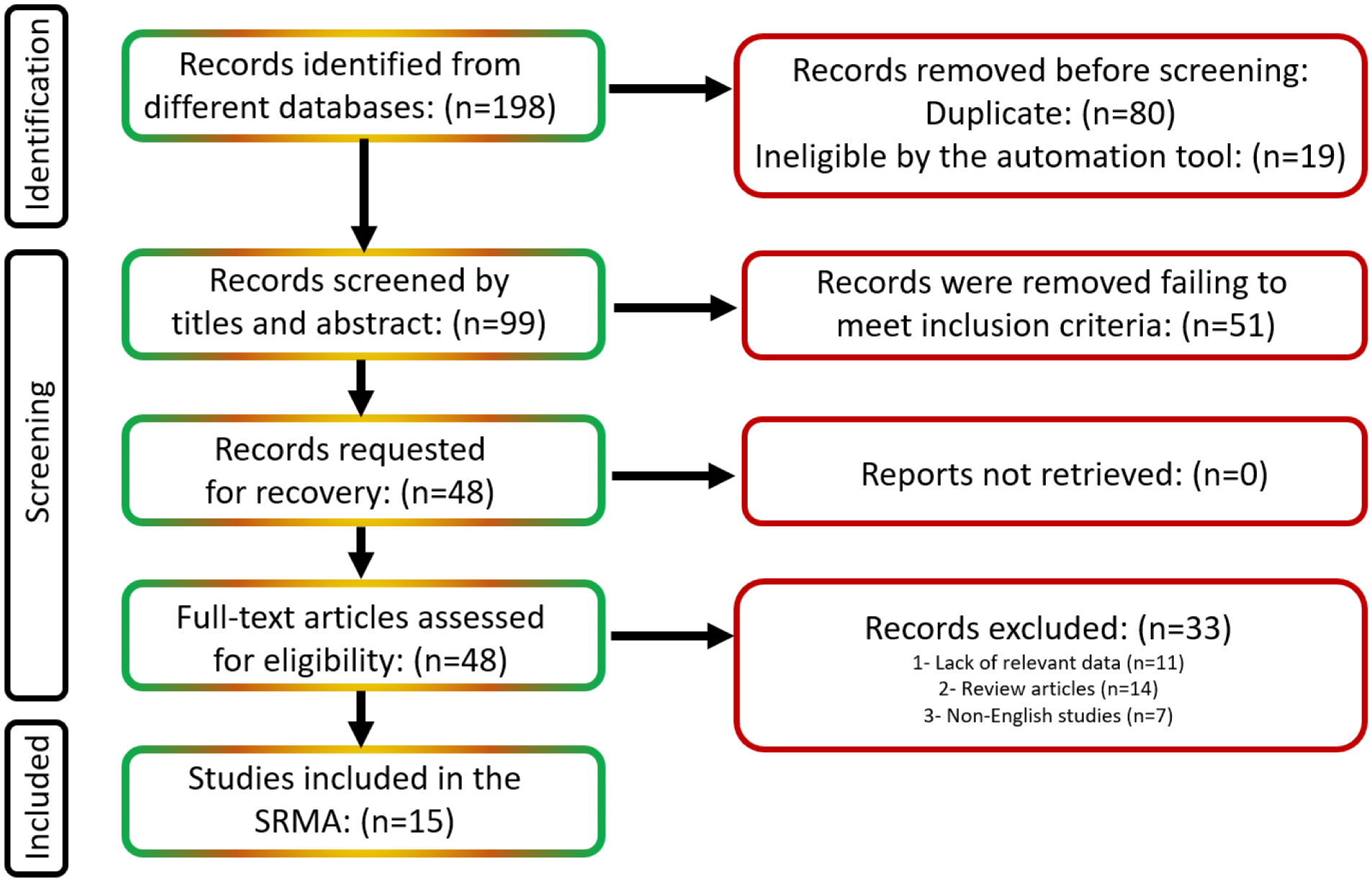
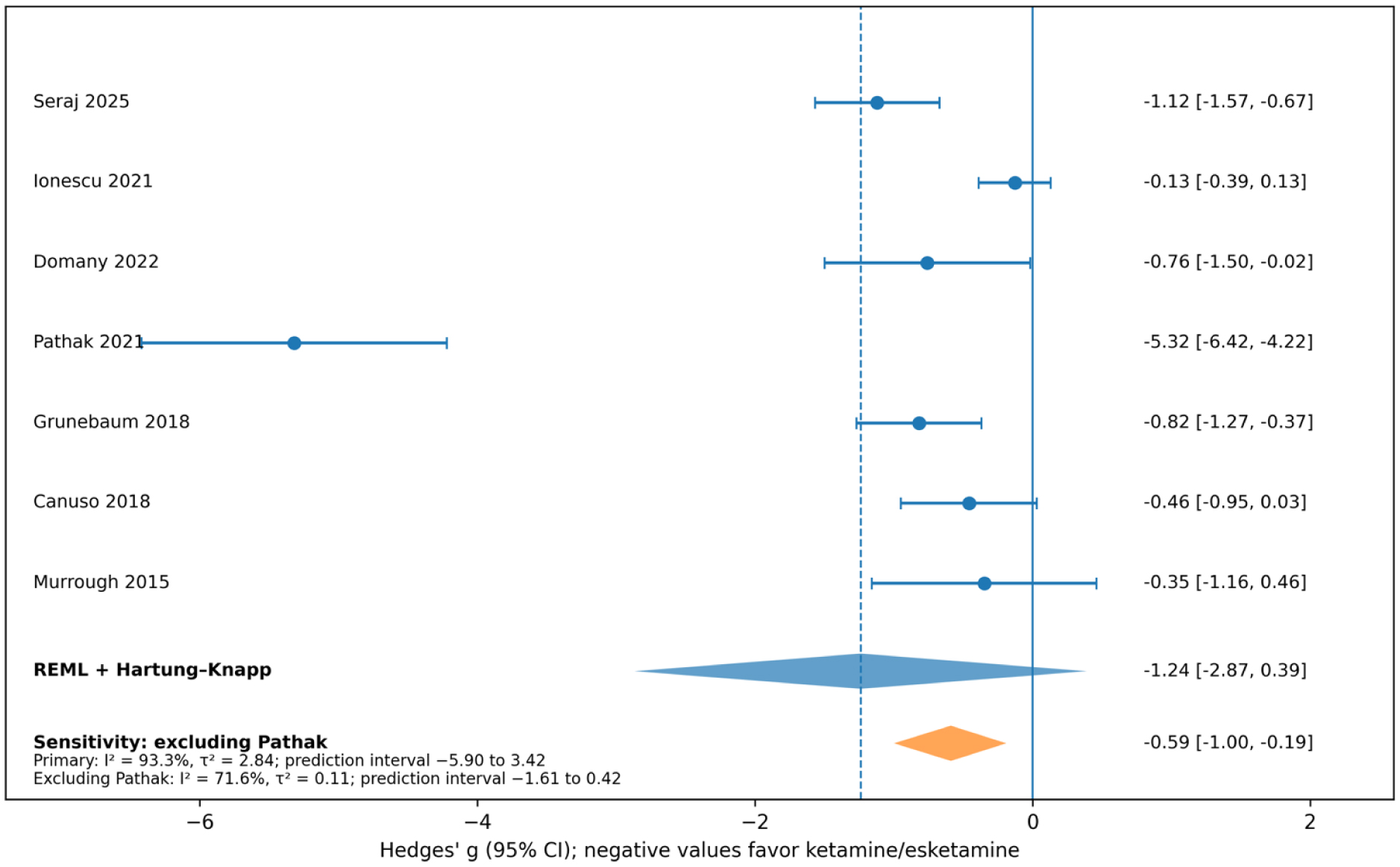
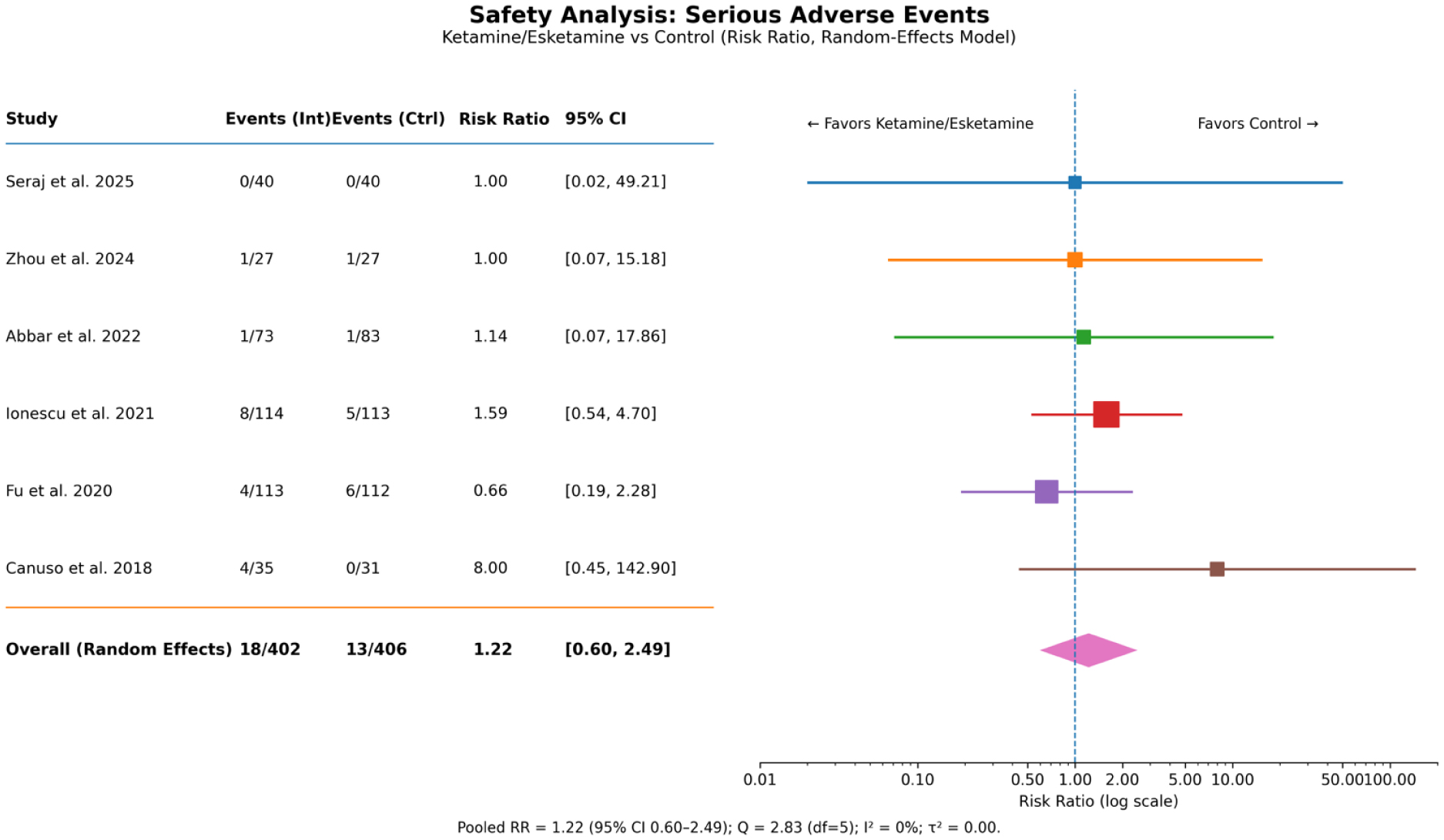
Fifteen studies (N = 1509) met the inclusion criteria, of which seven independent controlled studies (N = 567) contributed to the primary ≤24-h quantitative synthesis. The pooled effect was g = −1.24 (95% CI: −2.87 to 0.39; I2 = 93.3%), indicating substantial heterogeneity and considerable imprecision. The estimate was strongly influenced by Pathak et al.; exclusion of this study yielded a more moderate effect (g = −0.59; 95% CI: −1.00 to −0.19; I2 = 71.6%). Exploratory subgroup analyses showed no statistically significant differences by route of administration, clinical setting, or diagnosis. No statistically significant difference in serious adverse events was detected (RR = 1.22; 95% CI: 0.60–2.49; I2 = 0%), although the confidence interval was wide. Evidence concerning whether reductions in suicidal ideation were partly dissociable from improvements in depressive symptoms was indirect and exploratory.
Ketamine and esketamine may produce rapid reductions in suicidal ideation in some acute clinical settings; however, the magnitude of benefit remains uncertain because of substantial heterogeneity, imprecision, and sensitivity to an influential study. Evidence regarding the relationship between improvements in suicidal ideation and depressive symptoms remains exploratory. These findings support cautious interpretation of short-term symptomatic benefit and highlight the need for larger, methodologically rigorous trials to clarify durability, safety, and population-specific effects.
Citation: Tariq H. Alotaibi, Mazhar Mushtaq, Abdulrahman Abdullah Altuwaim, Nawal Alammari, Fay Abdullah Almutairi, Saleh Ahmed Alzahrani, Ahmed Mohammed Alghamdi, Mariam Saleh M. Moshref, Mohammed Adel Alrehaili, Turki Falah M. Alrashidi, Nouf Mohammed Asiri, Ahmed Y. Azzam. Rapid effects of ketamine and esketamine on suicidal ideation in acute psychiatric settings: A systematic review and meta-analysis[J]. AIMS Medical Science, 2026, 13(4): 268-291. doi: 10.3934/medsci.2026019
Suicide represents a major global health challenge requiring rapidly acting interventions. Ketamine and intranasal esketamine have demonstrated rapid antidepressant effects, but the extent to which their effects on suicidal ideation are distinct from mood improvement remains uncertain. We conducted a systematic review and meta-analysis to evaluate the efficacy and safety of ketamine/esketamine for suicide-specific outcomes in acute clinical settings.
Following PRISMA 2020 guidelines, we searched major databases through June 29, 2025. Randomized controlled trials and eligible controlled feasibility studies evaluating ketamine or esketamine in patients with suicidal ideation were included. The primary quantitative synthesis evaluated suicide-specific outcomes within 24 h of treatment. Random-effects models using restricted maximum likelihood estimation with Hartung–Knapp adjustment were used to calculate pooled Hedges' g. We conducted sensitivity and exploratory subgroup analyses and assessed the certainty of evidence using GRADE.
Fifteen studies (N = 1509) met the inclusion criteria, of which seven independent controlled studies (N = 567) contributed to the primary ≤24-h quantitative synthesis. The pooled effect was g = −1.24 (95% CI: −2.87 to 0.39; I2 = 93.3%), indicating substantial heterogeneity and considerable imprecision. The estimate was strongly influenced by Pathak et al.; exclusion of this study yielded a more moderate effect (g = −0.59; 95% CI: −1.00 to −0.19; I2 = 71.6%). Exploratory subgroup analyses showed no statistically significant differences by route of administration, clinical setting, or diagnosis. No statistically significant difference in serious adverse events was detected (RR = 1.22; 95% CI: 0.60–2.49; I2 = 0%), although the confidence interval was wide. Evidence concerning whether reductions in suicidal ideation were partly dissociable from improvements in depressive symptoms was indirect and exploratory.
Ketamine and esketamine may produce rapid reductions in suicidal ideation in some acute clinical settings; however, the magnitude of benefit remains uncertain because of substantial heterogeneity, imprecision, and sensitivity to an influential study. Evidence regarding the relationship between improvements in suicidal ideation and depressive symptoms remains exploratory. These findings support cautious interpretation of short-term symptomatic benefit and highlight the need for larger, methodologically rigorous trials to clarify durability, safety, and population-specific effects.

This study is a systematic review and meta-analysis of previously published studies; therefore, ethical approval from an Institutional Review Board (IRB) was not required. This study did not involve direct human participants as it exclusively analyzed data from previously published studies.
The author declares no conflict of interest.
| [1] |
Naghavi M (2019) Global, regional, and national burden of suicide mortality 1990 to 2016: systematic analysis for the Global Burden of Disease Study 2016. BMJ 364: l94. https://doi.org/10.1136/bmj.l94 
|
| [2] |
Yan N, Luo Y, Mackay LE, et al. (2024) Global patterns and trends of suicide mortality and years of life lost among adolescents and young adults from 1990 to 2021: a systematic analysis for the Global Burden of Disease Study 2021. Epidemiol Psychiatr Sci 33: e52. https://doi.org/10.1017/s2045796024000532
|
| [3] |
Pompili M (2024) On mental pain and suicide risk in modern psychiatry. Ann Gen Psychiatry 23: 6. https://doi.org/10.1186/s12991-024-00490-5
|
| [4] |
Gerhard DM, Duman RS (2018) Rapid-acting antidepressants: mechanistic insights and future directions. Curr Behav Neurosci Rep 5: 36-47.
|
| [5] |
Witkin JM, Martin AE, Golani LK, et al. (2019) Rapid-acting antidepressants. Adv Pharmacol 86: 47-96. https://doi.org/10.1016/bs.apha.2019.03.002
|
| [6] |
Lullau APM, Haga EMW, Ronold EH, et al. (2023) Antidepressant mechanisms of ketamine: a review of actions with relevance to treatment-resistance and neuroprogression. Front Neurosci 17: 1223145. https://doi.org/10.3389/fnins.2023.1223145
|
| [7] |
Ballard ED, Neely L, Waldman L, et al. (2025) Clinical indicators of the suicide crisis and response to ketamine. J Affect Disord 372: 126-133. https://doi.org/10.1016/j.jad.2024.11.080
|
| [8] |
Reif A, Bitter I, Buyze J, et al. (2023) Esketamine nasal spray versus quetiapine for treatment-resistant depression. N Engl J Med 389: 1298-1309. https://doi.org/10.1056/NEJMoa2304145
|
| [9] |
Rodolico A, Cutrufelli P, Di Francesco A, et al. (2024) Efficacy and safety of ketamine and esketamine for unipolar and bipolar depression: an overview of systematic reviews with meta-analysis. Front Psychiatry 15: 1325399. https://doi.org/10.3389/fpsyt.2024.1325399
|
| [10] |
Fountoulakis KN, Saitis A, Schatzberg AF (2025) Esketamine treatment for depression in adults: a PRISMA systematic review and meta-analysis. Am J Psychiatry 182: 259-275. https://doi.org/10.1176/appi.ajp.20240515
|
| [11] |
Jollant F, Colle R, Nguyen TML, et al. (2023) Ketamine and esketamine in suicidal thoughts and behaviors: a systematic review. Ther Adv Psychopharmacol 13: 20451253231151327. https://doi.org/10.1177/20451253231151327
|
| [12] |
Yavi M, Lee H, Henter ID, et al. (2022) Ketamine treatment for depression: a review. Discov Ment Health 2: 9. https://doi.org/10.1007/s44192-022-00012-3
|
| [13] |
Kang MJY, Hawken E, Vazquez GH (2022) The mechanisms behind rapid antidepressant effects of ketamine: a systematic review with a focus on molecular neuroplasticity. Front Psychiatry 13: 860882. https://doi.org/10.3389/fpsyt.2022.860882
|
| [14] |
Jóźwiak-Bębenista M, Sokołowska P, Wiktorowska-Owczarek A, et al. (2024) Ketamine—a new antidepressant drug with anti-inflammatory properties. J Pharmacol Exp Ther 388: 134-144. https://doi.org/10.1124/jpet.123.001823
|
| [15] |
Peiris ET, Pokhrel A, Paudel Y (2025) Ketamine for unipolar depression: a systematic review of efficacy and safety. Australas Psychiatry 33: 376-388. https://doi.org/10.1177/10398562251328805
|
| [16] |
Wang YT, Wang XL, Lei L, et al. (2024) A systematic review and meta-analysis of the efficacy of ketamine and esketamine on suicidal ideation in treatment-resistant depression. Eur J Clin Pharmacol 80: 287-296. https://doi.org/10.1007/s00228-023-03605-1
|
| [17] |
Sokołowska P, Seweryn Karbownik M, Jóźwiak-Bębenista M, et al. (2023) Antidepressant mechanisms of ketamine's action: NF-κB in the spotlight. Biochem Pharmacol 218: 115918. https://doi.org/10.1016/j.bcp.2023.115918
|
| [18] |
Page MJ, McKenzie JE, Bossuyt PM, et al. (2021) The PRISMA 2020 statement: an updated guideline for reporting systematic reviews. Rev Esp Cardiol 74: 790-799. https://doi.org/10.1016/j.rec.2021.07.010
|
| [19] |
Seraj A, Reyazuddin M, Gaur RK, et al. (2025) Oral ketamine for rapid reduction of suicidal ideation in major depressive disorder: a midazolam-controlled randomized clinical trial. Asian J Psychiatr 106: 104413. https://doi.org/10.1016/j.ajp.2025.104413
|
| [20] |
Zhou Y, Lan X, Wang C, et al. (2024) Effect of repeated intravenous esketamine on adolescents with major depressive disorder and suicidal ideation: a randomized active-placebo-controlled trial. J Am Acad Child Adolesc Psychiatry 63: 507-518. https://doi.org/10.1016/j.jaac.2023.05.031
|
| [21] |
Hochschild A, Keilp JG, Madden SP, et al. (2022) Ketamine vs midazolam: mood improvement reduces suicidal ideation in depression. J Affect Disord 300: 10-16. https://doi.org/10.1016/j.jad.2021.12.055
|
| [22] |
Gaither R, Ranney M, Peachey A, et al. (2022) A feasibility study of low-dose ketamine for acute management of suicidal ideation. J Am Coll Emerg Physicians Open 3: e12790. https://doi.org/10.1002/emp2.12790
|
| [23] |
Abbar M, Demattei C, El-Hage W, et al. (2022) Ketamine for the acute treatment of severe suicidal ideation: double blind, randomised placebo controlled trial. BMJ 376: e067194. https://doi.org/10.1136/bmj-2021-067194
|
| [24] |
Ionescu DF, Fu DJ, Qiu X, et al. (2021) Esketamine nasal spray for rapid reduction of depressive symptoms in patients with major depressive disorder who have active suicide ideation with intent: results of a phase 3, double-blind, randomized study (ASPIRE II). Int J Neuropsychoph 24: 22-31. https://doi.org/10.1093/ijnp/pyaa068
|
| [25] |
Domany Y, McCullumsmith CB (2022) Single, fixed-dose intranasal ketamine for alleviation of acute suicidal ideation. An emergency department, trans-diagnostic approach: a randomized, double-blind, placebo-controlled, proof-of-concept trial. Arch Suicide Res 26: 1250-1265. https://doi.org/10.1080/13811118.2021.1878078
|
| [26] |
Pathak U, Ahuja SK, Dwivedi R, et al. (2021) Antisuicidal efficacy of ketamine infusion in suicidal patients of depressive disorder. Indian J Psychiatry 63: 483-489. https://doi.org/10.4103/indianjpsychiatry.indianjpsychiatry_80_21
|
| [27] |
Canuso CM, Ionescu DF, Li X, et al. (2021) Esketamine nasal spray for the rapid reduction of depressive symptoms in major depressive disorder with acute suicidal ideation or behavior. J Clin Psychopharmacol 41: 516-524. https://doi.org/10.1097/jcp.0000000000001465
|
| [28] | Fu DJ, Ionescu DF, Li X, et al. (2020) Esketamine nasal spray for rapid reduction of major depressive disorder symptoms in patients who have active suicidal ideation with intent: double-blind, randomized study (ASPIRE I). J Clin Psychiatry 81: 19m13191. https://doi.org/10.4088/JCP.19m13191 |
| [29] |
Domany Y, Shelton RC, McCullumsmith CB (2020) Ketamine for acute suicidal ideation. An emergency department intervention: A randomized, double-blind, placebo-controlled, proof-of-concept trial. Depress Anxiety 37: 224-233. https://doi.org/10.1002/da.22975
|
| [30] |
Grunebaum MF, Galfalvy HC, Choo TH, et al. (2018) Ketamine for rapid reduction of suicidal thoughts in major depression: a midazolam-controlled randomized clinical trial. Am J Psychiatry 175: 327-335. https://doi.org/10.1176/appi.ajp.2017.17060647
|
| [31] |
Canuso CM, Singh JB, Fedgchin M, et al. (2018) Efficacy and safety of intranasal esketamine for the rapid reduction of symptoms of depression and suicidality in patients at imminent risk for suicide: results of a double-blind, randomized, placebo-controlled study. Am J Psychiatry 175: 620-630. https://doi.org/10.1176/appi.ajp.2018.17060720
|
| [32] |
Burger J, Capobianco M, Lovern R, et al. (2016) A double-blinded, randomized, placebo-controlled sub-dissociative dose ketamine pilot study in the treatment of acute depression and suicidality in a military emergency department setting. Mil Med 181: 1195-1199. https://doi.org/10.7205/milmed-d-15-00431
|
| [33] |
Murrough JW, Soleimani L, DeWilde KE, et al. (2015) Ketamine for rapid reduction of suicidal ideation: a randomized controlled trial. Psychol Med 45: 3571-3580. https://doi.org/10.1017/s0033291715001506
|
| [34] |
Chammas F, Januel D, Bouaziz N (2022) Inpatient suicide in psychiatric settings: evaluation of current prevention measures. Front Psychiatry 13: 997974. https://doi.org/10.3389/fpsyt.2022.997974
|
| [35] | Seyedoshohadaei SA, Darehbagh RR, Gholami F, et al. (2024) Ketamine's efficacy in alleviating acute suicidal thoughts: a comprehensive systematic review and meta-analysis. Middle East Curr Psy 31. https://doi.org/10.1186/s43045-024-00428-3 |
| [36] |
Bahji A, Vazquez GH, Zarate CA (2021) Comparative efficacy of racemic ketamine and esketamine for depression: a systematic review and meta-analysis. J Affect Disord 278: 542-555. https://doi.org/10.1016/j.jad.2020.09.071
|
| [37] |
Zanos P, Gould TD (2018) Mechanisms of ketamine action as antidepressant. Mol Psychiatr 23: 801-811. https://doi.org/10.1038/mp.2017.255
|
| [38] |
Hochschild A, Grunebaum MF, Mann JJ (2021) The rapid anti-suicidal ideation effect of ketamine: a systematic review. Prev Med 152: 106524. https://doi.org/10.1016/j.ypmed.2021.106524
|
| [39] |
Witt K, Potts J, Hubers A, et al. (2020) Ketamine for suicidal ideation in adults with psychiatric disorders: a systematic review and meta-analysis of treatment trials. Aust N Z J Psychiatry 54: 29-45. https://doi.org/10.1177/0004867419883341
|
| [40] |
Kosik-Gonzalez C, Fu DJ, Chen LN, et al. (2025) Effect of esketamine on depressive symptoms in adolescents with major depressive disorder at imminent suicide risk: a randomized psychoactive-controlled study. J Am Acad Child Psy 65: 42-55. https://doi.org/10.1016/j.jaac.2025.02.015
|
 medsci-13-04-019-s001.pdf |
 |
Figures(3) / Tables(4)

Tariq H. Alotaibi, Mazhar Mushtaq, Abdulrahman Abdullah Altuwaim, Nawal Alammari, Fay Abdullah Almutairi, Saleh Ahmed Alzahrani, Ahmed Mohammed Alghamdi, Mariam Saleh M. Moshref, Mohammed Adel Alrehaili, Turki Falah M. Alrashidi, Nouf Mohammed Asiri, Ahmed Y. Azzam. Rapid effects of ketamine and esketamine on suicidal ideation in acute psychiatric settings: A systematic review and meta-analysis[J]. AIMS Medical Science, 2026, 13(4): 268-291. doi: 10.3934/medsci.2026019





 DownLoad: