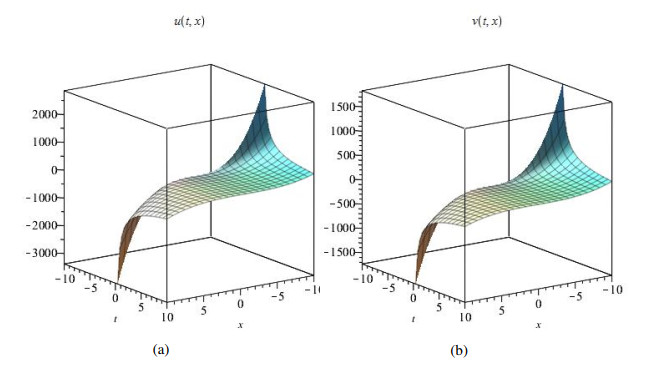
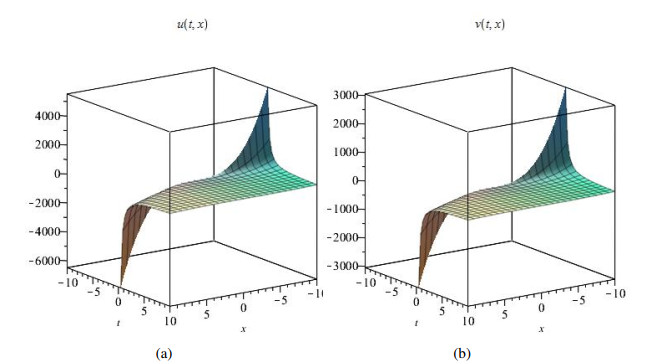
In this paper, the Lie symmetry analysis method is extended to investigate the space–time fractional Gerdjikov–Ivanov equation, a generalized derivative nonlinear Schrödinger equation that arises in various branches of nonlinear physics, including nonlinear optics, fluid mechanics, and plasma physics. By applying the Lie symmetry approach, we derive the corresponding symmetry groups for both the space–time fractional equation and its special cases—the time-fractional and the integer-order Gerdjikov–Ivanov equations. The obtained Lie symmetries are then utilized to reduce the fractional partial differential equations with Riemann–Liouville fractional derivative to systems of fractional ordinary differential equations involving the Erdélyi–Kober fractional derivative. Subsequently, the power series method is employed to construct explicit power series solutions for the reduced systems, and the convergence of these solutions is rigorously analyzed with numerical simulations provided to support the analytical results. Furthermore, the conservation laws for the studied equations are systematically established by developing a generalized version of Noether's operators and applying the new conservation theorem. The results presented in this work not only extend the existing Lie symmetry analysis of derivative nonlinear Schrödinger-type equations but also provide a comprehensive analytical framework for studying fractional nonlinear evolution equations.
Citation: Jicheng Yu. Invariant analysis, power series solutions, and conservation laws of the space–time fractional Gerdjikov–Ivanov equation[J]. AIMS Mathematics, 2026, 11(10): 34546-34569. doi: 10.3934/math.20261346
In this paper, the Lie symmetry analysis method is extended to investigate the space–time fractional Gerdjikov–Ivanov equation, a generalized derivative nonlinear Schrödinger equation that arises in various branches of nonlinear physics, including nonlinear optics, fluid mechanics, and plasma physics. By applying the Lie symmetry approach, we derive the corresponding symmetry groups for both the space–time fractional equation and its special cases—the time-fractional and the integer-order Gerdjikov–Ivanov equations. The obtained Lie symmetries are then utilized to reduce the fractional partial differential equations with Riemann–Liouville fractional derivative to systems of fractional ordinary differential equations involving the Erdélyi–Kober fractional derivative. Subsequently, the power series method is employed to construct explicit power series solutions for the reduced systems, and the convergence of these solutions is rigorously analyzed with numerical simulations provided to support the analytical results. Furthermore, the conservation laws for the studied equations are systematically established by developing a generalized version of Noether's operators and applying the new conservation theorem. The results presented in this work not only extend the existing Lie symmetry analysis of derivative nonlinear Schrödinger-type equations but also provide a comprehensive analytical framework for studying fractional nonlinear evolution equations.

| [1] |
Z. M. Yan, J. B. Li, S. Barak, S. Haque, N. Mlaiki, Delving into quasi-periodic type optical solitons in fully nonlinear complex structured perturbed Gerdjikov-Ivanov equation, Sci. Rep., 15 (2025), 8818. http://doi.org/10.1038/s41598-025-91978-x doi: 10.1038/s41598-025-91978-x

|
| [2] |
Y. Q. Liu, S. J. Zeng, Discontinuous initial value and Whitham modulation for the generalized Gerdjikov-Ivanov equation, Wave Motion, 127 (2024), 103276. http://doi.org/10.1016/j.wavemoti.2024.103276 doi: 10.1016/j.wavemoti.2024.103276
|
| [3] | S. G. Samko, A. A. Kilbas, O. I. Marichev, Fractional integrals and derivatives: theory and applications, Yverdon: Gordon and Breach Science Publishers, 1993. |
| [4] | I. Podlubny, Fractional differential equations, San Diego: Academic Press, 1999. |
| [5] | R. Hilfer, Applications of fractional calculus in physics, Singapore: World Scientific, 2000. |
| [6] | A. A. Kilbas, H. M. Srivastava, J. J. Trujillo, Theory and applications of fractional differential equations, New York: Elsevier, 2006. |
| [7] |
H. W. A. Riaz, A. Farooq, Analytical solutions and instability analysis of truncated M-fractional coupled dispersionless equations, Phys. Scr., 99 (2024), 125230. http://doi.org/10.1088/1402-4896/ad8d45 doi: 10.1088/1402-4896/ad8d45
|
| [8] |
M. I. Khan, A. Khan, A. Farooq, Analyzing the Kuralay-Ⅱ equation: bifurcation, chaos, and sensitivity insights through conformable derivative and Jacobi elliptic function expansion, Phys. Scr., 99 (2024), 095210. http://doi.org/10.1088/1402-4896/ad67af doi: 10.1088/1402-4896/ad67af
|
| [9] |
Sh. Mohamed, M. S. El-Azab, M. Sameeh, Chebyshev collocation method for solving Caputo fractional interface problem, J. Inform. Math. Sci., 17 (2025), 173–185. http://doi.org/10.26713/jims.v17i2.3224 doi: 10.26713/jims.v17i2.3224
|
| [10] |
E. Adel, I. L. El-Kalla, A. Elsaid, M. Sameeh, An adaptive finite element scheme for solving space-time Riesz-Caputo fractional partial differential equations, Iran. J. Sci., 49 (2025), 1061–1073. http://doi.org/10.1007/s40995-025-01789-y doi: 10.1007/s40995-025-01789-y
|
| [11] |
E. Adel, I. L. El-Kalla, A. Elsaid, M. Sameeh, An adaptive finite element method for Riesz fractional partial integro-differential equations, Math. Sci., 18 (2024), 611–624. http://doi.org/10.1007/s40096-023-00518-z doi: 10.1007/s40096-023-00518-z
|
| [12] |
J. Y. Chu, Y. Q. Liu, Coupling model of a generalized second grade fluid flow and fractional Cattaneo heat transfer with magnetic field and radiation, Results Phys., 57 (2024), 107409. http://doi.org/10.1016/j.rinp.2024.107409 doi: 10.1016/j.rinp.2024.107409
|
| [13] |
Y. Q. Liu, L. Y. Peng, Some novel physical structures of a (2+1)-dimensional variable-coefficient Korteweg-de Vries system, Chaos Soliton. Fract., 171 (2023), 113430. http://doi.org/10.1016/j.chaos.2023.113430 doi: 10.1016/j.chaos.2023.113430
|
| [14] |
A. Farooq, K. Shah, M. A. El Yamani, U. Khan, J. Shah, W.-X. Ma, Revolutionizing corruption dynamics: Integrating jury influence and fractional approaches with neural network and optimal control, Expert Syst. Appl., 296 (2026), 129111. http://doi.org/10.1016/j.eswa.2025.129111 doi: 10.1016/j.eswa.2025.129111
|
| [15] |
E. Adel, I. L. El-Kalla, A. Elsaid, M. Sameeh, Modeling mass transport using time-variable space-fractional Riesz derivative, Int. J. Dynam. Control, 14 (2026), 19. http://doi.org/10.1007/s40435-025-01945-7 doi: 10.1007/s40435-025-01945-7
|
| [16] |
J. C. Yu, Y. Q. Feng, Lie symmetry analysis and exact solutions of space-time fractional cubic Schrödinger equation, Int. J. Geom. Methods M., 19 (2022), 2250077. http://doi.org/10.1142/s0219887822500773 doi: 10.1142/s0219887822500773
|
| [17] | L. V. Ovsiannikov, Group analysis of differential equations, New York: Academic Press, 1982. https://doi.org/10.1016/C2013-0-07470-1 |
| [18] | P. J. Olver, Applications of Lie groups to differential equations, Heidelberg: Springer, 1986. https://doi.org/10.1007/978-1-4612-4350-2 |
| [19] | N. H. Ibragimov, CRC handbook of Lie group analysis of differential equations, Volume 1, symmetries, exact solutions and conservation laws, Boca Raton: CRC Press, 1993. https://doi.org/10.1201/9781003419808 |
| [20] | N. H. Ibragimov, CRC handbook of Lie group analysis of differential equations, Volume 2, applications in engineering and physical sciences, Boca Raton: CRC Press, 1994. |
| [21] | N. H. Ibragimov, CRC handbook of Lie group analysis of differential equations, Volume 3, new trends in theoretical developments and computational methods, Boca Raton: CRC Press, 1995. |
| [22] | R. K. Gazizov, A. A. Kasatkin, S. Y. Lukashchuk, Continuous transformation groups of fractional differential equations, Vestnik USATU, 9 (2007), 125–135. |
| [23] |
Z. Y. Zhang, G. F. Li, Lie symmetry analysis and exact solutions of the time-fractional biological population model, Physica A, 540 (2020), 123134. http://doi.org/10.1016/j.physa.2019.123134 doi: 10.1016/j.physa.2019.123134
|
| [24] |
J. C. Yu, Y. Q. Feng, Group classification of time fractional Black-Scholes equation with time-dependent coefficients, Fract. Calc. Appl. Anal., 27 (2024), 2335–2358. http://doi.org/10.1007/s13540-024-00339-4 doi: 10.1007/s13540-024-00339-4
|
| [25] |
J. C. Yu, Y. Q. Feng, On the generalized time fractional reaction-diffusion equation: Lie symmetries, exact solutions and conservation laws, Chaos Soliton. Fract., 182 (2024), 114855. http://doi.org/10.1016/j.chaos.2024.114855 doi: 10.1016/j.chaos.2024.114855
|
| [26] |
Vinita, S. S. Ray, Lie symmetry reductions, power series solutions and conservation laws of the coupled Gerdjikov-Ivanov equation using optimal system of Lie subalgebra, Z. Angew. Math. Phys., 72 (2021), 133. http://doi.org/10.1007/s00033-021-01564-0 doi: 10.1007/s00033-021-01564-0
|
| [27] |
N. H. Ibragimov, Nonlinear self-adjointness and conservation laws, J. Phys. A: Math. Theor., 44 (2011), 432002. http://doi.org/10.1088/1751-8113/44/43/432002 doi: 10.1088/1751-8113/44/43/432002
|
| [28] |
N. H. Ibragimov, A new conservation theorem, J. Math. Anal. Appl., 333 (2007), 311–328. http://doi.org/10.1016/j.jmaa.2006.10.078 doi: 10.1016/j.jmaa.2006.10.078
|
Figures(2)

Jicheng Yu. Invariant analysis, power series solutions, and conservation laws of the space–time fractional Gerdjikov–Ivanov equation[J]. AIMS Mathematics, 2026, 11(10): 34546-34569. doi: 10.3934/math.20261346





 DownLoad: