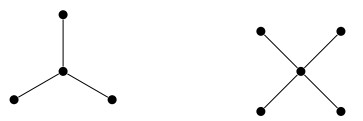
Zhou et al. (2025) proposed a distance Laplacian analog of Brouwer's conjecture on partial sums of Laplacian eigenvalues, asserting that for any connected graph $ G $, $ \sum_{i = 1}^r \partial_i^L(G)\le W(G)+\binom{r+2}{3} $ holds, where $ \partial_i^L(G) $ are the eigenvalues of the distance Laplacian matrix and $ W(G) $ is the Wiener index. We prove this inequality for three broad classes of graphs, thereby improving and extending existing results. First, we prove that all connected graphs of diameter at most $ D $ satisfy the inequality once the order $ n $ satisfies $ n\ge\lceil\frac49(D+1)^3\rceil $. Second, we show that the inequality holds for every diameter-$ 2 $ graph with the only exceptions being $ K_{1, 3} $ at $ r = 2 $ and $ K_{1, 4} $ at $ r = 3 $. Third, we prove that if the maximum degree is $ \Delta(G) = n-k $, then the inequality holds for all $ n\ge N(k) $, where $ N(2) = 10 $ and $ N(k) = \lceil 5(k-1)^{3/2}\rceil $ for $ k\ge 3 $. Our proofs rely on decomposing the distance Laplacian matrix into Laplacian matrices of auxiliary graphs whose edges are vertex pairs at distance at least a prescribed value, together with some classical eigenvalue inequalities.
Citation: Silin Huang. On a distance Laplacian analog of Brouwer's conjecture for several classes of graphs[J]. AIMS Mathematics, 2026, 11(10): 33617-33633. doi: 10.3934/math.20261314
Zhou et al. (2025) proposed a distance Laplacian analog of Brouwer's conjecture on partial sums of Laplacian eigenvalues, asserting that for any connected graph $ G $, $ \sum_{i = 1}^r \partial_i^L(G)\le W(G)+\binom{r+2}{3} $ holds, where $ \partial_i^L(G) $ are the eigenvalues of the distance Laplacian matrix and $ W(G) $ is the Wiener index. We prove this inequality for three broad classes of graphs, thereby improving and extending existing results. First, we prove that all connected graphs of diameter at most $ D $ satisfy the inequality once the order $ n $ satisfies $ n\ge\lceil\frac49(D+1)^3\rceil $. Second, we show that the inequality holds for every diameter-$ 2 $ graph with the only exceptions being $ K_{1, 3} $ at $ r = 2 $ and $ K_{1, 4} $ at $ r = 3 $. Third, we prove that if the maximum degree is $ \Delta(G) = n-k $, then the inequality holds for all $ n\ge N(k) $, where $ N(2) = 10 $ and $ N(k) = \lceil 5(k-1)^{3/2}\rceil $ for $ k\ge 3 $. Our proofs rely on decomposing the distance Laplacian matrix into Laplacian matrices of auxiliary graphs whose edges are vertex pairs at distance at least a prescribed value, together with some classical eigenvalue inequalities.

| [1] | A. E. Brouwer, W. H. Haemers, Spectra of graphs, New York: Springer, 2012. https://doi.org/10.1007/978-1-4614-1939-6 |
| [2] |
W. H. Haemers, A. Mohammadian, B. Tayfeh-Rezaie, On the sum of Laplacian eigenvalues of graphs, Linear Algebra Appl., 432 (2010), 2214–2221. https://doi.org/10.1016/j.laa.2009.03.038 doi: 10.1016/j.laa.2009.03.038

|
| [3] |
K. Wang, Z. Lin, S. Zhang, C. Ye, A proof of Brouwer's conjecture for $k = 3$, Linear Algebra Appl., 736 (2026), 189–213. https://doi.org/10.1016/j.laa.2026.01.026 doi: 10.1016/j.laa.2026.01.026
|
| [4] |
Z. Du, B. Zhou, Upper bounds for the sum of Laplacian eigenvalues of graphs, Linear Algebra Appl., 436 (2012), 3672–3683. https://doi.org/10.1016/j.laa.2012.01.007 doi: 10.1016/j.laa.2012.01.007
|
| [5] |
X. Chen, Improved results on Brouwer's conjecture for sum of the Laplacian eigenvalues of a graph, Linear Algebra Appl., 557 (2018), 327–338. https://doi.org/10.1016/j.laa.2018.08.003 doi: 10.1016/j.laa.2018.08.003
|
| [6] |
X. Chen, On Brouwer's conjecture for the sum of $k$ largest Laplacian eigenvalues of graphs, Linear Algebra Appl., 578 (2019), 402–410. https://doi.org/10.1016/j.laa.2019.05.029 doi: 10.1016/j.laa.2019.05.029
|
| [7] |
H. A. Ganie, S. Pirzada, B. A. Rather, V. Trevisan, Further developments on Brouwer's conjecture for the sum of Laplacian eigenvalues of graphs, Linear Algebra Appl., 588 (2020), 1–18. https://doi.org/10.1016/j.laa.2019.11.020 doi: 10.1016/j.laa.2019.11.020
|
| [8] |
M. Aouchiche, P. Hansen, Two Laplacians for the distance matrix of a graph, Linear Algebra Appl., 439 (2013), 21–33. https://doi.org/10.1016/j.laa.2013.02.030 doi: 10.1016/j.laa.2013.02.030
|
| [9] |
M. Aouchiche, P. Hansen, Some properties of the distance Laplacian eigenvalues of a graph, Czech. Math. J., 64 (2014), 751–761. https://doi.org/10.1007/s10587-014-0129-2 doi: 10.1007/s10587-014-0129-2
|
| [10] |
M. Nath, S. Paul, On the distance Laplacian spectra of graphs, Linear Algebra Appl., 460 (2014), 97–110. https://doi.org/10.1016/j.laa.2014.07.025 doi: 10.1016/j.laa.2014.07.025
|
| [11] |
H. Lin, B. Wu, Y. Chen, J. Shu, On the distance and distance Laplacian eigenvalues of graphs, Linear Algebra Appl., 492 (2016), 128–135. https://doi.org/10.1016/j.laa.2015.11.014 doi: 10.1016/j.laa.2015.11.014
|
| [12] |
R. Fernandes, M. A. A. de Freitas, C. M. da Silva Jr., R. R. Del-Vecchio, Multiplicities of distance Laplacian eigenvalues and forbidden subgraphs, Linear Algebra Appl., 541 (2018), 81–93. https://doi.org/10.1016/j.laa.2017.11.031 doi: 10.1016/j.laa.2017.11.031
|
| [13] |
B. Brimkov, K. Duna, L. Hogben, K. Lorenzen, C. Reinhart, S. Y. Song, et al., Graphs that are cospectral for the distance Laplacian, Electron. J. Linear Algebra, 36 (2020), 334–351. https://doi.org/10.13001/ela.2020.4941 doi: 10.13001/ela.2020.4941
|
| [14] |
B. A. Rather, M. Aouchiche, Distance Laplacian spectra of graphs: A survey, Discrete Appl. Math., 361 (2025), 136–195. https://doi.org/10.1016/j.dam.2024.10.001 doi: 10.1016/j.dam.2024.10.001
|
| [15] |
Y. Zhou, L. Wang, Y. Chai, Brouwer type conjecture for the eigenvalues of distance Laplacian matrix of a graph, Comput. Appl. Math., 44 (2025), 138. https://doi.org/10.1007/s40314-025-03095-0 doi: 10.1007/s40314-025-03095-0
|
| [16] |
S. Pirzada, S. Khan, On the sum of distance Laplacian eigenvalues of graphs, Tamkang J. Math., 54 (2023), 83–91. https://doi.org/10.5556/j.tkjm.54.2023.4120 doi: 10.5556/j.tkjm.54.2023.4120
|
| [17] |
U. Mushtaq, S. Pirzada, S. Khan, On the sum of the eigenvalues of the distance Laplacian matrix of graphs with diameter three and four, Rev. Un. Mat. Argentina, 69 (2026), 193–202. https://doi.org/10.33044/revuma.5147 doi: 10.33044/revuma.5147
|
| [18] |
K. Fan, On a theorem of Weyl concerning eigenvalues of linear transformations Ⅰ, Proc. Natl. Acad. Sci. USA, 35 (1949), 652–655. https://doi.org/10.1073/pnas.35.11.652 doi: 10.1073/pnas.35.11.652
|
| [19] |
R. Grone, R. Merris, The Laplacian spectrum of a graph Ⅱ, SIAM J. Discrete Math., 7 (1994), 221–229. https://doi.org/10.1137/S0895480191222653 doi: 10.1137/S0895480191222653
|
| [20] |
H. Bai, The Grone-Merris conjecture, Trans. Amer. Math. Soc., 363 (2011), 4463–4474. https://doi.org/10.1090/S0002-9947-2011-05393-6 doi: 10.1090/S0002-9947-2011-05393-6
|
| [21] |
G. Williams, Smith forms for adjacency matrices of circulant graphs, Linear Algebra Appl., 443 (2014), 21–33. https://doi.org/10.1016/j.laa.2013.11.006 doi: 10.1016/j.laa.2013.11.006
|
Figures(1)

Silin Huang. On a distance Laplacian analog of Brouwer's conjecture for several classes of graphs[J]. AIMS Mathematics, 2026, 11(10): 33617-33633. doi: 10.3934/math.20261314





 DownLoad: