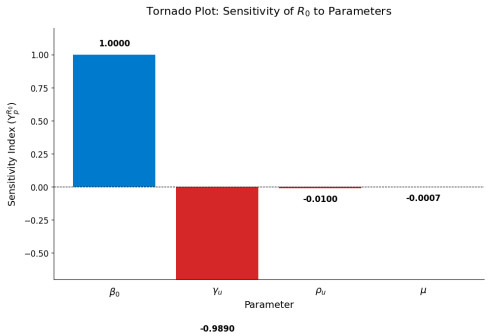
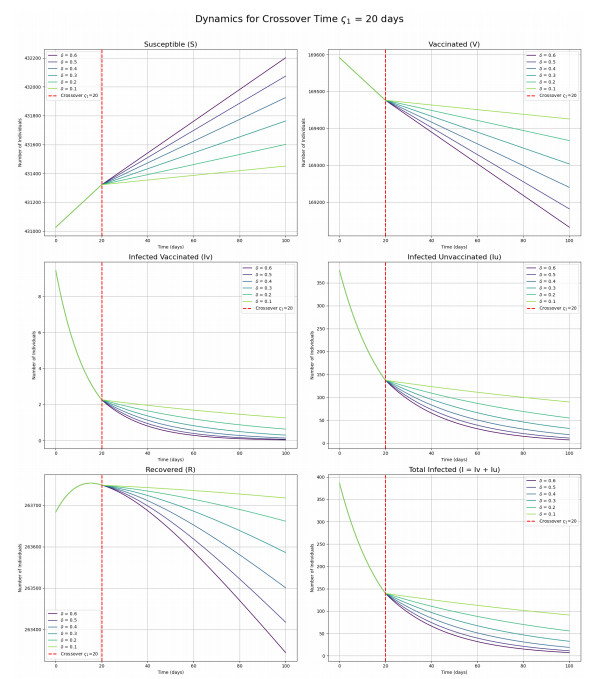
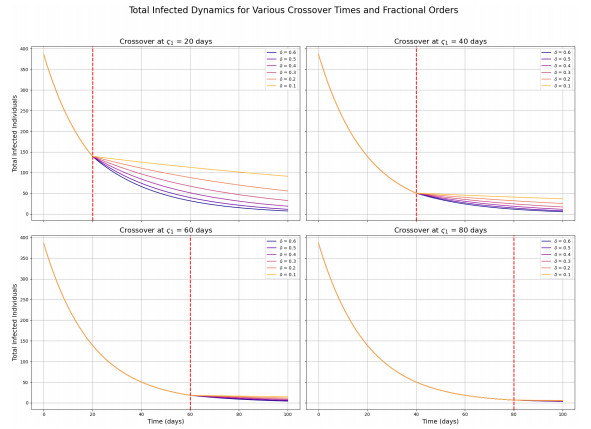
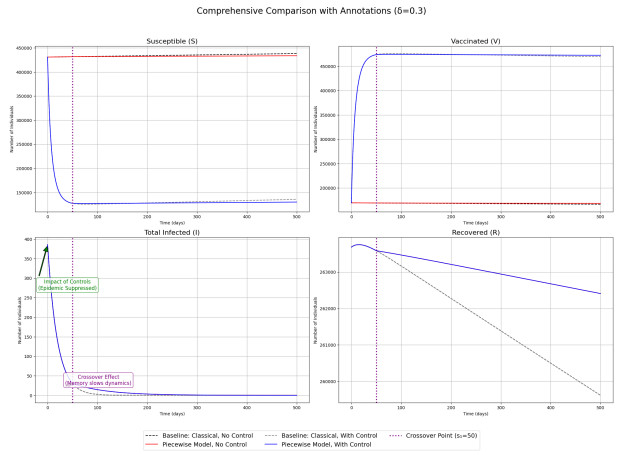
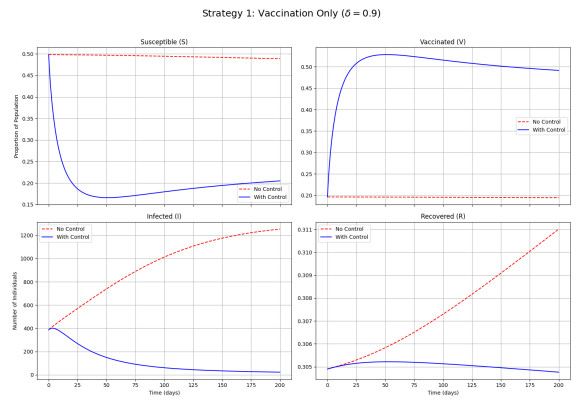
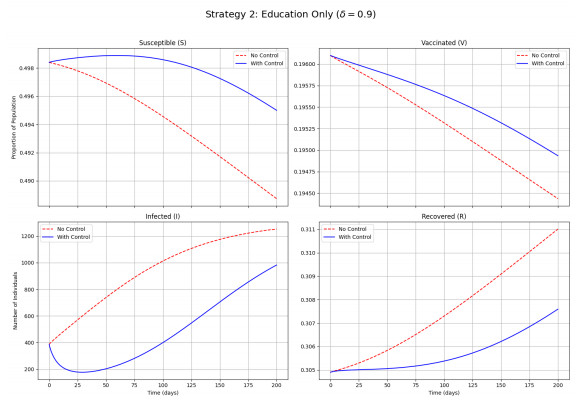
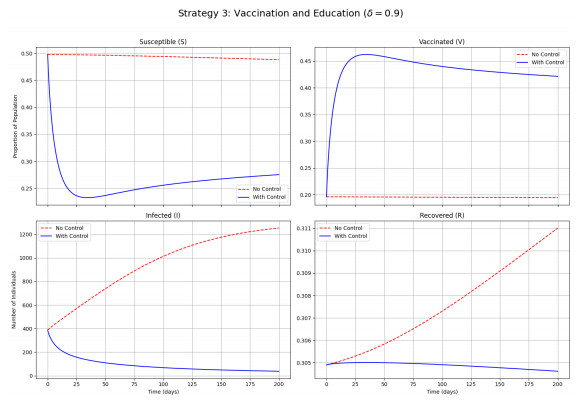
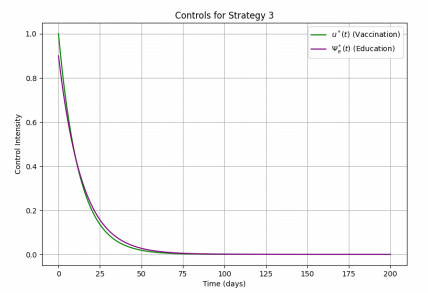
Modeling the long-term dynamics of the COVID-19 pandemic is challenged by evolving public behavior and interventions. We propose a novel piecewise fractional-order (SVIR) model incorporating vaccination and education controls. The model uniquely employs a classical derivative for the initial, memoryless phase of the epidemic. It then transitions to a Caputo-Fabrizio fractional derivative to capture long-term collective memory effects on transmission. We establish the model's mathematical well-posedness and derive the basic reproduction number ($ R_{0} $). Under our baseline parameterization, the reproduction number is $ R _{0}\simeq 4.95 $. An optimal control problem is formulated to determine the ideal implementation of time-varying vaccination and education. Numerical simulations validate the distinct crossover dynamics produced by our piecewise approach. Results demonstrate that a synergistic strategy combining vaccination and education is highly effective, reducing the peak of infected individuals by over 90% compared to the uncontrolled scenario, and significantly outperforms isolated interventions. This study offers a flexible tool for understanding and controlling epidemics.
Citation: F. Gassem, Ashraf A. Qurtam, Mesfer H. Alqahtani, Mohammed Rabih, Khaled Aldwoah, Abdelaziz El-Sayed, S. O. Ali. Optimal control of pandemic dynamics using a piecewise fractional order SVIR model[J]. AIMS Mathematics, 2025, 10(9): 20947-20978. doi: 10.3934/math.2025936
Modeling the long-term dynamics of the COVID-19 pandemic is challenged by evolving public behavior and interventions. We propose a novel piecewise fractional-order (SVIR) model incorporating vaccination and education controls. The model uniquely employs a classical derivative for the initial, memoryless phase of the epidemic. It then transitions to a Caputo-Fabrizio fractional derivative to capture long-term collective memory effects on transmission. We establish the model's mathematical well-posedness and derive the basic reproduction number ($ R_{0} $). Under our baseline parameterization, the reproduction number is $ R _{0}\simeq 4.95 $. An optimal control problem is formulated to determine the ideal implementation of time-varying vaccination and education. Numerical simulations validate the distinct crossover dynamics produced by our piecewise approach. Results demonstrate that a synergistic strategy combining vaccination and education is highly effective, reducing the peak of infected individuals by over 90% compared to the uncontrolled scenario, and significantly outperforms isolated interventions. This study offers a flexible tool for understanding and controlling epidemics.

| [1] |
A. Costa, M. Pires, R. Resque, S. Almeida, Mathematical modeling of the infectious diseases: Key concepts and applications, J. Infect. Dis. Epidemiol., 7 (2021), 209. https://doi.org/10.23937/2474-3658/1510209 doi: 10.23937/2474-3658/1510209

|
| [2] |
S. N. Shanmugam, H. Byeon, Comprehending symmetry in epidemiology: A review of analytical methods and insights from models of COVID-19, Ebola, Dengue, and Monkeypox, Medicine, 103 (2024), e40063. https://doi.org/10.1097/MD.0000000000040063 doi: 10.1097/MD.0000000000040063
|
| [3] |
F. H. Damag, A. A. Qurtam, M. Almalahi, K. Aldwoah, M. Adel, A. M. Abd El-Latif, et al., A comparative analysis of Harmonic Mean, Holling Type II, Beddington-DeAngelis, and Crowley-Martin incidence rates of a piecewise dengue fever dynamics model, Fractal Fract., 9 (2025), 400. https://doi.org/10.3390/fractalfract9070400 doi: 10.3390/fractalfract9070400
|
| [4] |
R. Schlickeiser, M. Kroeger, Mathematics of epidemics: On the general solution of SIRVD, SIRV, SIRD, and SIR compartment models, Mathematics, 12 (2024), 941. https://doi.org/10.3390/math12070941 doi: 10.3390/math12070941
|
| [5] | F. Mansal, M. A. BaldA, A. O. Bah, Optimal control on a mathematical model of SIR and application to Covid-19, In: Nonlinear Analysis, Geometry and Applications: Proceedings of the Third NLAGA-BIRS Symposium, AIMS-Mbour, Senegal, Springer Nature Switzerland, 2023,101–128. |
| [6] | M. Sadki, K. Allali, A mathematical model for the impacts of vaccination and quarantine on the dynamics of COVID-19 pandemic: Deterministic and stochastic analysis, In: Biology and Sustainable Development Goals: Applications of Mathematical Methods, Springer Nature Singapore, 2025,211–228. |
| [7] | B. Riemann, Versuch einer allgemeinen auffassung der integration und differentiation, Gesammelte Werke, 62 (1876), 385–398. |
| [8] | K. S. Miller, B. Ross, An introduction to the fractional calculus and fractional differential equations, New York: John Wiley & Sons, 1993. |
| [9] |
R. Almeida, A Caputo fractional derivative of a function with respect to another function, Commun. Nonlinear Sci. Numer. Simul., 44 (2017), 460–481. https://doi.org/10.1016/j.cnsns.2016.09.006 doi: 10.1016/j.cnsns.2016.09.006
|
| [10] | A. Atangana, D. Baleanu, New fractional derivatives with nonlocal and non-singular kernel: Theory and application to heat transfer model, Thermal Sci., 20 (2016), 763–769. |
| [11] |
M. Caputo, M. Fabrizio, A new definition of fractional derivative without singular kernel, Progr. Fract. Diff. Appl., 1 (2015), 73–85. http://doi.org/10.12785/pfda/010201 doi: 10.12785/pfda/010201
|
| [12] |
K. Shah, M. Sarwar, T. Abdeljawad, On mathematical model of infectious disease by using fractals fractional analysis, Discr. Contin. Dyn. Syst.-S, 17 (2024), 3064–3085. https://doi.org/10.3934/dcdss.2024073 doi: 10.3934/dcdss.2024073
|
| [13] |
M. S. Algolam, M. Almalahi, K. Aldwoah, A. S. Awaad, M. Suhail, F. A. Alshammari, et al., Theoretical and numerical analysis of the SIR model and its symmetric cases with power Caputo fractional derivative, Fractal Fract., 9 (2025), 251. https://doi.org/10.3390/fractalfract9040251 doi: 10.3390/fractalfract9040251
|
| [14] |
T. Alraqad, M. A. Almalahi, N. Mohammed, A. Alahmade, K. A. Aldwoah, H. Saber, Modeling Ebola dynamics with a $\Phi$ -piecewise hybrid fractional derivative approach, Fractal Fract., 8 (2024), 596. https://doi.org/10.3390/fractalfract8100596 doi: 10.3390/fractalfract8100596
|
| [15] |
W. Sintunavarat, A. Turab, Mathematical analysis of an extended SEIR model of COVID-19 using the ABC-fractional operator, Math. Comput. Simul., 198 (2022), 65–84. https://doi.org/10.1016/j.matcom.2022.02.009 doi: 10.1016/j.matcom.2022.02.009
|
| [16] |
M. Althubyani, S. Saber, Hyers-Ulam stability of fractal-fractional computer virus models with the Atangana-Baleanu operator, Fractal Fract., 9 (2025), 158. https://doi.org/10.3390/fractalfract9030158 doi: 10.3390/fractalfract9030158
|
| [17] |
A. Turab, R. Shafqat, S. Muhammad, M. Shuaib, M. F. Khan, M. Kamal, Predictive modeling of hepatitis B viral dynamics: A Caputo derivative-based approach using artificial neural networks, Sci. Rep., 14 (2024), 21853. https://doi.org/10.1038/s41598-024-70788-7 doi: 10.1038/s41598-024-70788-7
|
| [18] |
S. Saber, E. Solouma, R. A. Alharb, A. Alalyani, Chaos in fractional-order glucose-insulin models with variable derivatives: Insights from the Laplace-adomian decomposition method and generalized Euler techniques, Fractal Fract., 9 (2025), 149. https://doi.org/10.3390/fractalfract9030149 doi: 10.3390/fractalfract9030149
|
| [19] |
A. Alsulami, R. A. Alharb, T. M. Albogami, N. H. Eljaneid, H. D. Adam, S. F. Saber, Controlled chaos of a fractal-fractional Newton-Leipnik system, Thermal Sci., 28 (2024), 5153–5160. https://doi.org/10.2298/TSCI2406153A doi: 10.2298/TSCI2406153A
|
| [20] | M. T. Al-arydah, H. Berhe, K. Dib, K. Madhu, Mathematical modeling of the spread of the coronavirus under strict social restrictions, Math. Meth. Appl. Sci., 2021, 1–11. https://doi.org/10.1002/mma.7965 |
| [21] |
M. B. Jeelani, A. S. Alnahdi, M. S. Abdo, M. A. Almalahi, N. H. Alharthi, K. Shah, A generalized fractional order model for COV-2 with vaccination effect using real data, Fractals, 31 (2023), 2340042. https://doi.org/10.1142/S0218348X2340042X doi: 10.1142/S0218348X2340042X
|
| [22] |
Y. Xiao, B. Tang, J. Wu, R. A. Cheke, S. Tang, Linking key intervention timing to rapid decline of the COVID-19 effective reproductive number to quantify lessons from mainland China, Int. J. Infect. Dis., 97 (2020), 296–298. https://doi.org/10.1016/j.ijid.2020.06.030 doi: 10.1016/j.ijid.2020.06.030
|
| [23] |
S. Funk, M. Salatha, V. A. Jansen, Modelling the influence of human behaviour on the spread of infectious diseases: A review, J. Royal Soc. Interf., 7 (2010), 1247–1256. https://doi.org/10.1098/rsif.2010.0142 doi: 10.1098/rsif.2010.0142
|
| [24] |
F. Verelst, L. Willem, P. Beutels, Behavioural change models for infectious disease transmission: a systematic review (2010–2015), J. Royal Soc. Interf., 13 (2016), 20160820. https://doi.org/10.1098/rsif.2016.0820 doi: 10.1098/rsif.2016.0820
|
| [25] |
O. Forrest, M. T. Al-arydah, Optimal control strategies for infectious diseases with consideration of behavioral dynamics, Math. Meth. Appl. Sci., 48 (2025), 1362–1380. https://doi.org/10.1002/mma.10388 doi: 10.1002/mma.10388
|
| [26] |
T. Usherwood, Z. LaJoie, V. Srivastava, A model and predictions for COVID-19 considering population behavior and vaccination, Sci. Rep., 11 (2021), 12051. https://doi.org/10.1038/s41598-021-91514-7 doi: 10.1038/s41598-021-91514-7
|
| [27] |
H. D. Adam, M. Althubyani, S. M. Mirgani, S. Saber, An application of Newton's interpolation polynomials to the zoonotic disease transmission between humans and baboons system based on a time-fractal fractional derivative with a power-law kernel, AIP Adv., 15 (2025), 045217. https://doi.org/10.1063/5.0253869 doi: 10.1063/5.0253869
|
| [28] |
M. Alhazmi, F. M. Dawalbait, A. Aljohani, K. O. Taha, H. D. Adam, S. Saber, Numerical approximation method and Chaos for a chaotic system in sense of Caputo-Fabrizio operator, Thermal Sci., 28 (2024), 5161–5168. https://doi.org/10.2298/TSCI2406161A doi: 10.2298/TSCI2406161A
|
| [29] |
A. Turab, H. Hilmi, J. L. Guirao, S. Jalil, N. Chorfi, P. O. Mohammed, The Rishi Transform method for solving multi-high order fractional differential equations with constant coefficients, AIMS Math., 9 (2024), 3798–3809. https://doi.org/10.3934/math.2024187 doi: 10.3934/math.2024187
|
| [30] |
K. Diethelm, N. J. Ford, A. D. Freed, Y. Luchko, Algorithms for the fractional calculus: A selection of numerical methods, Comput. Meth. Appl. Mech. Eng., 194 (2005), 743–773. https://doi.org/10.1016/j.cma.2004.06.006 doi: 10.1016/j.cma.2004.06.006
|
Figures(14) / Tables(3)

F. Gassem, Ashraf A. Qurtam, Mesfer H. Alqahtani, Mohammed Rabih, Khaled Aldwoah, Abdelaziz El-Sayed, S. O. Ali. Optimal control of pandemic dynamics using a piecewise fractional order SVIR model[J]. AIMS Mathematics, 2025, 10(9): 20947-20978. doi: 10.3934/math.2025936





 DownLoad: