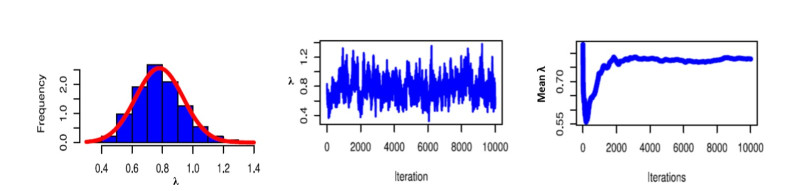
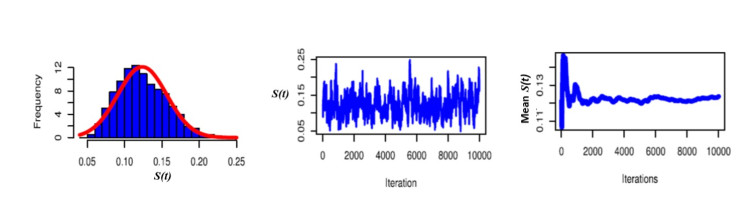
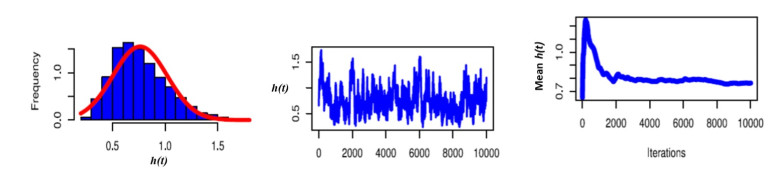
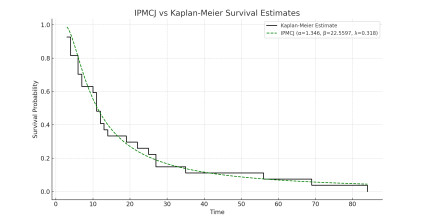
Accurate estimation and modeling of infant mortality rates are essential for public health planning and medical research, as they are influenced by a wide range of biological, environmental, and socio-economic factors. To capture the underlying failure patterns, we proposed the inverse power–modified Chris–Jerry (IPMCJ) distribution, a generalized lifetime model particularly suited for decreasing failure rates. Progressive censoring (PC) was incorporated to address the common challenge of incomplete data collection in mortality studies. The statistical properties of the IPMCJ model were studied in detail, and parameter estimation was conducted through maximum likelihood and Bayesian approaches. Bayesian inference was further explored under symmetric squared error and asymmetric linear exponential (LINEX) loss functions, supported by confidence and credible intervals constructed via bootstrap, asymptotic, and Markov chain Monte Carlo (MCMC) methods. The practical relevance of the IPMCJ model was demonstrated using two real infant mortality datasets, where it consistently outperformed ten competing distributions. Convergence was evaluated using maximum likelihood checks and standard Bayesian diagnostics. Model performance of the IPMCJ distribution was validated using (a) the nonparametric Kaplan-Meier estimator and (b) comparisons with the complete-sample analysis. Extensive simulation studies confirmed the robustness and accuracy of the proposed estimators. The results emphasized the value of combining PC with the IPMCJ distribution, offering an effective framework for analyzing infant mortality data and informing health policy decisions.
Citation: Mohammad Y. Awajan, Dina A. Ramadan, Hanan Haj Ahmad, Beih S. El-Desouky. Applied statistical modeling of infant mortality with the progressively censored IPMCJ distribution[J]. AIMS Mathematics, 2025, 10(10): 23880-23918. doi: 10.3934/math.20251062
Accurate estimation and modeling of infant mortality rates are essential for public health planning and medical research, as they are influenced by a wide range of biological, environmental, and socio-economic factors. To capture the underlying failure patterns, we proposed the inverse power–modified Chris–Jerry (IPMCJ) distribution, a generalized lifetime model particularly suited for decreasing failure rates. Progressive censoring (PC) was incorporated to address the common challenge of incomplete data collection in mortality studies. The statistical properties of the IPMCJ model were studied in detail, and parameter estimation was conducted through maximum likelihood and Bayesian approaches. Bayesian inference was further explored under symmetric squared error and asymmetric linear exponential (LINEX) loss functions, supported by confidence and credible intervals constructed via bootstrap, asymptotic, and Markov chain Monte Carlo (MCMC) methods. The practical relevance of the IPMCJ model was demonstrated using two real infant mortality datasets, where it consistently outperformed ten competing distributions. Convergence was evaluated using maximum likelihood checks and standard Bayesian diagnostics. Model performance of the IPMCJ distribution was validated using (a) the nonparametric Kaplan-Meier estimator and (b) comparisons with the complete-sample analysis. Extensive simulation studies confirmed the robustness and accuracy of the proposed estimators. The results emphasized the value of combining PC with the IPMCJ distribution, offering an effective framework for analyzing infant mortality data and informing health policy decisions.

| [1] |
A. C. Cohen, Progressively censored samples in life testing, Technometrics, 5 (1963), 327–339. https://doi.org/10.2307/1266337 doi: 10.2307/1266337

|
| [2] |
N. Balakrishnan, R. A. Sandhu, A simple simulation algorithm for generating progressive type-Ⅱ censored samples, Amer. Stat., 49 (1995), 229–230. https://doi.org/10.1080/00031305.1995.10476150 doi: 10.1080/00031305.1995.10476150
|
| [3] | N. Balakrishnan, R. Aggarwala, Progressive censoring: theory, methods, and applications, Boston: Birkhäuser, 2000. https://doi.org/10.1007/978-1-4612-1334-5 |
| [4] | N. Balakrishnan, E. Cramer, The art of progressive censoring: applications to reliability and quality, New York: Birkhäuser, 2014. https://doi.org/10.1007/978-0-8176-4807-7 |
| [5] |
D. Kundu, Bayesian inference and life testing plan for the Weibull distribution in presence of progressive censoring, Technometrics, 50 (2008), 144–154. https://doi.org/10.1198/004017008000000217 doi: 10.1198/004017008000000217
|
| [6] |
S. K. Ashour, A. A. El-Sheikh, A. Elshahhat, Inferences and optimal censoring schemes for progressively first-failure censored Nadarajah-Haghighi distribution, Sankhya A, 84 (2020), 885–923. https://doi.org/10.1007/s13171-019-00175-2 doi: 10.1007/s13171-019-00175-2
|
| [7] |
N. Feroze, M. Noor-ul-Amin, M. Sadiq, M. M. Hossain, On optimal progressive censoring schemes from models with U-shaped hazard rate: a comparison between conventional and fuzzy priors, J. Funct. Space., 2022 (2022), 2336760. https://doi.org/10.1155/2022/2336760 doi: 10.1155/2022/2336760
|
| [8] |
B. Laumen, E. Cramer, Progressive censoring with fixed censoring times, Statistics, 53 (2019), 569–600. https://doi.org/10.1080/02331888.2019.1579817 doi: 10.1080/02331888.2019.1579817
|
| [9] |
E. Cramer, J. Navarro, The progressive censoring signature of coherent systems, Appl. Stoch. Model. Bus. Ind., 32 (2016), 697–710. https://doi.org/10.1002/asmb.2188 doi: 10.1002/asmb.2188
|
| [10] |
E. A. Ahmed, Estimation of some lifetime parameters of generalized Gompertz distribution under progressively type-Ⅱ censored data, Appl. Math. Model., 39 (2015), 5567–5578. https://doi.org/10.1016/j.apm.2015.01.023 doi: 10.1016/j.apm.2015.01.023
|
| [11] |
E. M. Almetwally, H. M. Almongy, A. El Sayed Mubarak, Bayesian and maximum likelihood estimation for the Weibull generalized exponential distribution parameters using progressive censoring schemes, Pak. J. Stat. Oper. Res., 14 (2018), 853–868. https://doi.org/10.18187/pjsor.v14i4.2600 doi: 10.18187/pjsor.v14i4.2600
|
| [12] |
H. Haj Ahmad, Best prediction method for progressive type-Ⅱ censored samples under new Pareto model with applications, J. Math., 2021 (2021), 1355990. https://doi.org/10.1155/2021/1355990 doi: 10.1155/2021/1355990
|
| [13] |
H. Haj Ahmad, E. Elnagar, D. Ramadan, Investigating the lifetime performance index under Ishita distribution based on progressive type Ⅱ censored data with applications, Symmetry, 15 (2023), 1779. https://doi.org/10.3390/sym15091779 doi: 10.3390/sym15091779
|
| [14] |
C. I. Ezeilo, O. S. I., E. U. Umeh, C. K. Onyekwere, On power Chris-Jerry distribution: properties and parameter estimation methods, Asian Journal of Probability and Statistics, 25 (2023), 29–44. https://doi.org/10.9734/ajpas/2023/v25i3562 doi: 10.9734/ajpas/2023/v25i3562
|
| [15] |
M. Y. Awajan, D. A. Ramadan, B. S. El-Desouky, Inverse power modified Chris-Jerry distribution: properties, estimation, simulation and medical application, Appl. Math. Inf. Sci., 18 (2024), 1261–1271. https://doi.org/10.18576/amis/180608 doi: 10.18576/amis/180608
|
| [16] |
S. K. Tse, C. Yang, H.-K. Yuen, Statistical analysis of Weibull distributed lifetime data under type Ⅱ progressive censoring with binomial removals, J. Appl. Stat., 27 (2000), 1033–1043. https://doi.org/10.1080/02664760050173355 doi: 10.1080/02664760050173355
|
| [17] |
R. Aggarwala, N. Balakrishnan, Some properties of progressive censored order statistics from arbitrary and uniform distributions with applications to inference and simulation, J. Stat. Plan. Infer., 70 (1998), 35–49. https://doi.org/10.1016/S0378-3758(97)00173-0 doi: 10.1016/S0378-3758(97)00173-0
|
| [18] |
U. H. Salemi, S. Rezaei, S. Nadarajah, A-optimal and D-optimal censoring plans in progressively type-Ⅱ right censored order statistics, Stat. Papers, 60 (2019), 1349–1367. https://doi.org/10.1007/s00362-017-0877-9 doi: 10.1007/s00362-017-0877-9
|
| [19] |
X. Qin, J. Yu, W. Gui, Goodness-of-fit test for exponentiality based on spacings for general progressive type-Ⅱ censored data, J. Appl. Stat., 49 (2022), 599–620. https://doi.org/10.1080/02664763.2020.1821613 doi: 10.1080/02664763.2020.1821613
|
| [20] |
K. Maiti, S. Kayal, Estimation of parameters and reliability characteristics for a generalized Rayleigh distribution under progressive type-Ⅱ censored sample, Commun. Stat.-Simul. Comput., 50 (2021), 3669–3698. https://doi.org/10.1080/03610918.2019.1630431 doi: 10.1080/03610918.2019.1630431
|
| [21] |
H. Haj Ahmad, D. A. Ramadan, Investigating risk factors under progressive type-Ⅱ censoring scheme: statistical inference and modeling, AIP Conf. Proc., 3301 (2025), 050009. https://doi.org/10.1063/5.0262301 doi: 10.1063/5.0262301
|
| [22] |
E. H. Khalifa, D. A. Ramadan, H. N. Alqifari, B. S. El-Desouky, Bayesian inference for inverse power exponentiated Pareto distribution using progressive type-Ⅱ censoring with application to flood-level data analysis, Symmetry, 16 (2024), 309. https://doi.org/10.3390/sym16030309 doi: 10.3390/sym16030309
|
| [23] |
V. K. Sharma, S. K. Singh, U. Singh, V. Agiwal, The inverse Lindley distribution: a stress-strength reliability model with application to head and neck cancer data, J. Ind. Prod. Eng., 32 (2015), 162–173. https://doi.org/10.1080/21681015.2015.1025901 doi: 10.1080/21681015.2015.1025901
|
| [24] | M. S. Khan, G. R. Pasha, A. H. Pasha, Theoretical analysis of inverse Weibull distribution, WSEAS Transactions on Mathematics, 2 (2008), 30–38. |
| [25] |
D. Kundu, H. Howlader, Bayesian inference and prediction of the inverse Weibull distribution for Type-Ⅱ censored data, Comput. Stat. Data Anal., 54 (2010), 1547–1558. https://doi.org/10.1016/j.csda.2010.01.003 doi: 10.1016/j.csda.2010.01.003
|
| [26] |
K. A. Elnagar, D. A. Ramadan, B. S. El-Desouky, Statistical inference to the parameter of the inverse power Ishita distribution under progressive type Ⅱ censored data with application to COVID-19 data, J. Math., 2022 (2022), 7704167. https://doi.org/10.1155/2022/7704167 doi: 10.1155/2022/7704167
|
| [27] |
H. S. Jabarah, A. H. Tolba, A. T. Ramadan, A. I. El-Gohary, The truncated unit Chris-Jerry distribution and its applications, Appl. Math. Inf. Sci., 18 (2024), 1317–1330. https://doi.org/10.18576/amis/180613 doi: 10.18576/amis/180613
|
| [28] | J. F. Lawless, Statistical models and methods for lifetime data, 2 Eds., Wiley, 2011. |
| [29] | W. H. Greene, Econometric analysis, 5 Eds., India: Pearson Education, 2003. |
| [30] |
P. Hall, Theoretical comparison of bootstrap confidence intervals, Ann. Stat., 16 (1988), 927–953. https://doi.org/10.1214/aos/1176350933 doi: 10.1214/aos/1176350933
|
| [31] | S. J. Press, Subjective and objective Bayesian statistics: principles, models, and applications, 2 Eds., Wiley, 2009. |
| [32] | H. R. Varian, A Bayesian approach to real estate assessment, In: Studies in Bayesian econometrics and statistics: in honor of Leonard J. Savage, North-Holland, 1975,195–208. |
| [33] |
N. Metropolis, A. W. Rosenbluth, M. N. Rosenbluth, A. H. Teller, E. Teller, Equation of state calculations by fast computing machines, J. Chem. Phys., 21 (1953), 1087–1092. https://doi.org/10.1063/1.1699114 doi: 10.1063/1.1699114
|
| [34] |
W. K. Hastings, Monte Carlo sampling methods using Markov chains and their applications, Biometrika, 57 (1970), 97–109. https://doi.org/10.1093/biomet/57.1.97 doi: 10.1093/biomet/57.1.97
|
| [35] |
H. Haj Ahmad, D. A. Ramadan, E. M. Almetwally, Tampered random variable analysis in step-stress testing: modeling, inference, and applications, Mathematics, 12 (2024), 1248. https://doi.org/10.3390/math12081248 doi: 10.3390/math12081248
|
| [36] |
L. Tierney, Markov chains for exploring posterior distributions, Ann. Stat., 22 (1994), 1701–1728. https://doi.org/10.1214/aos/1176325750 doi: 10.1214/aos/1176325750
|
| [37] |
G. S. Mudholkar, D. K. Srivastava, Exponentiated Weibull family for analyzing bathtub failure-rate data, IEEE Trans. Reliab., 42 (1993), 299–302. https://doi.org/10.1109/24.229504 doi: 10.1109/24.229504
|
| [38] |
T. Zhang, M. Xie, Failure data analysis with extended Weibull distribution, Commun. Stat.-Simul. Comput., 36 (2007), 579–592. https://doi.org/10.1080/03610910701236081 doi: 10.1080/03610910701236081
|
| [39] |
E. W. Stacy, A generalization of the gamma distribution, Ann. Math. Stat., 33 (1962), 1187–1192. https://doi.org/10.1214/aoms/1177704481 doi: 10.1214/aoms/1177704481
|
| [40] | P. E. Oguntunde, A. O. Adejumo, E. A. Owoloko, On the exponentiated generalized inverse exponential distribution, In: Proceedings of the world congress on engineering, WCE 2017, July 5–7, 2017, London, 1–4. |
| [41] |
C. D. Lai, M. Xie, D. N. P. Murthy, A modified Weibull distribution, IEEE Trans. Reliab., 52 (2003), 33–37. https://doi.org/10.1109/TR.2002.805788 doi: 10.1109/TR.2002.805788
|
| [42] |
A. S. Papadopoulos, The Burr distribution as a failure model from a Bayesian approach, IEEE Trans. Reliab., 27 (1978), 369–371. https://doi.org/10.1109/TR.1978.5220427 doi: 10.1109/TR.1978.5220427
|
| [43] |
H. C. S. Thom, A note on the gamma distribution, Mon. Weather Rev., 86 (1958), 117–122. https://doi.org/10.1175/1520-0493(1958)086<0117:ANOTGD>2.0.CO;2 doi: 10.1175/1520-0493(1958)086<0117:ANOTGD>2.0.CO;2
|
| [44] |
C. K. Onyekwere, O. J. Obulezi, Chris-Jerry distribution and its applications, Asian Journal of Probability and Statistics, 20 (2022), 16–30. https://doi.org/10.9734/ajpas/2022/v20i130480 doi: 10.9734/ajpas/2022/v20i130480
|
| [45] |
E. Q. Chinedu, Q. C. Chukwudum, N. Alsadat, O. J. Obulezi, E. M. Almetwally, A. H. Tolba, New lifetime distribution with applications to single acceptance sampling plan and scenarios of increasing hazard rates, Symmetry, 15 (2023), 1881. https://doi.org/10.3390/sym15101881 doi: 10.3390/sym15101881
|
| [46] |
A. J. Lemonte, G. M. Cordeiro, An extended Lomax distribution, Statistics, 47 (2013), 800–816. https://doi.org/10.1080/02331888.2011.568119 doi: 10.1080/02331888.2011.568119
|
Figures(12) / Tables(23)

Mohammad Y. Awajan, Dina A. Ramadan, Hanan Haj Ahmad, Beih S. El-Desouky. Applied statistical modeling of infant mortality with the progressively censored IPMCJ distribution[J]. AIMS Mathematics, 2025, 10(10): 23880-23918. doi: 10.3934/math.20251062





 DownLoad: