In this paper, we examined the interaction between live streaming investment and store-brand (SB) encroachment in a supply chain comprising a national-brand manufacturer and an e-commerce platform. By developing a game-theoretic model, we analyzed how the platform utilizes live streaming to enhance the perceived quality of its SB and the subsequent strategic response from the manufacturer regarding wholesale pricing. Our analysis characterized three distinct equilibrium regimes: no encroachment, false encroachment, and substantive encroachment. Unlike studies that explain false encroachment through information asymmetry or manufacturer technology investment, we show that platform-controlled live-streaming investment can generate and reshape false encroachment by improving the SB's perceived quality and changing the encroachment thresholds. The results demonstrated that live streaming investment significantly elevates the cost threshold for encroachment and expands the feasible region for substantive encroachment. Notably, the impact of live streaming effort on the manufacturer's wholesale price is non-monotonic, reflecting a complex trade-off between the market expansion effect and the cannibalization effect. Furthermore, we derived the optimal live streaming effort in the extended analysis. Extended analyses also revealed that sales formats (reselling vs. agency selling) and pricing sequences (sequential vs. simultaneous) critically moderate the platform's encroachment incentives. Specifically, under agency selling, a higher commission rate strengthens the platform's incentive to introduce an SB, while simultaneous pricing facilitates the emergence of substantive encroachment. These findings provide a theoretical framework for platforms to optimize resource allocation between marketing investments and product positioning strategies.
Citation: Xiaoya Han, Mengdie Li, Xin Liu. Leveraging live streaming for effective platform encroachment: Overcoming product quality disadvantages[J]. Journal of Industrial and Management Optimization, 2026, 22(11): 6089-6123. doi: 10.3934/jimo.2026205
In this paper, we examined the interaction between live streaming investment and store-brand (SB) encroachment in a supply chain comprising a national-brand manufacturer and an e-commerce platform. By developing a game-theoretic model, we analyzed how the platform utilizes live streaming to enhance the perceived quality of its SB and the subsequent strategic response from the manufacturer regarding wholesale pricing. Our analysis characterized three distinct equilibrium regimes: no encroachment, false encroachment, and substantive encroachment. Unlike studies that explain false encroachment through information asymmetry or manufacturer technology investment, we show that platform-controlled live-streaming investment can generate and reshape false encroachment by improving the SB's perceived quality and changing the encroachment thresholds. The results demonstrated that live streaming investment significantly elevates the cost threshold for encroachment and expands the feasible region for substantive encroachment. Notably, the impact of live streaming effort on the manufacturer's wholesale price is non-monotonic, reflecting a complex trade-off between the market expansion effect and the cannibalization effect. Furthermore, we derived the optimal live streaming effort in the extended analysis. Extended analyses also revealed that sales formats (reselling vs. agency selling) and pricing sequences (sequential vs. simultaneous) critically moderate the platform's encroachment incentives. Specifically, under agency selling, a higher commission rate strengthens the platform's incentive to introduce an SB, while simultaneous pricing facilitates the emergence of substantive encroachment. These findings provide a theoretical framework for platforms to optimize resource allocation between marketing investments and product positioning strategies.

| [1] |
Y. Li, M. Chu, X. Bai, To fight or not? product introduction and channel selection in the presence of a platform's private label, Transp. Res. E Logist. Transp. Rev., 181 (2024), 103373. https://doi.org/10.1016/j.tre.2023.103373 doi: 10.1016/j.tre.2023.103373
|
| [2] |
Y. Tong, T. Xiao, National or third-party manufacturer? Sourcing strategy of a dominant platform: Signaling game's perspective, Omega, 124 (2024), 103016. https://doi.org/10.1016/j.omega.2023.103016 doi: 10.1016/j.omega.2023.103016
|
| [3] |
J. Tian, Y. Liu, Q. Zhang, E-tailer's choice between low-quality store brand and high-quality store brand: The role of data-driven marketing, J. Ind. Manag. Optim., 21 (2025), 5197–5240. https://doi.org/10.3934/jimo.2025090 doi: 10.3934/jimo.2025090
|
| [4] |
EY, EY Future Consumer Index: Brands fall out of favor as pressure mounts to win back faltering customer loyalty, EY Global, 2025. Available from: https://www.ey.com/en_gl/newsroom/2025/03/ey-future-consumer-index-brands-fall-out-of-favor-as-pressure-mounts-to-win-back-faltering-customer-loyalty. |
| [5] |
Amazon Ads, Amazon Live-Create shoppable live advertising streams, 2026. Available from: https://advertising.amazon.com/library/news/amazon-live-groupm-shoppable-content-partnership. |
| [6] |
Walmart Inc, Walmart Doubles Down on TikTok Shopping, Hosts All-New Live Stream Shopping Event, 2026. Available from: https://corporate.walmart.com/news/2021/03/09/walmart-doubles-down-on-tiktok-shopping-hosts-all-new-live-stream-shopping-event. |
| [7] |
H. Chen, Y. Dou, Y. Xiao, Understanding the role of live streamers in live-streaming e-commerce, Electron. Commer. Res. Appl., 59 (2023), 101266. https://doi.org/10.1016/j.elerap.2023.101266 doi: 10.1016/j.elerap.2023.101266
|
| [8] |
X. Chen, J. Shen, S. Wei, What reduces product uncertainty in live streaming e-commerce? From a signal consistency perspective, J. Retail. Consum. Serv., 74 (2023), 103441. https://doi.org/10.1016/j.jretconser.2023.103441 doi: 10.1016/j.jretconser.2023.103441
|
| [9] |
Y. Xu, J. Wang, K. Cao, Logistics mode strategy of firms selling fresh products on e-commerce platforms with private brand introduction, J. Retail. Consum. Serv., 73 (2023), 103306. https://doi.org/10.1016/j.jretconser.2023.103306 doi: 10.1016/j.jretconser.2023.103306
|
| [10] |
X. Wang, Z. Chen, Dual impact of live-streaming e-commerce on non-live sales: Evidence from Douyin, J. Retail. Consum. Serv., 92 (2026), 104835. https://doi.org/10.1016/j.jretconser.2026.104835 doi: 10.1016/j.jretconser.2026.104835
|
| [11] |
Q. Chu, Z. Zhang, T. J. Wu, Z. Zhang, Interaction between online retail platforms' private label brand introduction and manufacturers' channel selection, J. Retail. Consum. Serv., 84 (2025), 104208. https://doi.org/10.1016/j.jretconser.2024.104208 doi: 10.1016/j.jretconser.2024.104208
|
| [12] |
C. Zhang, Y. Zhu, Y. Zhang, Y. Ma, Private brand encroachment and channel structure in a hybrid platform, Eur. J. Oper. Res., 331 (2026), 77–91. https://doi.org/10.1016/j.ejor.2025.09.030 doi: 10.1016/j.ejor.2025.09.030
|
| [13] |
W. Gao, N. Jiang, Q. Guo, How do virtual streamers affect purchase intention in the live streaming context? A presence perspective, J. Retail. Consum. Serv., 73 (2023), 103356. https://doi.org/10.1016/j.jretconser.2023.103356 doi: 10.1016/j.jretconser.2023.103356
|
| [14] |
Y. R. Tan, C. Yu, Y. Liu, Q. Zheng, Agency models in online platforms: A review of recent developments and future prospects, Eur. J. Oper. Res., 319 (2024), 679–695. https://doi.org/10.1016/j.ejor.2024.02.021 doi: 10.1016/j.ejor.2024.02.021
|
| [15] |
C. Gong, J. Ignatius, H. Song, J. Chai, S. J. Day, The impact of platform's information sharing on manufacturer encroachment and selling format decision, Eur. J. Oper. Res., 317 (2024), 141–155. https://doi.org/10.1016/j.ejor.2024.03.036 doi: 10.1016/j.ejor.2024.03.036
|
| [16] |
D. Yu, C. Luo, B. Wang, X. Tian, X. Zhou, Manufacturer technology investment: A bane or boon to the store brand encroachment, Transp. Res. E Logist. Transp. Rev., 176 (2023), 103188. https://doi.org/10.1016/j.tre.2023.103188 doi: 10.1016/j.tre.2023.103188
|
| [17] |
K. Matsui, Optimal pricing timing for an e-commerce platform selling a private label on its own marketplace, Eur. J. Oper. Res., 331 (2026), 1005–1021. https://doi.org/10.1016/j.ejor.2025.10.001 doi: 10.1016/j.ejor.2025.10.001
|
| [18] |
Y. Yan, F. Hou, The retailer's freebies promotion strategy with manufacturer encroachment, J. Ind. Manag. Optim., 20 (2024), 752–785. https://doi.org/10.3934/jimo.2023101 doi: 10.3934/jimo.2023101
|
| [19] |
S. Chang, H. Ma, X. Wang, Strategic inventory and supplier encroachment under asymmetric information, J. Ind. Manag. Optim., 19 (2023), 8164–8206. https://doi.org/10.3934/jimo.2023035 doi: 10.3934/jimo.2023035
|
| [20] |
Y. Chen, X. Xu, Y. Zhong, The channel selection and coordination considering platform private-label products, Int. Trans. Oper. Res., 32 (2025), 2248–2277. https://doi.org/10.1111/itor.13355 doi: 10.1111/itor.13355
|
| [21] |
H. Li, H. Chen, J. Chai, V. Shi, Private label sourcing for an e-tailer with agency selling and service provision, Eur. J. Oper. Res., 305 (2023), 114–127. https://doi.org/10.1016/j.ejor.2022.05.023 doi: 10.1016/j.ejor.2022.05.023
|
| [22] |
Y. Zhang, T. Zhang, X. Yan, Understanding impulse buying in short video live e-commerce: The perspective of consumer vulnerability and product type, J. Retail. Consum. Serv., 79 (2024), 103853. https://doi.org/10.1016/j.jretconser.2024.103853 doi: 10.1016/j.jretconser.2024.103853
|
| [23] |
Y. Lu, J. Zhang, Balancing identity diversity and product contexts: Understanding consumer trust in AI-enhanced chatbot services, J. Retail. Consum. Serv., 84 (2025), 104205. https://doi.org/10.1016/j.jretconser.2024.104205 doi: 10.1016/j.jretconser.2024.104205
|
| [24] |
T. Zou, B. Zhou, Self-preferencing and search neutrality in online retail platforms, Manag. Sci., 71 (2025), 4087–4107. https://doi.org/10.1287/mnsc.2022.01795 doi: 10.1287/mnsc.2022.01795
|
| [25] |
Y. Xiao, W. Niu, L. Zhang, W. Xue, Store brand introduction in a dual-channel supply chain: The roles of quality differentiation and power structure, Omega, 116 (2023), 102802. https://doi.org/10.1016/j.omega.2022.102802 doi: 10.1016/j.omega.2022.102802
|
| [26] |
R. Wang, Y. Qiu, Dual role and product featuring strategy of digital platform, Mark. Sci., 43 (2024), 1168–1187. https://doi.org/10.1287/mksc.2022.0338 doi: 10.1287/mksc.2022.0338
|
| [27] |
X. Yang, B. Dai, X. Xie, Supplier encroachment strategies in a retail platform with strategic inventory holding behavior, Transp. Res. E Logist. Transp. Rev., 187 (2024), 103582. https://doi.org/10.1016/j.tre.2024.103582 doi: 10.1016/j.tre.2024.103582
|
| [28] |
J. Zhang, J. Zhang, R. Yang, X. Yue, Quality strategy to confront store brand encroachment, Eur. J. Oper. Res., 328 (2026), 832–844. https://doi.org/10.1016/j.ejor.2025.07.017 doi: 10.1016/j.ejor.2025.07.017
|
| [29] |
H. Li, Y. He, S. Huang, Voluntary investment strategy of customer-to-manufacturer e-commerce platform under manufacturer encroachment, Transp. Res. E Logist. Transp. Rev., 204 (2025), 104424. https://doi.org/10.1016/j.tre.2025.104424 doi: 10.1016/j.tre.2025.104424
|
| [30] |
D. Wu, Y. Qiu, M. Xue, Decision optimization of new energy vehicle supply chain considering information sharing for perceived quality under dual credit policy, J. Ind. Manag. Optim., 21 (2025), 4536–4559. https://doi.org/10.3934/jimo.2025063 doi: 10.3934/jimo.2025063
|
| [31] |
S. Pandey, S. Mittal, D. Chawla, Tackling consumer information asymmetry and perceived uncertainty for luxury re-commerce through seller signals, J. Retail. Consum. Serv., 79 (2024), 103736. https://doi.org/10.1016/j.jretconser.2024.103736 doi: 10.1016/j.jretconser.2024.103736
|
| [32] |
J. Zhao, Q. Liu, M. K. Lee, G. Qi, Y. Liu, Consumers' usage of errand delivery services: The effects of service quality and consumer perception, J. Retail. Consum. Serv., 81 (2024), 104048. https://doi.org/10.1016/j.jretconser.2024.104048 doi: 10.1016/j.jretconser.2024.104048
|
| [33] |
J. Chaab, G. Zaccour, Dynamic pricing in the presence of social externalities and reference-price effect, Omega, 122 (2024), 102963. https://doi.org/10.1016/j.omega.2023.102963 doi: 10.1016/j.omega.2023.102963
|
| [34] |
Y. Tang, S. P. Sethi, Y. Wang, Supplier and platform led games of supplier encroachment, Transp. Res. E Logist. Transp. Rev., 193 (2025), 103854. https://doi.org/10.1016/j.tre.2024.103854 doi: 10.1016/j.tre.2024.103854
|
| [35] |
Y. Zha, L. Ren, Q. Li, Cooperation or coopetition? Online platforms' private label products encroachment and brand manufacturers' pricing model selection, J. Model. Manag., 20 (2025), 1081–1101. https://doi.org/10.1108/jm2-06-2024-0191 doi: 10.1108/jm2-06-2024-0191
|
| [36] |
L. Hu, X. Zhou, T. M. Choi, S. Du, Making delivery platform drivers safer: Platform responsibility versus consumer empowerment, Prod. Oper. Manag., 34 (2025), 2104–2123. https://doi.org/10.1177/10591478241310218 doi: 10.1177/10591478241310218
|
| [37] |
X. Zhang, Y. Cai, Y. Li, Y. Zhou, Impacts of information asymmetry on users' payment rates: Evidence from trading data of Chinese knowledge payment platform, Asia Pac. J. Mark. Logist., 36 (2024), 1317–1336. https://doi.org/10.1108/apjml-08-2023-0766 doi: 10.1108/apjml-08-2023-0766
|
| [38] |
B. Hu, F. Ren, J. Yi, C. Meng, X. Chen, Cooperative strategy selection for livestreaming commerce supply chain with network externality, Transp. Res. E Logist. Transp. Rev., 203 (2025), 104352. https://doi.org/10.1016/j.tre.2025.104352 doi: 10.1016/j.tre.2025.104352
|
| [39] |
X. Zhang, W. Hou, The impacts of e-tailer's private label on the sales mode selection: From the perspectives of economic and environmental sustainability, Eur. J. Oper. Res., 296 (2022), 601–614. https://doi.org/10.1016/j.ejor.2021.04.009 doi: 10.1016/j.ejor.2021.04.009
|
| [40] |
T. Wang, Commission incentives and power structures in live-stream: exploring dynamic commission rate and wholesale price, J. Ind. Manag. Optim., 21 (2025), 4474–4502. https://doi.org/10.3934/jimo.2025061 doi: 10.3934/jimo.2025061
|
| [41] |
M. Hemmati, S. M. T. Fatemi Ghomi, M. S. Sajadieh, The impact of advertising and product quality on sales mode choice in the presence of private label, Int. J. Prod. Econ., 269 (2024), 109164. https://doi.org/10.1016/j.ijpe.2024.109164 doi: 10.1016/j.ijpe.2024.109164
|
| [42] |
Y. Zhou, H. Lai, X. Chen, C. Hu, Protecting labor rights: Contract design and coordination between brand firms and suppliers, Eur. J. Oper. Res., 320 (2025), 69–84. https://doi.org/10.1016/j.ejor.2024.07.025 doi: 10.1016/j.ejor.2024.07.025
|
| [43] |
T. Chakraborty, S. S. Chauhan, X. Huang, Quality competition between national and store brands, Int. J. Prod. Res., 60 (2022), 2703–2732. https://doi.org/10.1080/00207543.2021.1901154 doi: 10.1080/00207543.2021.1901154
|
| [44] |
P. J. Boyle, E. S. Lathrop, The value of private label brands to U. S. consumers: An objective and subjective assessment, J. Retail. Consum. Serv., 20 (2013), 80–86. https://doi.org/10.1016/j.jretconser.2012.10.008 doi: 10.1016/j.jretconser.2012.10.008
|
| [45] |
X. Cui, Y. Li, X. Li, S. Fang, Livestream e-commerce in a platform supply chain: A product-fit uncertainty reduction perspective, Int. J. Prod. Econ., 258 (2023), 108796. https://doi.org/10.1016/j.ijpe.2023.108796 doi: 10.1016/j.ijpe.2023.108796
|
| [46] |
G. Li, Z. Zheng, T. C. E. Cheng, W. Wang, F. Wu, Agency selling or reselling: The impact of logistics service on selling mode choice, Transp. Res. E Logist. Transp. Rev., 193 (2025), 103849. https://doi.org/10.1016/j.tre.2024.103849 doi: 10.1016/j.tre.2024.103849
|
 jimo-22-11-205-s001.pdf |
 |
Figures(12) / Tables(5)
Xiaoya Han, Mengdie Li, Xin Liu. Leveraging live streaming for effective platform encroachment: Overcoming product quality disadvantages[J]. Journal of Industrial and Management Optimization, 2026, 22(11): 6089-6123. doi: 10.3934/jimo.2026205

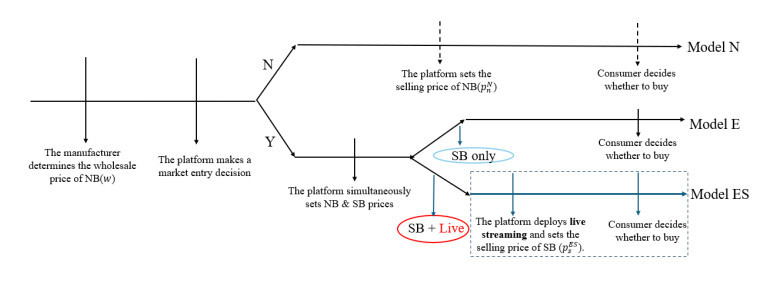
The sequence of events
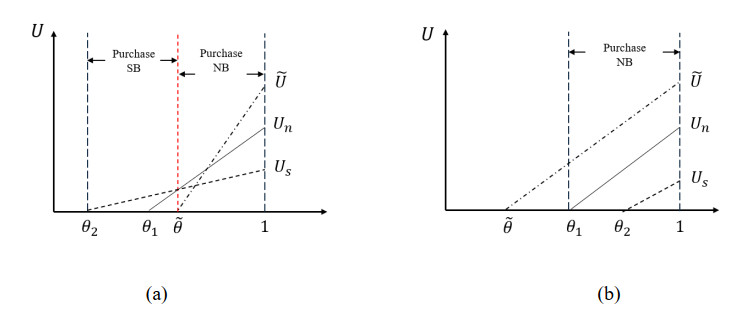
Demand analysis for the platforms under different consumer valuations (i.e., $ {\theta }_{1} $, $ {\theta }_{2} $)
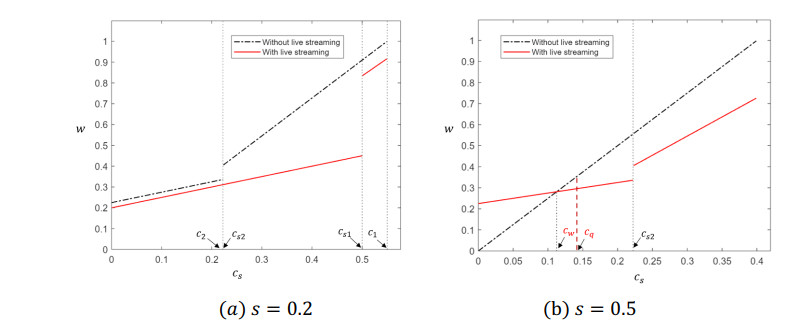
Wholesale price of the manufacturer under Model ES
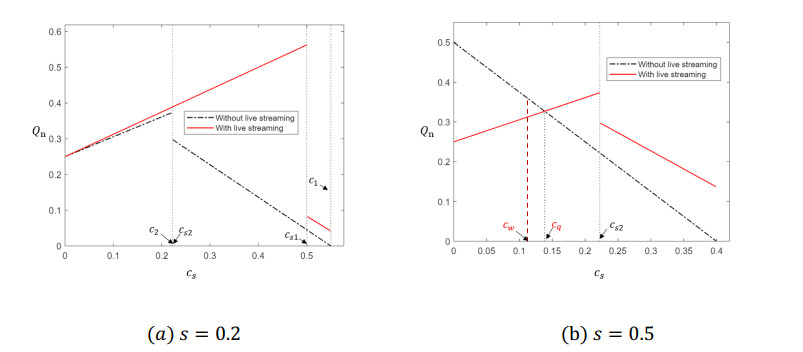
NB sales volume under Model ES
Profit under substantive encroachment
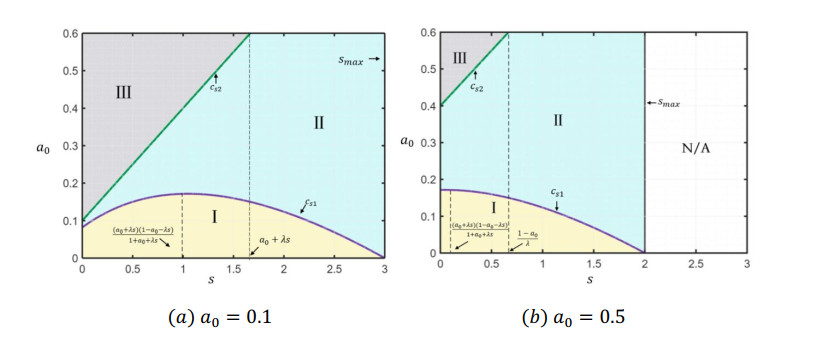
The equilibrium decisions under the Model ES
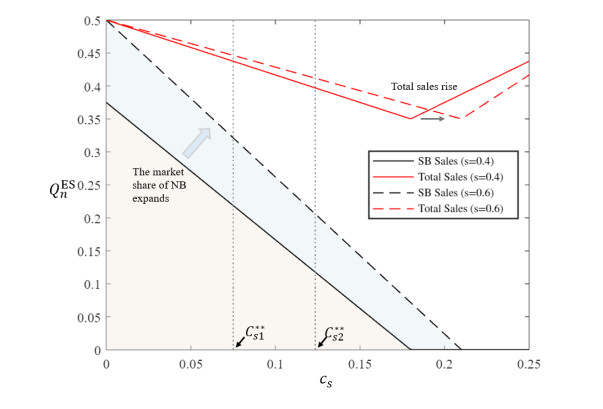
SB and Total sales volume
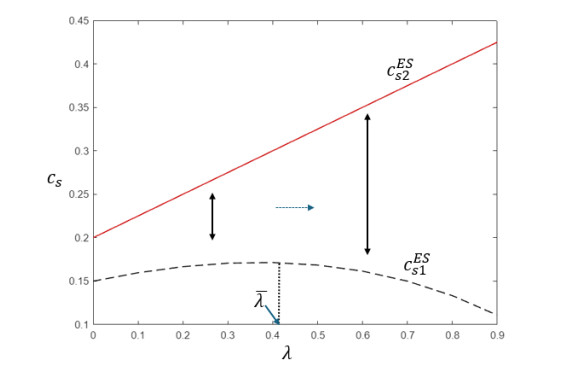
Impact of $ \lambda $ on encroachment thresholds
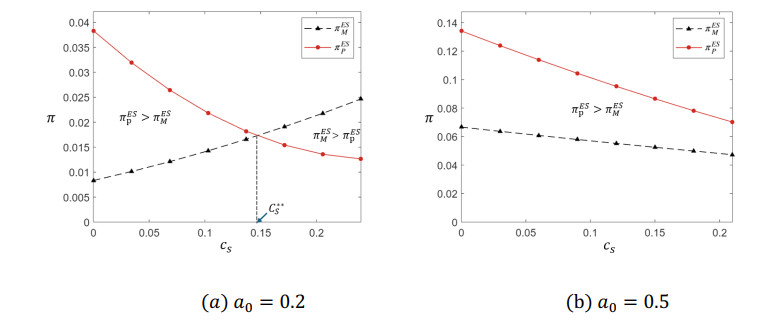
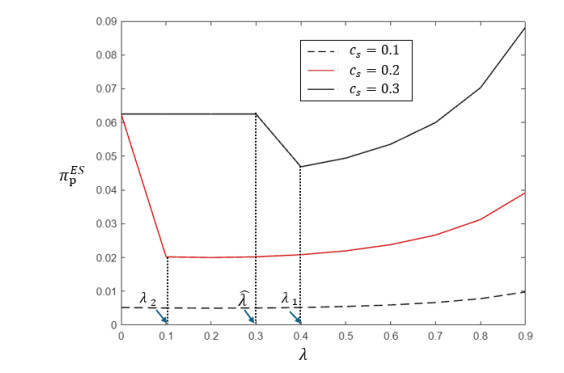
Platform profit across different $ {c}_{s} $ under Model ES
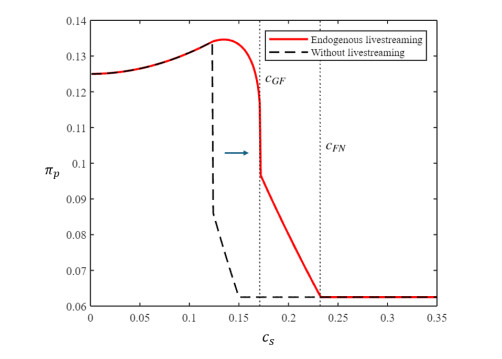
The platform profits when live streaming effort is endogenous
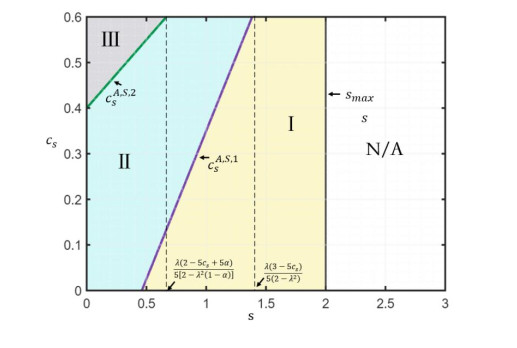
The equilibrium decisions under Agency selling mode
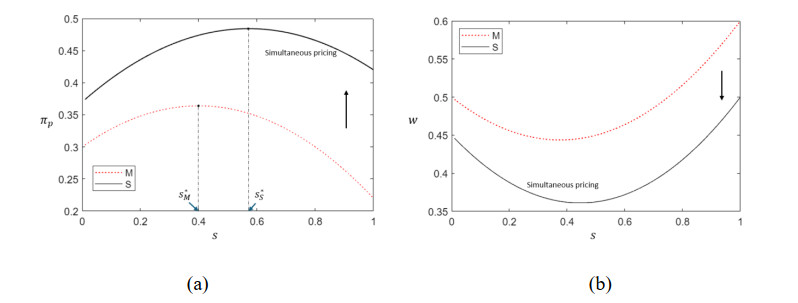
Platform profit and wholesale price under two scenarios



 DownLoad: