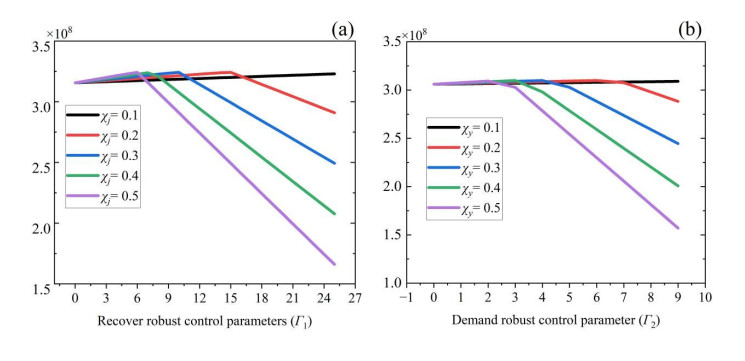
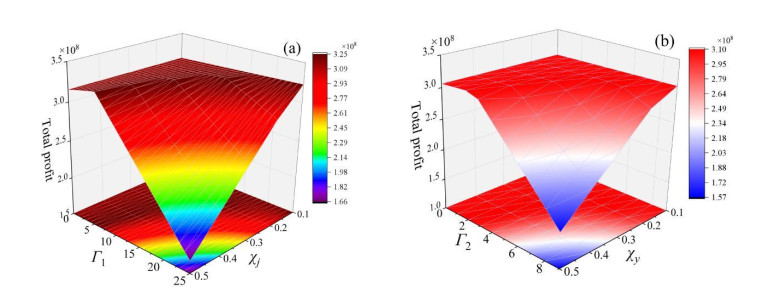
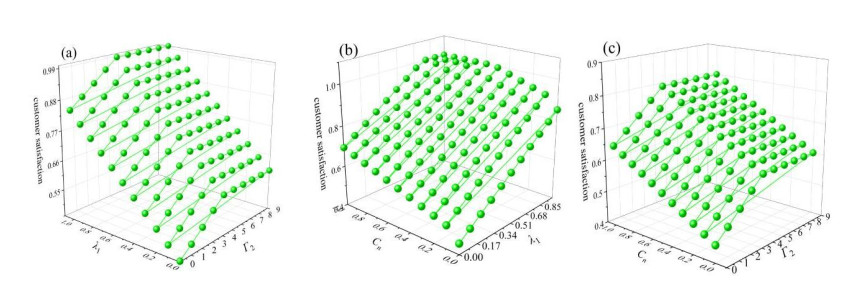
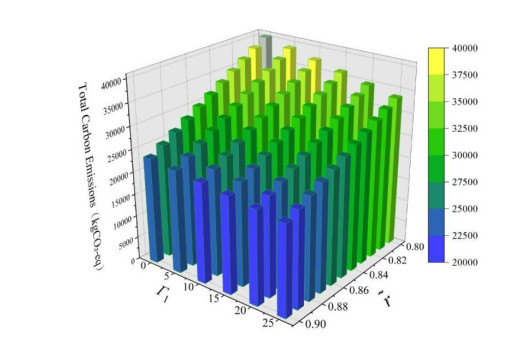
Driven by shortened mobile phone lifecycles, waste mobile phones have become a major e-waste stream and a valuable urban mine for resource recovery. In this study, we developed a multi-objective robust optimization framework for a sustainable closed-loop supply chain (CLSC) network under heterogeneous, multi-source uncertainty. Five uncertainty sources, namely recovery volume, recovery quality, market demand, second-hand prices, and material values, were modeled via a differentiated uncertainty set scheme integrating budgeted, box, and polyhedral sets to capture heterogeneous fluctuations and correlations. The model maximized profitability and customer satisfaction while minimizing carbon emissions and was reformulated as a linear robust counterpart via duality. As the recovery-volume disturbance coefficient increased from 0 to 0.5, total profit decreased by up to 25.1%, customer satisfaction declined by more than 50.5%, and carbon emissions decreased by 19.4%. Simulation and regional case studies indicated that the proposed robust framework improves solution feasibility under the considered multi-source uncertainty scenarios and yields implementable network layouts and capacity plans. The findings provide a basis for decision-makers to calibrate robust control parameters according to decision preferences and to determine resource allocation strategies under different decision scenarios by adjusting the relative weights of the three objectives. Overall, the proposed approach provides practical decision support for resilient and low-carbon CLSC planning, thereby advancing circular-economy implementation for end-of-life mobile phones.
Citation: Shuming Liu, Xiang Liu, Xianghua Liu, Ziqua Lin, Qiuzhi He. Sustainable network design for waste mobile phone closed-loop supply chains: A multi-objective robust optimization approach under multi-source uncertainties[J]. Journal of Industrial and Management Optimization, 2026, 22(11): 5732-5765. doi: 10.3934/jimo.2026194
Driven by shortened mobile phone lifecycles, waste mobile phones have become a major e-waste stream and a valuable urban mine for resource recovery. In this study, we developed a multi-objective robust optimization framework for a sustainable closed-loop supply chain (CLSC) network under heterogeneous, multi-source uncertainty. Five uncertainty sources, namely recovery volume, recovery quality, market demand, second-hand prices, and material values, were modeled via a differentiated uncertainty set scheme integrating budgeted, box, and polyhedral sets to capture heterogeneous fluctuations and correlations. The model maximized profitability and customer satisfaction while minimizing carbon emissions and was reformulated as a linear robust counterpart via duality. As the recovery-volume disturbance coefficient increased from 0 to 0.5, total profit decreased by up to 25.1%, customer satisfaction declined by more than 50.5%, and carbon emissions decreased by 19.4%. Simulation and regional case studies indicated that the proposed robust framework improves solution feasibility under the considered multi-source uncertainty scenarios and yields implementable network layouts and capacity plans. The findings provide a basis for decision-makers to calibrate robust control parameters according to decision preferences and to determine resource allocation strategies under different decision scenarios by adjusting the relative weights of the three objectives. Overall, the proposed approach provides practical decision support for resilient and low-carbon CLSC planning, thereby advancing circular-economy implementation for end-of-life mobile phones.

| [1] |
X. Mu, M. Zhang, X. Chu, L. Li, F. Yin, Exploration of driving factors for smartphone abandonment and recycling in China, J. Mater. Cycles Waste Manag., 27 (2025), 4499–4515. https://doi.org/10.1007/s10163-025-02380-8 doi: 10.1007/s10163-025-02380-8

|
| [2] | S. Ramirez, Mobile phone usage statistics 2026: What the latest data reveals, SQ Magazine, 2025. Available from: https://sqmagazine.co.uk/mobile-phone-usage-statistics/. |
| [3] | F. Zhang, M. Wang, Y. Wang, Circular utilization: Turning waste mobile phones into treasures through recycling, The People's Daily, 2024. http://paper.people.com.cn/rmrb/images/2024-06/03/01/rmrb2024060301.pdf. |
| [4] |
D. Teng, J. Wu, Q. Ma, W. Wang, G. Zhou, G. Fan, et al., Advances in the recovery of critical rare dispersed metals (gallium, germanium, indium) from urban mineral resources, ACS Omega, 10 (2024), 76–92. https://doi.org/10.1021/acsomega.4c08689 doi: 10.1021/acsomega.4c08689
|
| [5] |
Y. Guo, Circular economy of waste electronic products based on gompertz model, Proc. Integr. Optim., 9 (2025), 667–79. https://doi.org/10.1007/s41660-024-00477-5 doi: 10.1007/s41660-024-00477-5
|
| [6] | Global commodities outlook 2025: Gold prices and market drivers, J. P. Morgan Chase & Co; 2025. Available from: https://www.jpmorgan.com/insights/global-research/commodities/gold-prices. |
| [7] |
M. Fattahi, K. Govindan, Integrated forward/reverse logistics network design under uncertainty with pricing for collection of used products, Ann. Oper. Res., 253 (2017), 193–225. https://doi.org/10.1007/s10479-016-2347-5 doi: 10.1007/s10479-016-2347-5
|
| [8] |
S. Beheshti, J. Heydari, Z. Sazvar, Food waste recycling closed loop supply chain optimization through renting waste recycling facilities, Sustain. Cities Soc., 78 (2022), 103644. https://doi.org/10.1016/j.scs.2021.103644 doi: 10.1016/j.scs.2021.103644
|
| [9] |
T. Abdallah, A. Farhat, A. Diabat, S. Kennedy, Green supply chains with carbon trading and environmental sourcing: Formulation and life cycle assessment, Appl. Math. Model., 36 (2012), 4271–4285. https://doi.org/10.1016/j.apm.2011.11.056 doi: 10.1016/j.apm.2011.11.056
|
| [10] |
A. Bal, S. I. Satoglu, A goal programming model for sustainable reverse logistics operations planning and an application, J. Clean. Prod., 201 (2018), 1081–1091. https://doi.org/10.1016/j.jclepro.2018.08.104 doi: 10.1016/j.jclepro.2018.08.104
|
| [11] |
Y. Xu, X. Wu, M. Tang, C. -H. Yeh, L. Zhang, Developing effective intervention strategies to improve public participation in household waste recycling program: A data-driven agent-based behavior analysis approach, Sustain. Cities Soc., 127 (2025), 106447. https://doi.org/10.1016/j.scs.2025.106447 doi: 10.1016/j.scs.2025.106447
|
| [12] |
I. I. Almaraj, T. B. Trafalis, A robust optimization approach in a multi-objective closed-loop supply chain model under imperfect quality production, Ann. Oper. Res., 319 (2022), 1479–1505. https://doi.org/10.1007/s10479-021-04286-8 doi: 10.1007/s10479-021-04286-8
|
| [13] |
J. Ba, Y. Wang, D. Wang, X. An, M. Zhang, Carbon footprint accounting of E-waste dismantling process in China: field-based research, Carbon Res., 5 (2026), 1. https://doi.org/10.1007/s44246-025-00238-0 doi: 10.1007/s44246-025-00238-0
|
| [14] |
M. Mohsenizadeh, M. K. Tural, E. Kentel, Municipal solid waste management with cost minimization and emission control objectives: A case study of Ankara, Sustain. Cities Soc., 52 (2020), 101807. https://doi.org/10.1016/j.scs.2019.101807 doi: 10.1016/j.scs.2019.101807
|
| [15] | Unblocking "the green cycle" of waste mobile phone recycling, National Development and Reform Commission, 2025. Available from: https://www.ndrc.gov.cn/fggz/hjyzy/zyzhlyhxhjj/202506/t20250611_1398381_ext.html. |
| [16] |
F. Gu, P. A. Summers, P. Hall, Recovering materials from waste mobile phones: Recent technological developments, J. Clean. Prod., 237 (2019), 117657. https://doi.org/10.1016/j.jclepro.2019.117657 doi: 10.1016/j.jclepro.2019.117657
|
| [17] |
W. Sun, J. M. Price, The impact of environmental uncertainty on increasing customer satisfaction through corporate social responsibility, Eur. J. Mark., 50 (2016), 1209–1238. https://doi.org/10.1108/EJM-02-2015-0077 doi: 10.1108/EJM-02-2015-0077
|
| [18] |
M. Wilhelm, M. Hutchins, C. Mars, C. Benoit-Norris, An overview of social impacts and their corresponding improvement implications: a mobile phone case study, J. Clean. Prod., 102 (2015), 302–315. https://doi.org/10.1016/j.jclepro.2015.04.025 doi: 10.1016/j.jclepro.2015.04.025
|
| [19] |
B. Yang, C. Lee, I. W. K. Suryawan, Resilient socio-technical systems for adaptive consumer e-waste management, Sustain. Cities Soc., 118 (2025), 106026. https://doi.org/10.1016/j.scs.2024.106026 doi: 10.1016/j.scs.2024.106026
|
| [20] |
A. Li, B. Li, X. Liu, Y. Zhang, H. Zhang, X. Lei, et al., Characteristics and dynamics of university students' awareness of retired mobile phones in China, Sustainability, 14 (2022), 10587. https://doi.org/10.3390/su141710587 doi: 10.3390/su141710587
|
| [21] |
T. B. Yahya, N. M. Jamal, B. Sundarakani, S. Z. Omain, The effects of data security and perceived benefits on mobile phone recycling behaviour and the recycling intention mediation role, Recycling, 8 (2023), 27. https://doi.org/10.3390/recycling8010027 doi: 10.3390/recycling8010027
|
| [22] |
S. J. H. Dehshiri, M. Amiri, Considering the circular economy for designing closed-loop supply chain under hybrid uncertainty: A robust scenario-based possibilistic-stochastic programming, Expert Syst. Appl., 238 (2024), 121745. https://doi.org/10.1016/j.eswa.2023.121745 doi: 10.1016/j.eswa.2023.121745
|
| [23] |
Y. Du, Y. Zhou, D. Jia, X. Li, The end-of-life power battery recycling & remanufacturing center location-adjustment problem considering battery capacity and quantity uncertainty, J. Environ. Manag., 357 (2024), 14. https://doi.org/10.1016/j.jenvman.2024.120774 doi: 10.1016/j.jenvman.2024.120774
|
| [24] | H. Cheng, C. Yu, Y. Shi, C. Wang, C. Liu, Z. Jin, Collaborative medical triage under uncertainty: A multi-agent dynamic matching approach, 2021. https://doi.org/10.48550/arXiv.2507.22504 |
| [25] |
Q. Zhang, Z. Wang, M. Huang, H. Wang, X. Wang, S. -C. Fang, Collaborative supply chain network design under demand uncertainty: A robust optimization approach, Int. J. Prod. Econ., 279 (2025), 109465. https://doi.org/10.1016/j.ijpe.2024.109465 doi: 10.1016/j.ijpe.2024.109465
|
| [26] |
H. S. Kilic, U. Cebeci, M. B. Ayhan, Reverse logistics system design for the waste of electrical and electronic equipment (WEEE) in Turkey, Resour. Conserv. Recycl., 95 (2015), 120–132. https://doi.org/10.1016/j.resconrec.2014.12.010 doi: 10.1016/j.resconrec.2014.12.010
|
| [27] |
M. -L. Bentaha, P. Marangé, A. Voisin, N. Moalla, End-of-Life product quality management for efficient design of disassembly lines under uncertainty, Int. J. Prod. Res., 61 (2023), 1146–1167. https://doi.org/10.1080/00207543.2022.2028199 doi: 10.1080/00207543.2022.2028199
|
| [28] |
G. Yan, Y. Ni, X. Yang, Optimal pricing in recycling and remanufacturing in uncertain environments, Sustainability, 12 (2020), 3199. https://doi.org/10.3390/su12083199 doi: 10.3390/su12083199
|
| [29] |
J. Lin, X. Li, Y. Zhao, W. Chen, M. Wang, Design a reverse logistics network for end-of-life power batteries: A case study of Chengdu in China, Sustain. Cities Soc., 98 (2023), 104807. https://doi.org/10.1016/j.scs.2023.104807 doi: 10.1016/j.scs.2023.104807
|
| [30] |
J. Morell, D. Ribas, I. Tristany, X. Guimerà, A. D. Dorado, Metal recovery in mobile phone waste: Characterization of metal composition and economic assessment through shredding and screening processes, Waste Manage., 196 (2025), 93–105. https://doi.org/10.1016/j.wasman.2025.02.014 doi: 10.1016/j.wasman.2025.02.014
|
| [31] |
L. Chen, T. Dong, J. Peng, D. Ralescu, Uncertainty analysis and optimization modeling with application to supply chain management: A systematic review, Mathematics, 11 (2023), 2530. https://doi.org/10.3390/math11112530 doi: 10.3390/math11112530
|
| [32] |
S. Mohseni, M. S. Pishvaee, Data-driven robust optimization for wastewater sludge-to-biodiesel supply chain design, Comput. Ind. Eng., 139 (2020), 105944. https://doi.org/10.1016/j.cie.2019.07.001 doi: 10.1016/j.cie.2019.07.001
|
| [33] |
M. Kiani-Moghaddam, M. N. Soltani, P. D. Weinsier, A. Arabkoohsar, A bi-level, many-objective stochastic optimization model for handling simultaneous uncertainties in the operation of multi-carrier integrated energy systems: A hospital case study, Sustain. Cities Soc., 127 (2025), 106430. https://doi.org/10.1016/j.scs.2025.106430 doi: 10.1016/j.scs.2025.106430
|
| [34] |
P. He, S. Geng, F. T. Chan, C. Pang, H. Tang, Joint decisions of pricing and inventory of a dual-channel supply chain with demand ambiguity considering free-riding behavior under sales effort: based on a fuzzy optimization method, Expert Syst. Appl., (2026), 131182. https://doi.org/10.1016/j.eswa.2026.131182 doi: 10.1016/j.eswa.2026.131182
|
| [35] |
N. Mirzaei, A. Mahmoodirad, S. Niroomand, R. Nowzari, A sustainable intuitionistic fuzzy Z-number multi-objective model for optimizing electric vehicle charging infrastructure in the European side of Istanbul, Sustain. Cities Soc., 2026, 107391. https://doi.org/10.1016/j.scs.2026.107391 doi: 10.1016/j.scs.2026.107391
|
| [36] |
S. Rosenberg, S. Huster, A. Rudi, F. Schultmann, Assessing economic uncertainty in dynamic reverse logistics networks–A stochastic modeling approach for planning circular battery treatment, Comput. Ind. Eng., 201 (2025), 110900. https://doi.org/10.1016/j.cie.2025.110900 doi: 10.1016/j.cie.2025.110900
|
| [37] |
P. Surya, K. Sameer, S. Gunjan, J. Vipul, R. A. P. Singh, Closed-loop supply chain network design and modelling under risks and demand uncertainty: an integrated robust optimization approach, Ann. Oper. Res., 2018. https://doi.org/10.1007/s10479-018-2902-3 doi: 10.1007/s10479-018-2902-3
|
| [38] |
A. Hasani, S. H. Zegordi, E. Nikbakhsh, Robust closed-loop supply chain network design for perishable goods in agile manufacturing under uncertainty, Int. J. Prod. Res., 50 (2012), 4649–4669. https://doi.org/10.1080/00207543.2011.625051 doi: 10.1080/00207543.2011.625051
|
| [39] |
D. Bertsimas, M. Sim, Robust discrete optimization and network flows, Math. Program., 98 (2003), 49–71. https://doi.org/10.1007/s10107-003-0396-4 doi: 10.1007/s10107-003-0396-4
|
| [40] |
K. Govindan, M. Fattahi, E. Keyvanshokooh, Supply chain network design under uncertainty: A comprehensive review and future research directions, Eur. J. Oper. Res., 263 (2017), 108–141. https://doi.org/10.1016/j.ejor.2017.04.009 doi: 10.1016/j.ejor.2017.04.009
|
| [41] | C. Johnstone, B. Cox, Conformal uncertainty sets for robust optimization, Conformal and probabilistic prediction and applications, 2021. https://doi.org/10.48550/arXiv.2105.14957 |
| [42] |
H. Asefi, S. Shahparvari, P. Chhetri, Integrated Municipal Solid Waste Management under uncertainty: A tri-echelon city logistics and transportation context, Sustain. Cities Soc., 50 (2019), 101606. https://doi.org/10.1016/j.scs.2019.101606 doi: 10.1016/j.scs.2019.101606
|
| [43] | Z. Song, H. Sun, X. Liu, M. Wang, Optimal design of reverse supply chain network for waste mobile phones under uncertainty, Proc. 2020 IEEE Int. Conf. Artif. Intell. Comput. Appl. (ICAICA), 2020,898–908. https://doi.org/10.1109/ICAICA50127.2020.9181931 |
| [44] | T. K. Dasaklis, F. Casino, C. Patsakis, A traceability and auditing framework for electronic equipment reverse logistics based on blockchain: The case of mobile phones, Proc. 2020 11th Int. Conf. Inf., Intell., Syst. Appl. (IISA), 2020, 1–7. https://doi.org/10.1109/IISA50023.2020.9284394 |
| [45] |
S. Kumar Singh, A. Chauhan, B. Sarkar, Supply chain management of e-waste for end-of-life electronic products with reverse logistics, Mathematics, 11 (2022), 124. https://doi.org/10.3390/math11010124 doi: 10.3390/math11010124
|
| [46] |
A. Singh, A. Goel, A. Chauhan, S. K. Singh, Sustainability of electronic product manufacturing through e-waste management and reverse logistics, Sustain. Futures, 9 (2025), 100490. https://doi.org/10.1016/j.sftr.2025.100490 doi: 10.1016/j.sftr.2025.100490
|
| [47] |
A. M. Harijani, S. Mansour, Municipal solid waste recycling network with sustainability and supply uncertainty considerations, Sustain. Cities Soc., 81 (2022), 103857. https://doi.org/10.1016/j.scs.2022.103857 doi: 10.1016/j.scs.2022.103857
|
| [48] | D. Dong, Z. Bai, M. Yin, S. Li, L. Xiao, Optimizing e-waste recycling networks under uncertain environment: a fourth-party logistics perspective, 5th International Conference on Internet of Things and Smart City (2025), 13739 (2025), 144–151. https://doi.org/10.1117/12.3072630 |
| [49] |
B. Ayvaz, B. Bolat, N. Aydın, Stochastic reverse logistics network design for waste of electrical and electronic equipment, Resour. Conserv. Recy., 104 (2015), 391–404. https://doi.org/10.1016/j.resconrec.2015.07.006 doi: 10.1016/j.resconrec.2015.07.006
|
| [50] |
S. Shahparvari, H. Soleimani, K. Govindan, B. Bodaghi, M. T. Fard, H. Jafari, Closing the loop: Redesigning sustainable reverse logistics network in uncertain supply chains, Comput. Ind. Eng., 157 (2021), 107093. https://doi.org/10.1016/J.CIE.2020.107093 doi: 10.1016/J.CIE.2020.107093
|
| [51] | A. R. Abbas, K. Tamara, Optimization of sustainable reverse logistics network with multi-objectives under uncertainty, J. Remanuf., (2023), https://doi.org/10.1007/s13243-022-00118-5 |
| [52] | S. Shahrabifarahani, S. A. Torabi, M. Rahiminia, Circular sustainable supply chain network design for electronic devices, Environ. Dev. Sustain., (2025), 1–34. https://doi.org/10.1007/s10668-025-06068-9 |
| [53] |
F. Yang, Y. Wang, J. Pei, J. Li, Electronic markets selection in supply chain with uncertain demand and uncertain price, Math. Probl. Eng., 2015 (2015), 939284. https://doi.org/10.1155/2015/939284 doi: 10.1155/2015/939284
|
| [54] | J. Xiao, K. Huang, S. Terzi, R. Bandinelli, Towards uncertainty of End-of-Use product recycling: a general screw connection-oriented disassembly analysis, Int. J. Prod. Res., (2025), 1–24. https://doi.org/10.1080/00207543.2025.2507111 |
| [55] |
Y. Zhao, M. R. Ghiasvand, B. M. Tosarkani, Balanced uncertainty sets for Closed-Loop supply chain Design: A Data-Driven robust optimization framework with Fairness considerations, Expert Syst. Appl., 276 (2025), 127170. https://doi.org/10.1016/j.eswa.2025.127170 doi: 10.1016/j.eswa.2025.127170
|
| [56] |
H. Yu, X. Sun, Uncertain remanufacturing reverse logistics network design in industry 5.0: Opportunities and challenges of digitalization, Eng. Appl. Artif. Intell., 133 (2024), 108578. https://doi.org/10.1016/j.engappai.2024.108578 doi: 10.1016/j.engappai.2024.108578
|
| [57] |
Y. Liu, L. Ma, Y. Liu, A novel robust fuzzy mean-UPM model for green closed-loop supply chain network design under distribution ambiguity, Appl. Math. Model., 92 (2021), 99–135. https://doi.org/10.1016/j.apm.2020.10.042 doi: 10.1016/j.apm.2020.10.042
|
| [58] |
D. Bertsimas, D. B. Brown, C. Caramanis, Theory and applications of robust optimization, SIAM Rev., 53 (2011), 464–501. https://doi.org/10.1137/080734510 doi: 10.1137/080734510
|
| [59] |
B. Sarkar, S. K. Singh, A. Chauhan, An advanced robust possibilistic chance-constrained programming model for the animal fat-based biodiesel supply chain network, J. Ind. Inf. Integr., 47 (2025), 100884. https://doi.org/10.1016/j.jii.2025.100884 doi: 10.1016/j.jii.2025.100884
|
| [60] |
A. Dehnokhalaji, S. Khezri, A. Emrouznejad, A box-uncertainty in DEA: A robust performance measurement framework, Expert Syst. Appl., 187 (2022), 115855. https://doi.org/10.1016/j.eswa.2021.115855 doi: 10.1016/j.eswa.2021.115855
|
| [61] |
D. Cuellar-Usaquén, M. W. Ulmer, O. Antons, J. C. Arlinghaus, Dynamic multi-period recycling collection routing with uncertain material quality, OR Spectrum, 47 (2025), 699–742. https://doi.org/10.1007/s00291-025-00808-z doi: 10.1007/s00291-025-00808-z
|
| [62] |
A. Jalilvand-Nejad, R. Shafaei, H. Shahriari, Robust optimization under correlated polyhedral uncertainty set, Comput. Ind. Eng., 92 (2016), 82–94. https://doi.org/10.1016/j.cie.2015.12.006 doi: 10.1016/j.cie.2015.12.006
|
| [63] |
I. I. Almaraj, T. B. Trafalis, A robust optimization approach in a multi-objective closed-loop supply chain model under imperfect quality production, Ann. Oper. Res., 319 (2022), 1479–1505. https://doi.org/10.1007/s10479-021-04286-8 doi: 10.1007/s10479-021-04286-8
|
| [64] |
S. Leyffer, M. Menickelly, T. Munson, C. Vanaret, S. M. Wild, A survey of nonlinear robust optimization, INFOR Inf. Syst. Oper. Res., 58 (2020), 342–373. https://doi.org/10.1080/03155986.2020.1730676 doi: 10.1080/03155986.2020.1730676
|
| [65] |
Y. Yao, H. Xu, H. -Y. Song, Exploring the key factors affecting customer satisfaction in China's sustainable second-hand clothing market: A mixed methods approach, Sustainability, 17 (2025), 1694. https://doi.org/10.3390/su17041694 doi: 10.3390/su17041694
|
| [66] |
H. Shambayati, M. S. Nikabadi, M. Rahmanimanesh, Customer satisfaction optimisation in a dynamic closed-loop supply chain under uncertainty, Int. J. Ind. Syst. Eng., 49 (2025), 18–56. https://doi.org/10.1504/IJISE.2023.10059290 doi: 10.1504/IJISE.2023.10059290
|
| [67] |
C. L. Miltgen, J. Henseler, C. Gelhard, A. Popovič, Introducing new products that affect consumer privacy: A mediation model, J. Bus. Res., 69 (2016), 4659–4666. https://doi.org/10.1016/j.jbusres.2016.04.015 doi: 10.1016/j.jbusres.2016.04.015
|
| [68] |
M. Mottaghi, S. Mansour, A multi-objective robust optimization model to sustainable closed-loop lithium-ion battery supply chain network design under uncertainties, Comput. Chem. Eng., 195 (2025), 109008. https://doi.org/10.1016/j.compchemeng.2025.109008 doi: 10.1016/j.compchemeng.2025.109008
|
| [69] |
O. Polat, O. Capraz, A. Gungor, Modelling of WEEE recycling operation planning under uncertainty, J. Clean. Prod., 180 (2018), 769–779. https://doi.org/10.1016/j.jclepro.2018.01.187 doi: 10.1016/j.jclepro.2018.01.187
|
| [70] |
L. Yao, T. Liu, X. Chen, M. Mahdi, J. Ni, An integrated method of life-cycle assessment and system dynamics for waste mobile phone management and recycling in China, J. Clean. Prod., 187 (2018), 852–862. https://doi.org/10.1016/j.jclepro.2018.03.195 doi: 10.1016/j.jclepro.2018.03.195
|
| [71] | L. Kauhanen, Towards a carbon-neutral waste management: an assessment of the potential CO2 emissions reductions from waste transport optimization, 2024. https://urn.fi/URN: NBN: fi: amk-2024121937507 |
| [72] |
W. Pan, K. Li, Y. Teng, Rethinking system boundaries of the life cycle carbon emissions of buildings, Renw. Sust. Energ. Rev., 90 (2018), 379–390. https://doi.org/10.1016/j.rser.2018.03.057 doi: 10.1016/j.rser.2018.03.057
|
| [73] |
E. Sahle-Demessie, B. Mezgebe, J. Dietrich, Y. Shan, S. Harmon, C. C. Lee, Material recovery from electronic waste using pyrolysis: Emissions measurements and risk assessment, J. Environ. Chem. Eng., 9 (2021), 104943. https://doi.org/10.1016/j.jece.2020.104943 doi: 10.1016/j.jece.2020.104943
|
| [74] | Y. Gao, Y. Feng, Q. Wang, H. Zheng, J. Tan, A multi-objective decision making approach for dealing with uncertainty in EOL product recovery, J. Clean. Prod., 2018. https://doi.org/10.1016/j.jclepro.2018.09.080 |
| [75] | H. Lu, B. Sturt, On the sparsity of optimal linear decision rules for a class of robust optimization problems with box uncertainty sets, Oper. Res., 2025. https://doi.org/10.1287/opre.2023.0603 |
| [76] | C. P. Baldé, R. Kuehr, T. Yamamoto, R. McDonald, E. D'Angelo, S. Althaf, et al., Global e-waste monitor 2024, 2024. Available from: https://ewastemonitor.info. |
| [77] |
S. -Y. Youn, J. Hwang, N. Ju, Blockchain transparency in reducing second-hand luxury shopping uncertainty and the role of price consciousness, Fash. Text., 12 (2025), 10. https://doi.org/10.1186/s40691-025-00420-3 doi: 10.1186/s40691-025-00420-3
|
| [78] |
M. Hayati, S. M. S. A. Ganji, S. H. Shahcheraghi, R. R. Khabir, Optimization of copper recovery from electronic waste using response surface methodology and Monte Carlo simulation under uncertainty, J. Mater. Cycles Waste Manag., 25 (2023), 211–220. https://doi.org/10.1007/s10163-022-01526-2 doi: 10.1007/s10163-022-01526-2
|
| [79] | China National Resources Recycling Association, Development report of China waste electrical and electronic products recycling and treatment industry 2023: China National Resources Recycling Association, 2023. Available from: https://gfcl.hbzhan.com/news/169775.html. |
| [80] |
X. Guo, K. Yan, J. Zhang, G. Huang, Q. Tian, Exploitation potentiality analysis of metal resources in typical electronic waste, Chin. J. Nonferrous Met, 28 (2018), 365–376. https://doi.org/10.19476/j.ysxb.1004.0609.2018.02.19 doi: 10.19476/j.ysxb.1004.0609.2018.02.19
|
 jimo-22-11-194-s001.pdf |
 |
Figures(10) / Tables(6)
Shuming Liu, Xiang Liu, Xianghua Liu, Ziqua Lin, Qiuzhi He. Sustainable network design for waste mobile phone closed-loop supply chains: A multi-objective robust optimization approach under multi-source uncertainties[J]. Journal of Industrial and Management Optimization, 2026, 22(11): 5732-5765. doi: 10.3934/jimo.2026194




 DownLoad: