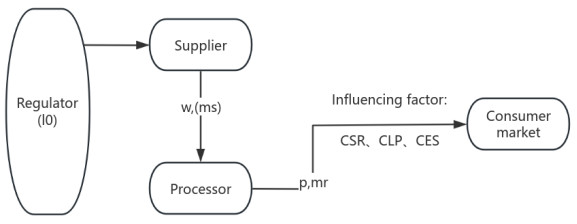
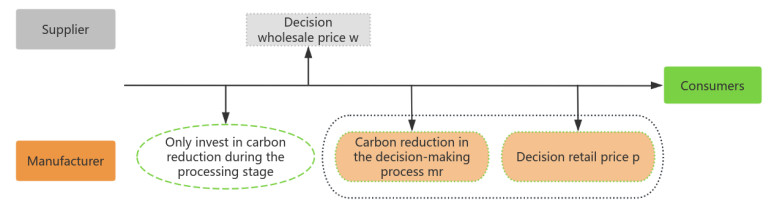
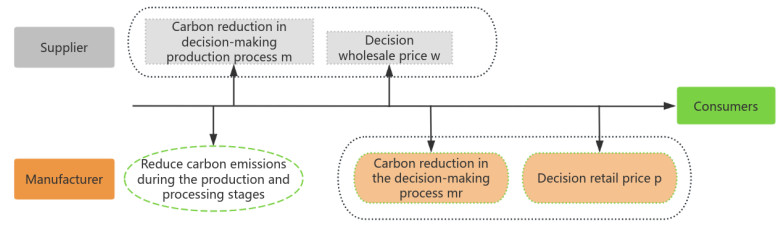
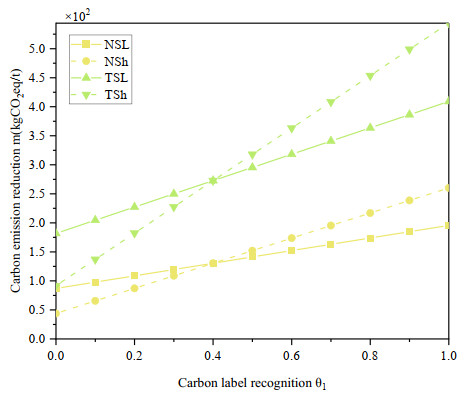
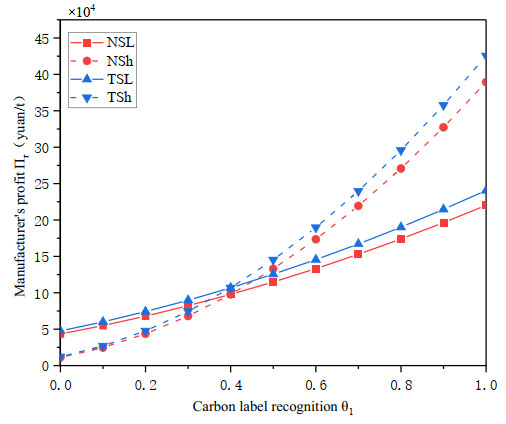
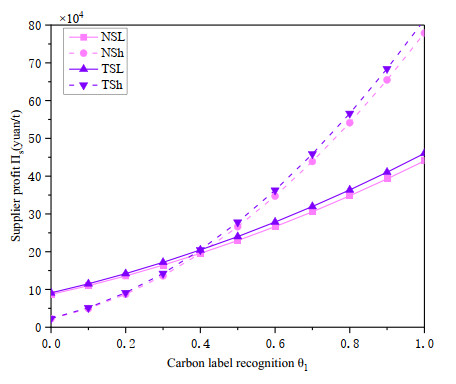
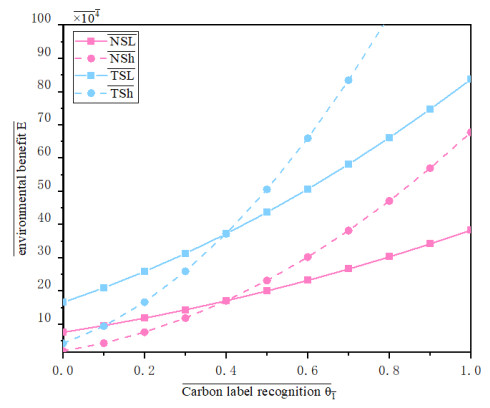
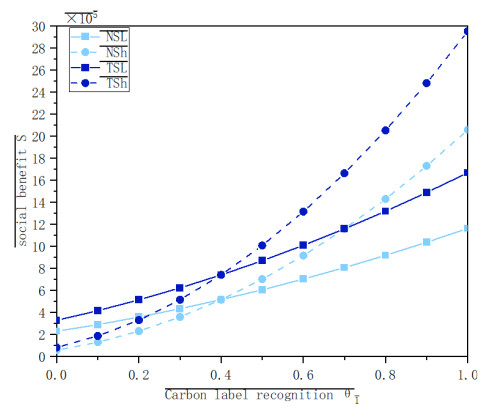
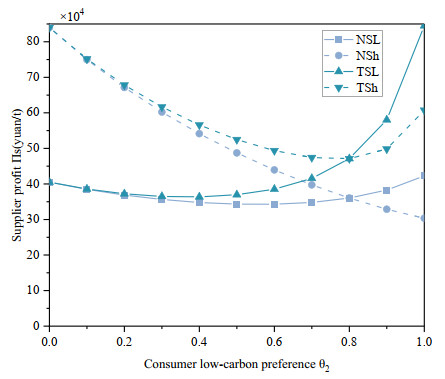
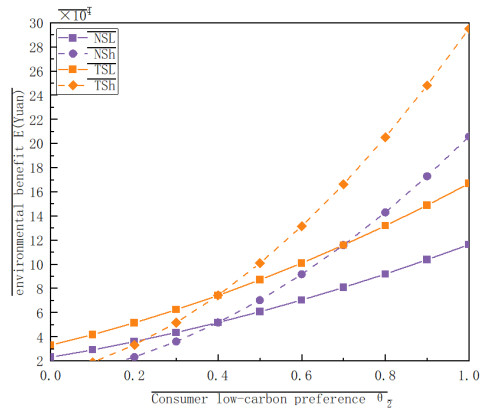
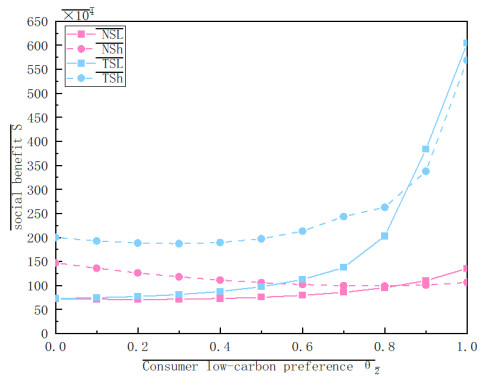
In response to growing concerns over agricultural carbon emissions, carbon reduction label standards (CES) have emerged as a market-oriented policy tool to promote low-carbon transitions in supply chains. This study investigates the effects of consumers' low-carbon preference (CLP) and consumers' recognition of carbon reduction labels (CLR) on the effectiveness of CES within agricultural supply chains, considering two emission reduction strategies that are independent reduction by processors (i.e. Non-cooperative Strategy, NS model) and two-tier reduction by suppliers and processors (i.e. Tandem Strategy, TS model). Using Stackelberg game theory, we derive optimal pricing, emission reduction levels, profits, and environmental and social benefits under each model. Our analytical and numerical results reveal that stringent CESs enhance carbon reduction, profitability, and social benefits when CLR is high, particularly under two-tier emission reduction. Moreover, the comparative advantage of two-tier over independent reduction widens with increasing CLR. While higher CLP incentivizes greater emission reductions, its effects on profits and social benefits depend on its interaction with CES's stringency and the choice of reduction strategy. Notably, under high CLP, relaxed CES can yield higher firm profits and social benefits than strict standards. This study provides theoretical and practical insights for policymakers, firms, and consumers in designing and responding to carbon labeling policies.
Citation: Jianli Jiang, Shucui He, Huan Zhang, Xiaoyu Ju. Stackelberg game analysis of carbon reduction label standards in agricultural supply chains: Impacts of consumer low-carbon preference and label recognition[J]. Journal of Industrial and Management Optimization, 2026, 22(9): 4284-4314. doi: 10.3934/jimo.2026150
In response to growing concerns over agricultural carbon emissions, carbon reduction label standards (CES) have emerged as a market-oriented policy tool to promote low-carbon transitions in supply chains. This study investigates the effects of consumers' low-carbon preference (CLP) and consumers' recognition of carbon reduction labels (CLR) on the effectiveness of CES within agricultural supply chains, considering two emission reduction strategies that are independent reduction by processors (i.e. Non-cooperative Strategy, NS model) and two-tier reduction by suppliers and processors (i.e. Tandem Strategy, TS model). Using Stackelberg game theory, we derive optimal pricing, emission reduction levels, profits, and environmental and social benefits under each model. Our analytical and numerical results reveal that stringent CESs enhance carbon reduction, profitability, and social benefits when CLR is high, particularly under two-tier emission reduction. Moreover, the comparative advantage of two-tier over independent reduction widens with increasing CLR. While higher CLP incentivizes greater emission reductions, its effects on profits and social benefits depend on its interaction with CES's stringency and the choice of reduction strategy. Notably, under high CLP, relaxed CES can yield higher firm profits and social benefits than strict standards. This study provides theoretical and practical insights for policymakers, firms, and consumers in designing and responding to carbon labeling policies.

| [1] |
X. Li, J. Du, W. Li, F, Shahzad. Green ambitions: A comprehensive model for enhanced traceability in agricultural product supply chain to ensure quality and safety, J. Clean. Prod., 420 (2023), 138397. https://doi.org/10.1016/j.jclepro.2023.138397 doi: 10.1016/j.jclepro.2023.138397

|
| [2] |
F. M. Alkaabneh, J. G. M. I. Lee, H. O. Gao, A systems approach to carbon policy for fruit supply chains: Carbon tax, technology innovation, or land sparing? Sci. Total Environ., 767 (2021), 144211. https://doi.org/10.1016/j.scitotenv.2020.144211 doi: 10.1016/j.scitotenv.2020.144211
|
| [3] |
K. Jiang, L. Zhang, X. Zhang, Y. Wang, Sustainable implementation of the carbon-labeling policy with customer participation and government supervision, Comput. Ind. Eng., 178 (2023), 109100. https://doi.org/10.1016/j.cie.2023.109100 doi: 10.1016/j.cie.2023.109100
|
| [4] |
P. Liu, M. Segovia, E. C. Y. Tse, R. M. Nayga, Become an environmentally responsible customer by choosing low-carbon footprint products at restaurants: Integrating the elaboration likelihood model (ELM) and the theory of planned behavior (TPB), J. Hosp. Tour. Manag., 52 (2022), 346–355. https://doi.org/10.1016/j.jhtm.2022.07.021 doi: 10.1016/j.jhtm.2022.07.021
|
| [5] |
R. Li, F. Lu, J. Xu, K. Chen, X. Zhao, Effect of carbon information disclosure with consistent evaluation standards: An empirical study about carbon efficiency label in Huzhou China, Energy Pol., 181 (2023), 113717. https://doi.org/10.1016/j.enpol.2023.113717 doi: 10.1016/j.enpol.2023.113717
|
| [6] |
X. Chen, S. Zhen, S. Li, J. Yang, Y. Ren, Consumers' willingness to pay for carbon-labeled agricultural products and its effect on greenhouse gas emissions: Evidence from beef products in urban China, Environ. Impact Assess. Rev., 106 (2024), 107528. https://doi.org/10.1016/j.eiar.2024.107528 doi: 10.1016/j.eiar.2024.107528
|
| [7] |
A. Qiao, S. H. Choi, Y. Pan, Multi-party coordination in sustainable supply chain under consumer green awareness, Sci. Total Environ., 777 (2021), 146043. https://doi.org/10.1016/j.scitotenv.2021.146043 doi: 10.1016/j.scitotenv.2021.146043
|
| [8] |
Q. Bai, Y. Gong, M. Jin, X. Xu, Effects of carbon emission reduction on supply chain coordination with vendor-managed deteriorating product inventory, Int. J. Prod. Econ., 208 (2019), 83–99. https://doi.org/10.1016/j.ijpe.2018.11.008 doi: 10.1016/j.ijpe.2018.11.008
|
| [9] | Y. Xu, B. Xian, Y. Ren, Y. Wang, L. Lang, B. Wang, Do carbon labels increase Chinese consumers' willingness to pay for carbon-labeled agricultural products? J. Clean. Prod., 434 (2024), 140299. https://doi.org/10.1016/j.jclepro.2023.140299 |
| [10] |
F. Yao, E. Parilina, G. Zaccour, H. Gao, Accounting for consumers' environmental concern in supply chain contracts, Eur. J. Oper. Res., 30 (2022), 987–1006. https://doi.org/10.1016/j.ejor.2021.11.039 doi: 10.1016/j.ejor.2021.11.039
|
| [11] |
W. Zhang, L. He, H. Yuan, Enterprises' decisions on adopting low-carbon technology by considering consumer perception disparity, Technovation, 117 (2022), 102238. https://doi.org/10.1016/j.technovation.2021.102238 doi: 10.1016/j.technovation.2021.102238
|
| [12] | M. A. Delmas, N. Lessem. Saving power to conserve your reputation? The effectiveness of private versus public information, J. Environ. Econ. Manag., 6 (2014), 353–370. https://doi.org/10.1016/j.jeem.2013.12.009 |
| [13] |
M. Courtat, P. J. Joyce, S. Sim, J. Sadhukhan, R. Murphy, Towards credible, evidence-based environmental rating ecolabels for consumer products: A proposed framework, J. Environ. Manage., 336 (2023), 117684. https://doi.org/10.1016/j.jenvman.2023.117684 doi: 10.1016/j.jenvman.2023.117684
|
| [14] |
S. Du, W. Tang, M. Song, Low-carbon production with low-carbon premium in cap-and-trade regulation, J. Clean. Prod., 134 (2016), 652-662. https://doi.org/10.1016/j.jclepro.2016.01.012 doi: 10.1016/j.jclepro.2016.01.012
|
| [15] |
R. Mardyana, C. M. Gour, Impacts of dual carbon emission reduction technology and technology spillovers of deterioration reduction on supply chain system's performances considering government incentives and contract design, J. Clean. Prod., 468 (2024), 142977. https://doi.org/10.1016/j.jclepro.2024.142977 doi: 10.1016/j.jclepro.2024.142977
|
| [16] |
Z. Guo, X. Zhang, Carbon reduction effect of agricultural green production technology: A new evidence from China, Sci. Total Environ., 874 (2023), 162483. https://doi.org/10.1016/j.scitotenv.2023.162483 doi: 10.1016/j.scitotenv.2023.162483
|
| [17] |
S. An, B. Li, D. Song, X. Chen, Green credit financing versus trade credit financing in a supply chain with carbon emission limits, Eur. J. Oper. Res., 292 (2021), 125–142. https://doi.org/10.1016/j.ejor.2020.10.025 doi: 10.1016/j.ejor.2020.10.025
|
| [18] | P. He, Y. Sun. The impacts of retailer's carbon tax on the price and carbon reduction decisions in supply chain, Comput. Ind. Eng., 190 (2024), 110034. https://doi.org/10.1016/j.cie.2024.110034 |
| [19] |
Y. Wang, S. Shi, H. Xu, Y. Zhao, F. Gu, Government economic subsidies or credit risk mitigation: incentive contracts and resilience assessment in low-carbon agricultural supply chains, Expert. Syst. Appl., 299 (2026), 130329. https://doi.org/10.1016/j.eswa.2025.130329 doi: 10.1016/j.eswa.2025.130329
|
| [20] |
R. Zhang, Z. Xiao, X. Fei, G. Zhou, Eco-label selection and information sharing in green supply chains under demand uncertainty: A perspective on two types of green products, J. Ind. Manag. Optim., 22 (2026), 2208–2241. https://doi.org/10.3934/jimo.2026081 doi: 10.3934/jimo.2026081
|
| [21] |
Y. Yang, G. Yao, Fresh-Keeping decision and coordination of ffresh aagricultural pproduct supply chain considering carbon cap-and-trade under different dominance, J. Syst. Sci. Syst. Eng., 33 (2023), 30–51. https://doi.org/10.1007/s11518-023-5587-3 doi: 10.1007/s11518-023-5587-3
|
| [22] |
Y. Yu, S. Zhou, Y. Shi, Information sharing or not across the supply chain: The role of carbon emission reduction, Transp. Res. E: Logist. Transp. Rev., 137 (2020), 101915. https://doi.org/10.1016/j.tre.2020.101915 doi: 10.1016/j.tre.2020.101915
|
| [23] | S. Fu, D. Wang, C. Lin, Z. Li. Which is better for remanufacturing: carbon asset pledge financing vs equity financing? J. Ind. Manag. Optim., 22 (2026), 1847–1869. https://doi.org/10.3934/jimo.2026068 |
| [24] |
H. J. Schmidt, Carbon footprinting, labelling and life cycle assessment, Int. J. Life Cycle Assess, 14 (2009), 6–9. https://doi.org/10.1007/s11367-009-0071-y doi: 10.1007/s11367-009-0071-y
|
| [25] |
J. Lopes, D. L. Medeiros, A. Kiperstok, Combining cleaner production and life cycle assessment for reducing the environmental impacts of irrigated carrot production in Brazilian semi-arid region, J. Clean. Prod., 170 (2018), 924–939. https://doi.org/10.1016/j.jclepro.2017.08.198 doi: 10.1016/j.jclepro.2017.08.198
|
 jimo-22-09-150-s001.pdf |
 |
Figures(17) / Tables(2)
Jianli Jiang, Shucui He, Huan Zhang, Xiaoyu Ju. Stackelberg game analysis of carbon reduction label standards in agricultural supply chains: Impacts of consumer low-carbon preference and label recognition[J]. Journal of Industrial and Management Optimization, 2026, 22(9): 4284-4314. doi: 10.3934/jimo.2026150




 DownLoad: