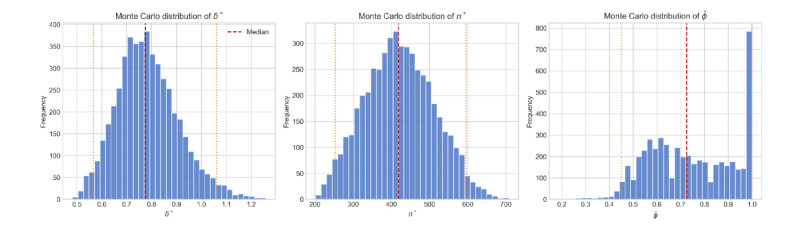
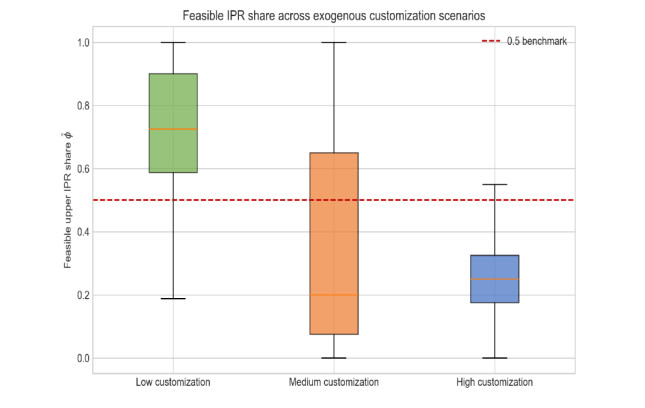
Unlike ordinary small and medium-sized enterprises (SMEs), 3D printing technology vendors rely on intangible technological assets and face R&D costs, uncertainty in patent valuation, and unstable cash flows from commercialization. To address the financing constraints faced by high-risk, asset-light SMEs in the 3D printing technology sector, we constructed a three-tier supply chain model consisting of a capital-constrained 3D printing technology vendor, a well-funded manufacturer, and a retailer. By embedding financing decisions into a supply chain coordination framework, we examine three financing mechanisms: intellectual property rights (IPR) pledges, internal debt, and internal equity. Our analysis reveals an inherent conflict of interest between the manufacturer (the primary fund provider) and the technology vendor (the capital demander). To mitigate this conflict, we proposed a hybrid financing structure that integrated the three mechanisms, resulting in four distinct financing modes. The results show that financing preferences are jointly affected by customization characteristics, customization cost, and financing structure. Hybrid financing can mitigate financing-preference conflicts between the technology vendor and the manufacturer by generating mutually acceptable financing regions, but its coordinating effect depends on the operating and financing environment. Monte Carlo robustness analysis further demonstrated that the feasible proportion of IPR pledges varied substantially across customization scenarios. Under low-customization conditions, a relatively higher IPR proportion remained feasible, whereas increasing customization complexity, cost pressure, and uncertainty reduced the acceptable IPR share and increased the importance of internal debt and equity financing. These findings indicated that IPR pledge financing should not be restricted by a universal threshold; instead, the appropriate proportion should be determined by technological characteristics and financing conditions.
Citation: Liurui Deng, Shaodan Li, Lingling Jiang. Hybrid financing strategies for capital-constrained 3D printing technology vendors: a game-theoretic approach to supply chain coordination[J]. Journal of Industrial and Management Optimization, 2026, 22(9): 4176-4230. doi: 10.3934/jimo.2026147
Unlike ordinary small and medium-sized enterprises (SMEs), 3D printing technology vendors rely on intangible technological assets and face R&D costs, uncertainty in patent valuation, and unstable cash flows from commercialization. To address the financing constraints faced by high-risk, asset-light SMEs in the 3D printing technology sector, we constructed a three-tier supply chain model consisting of a capital-constrained 3D printing technology vendor, a well-funded manufacturer, and a retailer. By embedding financing decisions into a supply chain coordination framework, we examine three financing mechanisms: intellectual property rights (IPR) pledges, internal debt, and internal equity. Our analysis reveals an inherent conflict of interest between the manufacturer (the primary fund provider) and the technology vendor (the capital demander). To mitigate this conflict, we proposed a hybrid financing structure that integrated the three mechanisms, resulting in four distinct financing modes. The results show that financing preferences are jointly affected by customization characteristics, customization cost, and financing structure. Hybrid financing can mitigate financing-preference conflicts between the technology vendor and the manufacturer by generating mutually acceptable financing regions, but its coordinating effect depends on the operating and financing environment. Monte Carlo robustness analysis further demonstrated that the feasible proportion of IPR pledges varied substantially across customization scenarios. Under low-customization conditions, a relatively higher IPR proportion remained feasible, whereas increasing customization complexity, cost pressure, and uncertainty reduced the acceptable IPR share and increased the importance of internal debt and equity financing. These findings indicated that IPR pledge financing should not be restricted by a universal threshold; instead, the appropriate proportion should be determined by technological characteristics and financing conditions.

| [1] | C. W. Hull, Apparatus for production of three-dimensional objects by stereolithography, U. S. Patent No. 4,575,330, 1986. Available from: https://patents.google.com/patent/US4575330A/en. |
| [2] |
H. Sun, H. Zheng, X. Sun, W. Li, Customized investment decisions for new and remanufactured products supply chain based on 3D printing technology, Sustainability., 14 (2022), 2502. https://doi.org/10.3390/su14052502 doi: 10.3390/su14052502

|
| [3] |
W. Zhang, H. -H. Lee, Investment strategies for sourcing a new technology in the presence of a mature technology, Manag. Sci. , 68 (2022), 4631–4644. https://doi.org/10.1287/mnsc.2021.4078 doi: 10.1287/mnsc.2021.4078
|
| [4] | B. Berman, 3-D printing: The new industrial revolution, Bus. Horiz., 55 (2012), 155–162.https://doi.org/10.1016/j.bushor.2011.11.003 |
| [5] |
X. Xiao, Research on the management countermeasures of intellectual property pledge financing for science and technology SMEs, Sci. Manag. Res., 29 (2011), 116–120. https://doi.org/10.19445/j.cnki.15-1103/g3.2011.05.027 doi: 10.19445/j.cnki.15-1103/g3.2011.05.027
|
| [6] |
H. Fu, S. Xu, L. Guan, Y. Peng, L. Zhang, Downstream firm's equity financing for capacity expansion in a supply chain, Int. Trans. Oper. Res., 32 (2025), 1751–1791. https://doi.org/10.1111/itor.13357 doi: 10.1111/itor.13357
|
| [7] |
X. Liang, X. Zhao, M. Wang, Z. Li, Small and medium-sized enterprises sustainable supply chain financing decision based on triple bottom line theory, Sustainability., 10 (2018), 4242. https://doi.org/10.3390/su10114242 doi: 10.3390/su10114242
|
| [8] |
B. H. Hall, The financing of research and development, Oxf. Rev. Econ. Policy., 18 (2002), 35–51. https://doi.org/10.1093/oxrep/18.1.35 doi: 10.1093/oxrep/18.1.35
|
| [9] |
W. Gao, Y. Zhang, D. Ramanujan, K. Ramani, Y. Chen, C. B. Williams, et al., The status, challenges, and future of additive manufacturing in engineering, Comput. Aided Des., 69 (2015), 65–89. https://doi.org/10.1016/j.cad.2015.04.001 doi: 10.1016/j.cad.2015.04.001
|
| [10] |
T. D. Ngo, A. Kashani, G. Imbalzano, K. T. Q. Nguyen, D. Hui, Additive manufacturing (3D printing): A review of materials, methods, applications and challenges, Compos. Part B Eng., 143 (2018), 172–196. https://doi.org/10.1016/j.compositesb.2018.02.012 doi: 10.1016/j.compositesb.2018.02.012
|
| [11] |
S. Mellor, L. Hao, D. Zhang, Additive manufacturing: A framework for implementation, Int. J. Prod. Econ., 149 (2014), 194–201. https://doi.org/10.1016/j.ijpe.2013.07.008 doi: 10.1016/j.ijpe.2013.07.008
|
| [12] |
B. Westerweel, R. Basten, J. denBoer, G. -J. vanHoutum, Printing spare parts at remote locations: Fulfilling the promise of additive manufacturing, Prod. Oper. Manag., 30 (2021), 1615–1632. https://doi.org/10.1111/poms.13298 doi: 10.1111/poms.13298
|
| [13] |
B. H. Hall, J. Lerner, Chapter 14-The Financing of R&D and Innovation, Handb. Econ. Innov., 1 (2010), 609–639. https://doi.org/10.1016/S0169-7218(10)01014-2 doi: 10.1016/S0169-7218(10)01014-2
|
| [14] |
W. Mann, Creditor rights and innovation: Evidence from patent collateral, J. Financ. Econ., 130 (2018), 25–47. https://doi.org/10.1016/j.jfineco.2018.07.001 doi: 10.1016/j.jfineco.2018.07.001
|
| [15] |
W. Zhuo, J. Peng, Z. Zhen, J. Wang, Mixed financing modes for capital-constrained supply chain with risk-averse members, RAIRO Oper. Res., 56 (2022), 1223–1258. https://doi.org/10.1051/ro/2022054 doi: 10.1051/ro/2022054
|
| [16] |
P. Mandal, P. Basu, T. -M. Choi, S. B. Rath, Platform financing vs. bank financing: Strategic choice of financing mode under seller competition, Eur. J. Oper. Res., 315 (2024), 130–146. https://doi.org/10.1016/j.ejor.2023.11.025 doi: 10.1016/j.ejor.2023.11.025
|
| [17] |
Y. V. Hochberg, C. J. Serrano, R. H. Ziedonis, Patent collateral, investor commitment, and the market for venture lending, J. Financ. Econ., 130 (2018), 74–94. https://doi.org/10.1016/j.jfineco.2018.06.003 doi: 10.1016/j.jfineco.2018.06.003
|
| [18] |
Y. Luo, D. Wang, S. Hu, Patent collateral and the trajectory of innovation, Pac. -Basin Financ. J., 84 (2024), 102301. https://doi.org/10.1016/j.pacfin.2024.102301 doi: 10.1016/j.pacfin.2024.102301
|
| [19] |
L. Kogan, D. Papanikolaou, A. Seru, N. Stoffman, Technological innovation, resource allocation, and growth, Q. J. Econ., 132 (2017), 665–712. https://doi.org/10.1093/qje/qjw040 doi: 10.1093/qje/qjw040
|
| [20] |
C. J. Serrano, The dynamics of the transfer and renewal of patents, RAND J. Econ., 41 (2010), 686–708. https://doi.org/10.1111/j.1756-2171.2010.00117.x doi: 10.1111/j.1756-2171.2010.00117.x
|
| [21] |
C. J. Serrano, R. Ziedonis, How redeployable are patent assets? Evidence from failed startups, Acad. Manag. Proc., 2019 (2019), 15631. https://doi.org/10.5465/AMBPP.2019.260 doi: 10.5465/AMBPP.2019.260
|
| [22] |
Z. Liu, H. Zhu, Impacts of patent pledge financing on corporate investment: Evidence from a quasi-natural experiment in China, Pac. -Basin Financ. J., 89 (2025), 102596. https://doi.org/10.1016/j.pacfin.2024.102596 doi: 10.1016/j.pacfin.2024.102596
|
| [23] |
T. I. Tunca, W. Zhu, Buyer intermediation in supplier finance, Manag. Sci., 64 (2018), 5631–5650. https://doi.org/10.1287/mnsc.2017.2863 doi: 10.1287/mnsc.2017.2863
|
| [24] |
F. Caniato, M. Henke, G. A. Zsidisin, Supply chain finance: Historical foundations, current research, future developments, J. Purch. Supply Manag., 25 (2019), 99–104. https://doi.org/10.1016/j.pursup.2019.02.002 doi: 10.1016/j.pursup.2019.02.002
|
| [25] |
C. S. Tang, S. A. Yang, J. Wu, Sourcing from suppliers with financial constraints and performance risk, Manuf. Serv. Oper. Manag., 20 (2018), 70–84. https://doi.org/10.1287/msom.2017.0638 doi: 10.1287/msom.2017.0638
|
| [26] |
B. F. Zhang, S. Xiao, Hybrid financing in a dual-channel supply chain with asymmetric demand information, Int. Trans. Oper. Res., 33 (2026), 1296–1322. https://doi.org/10.1111/itor.13541 doi: 10.1111/itor.13541
|
| [27] |
X. He, S. P. Sethi, X. Xu, N. Yan, Financing a capital-constrained supply chain: Equity or debt, Transp. Res. Part E Logist. Transp. Rev., 188 (2024), 103614. https://doi.org/10.1016/j.tre.2024.103614 doi: 10.1016/j.tre.2024.103614
|
| [28] |
S. A. Yang, J. R. Birge, Trade credit, risk sharing, and inventory financing portfolios, Manag. Sci., 64 (2018), 3667–3689. https://doi.org/10.1287/mnsc.2017.2799 doi: 10.1287/mnsc.2017.2799
|
| [29] |
Q. Yan, C. Wang, Mixed financing strategies for a supply chain with a financially distressed seller: Combination of equity financing and debt financing, Int. Trans. Oper. Res., 33 (2026), 1854–1882. https://doi.org/10.1111/itor.13600 doi: 10.1111/itor.13600
|
| [30] |
G. Kara, A. Özmen, G. -W. Weber, Stability advances in robust portfolio optimization under parallelepiped uncertainty, Cent. Eur. J. Oper. Res., 27 (2019), 241–261. https://doi.org/10.1007/s10100-017-0508-5 doi: 10.1007/s10100-017-0508-5
|
| [31] |
I. Baltas, Optimal investment in a general stochastic factor framework under model uncertainty, J. Dyn. Games., 11 (2024), 20–47. https://doi.org/10.3934/jdg.2023011 doi: 10.3934/jdg.2023011
|
| [32] |
E. Savku, G. -W. Weber, A stochastic maximum principle for a Markov regime-switching jump-diffusion model with delay and an application to finance, J. Optim. Theory Appl., 179 (2018), 696–721. https://doi.org/10.1007/s10957-017-1159-3 doi: 10.1007/s10957-017-1159-3
|
| [33] |
E. Savku, G. -W. Weber, Stochastic differential games for optimal investment problems in a Markov regime-switching jump-diffusion market, Ann. Oper. Res., 312 (2022), 1171–1196. https://doi.org/10.1007/s10479-020-03768-5 doi: 10.1007/s10479-020-03768-5
|
| [34] |
F. Yılmaz, H. Öz Bakan, G. -W. Weber, Weak second-order conditions of Runge–Kutta method for stochastic optimal control problems, J. Optim. Theory Appl., 202 (2024), 497–517. https://doi.org/10.1007/s10957-023-02324-y doi: 10.1007/s10957-023-02324-y
|
| [35] |
X. L. Wan, K. Y. Wang, X. C. Fan, W. Xu, Can government subsidy and marine carbon capture, utilization and storage technology improve the decision level of supply chain intellectual property pledge financing? Ocean Coast. Manag., 240 (2023), 106663. https://doi.org/10.1016/j.ocecoaman.2023.106663 doi: 10.1016/j.ocecoaman.2023.106663
|
| [36] |
M. Tong, W. Li, Decision on dual-channel supply chain based on 3D printing technology affecting cost and demand, Chin. J. Manag. Sci., 31 (2023), 142–150. https://doi.org/10.16381/j.cnki.issn1003-207x.2021.0062 doi: 10.16381/j.cnki.issn1003-207x.2021.0062
|
| [37] |
A. Nair, R. Narasimhan, Dynamics of competing with quality- and advertising-based goodwill, Eur. J. Oper. Res., 175 (2006), 462–474. https://doi.org/10.1016/j.ejor.2005.05.015 doi: 10.1016/j.ejor.2005.05.015
|
| [38] |
Y. Zhou, M. Bao, X. Chen, X. Xu, Co-op advertising and emission reduction cost sharing contracts and coordination in low-carbon supply chain based on fairness concerns, J. Clean. Prod., 133 (2016), 402–413. https://doi.org/10.1016/j.jclepro.2016.05.097 doi: 10.1016/j.jclepro.2016.05.097
|
| [39] |
Wang M, Li Q, Liu W. Research on credit guarantee financing coordination mechanism of the consignment supply chain, J Manage Eng., 33 (2019), 211–218. https://doi.org/10.13587/j.cnki.jieem.2019.02.025 doi: 10.13587/j.cnki.jieem.2019.02.025
|
| [40] | National Development and Reform Commission and Ministry of Finance, Notice on Issuing the Measures for the Administration of Asset Appraisal Fees, NDRC Price [2009] No. 2914, 2009. Available from: https://www.ndrc.gov.cn/xxgk/zcfb/tz/200912/t20091202_965252.html. |
| [41] |
J. Qin, H. Fu, Z. Wang, L. Xia, Financing and carbon emission reduction strategies of capital-constrained manufacturers in e-commerce supply chains, Int. J. Prod. Econ., 241 (2021), 108271. https://doi.org/10.1016/j.ijpe.2021.108271 doi: 10.1016/j.ijpe.2021.108271
|
 jimo-22-09-147-s001.pdf |
 |
Figures(18) / Tables(11)
Liurui Deng, Shaodan Li, Lingling Jiang. Hybrid financing strategies for capital-constrained 3D printing technology vendors: a game-theoretic approach to supply chain coordination[J]. Journal of Industrial and Management Optimization, 2026, 22(9): 4176-4230. doi: 10.3934/jimo.2026147




 DownLoad: