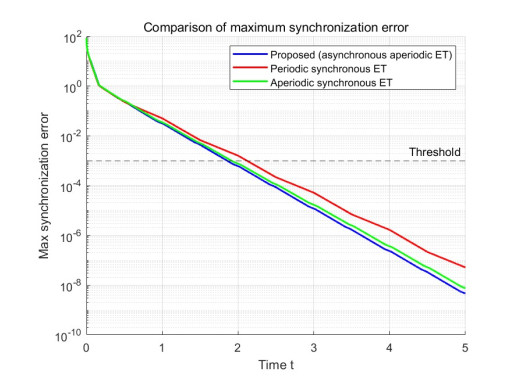
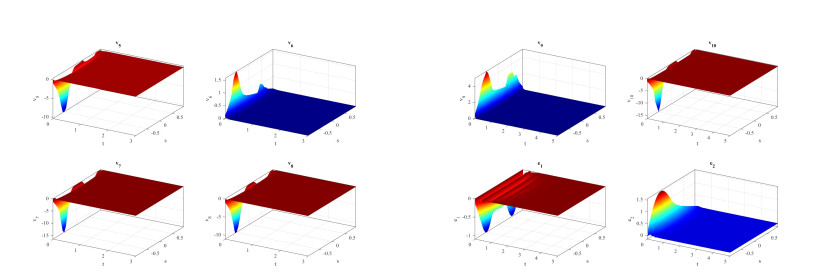
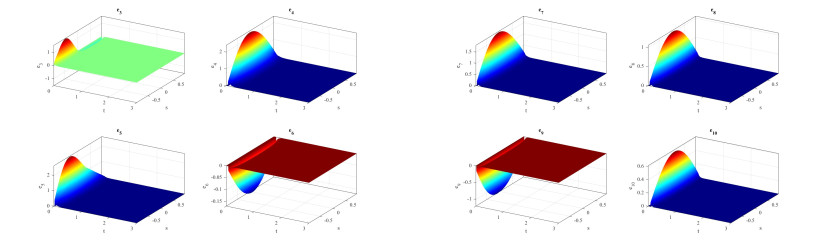
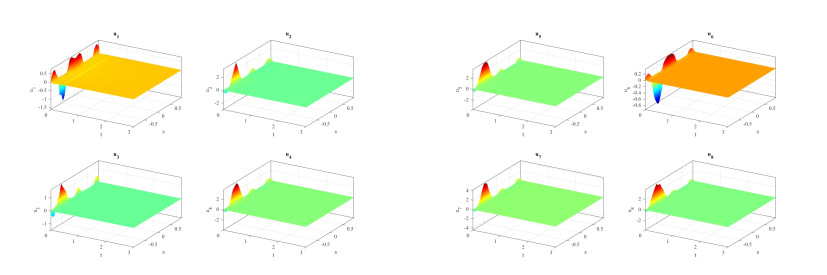
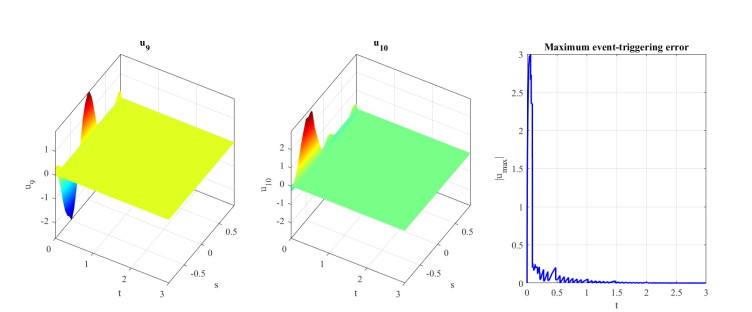
This work investigated the exponential synchronization (ES) of reaction-diffusion neural networks (RDNNs) via a novel aperiodic intermittent event-triggered control strategy. The proposed scheme enables each network node to independently configure its event-triggered threshold, control interval, and rest interval, thereby reducing unnecessary response-state sampling/transmission and controller updates under the assumption that the drive state is locally available. By constructing a piecewise Lyapunov functional and adopting Dini derivative analysis and graph-theory techniques, sufficient conditions for exponential synchronization were established. Furthermore, the exclusion of Zeno behavior was strictly proven to guarantee the feasibility of the designed event-triggered mechanism. Numerical simulations on a 10-node directed RDNN with fully heterogeneous node-wise configurations and 200 Monte Carlo runs validated the effectiveness and advantage of the proposed algorithm in reducing response-state sampling and transmission as well as controller updates compared with event-triggered synchronous schemes.
Citation: Shuo Huang, Wenxuan Zhou, Zhonggang Hu, Chengjie Xu. Exponential synchronization of reaction-diffusion neural networks via intermittent event-triggered control[J]. Electronic Research Archive, 2026, 34(12): 9094-9117. doi: 10.3934/era.2026383
This work investigated the exponential synchronization (ES) of reaction-diffusion neural networks (RDNNs) via a novel aperiodic intermittent event-triggered control strategy. The proposed scheme enables each network node to independently configure its event-triggered threshold, control interval, and rest interval, thereby reducing unnecessary response-state sampling/transmission and controller updates under the assumption that the drive state is locally available. By constructing a piecewise Lyapunov functional and adopting Dini derivative analysis and graph-theory techniques, sufficient conditions for exponential synchronization were established. Furthermore, the exclusion of Zeno behavior was strictly proven to guarantee the feasibility of the designed event-triggered mechanism. Numerical simulations on a 10-node directed RDNN with fully heterogeneous node-wise configurations and 200 Monte Carlo runs validated the effectiveness and advantage of the proposed algorithm in reducing response-state sampling and transmission as well as controller updates compared with event-triggered synchronous schemes.

| [1] |
Y. Sheng, H. Zhang, Z. Zeng, Synchronization of reaction–diffusion neural networks with dirichlet boundary conditions and infinite delays, IEEE Trans. Cybern., 47 (2017), 3005–3017. https://doi.org/10.1109/TCYB.2017.2691733 doi: 10.1109/TCYB.2017.2691733

|
| [2] |
J. G. Lu, Global exponential stability and periodicity of reaction–diffusion delayed recurrent neural networks with dirichlet boundary conditions, Chaos Solitons Fractals, 35 (2008), 116–125. https://doi.org/10.1016/j.chaos.2007.05.002 doi: 10.1016/j.chaos.2007.05.002
|
| [3] |
M. Y. Li, Z. Shuai, Global stability problem for coupled systems of differential equations on networks, J. Differ. Equations, 248 (2010), 1–20. https://doi.org/10.1016/j.jde.2009.09.003 doi: 10.1016/j.jde.2009.09.003
|
| [4] |
H. Wei, R. Li, Exponential synchronization control of reaction-diffusion fuzzy memristive neural networks: Hardy-Poincarè inequality, IEEE Trans. Neural Networks Learn. Syst., 35 (2024), 14825–14832. https://doi.org/10.1109/TNNLS.2023.3281645 doi: 10.1109/TNNLS.2023.3281645
|
| [5] |
Y. Jia, Y. Huang, Aperiodically intermittent synchronization and H$\infty$ synchronization of coupled reaction-diffusion complex-valued neural networks, Eur. J. Control, 84 (2025), 101258. https://doi.org/10.1016/j.ejcon.2025.101258 doi: 10.1016/j.ejcon.2025.101258
|
| [6] |
M. Hui, X. Liu, S. Zhu, J. Cao, Event-triggered impulsive cluster synchronization of coupled reaction-diffusion neural networks and its application to image encryption, Neural Networks, 170 (2024), 46–54. https://doi.org/10.1016/j.neunet.2023.11.022 doi: 10.1016/j.neunet.2023.11.022
|
| [7] | Y. Sun, M. Chen, X. Lou, Exponential synchronization of coupled reaction-diffusion neural networks via event-triggered impulsive control, in 2025 IEEE 14th Data Driven Control and Learning Systems (DDCLS), (2025), 1865–1869. https://doi.org/10.1109/DDCLS66240.2025.11065277 |
| [8] |
Y. Chen, C. Lu, X. Zhang, Allowable delay set flexible fragmentation approach to passivity analysis of delayed neural networks, Neurocomputing, 629 (2025), 129730. https://doi.org/10.1016/j.neucom.2025.129730 doi: 10.1016/j.neucom.2025.129730
|
| [9] |
H. C. Lin, H. B. Zeng, X. Zhang, W. Wang, Stability analysis for delayed neural networks via a generalized reciprocally convex inequality, IEEE Trans. Neural Networks Learn. Syst., 34 (2023), 7491–7499. https://doi.org/10.1109/TNNLS.2022.3144032 doi: 10.1109/TNNLS.2022.3144032
|
| [10] |
X. Ma, B. Liu, X. Jia, X. Zhang, Synchronization control of chaotic neural networks subject to actuator saturation under event-triggered sampling scheme, Neurocomputing, 677 (2026), 133038. https://doi.org/10.1016/j.neucom.2026.133038 doi: 10.1016/j.neucom.2026.133038
|
| [11] |
X. M. Zhang, Q. L. Han, B. L. Zhang, X. Ge, Monotonically-increasing-function-based event-triggered sampling scheme for stabilization of networked nonlinear systems, Sci. China Inf. Sci., 69 (2026), 152201. https://doi.org/10.1007/s11432-025-4644-x doi: 10.1007/s11432-025-4644-x
|
| [12] |
Y. Wu, Z. Sun, G. Ran, L. Xue, Intermittent control for fixed-time synchronization of coupled networks, IEEE/CAA J. Autom. Sinica, 10 (2023), 1488–1490. https://doi.org/10.1109/JAS.2023.123363 doi: 10.1109/JAS.2023.123363
|
| [13] |
W. Tang, Y. Sheng, Q. Xiao, T. Huang, Z. Zeng, Synchronization of complex dynamical networks on time scales via intermittent dynamic event-triggered control, IEEE Trans. Syst. Man Cybern. Syst., 54 (2024), 2897–2906. https://doi.org/10.1109/TSMC.2024.3352074 doi: 10.1109/TSMC.2024.3352074
|
| [14] |
Y. Wu, Z. Guo, L. Xue, C. K. Ahn, J. Liu, Stabilization of complex networks under asynchronously intermittent event-triggered control, Automatica, 161 (2024), 111493. https://doi.org/10.1016/j.automatica.2023.111493 doi: 10.1016/j.automatica.2023.111493
|
| [15] |
W. Tian, G. Zhang, G. Chen, J. Hu, S. Wen, Fixed-time synchronization of delayed memristive reaction-diffusion neural networks via semi-intermittent switching control, Appl. Math. Comput., 523 (2026), 130026. https://doi.org/10.1016/j.amc.2026.130026 doi: 10.1016/j.amc.2026.130026
|
| [16] |
N. Zhang, Z. Wang, J. H. Park, W. Li, Semi-global synchronization of stochastic mixed time-delay systems with Lévy noise under aperiodic intermittent delayed sampled-data control, Automatica, 171 (2025), 111963. https://doi.org/10.1016/j.automatica.2024.111963 doi: 10.1016/j.automatica.2024.111963
|
| [17] |
N. Zhang, Q. Hu, J. H. Park, W. Li, Exponential stability of stochastic highly nonlinear delayed systems with regime-switching diffusion under asynchronous intermittent control, IEEE Trans. Autom. Control, 70 (2025), 8375–8381. https://doi.org/10.1109/TAC.2025.3583609 doi: 10.1109/TAC.2025.3583609
|
| [18] |
N. Zhang, X. Wang, W. Li, Stability for multi-linked stochastic delayed complex networks with stochastic hybrid impulses by Dupire Itô's formula, Nonlinear Anal. Hybrid Syst., 45 (2022), 101200. https://doi.org/10.1016/j.nahs.2022.101200 doi: 10.1016/j.nahs.2022.101200
|
| [19] |
G. Zhang, R. Rakkiyappan, L. Wang, Event-triggered-based fixed/preassigned-time synchronization control of second-order neural networks with distributed delays, Commun. Nonlinear Sci. Numer. Simul., 139 (2024), 108301. https://doi.org/10.1016/j.cnsns.2024.108301 doi: 10.1016/j.cnsns.2024.108301
|
| [20] |
J. Gao, G. Zhang, L. Wang, Fixed/preassigned-time synchronization of memristive neural networks with mixed-time delays via event-triggered control, Int. J. Control Autom. Syst., 23 (2025), 2009–2018. https://doi.org/10.1007/s12555-024-0834-z doi: 10.1007/s12555-024-0834-z
|
| [21] |
C. Zhang, H. Wu, X. Han, X. Zhang, Exponential synchronization of reaction-diffusion neural networks via switched event-triggered control, Inf. Sci., 648 (2023), 119599. https://doi.org/10.1016/j.ins.2023.119599 doi: 10.1016/j.ins.2023.119599
|
| [22] |
Z. P. Wang, H. Y. Chen, J. Qiao, H. Ding, H. N. Wu, T. Huang, Output synchronization via intermittent dynamic event-triggered sampled-data security control for delayed reaction–diffusion neural networks, IEEE Trans. Cybern., 56 (2026), 3818–3829. https://doi.org/10.1109/TCYB.2026.3658950 doi: 10.1109/TCYB.2026.3658950
|
| [23] |
X. Song, Z. Peng, S. Song, V. Stojanovic, Asynchronous state estimation for switched nonlinear reaction-diffusion SIR epidemic models with impulsive effects, Biomed. Signal Process. Control, 105 (2025), 107600. https://doi.org/10.1016/j.bspc.2025.107600 doi: 10.1016/j.bspc.2025.107600
|
| [24] |
D. Zheng, X. Song, S. Song, V. Stojanovic, Quantized control for interconnected PDE systems via mobile measurement and control strategies, J. Franklin Inst., 361 (2024), 107070. https://doi.org/10.1016/j.jfranklin.2024.107070 doi: 10.1016/j.jfranklin.2024.107070
|
| [25] |
L. Xue, H. Zhou, Y. Wu, J. Liu, D. C. Wunsch, Aperiodically intermittent dynamic event-triggered control for predefined-time synchronization of stochastic complex networks, IEEE Trans. Network Sci. Eng., 12 (2025), 970–981. https://doi.org/10.1109/TNSE.2024.3521598 doi: 10.1109/TNSE.2024.3521598
|
| [26] | Z. Chang, Y. Guo, G. Zong, W. Qi, X. Zhao, Exponential synchronization for mobile robotic formation: A hybrid dynamic event-triggered intermittent control method, IEEE Trans. Intell. Veh., 2024, 1–10. https://doi.org/10.1109/TIV.2024.3410040 |
| [27] |
Y. Wu, J. Sun, N. Gunasekaran, J. Kurths, J. Liu, Exponential output synchronization of complex networks with output coupling via intermittent event-triggered control, IEEE Trans. Control Network Syst., 11 (2024), 284–294. https://doi.org/10.1109/TCNS.2023.3280457 doi: 10.1109/TCNS.2023.3280457
|
| [28] |
Y. Xu, Z. Jiang, X. Xie, W. Li, Y. Wu, R. M. Palhares, Bipartite synchronization of fractional-order T-S fuzzy signed networks via event-triggered intermittent control, IEEE Trans. Fuzzy Syst., 32 (2024), 6979–6989. https://doi.org/10.1109/TFUZZ.2024.3471793 doi: 10.1109/TFUZZ.2024.3471793
|
| [29] |
H. Sang, C. Cui, Y. Liu, P. Wang, S. Yu, G. M. Dimirovski, Sampled-data-based event-triggered synchronization strategy for directed networks with intermittent communication control, IEEE Trans. Network Sci. Eng., 13 (2026), 1374–1388. https://doi.org/10.1109/TNSE.2025.3595853 doi: 10.1109/TNSE.2025.3595853
|
| [30] |
C. Xu, H. Xu, Z. H. Guan, Y. Ge, Observer-based dynamic event-triggered semiglobal bipartite consensus of linear multi-agent systems with input saturation, IEEE Trans. Cybern., 53 (2023), 3139–3152. https://doi.org/10.1109/TCYB.2022.3164048 doi: 10.1109/TCYB.2022.3164048
|
| [31] |
C. Xu, F. Deng, Z. H. Guan, Y. Ge, Dynamic event-triggered fault-tolerant secure bipartite output consensus of multiagent systems with quantized information and DoS attacks, IEEE Trans. Control Network Syst., 13 (2026), 1121–1133. https://doi.org/10.1109/TCNS.2026.3686941 doi: 10.1109/TCNS.2026.3686941
|
| [32] |
R. Hao, Y. Yang, H. Weng, B. Zhou, Cluster synchronization of fractional-order reaction-diffusion neural networks under modular directed topologies, Neurocomputing, 660 (2026), 131803. https://doi.org/10.1016/j.neucom.2025.131803 doi: 10.1016/j.neucom.2025.131803
|
| [33] |
M. Shen, C. Wang, Q. G. Wang, H. Yan, G. Zong, Z. H. Zhu, Fault-tolerant synchronization control of switched complex networks by a proportional-integral intermediate observer approach, IEEE Trans. Cybern., 55 (2025), 4689–4698. https://doi.org/10.1109/TCYB.2025.3591393 doi: 10.1109/TCYB.2025.3591393
|
| [34] |
C. Wang, Y. Gu, M. Shen, L. Li, W. Qin, T. Huang, Pareto-optimal synchronization control of complex networks under dynamic topology, IEEE Internet Things J., 13 (2026), 16995–17002. https://doi.org/10.1109/JIOT.2026.3660983 doi: 10.1109/JIOT.2026.3660983
|
| [35] |
J. Liu, Y. Yang, Y. Wu, S. Al-Dabooni, L. Xue, D. C. Wunsch, Exponential synchronization of reaction-diffusion systems on networks via asynchronous intermittent control, IEEE Trans. Signal Inf. Process. Networks, 9 (2023), 825–835. https://doi.org/10.1109/TSIPN.2023.3338452 doi: 10.1109/TSIPN.2023.3338452
|
Figures(8) / Tables(6)
Shuo Huang, Wenxuan Zhou, Zhonggang Hu, Chengjie Xu. Exponential synchronization of reaction-diffusion neural networks via intermittent event-triggered control[J]. Electronic Research Archive, 2026, 34(12): 9094-9117. doi: 10.3934/era.2026383





 DownLoad: