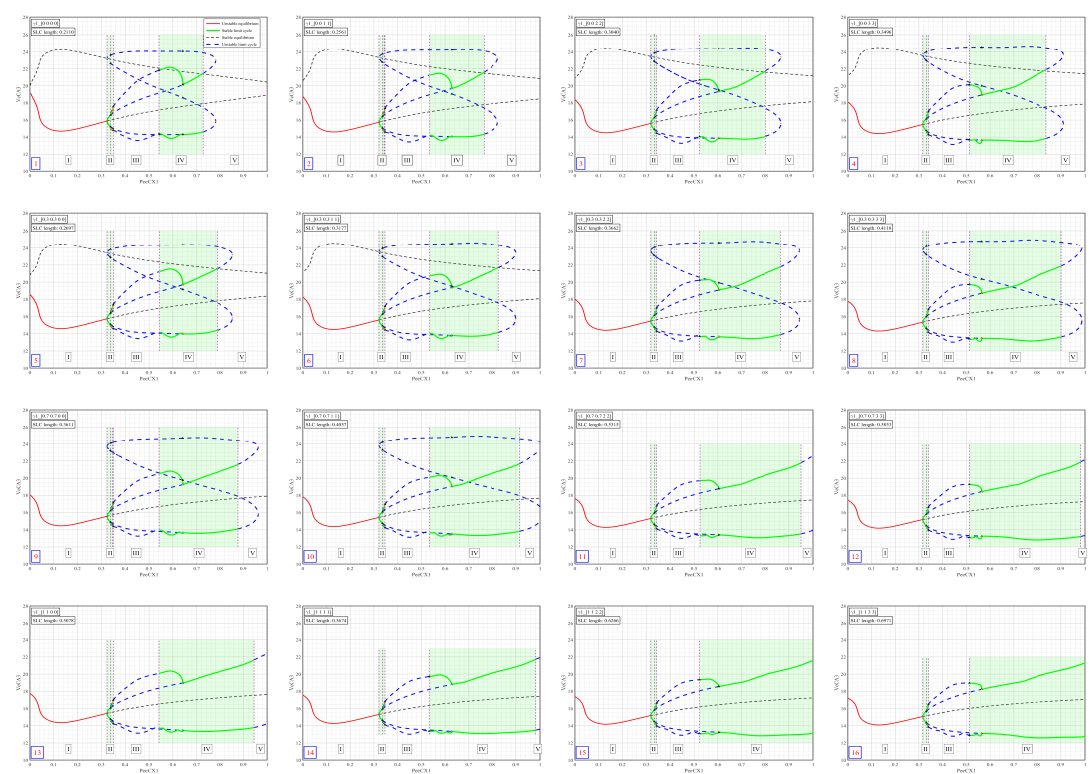
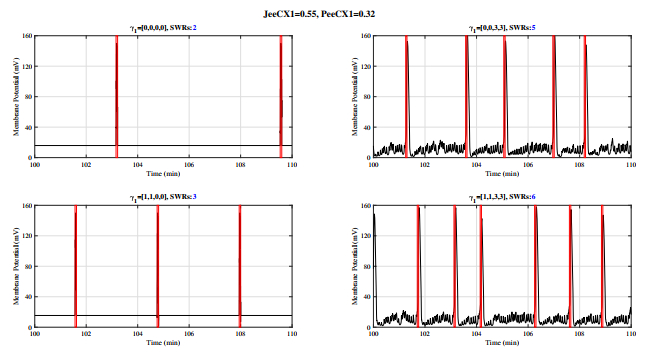
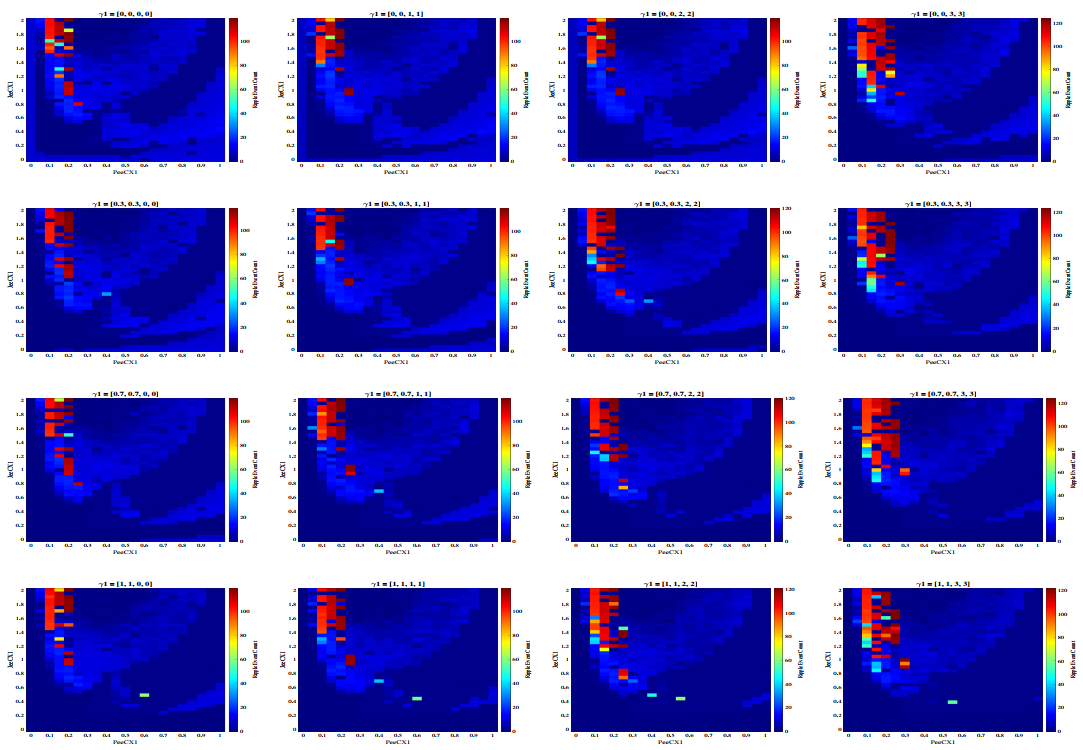
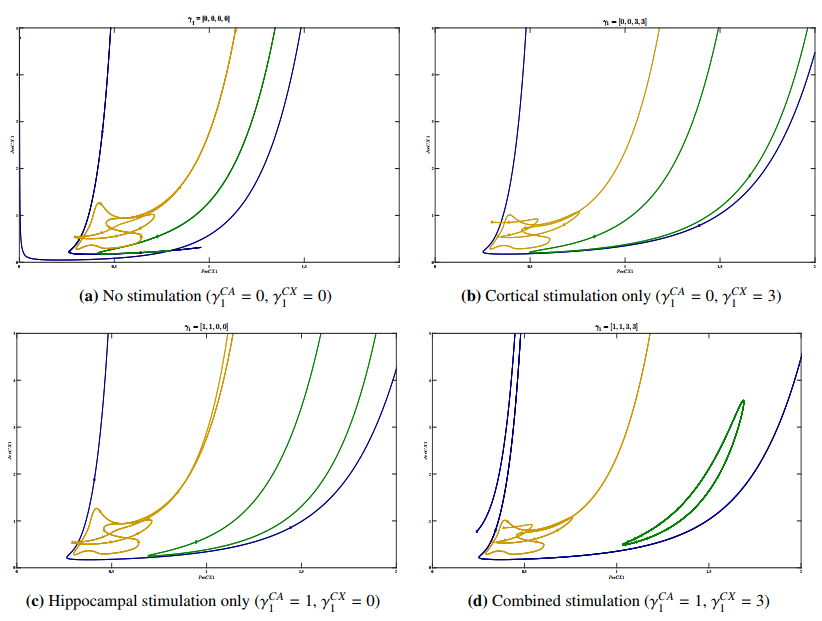
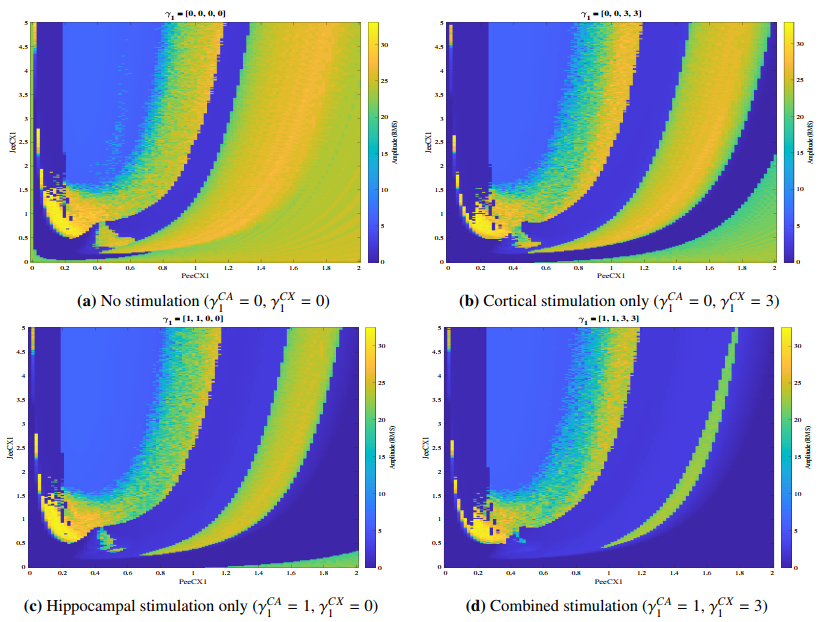
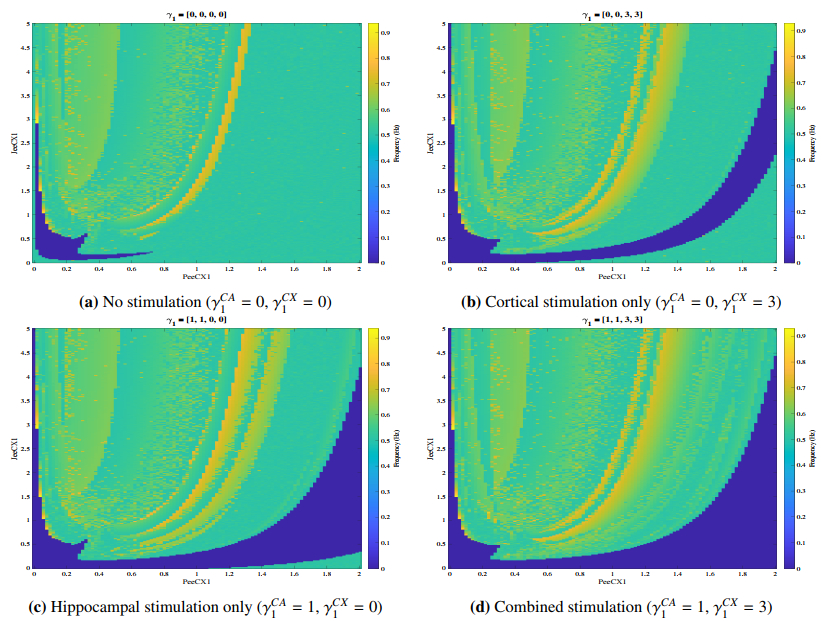
This study investigates a biologically constrained computational model of the hippocampal-cortical circuit incorporating magnetic-flow feedback to elucidate the nonlinear dynamical mechanisms through which magnetic stimulation modulates network states and drives transitions among memory-related neural rhythms. Bifurcation analysis characterizes the response of the hippocampal CA3 excitatory population to variations in the magnetic-flow feedback coefficients. One-parameter bifurcation analysis identifies critical bifurcations governing rhythm initiation, stability, and complexity, whereas two-parameter bifurcation diagrams show that cortical feedback expands the oscillatory regime more strongly than hippocampal feedback. Combined feedback produces the largest expansion and generates closed torus-bifurcation curves, indicating quasi-periodic dynamics. An automated sharp wave ripple (SWR) detection algorithm quantifies the incidence of model-derived SWR-related events across feedback conditions, thereby relating changes in the magnetic-flow feedback coefficients to changes in simulated SWR-related rhythmic activity. We further examine how SWR counts depend on two key CX1 microcircuit parameters: excitatory self-connection strength and local connectivity probability. Comparative analysis of SWR distributions illustrates how the network transitions from baseline quiescence or irregular firing to coherent, feedback-driven rhythmic discharge. SWR-count heatmaps further map the modulation of SWR-related activity across the parameter space. Collectively, these results establish a theoretical framework for understanding how magnetic-flow feedback modulates hippocampal-cortical dynamics and SWR-related activity, providing a basis for investigating targeted magnetic neuromodulation in memory-related neural processes.
Citation: Xin Jiang, Jialiang Nie, Denggui Fan, Lixia Duan. Magnetic flow drives hippocampal-cortical memory rhythm shifts through bifurcation dynamics[J]. Electronic Research Archive, 2026, 34(12): 8756-8785. doi: 10.3934/era.2026369
This study investigates a biologically constrained computational model of the hippocampal-cortical circuit incorporating magnetic-flow feedback to elucidate the nonlinear dynamical mechanisms through which magnetic stimulation modulates network states and drives transitions among memory-related neural rhythms. Bifurcation analysis characterizes the response of the hippocampal CA3 excitatory population to variations in the magnetic-flow feedback coefficients. One-parameter bifurcation analysis identifies critical bifurcations governing rhythm initiation, stability, and complexity, whereas two-parameter bifurcation diagrams show that cortical feedback expands the oscillatory regime more strongly than hippocampal feedback. Combined feedback produces the largest expansion and generates closed torus-bifurcation curves, indicating quasi-periodic dynamics. An automated sharp wave ripple (SWR) detection algorithm quantifies the incidence of model-derived SWR-related events across feedback conditions, thereby relating changes in the magnetic-flow feedback coefficients to changes in simulated SWR-related rhythmic activity. We further examine how SWR counts depend on two key CX1 microcircuit parameters: excitatory self-connection strength and local connectivity probability. Comparative analysis of SWR distributions illustrates how the network transitions from baseline quiescence or irregular firing to coherent, feedback-driven rhythmic discharge. SWR-count heatmaps further map the modulation of SWR-related activity across the parameter space. Collectively, these results establish a theoretical framework for understanding how magnetic-flow feedback modulates hippocampal-cortical dynamics and SWR-related activity, providing a basis for investigating targeted magnetic neuromodulation in memory-related neural processes.

| [1] |
H. Urakubo, M. Honda, R. C. Froemke, S. Kuroda, Requirement of an allosteric kinetics of NMDA receptors for spike timing-dependent plasticity, J. Neurosci., 28 (2008), 3310–3323. https://doi.org/10.1523/JNEUROSCI.0303-08.2008 doi: 10.1523/JNEUROSCI.0303-08.2008

|
| [2] |
L. Yang, H. Zhang, Z. Sun, Modeling dynamics of memory integration and retrieval in the hippocampus, Eur. Phys. J. Spec. Top., 234 (2026), 9167–9182. https://doi.org/10.1140/epjs/s11734-025-01821-7 doi: 10.1140/epjs/s11734-025-01821-7
|
| [3] |
A. Foroutannia, F. Nazarimehr, M. Ghasemi, S. Jafari, Chaos in memory function of sleep: A nonlinear dynamical analysis in thalamocortical study, J. Theor. Biol., 528 (2021), 110837. https://doi.org/10.1016/j.jtbi.2021.110837 doi: 10.1016/j.jtbi.2021.110837
|
| [4] |
L. Yang, H. H. Zhang, Z. K. Sun, L. Du, G. R. Chen, Hippocampal CA3–CA1 synaptic network model of memory, Nonlinear Dyn., 112 (2024), 7499–7525. https://doi.org/10.1007/s11071-024-09375-4 doi: 10.1007/s11071-024-09375-4
|
| [5] |
A. Azimi, Z. Alizadeh, M. Ghorbani, The essential role of hippocampo-cortical connections in temporal coordination of spindles and ripples, NeuroImage, 243 (2021), 118485. https://doi.org/10.1016/j.neuroimage.2021.118485 doi: 10.1016/j.neuroimage.2021.118485
|
| [6] |
D. Fan, J. Chen, S. Hou, Z. Song, G. Baier, Q. Wang, From experimental phenomena to computational models: Exploring the synchronization mechanisms of phase-locked stimulation in the hippocampal-thalamic-cortical circuit for memory consolidation, Chaos, Solitons Fractals, 191 (2025), 115754. https://doi.org/10.1016/j.chaos.2024.115754 doi: 10.1016/j.chaos.2024.115754
|
| [7] |
M. Ghorbani, M. Mehta, R. Bruinsma, A. J. Levine, Nonlinear-dynamics theory of up-down transitions in neocortical neural networks, Phys. Rev. E: Stat. Nonlinear Soft Matter Phys., 85 (2012), 021908. https://doi.org/10.1103/PhysRevE.85.021908 doi: 10.1103/PhysRevE.85.021908
|
| [8] |
A. Foroutannia, M. Ghasemi, F. Parastesh, S. Jafari, M. Perc, Complete dynamical analysis of a neocortical network model, Nonlinear Dyn., 100 (2020), 2699–2714. https://doi.org/10.1007/s11071-020-05668-6 doi: 10.1007/s11071-020-05668-6
|
| [9] |
H. Lin, X. Deng, S. Zhang, X. Chen, G. Min, K. Xue, Securing image privacy in internet-of-vehicles with a multiwing hyperchaotic memristive neural network, IEEE Internet Things J., 12 (2025), 55269–55282. https://doi.org/10.1109/JIOT.2025.3622741 doi: 10.1109/JIOT.2025.3622741
|
| [10] |
N. Munir, H. Lin, S. O. Hwang, Innovative multi-scroll 6D jerk chaotic system and its application in telemedicine, IEEE Internet Things J., 13 (2026), 23994–24009. https://doi.org/10.1109/JIOT.2026.3672051 doi: 10.1109/JIOT.2026.3672051
|
| [11] |
D. Fan, F. Li, Z. Song, Q. Wang, Dual regulation of medial septum in the hippocampal transitions from theta to non-theta oscillations, Eur. Phys. J. Spec. Top., 234 (2026), 9183–9200. https://doi.org/10.1140/epjs/s11734-025-01820-8 doi: 10.1140/epjs/s11734-025-01820-8
|
| [12] |
J. Lisman, Long-term potentiation: outstanding questions and attempted synthesis, Philos. Trans. R. Soc. London, Ser. B, 358 (2003), 829–842. https://doi.org/10.1098/rstb.2002.1242 doi: 10.1098/rstb.2002.1242
|
| [13] |
X. Shi, Q. Wang, Q. Lu, Firing synchronization and temporal order in noisy neuronal networks, Cognit. Neurodyn., 2 (2008), 195–206. https://doi.org/10.1007/s11571-008-9055-z doi: 10.1007/s11571-008-9055-z
|
| [14] |
D. Fan, Y. Wang, J. Wu, S. Hou, Q. Wang, The preview control of a corticothalamic model with disturbance, Electron. Res. Arch., 32 (2024), 812–835. https://doi.org/10.3934/era.2024039 doi: 10.3934/era.2024039
|
| [15] |
H. Pei, Z. Wu, L. Ma, J. Wang, J. Li, X. Geng, et al., Deep brain stimulation mechanisms in Parkinson's disease: immediate and long-term effects, J. Integr. Neurosci., 23 (2024), 114. https://doi.org/10.31083/j.jin2306114 doi: 10.31083/j.jin2306114
|
| [16] |
S. Hou, D. Fan, Q. Wang, Regulating absence seizures by tri-phase delay stimulation applied to globus pallidus internal, Appl. Math. Mech., 43 (2022), 1399–1414. https://doi.org/10.1007/s10483-022-2896-7 doi: 10.1007/s10483-022-2896-7
|
| [17] |
M. Liu, L. Duan, Dynamics and bifurcation mechanisms of respiratory patterns under optogenetic intervention, Nonlinear Dyn., 113 (2025), 20149–20168. https://doi.org/10.1007/s11071-025-11179-z doi: 10.1007/s11071-025-11179-z
|
| [18] |
Z. Shen, H. Zhang, L. Du, Y. Zhang, X. Sun, Mechanisms and optogenetic control of rhythm slowing associated with Alzheimer's disease: some views from dynamical modeling, Nonlinear Dyn., 112 (2024), 11637–11659. https://doi.org/10.1007/s11071-024-09552-5 doi: 10.1007/s11071-024-09552-5
|
| [19] |
H. Hua, H. Gu, Y. Jia, Y. Li, Opposite stimulations can induce a same mixed-mode neuronal bursting containing four phases: underlying two-parameter bifurcations and threshold, Nonlinear Dyn., 113 (2025), 25153–25173. https://doi.org/10.1007/s11071-025-11387-7 doi: 10.1007/s11071-025-11387-7
|
| [20] |
Z. Wang, X. Wei, L. Duan, Regulatory mechanism of inhibitory interneurons with time-delay on epileptic seizures under sinusoidal sensory stimulation, Cognit. Neurodyn., 19 (2025), 37. https://doi.org/10.1007/s11571-025-10227-z doi: 10.1007/s11571-025-10227-z
|
| [21] |
W. Ji, M. Liu, L. Duan, Influence of electric current and magnetic flow on firing patterns of Pre-Bötzinger complex model, Neural Plast., 2021 (2021), 6655933. https://doi.org/10.1155/2021/6655933 doi: 10.1155/2021/6655933
|
| [22] |
H. Zhang, Z. Shen, Y. Zhao, L. Du, Z. Deng, Dynamical mechanism analysis of three neuroregulatory strategies on the modulation of seizures, Int. J. Mol. Sci., 23 (2022), 13652. https://doi.org/10.3390/ijms232113652 doi: 10.3390/ijms232113652
|
| [23] |
D. Ziesel, M. Nowakowska, S. Scheruebel, K. Kornmueller, U. Schaefer, R. Schindl, et al., Electrical stimulation methods and protocols for the treatment of traumatic brain injury: a critical review of preclinical research, J. NeuroEng. Rehabil., 20 (2023), 51. https://doi.org/10.1186/s12984-023-01159-y doi: 10.1186/s12984-023-01159-y
|
| [24] |
R. Dan, H. Zhang, J. Bai, Closed-loop control of epilepsy based on reinforcement learning, Int. J. Neural Syst., 36 (2026), 2550074. https://doi.org/10.1142/S0129065725500741 doi: 10.1142/S0129065725500741
|
| [25] |
H. Zhang, H. Zhang, S. Liu, L. Du, Optimized PID neural network closed-loop control for basal ganglia network in Parkinson's disease, Chin. Phys. B, 34 (2025), 120701. https://doi.org/10.1088/1674-1056/ae0d55 doi: 10.1088/1674-1056/ae0d55
|
| [26] |
H. T. Whittaker, L. Khayyat, J. Fortier-Lavallée, M. Laverdière, C. Bélanger, R. J. Zatorre, et al., Information-based rhythmic transcranial magnetic stimulation to accelerate learning during auditory working memory training: a proof-of-concept study, Front. Neurosci., 18 (2024), 1355565. https://doi.org/10.3389/fnins.2024.1355565 doi: 10.3389/fnins.2024.1355565
|
| [27] |
X. Yuan, X. Zhang, J. Sun, R. Li, J. Ma, C. Pan, et al., Enhancing working memory in MCI: Modulating alpha-gamma coupling and gamma oscillations via rTMS, Neurotherapeutics, 22 (2025), e00619. https://doi.org/10.1016/j.neurot.2025.e00619 doi: 10.1016/j.neurot.2025.e00619
|
| [28] |
X. Han, S. Cai, H. Gui, R. Chen, Transcranial magnetic stimulation cortical oscillations and improve cognition in obstructive sleep apnea patients, Brain Behav., 13 (2023), e2958. https://doi.org/10.1002/brb3.2958 doi: 10.1002/brb3.2958
|
| [29] |
Z. Wang, Y. Yang, L. Duan, Control effects of electromagnetic induction on epileptic seizures, Nonlinear Dyn., 112 (2024), 6615–6628. https://doi.org/10.1007/s11071-024-09373-6 doi: 10.1007/s11071-024-09373-6
|
| [30] |
Z. Cao, L. Du, H. Zhang, L. Qu, L. Yan, Z. Deng, Firing activities and magnetic stimulation effects in a Cortico-basal ganglia-thalamus neural network, Electron. Res. Arch., 30 (2022), 2054–2074. https://doi.org/10.3934/era.2022104 doi: 10.3934/era.2022104
|
| [31] |
M. S. Hermiller, S. VanHaerents, T. Raij, J. L. Voss, Frequency-specific noninvasive modulation of memory retrieval and its relationship with hippocampal network connectivity, Hippocampus, 29 (2019), 595–609. https://doi.org/10.1002/hipo.23054 doi: 10.1002/hipo.23054
|
| [32] |
R. Liu, R. Ma, X. Zhou, X. Wang, J. Wu, F. Chu, et al., Cortical plasticity induced by pairing primary motor cortex transcranial magnetic stimulation with subthalamic nucleus magneto-acoustic coupling stimulation, IEEE Trans. Neural Syst. Rehabil. Eng., 33 (2025), 1751–1762. https://doi.org/10.1109/TNSRE.2025.3565258 doi: 10.1109/TNSRE.2025.3565258
|
| [33] |
P. Phylactou, N. Konstantinou, E. F. Ester, Advancing working memory research through cortico-cortical transcranial magnetic stimulation, Front. Hum. Neurosci., 18 (2024), 1504783. https://doi.org/10.3389/fnhum.2024.1504783 doi: 10.3389/fnhum.2024.1504783
|
| [34] |
T. Zhang, Q. Lu, J. Song, M. Dong, C. He, Z. Zhu, et al., Enhanced episodic memory and LTP-like plasticity in subjective cognitive decline following 10-Hz repetitive transcranial magnetic stimulation, J. NeuroEng. Rehabil., 22 (2025), 197. https://doi.org/10.1186/s12984-025-01741-6 doi: 10.1186/s12984-025-01741-6
|
| [35] |
S. Sriram, H. Natiq, K. Rajagopal, F. Parastesh, S. Jafari, Uncovering the correlation between spindle and ripple dynamics and synaptic connections in a hippocampal-thalamic-cortical model, Int. J. Bifurcation Chaos, 33 (2023), 2350109. https://doi.org/10.1142/S0218127423501092 doi: 10.1142/S0218127423501092
|
| [36] |
B. P. Staresina, T. O. Bergmann, M. Bonnefond, R. Van Der Meij, O. Jensen, L. Deuker, et al., Hierarchical nesting of slow oscillations, spindles and ripples in the human hippocampus during sleep, Nat. Neurosci., 18 (2015), 1679–1686. https://doi.org/10.1038/nn.4119 doi: 10.1038/nn.4119
|
| [37] |
M. Geva-Sagiv, E. A. Mankin, D. Eliashiv, S. Epstein, N. Cherry, G. Kalender, et al., Augmenting hippocampal-prefrontal neuronal synchrony during sleep enhances memory consolidation in humans, Nat. Neurosci., 26 (2023), 1100–1110. https://doi.org/10.1038/s41593-023-01324-5 doi: 10.1038/s41593-023-01324-5
|
| [38] |
R. F. Helfrich, J. D. Lendner, B. A. Mander, H. Guillen, M. Paff, L. Mnatsakanyan, et al., Bidirectional prefrontal-hippocampal dynamics organize information transfer during sleep in humans, Nat. Commun., 10 (2019), 3572. https://doi.org/10.1038/s41467-019-11444-x doi: 10.1038/s41467-019-11444-x
|
| [39] |
N. S. Hashemi, F. Dehnavi, S. Moghimi, M. Ghorbani, Slow spindles are associated with cortical high frequency activity, Neuroimage, 189 (2019), 71–84. https://doi.org/10.1016/j.neuroimage.2019.01.012 doi: 10.1016/j.neuroimage.2019.01.012
|
| [40] |
M. Lv, C. Wang, G. Ren, J. Ma, X. Song, Model of electrical activity in a neuron under magnetic flow effect, Nonlinear Dyn., 85 (2016), 1479–1490. https://doi.org/10.1007/s11071-016-2773-6 doi: 10.1007/s11071-016-2773-6
|
| [41] |
Y. Zhang, Y. Xu, Z. Yao, J. Ma, A feasible neuron for estimating the magnetic field effect, Nonlinear Dyn., 102 (2020), 1849–1867. https://doi.org/10.1007/s11071-020-05991-y doi: 10.1007/s11071-020-05991-y
|
| [42] |
H. L. Robinson, R. Todorova, G. A. Nagy, A. Gruzdeva, P. Paudel, A. Oliva, et al., Large sharp-wave ripples promote hippocampo-cortical memory reactivation and consolidation during sleep, Neuron, 114 (2026), 226–236.E6. https://doi.org/10.1016/j.neuron.2025.10.003 doi: 10.1016/j.neuron.2025.10.003
|
| [43] |
X. Jiang, J. Nie, D. Fan, L. Duan, Bifurcation dynamics govern sharp wave ripple generation and rhythmic transitions in hippocampal-cortical memory networks, Chin. Phys. B, 34 (2025), 128702. https://doi.org/10.1088/1674-1056/ae111d doi: 10.1088/1674-1056/ae111d
|
Figures(6) / Tables(2)
Xin Jiang, Jialiang Nie, Denggui Fan, Lixia Duan. Magnetic flow drives hippocampal-cortical memory rhythm shifts through bifurcation dynamics[J]. Electronic Research Archive, 2026, 34(12): 8756-8785. doi: 10.3934/era.2026369





 DownLoad: