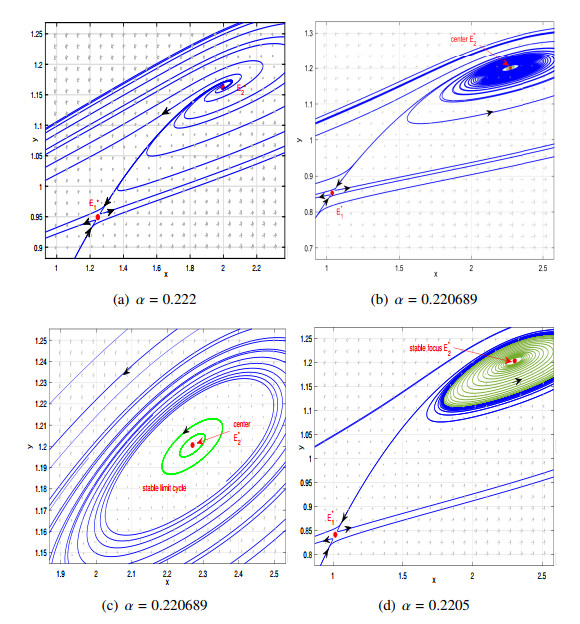
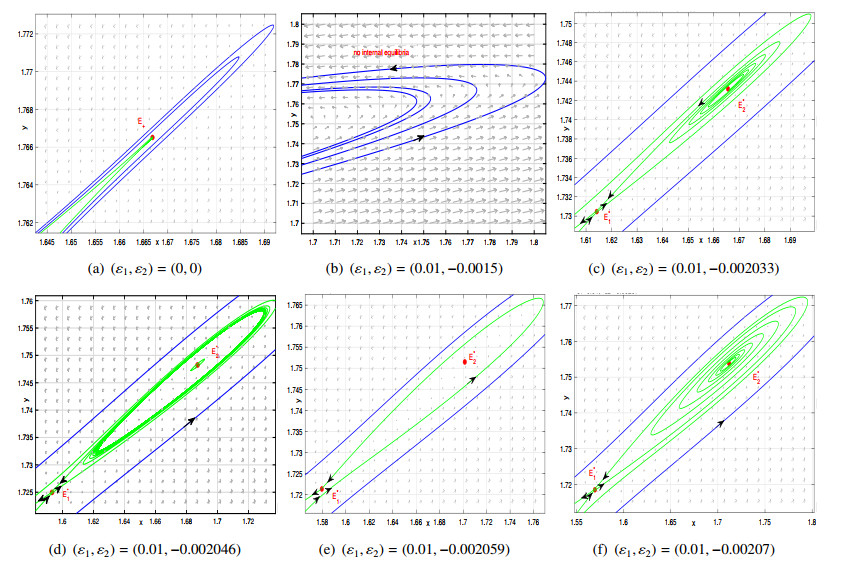
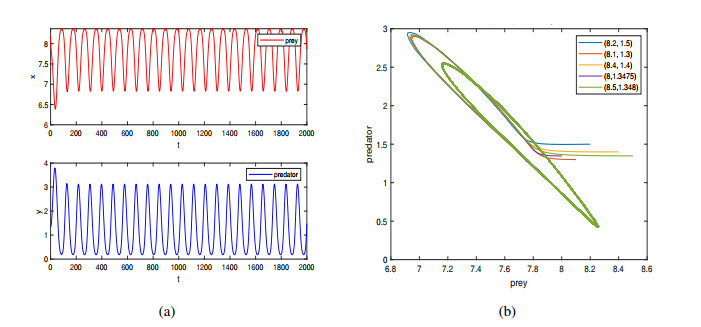
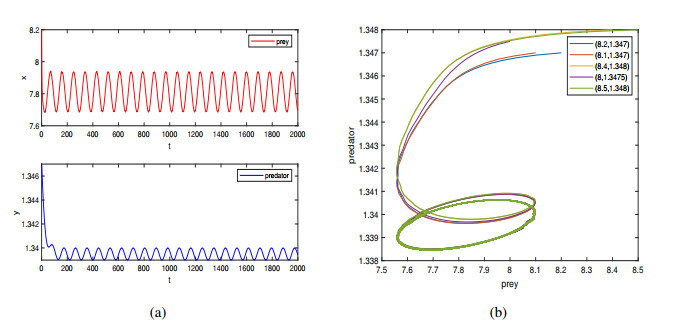
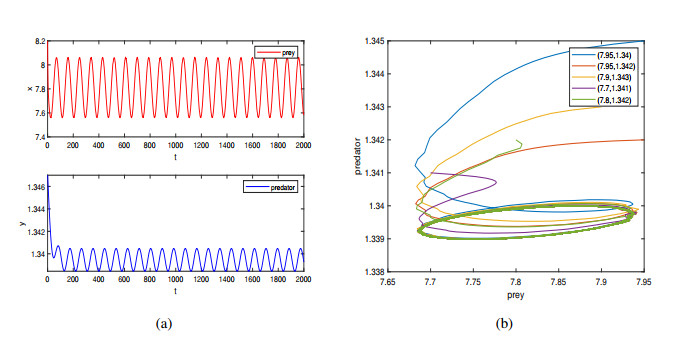
In the paper, autonomous and nonautonomous predator-prey models with nonlinear harvesting and Beddington-DeAngelis functional response were proposed. The mathematical goal was to explore the evolution process of specific bifurcation dynamics, the existence, and attractiveness of positive periodic solutions. The ecological objective was to ascertain the population growth coexistence modes and their underlying driving mechanisms from a specific perspective of dynamic evolution. Regarding the autonomous predator-prey model, mathematical theoretical work has investigated the existence and local stability of all equilibrium points, as well as the occurrence of specific bifurcation dynamics. Regarding the nonautonomous predator-prey model, the boundedness of all solutions, the possibility and global attractiveness of a positive periodic solution were theoretically derived in detail. The numerical simulation work not only verified the feasibility of the theoretical derivation work, but also dynamically showed that the autonomous model had transcritical bifurcation, saddle-node bifurcation, Hopf bifurcation, and Bogdanov-Takens bifurcation, while the nonautonomous model had attractive periodic solutions. It was worth emphasizing that predator and prey had steady state constant growth coexistence mode and steady state periodic oscillation growth coexistence mode. It must also be pointed out that their intrinsic driving mechanisms were mainly the specific bifurcation dynamics evolution mechanism in autonomous model and seasonal disturbance of key ecological environment parameters in the nonautonomous model. In summary, it was expected that these research results would contribute to the rapid development of nonlinear dynamics in predator-prey models.
Citation: Xinyu Xie, Hengguo Yu, Jingzhe Fang, Zhongyang Cao, Qi Wang, Min Zhao. Dynamics analysis of autonomous and nonautonomous predator-prey models with nonlinear harvesting[J]. Electronic Research Archive, 2025, 33(10): 6096-6140. doi: 10.3934/era.2025271
In the paper, autonomous and nonautonomous predator-prey models with nonlinear harvesting and Beddington-DeAngelis functional response were proposed. The mathematical goal was to explore the evolution process of specific bifurcation dynamics, the existence, and attractiveness of positive periodic solutions. The ecological objective was to ascertain the population growth coexistence modes and their underlying driving mechanisms from a specific perspective of dynamic evolution. Regarding the autonomous predator-prey model, mathematical theoretical work has investigated the existence and local stability of all equilibrium points, as well as the occurrence of specific bifurcation dynamics. Regarding the nonautonomous predator-prey model, the boundedness of all solutions, the possibility and global attractiveness of a positive periodic solution were theoretically derived in detail. The numerical simulation work not only verified the feasibility of the theoretical derivation work, but also dynamically showed that the autonomous model had transcritical bifurcation, saddle-node bifurcation, Hopf bifurcation, and Bogdanov-Takens bifurcation, while the nonautonomous model had attractive periodic solutions. It was worth emphasizing that predator and prey had steady state constant growth coexistence mode and steady state periodic oscillation growth coexistence mode. It must also be pointed out that their intrinsic driving mechanisms were mainly the specific bifurcation dynamics evolution mechanism in autonomous model and seasonal disturbance of key ecological environment parameters in the nonautonomous model. In summary, it was expected that these research results would contribute to the rapid development of nonlinear dynamics in predator-prey models.

| [1] |
A. J. Lotka, Elements of physical biology, Nature, 16 (1925), 461. https://doi.org/10.1038/116461b0 doi: 10.1038/116461b0

|
| [2] |
V. Volterra, Fluctuations in the abundance of a species considered mathematically, Nature, 118 (1926), 558–560. https://doi.org/10.1038/118558a0 doi: 10.1038/118558a0
|
| [3] |
A. Korobeinikov, A Lyapunov function for Leslie-Gower predator-prey models, Appl. Math. Lett., 14 (2001), 697–699. https://doi.org/10.1016/S0893-9659(01)80029-X doi: 10.1016/S0893-9659(01)80029-X
|
| [4] |
P. H. Leslie, A stochastic model for studying the properties of certain biological systems by numerical methods, Biometrika, 45 (1958), 16–31. https://doi.org/10.2307/2333042 doi: 10.2307/2333042
|
| [5] |
A. Erbach, F. Lutscher, G. Seo, Bistability and limit cycles in generalist predator–prey dynamics, Ecol. Complexity, 14 (2013), 48–55. https://doi.org/10.1016/j.ecocom.2013.02.005 doi: 10.1016/j.ecocom.2013.02.005
|
| [6] |
G. Mandal, L. N. Guin, S. Chakravarty, Dynamical inquest of refuge and bubbling issues in an interacting species system, Commun. Nonlinear Sci. Numer. Simul., 129 (2024), 107700. https://doi.org/10.1016/j.cnsns.2023.107700 doi: 10.1016/j.cnsns.2023.107700
|
| [7] |
B. Mondal, S. Sarkar, U. Ghosh, Complex dynamics of a generalist predator–prey model with hunting cooperation in predator, Eur. Phys. J. Plus, 137 (2022), 43. https://doi.org/10.1140/epjp/s13360-021-02272-4 doi: 10.1140/epjp/s13360-021-02272-4
|
| [8] |
Y. L. Cai, C. D. Zhao, W. M. Wang, J. F. Wang, Dynamics of a Leslie-Gower predator-prey model with additive Allee effect, Appl. Math. Modell., 39 (2015), 2092–2106. https://doi.org/10.1016/j.apm.2014.09.038 doi: 10.1016/j.apm.2014.09.038
|
| [9] |
D. Sen, S. Ghorai, S. Sharma, M. Banerjee, Allee effect in prey's growth reduces the dynamical complexity in prey-predator model with generalist predator, Appl. Math. Modell., 91 (2021), 768–790. https://doi.org/10.1016/j.apm.2020.09.046 doi: 10.1016/j.apm.2020.09.046
|
| [10] |
J. W. Jia, D. P. Hu, R. K. Upadhyay, Z. W. Zheng, N. N. Zhu, M. Liu, Canard cycle, relaxation oscillation and cross-diffusion induced pattern formation in a slow-fast ecological system with weak Allee effect, Commun. Nonlinear Sci. Numer. Simul., 140 (2025), 108360. https://doi.org/10.1016/j.cnsns.2024.108360 doi: 10.1016/j.cnsns.2024.108360
|
| [11] |
Z. C. Shang, Y. H. Qiao, Multiple bifurcations in a predator-prey system of modified Holling and Leslie type with double Allee effect and nonlinear harvesting, Math. Comput. Simul., 205 (2023), 745–764. https://doi.org/10.1016/j.matcom.2022.10.028 doi: 10.1016/j.matcom.2022.10.028
|
| [12] |
X. Wang, L. Zanette, X. Zou, Modelling the fear effect in predator-prey interactions, J. Math. Biol., 73 (2016), 1179–1204. https://doi.org/10.1007/s00285-016-0989-1 doi: 10.1007/s00285-016-0989-1
|
| [13] |
X. Wang, X. Zou, Modeling the fear effect in predator-prey interactions with adaptive avoidance of predators, Bull. Math. Biol., 79 (2017), 1325–1359. https://doi.org/10.1007/s11538-017-0287-0 doi: 10.1007/s11538-017-0287-0
|
| [14] |
M. M. Chen, Y. Takeuchi, J. F. Zhang, Dynamic complexity of a modified Leslie-Gower predator-prey system with fear effect, Commun. Nonlinear Sci. Numer. Simul., 119 (2023), 107109. https://doi.org/10.1016/j.cnsns.2023.107109 doi: 10.1016/j.cnsns.2023.107109
|
| [15] |
S. Creel, D. Christianson, Relationships between direct predation and risk effects, Trends Ecol. Evol., 23 (2008), 194–201. http://dx.doi.org/10.1016/j.tree.2007.12.004 doi: 10.1016/j.tree.2007.12.004
|
| [16] |
S. L. Lima, L. M. Dill, Behavioral decisions made under the risk of predation: A review and prospectus, Can. J. Zool., 68 (1990), 619–640. https://doi.org/10.1139/z90-092 doi: 10.1139/z90-092
|
| [17] |
J. R. Beddington, Mutual interference between parasites or predators and its effect on searching efficiency, J. Anim. Ecolo., 44 (1975), 331–340. https://doi.org/10.2307/3866 doi: 10.2307/3866
|
| [18] |
X. Z. Feng, C. Sun, W. B. Yang, C. T. Li, Dynamics of a predator-prey model with nonlinear growth rate and B-D functional response, Nonlinear Anal. Real World Appl., 70 (2023), 103766. https://doi.org/10.1016/j.nonrwa.2022.103766 doi: 10.1016/j.nonrwa.2022.103766
|
| [19] |
R. P. Gupta, P. Chandra, Bifurcation analysis of modified Leslie-Gower predator-prey model with Michaelis–Menten type prey harvesting, J. Math. Anal. Appl., 398 (2013), 278–295. https://doi.org/10.1016/j.jmaa.2012.08.057 doi: 10.1016/j.jmaa.2012.08.057
|
| [20] |
F. D. Chen, Y. M. Chen, Z. Li, L. J. Chen, Note on the persistence and stability property of a commensalism model with Michaelis-Menten harvesting and Holling type Ⅱ commensalistic benefit, Appl. Math. Lett., 134 (2022), 108381. https://doi.org/10.1016/j.aml.2022.108381 doi: 10.1016/j.aml.2022.108381
|
| [21] |
D. P. Hu, H. J. Cao, Stability and bifurcation analysis in a predator-prey system with Michaelis-Menten type predator harvesting, Nonlinear Anal. Real World Appl., 33 (2017), 58–82. https://doi.org/10.1016/j.nonrwa.2016.05.010 doi: 10.1016/j.nonrwa.2016.05.010
|
| [22] |
D. P. Hu, L. Y. Ma, Z. G. Song, Z. W. Zheng, L. F. Cheng, M. Liu, Multiple bifurcations of a time-delayed coupled FitzHugh-Rinzel neuron system with chemical and electrical couplings, Chaos Solitons Fractals, 180 (2024), 114546. https://doi.org/10.1016/j.chaos.2024.114546 doi: 10.1016/j.chaos.2024.114546
|
| [23] |
X. B. Zhang, Q. An, A. Moussaoui, Effect of density-dependent diffusion on a diffusive predator-prey model in spatially heterogeneous environment, Math. Comput. Simul., 227 (2025), 1–18. https://doi.org/10.1016/j.matcom.2024.07.022 doi: 10.1016/j.matcom.2024.07.022
|
| [24] |
L. L. Ding, X. B. Zhang, G. Y. Lv, Dynamics of a plankton community with delay and herd-taxis, Chaos Solitons Fractals, 184 (2024), 114974. https://doi.org/10.1016/j.chaos.2024.114974 doi: 10.1016/j.chaos.2024.114974
|
| [25] |
B. Mondal, S. Mandal, P. K. Tiwari, R. K. Upadhyay, How predator harvesting affects prey-predator dynamics in deterministic and stochastic environments, Appl. Math. Comput., 498 (2025), 129380. https://doi.org/10.1016/j.amc.2025.129380 doi: 10.1016/j.amc.2025.129380
|
| [26] |
Y. Tian, J. Zhu, J. Zheng, K. B. Sun, Modeling and analysis of a prey-predator system with prey habitat selection in an environment subject to stochastic disturbances, Electron. Res. Arch., 33(2025), 744–767. https://doi.org/10.3934/era.2025034 doi: 10.3934/era.2025034
|
| [27] |
Y. Tian, H. Guo, W. Y. Shen, X. R. Yan, J. Zheng, K. B. Sun, Dynamic analysis and validation of a prey-predator model based on fish harvesting and discontinuous prey refuge effect in uncertain environments, Electron. Res. Arch., 33 (2025), 973–994. https://doi.org/10.3934/era.2025044 doi: 10.3934/era.2025044
|
| [28] |
X. R. Yan, Y. Tian, K. B. Sun, Hybrid effects of cooperative hunting and inner fear on the dynamics of a fishery model with additional food supplement, Math. Methods Appl. Sci., 48 (2025), 9389–9403. https://doi.org/10.1002/mma.10805 doi: 10.1002/mma.10805
|
| [29] |
M. Ch-Chaoui, K. Mokni, A discrete evolutionary Beverton-Holt population model, Int. J. Dyn. Control, 11 (2023), 1060–1075. https://doi.org/10.1007/s40435-022-01035-y doi: 10.1007/s40435-022-01035-y
|
| [30] |
M. Ch-Chaoui, K. Mokni, A multi-parameter bifurcation analysis of a prey-predator model incorporating the prey Allee effect and predator-induced fear, Nonlinear Dyn., 113 (2025), 18879–18911. https://doi.org/10.1007/s11071-025-11063-w doi: 10.1007/s11071-025-11063-w
|
| [31] |
K. Mokni, S. Elaydi, M. Ch-Chaoui, A. Eladdaoi, Discrete evolutionary population models: A new approach, J. Biol. Dyn., 14 (2020), 454–478. https://doi.org/10.1080/17513758.2020.1772997 doi: 10.1080/17513758.2020.1772997
|
| [32] |
B. X. Li, L. H. Zhu, Turing instability analysis of a reaction-diffusion system for rumor propagation in continuous space and complex networks, Inf. Process. Manage., 61 (2024), 103621. https://doi.org/10.1016/j.ipm.2023.103621 doi: 10.1016/j.ipm.2023.103621
|
| [33] |
H. Y. Sha, L. H. Zhu, Dynamic analysis of pattern and optimal control research of rumor propagation model on different networks, Inf. Process. Manage., 62 (2025), 104016. https://doi.org/10.1016/j.ipm.2024.104016 doi: 10.1016/j.ipm.2024.104016
|
| [34] |
J.Y. Shi, L. H. Zhu, Turing pattern theory on homogeneous and heterogeneous higher-order temporal network system, J. Math. Phys., 66 (2025), 042706. https://doi.org/10.1063/5.0211728 doi: 10.1063/5.0211728
|
| [35] |
L. H. Zhu, Y. Ding, S. L. Shen, Green behavior propagation analysis based on statistical theory and intelligent algorithm in data-driven environment, Math. Biosci., 379 (2025), 109340. https://doi.org/10.1016/j.mbs.2024.109340 doi: 10.1016/j.mbs.2024.109340
|
| [36] |
T. Y. Yuan, G. Guan, S. L. Shen, L. H. Zhu, Stability analysis and optimal control of epidemic-like transmission model with nonlinear inhibition mechanism and time delay in both homogeneous and heterogeneous networks, J. Math. Anal. Appl., 526 (2023), 127273. https://doi.org/10.1016/j.jmaa.2023.127273 doi: 10.1016/j.jmaa.2023.127273
|
| [37] |
G. W. He, F. D. Chen, L. Zhong, L. J. Chen, The influence of saturated fear effects on species dynamics: A Lotka-Volterra competition model analysis, Int. J. Biomath., 23 (2025), 2550037. https://doi.org/10.1142/S1793524525500378 doi: 10.1142/S1793524525500378
|
| [38] |
A. K. Umrao, S. Roy, P. K. Tiwari, P. K. Srivastava, Dynamical behaviors of autonomous and nonautonomous models of generalist predator-prey system with fear, mutual interference and nonlinear harvesting, Chaos Solitons Fractals, 183 (2024), 114891. https://doi.org/10.1016/j.chaos.2024.114891 doi: 10.1016/j.chaos.2024.114891
|
| [39] |
D. Barman, S. Roy, P. K. Tiwari, S. Alam, Two fold impacts of fear in a seasonally forced predator-prey system with Cosner functional response, J. Biol. Syst., 31 (2023), 517–555. DOI:10.1142/S0218339023500183 doi: 10.1142/S0218339023500183
|
| [40] |
A. L. Greggor, J. W. Jolles, A. Thornton, N. S. Clayton, Seasonal changes in neophobia and its consistency in rooks: The effect of novelty type and dominance position, Anim. Behav., 121 (2013), 11–20. http://dx.doi.org/10.1016/j.anbehav.2016.08.010 doi: 10.1016/j.anbehav.2016.08.010
|
| [41] |
K. H. Elliott, G. S. Betini, I. Dworkin, D. R. Norris, Experimental evidence for withinand cross-seasonal effects of fear on survival and reproduction, J. Anim. Ecol., 85 (2016), 507–515. http://dx.doi.org/10.1111/1365-2656.12487. doi: 10.1111/1365-2656.12487
|
| [42] |
S. Y. Tang, R. A. Cheke, Y. N. Xiao, Optimal impulsive harvesting on non-autonomous Beverton-Holt difference equations, Nonlinear Anal. Theory, 65 (2006), 2311–2341. https://doi.org/10.1016/j.na.2006.02.049 doi: 10.1016/j.na.2006.02.049
|
| [43] |
X. M. Feng, Y. F. Liu, S. G. Ruan, J. S. Yu, Periodic dynamics of a single species model with seasonal Michaelis-Menten type harvesting, J. Differ. Equations, 354 (2023), 237–263. https://doi.org/10.1016/j.jde.2023.01.014 doi: 10.1016/j.jde.2023.01.014
|
| [44] |
Y. F. Liu, X. M. Feng, S. G. Ruan, J. S. Yu, Periodic dynamics of a single species model with seasonal Michaelis-Menten type harvesting, Ⅱ: Existence of two periodic solutions, J. Differ. Equations, 388 (2024), 253–282. https://doi.org/10.1016/j.jde.2024.01.004 doi: 10.1016/j.jde.2024.01.004
|
| [45] |
S. Roy, P. K. Tiwari, Bistability in a predator-prey model characterized by the Crowley-Martin functional response: Effects of fear, hunting cooperation, additional foods and nonlinear harvesting, Math. Comput. Simul., 228 (2025), 274–297. https://doi.org/10.1016/j.matcom.2024.09.001 doi: 10.1016/j.matcom.2024.09.001
|
| [46] | Z. F. Zhang, T. R. Ding, W. Z. Huang, Z. X. Dong, Qualitative Theory of Differential Equation, Science Press, 1992. |
| [47] | L. Perko, Differential Equations and Dynamical Systems, Springer, 2001. https://doi.org/10.1007/978-1-4613-0003-8 |
| [48] |
J. Chen, J. C. Huang, S. G. Ruan, J. H. Wang, Bifurcations of invariant tori in predatorprey models with seasonal prey harvesting, SIAM J. Appl. Math., 73 (2013), 1876–1905. https://doi.org/10.1137/120895858 doi: 10.1137/120895858
|
| [49] |
J. C. Huang, Y. J. Gong, J. Chen, Multiple bifurcation in a predator-prey system of Holling and Leslie type with constant-yield prey harvesting, Int. J. Bifurcation Chaos, 23 (2013), 1350164. https://doi.org/10.1142/S0218127413501642 doi: 10.1142/S0218127413501642
|
| [50] | R. E. Gaines, J. L. Mawhin, Coincidence Degree and Nonlinear Differential Equations, Springer, 2006. https://doi.org/10.1007/BFb0089537 |
Figures(9) / Tables(4)
Xinyu Xie, Hengguo Yu, Jingzhe Fang, Zhongyang Cao, Qi Wang, Min Zhao. Dynamics analysis of autonomous and nonautonomous predator-prey models with nonlinear harvesting[J]. Electronic Research Archive, 2025, 33(10): 6096-6140. doi: 10.3934/era.2025271





 DownLoad: