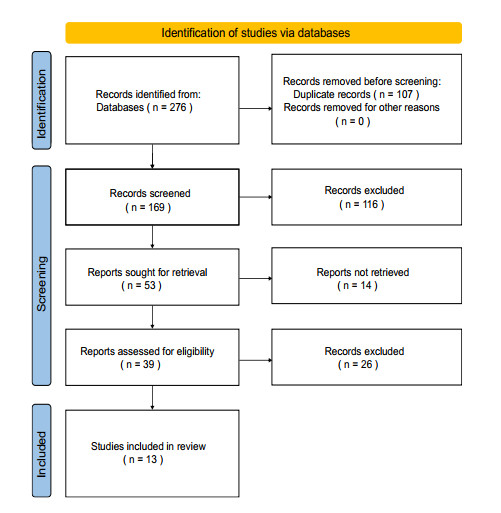
In this systematic review, we synthesized research on the application of the precautionary principle to the complex environmental and ecological risks associated with hydraulic fracturing. Following PRISMA guidelines, the search was conducted across five major academic databases, resulting in the analysis of thirteen high-quality, peer-reviewed studies and authoritative reports. The findings indicated a significant and persistent gap between the formal legal adoption of the precautionary principle and its practical implementation within regulatory frameworks. Evidence showed that although some jurisdictions have incorporated the principle into legislative mandates, they often rely on traditional, hazard-based risk assessments in practice. In contrast, other regions exhibit varied applications of the principle, shaped by enforcement capacities, political contexts, and governance structures. Furthermore, the analysis suggests that the precautionary principle is frequently employed as a strategic tool in contentious public debates, serving more as a rhetorical device than as a binding legal standard. This instrumental use complicates its function within evidence-based policy. In conclusion, effective precautionary governance requires more than legislative commitments. Managing technologies characterized by significant environmental uncertainty requires developing robust institutional capacity, enhancing transparency in decision-making, and implementing proactive measures such as comprehensive, long-term baseline environmental monitoring. Transitioning from symbolic legal declarations to operationalized, science-informed oversight enables authorities to better mitigate the ecological risks of hydraulic fracturing and promote resilient environmental protection strategies.
Citation: Iván Vargas-Chaves. The precautionary principle and fracking: a systematic review of environmental risk governance of hydraulic fracturing[J]. AIMS Environmental Science, 2026, 13(5): 896-916. doi: 10.3934/environsci.2026035
In this systematic review, we synthesized research on the application of the precautionary principle to the complex environmental and ecological risks associated with hydraulic fracturing. Following PRISMA guidelines, the search was conducted across five major academic databases, resulting in the analysis of thirteen high-quality, peer-reviewed studies and authoritative reports. The findings indicated a significant and persistent gap between the formal legal adoption of the precautionary principle and its practical implementation within regulatory frameworks. Evidence showed that although some jurisdictions have incorporated the principle into legislative mandates, they often rely on traditional, hazard-based risk assessments in practice. In contrast, other regions exhibit varied applications of the principle, shaped by enforcement capacities, political contexts, and governance structures. Furthermore, the analysis suggests that the precautionary principle is frequently employed as a strategic tool in contentious public debates, serving more as a rhetorical device than as a binding legal standard. This instrumental use complicates its function within evidence-based policy. In conclusion, effective precautionary governance requires more than legislative commitments. Managing technologies characterized by significant environmental uncertainty requires developing robust institutional capacity, enhancing transparency in decision-making, and implementing proactive measures such as comprehensive, long-term baseline environmental monitoring. Transitioning from symbolic legal declarations to operationalized, science-informed oversight enables authorities to better mitigate the ecological risks of hydraulic fracturing and promote resilient environmental protection strategies.

| [1] |
Vengosh A, Jackson RB, Warner N, et al. (2014) A critical review of the risks to water resources from unconventional shale gas development and hydraulic fracturing in the United States. Environ Sci Technol 48: 8334–8348. https://doi.org/10.1021/es405118y doi: 10.1021/es405118y

|
| [2] | Gilje E, Ready R, Roussanov N (2016) Fracking, drilling, and asset pricing: Estimating the economic benefits of the shale revolution. National Bureau of Economic Research.https://www.aeaweb.org/conference/2016/retrieve.php?pdfid = 20835 & tk = 3tYTTn52 |
| [3] |
Osborn SG, Vengosh A, Warner NR, et al. (2011) Methane contamination of drinking water accompanying gas-well drilling and hydraulic fracturing. Proc Natl Acad Sci 108: 8172–8176. https://doi.org/10.1073/pnas.1100682108 doi: 10.1073/pnas.1100682108
|
| [4] |
Showstack R (2012) Induced seismicity from fracking and carbon storage is focus of study and hearing. Eos Trans Am Geophys Union 93: 251–251. https://doi.org/10.1029/2012EO270003 doi: 10.1029/2012EO270003
|
| [5] |
Wilde S E, Hopkins J R, Lewis A C, et al. (2023) The air quality impacts of pre-operational hydraulic fracturing activities. Sci Total Environ 858: 159702. https://doi.org/10.1016/j.scitotenv.2022.159702 doi: 10.1016/j.scitotenv.2022.159702
|
| [6] |
Li J, Jovanovic A, Klimek P, et al. (2015) Bibliometric analysis of fracking scientific literature. Scientometrics 105: 1273–1284. https://doi.org/10.1007/s11192-015-1739-7 doi: 10.1007/s11192-015-1739-7
|
| [7] |
Gardiner S (2006) A core precautionary principle. J Polit Philos 14: 33–60. https://doi.org/10.1111/j.1467-9760.2006.00237.x doi: 10.1111/j.1467-9760.2006.00237.x
|
| [8] |
Triana N, Khashogi L R, Turistiati A T, et al. (2023) Application of the precautionary principle in judge's legal considerations for pollution cases in Islamic law perspectives. Al-'Adalah 20: 61–90. https://doi.org/10.24042/adalah.v20i1.16660 doi: 10.24042/adalah.v20i1.16660
|
| [9] |
Pabón-Romero LN (2026) El principio de precaución en materia de nanotecnología y de nuevos medicamentos en Colombia. Chornancap Revista Jurídica 4. https://doi.org/10.61542/rjch.229 doi: 10.61542/rjch.229
|
| [10] |
Saldívar Tanaka L (2024) El principio de precaución ante los posibles riesgos de la nanotecnología y sus derivados. Mundo Nano Revista Interdisciplinaria en Nanociencias y Nanotecnología 17: e69762. https://doi.org/10.22201/ceiich.24485691e.2024.33.69762 doi: 10.22201/ceiich.24485691e.2024.33.69762
|
| [11] |
Aczel MR (2020) Public opposition to shale gas extraction in Algeria: Potential application of France's 'Duty of Care Act'. Extr Ind Soc 7: 1360–1368. https://doi.org/10.1016/j.exis.2020.09.003 doi: 10.1016/j.exis.2020.09.003
|
| [12] |
Brady WJ, Crannell JP (2012) Hydraulic fracturing regulation in the United States: The laissez-faire approach of the federal government and varying state regulations. Vermont J Environ Law 14: 39–70. https://doi.org/10.2307/vermjenvilaw.14.1.39 doi: 10.2307/vermjenvilaw.14.1.39
|
| [13] |
Kinchy A (2017) Citizen science and democracy: Participatory water monitoring in the Marcellus shale fracking boom. Sci Cult 26: 88–110. https://doi.org/10.1080/09505431.2016.1223113 doi: 10.1080/09505431.2016.1223113
|
| [14] |
Page MJ, McKenzie JE, Bossuyt PM, et al. (2021) The PRISMA 2020 statement: An updated guideline for reporting systematic reviews. BMJ 372: n71. https://doi.org/10.26633/RPSP.2022.112 doi: 10.26633/RPSP.2022.112
|
| [15] |
Azamar Alonso A (2021) Implications of the precautionary and preventive principles for the right to a healthy environment in Latin America. Econ Soc 26: 34–47. http://dx. doi.org/10.15359/eys.26-59.2 doi: 10.15359/eys.26-59.2
|
| [16] | Melo Marques Mourão M (2025) Constitucionalismo petrolífero brasileiro: o regime jurídico do petróleo no Brasil. Editora Dialética. |
| [17] |
Liaw C, Brito T L F, Costa H K M, et al. (2022) Standardization as key to precautionary principle handling: Risk mitigation for shale gas production in Brazil. Res Humanit Soc Sci 14: 10–20. https://doi.org/10.7176/RHSS/12-2-02 doi: 10.7176/RHSS/12-2-02
|
| [18] |
Metze T (2017) Fracking the debate: Frame shifts and boundary work in Dutch decision making on shale gas. J Environ Policy Plann 19: 35–52. https://doi.org/10.1080/1523908X.2014.941462 doi: 10.1080/1523908X.2014.941462
|
| [19] | Murray T, Andre DE, Prasad K (2016) Holding fracking operations to account for environmental contamination in risk-based regulatory regimes: Insights from the United States. Environ Plann Law J 33: 222–236. https://ro.ecu.edu.au/ecuworkspost2013/2661/ |
| [20] |
Patterson A, McLean C (2018) The regulation of risk: the case of fracking in the UK and the Netherlands. Sci Public Policy 45: 45–52. https://doi.org/10.1093/scipol/scx036 doi: 10.1093/scipol/scx036
|
| [21] |
Rinaldi PN (2023) Water science in the public sphere: A narrative network analysis of fracking and oil spills in Colombian media. Extr Ind Soc 13: 101215. https://doi.org/10.1016/j.exis.2023.101215 doi: 10.1016/j.exis.2023.101215
|
| [22] | Raimi D (2017) The fracking debate: The risks, benefits, and uncertainties of the shale revolution. Columbia University Press. |
| [23] |
Orthofer CL, Huppmann D, Krey V (2019) South Africa after Paris—fracking its way to the NDCs?. Front Energy Res 7: 20. https://doi.org/10.3389/fenrg.2019.00020 doi: 10.3389/fenrg.2019.00020
|
| [24] |
Stephan HR (2017) The discursive politics of unconventional gas in Scotland: Drifting towards precaution?. Energy Res Soc Sci 23: 159–168. https://doi.org/10.1016/j.erss.2016.09.006 doi: 10.1016/j.erss.2016.09.006
|
| [25] |
Tarisayi KS (2023) Seeing through the lens of precaution: An analysis of South African online media coverage of fracking regulations. Alternation 30: 133–153. https://doi.org/10.29086/2519-5476/2023/v30n1a6 doi: 10.29086/2519-5476/2023/v30n1a6
|
| [26] | Tosun J, Lang A (2016) The politics of hydraulic fracturing in Germany: Party competition at different levels of government. Policy Debates on Hydraulic Fracturing: Comparing Coalition Politics in North America and Europe: 177–200. https://doi.org/10.1057/978-1-137-59574-4_7 |
| [27] | Yadav SK (2026) Regulating hydraulic fracturing as a transitional technology in India and Australia: A comparative contextual approach to the precautionary principle. University of Surrey. |
| [28] |
Muñoz Lancheros CA (2022) Régimen de responsabilidad civil ambiental por actividades de fracking en Colombia. Anuario de Derecho Privado 4: 1–48. http://dx.doi.org/10.15425/2022.656 doi: 10.15425/2022.656
|
Figures(2) / Tables(3)

Iván Vargas-Chaves. The precautionary principle and fracking: a systematic review of environmental risk governance of hydraulic fracturing[J]. AIMS Environmental Science, 2026, 13(5): 896-916. doi: 10.3934/environsci.2026035





 DownLoad: