This article examined the pivotal role of environmental factors within the environmental, social, and governance (ESG) framework in shaping the development of Vietnam's cement industry. It highlights how sustainability drivers influence environmental management practices and overall sectoral performance. Rising cement demand, evolving regulations, and the growing emphasis on sustainable construction have propelled the prioritization of environmental sustainability, facilitated by the adoption of robust environmental management systems (EMS). This environmental focus has resulted in tangible improvements in community health, employee well-being, stakeholder relations, regulatory compliance, and investor confidence, ultimately driving innovation, operational efficiency, and cost reduction. This industry-wide shift aligns with consumer preferences for eco-friendly construction materials and fosters a culture of sustainability across Vietnam's cement sector. Notably, the industry has made significant progress in embracing cleaner production technologies, waste utilization, and green financing to drive its environmental sustainability agenda, underscoring the increasing prominence of ESG considerations. While the importance of ESG factors is widely recognized, a research gap persists in quantifying the specific contributions of the ESG pillars to overall ESG performance in the cement industry.
Citation: Trung Nguyen Tran, Hung Nguyen Tri Quang, Nguyen Trinh Trong, Nam Thai Van. Literature review on environmental aspects of ESG performance in Vietnam's cement industry[J]. AIMS Environmental Science, 2025, 12(6): 958-978. doi: 10.3934/environsci.2025042
This article examined the pivotal role of environmental factors within the environmental, social, and governance (ESG) framework in shaping the development of Vietnam's cement industry. It highlights how sustainability drivers influence environmental management practices and overall sectoral performance. Rising cement demand, evolving regulations, and the growing emphasis on sustainable construction have propelled the prioritization of environmental sustainability, facilitated by the adoption of robust environmental management systems (EMS). This environmental focus has resulted in tangible improvements in community health, employee well-being, stakeholder relations, regulatory compliance, and investor confidence, ultimately driving innovation, operational efficiency, and cost reduction. This industry-wide shift aligns with consumer preferences for eco-friendly construction materials and fosters a culture of sustainability across Vietnam's cement sector. Notably, the industry has made significant progress in embracing cleaner production technologies, waste utilization, and green financing to drive its environmental sustainability agenda, underscoring the increasing prominence of ESG considerations. While the importance of ESG factors is widely recognized, a research gap persists in quantifying the specific contributions of the ESG pillars to overall ESG performance in the cement industry.

| [1] |
Environment UN, Scrivener KL, John VM, et al. (2018) Eco-efficient cements: Potential economically viable solutions for a low-CO2 cement-based material industry CO2. Cem Concr Res 114: 2–26. https://doi.org/10.1016/j.cemconres.2018.03.015. doi: 10.1016/j.cemconres.2018.03.015

|
| [2] | Gibbs MJ, Soyka P, Conneely D (2006) CO2 emissions from cement production "in Good Practice Guidance and Uncertainty Management in National Greenhouse Gas Inventories", IPCC. |
| [3] | International Finance Corporation (2020) Strengthening Sustainability in the Cement Industry. |
| [4] |
Le N, Wu S, Andrew R, et al. (2024) Global and National CO2 Uptake by Cement Carbonation from 1928 to 2024. Article 17: 2231–2247. https://doi.org/10.5194/essd-17-2231-2025. doi: 10.5194/essd-17-2231-2025
|
| [5] | Marmier A (2023) Decarbonisation options for cement industry. Publications Office of the European Union. https://dx.doi.org/10.2760/174037. |
| [6] | Choe K, Roberts B (2011) Competitive Cities in the 21st Centurt: Cluster-based Local Economic Development. Mandaluyong City, Philippines: Asian Development Bank. |
| [7] | Cozzi L, Gould T (2024) World Energy Outlook. International Energy Agency, Paris, France. |
| [8] |
Das S, Paul R (2021) Urbanization Trend of South, East, and Southeast Asian Countries: Influence of Economic Growth and Changing Trends in Employment Sectors. Curr Urban Stud 09: 694–719. https://doi.org/10.4236/cus.2021.94041. doi: 10.4236/cus.2021.94041
|
| [9] | Chang CH (2011) The Influence of Corporate Environmental Ethics on Competitive Advantage: The Mediation Role of Green Innovation. J Bus Ethics 104: 361–370. http://www.jstor.org/stable/41476093. |
| [10] |
Soewarno N, Tjahjadi B, Fithrianti F (2019) Green innovation strategy and green innovation: The roles of green organizational identity and environmental organizational legitimacy. Manag Decis 57: 1–19. https://doi.org/10.1108/MD-05-2018-0563. doi: 10.1108/MD-05-2018-0563
|
| [11] | ESG Industry Materiality Map. Accessed: May 31, 2025.[Online]. Available: https://www.msci.com/data-and-analytics/sustainability-solutions/esg-industry-materiality-map. |
| [12] | International Finance Corporation (2021) IFC ESG Guidebook. Washington, D.C. 20433. |
| [13] |
Jiang J (2024) Optimization of corporate governance structures in ESG Practice: Corporate social responsibility synergies with the environment. J Infrastruct Policy Dev 8: 7570. https://doi.org/10.24294/jipd7570. doi: 10.24294/jipd7570
|
| [14] |
Piao X, Xie J, Managi S (2022) Environmental, social, and corporate governance activities with employee psychological well-being improvement. BMC Public Health 22: 1–12. https://10.1186/s12889-021-12350-y. doi: 10.1186/s12889-021-12350-y
|
| [15] |
Delmas MA, Pekovic S (2013) Environmental standards and labor productivity: Understanding the mechanisms that sustain sustainability. J Organ Behav 34: 230–252. https://doi.org/10.1002/job.1827. doi: 10.1002/job.1827
|
| [16] |
Komnitsas K (2020) Social License to Operate in Mining: Present Views and Future Trends. Resources 9: 1–15. https://doi.org/10.3390/resources9060079. doi: 10.3390/resources9060079
|
| [17] | Cement (HS: 2523) Product Trade, Exporters and Importers, OEC, 2025. Available from: https://oec.world/en/profile/hs/cement. |
| [18] |
Barbosa AdS, Silva MCBCd, Silva LBd, et al. (2023) Integration of Environmental, Social, and Governance (ESG) criteria: their impacts on corporate sustainability performance. Humanit Soc Sci Commun 10: 1–18. https://doi.org/10.1057/s41599-023-01919-0. doi: 10.1057/s41599-023-01919-0
|
| [19] | Finn Group, Vietnam's emerging trends, 2023. |
| [20] | China Research and Intelligence (2024) Vietnam Cement Export Research Report 2024–2033. |
| [21] | Jaganmohan M, Export value of cement worldwide in 2023. Statista. Available from: https://www.statista.com/statistics/1338916/countries-cement-export-value-globally/ |
| [22] | Urban population (% of total population) – Viet Nam, World Bank DataBank (World Urbanization Prospects, United Nations Population Division), 2024. Available from: https://data.worldbank.org/indicator/SP.URB.TOTL.IN.ZS?locations = VN |
| [23] |
Yeye O, Egbunike C (2023) Environmental, Social and Governance (ESG) disclosure and firm value of manufacturing firms: The moderating role of profitabilit. Int J Financ Account Manag 5: 311–322. https://doi.org/10.35912/ijfam.v5i3.1466. doi: 10.35912/ijfam.v5i3.1466
|
| [24] |
Cortés D, Traxler AA, Greiling D (2023) Sustainability reporting in the construction industry – Status quo and directions of future research. Heliyon 9: e21682. https://doi.org/10.1016/j.heliyon.2023.e21682. doi: 10.1016/j.heliyon.2023.e21682
|
| [25] |
Krueger P, Sautner Z, Tang DY, et al. (2024) The Effects of Mandatory ESG Disclosure Around the World. J Account Res 62: 1795–1847. https://doi.org/10.1111/1475–679X.12548. doi: 10.1111/1475–679X.12548
|
| [26] | Vietnam country report 2023. United Nations Human Settlements Programme (UN-Habitat), 2023. |
| [27] |
Lau HC, Tsai SC (2024) Toward Cleaner and More Sustainable Cement Production in Vietnam via Carbon Capture and Storage. Sustainability 16: 1–22. https://doi.org/10.3390/su16020942. doi: 10.3390/su16020942
|
| [28] | UNIDO, Preliminary Roadmap for Industrial Decarbonization – Vietnam, 2024. |
| [29] | Government of Viet Nam, Nationally Determined Contribution (NDC) - Updated in 2022. UNFCCC, 2022. Available from: https://unfccc.int/sites/default/files/NDC/2022-11/Viet%20Nam_NDC_2022_Eng.pdf |
| [30] | Czigler T, Reiter S, Schulze P, et al., Laying the foundation for zero-carbon cement. McKinsey & Company, 2020. Available from: https://www.mckinsey.com/industries/chemicals/our-insights/laying-the-foundation-for-zero-carbon-cement#/. |
| [31] |
Durastanti C, Moretti L (2020) Environmental Impacts of Cement Production: A Statistical Analysis. Appl Sci 10: 1–25. https://doi.org/10.3390/app10228212. doi: 10.3390/app10228212
|
| [32] | Mohsen M (2015) Cement Manufacturing Relationship between Mining and Cement Manufactaring. https://doi.org/10.13140/RG.2.1.3461.0003. |
| [33] |
Scripcariu M, Gheorghiu C, Gheorghiu M, et al. (2021) Improving energy performance of a Cement Manufacturing factory by using Waste Heat Recovery Systems, Estimated vs. Actual achievements. E3S Web of Conferences 286: 01007. https://doi.org/10.1051/e3sconf/202128601007. doi: 10.1051/e3sconf/202128601007
|
| [34] | New Climate (2020) Decarbonisation pathways for the EU cement sector: Technology routes and potential ways forward. IAEA. |
| [35] | Energy Efficiency Division (EefD), Energy Efficiency 2021. International Energy Agency (IEA), 2021. |
| [36] |
Vu K, Nguyen H, Nguyen T, et al. (2022) Application TAPM-AERMOD system model to study impacts of thermal power plants in SouthEast and SouthWest areas to the air quality of HCMC: current status and according to Vietnam power planning Ⅶ toward 2030. IOP Conf Ser Earth Environ Sci 964: 012024. https://doi.org/10.1088/1755-1315/964/1/012024. doi: 10.1088/1755-1315/964/1/012024
|
| [37] | FinnGroup (2023) The Outlook for Vietnam Cement Market. Hanoi. Available from: https://fiingroup.vn/upload/docs/230626-FG-Vietnam-Cement-Market-Outlook-Cemtech-Asia-2023.pdf |
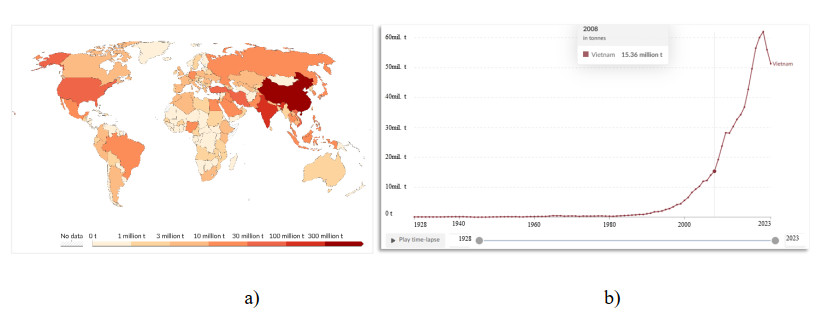
| [38] | Global Carbon Budget (2023) Annual emissions of carbon dioxide (CO2) from cement, measured in tonnes. Our World in Data. Available: https://ourworldindata.org/grapher/annual-co2-cement?time = latest & country = |
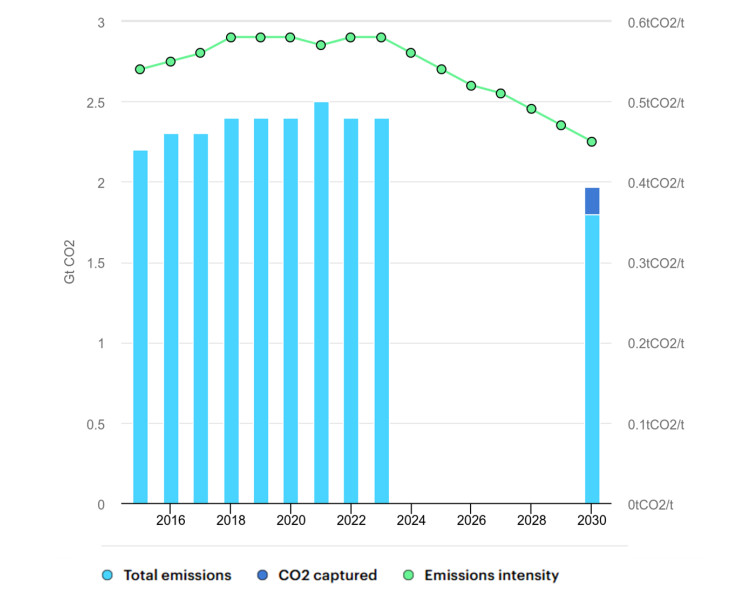
| [39] | Direct emissions intensity of cement production in the Net Zero Scenario, 2015–2030. IEA, 2023. Available from: https://www.iea.org/data-and-statistics/charts/direct-emissions-intensity-of-cement-production-in-the-net-zero-scenario-2015-2030-2 |
| [40] |
Schneider M, Romer M, Tschudin M, et al. (2011) Sustainable cement production—present and future. Cem Concr Res 41: 642–650. https://doi.org/10.1016/j.cemconres.2011.03.019. doi: 10.1016/j.cemconres.2011.03.019
|
| [41] | IEA, Tracking clean energy progress. Available from: https://www.iea.org/reports/tracking-clean-energy-progress-2023 |
| [42] | Research Centre for Gender, Family and Environment in Development (2024) Plastic waste, Refuse derived fuels (RDF) and cement kilns - Viet Nam. |
| [43] |
Sivakumar T (2021) Design and Simulation of a Waste Heat Recovery System for a Cement Manufacturing Process. J Univ Shanghai Sci Technol 23: 1092–1101. https://doi.org/10.51201/JUSST/21/05398. doi: 10.51201/JUSST/21/05398
|
| [44] | Holcim, Sustainable waste management. Available from: https://www.holcim.com/what-we-do/applications/sustainable-waste-management. |
| [45] | Blume S, Hinkel M, Mutz D, et al. (2020) Guidelines on Pre- and Co-processing of Waste in Cement Production – Use of waste as alternative fuel and raw material. Eur Union Available from: https://circulareconomy.europa.eu/platform/en/knowledge/guidelines-pre-and-co-processing-waste-cement-production-use-waste-alternative-fuel-and-raw-material |
| [46] |
Strunge T, Renforth P, Van der Spek M (2022) Towards a business case for CO2 mineralisation in the cement industry. Commun Earth Environ 3: 59. https://doi.org/10.1038/s43247-022-00390-0. doi: 10.1038/s43247-022-00390-0
|
| [47] |
Vinh KN, Khanh T, Anh TP, et al. (2020) Corporate Environmental Disclosure Practices in Vietnam. Res World Econ 11: 143. https://doi.org/10.5430/rwe.v11n1p143. doi: 10.5430/rwe.v11n1p143
|
| [48] |
Giles F (2008) Assessing the effectiveness of your environmental management system. Environ Qual Manag 18: 1–6. https://doi.org/10.1002/tqem.20201. doi: 10.1002/tqem.20201
|
| [49] |
Nguyen QA, Hens L (2015) Environmental performance of the cement industry in Vietnam: the influence of ISO 14001 certification. J Clean Prod 96: 362–378. https://doi.org/10.1016/j.jclepro.2013.09.032. doi: 10.1016/j.jclepro.2013.09.032
|
| [50] | EIGA (2025) Guidances on Environmental Management Systems. European Industrial Gases Association AISBL. |
| [51] |
Fore S, Mbohwa C (2015) Greening manufacturing practices in a continuous process industry. J Eng Design Technol 13: 94–122. https://doi.org/10.1108/JEDT-04-2014-0019. doi: 10.1108/JEDT-04-2014-0019
|
| [52] | Government of Vietnam, Law 72/2020/Vietnam on Environment, 2020. Available from: https://dazpro.com/law-72-2020-vietnam-on-environment/. |
| [53] | World Bank, Vietnam: Energy Efficiency in Buildings, 2020. |
| [54] | IFC, Green Buildings: A Financial and Policy Framework for Vietnam, 2021. |
| [55] | Government of Vietnam, Decision 882/QD-TTg 2022 the National Action Plan on Green Growth for the 2021–2030 period. Vietnam, 2022. |
| [56] |
Fadly D (2020) Greening Industry in Vietnam: Environmental Management Standards and Resource Efficiency in SMEs. Sustainability 12 https://doi.org/10.3390/su12187455. doi: 10.3390/su12187455
|
| [57] |
Janaćkovic M, Petrović-Ranđelović M (2021) The role of multinational corporations in the main concept of green produstion in the cement industry. НОВИ ЕКОНОМИСТ 14 https://doi.org/10.7251/NOEEN2028065R. doi: 10.7251/NOEEN2028065R
|
| [58] |
Cary M, Stephens HM (2024) Economic, environmental, and technical gains from the Kyoto Protocol: Evidence from cement manufacturing. Resour Policy 91: 1–17. https://doi.org/10.1016/j.resourpol.2024.104926. doi: 10.1016/j.resourpol.2024.104926
|
| [59] |
Dechezleprêtre A, Nachtigall D, Venmans F (2023) The joint impact of the European Union emissions trading system on carbon emissions and economic performance. J Environ Econ Manage 118: 1–41. https://doi.org/10.1016/j.jeem.2022.102758. doi: 10.1016/j.jeem.2022.102758
|
| [60] |
Branger F, Quirion P, Chevallier J (2016) Carbon Leakage and Competitiveness of Cement and Steel Industries Under the EU ETS: Much Ado About Nothing. Energy J 37: 109–136. https://doi.org/10.5547/01956574.37.3.fbra. doi: 10.5547/01956574.37.3.fbra
|
| [61] | CDM Executive Board, Approved baseline and monitoring methodology AM0024: Greenhouse gas reductions through waste heat recovery and utilization for power generation at cement plants. UNFCCC, 2008. |
| [62] |
Ong TS, Soh WN, Tan CL, et al. (2022) Role of Country Governance for Improved Environmental Performance. Indones J Sustain Account Manag 6. https://doi.org/10.28992/ijsam.v6i2.574. doi: 10.28992/ijsam.v6i2.574
|
| [63] |
Townsend B (2020) From SRI to ESG: The Origins of Socially Responsible and Sustainable Investing. J Impact ESG Invest 1: 10–25. https://doi.org/10.3905/jesg.2020.1.1.010. doi: 10.3905/jesg.2020.1.1.010
|
| [64] |
Nguyen T, Cu T (2021) Investigating the factors on attracting resources for urban development in Vietnam. Accounting 7: 933–942. https://doi.org/10.5267/j.ac.2021.1.014. doi: 10.5267/j.ac.2021.1.014
|
| [65] |
Wyrwa J (2020) Measuring Innovative Employee Behavior in an Enterprise – Methodological Aspects. Eur J Sustain Dev 9: 565–580. https://doi.org/10.14207/ejsd.2020.v9n3p565. doi: 10.14207/ejsd.2020.v9n3p565
|
| [66] | Vietnam News, Vietnamese consumers increasingly embrace sustainability. Available from: https://vietnamnews.vn/economy/809005/vietnamese-consumers-increasingly-embrace-sustainability.html. |
| [67] |
Hai D, Hong D, Doan H (2021) The situation and solutions to develop Green Building in Vietnam. Real Estate Econ Manag 1: 70–74. https://doi.org/10.22337/2073-8412-2021-1-70-74. doi: 10.22337/2073-8412-2021-1-70-74
|
| [68] |
Vu N (2023) Situation and solutions for the construction industry in the trend of green economic development in Vietnam. E3S Web of Conferences 403: 02019. https://doi.org/10.1051/e3sconf/202340302019. doi: 10.1051/e3sconf/202340302019
|
| [69] |
Tran QD, Nazir S, Nguyen TH, et al. (2020) Empirical Examination of Factors Influencing the Adoption of Green Building Technologies: The Perspective of Construction Developers in Developing Economies. Sustainability 12: 8067. https://doi.org/10.3390/su12198067. doi: 10.3390/su12198067
|
| [70] | Huong NTV (2019) Comparison between Vietnam green industrial buildings and the world with LEED certification (Vietnamese). Vietnam Archit Mag 4: 1–6. |
| [71] | IFC, Overview Vietnam Green Building Market - Quarter 3, 2022. |
| [72] |
Chen J (2024) Corporate ESG and total factor productivity: Will the fulfillment of social responsibility sacrifice productivity? PLoS One 19: e0301701. https://doi.org/10.1371/journal.pone.0301701. doi: 10.1371/journal.pone.0301701
|
| [73] |
Sun Y, Rahman MM, Xinyan X, et al. (2024) Unlocking environmental, social, and governance (ESG) performance through energy efficiency and green tax: SEM-ANN approach. Energy Strateg Rev 53: 101408. https://doi.org/10.1016/j.esr.2024.101408. doi: 10.1016/j.esr.2024.101408
|
| [74] | IFC, Governance and Performance in Emerging Markets: Emperical Study on the Link Between Performance and Corporate Governance of IFC Investment Clients, 2018. |
| [75] |
He X, Jiang S (2019) Does gender diversity matter for green innovation? Bus Strategy Environ 28: 1341–1356. https://doi.org/10.1002/bse.2319. doi: 10.1002/bse.2319
|
| [76] |
Adu Sarfo P, Zhang J, Nyantakyi G, et al. (2024). Influence of Green Human Resource Management on firm's environmental performance: Green Employee Empowerment as a mediating factor. PlosOne 19. https://doi.org/10.1371/journal.pone.0293957. doi: 10.1371/journal.pone.0293957
|
| [77] | Dechant K, et al. (1994) Environmental Leadership: From Compliance to Competitive Advantage[and Executive Commentary]. Acad Manage 8: 7–27. https://www.jstor.org/stable/4165201. |
| [78] |
Baran M, Kuźniarska A, Makieła ZJ, et al. (2022) Does ESG Reporting Relate to Corporate Financial Performance in the Context of the Energy Sector Transformation? Evidence from Poland. Energies 15. https://doi.org/10.3390/en15020477. doi: 10.3390/en15020477
|
| [79] |
Kwilinski A, Lyulyov O, Pimonenko T (2023) Unlocking Sustainable Value through Digital Transformation: An Examination of ESG Performance. Information 14: 444. https://doi.org/10.3390/info14080444. doi: 10.3390/info14080444
|
Figures(8) / Tables(3)

Trung Nguyen Tran, Hung Nguyen Tri Quang, Nguyen Trinh Trong, Nam Thai Van. Literature review on environmental aspects of ESG performance in Vietnam's cement industry[J]. AIMS Environmental Science, 2025, 12(6): 958-978. doi: 10.3934/environsci.2025042





 DownLoad: