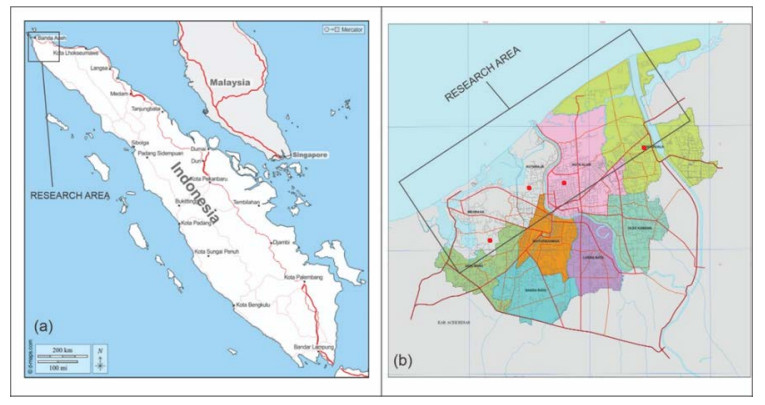
Microplastics (MPs) pose a substantial challenge to the environment and have life-threatening implications for organisms, including humans. To overcome this challenge, several investigations have been conducted, including adsorption with a specific absorbent, manual and modified sand filtration columns, and ultrafiltration using polymers. However, microplastic removal using these methods remains limited in certain cases; hence, an optimal method is required to separate MPs from water. The aim of this study was to remove MPs from community water wells in Banda Aceh, Indonesia, using a polyether sulfone (PES) membrane modified with poloxamer surfactants and patchouli oil. Membranes were created using the phase inversion method to form an asymmetrical structure with a top-to-bottom pore distribution. Community well water samples were collected from numerous points in Banda Aceh City. This was followed by analysis before and after filtration using a microscope and FTIR spectroscopy to determine the shape and type of MPs. The results revealed fiber- and film-shaped MPs detected in the well water of each community examined in this study. The FTIR analysis demonstrated that MP contamination was dominated by polyethylene and polypropylene plastics, consistent with the trend observed across Asia. Nonetheless, MP contamination could be eliminated by an ultrafiltration process using a membrane. In this study, the removal of MPs using the membrane delivered significant results. Pure PES membranes can eliminate up to 87.5% of MPs from water samples. However, the PES membrane containing poloxamer and patchouli oil delivered 100% rejection.
Citation: Nasrul Arahman, Cut Meurah Rosnelly, Sri Mulyati, Wafiq Alni Dzulhijjah, Nur Halimah, Rinal Dia'ul Haikal, Syahril Siddiq, Sharfina Maulidayanti, Muhammad Aziz, Mathias Ulbricht. Investigation of microplastics in community well water in Banda Aceh, Indonesia: a separation technique using polyethersulfone-poloxamer membrane[J]. AIMS Environmental Science, 2025, 12(1): 53-71. doi: 10.3934/environsci.2025003
Microplastics (MPs) pose a substantial challenge to the environment and have life-threatening implications for organisms, including humans. To overcome this challenge, several investigations have been conducted, including adsorption with a specific absorbent, manual and modified sand filtration columns, and ultrafiltration using polymers. However, microplastic removal using these methods remains limited in certain cases; hence, an optimal method is required to separate MPs from water. The aim of this study was to remove MPs from community water wells in Banda Aceh, Indonesia, using a polyether sulfone (PES) membrane modified with poloxamer surfactants and patchouli oil. Membranes were created using the phase inversion method to form an asymmetrical structure with a top-to-bottom pore distribution. Community well water samples were collected from numerous points in Banda Aceh City. This was followed by analysis before and after filtration using a microscope and FTIR spectroscopy to determine the shape and type of MPs. The results revealed fiber- and film-shaped MPs detected in the well water of each community examined in this study. The FTIR analysis demonstrated that MP contamination was dominated by polyethylene and polypropylene plastics, consistent with the trend observed across Asia. Nonetheless, MP contamination could be eliminated by an ultrafiltration process using a membrane. In this study, the removal of MPs using the membrane delivered significant results. Pure PES membranes can eliminate up to 87.5% of MPs from water samples. However, the PES membrane containing poloxamer and patchouli oil delivered 100% rejection.

| [1] |
Poerio M, Piacentini E, Mazzei R (2019) Membrane Processes for Microplastic Removal. Molecules 24: 1-15. https://doi.org/10.3390/molecules24224148 doi: 10.3390/molecules24224148

|
| [2] |
Pandey P, Dhiman M, Kansal A, et al (2023) Plastic waste management for sustainable environment: techniques and approaches. Waste Dispos Sustain Energy 5: 205–222. https://doi.org/10.1007/s42768-023-00134-6 doi: 10.1007/s42768-023-00134-6
|
| [3] |
Md. Kibria G, Masuk NI, Safayet R, et al (2023) Plastic Waste: Challenges and Opportunities to Mitigate Pollution and Effective Management. Int J Environ Res 17: 1-37. https://doi.org/10.1007/s41742-023-00507-z doi: 10.1007/s41742-023-00507-z
|
| [4] |
Azizah P, Ridlo A, Suryono CA (2020) Mikroplastik pada Sedimen di Pantai Kartini Kabupaten Jepara Jawa Tengah. J Mar Res 9: 326–332. https://doi.org/10.14710/jmr.v9i3.28197 doi: 10.14710/jmr.v9i3.28197
|
| [5] |
Kumar V, Singh E, Singh S, et al (2023) Micro- and nano-plastics (MNPs) as emerging pollutant in ground water: Environmental impact, potential risks, limitations and way forward towards sustainable management. Chem Eng J 459: 141568. https://doi.org/10.1016/j.cej.2023.141568 doi: 10.1016/j.cej.2023.141568
|
| [6] |
Campanale C, Massarelli C, Savino I, Locaputo V, Uricchio VF (2020) A Detailed Review Study on Potential Effects of Microplastics and Additives of Concern on Human Health. Int J Environ Res Public Health 17: 1212. https://doi.org/10.3390/ijerph17041212 doi: 10.3390/ijerph17041212
|
| [7] |
Bostan N, Ilyas N, Akhtar N, et al. (2023) Toxicity assessment of microplastic (MPs); a threat to the ecosystem. Environ Res 234: 116523. https://doi.org/10.1016/j.envres.2023.116523 doi: 10.1016/j.envres.2023.116523
|
| [8] |
Samandra S, Johnston J M, Jaeger J E, et al. (2022) Microplastic contamination of an unconfined groundwater aquifer in Victoria, Australia. Sci Total Environ 802: 149727. https://doi.org/10.1016/j.scitotenv.2021.149727 doi: 10.1016/j.scitotenv.2021.149727
|
| [9] |
Viaroli S, Lancia M, Re V (2022) Microplastics contamination of groundwater: Current evidence and future perspectives. Sci Total Environ 824: 153851. https://doi.org/10.1016/j.scitotenv.2022.153851 doi: 10.1016/j.scitotenv.2022.153851
|
| [10] |
Ren Z, Gui X, Xu X, et al (2021) Microplastics in the soil-groundwater environment: Aging, migration, and co-transport of contaminants – A critical review. J Hazard Mater 419: 126455. https://doi.org/10.1016/j.jhazmat.2021.126455 doi: 10.1016/j.jhazmat.2021.126455
|
| [11] |
Negrete Velasco A, Ramseier Gentile S, Zimmermann S, et al (2023) Contamination and removal efficiency of microplastics and synthetic fibres in a conventional drinking water treatment plant in Geneva, Switzerland. Sci Total Environ 880: 163270. https://doi.org/10.1016/j.scitotenv.2023.163270 doi: 10.1016/j.scitotenv.2023.163270
|
| [12] |
Li X, Chen L, Mei Q, et al. (2018) Microplastics in sewage sludge from the wastewater treatment plants in China. Water Res 142: 75–85. https://doi.org/10.1016/j.watres.2018.05.034 doi: 10.1016/j.watres.2018.05.034
|
| [13] |
Fuller S, Gautam A (2016) A Procedure for Measuring Microplastics using Pressurized Fluid Extraction. Environ Sci Technol 50: 5774–5780. https://doi.org/10.1021/acs.est.6b00816 doi: 10.1021/acs.est.6b00816
|
| [14] |
Shah A, Arjunan A, Baroutaji A, et al (2023) A review of physicochemical and biological contaminants in drinking water and their impacts on human health. Water Sci Eng 16: 333–344. https://doi.org/10.1016/j.wse.2023.04.003 doi: 10.1016/j.wse.2023.04.003
|
| [15] |
Ondara K, Dhiauddin R (2020) Indonesia Marine Debris: Banda Aceh Coastal Environment Identification. J Kel Trop 23: 117. https://doi.org/10.14710/jkt.v23i1.6238 doi: 10.14710/jkt.v23i1.6238
|
| [16] |
Windari W, Saiful S, Gani A, et al (2022) Analysis of marine debris at Alue Naga and Ulee Lheue beaches in Banda Aceh City using the transect method. Mater Today Proc 63: S339–S345. https://doi.org/10.1016/j.matpr.2022.03.236 doi: 10.1016/j.matpr.2022.03.236
|
| [17] |
Liu Q, Chen Y, Chen Z, et al (2022) Current status of microplastics and nanoplastics removal methods: Summary, comparison and prospect. Sci Total Environ 851: 157991. https://doi.org/10.1016/j.scitotenv.2022.157991 doi: 10.1016/j.scitotenv.2022.157991
|
| [18] |
Lu Y, Li M-C, Lee J, et al (2023) Microplastic remediation technologies in water and wastewater treatment processes: Current status and future perspectives. Sci Total Environ 868: 161618. https://doi.org/10.1016/j.scitotenv.2023.161618 doi: 10.1016/j.scitotenv.2023.161618
|
| [19] |
Nabi I, Bacha A-U-R, Zhang L (2022) A review on microplastics separation techniques from environmental media. J Clean Prod 337: 130458. https://doi.org/10.1016/j.jclepro.2022.130458 doi: 10.1016/j.jclepro.2022.130458
|
| [20] |
Mat Nawi N I, Bilad M R, Anath G, et al. (2020) The Water Flux Dynamic in a Hybrid Forward Osmosis-Membrane Distillation for Produced Water Treatment. Membranes 10: 225. https://doi.org/10.3390/membranes10090225 doi: 10.3390/membranes10090225
|
| [21] |
An Y C, Gao X X, Jiang W L, et al. (2023) A critical review on graphene oxide membrane for industrial wastewater treatment. Environ Res 223: 115409. https://doi.org/10.1016/j.envres.2023.115409 doi: 10.1016/j.envres.2023.115409
|
| [22] |
Acarer S (2023) A review of microplastic removal from water and wastewater by membrane technologies. Water Sci Technol 88: 199–219. https://doi.org/10.2166/wst.2023.186 doi: 10.2166/wst.2023.186
|
| [23] |
Pizzichetti ARP, Pablos C, Álvarez-Fernández C, et al (2021) Evaluation of membranes performance for microplastic removal in a simple and low-cost filtration system. Case Stud Chem Environ Eng 3: 100075. https://doi.org/10.1016/j.cscee.2020.100075 doi: 10.1016/j.cscee.2020.100075
|
| [24] |
Mulyati S, Rosnelly CM, Syamsuddin Y, et al (2023) Household bleach products as high-performance and cost-effective cleaning agents for membrane fouling. S Afr J Chem Eng 46: 35–41. https://doi.org/10.1016/j.sajce.2023.07.005 doi: 10.1016/j.sajce.2023.07.005
|
| [25] |
Barambu N U, Bilad M R, Huda N, et al. (2021) Effect of Membrane Materials and Operational Parameters on Performance and Energy Consumption of Oil/Water Emulsion Filtration. Membranes 11: 370. https://doi.org/10.3390/membranes11050370 doi: 10.3390/membranes11050370
|
| [26] |
Radityaningrum AD, Trihadiningrum Y, Mar'atusholihah, et al (2021) Microplastic contamination in water supply and the removal efficiencies of the treatment plants: A case of Surabaya City, Indonesia. J Water Process Eng 43: 102195. https://doi.org/10.1016/j.jwpe.2021.102195 doi: 10.1016/j.jwpe.2021.102195
|
| [27] |
Hosseini R, Sayadi MH, Aazami J, et al (2020) Accumulation and distribution of microplastics in the sediment and coastal water samples of Chabahar Bay in the Oman Sea, Iran. Mar Pollut Bull 160: 111682. https://doi.org/10.1016/j.marpolbul.2020.111682 doi: 10.1016/j.marpolbul.2020.111682
|
| [28] |
Ta AT, Promchan N (2024) Microplastics in wastewater from developing countries: A comprehensive review and methodology suggestions. TrAC Trends Anal Chem 171: 117537. https://doi.org/10.1016/j.trac.2024.117537 doi: 10.1016/j.trac.2024.117537
|
| [29] |
Yang L, Kang S, Luo X, et al (2024) Microplastics in drinking water: A review on methods, occurrence, sources, and potential risks assessment. Environ Pollut 348: 123857. https://doi.org/10.1016/j.envpol.2024.123857 doi: 10.1016/j.envpol.2024.123857
|
| [30] |
Hänninen J, Weckström M, Pawłowska J, et al. (2021) Plastic debris composition and concentration in the Arctic Ocean, the North Sea and the Baltic Sea. Mar Pollut Bull 165: 112150. https://doi.org/10.1016/j.marpolbul.2021.112150 doi: 10.1016/j.marpolbul.2021.112150
|
| [31] |
Arahman N, Jakfar J, Dzulhijjah W A, et al. (2022) Hydrophilic Antimicrobial Polyethersulfone Membrane for Removal of Turbidity of Well-Water. Water 14: 3769. https://doi.org/10.3390/w14223769 doi: 10.3390/w14223769
|
| [32] |
Arahman N, Rosnelly C M, Windana D S, et al. (2021) Antimicrobial Hydrophilic Membrane Formed by Incorporation of Polymeric Surfactant and Patchouli Oil. Polymers 13: 3872. https://doi.org/10.3390/polym13223872 doi: 10.3390/polym13223872
|
| [33] |
Harmes A, Ambarita AC, Arahman N, et al (2024) Improvement of polyvinylidene fluoride membrane performance by combination of polyethylene glycol and dragon blood resin through coordination reaction with Fe3+ ions. S Afr J Chem Eng 48: 237–245. https://doi.org/10.1016/j.sajce.2024.02.008 doi: 10.1016/j.sajce.2024.02.008
|
| [34] |
Mulyati S, Riza M, Muchtar S, et al. (2024) A high performance of polyvinylidene fluoride membrane modified with vanilin for humic acid removal. Case Stud Chem Environ Eng 9: 100654. https://doi.org/10.1016/j.cscee.2024.100654 doi: 10.1016/j.cscee.2024.100654
|
| [35] |
Danopoulos E, Twiddy M, Rotchell JM (2020) Microplastic contamination of drinking water: A systematic review. PLoS ONE 15: e0236838. https://doi.org/10.1371/journal.pone.0236838 doi: 10.1371/journal.pone.0236838
|
| [36] |
Lusher AL, Bråte ILN, Munno K, Hurley RR, Welden NA (2020) Is It or Isn't It: The Importance of Visual Classification in Microplastic Characterization. Appl Spectrosc 74: 1139–1153. https://doi.org/10.1177/0003702820930733 doi: 10.1177/0003702820930733
|
| [37] |
Golgoli M, Khiadani M, Shafieian A, et al. (2021) Microplastics fouling and interaction with polymeric membranes: A review. Chemosphere 283: 131185. https://doi.org/10.1016/j.chemosphere.2021.131185 doi: 10.1016/j.chemosphere.2021.131185
|
| [38] |
Hasibuan NH, Suryati I, Leonardo R, et al (2020) Analisa jenis, bentuk, dan kelimpahan mikroplastik di Sungai Sei Sikambing Medan. STSP 20: 108. https://doi.org/10.36275/stsp.v20i2.270 doi: 10.36275/stsp.v20i2.270
|
| [39] |
Kovač Viršek M, Palatinus A, Koren Š, et al (2016) Protocol for Microplastics Sampling on the Sea Surface and Sample Analysis. JoVE: 55161. https://doi.org/10.3791/55161-v doi: 10.3791/55161-v
|
| [40] |
Li J, Wang B, Chen Z, et al (2021) Ultrafiltration membrane fouling by microplastics with raw water: Behaviors and alleviation methods. Chem Eng J 410: 128174. https://doi.org/10.1016/j.cej.2020.128174 doi: 10.1016/j.cej.2020.128174
|
| [41] |
Cai H, Chen M, Chen Q, et al (2020) Microplastic quantification affected by structure and pore size of filters. Chemosphere 257: 127198. https://doi.org/10.1016/j.chemosphere.2020.127198 doi: 10.1016/j.chemosphere.2020.127198
|
| [42] |
Im S-J, Lee H, Jang A (2021) Effects of co-existence of organic matter and microplastics on the rejection of PFCs by forward osmosis membrane. Environ Res 194: 110597. https://doi.org/10.1016/j.envres.2020.110597 doi: 10.1016/j.envres.2020.110597
|
| [43] |
Arahman N (2018) Fabrication of Polyethersulfone Membranes Using Nanocarbon as Additive. Int J Geomate 15: 95424. https://doi.org/10.21660/2018.50.95424 doi: 10.21660/2018.50.95424
|
| [44] |
Mulyati S, Ambarita A C, Arahman N, et al. (2024) Chemical Stability and Additive Leach Out in Polyethersulfone Membranes Blended with Dragon Blood Resin: An Investigative Study. Korean J Chem Eng 41: 1217–1227. https://doi.org/10.1007/s11814-024-00091-8 doi: 10.1007/s11814-024-00091-8
|

Figures(2) / Tables(7)

Nasrul Arahman, Cut Meurah Rosnelly, Sri Mulyati, Wafiq Alni Dzulhijjah, Nur Halimah, Rinal Dia'ul Haikal, Syahril Siddiq, Sharfina Maulidayanti, Muhammad Aziz, Mathias Ulbricht. Investigation of microplastics in community well water in Banda Aceh, Indonesia: a separation technique using polyethersulfone-poloxamer membrane[J]. AIMS Environmental Science, 2025, 12(1): 53-71. doi: 10.3934/environsci.2025003





 DownLoad: