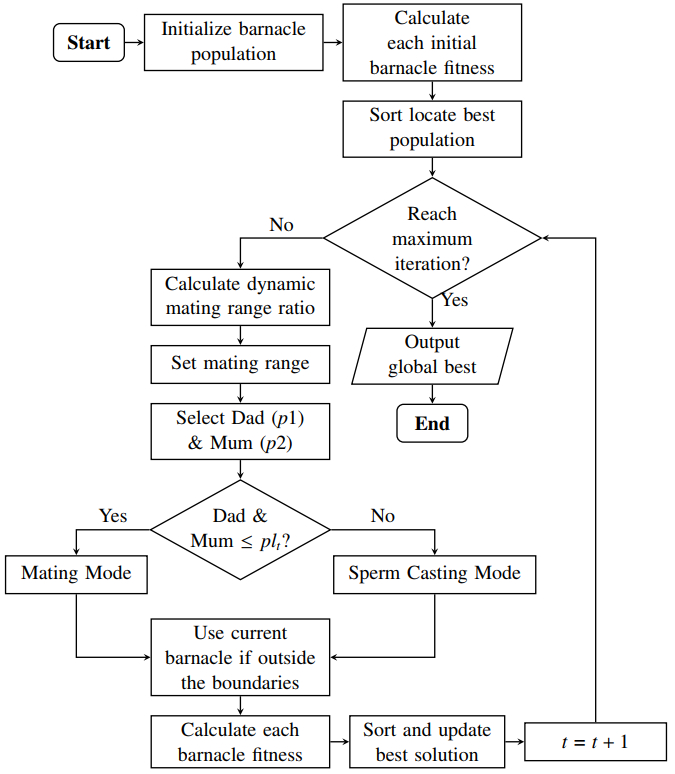
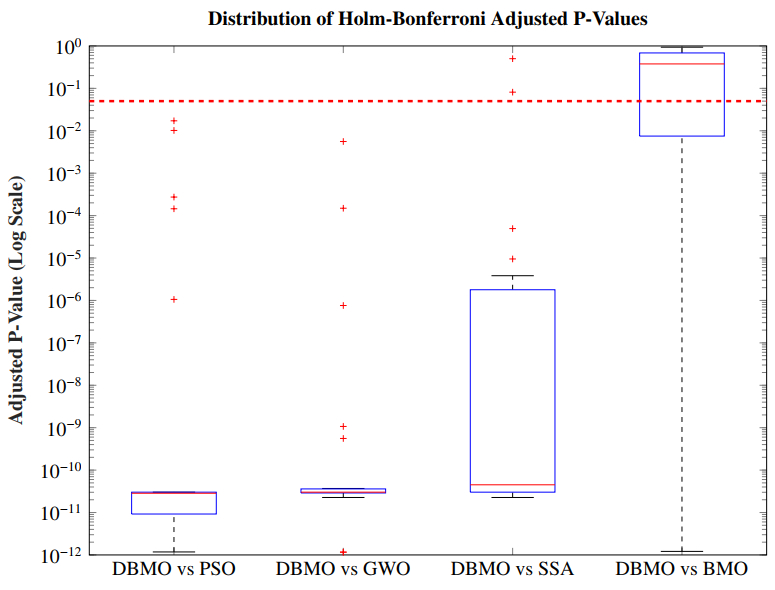
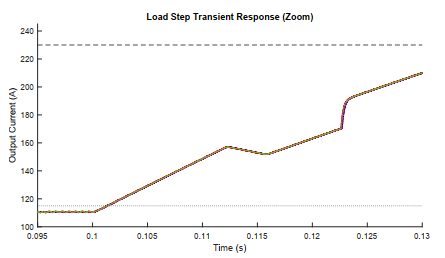
Off-board fast-charging systems for electric vehicles require high-power DC-DC converters capable of maintaining rapid transient regulation without overshooting current boundaries. Dual Active Bridge converters satisfy these topology requirements, but conventional Proportional-Integral controllers tuned via static methods struggle under severe load steps and non-linear battery dynamics. In this study, we present a Dynamic Barnacles Mating Optimization framework engineered to automate controller gain synthesis. By introducing a time-varying linear decay mechanism to regulate the mating search radius, the proposed algorithm resolves the exploration-exploitation imbalance inherent in standard metaheuristic search strategies. Algorithm performance was benchmarked across 23 classical test functions, followed by offline converter simulation models and real-time validation on a hardware emulator. Statistical analysis under a Holm-Bonferroni corrected test confirmed that the dynamic search mechanism significantly improves solution accuracy and stability over standard barnacles optimization without incurring statistical losses. When applied to controller tuning, the proposed optimizer effectively suppressed transient current overshoot during severe load steps in offline simulation models. In real-time hardware emulation, the controller suppressed supply voltage disturbances within 7.2 milliseconds and restricted startup current overshoot below 3.5%. These results verify that dynamic search radius decay synthesizes well-damped control parameters, preventing overcurrent protection tripping and ensuring safe, stable electric vehicle fast-charging.
Citation: Ying Foo Leong, Nur Huda Ramlan, Suliana Ab-Ghani, Hamdan Daniyal, Mohd Herwan Sulaiman. A novel dynamic barnacles mating optimizer with linear decay mechanism for dual active bridge control: hardware-in-the-loop validation[J]. AIMS Electronics and Electrical Engineering, 2026, 10(4): 677-705. doi: 10.3934/electreng.2026028
Off-board fast-charging systems for electric vehicles require high-power DC-DC converters capable of maintaining rapid transient regulation without overshooting current boundaries. Dual Active Bridge converters satisfy these topology requirements, but conventional Proportional-Integral controllers tuned via static methods struggle under severe load steps and non-linear battery dynamics. In this study, we present a Dynamic Barnacles Mating Optimization framework engineered to automate controller gain synthesis. By introducing a time-varying linear decay mechanism to regulate the mating search radius, the proposed algorithm resolves the exploration-exploitation imbalance inherent in standard metaheuristic search strategies. Algorithm performance was benchmarked across 23 classical test functions, followed by offline converter simulation models and real-time validation on a hardware emulator. Statistical analysis under a Holm-Bonferroni corrected test confirmed that the dynamic search mechanism significantly improves solution accuracy and stability over standard barnacles optimization without incurring statistical losses. When applied to controller tuning, the proposed optimizer effectively suppressed transient current overshoot during severe load steps in offline simulation models. In real-time hardware emulation, the controller suppressed supply voltage disturbances within 7.2 milliseconds and restricted startup current overshoot below 3.5%. These results verify that dynamic search radius decay synthesizes well-damped control parameters, preventing overcurrent protection tripping and ensuring safe, stable electric vehicle fast-charging.

| [1] |
Campos-Salazar JM, Rafiezadeh R, Santander F, Aguayo-Lazcano JL, Kunakov N (2025) Comprehensive gssa and d-q frame dynamic modeling of dual-active-bridge dc-dc converters. AIMS Electronics and Electrical Engineering 9: 288–313. https://doi.org/10.3934/electreng.2025014 doi: 10.3934/electreng.2025014

|
| [2] |
El-Naeem KS, A. Nayel M, Abdelrahem M, Alkabbany I (2025) Detecting open-circuit faults in power electronic converters using continuous wavelet transform and convolutional neural networks for simultaneous charging systems. Arab J Sci Eng 51: 10823–10845. https://doi.org/10.1007/s13369-025-10780-z doi: 10.1007/s13369-025-10780-z
|
| [3] |
Mejia-Ruiz GE, Paternina MR, Ramirez JM, Zamora-Mendez A, Bolivar-O G (2022) A system identification-based modeling framework of bidirectional dc-dc converters for power grids. J Mod Power Syst Cle Ener 10: 788–799. https://doi.org/10.35833/MPCE.2020.000836 doi: 10.35833/MPCE.2020.000836
|
| [4] |
Ab-Ghani S, Daniyal H, Ahmad AZ, Jaalam N, Saad NM, Ramlan NH, et al. (2023) Adaptive online auto-tuning using particle swarm optimized pi controller with time-variant approach for high accuracy and speed in dual active bridge converter. AIMS Electronics and Electrical Engineering 7: 156–170. https://doi.org/10.3934/electreng.2023009 doi: 10.3934/electreng.2023009
|
| [5] |
Cuoghi S, Pittala LK, Mandrioli R, Cirimele V, Ricco M, Grandi G (2024) Model-based adaptive control of modular dab converter for ev chargers. IET Power Electron 17: 2669–2685. https://doi.org/10.1049/pel2.12709 doi: 10.1049/pel2.12709
|
| [6] |
Pal P, Behera RK, Muduli UR (2025) Feedforward repetitive approach to disturbance rejection in dab converters for ev charging. IEEE T Ind Electron 72: 7861–7873. https://doi.org/10.1109/TIE.2024.3519565 doi: 10.1109/TIE.2024.3519565
|
| [7] |
Rajender J, Dubey M, Kumar Y, Somanna B, Alshareef M, Namomsa B, et al. (2024) Design and analysis of a high-efficiency bi-directional dab converter for ev charging. Scientific Reports 14: 23764. https://doi.org/10.1038/s41598-024-71982-3 doi: 10.1038/s41598-024-71982-3
|
| [8] |
Ashfaq MH, Memon ZA, Chaudhary MA, Talha M, Selvaraj J, Rahim NA, et al. (2022) Robust dynamic control of constant-current-source-based dual-active-bridge dc/dc converter used for off-board ev charging. Energies 15: 8850. https://doi.org/10.3390/en15238850 doi: 10.3390/en15238850
|
| [9] |
Saidi S, Abbassi R, Khélifi HE, Abbassi A, Ahmad A, Mirjalili S (2025) Innovative estimation of pemfc operating parameters using a novel bio-inspired metaheuristic nonlinear gazelle optimization algorithm. Results in Engineering 27: 106400. https://doi.org/10.1016/j.rineng.2025.106400 doi: 10.1016/j.rineng.2025.106400
|
| [10] |
Saidi S, Horchani E, Khriji W (2026) Highly accurate extraction of pem fuel cell parameters using an innovative hybrid salp swarm algorithm with a chaotic system and adaptive differential evolution. Energ Convers Manage 348: 120472. https://doi.org/10.1016/j.enconman.2025.120472 doi: 10.1016/j.enconman.2025.120472
|
| [11] |
Abbassi R, Saidi S, Jerbi H, Ladhar L, Omri M (2025) Accurate parameters extraction of photovoltaic models using lambert w-function collaborated with ai-based puma optimization method. Results in Engineering 25: 104268. https://doi.org/10.1016/j.rineng.2025.104268 doi: 10.1016/j.rineng.2025.104268
|
| [12] | Spoorthi B, Pradeepa P (2022) Review on battery management system in EV. 2022 International Conference on Intelligent Controller and Computing for Smart Power (ICICCSP), 1–4. |
| [13] |
Ai H, Ekinci YL, Balkaya Ç, Alvandi A, Ekinci R, Roy A, et al. (2024) Modified barnacles mating optimizing algorithm for the inversion of self-potential anomalies due to ore deposits. Nat Resour Res 33: 1073–1102. https://doi.org/10.1007/s11053-024-10331-7 doi: 10.1007/s11053-024-10331-7
|
| [14] |
Sulaiman MH, Mustaffa Z, Saari MM, Daniyal H (2020) Barnacles mating optimizer: A new bio-inspired algorithm for solving engineering optimization problems. Eng Appl Artif Intell 87: 103330. https://doi.org/10.1016/j.engappai.2019.103330 doi: 10.1016/j.engappai.2019.103330
|
| [15] | Shi Y, Eberhart RC (1998) Parameter selection in particle swarm optimization. In International conference on evolutionary programming, 591–600. https://doi.org/10.1007/BFb0040810 |
| [16] | Shi Y, Eberhart RC (1999) Empirical study of particle swarm optimization. Proceedings of the 1999 Congress on Evolutionary Computation-CEC99 3: 1945–1950. |
| [17] |
Vrabel R (2025) Hybrid particle swarm and grey wolf optimization for robust feedback control of nonlinear systems. Automation 6: 89. https://doi.org/10.20944/preprints202511.1095.v1 doi: 10.20944/preprints202511.1095.v1
|
| [18] |
Yörük AE, Metin NA, Lüy M (2025) Performance optimization of pid controllers for dc machine drives using pso, aco, and hybrid pso-aco algorithms. International Scientific and Vocational Studies Journal 9: 118–129. https://doi.org/10.47897/bilmes.1688286 doi: 10.47897/bilmes.1688286
|
| [19] |
Zamli KZ, Din F, Alhadawi HS, Khalid S, Alsolai H, Nour MK, et al. (2023) Exploiting an elitist barnacles mating optimizer implementation for substitution box optimization. ICT Express 9: 619–627. https://doi.org/10.1016/j.icte.2022.11.005 doi: 10.1016/j.icte.2022.11.005
|
| [20] |
Ai H, Abdelrahman K, Eldosouky AM (2026) Full-parametric, transdimensional, and joint inversion of surface wave dispersion and earthquake-based hvsr by mbmo for obtaining reliable subsurface structures. Scientific Reports 16: 4312. https://doi.org/10.1038/s41598-025-16557-6 doi: 10.1038/s41598-025-16557-6
|
| [21] |
Roslan AA, Nasir AN, Jusof MF, Razak AA, Ahmad MA (2022) Sine-based barnacle mating optimization for pd control of an inverted pendulum system. Lecture Notes in Electrical Engineering 842: 429–439. https://doi.org/10.1007/978-981-16-8690-0_39 doi: 10.1007/978-981-16-8690-0_39
|
| [22] |
Ahmed M, Sulaiman MH, Mohamad AJ, Rahman M (2024) Gooseneck barnacle optimization algorithm: A novel nature inspired optimization theory and application. Math Comput Simulat 218: 248–265. https://doi.org/10.1016/j.matcom.2023.10.006 doi: 10.1016/j.matcom.2023.10.006
|
| [23] |
De Doncker RW, Divan DM, Kheraluwala MH (1991) A three-phase soft-switched high-power-density dc/dc converter for high-power applications. IEEE T Ind Appl 27: 63–73. https://doi.org/10.1109/28.67533 doi: 10.1109/28.67533
|
| [24] |
Kheraluwala MN, Gascoigne RW, Divan DM, Baumann ED (1992) Performance characterization of a high-power dual active bridge dc-to-dc converter. IEEE T Ind Appl 28: 1294–1301. https://doi.org/10.1109/28.175280 doi: 10.1109/28.175280
|
| [25] |
Krismer F, Kolar JW (2009) Accurate small-signal model for the digital control of an automotive bidirectional dual active bridge. IEEE T Power Electr 24: 2756–2768. https://doi.org/10.1109/TPEL.2009.2027904 doi: 10.1109/TPEL.2009.2027904
|
| [26] | Franklin GF, Powell JD, Workman ML (1998) Digital Control of Dynamic Systems, Third Edition, Ellis-Kagle Press. |
| [27] |
Barazandeh M, Davis CS, Neufeld CJ, Coltman DW, Palmer AR (2013) Something darwin didn't know about barnacles: spermcast mating in a common stalked species. P Roy Soc B-Biol Sci 280: 20122919. https://doi.org/10.1098/rspb.2012.2919 doi: 10.1098/rspb.2012.2919
|
| [28] |
Hoch JM, Schneck DT, Neufeld CJ (2016) Ecology and evolution of phenotypic plasticity in the penis and cirri of barnacles. Integr Comp Biol 56: 728–740. https://doi.org/10.1093/icb/icw006 doi: 10.1093/icb/icw006
|
| [29] |
Almufti SM, Asaad RR, Shaban AA, Ali RI (2025) Human-inspired metaheuristic algorithms: a comprehensive review of theory, design, and applications. IJITC 5: 15–32. https://doi.org/10.55529/ijitc.51.15.32 doi: 10.55529/ijitc.51.15.32
|
| [30] |
Yu F, Su Y, Hu Y, Deng Y, Zhang L, Zou D (2026) Mastering diverse, unknown, and cluttered tracks for robust vision-based drone racing. IEEE Robot Autom Lett 11: 2090–2097. https://doi.org/10.1109/LRA.2025.3643267 doi: 10.1109/LRA.2025.3643267
|
| [31] |
Abualigah L, Diabat A, Elaziz MA (2021) Improved slime mould algorithm by opposition-based learning and levy flight distribution for global optimization and advances in real-world engineering problems. J Amb Intel Hum Comput 14: 1163–1202. https://doi.org/10.1007/s12652-021-03372-w doi: 10.1007/s12652-021-03372-w
|
| [32] |
Sharma P, Raju S (2023) Metaheuristic optimization algorithms: a comprehensive overview and classification of benchmark test functions. Soft Comput 28: 3123–3186. https://doi.org/10.1007/s00500-023-09276-5 doi: 10.1007/s00500-023-09276-5
|
| [33] |
Xiao Y, Guo Y, Cui H, Wang Y, Li J, Zhang Y (2022) Ihaoavoa: An improved hybrid aquila optimizer and african vultures optimization algorithm for global optimization problems. Math Biosci Eng 19: 10963–11017. https://doi.org/10.3934/mbe.2022512 doi: 10.3934/mbe.2022512
|
| [34] |
Mirjalili S, Mirjalili SM, Lewis A (2014) Grey wolf optimizer. Adv Eng Softw 69: 46–61. https://doi.org/10.1016/j.advengsoft.2013.12.007 doi: 10.1016/j.advengsoft.2013.12.007
|
| [35] |
Xue J, Shen B (2020) A novel swarm intelligence optimization approach: sparrow search algorithm. Syst Sci Control Eng 8: 22–34. https://doi.org/10.1080/21642583.2019.1708830 doi: 10.1080/21642583.2019.1708830
|
| [36] |
Wolpert DH, Macready WG (1997) No free lunch theorems for optimization. IEEE T Evolut Comput 1: 67–82. https://doi.org/10.1109/4235.585893 doi: 10.1109/4235.585893
|
Figures(13) / Tables(9)

Ying Foo Leong, Nur Huda Ramlan, Suliana Ab-Ghani, Hamdan Daniyal, Mohd Herwan Sulaiman. A novel dynamic barnacles mating optimizer with linear decay mechanism for dual active bridge control: hardware-in-the-loop validation[J]. AIMS Electronics and Electrical Engineering, 2026, 10(4): 677-705. doi: 10.3934/electreng.2026028





 DownLoad: